education

BCL activists attack Chhatra Odhikar Parishad activist, says a Parishad member
Activists of Bangladesh Chhatra Odhikar Parishad said that a group of activists of Bangladesh Chhatra League attacked their regular Qwwali programme at the TSC of the Dhaka University on Thursday evening.
But a BCL leader rejected the allegation.
Asif Mahmud, former vice president of DU Chhatra Odhikar Parishad, said that the BCL activists beat a member of their group when he arrived at the TSC to join about a dozen of them who gathered there to sing Qwwali songs.
Mahmud said they left the place after sensing danger, but their friend Lutfor Rahman was attacked when he arrived at the scene late.
Mahmud accused Dhaka University Chhatra League General Secretary S Tanbir Hasan Saikat of asking his followers to attack Lutfor, but he denied the allegation.
After the attack, Lutfor Rahman was taken to Dhaka Medical College Hospital for treatment as he was injured badly, his friends said.
Asked, Saikat said he had no idea about any attack.
Lutfor is a student of Arabic Department of Dhaka University of 2016-17 academic session and was former cultural affairs secretary of Chhatra Odhikar parishad of DU unit. He is also one of the founders of Silsila, the Qwwali music brand of Dhaka University.
Read more: 4 BCL leaders arrested over attack at Barishal University dormitory
3 years ago

Daylong bird fair at Jahangirnagar University Friday
A daylong bird fair will be held at Jahangirnagar University (JU) on Friday, aiming to create mass awareness about wildlife conservation and preserving birds.The Zoology Department in association with WildLife Rescue Centre, Bangladesh Bird Club, Aronnyok Foundation, Prokriti O Jibon Foundation, Bangladesh Zoological Society and International Union for Conservation of Nature will organise the fair, said a press release.JU vice-chancellor professor Nurul Alam will inaugurate the programme in the morning on Zahir Raihan auditorium premises of the university.
Read more: 6th convocation of Jahangirnagar University on February 25Convener of the fair professor Md Kamrul Hasan said, ‘We are expecting a successful fair as the previous years. Moreover, the fair will bring more hype this year as we could not organise the fair last two years due to the Covid pandemic.’The daylong fair will include an inaugural session, competition of bird identification through audio and video, debate on environment and bird painting competition for children, award giving session and others.Besides, a total of 7 bird conservationists will be awarded under three categories - Big Bird Bangladesh Award, Conservation Media Award and Scientific Publication Award.
3 years ago

‘Join Florida Atlantic University, be the next entrepreneurs in the world’
Florida Atlantic University (FAU) has invited Bangladesh students to explore the opportunities it offers to international students to help shape their future.
“We are more than happy to invite all of you to join Florida Atlantic University (FAU) and have a very good experience at our campus, and be the next entrepreneurs in the world,” Harshal A. Sanghvi from the US university told UNB in an interview.
Florida Atlantic University, established in 1961, officially opened its doors in 1964 as the fifth public university in Florida.
Today, the institution serves more than 30,000 undergraduate and graduate students across six campuses located along the southeast Florida coast and is ranked as a top public university by the U.S. News and World Report.
“That's what we are here to let students know. We are not just here to promote education but we are here to promote their overall growth and take them to the very next step in their life,” Sanghvi said.
He said they are in Dhaka to promote the master's program and the courses they teach at FAU, especially the courses in the department of Electrical Engineering and Computer Science (EECS).
He said he is also here to describe in detail the opportunities they have at Florida Atlantic University, as well as why a student should choose FAU, and the overall benefits that the master's degree program offers.
Encouraging the prospective Bangladeshi students, Sanghvi said, “We have a very good culture and environment. We have great academic and financial support that we give to our students in terms of the university offerings – placement, housing and residency, and a lot more to explore in Florida, especially in Boca Raton, where we are situated. And of course the students love Miami.”
During his brief visit in Bangladesh, he attended some students’ recruitment events along with StudyGroup and other partner agencies they have collaboration with.
3 years ago

2023 SSC, equivalent exams from April 30
The Secondary School Certificate (SSC) and equivalent examinations for 2023 will begin on April 30.
Professor Tapan Kumar Sarkar, chairman of Dhaka Secondary and Higher Secondary Education Board, revealed the schedule to UNB today (January 30, 2023).
Read more: SSC results 2022: Average pass rate 87.44%
Last year, Education Minister Dipu Moni said SSC and HSC exams in 2023 will be held in April and June, respectively, based on shortened syllabus, just like the previous academic session.
SSC exams for 2022 began on September 15 last year considering the flood situation in the country.
According to the government's academic calendar, SSC exams are held from February 1 and HSC from April 1 every year. However, these exams were not held on time in the past two years due to Covid-19.
Read More SSC Results 2022: Girls slightly ahead of boys with 87.71% pass rate
3 years ago

US Embassy hosts first university fair in Chattogram
The US Embassy in Dhaka hosted the first US university fair in Chattogram Sunday.
The embassy arranged the US University Spring Fair at a Chattogram hotel through its EducationUSA platform in partnership with EdPrograms. EducationUSA is the official source on US higher education.
Around 600 students from Chattogram, Cox's Bazar, Rangamati, Khagrachhari and Bandarban joined the fair.
US Embassy Cultural Affairs Officer Sharlina Hussain-Morgan said: "Many in Bangladesh are interested in pursuing higher education at US universities. At present, about 10,000 Bangladeshi students are studying at US universities."
"The fair aimed at creating opportunities for US institutions of higher education to meet prospective undergraduate and graduate students in Bangladesh," she added.
The programme provided prospective students, teachers, and college counsellors with a unique opportunity to learn about the US higher education application process from admissions officers from 12 accredited higher education institutions.
The fair included interactive discussions and one-on-one fireside chat opportunities for students to engage with US university admissions recruiters, EducationUSA advisors, and US Embassy officials. Students also receive tips on best practices for a strong application
Besides, the programme featured information sessions on the F-1 student visa process. The fair also provided students with an opportunity to learn firsthand from testing services on SAT and banking representatives on financial options.
The US Embassy will host another education fair at InterContinental Dhaka on January 31.
Students at the fair in Dhaka will have the unique opportunity to speak with US university admission officials face-to-face about admission requirements and scholarship opportunities.
They will also receive tips on best practices for a strong application.
Also, there will be information sessions led by US Embassy officials and EducationUSA advisors about the F-1 student visa process and other topics related to the US higher education system.
The F-1 visa is the most common type of student visa. If someone wishes to engage in academic studies in the US at an approved school, such as an accredited US college or university, private secondary school or approved English language programme, he will need an F-1 visa. He will also need an F-1 visa if his course of study is more than 18 hours a week.
EducationUSA is the US state department's network of over 425 international student advising centres in 178 countries.
The network promotes US higher education to students around the world by offering accurate, comprehensive, and current information about opportunities to study at accredited institutions in the US.
EducationUSA also provides services to the US higher education community to help institutional leaders meet their recruitment and campus internationalisation goals.
In Bangladesh, EducationUSA advising services and reference materials are available across the country at the American Center at the US Embassy in Dhaka, the Edward M Kennedy Center for Public Service and the Arts in Dhanmondi, and virtually in Chattogram.
EducationUSA reference libraries and remote advising services are also accessible in collaboration with the American Corners in Khulna, Sylhet, and Rajshahi.
3 years ago

HSC 2022 results on Feb 8
Results of 2022 HSC and equivalent exams will be published on February 8.
Tapan Kumar Sarker, convener of the Inter-Education Board Coordination Committee and Dhaka Education Board Chairman, confirmed the information to UNB today.
Also Read: Irregularities in HSC exam centre: Showcause notice sent to Habibullah Bahar College
“A proposal was sent to the Ministry of Education to publish the results between February 7 and 9. The prime minister set February 8 as the date,” he said.
HSC and equivalent exams were held from November 6 to December 13 last year.
A total of 1,203,407 examinees completed their registration to sit for the exams. Of them, 6,22,769 were boys and 5,80,611 were girls.
Read More: HSC results likely between Feb 7-9
3 years ago
Don't believe rumors about new textbooks: Dipu Moni
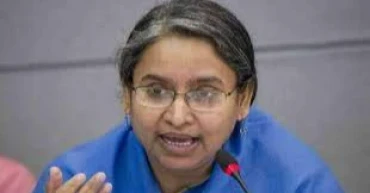
Education minister Dr. Dipu Moni on Saturday urged the people of the country not to pay heed to any rumors over content of NCTB textbooks, stating no book said humans evolved from monkeys.
“Rather, the textbook stated that humans did not evolve from monkeys. Do not listen to misinformation spread by a vested quarter," she said.
The minister made the remarks while inaugurating three schools of BRAC beside Dakatia river at Chandpur.
She stated that the illustration of monkeys was used in the textbook to demonstrate that humans did not evolve from them.
Also Read: Opposition MP rails against inclusion of Darwin's theory in textbook
"It was mentioned three times in the books that monkeys are not the ancestors of humans," she explained.
The minister also urged people to read the books for fact-checking.
She also stated that the textbook contains no derogatory remarks about Islam.
3 years ago
DU students stage protest demanding resignation of Bangladesh-Kuwait Maitree Hall provost
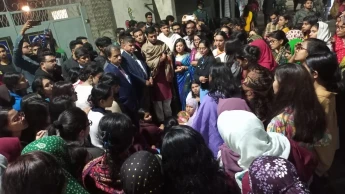
The resident students of Bangladesh-Kuwait Maitree Hall of Dhaka University have staged a sit-in in front of the vice-chancellor's (VC) house demanding the resignation of their provost.
They gathered in front of the VC's house around 9.30pm Thursday to protest "irregularities in seat allocation, lack of emergency facilities, poor quality of food in the canteen, student harassment, inadequate water filters and cooking facilities."
The agitating students demanded the resignation of Hall Provost Nazmun Nahar, professor of the Department of Geography and Environment, saying: "She does not care about the students and is always busy with her personal affairs."
Preferring anonymity, one of the protesting students said, "The hall provost has been involved in many irregularities. It takes a minimum of 15 days for us to get a document signed by the hall provost even if it is urgent. She takes Tk4,000 from every student every year to allocate seats although it is not allowed by the university regulations."
At one stage, four protesting students went to the VC's house to express their grievances.
DU Proctor Professor AKM Golam Rabbani said: "The students shared their sufferings and problems with us. They have some valid demands and points. We will try to resolve the issues through discussion."
After the meeting, the students returned to their dormitory at around 11:45pm.
However, Provost Nazmun Nahar could not be reached for comments despite repeated attempts.
Read more: DU punishes 114 students
3 years ago

Education Alliance Bangladesh: New name for 'Safe Back to School'
The "Safe Back to School" campaign alliance, which was formed following the Covid situation to bring back students to school, has started a new journey to ensure inclusive quality education for all in the country, under a new name: "Education Alliance Bangladesh – EAB."
The declaration of this new name came at the Education Summit 2023 Wednesday in Dhaka.
"Let's Work Together to Ensure Inclusive Quality Education in Bangladesh," is the new slogan of the alliance.
During the opening ceremony, Onno van Manen, Save the Children Country Director said: "This alliance aims to continue working together so that we can reach a larger number of children who require our assistance. We need to elevate the voices of the children through this platform."
The alliance will support the government to mitigate challenges related to quality and inclusive education. It will work with the government to strengthen the education system by taking initiatives to popularise technical/vocational education and fostering partnerships among education actors for accelerating a joyful learning environment.
The closure of educational institutions from March 17, 2020, to February 14, 2021, required the launch of mass awareness campaigns as it triggered children dropout rates from schools in both urban and rural areas, causing an increase in child labour and child marriage.
Against this backdrop, national and international NGOs working for the education sector in Bangladesh united themselves under the Safe Back to School.
Safe Back to School's awareness campaign, research study, and advocacy-related discussions with government officials and stakeholders underlined the need for long-term activities to ensure the scope for education for all children in Bangladesh.
The alliance members are Brac, British Council Bangladesh, CAMPE, Dhaka Ahsania Mission, Educo Bangladesh, FIVDB, Friendship, Habitat for Humanity Bangladesh, Humanity and Inclusion, Jagorani Chakra Foundation, Leonard Cheshire, Plan International Bangladesh, Room to Read, Save the Children, Sesame Workshop Bangladesh, Sight Savers Bangladesh, Stromme Foundation, Teach for Bangladesh, Voluntary Service Overseas, World Vision Bangladesh, and Young Power in Social Action.
Read more: 'Safe Back to School’ campaign pledges full support for reopening
3 years ago

Pro-Awami League panel sweeps JUTA election
Pro-Awami League (AL) Bangabandhu Panel teachers gained a landslide victory in the Jahangirnagar University Teachers' Association (DUTA) election Wednesday.
The voting was held at the university teachers' club from 9am to 1pm. The results were announced in the evening.
The pro-AL panel bagged 11 posts of the 15-member executive committee with Professor Farid of the physics department elected as president and Professor M Shamim Kaiser of the Institute of Information and Technology as general secretary.
Also, from the panel, Sabbir Alam of mathematics, Ahemd Reza of English, Nazmul Hasan of Bangla, Mohammad Tariqul Islam of government and politics, Mahfuza Khatun of finance and banking, Md Mizanur Rahman of geography and environment, Suborno Karmakar of chemistry, Mohammad Shafi-Ur-Rahman of urban and regional planning and Farha Matin Julia of biochemistry and molecular biology, departments were elected members.
Read more: Pro-AL Blue Panel sweeps DUTA polls
Monowar Hossain of the zoology department and Professor Mohammad Shafiqul of the economics department were elected as vice-president and treasurer, respectively, from the BNP-backed Sammilito Shikkhak Samaj.
Also, from the panel, Borhan Uddin of the biochemistry and molecular biology department and Mohammad Rezaul Rakib of the geography and environment department were elected joint secretary and executive committee member.
3 years ago