education

BCL men halt Islamic University recruitment test
The leaders and activists of the Islamic University unit of Bangladesh Chhatra League, student wing of the ruling Awami League, stopped a recruitment test forcing the job seekers out of the examination hall on the campus in Kushtia on Wednesday.
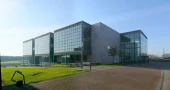
Witnesses said around two hundred job seekers, who applied for the post of office assistant-cum-computer operator at the political science department of the university, went to IU Nuclear Scientist MA Wazed Miah Science Building to take part in their computer typing test in the morning.
The leaders and activists of the IU BCL unit went to the building and threatened as well as forced the job seekers out of the examination hall at around 9:30am.
The BCL men, at one stage, put the main gate of the third floor of the Nuclear Scientist MA Wazed Miah Science Building of the university under lock and key.
Within minutes, a group of BCL men entered the examination hall and asked the applicants to leave, said several applicants.
The university authorities were yet to make any move against the ruling party men, who threatened not to allow the authorities to hold the recruitment test on the campus without their consent, seeking anonymity, a job seeker said.
The BCL men misbehaved with the job seekers, tore their admit cards and hurled abusive words. Later, the BCL men drove them out of the campus, he added.
“It is very unfortunate that I cannot sit for the recruitment test though I've travelled a long way for this,” said a job seeker who hailed from Panchagarh.
The university administration, however, postponed the recruitment process due to unavoidable reasons, IU acting registrar HM Ali Hasan said.
There was no involvement of incumbent IU BCL unit activists in the incident, IU BCL unit president Faisal Siddique Arafat said.
The former leaders and activists, who work at different offices daily at the university, forced the job seekers out of the examination hall demanding their jobs, he claimed.
Denying the allegation, IU BCL unit former organising secretary M Rasel Joarder said that they did not halt the recruitment test rather the running BCL activists did it.
"I am one of the job seekers of today’s test so why should we halt it," he said.
Read more: 15 injured in BCL factional clash at CU
3 years ago
Charging extra admission fees: Monitoring committees start visiting schools, colleges
The Education Ministry has formed monitoring committees to prevent charging extra admission and readmission fees in different schools and colleges across the country.
Four monitoring committee each led by a deputy secretary, on Wednesday visited a number of educational institutions to check whether the authorities concerned are taking admission fees, development fees and others for 2023 session following the admission policy of the ministry, said a media release of the Education Ministry signed by its public relations officer M Abul Khayer.
Besides, 16 monitoring committees formed by the Directorate of Secondary and Higher Education, eight divisional committees in Dhaka Metropolitan area, 55 district monitoring committees and upazila monitoring committees are also visiting educational institutions to check any violation of the government policy.
Also read: New curriculum to be introduced in 2023: Education Minister
Steps will be taken against those concerned if irregularities are found, it said.
3 years ago

New curriculum to be introduced in 2023: Education Minister
New curriculum will be introduced for primary, secondary and higher secondary level students from next year, said Education Minister Dipu Moni on Tuesday.
“The government formulated the new curriculum keeping in mind the labour market at home and abroad. Education from primary to higher secondary level will see a major transformation. As per the plan, the new curriculum will be introduced next year,” she said.
Read more: ADB to invest $2 billion over next 3 years in Bangladesh’s education sector
The education minister revealed these information while speaking at a discussion marking the Victory Day at Anima Chowdhury Auditorium in Natore district town.
Textbooks will be handed over to the students in the new year amid all obstacles, she said.
Terming the opposition political parties including BNP, who have started the anti-government movement, as evil force, Dipu said a vested quarter is involved in destabilising the country ahead of the national election and there is no scope to spare them.
Read more: Girls’ education among 5 core issues in Bangladesh development: Study
3 years ago

Study in New Zealand: Application process, cost for international students
From the creeks of Wellington to the nestled cityscape of Christchurch, the southern end of the Pacific treasures the beautiful country of New Zealand. This small island country is also a growing hub for higher study. With a rich culture, excellent academia, and perfect career growth opportunities, New Zealand can be a higher study destination. Let’s take a look at the study opportunities in New Zealand for international students at the bachelor, master's, and Ph.D. levels.
Why Study in New Zealand?
New Zealand has somewhat modest options compared to Nordic and central European countries. It might even pale compared to its Tasmanian rivals Australia with just 8 universities in total.
But that’s where the catch is. Even though New Zealand has only 8 universities, all of them are listed in the top 500 of the QS World Ranking. Additionally, all the New Zealand universities are part of the Lisbon Qualification Recognition Convention, which allows their degree to be recognized in 50 countries across the world.
Read More: UK accepting applications for GREAT Scholarships
The universities and curriculum are inclined to research as every university offers excellent pedagogy and outcome-based study facilities. New Zealand also offers up to 3 years of post-study visa to secure a job and build a career.
Additionally, the quality of life index in New Zealand is very high at 188 suggesting a perfect mix of PPI, health security as well as overall economic well-being.
Higher Study In New Zealand
New Zealand has a total of 8 universities and over 100 specialized institutions for training-based studies as well as Polytechnic studies. International students can access any of the universities or institutes, but the high concentration has always been on the university.
Read More: Study in Ireland: Application process, cost for international students
Popular streams include business and engineering, with a strong choice for life sciences as well. The university tracks accept students through an individual assessment based on available positions.
There is no centralized admission process in New Zealand for all universities. There are two intakes in New Zealand each year, one in February and the other in September.
Application for the February session starts around September of the previous year, whereas the application for the September intake starts around May of the same year.
Read More: Study in Thailand: Admission process, cost for International Students
For bachelor's, students will have to exclusively follow the central admission process of each university. For thesis-based masters and Ph.D., a prospective student can contact professors to supervise and they might fast-track the application process through recommendations.
Application Process
There are several steps involved in the admission process in New Zealand. And it all starts with choosing the right major and stream.
Choosing a Major
Since New Zealand has only 8 universities, there aren’t any dedicated websites for searching different streams and majors in different universities. So students will have to individually visit the admission section of the universities.
Read More: Higher Study Opportunities in Turkey for International Students: Process, Cost
You can check out the details here:
-University of Auckland
-University of Otago
-University of Canterbury
-Victoria University of Wellington
-Auckland University of Technology
-Massey University
-University of Waikato
-Lincoln University
In addition to streams and courses, students can also follow these websites for admission timelines and guidelines.
Read More: Study in Czech Republic: Application process, cost, scholarships
Required Documents
The second thing to consider is the required documents for the application. New Zealand doesn’t have any specialized requirements like some Nordic countries. Standard certified copies of documents are accepted either through mail or web portal. Some of the common documents applicable across the board include –
-Official Transcripts (Last completed Degree) -LOR -Statement of Purpose -Language Proficiency certification (IELTS/TOEFL iBT) -Proof of application fee payment -Bank statement -Additionally, some universities or majors may specifically require a GRE or GMAT score in case of applying for an MBA. Be sure to check that before proceeding.
Read More: Self-Funded Study Opportunity in France for International Students
Cost of Higher Education in New Zealand
With just 8 universities, it's pretty easy to break down the overall cost of education in New Zealand.
The cost of bachelors in New Zealand is roughly 32,000 NZD per year which translates to about 2121228 BDT (1 NZD = 66 BDT). On the other hand, the cost of master's is about 35,000 NZD or 2320093 BDT. The cost gets reduced for Ph.D. at around 8000 NZD or 530307 BDT per year.
The New Zealand regulation stipulates that you show at least a year’s tuition fee as a bank statement before arriving in New Zealand. Of course, there are other opportunities to cover the tuition fees, and we’ll discuss that in the next points.
Read More: Study in Japan: Scholarships, Tuitions, Application Process for Bangladeshi Students
Scholarship Opportunities in New Zealand
Since the higher study options themselves are limited in New Zealand, the scholarships are also somewhat limited. There are little to no scholarships available at the bachelor's level, with most of the scholarships available at the master's and Ph.D. levels.
Most of the available scholarships are university-based and students are either referred for the scholarship by the professor (in the case of thesis-based masters) or considered by the central admission authority.
Some notable scholarships include –
Lincoln University International Taught Master Merit Scholarships
Wellington Master’s by Thesis Scholarship
Tongarewa Scholarship at Victoria University of Wellington
University of Auckland International Student Excellence Scholarship
University of Waikato International Excellence Scholarship
Energy Scholarship at the University of Canterbury.
Read More: Is Norway Ending Free University Education for Non-EU Students?
Cost of Living and Work Opportunities in New Zealand
The cost of living in New Zealand is on the higher side, mostly due to the high rent fees in city centers. A single-room apartment may cost up to 1500 NZD. Combined with personal expenses and utilities, the cost comes in at around 3000 NZD per month or 198865 BDT.
Students are allowed to work 20 hours per week at max with 40 hours being the cap at summer vacation.
Thankfully, New Zealand has a high minimum wage starting at around 18.50 NZD per hour.
After completion of the study, a student can convert their student visa into a job visa. The median salary for a fresh graduate in New Zealand stands at around 80,000 NZD or 5303071 BDT per year.
Read More: Study in Belgium: Bachelor's, Masters and PhD options for Bangladeshi students
Final Words
Even though New Zealand is a small island country across the end of the Pacific, it still boasts some of the best education in its limited capacity. With over 20,000 international students currently pursuing different degrees at different levels, New Zealand is also growing to be a multicultural, cosmopolitan country. The lenient immigration law combined with ample work and career prospects should be a positive indicator for Bangladeshi students wishing to pursue higher studies in New Zealand.
3 years ago

Govt primary school assistant teacher recruitment test result published
The result of the government primary school assistant teacher recruitment test, 2022 has been published.
About 37,574 candidates have been selected based on written test and viva voce, according to a press release from the Ministry of Primary and Mass Education.
Read more: Primary schools to have one shift from Jan 2023: Secretary
Selected candidates will receive result SMS on mobile phone number.
The results have also been published on the website of the Ministry of Primary and Mass Education (www.mopme.gov.bd) and the website of the Directorate of Primary Education (www.dpe.gov.bd).
Selected candidates are requested to appear in person at the District Primary Education Office concerned with original copies of all certificates and three copies of National Identity Card, Police Verification Form, Health Fitness Certificate issued by Civil Surgeon by December 31.
Read more: Online transfer system of govt primary teachers resumes
The first phase of the examination was held on April 22, second phase on May 20, and third phase on June 3.
The number of candidates in this year's recruitment test for assistant teachers was 13,09,461.
At present, there are 65,566 govt primary schools in the country with 4,28,701 vacant teachers’ post.
3 years ago
Public universities lagged behind pvt ones in adopting online classes during pandemic: PM
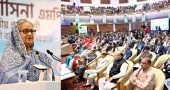
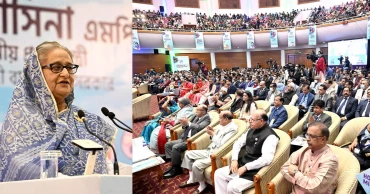
Prime Minister Sheikh Hasina today (December 12, 2022) said that public universities in Bangladesh lagged behind in adapting to virtual or online class when the government tried to introduce it during the Covid-19 pandemic.
“Let me share something regrettable. Our public universities were a bit slow in using the digital system in education during the pandemic period. They were far behind (compared to private universities),” she said.
The Prime Minister said this while attending the inaugural programme of Digital Bangladesh Day 2022.
ICT Division organised the programme at Bangabandhu International Conference Center (BICC) with the theme ‘Advanced Technology Inclusive Development’.
Read more: From ‘Digital Bangladesh’ to ‘Smart Bangladesh’ by 2041, PM announces
Sheikh Hasina said that during the pandemic, public universities expressed reluctance to go for online classes.
“Private universities started that (online classes) quickly. But our public universities (did not), even Dhaka University (did not start promptly),” she said.
She said that after repeated requests, public universities of the country introduced online classes.
“That was the reality. When a system is beneficial to us, why should we not adopt that?” – she questioned.
Read more: $230bn needed: PM seeks support from global partners to implement climate adaptation plan
If there were no ‘Digital Bangladesh’, what would have happened during the Covid-19 pandemic, she wondered. “Everything would come to a standstill.”
The Prime Minister also elaborated on her government’s ICT-friendly initiatives and Vision 2041 to establish Smart Bangladesh.
She mentioned that successful implementation of Digital Bangladesh made it possible for the government to keep the economy, education and other activities running properly during the pandemic.
Regarding the economic situation worldwide due to the coronavirus pandemic and Russia-Ukraine war, sanctions and counter-sanctions, Sheikh Hasina said that prices of essentials have increased globally.
Read More: Huawei ICT Incubator announces top 6 startups from Bangladesh
“Developed countries are facing a volatile situation. Even developed countries like Great Britain have declared recession. By the grace of Allah, we are still able to run our economic wheel,” she said.
3 years ago

UK accepting applications for GREAT Scholarships
Applications for the UK government's GREAT Scholarships, delivered by the British Council and GREAT Britain campaign, are now open for Bangladeshi students for the 2023-24 academic year.
The scholarships offer students from Bangladesh the opportunity to undertake postgraduate taught studies in the UK from autumn 2023.
The GREAT Scholarships aim to widen access to UK education and celebrate the diverse range of institutions across all four nations of the UK, offering a vast array of courses.
Ten universities have partnered with the British Council and GREAT Britain campaign to offer 11 scholarships to Bangladeshi students.
The universities are Aston University, Cardiff University, Cranfield University, Keele University, Robert Gordon University, University of Manchester, Ulster University, University of East Anglia, University of Hull, and the University of Southampton.
In the year ending September 2022, over 20,000 Bangladeshi nationals went to the UK with student visas. The GREAT Scholarships aim to build on the strong links between the UK and Bangladesh and continue to strengthen them for the future.
Each scholarship is worth a minimum of £10,000 towards tuition fees for a one-year postgraduate course in the UK for the 2023-24 academic year.
Students intending to apply for the scholarships will have to receive an offer of entry from one of the participating universities and must satisfy all entry requirements for the chosen course as stated by the respective university.
British High Commissioner to Bangladesh Robert Chatterton Dickson said: "The UK is an increasingly popular destination for Bangladeshi students, thousands of whom go each year to study in some of the world's best universities."
"A UK degree is a fantastic qualification, recognised all over the world. GREAT Scholarships offer a new way to fulfil the dreams of the brightest Bangladeshi students and further strengthen the bond between our two countries."
British Councils Director of Education David Maynard said: "The British Council in Bangladesh offers a wide range of scholarship programmes to aspiring students and professionals to pursue higher education from world-class universities in the UK."
"Over the years, these scholarship programmes have provided tremendous opportunities for individuals. Not only on an academic level but it also enhances their flexibility, cultural awareness, and an understanding of how other people work and think, thereby improving their chances of future employability. These scholarships also potentially open opportunities for academic and research collaborations between the UK and Bangladesh universities. GREAT scholarships are to be valued and celebrated."
3 years ago

5-day book fest at JU draws to a close
A five-day book fair at Jahangirnagar University (JU) came to an end Thursday.
The Faculty of Arts and Humanities of JU organised the fair in collaboration with Traxila Bookshop.
Jubayer Ahmed, a student of the English department, said he could buy books at a cheap rate from the fair. "Our campus is far from Dhaka. So it is not always easy for us to get good books. This fair filled the gap."
Professor Emran Jahan of the history department said: "We want this kind of book fest to take place more frequently."
Read: 'Secret Documents' on Bangabandhu: International editions launched at London Book Fair
"Nowadays students just read books only for academic purposes, but to enrich our knowledge, we should read other books along with the academic ones," he added.
3 years ago
Study in Ireland: Application process, cost for international students
From the Wild Atlantic Way to the Brú na Bóinne, Ireland is undoubtedly one of the most scenic countries in the world. Being part of the British Union, the country thrived in the middle to late middle ages and today presents a mix of cultural heritage and modernity. The country has professed development in the education sector.
Ireland owns some of the best higher study institutes in the world which have steadily positioned the country as an affordable, world-class higher study destination among prospective students. Let's look at the process and requirements to study bachelor, master's, or Ph.D. in Irish higher study institutions.
Why Study in Ireland?
The main reason to study in Ireland has to be world-class, progressive, and innovation-led studies in almost every discipline. And it's just not in words; the OECD report of 2019 puts Ireland as the 4th best study destination in the world. In addition to that, the Bloomberg Innovation Index of 2020 puts Ireland as the 12th most innovative country in the world.
Read More: Study in Thailand: Admission process, cost for International Students
Beyond its academic and innovative rigor, Ireland is home to some of the most scenic places in the western hemisphere. From the castles to the ridges to the shires, the views will fill your senses, unlike anything.
Another great thing about Ireland is the stay-back visa. Ireland welcomes its international graduates to stay back, find jobs, and contribute to the Irish economy. In that regard, the country offers up to 2 years of stay-back visa for students to find a job and settle in Ireland.
Higher Education in Ireland
Like most other EU countries, Ireland offers higher education through bachelor's, master's, and Ph.D. There are generally two intakes per year, one in the fall and the other in the spring. The spring semester starts in early January, and the fall semester starts in early September.
The bachelor's generally last for about three to four years, the masters for about one and a half to two years, and the Ph.D. usually lasts for about three to five years.
Read More: Higher Study Opportunities in Turkey for International Students: Process, Cost
How to Apply to Ireland for Higher Studies
There are several steps for applying to Ireland for higher studies. Here are the main ones.
Finding the Right Course
The first thing to do is to find the right course. If you are a student applying for bachelor's, you can choose streams based on your preference. And if you are a student applying for a master's or Ph.D., then you can choose courses based on your bachelor's stream or research interest.
The Education in Ireland portal is the perfect place to search for streams and degrees available at each of the degree levels. It is a repository for all the existing higher education programs in Ireland. You can easily find your desired course here.
Read More: Study in Czech Republic: Application process, cost, scholarships
Admission Requirements
The admission requirements in Irish Universities are in line with most EU countries. Depending on courses and streams, the application and admission requirements may vary. But you will at least need the following in any application.
-Official Transcripts (Last completed Degree) -LOR (Up to three)-Statement of Purpose -Language Proficiency certification (IELTS/TOEFL iBT) -Bank statement -Proof of application fee payment
One thing to note here is that most Irish Universities require at least 6.5 to 7.0 on the IELTS band. It's one of the stringent regulations that apply to most universities except for a few. If you cannot secure the required band score, you might have to enroll in a foundation course at your accepted university.
Read More: Self-Funded Study Opportunity in France for International Students
Application Process
There are mainly two ways to apply to Irish Universities. Either through the central application or a professor. If you are applying for bachelors, then the central application is the only way.
But if your masters are thesis-based or you’re applying for a Ph.D., then you can opt for a professor referral as well as a central application. Note that applying through a professor’s referral ensures better chances of securing funding.
Tuition Fee and Scholarship Opportunities in Ireland
Tuition fees in Ireland grossly differ based on whether it is a publicly funded or privately funded university. Depending on the course and the university, the undergraduate tuition fee can run anywhere between 3500 euros to 8000 euros or 377,742 BDT to 863,657 BDT per year (1 EUR = 107 BDT).
Read More: Study in Japan: Scholarships, Tuitions, Application Process for Bangladeshi Students
Tuition costs for masters are also similar at around 4000 euros to 9000 euros or 431828 BDT to 971614 BDT per year. Unfortunately, the cost of a Ph.D. is some of the highest in the world at around 9000 euros for non-EU/EEA students. But most prospective Ph.D. opts for funding first before pursuing a doctorate in Ireland.
In terms of scholarship, masters and Ph.D. students gets the most preference. Unfortunately, the number of bachelor’s scholarships is very limited in Ireland. Some of the common and prestigious scholarships in Ireland include –
-Dublin City University Scholarship
-University of Limerick Scholarship
-Dublin Institute of Technology Scholarship
-The Walsh Fellowship
-Central Bank of Ireland Undergraduate Scholarship
-Trinity College Dublin Scholarship.
Read More: Study in Belgium: Bachelor's, Masters and PhD options for Bangladeshi students
Cost of Living and Work Opportunities in Ireland
The cost of living in Ireland is one of the more lucrative aspects of studying in the country. Compared to other EU countries and even England, the cost of living is much lower. A student can expect to shell out anywhere between 650 euros to 1000 euros or 70172 BDT or 107957 BDT per month. Depending on location and personal spending habits, the cost can be even lower.
A full-time student can work for 20 hours per week as per the immigration law of Ireland. The time goes up to 40 hours in summer vacation. As a student working part-time jobs, you can expect to earn around 10 to 12 euros per hour.
Final Words
Beyond its picturesque cities, Ireland offers some of the best education you can find anywhere in the world. Besides education, Ireland is currently one of the most immigration-friendly countries in the world, with the government actively encouraging students to stay back and build a career in Ireland.
Read More: Study in Denmark: Costs, opportunities for international students
So far we have discussed the admission process, tuition, and living cost of international students in bachelor, master, or Ph.D. in Ireland. Students from Bangladesh can choose Ireland as a study hub to fulfill their dreams. So what are you waiting for? Apply away to experience Irish life.
3 years ago

RU teachers ‘beat’ students on hunger strike
Rajshahi University (RU) teachers and officials allegedly assaulted the students of the Urdu Department who were staging a hunger strike since Monday morning. Four female students were admitted to the university medical center after the incident.
The incident took place in front of the administration building of the university on Monday evening.
The injured students are Monija Akhtar, Runa Akhtar, Nusrat Jahan Priya and Sumaiya of the 2019-20 academic year of that department. Among them, Manija Akhtar and Sumaiya were taken to Rajshahi Medical College (RMC) Hospital as their condition was critical. The remaining two students are admitted to the university’s medical center.
Eyewitnesses and students of the Urdu department said that the officers and teachers of the university came in front of the administration building to break the hunger strike of the students. At one point, a fight broke out between them and the agitating students. This led to a scuffle between the two sides. Later, four students of the Urdu department got injured. The students claimed that they all were beaten up by the authorities.
During the scuffle, university pro-vice-chancellor Prof Sultan-Ul-Islam, Proctor Prof Ashabul Haque, Student Advisor M. Tareq Nur, Assistant Proctor Zakir Hossain, Theatre department Prof Ataur Rahman Raju, among others, were present.
Later protesting this incident, the students raised various slogans in front of the administration building.
Earlier, at 10:30am in the morning, the 2nd year students of the Urdu Department sat on hunger strike in front of the Administration Building of the University, demanding reevaluation of the results. When the university administration wanted to negotiate, the students announced that they would continue their hunger strike until their demands would be met.
Read more: RU says yes to second-time admission seekers
While asked about the complaint, Ataur Rahman Raju, professor of Theatre department said, “If they can prove the allegations against me, I will leave my job tomorrow morning. When the administration came to talk to them they were loud with the authorities and raised various slogans against the administration. Then I tried to make them understand."
In the meantime, a five-member delegation of students held discussions with the administration. Later at 8:30om, University vice-chancellor Professor Golam Sabbir Sattar, two pro-vice-chancellors and Proctor came and broke their hunger strike by feeding students water and biscuits.
Meanwhile, Vice-Chancellor Golam Sabbir Sattar said that according to the university's ordinance, there is no opportunity to re-evaluate the results after the publication of the results. But we will always work in the interest of students. He assured to form an investigation committee within seven days to solve the case.
“Later, regular counseling will be done to improve the relationship between teachers and students of the department,” Prof Sattar stated.
Read more: RU to take action over attack on students in RMCH
3 years ago