education
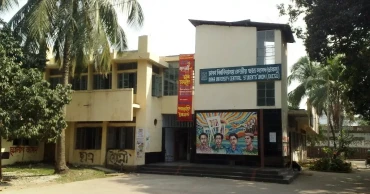
DUCSU election: Taskforce formed to resolve allegations of code of conduct violations
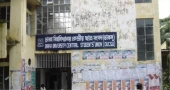
The Election Commission of Dhaka University Central Students’ Union (DUCSU) and Hall Union has formed a taskforce to look into complaints about election code of conduct violations – confirmed by the Chief Returning Officer, Prof. Dr, Mohammad Zashim Uddin, through a notification.
Professor Dr. Golam Rabbani from the Institute of Social Welfare and Research will lead the taskforce as Convener.
Other members are Professor Dr. Shahidul Islam of Banking and Insurance, Associate Professor Sharmin Kabir of the Institute of Education and Research, Associate Professor Syed Tanveer Rahman of Psychology, Assistant Proctor Dr. Md. Rafiqul Islam, Jahangir Alam, and Rezaul Karim Shohag.
Ducsu election: Shibir’s banners vandalised on first day of campaign
The taskforce will review complaints and help ensure the elections are fair and transparent.
9 months ago
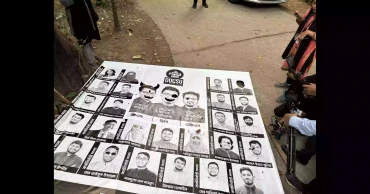
Ducsu election: Shibir’s banners vandalised on first day of campaign
On the very first day of official campaigning for the Dhaka University Central Students’ Union (DUCSU) election, allegations have been raised that the banners of the Shibir-supported panel “Oikyoboddho Shikkharti Jhot” were pulled down and distorted at the Faculty of Fine Arts (Charukola).
The incident took place on Tuesday noon.
Visiting the spot, UNB found that the images on the festoons had been distorted, which is a clear violation of the code of conduct.
According to sources, from the morning different panels and candidates began their election campaign. As part of this, the Shibir-supported panel set up a temporary banner at the Fine Arts faculty. However, in a video it was seen that shortly afterwards, two unidentified individuals came and threw away the festoon.
Miftahul Maruf, sports secretary of Dhaka University Shibir branch, alleged two of their banner-festoons were taken down which was set up at the Faculty of Fine Arts.
He urged the administration to check CCTV footage. “If the footage is reviewed, the culprits can be identified.”
Regarding this, Assistant Proctor of the Faculty of Fine Arts, Md. Israfil, said he visited the spot.
“Efforts are underway to identify who did this,” he added.
Meanwhile, the panel has submitted a written complaint to the Election Commission about this matter.
Final List Out: 471 candidates running in DUCSU elections
On this matter, Shibir also held a press conference on Tuesday afternoon. They called upon the administration to identify those involved and take action against them.
VP candidate Shadik Kayem said in the July movement and against Awami League, the students of Charukola protested through different artworks. They are helping to preserve the aspiration of July. But some defeated miscreants are lying low. Those who want to re-establish Shahbagi politics, those who legitimized various mass killings of Awami League.”
He called upon all conscious teachers and students of the country to protest the incident.
9 months ago

UGC chief vows full transparency in HEAT project implementation
University Grants Commission (UGC) Chairman Professor Dr. SMA Faiz has assured that complete transparency and accountability are being maintained in the evaluation of sub-projects under the ongoing Higher Education Acceleration and Transformation (HEAT) project.
He made the remarks during a press conference held at the UGC auditorium on Tuesday, where details were shared regarding the sub-project selection process and the upcoming agreement signing with universities for project implementation.
Prof Faiz said the UGC has taken every necessary initiative to ensure transparency in evaluating the sub-projects.
He said that he has personally monitored each step of the process to ensure fairness and uphold institutional integrity.
Referring to his own professional record, he said, "Before joining the UGC, I have honestly and sincerely fulfilled my duties as the Vice-Chancellor of Dhaka University and the Chairman of the Public Service Commission. I will not want the honor earned in my long service life to be destroyed for any reason."
He welcomed constructive criticism from the media and stakeholders in higher education, encouraging active engagement in ensuring accountability.
Addressing concerns of political bias or favoritism in the selection process, Professor Faiz clarified that there is no opportunity for individuals to submit sub-project proposals directly.
All proposals must be submitted through the respective university’s academic committee and with the approval of its vice-chancellor. As such, the UGC does not have the jurisdiction to consider the political affiliations of the applicants.
He emphasised that the evaluation process was conducted by impartial reviewers, consisting of qualified teachers and researchers from universities across the country.
He added that national interest and academic merit were prioritied in the selection of sub-projects.
UGC members Professor Dr. Mohammad Tanzimuddin Khan, Professor Dr. Mohammad Anwar Hossain, Professor Dr. Md. Saidur Rahman, Professor Dr. Machuma Habib, and Professor Dr. Mohammad Ayub Islam were also present.
HEAT Project Director Professor Dr. Asaduzzaman highlighted the progress of the project and elaborated on the selection procedure.
Director of the Public Relations and Publications Department Dr. Shamsul Arefin moderated the event, which was also attended by UGC Secretary Dr. Md. Fakhrul Islam, along with department heads and officials involved in the HEAT project.
China’s cooperation significantly contributes to education sector: UGC Chairman
On Wednesday, August 27, the UGC is scheduled to sign agreements with various universities for the implementation of 151 selected sub-projects under the HEAT project.
The five-year HEAT project, aimed at enhancing the quality of higher education in Bangladesh, is estimated to cost over Tk 4,000 crore.
The government of Bangladesh will cover 50.96 percent of the project cost, while the remaining 49.4 percent will be funded by the World Bank.
The project is designed to address key challenges in higher education by modernizing curriculum to meet market demand, improving digital connectivity across institutions, building teacher training infrastructure, enhancing the capacity of the Bangladesh Research and Education Network (BDREN), supporting the Bangladesh Accreditation Council, and promoting innovation and competitive research in universities across the country.
Prof Faiz reaffirmed that the UGC remains committed to upholding the highest standards of transparency and national interest throughout the project's implementation.
9 months ago
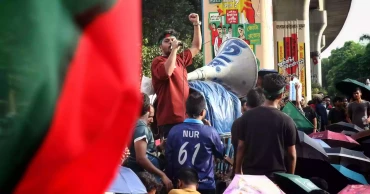
Buet students announce 'March to Dhaka' for Wednesday
Students of the Bangladesh University of Engineering and Technology (BUET) have announced a 'March to Dhaka' programme for Wednesday, as part of their ongoing movement to press home a three-point demand.
The announcement came on Tuesday, with student leaders calling for nationwide solidarity among engineering students.
Speaking to UNB, Zubair Ahmed, a student of the Department of Municipal Engineering at BUET, said, “We will block Shahbagh at 10 am on Wednesday as part of the programme.”
Students from engineering universities across the country have been urged to join the protest and gather at Shahbagh at the same time.
Earlier, the protesters started their demonstrations around 3 pm and continued till 8pm, halting traffic in the busy Shahbagh area.
Their demands are mandatory tests for all candidates seeking entry into the ninth grade in engineering, or for posts such as assistant engineer and equivalent, with eligibility restricted to those holding at least a BSc degree.
They also oppose promotions through quotas or by creating equivalent positions under different titles. They also demand that recruitment examinations for the technical 10th grade, or sub-assistant engineer positions, be open to both diploma and BSc holders.
Legal measures must be taken against those using the engineer title without having a BSc degree in engineering. Besides, non-accredited BSc engineering courses must be brought under IEB-BTEB accreditation following proper procedures.
Nishad Rahman, a student from the 21st batch of the Department of Civil Engineering, said, “This is our prolonged movement but the government is not paying any attention to our demands. So, we have been compelled to take to the streets.”
9 months ago
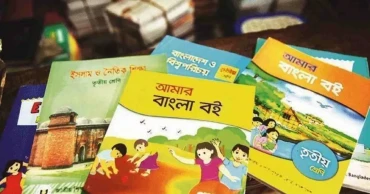
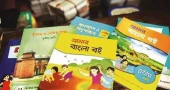
Govt moves to fast track printing of school textbooks for 2026 session
The government on Tuesday moved to shorten the tender submission period for printing, binding, and supplying textbooks for the 2026 academic year of class 6-8 to ensure timely delivery to students on January 1.
The approval came from the 27th meeting of the Advisers Council Committee on Economic Affairs in this year where Finance Adviser Salehuddin Ahmed chaired the meeting virtually.
According to the Education Ministry, the proposal was placed after the committee recommended re-tendering for the procurement process of textbooks for students of classes six, seven, and eight of secondary (Bangla and English versions), Dakhil, and technical education streams.
The committee earlier advised re-tendering after reviewing the proposals submitted in the initial phase.
However, officials noted that following the usual tender process — which requires 42 days for bid submission from the date of the newspaper advertisement — would make it impossible to distribute free textbooks to students on the first day of the new academic year.
To address the issue, the ministry proposed reducing the bid submission period from 42 days to 15 days under the emergency provision of Rule 83 (1)(Ka) of the Public Procurement Rules (PPR), 2008.
The National Curriculum and Textbook Board (NCTB) distributes millions of free textbooks every year as part of the government’s initiative to promote education and reduce dropouts. Any delay in the procurement process could disrupt the timely handover of textbooks to students across the country.
On August 19 the same committee turned down the procurement proposals for printing free textbooks for Class 6, 7, and 8 students under 2026 academic session, which raised concerns over potential delays in the timely distribution of textbooks to the secondary-level students.
The proposals, placed by the Secondary and Higher Education Division and to be executed by the National Curriculum and Textbook Board (NCTB), involved a combined budget of over Tk 603 crore for printing more than 12 crore copies of textbooks for the three classes, covering both Bangla and English versions, as well as Dakhil and technical streams.
According to the proposals, Class 6 textbooks were to be printed under 97 out of 100 responsive lots at a cost of Tk 180.04 crore, while Class 7 books were planned under 94 lots at Tk 200.20 crore. For Class 8, a contract for 89 lots amounting to Tk 223.12 crore was recommended. In each case, the remaining non-responsive lots were set to be re-tendered.
Procurement delay threatens timely distribution of class 6-8 textbooks in 2026
NCTB traditionally begins printing and binding months in advance to ensure that books are delivered to schools across the country before the start of the academic year.
The National Curriculum and Textbook Board (NCTB), under the Secondary and Higher Education Division, sought open tenders to print, bind, and deliver textbooks in 100 lots for each class.
For Class 6, bids for three lots were rejected out of 100 lots for 4.43 crore copies. For Class 7, among 4.15 crore planned copies, six lots were deemed non-responsive. Similarly, for Class 8, 11 lots failed technical and financial evaluations out of 100 lots for over 4.02 crore textbooks.
9 months ago
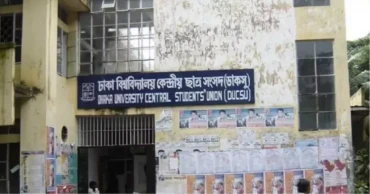
DUCSU and hall union election campaign rules and regulations
The campaign for the Dhaka University Central Students’ Union (DUCSU) and Hall Union elections will officially begin from tomorrow. In this regard, the Election Commission has set rules and regulations. Campaigning can continue until 10:00 pm on September 7. Voting will take place on September 9.
In election campaigning, no one other than voters or candidates may, in any way, campaign for or against any candidate within the university area.
In campaigning, printing and distributing black-and-white posters, leaflets, or handbills will be allowed. However, candidates can use their own black-and-white photograph. Using other photos is totally restricted.
No poster, leaflet, or handbill may be pasted on any type of structure, wall, vehicle, fence, tree, electric or telephone pole, or any other standing object within the university campus or hall areas.
No one may conduct election campaigns by writing, printing, engraving, or drawing with ink, lime, or chemicals on walls or vehicles.
During the campaign, female candidates may, in accordance with the election code of conduct, campaign in students’ rooms, in front of rooms on verandas, guest rooms, hall canteens, dining rooms, auditoriums, and food corners except reading rooms. Candidates from other halls or non-residential candidates must obtain permission from the concerned hall authority if they wish to campaign in residential halls.
No meeting, gathering, or election campaigning may be conducted in places where teaching or examination activities may be disrupted.
Male candidates may campaign only in the auditorium/guest rooms of female halls as designated by the hall administration.
According to election conduct rules 6 (ga), each candidate or panel may hold one projection meeting in each hall and three projection meetings in the university. In that case, a candidate may use the hall auditorium upon receiving permission from the hall administration at least 24 hours in advance, mentioning the date and time.
No candidate or any student organization on their behalf may hold any meeting, gathering, or procession inside the hall or on campus other than in the places approved by the Chief Returning Officer/Returning Officer.
No public meeting, street meeting, gathering, or even stage setup will be allowed on roads within the university campus that may cause obstruction to the movement of the public, teachers, and students.
Provocative statements or speeches and unruly behavior will not be permitted. No damage may be done to any opponent candidate’s posters, leaflets, or handbills.
DUCSU election: 21 step down, Julius Caesar recommended for exclusion
Any candidate or panel participating in the election may not, until September 10, 2025, voluntarily participate in any type of service-oriented work centered on Dhaka University, distribute any kind of gift, host receptions, provide financial assistance, or engage in similar activities.
If the election code of conduct is violated, the concerned Returning Officer will take action upon receiving a written complaint and after investigation. In addition, the Returning Officer may, if necessary, take immediate action on their own initiative.
If any candidate or anyone on their behalf violates the election code of conduct, they may be fined up to 20,000 taka, have their candidacy canceled, be expelled from the university, or be subjected to any other punishment under state/university law.
9 months ago
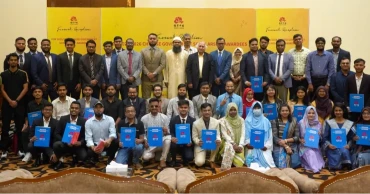
China’s cooperation significantly contributes to education sector: UGC Chairman
Professor Dr. SMA Faiz, Chairman of the University Grants Commission of Bangladesh (UGC), stated that China continues to play a vital role in Bangladesh's education development.
The relationship between Bangladesh and China is not only long-standing but also built on trust, mutual respect, and cooperation, he noted.
He made these remarks on Monday while speaking as the chief guest at a reception ceremony for students who have received scholarships from the Chinese government.
The event was organized by the Chinese Embassy in Dhaka and the Association of Bangladesh China Alumni (ABCA) at a hotel in Dhaka.
Professor Faiz highlighted that China has consistently supported Bangladesh's development, particularly in the education sector, which has been instrumental in modernizing and improving the quality of the country's education system.
China's ongoing cooperation and investment have been highly fruitful in Bangladesh’s economic development, infrastructure construction, and human resource development, he opined.
He expressed his firm belief that the relationship between the two countries will deepen in the future, with cooperation expanding into various fields, including education, research, technology, and culture, which will bring greater benefits to the people of both nations.
Dhaka University symbolises our national identity: UGC Chairman
Mr. Li Saoping, Cultural Counselor of the Chinese Embassy, spoke as a special guest at the event.
The programme was chaired by Professor Dr. Md. Shahabul Haque, General Secretary of the Association of Bangladesh China Alumni (ABCA) and a professor in the Department of Political Studies at Shahjalal University of Science and Technology.
During the event, Najmul Haque Himel, who successfully crossed the English Channel this year, was also honored. He was presented with a crest and an Achievement Award Certificate.
Among others spoke in the programme Professor Dr. Rakibul Haque, vice president of ABCA and professor in the Department of Management Information Systems at Dhaka University, Dr. Kawsar Swapan, joint secretary and managing director of life long hospital, Maruf Hasan, joint secretary and PhD researcher at Wuhan University, Jannatun Nahar, social welfare secretary and Chinese language teacher at the IML of Dhaka University, Nilambar, Cultural Attaché of the Chinese Embassy.
9 months ago
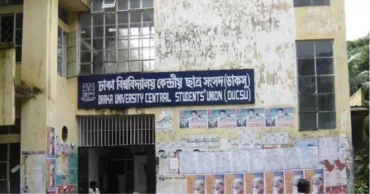
DUCSU election: 21 step down, Julius Caesar recommended for exclusion
Twenty one candidates have withdrawn their nominations from the Dhaka University Central Students’ Union (DUCSU) election. Today was the last day for nomination withdrawal.
The chief returning officer, Professor Dr. Mohammad Jasim Uddin, gave this information on Monday (August 25).
Earlier, in a press conference, he said that no major violation of the code of conduct has occurred so far. To ensure that such does not happen in the future, the Chief Returning Officer and his team are working. If inequality or discrimination is noticed, and if it is submitted in writing, they will take measures according to the rules. From tomorrow, candidates will be able to start formal campaigning in compliance with the regulations.
He said, to avoid complications in casting votes, votes can be cast at the polling center by showing hall card, university ID card, library card, or pay-in slip. In addition, tomorrow (Tlluesday) at 11 a.m. in the Senate Bhaban, there will be a meeting with all VP, GS, and AGS candidates regarding the code of conduct.
Also, from the Public Relations Office it has been informed that those voters who wish their photographs not to be displayed in the voter list, are requested to apply to the Chief Returning Officer by August 27, 2025.
In the female halls, non-residential candidates of the respective halls and residential and non-residential candidates of other female halls will be able to conduct election campaigning every day from 26 August 2025 to 07 September 2025, from 10 a.m. to 10 p.m.
DUCSU: Umama admits to breaching code of conduct
The final voter list for the DUCSU and Hall Union Election 2025 had been made open for the public. In response to students’ applications, it has now been closed. However, the final voter list will remain open for the concerned halls and offices.
In the meeting of the tribunal committee formed to resolve appeals of the DUCSU and Hall Union election and to settle complaints of code of conduct violation, held on 24 August 2025, Julius Caesar Talukdar and Bayezid Bostami were recommended to be excluded from the voter and candidate list due to being involved in terrorist activities and having links with banned organizations. The matter has been sent to the Syndicate for administrative action.
On the other hand, since the allegations brought against Asaduzzaman Jilani and Md. Khairul Alam were not duly proven and the complaint letter did not have the complainant’s signature, no decision has been taken regarding them.
9 months ago
Social media smear campaign mars DUCSU election
Social media smear campaigns, primarily targeting female candidates, have marred the festivity surrounding the Dhaka University Central Students’ Union (DUCSU) election scheduled for September 9.
Some male candidates also complained about being targeted in similar smear campaigns.
This is not an isolated issue in the DUCSU election; candidates in student council elections at other public universities are facing similar challenges as well. They are being tagged, body-shamed, bullied, and subjected to rumors, offensive remarks, hate speech, and relentless propaganda.
Cyberattacks have also been reported on the candidate’s personal profiles and organizational pages.
“Rivals’ supporters are leading the contemptuous campaign,” said Jeysan Bakul Ria (Jerry), an independent candidate who is vying for the position of Common Room, Reading Room, and Cafeteria Secretary.
Ria recalled social media barrages unleashed on her, endless abusive remarks landing in comment boxes, or defamatory remarks sent as private messages. The abusers left nothing untouched, she explained, dropping comments about her clothes and the length of her hair.
The abusers even called her a leftist because she wore short hair.
“We need to have some respect. We must not let go of our sense of courtesy and decency,” she said.
The harassment, in fact, began as soon as she started sharing her idea of running in the election that has a troubled past. Elections to universities’ students’ councils did not regularly happen because of reasons that always had something to do with lack of tolerance.
Public universities have long failed to foster a democratic atmosphere because of widespread politicization of teachers, officers, employees and spaces meant to be used by students. Ruling parties’ students’ wings dominated university campuses, sparing none from extortion and controlling everything from a makeshift shop to giant dormitories.
But the situation changed almost overnight last year when students led an uprising, kicking out the immediate past regime of the Awami League.
462 candidates primarily cleared for DUCSU election; strict regulations announced
Universities wore a festive look soon after dates of students' councils elections were announced. Some of them did not see such an election in decades. For instance, Jahangirnagar University held the JUCSU election in 1992.
Maisha Maliha, who is contesting for the position of Vice President in the council of Kobi Sufia Kamal Hall, interpreted the campaign as a tool to suppress women.
Character assassination, body shaming, bullying constitute the crime that women of this country have battled for a long time, she said.
“We have arrived at this position after fighting such nuisances throughout our lives,” said Maisha.
Women not wearing hijab are labeled as “Shahbaghi.”
A total of 462 candidates are primarily selected for this year’s DUCSU election by the election commission. Of the candidates, 60 are women.
Of the nine announced panels, five are led by women. Two women are vying for Vice President (VP), one for General Secretary (GS), and two for Assistant General Secretary (AGS).
Additionally, several others are contesting secretarial and member posts.
Umama Fatema, the first to announce her candidacy and former spokesperson of the Anti-Discrimination Student Movement, said she has been at the center of a storm of rumors. One viral claim alleged she sought to ban all political activity in Sufia Kamal Hall except leftist politics.
“This is false. In our official statement submitted to the provost, we clearly wrote that all politics—left, right, and Islamic—should be prohibited in the hall premises,” Fatema said.
Umama announces independent panel for DUCSU polls
She also alleged that parts of her statement were distorted in different media outlets.
Alongside misinformation, Umama has been subjected to offensive posts and body-shaming comments.
“Women are always an easy target — inside or outside politics. They are enduring continuous propaganda, cyberbullying, and offensive tagging,” said Sadekur Rahman Sunny, who is participating in the DUCSU election from the panel called Swatantro Shikkarti Oikya’ (Independent Student Unity).
VP candidate Md Abu Shadik (Kayem) from Shibir’s panel in a Facebook post claimed that their four female candidates are also facing cyber harassment.
Candidates’ political ideologies, as well as their personal lives, were also used in some attacks against them.
Abidul Islam, a VP candidate from Jatiyatabadi Chhatra Dal (JCD), faced rumors alleging that he was linked to Shibir during his days at Tamirul Millat.
Abid publicly rejected the claim, accusing Shibir of spreading the propaganda against him.
Numan Ahmad Chowdhury, who is vying for the post of Liberation War and Democratic Movement Affairs Secretary, believed that he was targeted by a bot army attack.
Chhatra Dal announces full panel for DUCSU elections
“I lost my profile minutes after declaring out panel. Simultaneous reports from unknown accounts blocked my access to my Facebook account,” he said.
"Bot army" refers to thousands of fake accounts controlled under a computer program.
Bot armies' favorite ground of operation is different Facebook groups and pages where the army finds its enemies.
Candidates claim that these bot campaigns are not just discrediting them but also threatening them with their lives.
When asked about cybersecurity measures for the candidates, DUCSU’s Chief Returning Officer Professor Mohammad Jasim Uddin said that they were in touch with the Bangladesh Telecommunication Regulatory Commission to address the issue.
9 months ago
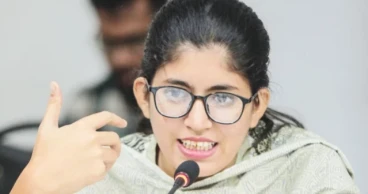
Umama announces independent panel for DUCSU polls
Former spokesperson of the Anti-Discrimination Student Movement and leader of Chhatra Federation Umama Fatema on Thursday announced a full panel named ‘Swatantro Shikkarti Oikya’ (Independent Student Unity) for the upcoming Dhaka University Central Students’ Union (DUCSU) elections.
She unveiled the panel at 4:30 pm in front of the Aparajeyo Bangla sculpture on the university campus.
Umama herself will contest for the post of Vice President (VP) while Al Sadi Bhuiyan, former president of Dhaka University Journalists’ Association, has been nominated for General Secretary (GS) and Zahed Hossain for Assistant General Secretary (AGS) post.
How Umama's call to ban all political activities at DU hall was distorted in the media
Others nominated candidates include Numan Ahmad Chowdhury, Liberation War and Democratic Movement Affairs Secretary, Mominul Islam (Bidan), Science and Technology Secretary, Surmi Chakma, Common Room, Reading Room and Cafeteria Secretary, Nafiz Bashar (Alif), International Affairs Secretary, Anid Hasan, Literature and Cultural Affairs Secretary, Siam Hossain Emon, Research and Publication Secretary, Md. Sadikuzzaman Sarkar (Sadik), Sports Secretary, Md. Rafiz Khan, Student Transport Secretary, Tanvir Samad, Social Welfare Secretary, Rupaiya Shrestha Tanchangya, Career Development Secretary, Israt Jahan Nijhum, Health and Environment Secretary, Nusrat Jahan Nisu, Human Rights and Legal Affairs Secretary.
Member post candidates included Bobby Biswas, Naureen Sultana Toma, Abir Hasan, Raktabij Ark Barua, Rafiul Haque Rafi, Abdullah Al Mubin (Rifat), Sadequr Rahman Sani, Md. Mukhtarul Islam (Riday), Hasibur Rahman, Abid Abdullah, Md. Hasan Zubair (Tufan), Md. Sajib Hossain, Md. Shakeel, Newaz Sharif Arman, and Abid Abdullah.
9 months ago