Local-Business

SAFE HVACR & Cold Chain Expo: Haier to present new horizon in indoor climate control technology
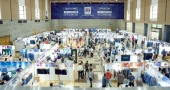
The participation of Haier in the SAFE HVACR & Cold Chain expo is introducing a new dimension to commercial and residential climate control technology.
SAFE HVACR & Cold Chain is the one and only dedicated exhibition on heating, ventilation, air-conditioning, air-filtration, purification, refrigeration systems, cold chain management system, solutions and services in Bangladesh.
The 10th Edition which began on May 15 at the International Convention City Bashundhara (ICCB) will end tomorrow.
At this expo, Haier showcased its cutting-edge products through live demonstrations, featuring the MRV5 series VRF air conditioners, Light Commercial AC units, and Room Air Conditioners.
Zamiruddin, frequent visitor shared his experience who is planning to buy latest model. He said he visited different stall to experience. "As part of the visit, I have also entered the Haer stall which have introduced the latest technology and briefed about the difference.This will help me buy the best one," he also said.
Sellers informed that single modules from 8 to 42 HP with the ability to connect units up to a maximum of 126 HP (100.2 tons) will be ensured while it utilizes advanced DC inverter scroll compressors and fan motors to ensure energy savings and uninterrupted performance
They also informed that they use Four-Way Heat Exchanger where this new technology increases heat transfer efficiency by up to 30% and providing extended pipe connections which is flexible solutions for large buildings with connection lengths up to 1000 meters.
Smart Link Wi-Fi Technology enables wireless communication between units while it maintains performance at heating mode down to -26°C and cooling mode up to 54°C.
The company is also exhibiting Light Commercial AC, Room Air Conditioner (RAC). Inverter technology units ideal for restaurants, banks, clinics, retail shops, and other medium-sized commercial spaces, offering easy installation and energy efficiency while Haier’s room air conditioner range for personal and residential use features powerful cooling, inverter technology, fast cooling, and smart control systems.
"By participating in this exhibition, we aimed not only to share product information but also to provide visitors with direct experience and confidence in the technology. Our objective was to present Haier’s high-quality products directly to customers and business partners," one of the seller at the stalls said.
1 year ago

Policy Research Institute launches Monthly Macroeconomic Insights
The Policy Research Institute of Bangladesh (PRI) launched its inaugural edition of the Monthly Macroeconomic Insights (MMI) on Thursday.
The MMI is a new initiative developed by PRI’s Center for Macroeconomic Analysis (CMEA) with support from the Australian Department of Foreign Affairs and Trade (DFAT), said a press release.
The event was chaired by PRI Chairman Dr. Zaidi Sattar, with Dr. Anisuzzaman Chowdhury, Special Assistant to the Ministry of Finance, attending as the Chief Guest.
Dr. Md. Habibur Rahman, Deputy Governor of Bangladesh Bank, joined as the guest of honour.
Clinton Pobke, Deputy Head of Mission, and Mr. Joshua Gacutan, Second Secretary, from the Australian High Commission in Bangladesh, participated as Special Guests.
Dr. Anisuzzaman Chowdhury said global economic history shows that nations achieve sustained development when policy coherence is paired with strong social capital. Bangladesh must prioritize both.
The government is committed to aligning its policies around clear objectives.
"While challenges are inevitable, LDC graduation offers a valuable opportunity to reassess our trajectory, learn from past missteps, and move forward with renewed strategic clarity and resolve,” he added.
Dr. Md. Habibur Rahman said, “Exchange rate liberalization will benefit Bangladesh on multiple fronts. Notably, the exchange rate has remained stable even after the move to a floating regime. Considering the current reserve levels, improvements in the current account, and overall balance of payments, we are well-positioned to manage any potential exchange rate overshooting. I remain optimistic about the trajectory of economic recovery.”
Mr. Clinton Pobke commended the initiative, “We are proud to support efforts that enhance evidence-based policy dialogue and contribute to more effective, timely policymaking. I commend PRI for bringing together macroeconomic data, rigorous analysis, and impactful presentation in a way that can meaningfully inform and influence policy decisions.”
The March edition of the MMI highlighted key developments, including a modest rebound in GDP growth in Q2 FY25, persistent inflationary pressures, and progress in the external sector driven by robust export performance and strong remittance inflows.
However, it also underscored persistent revenue collection challenges and limited fiscal headroom for counter-cyclical spending.
PRI will host monthly discussions based on the MMI, bringing together stakeholders from government, development partners, industry, and academia.
Designed to offer timely, data-driven insights, the MMI aims to support evidence-based policymaking and informed business decisions while fostering dialogue on Bangladesh’s evolving macroeconomic landscape.
1 year ago
Gold price to go down by Tk 3452 per bhori from Friday
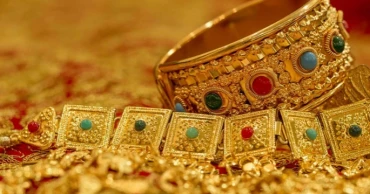
Bangladesh Jewelers Association (Bajus) has decreased the price of gold by Tk 3452 per bhori, with effective from Friday.
The Bajus has fixed the price of a bhori of 22-carat gold at Tk165,734, which was sold at Tk 169,186 per bhori on Thursday.
Gold price reduced by Tk3137 per bhori, effective from Tuesday
The Bajus notification stated that the price of pure gold (acid gold) has decreased in the local market. As a result, the new price of gold has been determined considering the overall situation.
According to the new prices, the price of 22-carat gold per bhori (11.664 grams) has been fixed at Tk 1,65,734, 21-carat gold per bhori at Tk 1,58,199, 18-carat gold per bhori at Tk1,35, 606 and the price of traditional gold per bhori at Tk 1,12,033.
Gold price increases by Tk1562 per bhori from Wednesday
On Thursday, the price of per bhori of 22-carat gold (11.664 grams) was at Tk 169,186, 21-carat per bhori at Tk1,61,499, 18-carat per bhori at Tk1,38, 428 and the price of traditional gold per bhori at Tk 1,14,435.
Although the price of gold has deincreased, the price of silver has remained unchanged.
1 year ago

Accountability-driven reforms enhanced passenger services at HSIA: Outgoing ED
Introducing accountability-based operations significantly improved passenger services at the Hazrat Shahjalal International airport, outgoing executive director of the airport Group Captain Kamrul Islam said on Wednesday.
“We focused on ensuring accountability during my tenure. As a result, over 85 percent of baggage is now delivered to passengers within the standard time, monitored through automated tracking systems,” he said.
Captain Kamrul was addressing a farewell and welcoming ceremony organised by the Aviation and Tourism Journalists’ Forum of Bangladesh (ATJFB) at the Civil Aviation Authority headquarters in the capital.
New Executive Director of HSIA Group Captain SM Ragib Samad was also formally welcomed at the event.
ATJFB President Tanzim Anwar presided over the programme, while General Secretary Baten Biplob moderated the event.
Islam noted that around 90 percent of passenger complaints are resolved through a dedicated hotline system, helping strengthen service delivery.
He expressed optimism that the recent reduction in domestic jet fuel prices would help lower airfares, boosting the domestic aviation market.
Islam projected that the aviation sector's contribution to Bangladesh’s GDP could reach 5–6 percent within the next five years if current growth trends continue, up from less than 1 percent at present.
The outgoing executive director also expressed hope that the long-anticipated third terminal would become operational this year, significantly expanding HSIA’s handling capacity and facilitating broader economic gains.
He thanked the media for their constructive reporting on the aviation sector, especially in light of HSIA’s status as a key point installation (KPI), and urged continued responsible journalism.
Newly appointed Executive Director Group Captain Samad pledged to prioritise international-standard services for both passengers and cargo, with transparency and professionalism.
“An airport is the first impression of a country. It must reflect the highest standards,” he said.
Despite political volatility last year, passenger traffic through HSIA increased by around 7 percent, driven largely by the continued outbound flow of migrant workers.
According to official airport data, HSIA handled nearly 12.5 million passengers—both domestic and international—in 2024, compared to 11.7 million in 2023.
International passenger movement alone rose by 8 percent.
1 year ago

Gold price reduced by Tk3137 per bhori, effective from Tuesday
Bangladesh Jewelers Association (Bajus) has reduced the price of gold by Tk 3137 per bhori from Tuesday.
According to the new price, the price of a bhori of the good quality 22-carat gold will be Tk 167,623, which was sold at Tk1,70,761 per bhori on Monday.
18th Bangladesh Denim Expo kicks off
The Bajus notification stated that the price of pure gold (acid gold) has decreased in the local market. As a result, the new price of gold has been determined considering the overall situation.
According to the new prices, the price of the best quality or 22-carat gold per bhori (11.664 grams) has been fixed at Tk 1,67,623, 21-carat gold per bhori at Tk1,59,995, 18-carat gold per bhori at Tk1,37,145 and the price of traditional gold per bhori at Tk1,13,339.
Bangladesh Bank increases limit for overseas medical treatment expenses
The previous price was for the best quality or 22-carat gold per bhori at Tk 170,761, 21-carat gold per bhori at Tk1,63004, 18-carat gold per bhori at Tk1 39711 and the price of traditional gold per bhori at Tk115532.
Although the price of gold has increased, the price of silver has remained unchanged.
1 year ago
Community Bank launches ‘Dedicated Service Desk’ for Police
Community Bank Bangladesh PLC on Monday launched ‘Dedicated Service Desk’ for police simultaneously in all its branches and sub-branches across the country.
The ‘Dedicated Service Desk’ will ensure specialised and priority banking services for police members.
Community Bank launched officially in a ceremony held at the Dhanmondi branch in the capital on Monday.
Additional DIG of Bangladesh Police and Director of Community Bank, Ahmad Mueed, opened the service as the chief guest.
He said that this initiative is a reflection of the sincere respect and sense of responsibility of Community Bank towards the Bangladesh Police. From now on, police members in any branch of the country will know that there is a desk and an officer designated for them, who will provide fast and priority services.
Kimiwa Saddat, MD (current Charge) of Community Bank was present at the event as the special guest.
He said, “Bangladesh Police are the foundation of this bank; it is our moral responsibility to provide them with respectable, fast, and convenient banking services.”
From today, every branch and sub-branch will have a dedicated desk where police members will receive special services. If it is not possible to provide any service immediately, it will be recorded on the central server and followed up regularly until it is resolved, he said.
The scope of the dedicated service desk includes:
• Full support regarding accounts, loans, deposits and cards.
• Priority in cash transactions and service by a designated officer.
• Quick resolution of incomplete services or complaints by recording them in the central database.
• Informing about the progress of the service through direct phone calls
• Providing information and advice on all banking products and services applicable to the police.
1 year ago
18th Bangladesh Denim Expo kicks off
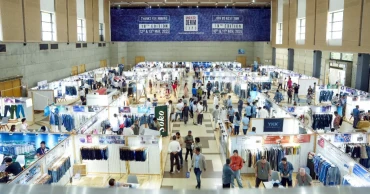
The two-day 18th Bangladesh Denim Expo began on Monday at the International Convention City Bashundhara (ICCB) in Dhaka.
A total of 57 exhibitors from 13 countries, including Bangladesh, India, Pakistan, China, Turkey, Spain, Italy, Vietnam, UAE, Germany, Switzerland and USA, have been participating in the expo.
Addressing the event, Mostafiz Uddin, founder & CEO of Bangladesh Denim Expo, said, “Bangladesh has emerged as the fastest-growing apparel exporter to the United States in the first quarter of 2025, posting the highest year-on-year growth of 26.64%. This performance placed Bangladesh ahead of other major exporters such as India with a 24.04% rise, while Pakistan, Vietnam, and China with the rise of 17.49%, 13.96%, and 4.18% respectively at a time when US market is volatile because of imposing worldwide reciprocal tariff by the Trump’s Administration recently. I think even on the negotiation table of the trade issues our card should be the industry’s steady progress towards skill development, sustainability and innovation. As we need our trade partners as much as their consumers need us.’’
Bangladesh is the largest denim exporter both to the USA and Europe and enjoying duty-free market access to the EU under the Everything But Arms (EBA) and Generalized Scheme of Preferences (GSP) as an least developed country (LDC) but the status to be changed to a developing nation next year, he said.
Medical equipment, health tourism, food and agro expositions kick off in Dhaka
If Bangladesh fails to attain GSP Plus, the country will not be able to export products with duty free facility to the EU from 2029, the region accounts for 50.15% of Bangladesh’s total apparel export, he continued.
“In the last edition of Bangladesh Denim Expo, we had expert panel sessions on the LDC graduation where all the speakers unanimously stressed on the capacity building of the industry to cope up with the changing tariff regimes. So, in this edition of the expo, all the panel sessions we designed are solely meant for capacity building of both the professionals and the industry. You may also say that from this edition we shifted from plans to actions to prepare Bangladesh’s denim industry for 2029 and beyond,’’ added Mostafiz Uddin.
There are two panel sessions scheduled for the two-day event on the topics “The growth of the Bangladesh denim industry, through the perspective of denim washing” and “Stretch-ability of Bangladesh denim traceability”.
Abdus Samad, Director of Well of Washing, Arief Labu, Co-founder & Creative Director of Ruhrose RBT Ltd. Julie Davies, GM - Processing Innovation, and Education Extension, The Woolmark Company, Kamal Uddin Mia, Chief Operation Officer (Washing), Bitopi Group, Marco Volpi, Head of Sales for the Europe and Africa region, Bluesign Technologies AG, Md. Forhad Hossain, Owner, Pure Chemicals, Raquib Imtiaz, Business manager, LC WAIKIKI, Reza e Rabbi, Head of Operation, Vertex Wear Limited, Shohel Rana, CEO, Designer Fashion LTD and Designer Wash LTD, are sharing their expert insights in the panel sessions.
Businesspeople think the country will continue to be an indispensable global sourcing destination even during the times of tariff and trade wars. Capacity building and innovation will be the building stone for the industry to sail through the uncertain times.
2-day Meet Bangladesh Exposition ends with strong buyer interest
There will also be one special presentation on ‘The denim business beside sewing and wash production’ by Mohammad Jahangir Alam, Head of Operation, Square Denims Ltd, Garment Unit.
At the expo, a fashion trend-zone was set up to showcase cutting-edge denim innovations and unique fabrics from Bangladesh.
1 year ago
Bangladesh Bank increases limit for overseas medical treatment expenses
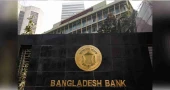
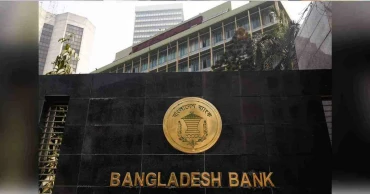
Bangladesh Bank has raised the limit of funds to be sent abroad for medical treatment expenses from US$ $10,000 to $15,000.
The foreign exchange policy department of the central,bank on Monday, through a circular confirmed this. The new directive allows individuals to send up to $15,000 for this purpose without prior approval from the central bank.
Previously, banks were authorised to remit a maximum of $10,000 for medical expenses without special permission. This limit has now been raised by an additional $5,000.
According to the Bangladesh Bank's notification, up to $15,000 in foreign currency can be released in the name of the hospital or through international cards. Within this limit, customers can also withdraw up to $5,000 in cash.
Bangladesh Bank to release newly designed banknotes ahead of Eid
Sources indicated that due to visa complexities with India, many individuals seeking advanced medical treatment are now opting for alternative destinations such as Thailand, China, Singapore, the United Kingdom, and the United States. The cost of travel and treatment expenditures in these countries tends to be higher, considering that the central bank has relaxed dollar spending.
The central bank clarified that for medical expenses exceeding $15,000, the remitting bank will need to seek special authorisation from the Bangladesh Bank.
Bangladesh Bank stated that simplifying the process for legitimate medical expense transfers aims to discourage individuals from resorting to illegal channels like hundi, which can negatively impact inward remittances.
This move follows a decision earlier this month by the Bangladesh Bank to ease regulations for sending funds abroad for various purposes, including education.
Bangladesh Bank urges best practices in LC payments
Banks can now utilise international card platforms to facilitate payments for membership fees, IT-related expenses, overseas education costs, visa fees, foreign training registration fees, and medical expenses.
1 year ago
Naogaon to commence its mango season with ‘Guti’ variety from May 22
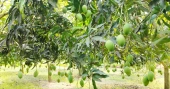
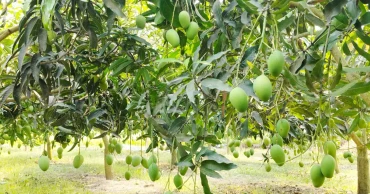
Naogaon district administration has set May 22 to deliver mangoes to the market for the buyers, commencing with local variety of mango ‘Guti’.
The decision was taken from a meeting chaired by Deputy Commissioner Mohammad Abdul Awal on Monday, with mango growers, traders, agriculture officers, and administrative officials from all 11 upazilas of the district, attending.
According to the meeting, only the early-ripening local varieties will be harvested on May 22 while the popular premium varieties such as Gopalbhog will follow on May 28, Khirsapat and Himsagar on June 2 and the Geographical Indication (GI)-recognised ‘Nak Fazli’ on June 5.
The district's most widely cultivated variety ‘Rupali,’ will be available from June 18.
Other varieties of mangoes will be available according to the schedule below:
Gopalbhog on May 28, Khirsapat, Himsagar on June 2, Nak Fazli on June 5, Langra, Haribhanga on June 10, Rupali on June 18, Fazli, Banana Mango on June 25, Ashwina, BARI-4, Gourmoti, and Katimon on July 10.
No timeframe set for mango harvesting in C’nawabganj this year
1 year ago

Stock market ends on a positive note with majority shares gaining
Although the week began with a downturn, trading on the country’s stock markets ended on a positive note on Sunday, with indices rising and share prices increasing for the majority of listed companies in both Dhaka and Chattogram.
At the Dhaka Stock Exchange (DSE), the benchmark DSEX index increased by 19 points, while the main index posted gains, the other two indices in Dhaka did not perform as strongly.
The Shariah-based DSES index rose by just 1 point and the DS30 index, which tracks blue-chip companies, fell by 4 points.
Out of the 395 companies that participated in trading at the DSE, the share prices of 189 companies increased, while 160 declined and 46 remained unchanged.
Across all three categories — A, B and Z — share prices were mostly on the rise. Among the 216 companies listed under the A category, which includes firms with consistent dividend payouts, 122 posted gains.
Stock market sheds Tk 17,000cr in April as DSEX down by 302 points
The share prices of 80 A-category firms declined, and 14 remained unchanged.
Mutual funds also saw a positive trend, with 30 out of 36 funds gaining in value. Only 3 saw price declines, while the remaining 3 stayed the same.
In the DSE block market, 21 companies traded shares worth Tk 6.83 crore. Beacon Pharmaceuticals accounted for the highest transaction, selling shares worth Tk 2.24 crore.
Despite the favourable movement in indices and share prices, overall turnover at the DSE remained stagnant. Total transactions stood at Tk 364 crore, slightly lower than the previous session’s Tk 366 crore.
Northern Islami Insurance emerged as the top gainer on the DSE with a 10% rise in share price. On the other hand, Bay Leasing and Investment Ltd saw the biggest drop, losing over 3.5%.
Chattogram Market Also Sees Gains
Like Dhaka, the Chattogram Stock Exchange (CSE) also ended the day with an upward trend. The CSE’s overall index rose by 19 points during the day’s trading.
Out of 182 companies that traded on the CSE, 91 advanced, 71 declined, and 20 remained unchanged.
DSE, 2 other South Asian stock markets unite to drive regional growth
Total turnover at the CSE amounted to Tk 7.29 crore — a sharp decline from the previous session’s figure of over Tk 21 crore.
Phoenix Insurance Company Ltd topped the gainers’ list at the CSE with a price surge of 9.87%. Meanwhile, Green Delta Insurance PLC ended at the bottom, shedding 10% in value.
1 year ago