Local-Business

BSEC chairman’s resignation demanded to stabilise stock market
Experts and stakeholders at a discussion meeting on Sunday demanded the immediate removal of Bangladesh Securities and Exchange Commission (BSEC) Chairman Khondoker Rashed Maqsood, holding him responsible for a series of wrong decisions that have resulted in significant losses for small investors.
They said investors at the Dhaka Stock Exchange have collectively lost around Tk 70,000 crore over the past six months due to the chairman’s mismanagement.
Bangladesh Capital Market Investors’ Association (BCMIA) arranged the discussion meeting at the Jatiya Press Club in the capital.
Former BSEC chairman Shibli Rubaiyat sent to jail
Gono Odhikar Parishad President Md Nurul Haque Nuru, AB Party Secretary Barrister Asaduzzaman Fuad, former Central Vice President of Jatiyatabadi Chhatra Dal Md Mamun Khan, journalist Fazlul Bari, and investors Zaimul Haque and Abu Bakar Siddique, among others, spoke at the event with BCMIA President SM Iqbal Hossain in the chair.
Nuru alleged that associates of the previous autocratic government are still holding key positions in the interim government, preventing it from functioning in the best interests of people.
He pointed out that Finance Adviser Dr Salehuddin Ahmed himself has acknowledged BSEC’s failures. “Despite this, Maqsood remains in office,” Nuru said, announcing his support for BCMIA’s movement to remove the BSEC chairman and other corrupt officials from both BSEC and the Dhaka Stock Exchange (DSE).
Ex-BSEC Chairman Shibli Rubayat arrested in Dhaka
Barrister Fuad also called for the resignation of the BSEC chairman and board members, stating that they had failed to reform the market and protect investors' interests.
He also demanded that investor representatives be included in the BSEC board in proportion to other institutional members.
BCMIA President SM Iqbal Hossain said the country’s capital market has been in crisis for the past 17 years. “While stock markets in other South Asian countries have seen growth, our market regulator’s poor decisions have left investors frustrated,” he said.
He said that many investors had lost 60–80% of their capital due to repeated policy failures by BSEC.
He also criticised the decision to change a company’s status to the Z-category for failing to provide dividends, arguing that such policies punish investors instead of the company.
The BCMIA will submit a memorandum to the finance adviser on Monday, outlining seven demands, including the resignation of the BSEC chairman.
1 year ago

Dhaka stocks begin week on a positive note, Chattogram sees decline
The first trading session of the week saw an upward trend in Dhaka's stock market, with all major indices posting gains, but trading in Chattogram started with a decline.
On Sunday, the Dhaka Stock Exchange (DSE) observed a rise in its key index, the DSEX, which gained 13 points.
Among the other indices, the Shariah-compliant DSES recorded a marginal increase, while the selective blue-chip index rose by 5 points.
During the first two hours of trading, the share prices of most listed companies surged.
A total of 245 companies saw their stock prices rise, while 87 companies experienced a decline and 56 remained unchanged.
At the beginning of the session, the trading turnover at the DSE surpassed Tk 190 crore.
On the other hand, the Chattogram Stock Exchange (CSE) experienced a downturn, with its overall index decreasing by 5 points.
DSE opens lower, CSE sees early gains
Despite the decline in the index, the share prices of a majority of the listed companies increased.
Out of the 102 companies traded at the CSE, 55 witnessed price appreciation, 29 saw a decline, and 18 remained unchanged.
During the first two hours of trading, the turnover at the CSE exceeded Tk 2 crore.
1 year ago

Gold price keeps soaring to new heights, having cleared Tk 1.5 lakh per bhori
Gold prices have reached a historic peak in Bangladesh, with the Bangladesh Jewellers Association (Bajus) raising the price of 22-carat gold by Tk 3,243 per bhori in its latest listing.
The new price now stands at Tk 154,524 per bhori, marking the highest cost ever recorded in the country’s history.
The new rates will come into effect on Friday (Feb 21), according to a press release issued on Thursday.
Next government should continue financial sector reform and return laundered money, to get benefits: Dr. Ahsan H. Mansur
This price adjustment applies to 22-carat gold, which now costs Tk 154,524 per bhori (11.664 grams).
Besides, 21-carat gold is priced at Tk 147,502, while 18-carat gold will cost Tk 126,426.
The traditional gold variety has seen its price set at Tk 104,206 per bhori.
Could gold prices in Bangladesh reach Tk 2 lakh per bhori?
Bajus has also said that the final retail price of gold must include a mandatory 5% VAT, as imposed by the government, as well as a 6% minimum labour charge set by the association.
However, the total labour charge may vary depending on the design and quality of the jewellery.
1 year ago
1,723 new businesses receive VAT registration in a single day
A record number of 1,723 new business entities received VAT registration in a single day on Wednesday.
Out of these, 46 are in the manufacturing category, 862 are service recipients, 500 are retailers and wholesalers, 29 are importers, 9 are exporters, and 277 are other organizations, according to a press release from NBR.
This is a new record during the current government as the Chairman of NBR is monitoring the daily registration.
All the VAT Commissioners at the field level are simultaneously finding new taxpayers and identifying competitive VAT payers.
Yesterday, a total of 1,723 businessmen including 579 in Chittagong Commissionerate, 180 in Dhaka (North) Commissionerate, 266 in Dhaka (West) Commissionerate, 195 in Khulna Commissionerate, 50 in Rajshahi Commissionerate, 47 in Jessore Commissionerate, 41 in Rangpur Commissionerate, 27 in Comilla Commissionerate, and 71 in Dhaka (South) Commissionerate accepted new registrations across the country. The officials of the 12 VAT Commissionerates of the country are also working extra hours to increase VAT collection and expand the tax net.
The NBR has been working to implement the government's new policies and guidelines for revenue collection. Increasing the tax-GDP ratio, satisfactory tax collection, and expanding the tax net are among the government's goals.
To this end, officials of the Income Tax, Customs, and VAT divisions are working simultaneously in the field.
These activities are continuing in line with the various initiatives of the current Chairman of the National Board of Revenue.
In order to increase VAT revenue and coverage, several new instructions have been issued to the field commissioners under the implementation division from the first week of February.
Earlier, the NBR declared February as the registration month for commissioners.
To that end, yesterday, the member (VAT Implementation and IT) gave instructions to the representatives of the important platforms iBAS++, iVAS and Genex and all the officials related to VAT implementation to maintain involvement, connection and coordination.
Similarly, he also involved the field-level commissioners.
As a result, a record number of new business establishments have been registered in one day.
Incidentally, the current government has already brought amendments to the existing VAT law to increase the coverage of registration.
Now, any businessman whose annual turnover is more than 50 lakh taka will have to get VAT registration.
All field commissioners from NBR have been asked to work with taxpayers with a service-oriented mentality in issuing new registrations and collecting legal revenue, and to work out of the box through merit-based activities to increase new VAT payers.
The NBR Chairman congratulated and thanked the hard-working VAT officials for bringing a record number of businesses under registration and called for continuing the work-oriented mentality.
The Chairman specially requested all stakeholders, businessmen, representatives of electronic and print media to cooperate with NBR officials and create awareness in increasing the tax net.
1 year ago

Walton launches Digital Campaign Season-22 with millionaire offer
Walton has launched ‘Digital Campaign Season-22’ with a millionaire offer ahead of the Eid festivals.
In this season-22, customers are offered Tk 10 lakh on the purchase of Walton brand fridges, ACs, washing machines, or BLDC fans from any Walton Plaza and distributor outlets across the country, according to a media statement.
Besides, customers can avail themselves of cashback offers worth crores of taka. These benefits will be available from 20 February until Eid-ul-Azha this year.
Walton Hi-Tech’s MD S M Mahbubul Alam wins ‘MD of the Year’ award
The campaign’s brand ambassador, popular film actress Bidya Sinha Saha Mim, inaugurated the logo for ‘Digital Campaign Season-22’ at the launch ceremony held at the Walton Corporate Office in the capital on Wednesday.
Highlighting the details of the campaign, Walton's Head of Strategic Business Development, Ariful Ambia, said that buyers will need to digitally register their products after purchase. After that, customers will receive an SMS from Walton notifying them of the award. The respective plaza or showroom will hand over the prize to the customers.
So far, Walton has conducted a total of 21 seasons of its digital campaign, with each season witnessing a huge response from buyers. Walton’s authorities hope this season will also be very successful and receive a great response from customers.
Auto-rickshaw driver wins Tk 20 lakh after purchasing Walton fridge
Among others, Walton Plaza’s Managing Director Mohammad Rayhan, Walton Hi-Tech's Additional Managing Director Nazrul Islam Sarkar, Deputy Managing Director and Chief Information Officer Mofizur Rahman, Walton Distributor Network’s Head of Sales Md. Firoj Alam, and Walton’s Head of Strategic Business Development Ariful Ambia, also attended the event.
Popular model and actor Irfan Sajjad moderated the programme.
1 year ago

Grameenphone workers accuse company of rights violations; demand justice
The Grameenphone Terminated and Rights-Deprived Workers Unity Council has raised allegations against Grameenphone Limited for its ‘unlawful’ layoffs and labour rights violations.
Council’s convener Abu Sadat Mohammad Shoaib brought the allegations against the company at a press conference at the Jatiya Press Club in Dhaka and demanded justice.
He accused Grameenphone of exploiting loopholes in the law to consistently deny workers their rights.
While the company positions itself as law-abiding, Shoaib alleged that it has been subtly violating labour laws withholding workers' dues, wrongfully terminating employees, and misusing the judicial system to prolong legal disputes, thereby wasting workers' time and energy in lengthy court battles, he said.
Grameenphone Limited, one of Bangladesh’s leading telecom companies, has increasingly come under scrutiny for its treatment of workers, said the convenor.
Shoaib claimed that over the last decade, Grameenphone has reduced its permanent workforce by 70%, now employing just 1,200 permanent workers.
During this process, workers have reportedly been coerced into voluntary retirement, subjected to mental stress, and denied their legal entitlements.
He said in 2012, around 180 workers were terminated for attempting to form a trade union.
Since 2015, the company has used a "voluntary retirement" scheme to pressure workers into resigning. In 2021, despite government directives, 180 workers were dismissed during the COVID-19 pandemic, said the council.
Grameenphone, despite being a profitable company, has terminated approximately 3,300 workers through various means in an effort to maximise profits, the council claimed at the press.
Under the Bangladesh Labor Act 2006, workers are entitled to 5% of the company’s profits.
Grameenphone has violated this law and failed to pay workers their dues, even after a High Court ruling ordered timely distribution and penalties for delays, they said.
The terminated workers, without alternative job opportunities, have faced social humiliation and financial instability, Shoeb said adding the company’s refusal to pay dues, coupled with legal tactics to avoid responsibility, has left many workers vulnerable.
Grameenphone workers accuse company of rights violations; demand justice
Shoaib also highlighted the mental harassment workers faced during the layoff process.
The press conference concluded with a call for justice and accountability from the telecom giant.
However, Grameenphone also issued a statement on Tuesday saying that the company has high regard for the judicial system and the demands that are being raised by some former employees are currently subject matters of various cases before the courts.
In the statement the company said, “For the last couple of months, some former employees of GP have been gathering in front of the GPHouse, raising various demands relating to employment and benefits.
To our knowledge, most of them separated from Grameenphone a long time ago and have received their lawful entitlements, it said.
Any legal proceedings will eventually be resolved through the court proceedings, it added.
While Grameenphone respects the right of peaceful association, these individuals illegally blocked the entry and exit ways of GP premises on several days, said the statement.
They also did the same on February 4, 2025, causing significant hindrance to the free movement of GP employees, suppliers and customers, keeping them stranded inside the office throughout the day until midnight, it added.
This has taken a toll on their health, with some employees falling sick. Grameenphone respects the law of the land and considers the safety and security of its employees and customers its highest priority, said the compay.
Law enforcement agencies deployed themselves around GP premises to protect individuals and property.
It has also come to our attention that these individuals are spreading misleading information about Grameenphone in media and in social media, claimed the comapy.
1 year ago
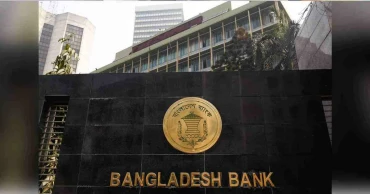
Bangladesh Bank to issue new notes for Eid-ul-Fitr from March 19
Like every year, Bangladesh Bank will release new notes in the market through banks on the occasion of Eid-ul-Fitr.
Customers will be able to collect the new notes starting from March 19. The common people can exchange old notes for new ones until March 25 (excluding weekly holidays and government holidays).
The central bank announced that from March 19, new notes will be distributed to the public through counters at various offices of Bangladesh Bank.
Fresh designs, new era: Bangladesh Bank to launch new notes
Additionally, 80 branches of commercial banks in Dhaka city will also facilitate the exchange of new notes in packets containing Tk5, 20, and Tk 50 denominations during the specified period under special arrangements.
An individual will not be allowed to collect new notes more than once, according to a press release of the central bank, issued on Sunday.
1 year ago
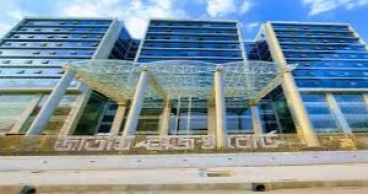
NBR invites budget proposals for FY 2025–2026
The National Board of Revenue (NBR) has called on stakeholders to submit budget proposals for the 2025–2026 fiscal year, aiming to craft a participatory, pro-people, and balanced budget. The NBR is holding discussions with various groups on revenue collection methods as part of the budget preparation process.
According to an NBR press release, taxpayers from all sectors—including industrial and trade associations, professional organizations, research institutions, and members of the intellectual community—are invited to submit their recommendations.
The NBR has specifically requested that chambers and associations submit their proposals in writing to the Federation of Bangladesh Chambers of Commerce and Industry (FBCCI) by March 20. Additionally, a soft copy of the proposal (NikoshBAN), should be emailed to [email protected].
NBR moves to expand tax net, targets 5 million taxpayers by end of fiscal year
The revenue board emphasized that all received proposals will be reviewed thoroughly. It reiterated its longstanding practice of engaging with taxpayers and stakeholders to develop inclusive and representative revenue policies.
The NBR clarified that institutions or organizations that are not affiliated with any chamber or association can also submit their proposals directly via the provided email.
Through these discussions and submissions, the NBR aims to make the revenue collection strategy for the upcoming fiscal year more meaningful, analytical, and representative.
Over 1.4 million taxpayers filed returns online: NBR
The NBR expressed hope that with the cooperation of all concerned, the budget for 2025–2026 will be pro-people, business- and taxpayer-friendly, and revenue-generating, fostering economic growth while addressing public needs.
1 year ago

BCCMEA election on March 8, panel manifesto announced
Charcoal Shilpo Sangskar Parishad, a panel of BCCMEA has announced its election manifesto for the tenure of 2025-27 with a pledge of major reforms as well as the industry’s development.
The Bangladesh Charcoal Manufacturers and Exporters Association (BCCMEA) election for the year of 2025-27 is scheduled to be held on March 8, 2025.
“If we are elected, we will cordially work to protect the industry, and work for major reformations to develop it,” said Parishad’s President Candidate Atikur Rahman.
He announced the manifesto at a press conference held at Dhaka Reporters’ Unity (DRU) auditorium in the capital on Sunday.
In a written speech at the press conference, Atikur said the industry is going through a difficult time due to various reasons including setting up unplanned factories across the country, and shortage of raw materials, easy access to environmental clearance, and high shipping charges.
The BCCMEA needs a talented governing body to resolve the industry’s problems. The Charcoal Shilpo Sangskar Parishad has sought government support to protect the industry.
Atikur said that there is an investment of Tk1000 crore in the charcoal industry where 25,000 people are directly engaged.
“We exported Tk350 crore in the previous year. We want to build it as a strong industry in the future. We have been doing business for the last more than one decade. But, a group of people are now hatching a conspiracy against the industry. If we are elected in the upcoming election, we will be included in the BCCMEA at FBCCI, and set up a permanent office,” he added.
BCCMEA’s Vice president candidate Mehedi Hasan Julias and Habib–E–Hasan, and other members Shahriar Ibne Ibrahim, Mofazzal Hossain Khokon, Mohammad Shamsul Alam Talukder, Alamgir Kabir, Shahadat Hossain Uzzal, Farhana Sharmin Kakon, Miraz Mohammad Tarekul Hasan, Hossain Ahmed Chowdhury, Shahim Ul Hoque, and businessman Md Monirul Islam were also present in the programme.
1 year ago
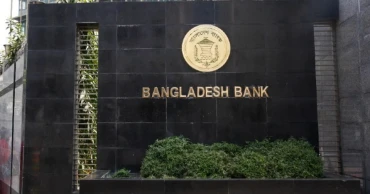
Bangladesh Bank eases loan rescheduling policy for raw jute exporters
Bangladesh Bank has eased the loan rescheduling policy for raw jute exporters for the next two years.
The central bank on Sunday in a circular stated that Raw Jute Exporters can reschedule loans with a 2 percent down payment of their outstanding loans. The loan outstanding will be calculated based on March 31, 2024.
As a result, the traders can get loans from scheduled banks as their moratorium will be accepted by banks.
Remittance inflow stands at Tk 16,008.84 crore in first half of Feb
Though Bangladesh is the global top raw jute exporter country, the traders have faced difficulties in exporting the item in the last few years.
The traders of this sector said production costs have increased while export prices have stagnated in the global market.
Bangladesh saw record mobile banking transactions in December
“Outdated technology and old machinery have decreased the productive efficiency of the industry. Inefficient management and corruption have led to operational losses,” said Abu Sufiya, a raw jute exporter.
A lack of investment in modernization and innovation has made the industry less competitive, he said.
1 year ago