local-business

Prolonged tight monetary policy stalling Bangladesh’s growth: DCCI
Dhaka Chamber of Commerce & Industry (DCCI) on Monday expressed deep concern over the central bank’s continued contractionary monetary policy, warning that prolonged tightening is holding back Bangladesh’s economic growth without effectively curbing inflation.
As one of the country’s leading private sector bodies, the DCCI said maintaining a tight monetary stance solely to control inflation has failed to deliver the intended results, while inflicting significant damage on productive economic activities, investment and employment generation.
The chamber noted that private sector credit growth has plunged to a 22-year low, falling sharply to 6.1 percent in December 2025, reflecting acute liquidity constraints, high interest rates and rising borrowing costs.
These factors, it said, are choking entrepreneurship, industrial expansion and job creation.
Private sector investment is also on a declining trend, dropping from 24.18 percent of GDP in FY2023 to 22.48 percent in FY2025, reinforcing concerns that prolonged monetary tightening is discouraging long-term investment decisions.
“The Bangladesh economy cannot grow with a tightly clenched monetary fist,” the DCCI observed.
The chamber pointed out that broad money (M2) growth rose from 7 percent in June 2025 to 9.6 percent by December 2025, indicating monetary expansion and raising questions about the overall effectiveness and consistency of the current tightening policy.
DCCI calls for immediate normalisation of Ctg port operations
Export performance has also come under pressure. Over the last six months, exports recorded consecutive negative growth, plunging to minus 14.25 percent in December 2025, signaling weakening external demand and declining competitiveness amid high financing costs.
DCCI said sustained growth, employment creation and investment revival are not possible under an excessively restrictive monetary regime.
It urged the next elected government to adopt a more pragmatic, growth-supportive policy framework through better coordination between fiscal and monetary policies.
The chamber called for ensuring flexible liquidity availability, reduced borrowing costs and a balanced approach that safeguards macroeconomic stability while supporting economic recovery in the days ahead.
3 months ago
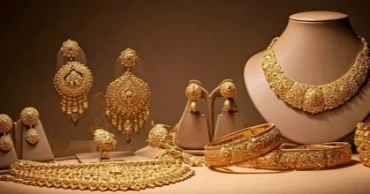
Bangladesh gold prices fall in overnight reversal after morning peak
Gold prices in Bangladesh fell by Tk 3,266 per bhori on Saturday night, hours after a sharp increase earlier in the day, as the Bangladesh Jewellers Association (BAJUS) announced a fresh price adjustment.
In a notification BAJUS fixed the price of 22-carat gold at Tk 258,824 per bhori (11.664 grams), which will take effect from Sunday morning.
BAJUS said the revision was made in line with the decline in the price of pure gold (tejabi gold) in the local market and considering the overall market situation.
Under the new rates, 21-carat gold will sell at Tk 247,044 per bhori, 18-carat gold at Tk 211,760 per bhori, while gold under the traditional method has been priced at Tk 173,327 per bhori.
In addition to the selling price, buyers will have to pay a mandatory 5 percent government VAT and a minimum 6 percent wage set by BAJUS. However, labour charges may vary depending on the design and quality of jewellery.
Earlier on Saturday morning, BAJUS had raised the price of 22-carat gold by Tk 7,640 per bhori, fixing it at Tk 262,090.
With the latest revision, gold prices in Bangladesh have been adjusted 27 times so far in 2026 — increased 17 times and reduced 10 times.
Despite the cut in gold prices, silver prices in Bangladesh remained unchanged.
Currently, 22-carat silver is selling at Tk 6,357 per bhori, while 21-carat silver stands at Tk 6,065 per bhori, 18-carat silver at Tk 5,190 per bhori, and traditional silver at Tk 3,907 per bhori.
So far this year, silver prices in Bangladesh have been revised 17 times, with prices increased 10 times and reduced seven times.
3 months ago

Nagad announces Royal Enfield winner in mega campaign
A S M Noman Sarkar of Cumilla has won a Royal Enfield motorcycle as the mega prize of Nagad’s campaign titled “Asha Aar Fera, Surprise Sera.”
He secured the top prize by participating in the campaign and completing transactions in line with all campaign conditions, according to a press release issued by Nagad on Saturday.
The prize was handed over to the winner at a grand ceremony during the two-day Nagad Carnival held at the International School Dhaka (ISD) grounds.
Nagad Administrator, Md. Motasem Billah presented the motorcycle to the winner.
Nagad to receive remittances thru National Bank
Nagad Additional Managing Director, Shyamal B. Das, Chief Marketing Officer, Simon Imran Hyder, and Chief Commercial Officer, Mohammad Shaheen Sarwar Bhuiyan, also present.
Alongside the mega prize, participants in the campaign won several other rewards, including scooters and iPhones.
In addition, the first customer to make a transaction on Nagad every minute received mobile recharge rewards. Through this process, Nagad distributed thousands of small, medium, and large prizes. Among other notable winners, Sani Bepari from Barishal won an iPhone, while Sohel from Mymensingh won a scooter.
Expressing his excitement, A S M Noman Sarkar, said he first learned about the campaign from Nagad’s Facebook page. “After that, I reactivated my unused Nagad wallet and started making transactions,” he said. Sharing his feelings, he added, “I can’t really put my emotions into words. I feel extremely happy. From now on, I will use Nagad regularly and encourage my friends to do the same.”
The campaign, which began on 26 November last year, saw enthusiastic participation from customers across the country.
Through such initiatives, Nagad continues to demonstrate its commitment to its customers and aims to further strengthen its bond with them through more attractive campaigns in the future.
Nagad hits record Tk 40,000 crore in monthly transactions
3 months ago
Gold price drops by Tk7,640 per bhori in Bangladesh
Gold prices in Bangladesh have been reduced by Tk7,640 per bhori on Friday, following a fresh price revision announced by the Bangladesh Jewellers Association (BAJUS).
The association explained that the decision was taken in view of an overall assessment of the market situation, particularly a fall in the local price of tejabi gold (pure gold).
Under the new rates, the price of 22-carat gold has been fixed at Tk254,450 per bhori (11.664 grams), which comes into effect immediately, BAJUS said in a statement.
According to the revised price list, 21-carat gold will now sell at Tk242,903 per bhori, while 18-carat gold has been priced at Tk208,202 per bhori.
Gold made under the traditional method has been fixed at Tk170,411 per bhori.
Gold Price Shock: Tk16,330 surge hits Bangladesh overnight
In addition to the declared selling price, buyers will have to pay a mandatory 5 percent government VAT and a minimum 6 percent making charge set by BAJUS.
However, the making charge may vary depending on the design and quality of the jewellery.
BAJUS last adjusted gold prices on February 3, when it raised the price by Tk10,906 per bhori, fixing the rate of 22-carat gold at Tk262,090.
So far in 2026, gold prices in the domestic market have been revised around 25 times — increased on 16 occasions and reduced nine times.
Alongside gold, silver prices have also been lowered. The price of 22-carat silver has been reduced by Tk175 per bhori to Tk6,357.
The new rates for 21-carat silver stand at Tk6,065 per bhori, 18-carat silver at Tk5,190 per bhori, and traditional silver at Tk3,907 per bhori.
This marks the 17th adjustment of silver prices in the local market this year, with prices raised 10 times and cut seven times so far.
3 months ago

Policy reforms, ethical business key to competitiveness after LDC graduation: Business leaders
Analysts and business leaders on Thursday said comprehensive policy reforms, stronger institutional efficiency and an uncompromising commitment to ethical business practices are crucial for Bangladesh to sustain its competitiveness in the post-LDC graduation era.
The observations came at a high-level discussion titled “Business Climate in Bangladesh: Issues and Challenges of Ethical Practice”, jointly organised by the Federation of Bangladesh Chambers of Commerce and Industry (FBCCI) and the International Business Forum of Bangladesh (IBFB) at the FBCCI office in Motijheel.
Presenting the keynote paper, Dr Khondaker Golam Moazzem, Research Director of the Centre for Policy Dialogue (CPD), called for urgent ‘business process re-engineering’ to lower the cost of doing business and enhance the efficiency of government agencies.
Read More: Top business leaders meet Tarique Rahman, discuss economy, jobs
He said streamlining core services such as licensing, registration and customs clearance must go hand in hand with strengthening integrity and accountability among public officials to remove systemic bottlenecks.
During the open discussion, business leaders said creating a genuinely investment-friendly environment requires swift implementation of digitalisation, automation and a fully functional single window system to ensure transparency and predictability.
IBFB Director M S Siddiqui noted that several existing regulatory frameworks remain misaligned with ease-of-doing-business objectives, which can deter both domestic and foreign investment.
Responding to the concerns, Anti-Corruption Commission (ACC) Secretary Mohammad Kaled Rahim acknowledged procedural complexities in the system but reiterated the commission’s commitment to simplifying processes.
He urged members of the business community to report specific instances of harassment or irregularities to the authorities.
Foreign Secretary Dr Md Nazrul Islam said the interim government has already initiated complex institutional reforms, but emphasised that broad-based “behavioural reform” across both public and private sectors has now become a critical priority.
Read More: Govt signs deal with ‘Shukrishi’ to develop agri-business entrepreneurship
IBFB President Lutfunnisa Saudia Khan said ethical business practices are the foundation of inclusive growth and a stronger global image for Bangladesh.
She stressed that collective responsibility, transparency and continuous dialogue are as important as legal frameworks in addressing the challenges faced by entrepreneurs.
FBCCI Administrator Md Abdur Rahim Khan assured participants that the private sector’s recommendations would be formally conveyed to the government.
He also urged entrepreneurs to uphold responsible and ethical business conduct.
Former FBCCI directors, general body members, FBCCI Secretary General Md Alamgir, Head of FBCCI International Affairs Wing Md Zafar Iqbal, Adviser of FBCCI Safety Council Brig Gen (retd) Abu Nayeem Md Shahidullah, along with leaders from IBFB and various chambers and trade associations attended the event.
3 months ago
DCCI calls for immediate normalisation of Ctg port operations
Dhaka Chamber of Commerce and Industry (DCCI) on Thursday urged the government to take immediate steps to restore normal operations at Chattogram Port, warning that the prolonged shutdown is severely disrupting trade and could have far-reaching consequences for the national economy.
Describing Chattogram Port as the lifeline of Bangladesh’s trade, the chamber said nearly 92 percent of the country’s import-export activities are handled through the port, with an average clearance of around 260,000 Twenty-foot Equivalent Units (TEUs) per month, or about 9,000 TEUs daily.
However, port operations have remained completely halted since February 4, 2026, leaving around 54,000 containers stranded so far, the DCCI said in a media release.
Due to delays in cargo clearance, businesses are incurring additional costs ranging from Tk 10,000 to Tk 15,000 per day, it said, adding that the situation is having a particularly severe impact on the export sector.
The chamber warned that if the deadlock continues, it could adversely affect the national economy, as exporters face the risk of order cancellations or diversion of purchase orders to competing countries.
While some international buyers have temporarily agreed to extend shipment deadlines, they may seek alternative sourcing destinations if the crisis persists, the release said.
With Ramadan just days away, the DCCI also expressed concern that prolonged delays in clearing imported goods could trigger price hikes in the local market, negatively affecting consumers across all income groups.
The chamber further said the unexpected disruption in cargo handling is likely to push up operational costs across trade and investment activities, placing additional pressure on both businesses and consumers.
Calling for urgent government intervention, the DCCI urged authorities to resolve the issue quickly through discussions with all stakeholders involved in Chattogram Port operations.
Emphasising the port’s critical role as the main driving force of the country’s economy, the chamber stressed the need for coordinated efforts among the business community, the Chattogram Port Authority and other relevant stakeholders to ensure uninterrupted operations.
3 months ago
Gold Price Shock: Tk16,330 surge hits Bangladesh overnight
Gold prices in Bangladesh soared again on Tuesday, climbing a total of Tk16,330 per bhori through two separate hikes announced by the Bangladesh Jewellers Association (BAJUS), pushing the price back above Tk260,000 per bhori.
In a morning notification, BAJUS said it had raised the price of 22-carat hallmarked gold by Tk5,424 per bhori. Later in the afternoon, the jewellers’ body announced another hike of Tk10,906 per bhori, taking the total increase for the day to Tk16,330.
Following the two revisions, the price of 22-carat gold has been set at Tk262,090 per bhori, effective immediately.
BAJUS said the latest price adjustment was made considering the overall market situation after an increase in the price of tejabi gold (pure gold) in the local market.
Under the new rates, 21-carat gold will cost Tk250,193 per bhori, 18-carat gold Tk214,443, while gold under the traditional method has been fixed at Tk175,485 per bhori.
In addition to the selling price, buyers will have to pay a 5 percent government-imposed VAT and a minimum 6 percent making charge set by BAJUS. The making charge may vary depending on the design and quality of jewellery.
Just a day earlier, on Monday, BAJUS had reduced gold prices twice, bringing the price of 22-carat gold down to Tk245,760 per bhori.
Gold prices plunge over 9%: what triggered the fall and where prices may head next
With the latest hike, gold prices have been adjusted 24 times so far this year—raised 16 times and reduced eight times.
Alongside gold, silver prices were also revised. The price of 22-carat silver has been fixed at Tk6,532 per bhori after a reduction of Tk175. The new rates set 21-carat silver at Tk6,240, 18-carat at Tk5,365, and traditional silver at Tk4,024 per bhori.
This marks the 16th adjustment of silver prices this year, with prices increased 10 times and reduced six times.
Gold prices drop by Tk6,590 per bhori in Bangladesh
Meanwhile, in the global market, spot gold prices jumped by more than 6 percent in a single day, rising over USD 280 per ounce to trade at around USD 4,900 per ounce.
4 months ago

Gold prices drop by Tk6,590 per bhori in Bangladesh
Gold prices in Bangladesh have been cut by Tk6,590 per bhori, with the new rates taking effect immediately, the Bangladesh Jewellers Association (BAJUS) said on Monday.
In a morning notice, BAJUS said the decision was taken following a decline in the local price of pure gold (tejabi), prompting a review of the overall market situation.
Under the revised rates, a bhori (11.664 grams) of 22-carat hallmark gold will now cost Tk251,184.
The price of 21-carat gold has been fixed at Tk239,754 per bhori, while 18-carat gold will sell at Tk205,520. Gold made under the traditional method has been priced at Tk168,195 per bhori.
In addition to the selling price, buyers will have to pay a mandatory 5 percent government VAT and a minimum 6 percent wage set by BAJUS. The labour charge, however, may vary depending on the design and quality of jewellery.
BAJUS last adjusted gold prices on the night of February 1, when it reduced the price of 22-carat gold by Tk1,925 per bhori to Tk257,774.
So far in 2026, gold prices have been adjusted 21 times in the local market—raised on 14 occasions and reduced seven times.
Despite the fall in gold prices, silver rates have remained unchanged. According to prices set on January 31, 22-carat silver is currently selling at Tk7,290 per bhori.
Why gold prices hit record highs and what triggered the sudden drop
The price of 21-carat silver stands at Tk6,940, while 18-carat silver is priced at Tk5,949 per bhori. Silver made under the traditional method is trading at Tk4,432 per bhori.
Silver prices have been adjusted 14 times so far this year, with increases on nine occasions and reductions on five.
4 months ago

$3.17 billion received in remittances in January, up 45.1 percent y-on-y
Bangladesh received US $3.17 billion in remittances in January 2026, a growth of 45.1 percent year-on-year.
The expatriates sent inward remittance $2.18 billion in January of 2025, while in January 2026, the volume of remittance is $3.17 billion. It means, Bangladesh received $985 million or 45.1 percent additional remittance in January 2026.
According to data released on Sunday by Arif Hossain Khan, spokesperson for Bangladesh Bank, the country received an average of $102.25 million daily during this period.
The expatriates sent $19.43 billion in seven months till January of fiscal year FY 2025-26, which was 15.96 billion in the previous FY2024-25. This figure marks a significant surge compared to the same period of last year, which saw an inflow of $3.47 billion additional remittance representing an increase by 21.8 percent.
The surge in January follows a record-breaking performance inward remittance in December 2025, which saw $3.23 billion, sent by the expatriates to the country. This was not only the highest monthly total for the current fiscal year but also the second-highest monthly remittance in history.
Monthly remittance breakdown of FY 2025-26.
December: $3.23 Billion (Highest in FY)
November: $2.89 Billion
October: $2.56 Billion
September: $2.69 Billion
August: $2.42 billion
July: $2.47 billion
This upward trend builds on the momentum of the previous FY 2024-25, which set an all-time record with a total of $30.32 billion in remittances.
Economic analysts suggest that the continued growth in formal channel transfers is providing a much-needed boost to the country's foreign exchange reserves and overall macroeconomic stability.
4 months ago
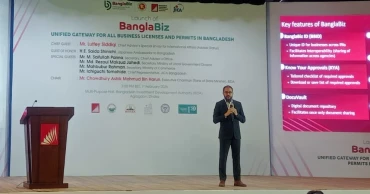
BanglaBiz unveiled as unified platform to ease investment in Bangladesh
Bangladesh Investment Development Authority (BIDA) on Sunday launched BanglaBiz, a unified digital platform bringing all investment promotion agencies (IPAs) under one umbrella to facilitate domestic and foreign investments in Bangladesh.
The platform was formally unveiled at BIDA’s Multipurpose Hall in Agargaon with support from the Japan International Cooperation Agency (JICA).
Chief Adviser’s Special Envoy on International Affairs Lutfey Siddiqi and BIDA Executive Chairman Chowdhury Ashik Mahmud Bin Harun were present at the inauguration.
Speaking at the event, Lutfey Siddiqi said this platform would significantly reduce licensing complexities for businesses; through BanglaBiz, around 1.2 million instances of physical contact related to business and investment licensing could be eliminated annually.
“If the online system is strengthened, physical contacts can be reduced to zero. However, attention must be paid to avoiding server-related complications. Once full online capacity is achieved, offline licensing options will be withdrawn. This will resolve the longstanding hassle of visiting multiple offices for business licences through a single platform,” he said.
Mobile financial service transactions to be restricted for national election
Chowdhury Ashik said investors currently have to submit the same documents to multiple offices, often moving from one ministry to another for months due to paperwork-related complications. “This discourages investment in Bangladesh.”
Ashik also announced that following the launch of BanglaBiz, BIDA will introduce an NRB Desk dedicated to expatriate Bangladeshis, offering them maximum support in investing in the country.
According to BIDA, information on licences and permits is currently scattered across various government laws, policies and portals. BanglaBiz will consolidate these into a single platform, replacing nearly 60 separate government portals related to business services.
At present, obtaining approval to establish a business requires applications to four different government agencies through four separate portals.
Under BanglaBiz, this process will be completed through a single application on one portal. BIDA said the use of e-signatures will ensure that the entire process is completed without any physical contact.
BGMEA honours Hams Garments for achieving world’s highest score for green factories
BIDA has divided the rollout of BanglaBiz into three phases. From the launch phase, entrepreneurs will be able to apply through the platform and start their businesses within three days, with pilot projects initially launched in major cities.
During 2027–28, a unique business ID will be introduced for all businesses through BanglaBiz, alongside artificial intelligence-driven services. By 2029–30, the platform’s services will be expanded to the grassroots level, BIDA said.
4 months ago