local-business
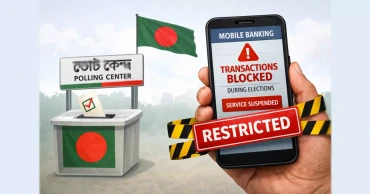
Mobile financial service transactions to be restricted for national election
Bangladesh Bank is set to impose strict limits on mobile financial services (MFS) and internet banking transactions ahead of the upcoming national parliamentary elections.
Under the proposed measures, platforms such as bKash, Rocket, and Nagad will see a significant reduction in transaction limits to prevent the misuse of funds during the polls.
According to authoritative sources within the central bank, the restrictions are expected to be in effect from February 8 to February 13. The move aims to curb the illegal flow of money used to influence voters.
The Bangladesh Financial Intelligence Unit (BFIU) has submitted a proposal to the central bank following a request from the Election Commission. While the final figures are subject to minor adjustments, the current plan includes:
· Single Transaction Limit: A maximum of Tk1,000 per transaction.
· Daily Transaction Limit: A total of Tk10,000 per day.
· Frequency: A maximum of 10 transactions per day.
Currently, MFS users can send up to Tk 50,000 daily and Tk300,000 monthly. The temporary restrictions represent a drastic reduction from these standard limits.
The central bank is also considering a temporary suspension of Person-to-Person (P2P) fund transfers via banking apps and internet banking platforms. Popular services such as BRAC Bank’s ‘Astha’, City Bank’s ‘Citytouch’, Islami Bank’s ‘Cellfin’, and Dutch-Bangla Bank’s ‘NexusPay’ may be impacted.
At present, individual customers can transfer up to Tk10 lakh daily through these apps. The BFIU has proposed halting these transfers entirely during the election period to maintain financial integrity.
In addition to digital restrictions, monitoring of physical cash movement has been intensified since January 11.
Cash Transaction Reports (CTR): Banks must report any single or multiple transactions totaling Tk10 lakh or more in a single day to the BFIU.
Reporting Frequency: These reports must now be submitted on a weekly basis.
Penalties: Failure to report or providing inaccurate data will lead to punitive action under the Money Laundering Prevention Act.
When asked about these measures at a recent press conference, Bangladesh Bank Governor Dr. Ahsan H. Mansur stated that the central bank would take action once formal instructions are received from the Election Commission.
"If necessary, Bangladesh Bank will issue a circular to inform all banks, financial institutions, and MFS providers regarding the implementation of these measures," said Dr. Mansur.
Central bank officials warned that if any abnormal transaction patterns are detected in CTRs, the respective banks must take immediate action, or they will face disciplinary measures from the regulator.
4 months ago
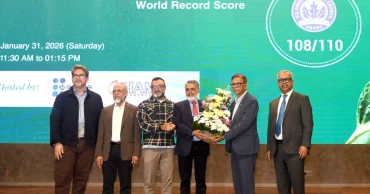
BGMEA honours Hams Garments for achieving world’s highest score for green factories
The Bangladesh Garments Manufacturers and Exporters Association (BGMEA) on Saturday accorded a special reception to Hams Garments Limited for becoming the world's top-rated green factory.
The ceremony, jointly organized by BGMEA and Hams Garments Limited, was held at the Nurul Quader Auditorium in the BGMEA Complex, Uttara. During the event, BGMEA Senior Vice President Inamul Haq Khan presented a special memento of honor to Engineer Shafiqur Rahman, Managing Director of Hams Garments Limited.
In his speech, Inamul Haq Khan revealed that Hams Garments Limited set a new world record by scoring 108 out of 110 in the USGBC LEED Platinum certification.
Read More: NBR links ASYCUDA World with BGMEA e-UD system to modernise bond management
"This is not just a number; it is currently the highest score achieved by any green factory in the world," said Inamul Haq Khan.
"This success has elevated the prestige of the 'Made in Bangladesh' brand to new heights and created a global benchmark for our apparel sector," he added.
While celebrating the achievement, industry leaders also discussed the practicalities of green manufacturing:
Access to Finance: BGMEA Director Faisal Samad emphasized the need to simplify the availability of the ‘Green Technology Fund’ to help more factories transition to eco-friendly operations.
Fair Pricing: Director Faruque Hassan noted that while Bangladesh continues to break its own records in LEED certification, the global market’s product pricing does not yet fully reflect the high costs and efforts of maintaining these green standards.
Read More: Uruguay could be a gateway for RMG exports to Mercosur: BGMEA
Ananta Ahmed, USGBC Consultant and Managing Director of 360 TSL, highlighted the technical milestones of the project, noting that Bangladesh is no longer just following sustainability trends but is actively setting the global pace.
The achievement further solidifies Bangladesh's position as the global leader in sustainable apparel manufacturing. Key statistics mentioned at the event include:
Total LEED-certified green factories in Bangladesh: 273
Platinum-rated factories: 115
Gold-rated factories: 139
69 out of the world’s top 100 highest-rated green factories are now located in Bangladesh.
Engr. Shafiqur Rahman, Managing Director of Hams Garments, shared the success story of his factory and expressed his gratitude to the BGMEA board. He noted that such recognition would inspire other industrial owners to take bold steps toward sustainable industrialization.
The event was attended by senior BGMEA officials, including Vice President (Finance) Mizanur Rahman, Director A.B.M. Shamsuddin, and representatives from the Institution of Textile Engineers and Technologists (ITET).
4 months ago
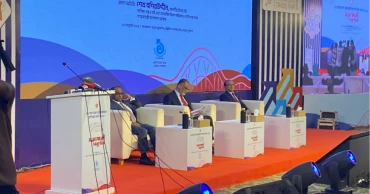
Dhaka Trade Fair wraps up with Tk 400cr in sales
The Dhaka International Trade Fair, the country’s flagship trade showcase, closed after a month on Saturday with sales of nearly Tk 400 crore, underscoring steady domestic demand despite pressure from inflation and a slowing economy, according to the Export Promotion Bureau.
At the closing ceremony held at the Bangladesh–China Friendship Exhibition Centre in Purbachal, Narayanganj, the EPB said domestic transactions at this year’s fair amounted to Tk 393 crore—up 3.42 percent compared to 2025.
Based on data received from 329 participating local and foreign companies, the EPB reported that potential export orders secured during the fair stood at $17.98 million, equivalent to Tk 224.26 crore.
Sectors attracting export orders included diversified jute products, electrical and electronics goods, home appliances, cosmetics, hygiene products, processed food, handloom, household items, home textiles, nakshi kantha and fabrics. Export orders were received from Afghanistan, Singapore, Hong Kong, Indonesia, India, Pakistan, Malaysia and Turkey.
A total of 329 enterprises participated in the fair, including 11 companies from six countries—India, Turkey, Singapore, Indonesia, Hong Kong and Malaysia—besides Bangladesh.
Products and services on display and sale covered cottage, micro, small, medium and large industries, including garments, leather goods, jute and jute products, agricultural and agro-processed goods, furniture, electrical and electronic items, cosmetics, home décor, toys, stationery, crockery, handicrafts, plastic and melamine products, herbal and toiletry items, imitation jewellery, real estate products and services, fast food and various other services.
At the closing ceremony, awards were presented to the best pavilions, stalls and enterprises across different categories.
A total of 40 institutions were recognised based on criteria such as construction and architectural design, interior decoration, product display, customer service and satisfaction, compliance with allotment conditions, cleanliness and health standards, digital contents, contribution as exporters and manufacturers, and innovation.
To promote export diversification and enhance exporters’ capacity, eight seminars were organised as sideline events under a seminar series led by the EPB, in collaboration with the Ministry of Commerce, government trade promotion bodies (BSCIC, SME Foundation and JDPC), product-based trade associations (BPGMEA, BGAPMEA, BFPIA and BanglaCraft), and development partners including the World Bank, GIZ, FCDO and BSI.
The EPB said an Export Enclave was set up at the fair to showcase the capabilities of seven leading export sectors, keeping foreign buyers and local visitors in focus.
Facilities such as a Senior Citizen Corner, mother and child care centre, and a children’s park were arranged to make the fair more comfortable and enjoyable for visitors of all ages.
30th Dhaka International Trade Fair kicks off
Several voluntary organisations conducted health awareness campaigns during the fair. To ensure security, CCTV surveillance, deployment of law enforcement agencies and fire service units were in place.
The Directorate of National Consumers’ Rights Protection carried out regular drives throughout the month to ensure food quality and prevent consumer harassment, the EPB added.
Commerce Adviser Sk Bashir Uddin formally declared the fair closed, with Commerce Secretary Mahbubur Rahman presiding over the closing ceremony.
4 months ago
Indices extend gains despite lower turnover at Bangladesh bourses
Stock indices at both the Dhaka Stock Exchange (DSE) and the Chittagong Stock Exchange (CSE) extended their gains on Wednesday, marking the second consecutive day of rise in the country’s capital market, despite a decline in overall turnover.
At the DSE, the benchmark index DSEX advanced by 34 points. Among the other indices, the Shariah-based DSES rose by 4 points, while the blue-chip DS30 gained 16 points.
Prices, however, fell for most listed companies at the DSE, as 191 issues closed lower against 134 gainers, while prices of 64 shares remained unchanged.
The turnover eased on the fourth trading day of the week following Tuesday’s highest transaction of the year. Shares and units worth Tk 633 crore were traded on the DSE, down from Tk 693 crore in the previous session.
In the block market, shares of 33 companies worth Tk 21 crore changed hands, with Trust Bank PLC accounting for the highest turnover of about Tk 4 crore.
Pubali Bank PLC topped the DSE gainers’ chart with its price rising more than 7 percent, while FAS Finance and Investment Limited ended as the worst loser, shedding over 10 percent.
The CSE also saw a positive close, with its broad-based index CASPI rising by 114 points.
At the port city bourse, prices increased for most issues as 86 companies advanced against 78 decliners, while 23 issues closed unchanged.
The total turnover at the CSE stood at Tk 8 crore, down from Tk 13 crore in the previous trading session.
Silva Pharmaceuticals Limited emerged as the top gainer at the CSE, jumping nearly 10 percent, while Phoenix Finance 1st Mutual Fund closed at the bottom of the chart after losing more than 9 percent.
4 months ago

Gold hits record high in Bangladesh as prices jump Tk 7,348 per bhori
Gold prices in Bangladesh surged to an all-time high on Wednesday, with the Bangladesh Jewellers Association (BAJUS) raising the price by Tk 7,348 per bhori, citing an increase in the local market price of pure gold.
According to a BAJUS notification issued in the morning, the price of 22-carat gold has been fixed at Tk 269,788 per bhori (11.664 grams), the highest ever in the country’s history.
The new rate came into effect immediately.
BAJUS said the latest adjustment was made after reviewing the overall market situation, particularly the rise in the price of tejabi gold (pure gold) in the local market.
Under the revised rates, the price of 21-carat gold has been set at Tk 257,483 per bhori, 18-carat gold at Tk 220,741 per bhori, and traditional method gold at Tk 181,725 per bhori.
Gold price skyrockets to Tk262,440 per bhori overnight in Bangladesh
In addition to the selling price, buyers will have to pay a mandatory 5 percent government VAT and a minimum 6 percent making charge set by BAJUS. However, the making charge may vary depending on the design and quality of the jewellery.
BAJUS last revised gold prices on January 26, when it increased the price by Tk 5,249 per bhori, setting the price of 22-carat gold at Tk 262,440 — which had remained the previous record high.
With the latest revision, gold prices have been adjusted 15 times so far this year, including 12 increases and three reductions.
Meanwhile, gold prices continue to soar in the global market. Spot gold prices have crossed $5,200 per ounce, marking a series of new records.
Gold price jumps Tk 6,299 per bhori in Bangladesh after brief cut
According to spot market reports, gold prices have risen by around 20 percent in the first month of the year alone, driven mainly by a weakening US dollar, as investors increasingly turn to gold as a safe-haven asset amid global uncertainties.
4 months ago
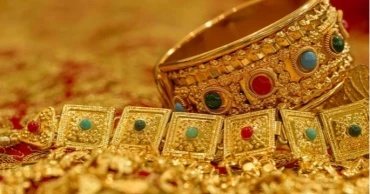
Gold price skyrockets to Tk262,440 per bhori overnight in Bangladesh
Gold prices in Bangladesh have climbed again within 24 hours, with the Bangladesh Jewellers Association (BAJUS) announcing a fresh hike on Monday that has pushed prices to a new all-time high.
In a notification issued late night, BAJUS said the price of 22-carat gold has been increased by Tk5,249 per bhori, fixing the new rate at Tk262,440, the highest ever in the country’s history.
The jewellers’ body said the decision was taken following an increase in the price of pure gold (tejabi gold) in the local market.
The revised prices will come into effect from Tuesday.
Under the new rates, 21-carat gold will sell at Tk250,484 per bhori, 18-carat gold at Tk214,734 per bhori, while gold made under the traditional method has been priced at Tk176,593 per bhori.
Buyers will have to pay an additional 5 percent VAT set by the government and a minimum 6 percent making charge fixed by BAJUS on the selling price.
Gold price jumps Tk 6,299 per bhori in Bangladesh after brief cut
However, making charges may vary depending on the design and quality of jewellery.
Earlier, on January 25, BAJUS last adjusted gold prices, raising the price of 22-carat gold by Tk1,574 to Tk257,191 per bhori, which was then the highest on record.
With the latest adjustment, gold prices have been revised 14 times so far in 2026 — increased on 11 occasions and reduced three times.
Alongside gold, BAJUS has also raised silver prices. The price of 22-carat silver has been increased by Tk525 per bhori to Tk7,757, marking the highest silver price in the country’s history.
According to the new rates, 21-carat silver will sell at Tk7,407 per bhori, 18-carat silver at Tk6,357 per bhori, while traditional silver has been priced at Tk4,782 per bhori.
So far this year, silver prices have been adjusted 11 times in the domestic market, with eight increases and three reductions.
4 months ago
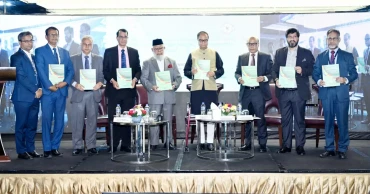
Bangladesh Bank to curb large corporate loans, boost bond market: Governor Dr. Mansur
Bangladesh Bank Governor Dr. Ahsan H. Mansur on Monday announced a strategic plan to reduce large-scale corporate lending by banks as part of a broader effort to contain defaulted loans and develop the country's bond market.
Speaking at a seminar titled ‘Bond Market Development in Bangladesh: Challenges and Recommendations’ at the Renaissance Dhaka Gulshan Hotel, the Governor emphasized that corporate entities will be encouraged to decouple from traditional bank financing for large projects.
Governor Mansur reaffirmed that the central bank will strictly enforce the ‘Single Borrower Exposure Limit’, which restricts a bank from lending more than 25 percent of its total capital to a single client.
Funded Loans will be capped at 15 percent of capital. Non-Funded Loans will be capped at 10 percent of capital.
Limits will remain flexible for green financing, including the power and energy sectors.
The Governor described this restriction as a "push factor" designed to drive corporate houses toward the bond market for their long-term financing needs.
Speaking in the seminar, Bangladesh Securities and Exchange Commission (BSEC) Chairman Khondoker Rashed Maqsood noted that easy access to bank loans has historically discouraged corporates from entering the capital market.
He identified long-term bank lending as a primary driver of the rising volume of non-performing loans (NPLs) in the country.
"The economy will be shifted from bank-dependency to capital market-dependency," Governor Mansur stated, adding that while the central bank is currently leading the initiative, full regulatory control of the bond market will eventually transition to the capital market authorities.
To make bond issuance more attractive, the central bank and BSEC are working to reduce the time and cost required to issue bonds, provide attractive incentives for investors and conduct ongoing research to align the market with international standards.
The seminar, moderated by Deputy Governor Habibur Rahman, featured high-level panel discussions. Notable participants included Finance Secretary Khairuzzaman Mozumder, ICC Bangladesh President Mahbubur Rahman, DSE Chairman Mominul Islam, and senior executives from Pran-RFL Group and City Bank.
The discussions were based on joint research conducted by Bangladesh Bank and BSEC, presented by central bank official Ezazul Islam, which highlighted the roadmap for a sustainable secondary bond market in Bangladesh.
4 months ago
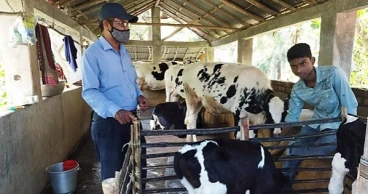
Bangladesh Dairy Board to open regional offices to boost milk output
The Bangladesh Dairy Development Board will open branch offices at key locations across the country to increase milk and dairy production and improve quality standards, Fisheries and Livestock Adviser Farida Akhter said on Monday.
Farida stressed the need to identify major dairy production hubs, establish an adequate number of regional offices, and develop an appropriate manpower structure to ensure effective implementation of the board’s mandate.
She made the remarks while presiding as chairperson over the first meeting of the dairy development governing board, formed under the Bangladesh Dairy Development Board Act, 2023, at the Fisheries and Livestock Ministry conference room.
Emphasising the importance of dairy as a balanced food, she said the board must play a strong role in increasing production, setting and controlling quality standards, marketing dairy products and ensuring proper management of related activities.
Plenty on fields: Why vegetables so expensive in Dhaka?
“To ensure safe milk and dairy products for people across the country, the activities of the Dairy Development Board must go beyond the confines of its headquarters and expand nationwide,” she said, adding that regular board meetings are essential for effective implementation of the law.
The 15-member governing board meeting was attended by Fisheries and Livestock Secretary Abu Tahir Muhammed Zaber, who served as vice-chairman of the board.
The secretary informed the meeting that Joint Secretary Shahina Ferdousi has been appointed as Executive Director of the board by the Ministry of Public Administration and will also serve as the board’s member secretary.
The meeting was convened to approve key decisions required for implementing the functions assigned to the board under the law.
Net FDI in Bangladesh jumps over 200 percent in Q3 of 2025: BIDA
Board members also discussed launching extensive publicity and awareness campaigns to familiarise stakeholders and the public with the activities of the Dairy Development Board, expressing unanimous support for the initiative.
4 months ago

South Korean company to invest $80mn in Mirsarai EZ
The Bangladesh Export Processing Zones Authority (BEPZA) on Monday signed a lease agreement with South Korean company Park Handbag BD Ltd to establish a large-scale bag, luggage and high-end garments manufacturing facility at the BEPZA Economic Zone in Mirsarai, Chattogram.
The proposed investment, amounting to US$ 80 million, is expected to significantly contribute to industrial growth and employment generation in the country.
The agreement was signed at the BEPZA Complex in Dhaka.
Md Tanvir Hossain, Executive Director (Investment Promotion) of BEPZA, signed the agreement on behalf of BEPZA, while Beomjoon Park, Chairman of Park Handbag BD Ltd, signed on behalf of the investing company.
BEPZA Executive Chairman Major General Mohammad Moazzem Hossain witnessed the signing ceremony.
Under the agreement, Park Handbag BD Ltd will develop the project on 57,600 square metres of land to manufacture handbags, backpacks, luggage, and a wide range of knit and woven garments, including polo shirts, T-shirts, padded and down jackets, trousers, sportswear and undergarments.
Once fully operational, the project is expected to create employment opportunities for 10,960 Bangladeshi nationals.
The manufactured products will be exported to major global markets, including the USA, the UK, the European Union, South America and Asia.
Welcoming the South Korean investor, the BEPZA Executive Chairman reaffirmed the authority’s commitment to providing round-the-clock facilitation to investors. He also urged Park to encourage other South Korean entrepreneurs to explore investment opportunities in BEPZA-administered EPZs and Economic Zones.
He said BEPZA is continuously modernising its service delivery system through increased automation, digitalisation and efficiency to better serve investors.
“We should do better than yesterday,” he remarked, underscoring BEPZA’s drive to remain competitive and responsive.
Speaking at the ceremony, Beomjoon Park said Park Handbag BD Ltd will manufacture bags for globally renowned brands such as Coach and Kate Spade.
He expressed strong confidence in Bangladesh as a competitive manufacturing destination and praised BEPZA for its fast, efficient and investor-friendly services.
4 months ago

Al-Arafah Islami Bank to suspend all services for 9 days
Al-Arafah Islami Bank (AIBL) has announced a temporary suspension of all its banking services for nine consecutive days, starting from January 30 to February 7, 2026.
The shutdown is part of a major technical upgrade to its "Core Banking System" (CBS) to ensure more secure and modern digital services for its customers.
The central bank of Bangladesh issued a notification on Sunday (January 25) granting the bank permission for this scheduled downtime.
According to the bank’s schedule, the suspension will affect various services in phases:
January 30 – February 7: All online banking services, including ATMs and Internet Banking, will remain completely suspended for the full nine days.
February 1 – February 3: All branches and sub-branches will be closed for cash transactions and physical banking.
February 5 (10:00 AM): Branches will resume limited operations, primarily for cash transactions only.
February 8: All regular and online banking services will fully resume and return to normal operations.
Banking sector reform can’t be done overnight: Salehuddin
The bank stated that the upgrade is essential to enhance the quality of customer service and bolster transaction security in the current era of digital banking. While the total service suspension lasts nine days, the bank noted that the actual impact on branch-based banking is limited to three days, as January 30-31 are weekend holidays and February 4 is a scheduled holiday for Shab-e-Barat.
Bangladesh Bank has approved this "technical downtime" to facilitate the bank's long-term goal of providing superior Shariah-based financial services. Customers are advised to plan their urgent transactions before the shutdown begins.
4 months ago