local-business
Shibli Rubayat and Sheikh Shamsuddin banned from capital market
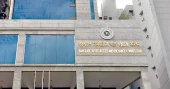
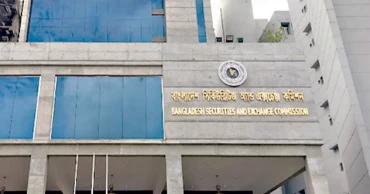
Shibli Rubayat-Ul-Islam, former chairman of the Bangladesh Securities and Exchange Commission (BSEC), has been declared 'persona non grata' in the capital market for life, while Sheikh Shamsuddin Ahmed, a former commissioner, has been banned for five years.
This significant decision was made on Wednesday at the 965th board meeting of the BSEC Commission, according to a press release.
The proposal for Bangladesh Export Import Company Limited's (Beximco) Tk3,000 crore, five-year Beximco Secured Convertible or Redeemable Asset-Backed Green Sukuk was approved at the 779th commission meeting held on June 23, 2021.
The proposed Green Sukuk was approved for issuance of Tk 2,250 crore through private placement (Tk 750 crore from existing shareholders and Tk1,500 crore from other investors excluding existing shareholders), and Tk 750 crore through an initial public offering (IPO).
The funds raised through this Sukuk were intended to expand Beximco Limited's textile unit operations and be utilised in two of its subsidiary renewable energy projects: Teesta Solar Limited and Karatoya Solar Limited, for environmental development and conservation.
Each unit of the Sukuk had a face value of Tk 100, and the minimum subscription amount was Tk 5,000.
Beximco served as the originator, Beximco Green Sukuk Al-Istisna'a as the issuer or trust/SPV, Investment Corporation of Bangladesh as the trustee, City Bank Capital Resources Limited and Agrani Equity & Investment Limited as the issue managers, M. J. Abedin & Co., Chartered Accountants as the auditor, and Emerging Credit Rating Limited (ECRL) as the credit rating agency for this Sukuk.
For this purpose, Beximco was granted exemption by the commission from certain rules of the relevant regulations.
However, the application for the issuance of this Sukuk was approved by the commission on June 23, 2021, even before the exemption notification was published in the government gazette.
The Commission then issued a consent letter on July 8, 2021.
Subsequently, the public subscription period for the Sukuk was extended unethically and through abuse of power from August 23, 2021 (the last subscription period according to regulations) to September 30, 2021. An investigation and inquiry into this matter was conducted by the 'Capital Market Inquiry and Investigation Committee,' and its report has been submitted to the Commission.
Considering these relevant issues, the Commission has taken the following decisions:
It has been decided to declare Shibli Rubayat-Ul-Islam, the then chairman of the BSEC, 'persona non grata' in the capital market for life, and Sheikh Shamsuddin Ahmed, the then commissioner, 'persona non grata' for five years.
Furthermore, it has been decided that an additional investigation by the commission will be conducted on the Beximco Secured Convertible or Redeemable Asset-Backed Green Sukuk, building upon the inquiry and investigation already carried out by the 'Capital Market Inquiry and Investigation Committee.' Necessary action will be taken against all involved in the irregularities and rule violations related to the Beximco Secured Convertible or Redeemable Asset-Backed Green Sukuk.
10 months ago

Bangladesh Bank likely to ease monetary policy amid interest rate shift
Bangladesh Bank is expected to revise its long-standing contractionary monetary policy, with an eye towards easing interest rates.
This crucial shift comes in response to lower-than-desired credit growth observed in the previous fiscal year, a direct consequence of the tight monetary stance.
For the past three fiscal years, the central bank has maintained a contractionary policy, primarily aimed at taming persistent inflation and stabilising the volatile foreign exchange market.
The central bank’s Monetary Policy Committee (MPC) now suggests measures to reduce interest rates in a bid to stimulate credit flow and boost employment.
Bangladesh sees sharp drop in bank deposits over scams, mergers: Report
Sources close to the MPC indicate that inflation is on a decreasing trend and has already fallen to a significant level.
This positive development is paving the way for a review of the contractionary policy, which economists and policymakers believe has severely impacted investment, credit growth and overall employment in recent fiscal years.
"The monetary policy significantly affected investment, credit growth and employment in the previous fiscal years. The central bank must now consider these major macroeconomic issues in the new monetary policy," said a prominent economist associated with the MPC.
The forthcoming monetary policy announcement on Thursday will reveal the extent of the central bank's adjustments.
GED projects cautious optimism for Bangladesh economy in FY2026
This move signals a potential shift in focus from solely inflation containment to balancing price stability with economic growth and job creation.
Types of Monetary Policy
Expansionary (Loose) Monetary Policy aims to stimulate economic growth, reduce unemployment and prevent deflation. This involves measures like lowering interest rates, buying government securities and reducing reserve requirements.
Contractionary (Tight) Monetary Policy aims to curb inflation and cool down an overheating economy. This involves measures like raising interest rates, selling government securities, and increasing reserve requirements.
The primary goal of monetary policy is to achieve macroeconomic objectives such as:
Price Stability: Keeping inflation low and stable. This is often the most important objective as high and volatile inflation erodes purchasing power and creates economic uncertainty.
Bangladesh needs to adapt strategically in order to navigate complex challenges of 2025: ICCB
Economic Growth: Promoting sustainable economic expansion and a high rate of employment.
Financial Stability: Ensuring the health and stability of the financial system, including banks and financial markets.
Exchange Rate Stability: Managing the value of the domestic currency in relation to trade with other currencies.
How Monetary Policy Works
Central banks implement monetary policy by adjusting the availability and cost of money in the economy. They do this primarily through various tools that influence interest rates, bank lending and the overall money supply. The mechanism through which these actions affect the economy is known as the monetary transmission mechanism.
Banking sector needs $35 billion for reconstruction as 80% funds embezzled: Finance Advisor
10 months ago

Stocks see gains in early trade on DSE-CSE
Dhaka and Chattogram bourses witnessed an upward trend in the early hours of Tuesday’s trading session, with most company shares advancing.
During the first two hours of trading, the benchmark DSEX index of the Dhaka Stock Exchange (DSE) rose by 21 points.
The Shariah-based DSES index gained 2 points, while the blue-chip DS30 index advanced by 7 points.
Prices increased for 200 companies, while 110 saw a decline and 85 remained unchanged.
The DSE recorded a turnover of Tk 340 crore during the first half of the session.
Trading begins in DSE, CSE on a positive note
The upward momentum was mirrored in the Chittagong Stock Exchange (CSE), where the overall index gained 10 points.
Out of 149 companies traded on the CSE, 53 advanced, 76 declined, and 20 remained unchanged.
The turnover at the CSE stood at Tk 4 crore in the first two hours.
10 months ago

Bangladesh sees sharp drop in bank deposits over scams, mergers: Report
Bangladesh’s banking sector is now witnessing a reversal in deposit growth, as total deposits shrink in the wake of widespread corruption and soaring loan defaults in several banks, according to the latest report from the Bangladesh Bank.
The report says the total amount of deposits in the banking sector stood at Tk 20.18 lakh crore at the end of May 2025.
Public anxiety over potential bank mergers and a history of financial irregularities and loan scams have prompted depositors to withdraw funds, causing deposit growth to fall below 9 percent, said banking sector experts.
While this represents an 8.74 percent increase compared to the same period last year, the growth rate has been consistently declining since March, when it was 9.51 percent.
GED projects cautious optimism for Bangladesh economy in FY2026
The number of banks experiencing a decline in deposits has also risen, from 11 in March to 16 in May.
The report indicates that public panic spread following the exposure of financial distress in several banks after a government change on August 5, 2024.
This led to increased pressure for deposit withdrawals. Although central bank liquidity support somewhat stabilised the situation, renewed uncertainty surrounding mergers of some banks.
The situation has been exacerbated by discussions surrounding the potential mergers of several banks, including EXIM Bank, Social Islami Bank, First Security Islami Bank, Global Islami Bank and Union Bank, along with fears of their true financial conditions being revealed.
Other banks have also experienced increased pressure for deposit withdrawals.
Bangladesh needs to adapt strategically in order to navigate complex challenges of 2025: ICCB
The Eid season typically sees an increase in cash circulation, but this year it reached a record high. Before Eid-ul-Azha on June 5, 2025, the amount of cash in circulation was Tk3.39 lakh crore, the highest in the country's history. This compares to Tk3.17 lakh crore in May and Tk 3.25 lakh crore before Eid-ul-Azha last year.
The managing director of a private bank, who preferred to remain anonymous, told UNB, "If merger or liquidation decisions are not made quickly and clearly, public confidence will erode. This could create a crisis for the banking sector."
Meanwhile, Bangladesh Bank data shows that the total amount of loans in the banking sector stood at Tk17.19 lakh crore at the end of May, a 7.31 percent increase year-on-year.
This places the loan-to-deposit ratio (ADR) at 81.02 percent, though for some distressed banks, this ratio is significantly higher.
Banks experiencing the most significant deposit declined include Basic Bank, Social Islami Bank, EXIM Bank, ICB Islamic Bank, National Bank, First Security Islami Bank, Global Islami Bank, Bangladesh Commerce Bank, Modhumoti Bank, Union Bank and Community Bank.
Banking sector needs $35 billion for reconstruction as 80% funds embezzled: Finance Advisor
Besides, foreign-owned banks such as Alfalah, State Bank of India, Woori, Habib and Standard Chartered Bank have also seen a decrease in deposits.
But, foreign banks typically have lower deposit trends due to their reliance on LC and commission-based business.
Dr Zahid Hussain, a former lead economist for the World Bank's Dhaka office, told UNB that the banking sector is facing a severe crisis of confidence due to a history of irregularities and corruption, large loan disbursements to single groups and a surge in non-performing loans, often fueled by political patronage.
The central bank has already provided approximately Tk 30,000 crore in special loans to troubled banks.
The five banks designated for potential mergers reportedly have a staggering Tk1.47 lakh crore in non-performing loans, accounting for nearly 77 percent of their total loans.
Financial sector 'will never recover' under prevailing judicial system: Ahsan Mansur
Finance Adviser Dr Salehuddin Ahmed recently said Bangladesh's banking sector requires an estimated US$35 billion for its reconstruction.
He said the International Monetary Fund (IMF) had initially estimated $18 billion, but the current assessment suggests more than double that amount is now needed.
Dr Salehuddin highlighted the severity of the economic crisis, stating that when the new government took office last August, such an economic disaster was unprecedented globally.
He revealed that 80 percent of the funds in the banking sector have been embezzled.
As an example, he explained that if a bank has Tk 20,000 crore in outstanding loans, Tk 16,000 crore of that amount has been siphoned off.
10 months ago
GED projects cautious optimism for Bangladesh economy in FY2026
In its latest monthly economic update, the General Economics Division (GED) of the Bangladesh Planning Commission has projected cautious optimism for the country’s economic trajectory in FY2026, highlighting both the encouraging trends and persistent structural challenges.
According to the GED’s assessment, the first month of FY2026 shows early signs of economic rebound, although growth projections remain modest due to ongoing political uncertainty, subdued investment and industrial activity, and global headwinds, including the recent imposition of reciprocal tariffs by the United States.
Multilateral institutions have revised their forecasts downward for the current fiscal.
The World Bank projects growth between 3.3% and 4.1%, while the Asian Development Bank (ADB) estimates it at 3.9%.
A moderate rebound to 5.1%-5.3% is anticipated in FY2026.
The report warns of continued low levels of foreign direct investment (FDI), driven by eroding investor confidence, a tight fiscal space due to poor revenue mobilisation, and limited public investment.
Bangladesh economy falters; growth slows, factories shut, jobs lost
A provisional National Board of Revenue (NBR) estimate indicates a revenue shortfall, compounded in June by temporary work stoppages over the proposed restructuring of the tax authority.
GED underscores that remittance inflows, export performance, and manufacturing growth will be key to supporting GDP.
It, however, flags a number of threats, including low reserves, changing global buyer preferences and inflationary pressures.
Food inflation remains a key concern despite an overall easing trend. Rice prices, particularly medium and coarse varieties, surged in June, with rice alone contributing 50% to food inflation.
The report cites rising input costs, post-harvest losses, transport costs, and speculative hoarding as possible reasons, calling for urgent supply chain scrutiny.
The banking sector also continues to struggle with decelerating deposit and credit growth.
Private sector credit has remained below 8% for six straight months, weighed down by inflation, tight monetary policy, and reduced import financing.
The GED recommends structural reforms, investment incentives, and economic policy reorientation to restore momentum and build resilience in the face of ongoing domestic and global uncertainties.
10 months ago
Bangladesh needs to adapt strategically in order to navigate complex challenges of 2025: ICCB
As the world continues to face a volatile mix of geopolitical tensions, climate risks, and economic disruptions, a leading Chamber on Saturday underscored the urgent need for Bangladesh to adapt strategically in order to navigate the complex challenges of 2025.
The global backdrop remains unstable, marked by the Red Sea crisis, ongoing wars in Ukraine and the Middle East, and a resurgence of economic nationalism, especially following the return of Donald Trump to the U.S. presidency.
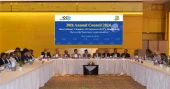
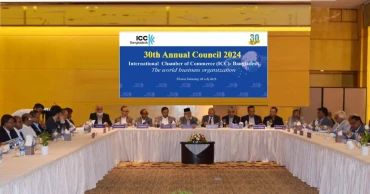
The 30th annual Council of the International Chamber of Commerce – Bangladesh (ICCB) was held in Dhaka.
ICCB President Mahbubur Rahman, on behalf of the Executive Board, presented a comprehensive report on the evolving global and national economic landscape and its implications for Bangladesh.
Rahman reiterated ICC Bangladesh’s commitment to supporting reform, resilience, and regional integration as key pillars for sustainable economic recovery.
The Council noted that the global economy is expected to grow by just 2.8% in 2025, with the U.S.–China trade war further aggravating uncertainties, according to a media release issued by the ICCB.
Inflationary pressures and protectionist policies risk fragmenting global supply chains—an alarming trend for developing economies such as Bangladesh.
In this context, Bangladesh’s economy faces significant headwinds.
The World Bank projects GDP growth to slow to 3.3% in FY2024–25, while the IMF and ADB forecast growth at 3.8% and 3.9%, respectively.
High inflation—exceeding 10% overall and 14% for food—combined with declining investment and political uncertainty, has deepened the economic slowdown.
A major concern is the fragile state of Bangladesh’s financial sector.
Non-performing loans (NPLs) hit a record Tk 3.45 trillion by December 2024, with state-owned banks the worst affected.
Nineteen banks have reported a capital shortfall of Tk 1.71 trillion, prompting the interim government to initiate banking reforms, including board dissolutions, bank mergers, and stronger oversight.
The ICCB also addressed the implications of Bangladesh’s planned graduation from Least Developed Country (LDC) status by November 2026.
With the likely loss of preferential trade terms—especially in the RMG sector—the country risks facing tariffs of up to 11.5% in major markets such as the EU and the UK.
The Council emphasized the importance of a transition strategy to safeguard export competitiveness and maintain foreign investment flows.
In addition to banking and trade concerns, the Council highlighted several key challenges:
Rising costs from increased reliance on imported fossil fuels and currency depreciation require urgent domestic exploration and investment in renewable.
With a tax-to-GDP ratio below 10%, revenue mobilization remains weak.
The restructuring of the National Board of Revenue is expected to improve efficiency and fiscal space.
Ranked among the most climate-vulnerable nations, Bangladesh faces serious risks from floods, droughts, and salinity intrusion.
Climate change may cut annual GDP growth by 2% if not addressed.
FDI remains far below regional peers, at $3 billion in 2023 compared to Vietnam’s $39 billion. Export reliance on garments must be reduced by promoting sectors like pharmaceuticals, agro-processing, and IT.
As the digital economy expands, the threat of cyberattacks grows.
The ICCB urged swift action to strengthen national cybersecurity infrastructure and regulation; U.S. Tariffs: A proposed 37% tariff on Bangladeshi exports to the U.S. could severely affect RMG exports and job creation.
The ICCB suggested forming a task force under the Ministry of Commerce to negotiate fairer trade terms and ensure continuity of access.
The Council emphasized the potential of the Bangladesh-Bhutan-India-Nepal (BBIN) corridor to enhance regional connectivity and trade.
With improved infrastructure and stronger cooperation, BBIN’s combined GDP could reach $8.3 trillion by 2035, positioning Bangladesh as a strategic transit hub.
The Council approved the Auditor’s Report of 2024 and appointed the Auditor for the year 2025.
The High Commissioner of Brunei Darussalam, Haji Haris Bin Haji Othman; the Ambassador of the Republic of the Union of Myanmar, U Kyaw Soe Moe; the Chargé d’Affaires of Argentina, Maximiliano Romanello and Senior Economic Officer Asian Development Bank Barun Kumar Dey attended the Council meeting as special guests.
The Council meeting was attended, among others, by the ICCB Vice President Naser Ezaz Bijoy; ICCB Executive Board Members : Kutubuddin Ahmed, Anwar-ul-Alam Chowdhury (Parvez), Aftab Ul Islam, FCA; Mir Nasir Hossain, Kamran T. Rahman, Sayeed Ahmed, Mahmud Hasan Khan, Mohammed Hatem and Showkat Aziz Russell; ICCB Members : Azim Group Chairman Mohammad Fazlul Azim, FICCI President Zaved Akhtar; DCCI Sr. Vice President Razeev H Chowdhury; Arlinks Limited Chairman & MD Imran Faiz Rahman, DBL Ceramics Limited Managing Director Mohammad Abdul Jabbar, ETBL Securities & Exchange Ltd. Managing Director & CEO Rizwan Rahman; Ha-meem Group Director Sajid Azad; Meghna Group of Industries Chairman & Managing Director Mostafa Kamal, New Zealand Dairy Products Bangladesh Limited Managing Director Mohammad Samsul Alam Mallick, Summit Alliance Port Limited Managing Director Syed Ali Jowher Rizvi; Islam Aftab Kamrul & Co Managing Partner AKM Kamrul Islam; United Insurance MD Khawja Manzer Nadeem; green Textile MD Tanvir Ahmed; Swisscontact Country Director Md. Helal Hussain, Tyser Risk Management Bangladesh Ltd. Managing Director S. M. Moinul Islam, Karnaphuly Ins. Co. CEO ANM Fazlul Karim Munshi; DSE COO & MD Mohammad Asadur Rahman ICC Bangladesh Banking Commission Chairman Muhammad A. (Rumee) Ali & ICCB Secretary General Ataur Rahman.
10 months ago

Banking sector needs $35 billion for reconstruction as 80% funds embezzled: Finance Advisor
Finance Advisor Dr. Salehuddin Ahmed stated that Bangladesh's banking sector requires an estimated US$35 billion for its reconstruction.
He noted that the International Monetary Fund (IMF) had initially estimated $18 billion, but the current assessment suggests double that amount is now needed.
Dr. Ahmed made these remarks on Saturday (July 26) at the CIRDAP auditorium in Dhaka, during the launching ceremony of the book 'Economy, Governance, and Power: An Account of Lived Life,' authored by Dr. Hossain Zillur Rahman, who also chaired the event.
Bangladesh’s private sector credit growth dips below 7% amid economic uncertainty
Dr. Salehuddin highlighted the severity of the economic crisis, stating that when the new government took office last August, such an economic disaster was unprecedented globally.
He revealed that 80 percent of the funds in the banking sector have been embezzled. As an example, he explained that if a bank has Tk20,000 crore in outstanding loans, Tk16,000 crore of that amount has been siphoned off.
He lamented the near absence of sound financial institutions, asserting that not only have laws been violated, but the entire process has been destroyed.
Furthermore, those responsible for these illicit activities remain unpunished and, in their positions, with no changes having occurred.
Financial sector 'will never recover' under prevailing judicial system: Ahsan Mansur
"Many suggest dismissing everyone, but that is not feasible," he added. "Now, we have to work by coaxing and admonishing them."
Dr. Salehuddin emphasized the difficulty of establishing good governance, pointing out that even the Prime Minister lacks effective checks and balances, and Members of Parliament have little accountability. He stressed that without addressing these fundamental issues, any reforms undertaken would yield minimal results.
He concluded by stating clearly, "Reforms are needed not only in government institutions but also within political parties."
Tourism has immense potential, but challenges persist: TOAB President
10 months ago
Bangladesh’s private sector credit growth dips below 7% amid economic uncertainty
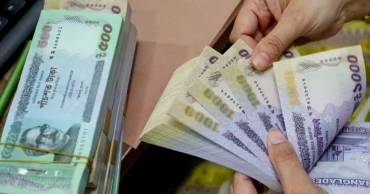
Private sector credit growth in Bangladesh has plummeted below 7 percent in June, reflecting a sharp slowdown in lending amid high interest rates and uncertainties following the change in government.
According to the latest data from the Bangladesh Bank, private sector credit growth recorded a mere 6.40 percent in June, a level not seen in recent years.
This marks the second time this year that credit growth has fallen below 7 percent, consistently hovering around that figure without exceeding it in any month.
Talking to UNB, Dr Mustafa K Mujeri, Executive Director at the Institute for Inclusive Finance and Development (InM), attributed the decline to several factors.
He said political uncertainty, a conflict-ridden environment, and disruptions to law and order are deterring entrepreneurs from taking on new investment risks. The banking sector itself also plays a role in this slowdown.
Financial sector 'will never recover' under prevailing judicial system: Ahsan Mansur
Extensive financial irregularities in previous years have left many banks grappling with liquidity shortages, thereby reducing their lending capacity, he said.
Besides, banks are now much more cautious in extending credit due to the immense pressure from soaring non-performing loans (NPLs), said Mujeri, a former Chief Economist of the Bangladesh Bank.
Dr Khondaker Golam Moazzem, research director at the Centre for Policy Dialogue (CPD), said that continuous decline in private sector credit growth signals a significant impending crisis for the economy.
This sustained decline points to a growing crisis in both the banking sector and the broader business environment.
Reduced credit growth directly translates to fewer new industries being established, less business expansion, and consequently, fewer employment opportunities being created.
The economists believe that the situation is unlikely to improve significantly before the upcoming national elections. If, for any reason, the national elections are delayed, the situation could further deteriorate.
A lack of an acceptable resolution regarding the mutual imposition of tariffs by the United States on Bangladeshi products could also have a negative impact on the economic outlook, they said.
Weak market monitoring, extortion in transport sector, propping up price of commodities: Speakers
Bangladesh Bank's monthly data reveals a consistent downward trend in private sector credit growth:
· May: 7.17%
· April:7.5%
· March: 7.57%
· February: 6.82%
· January: 7.15%
· December 2024:7.28%
10 months ago
Financial sector 'will never recover' under prevailing judicial system: Ahsan Mansur
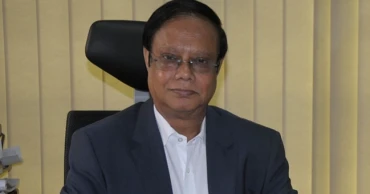
Bangladesh Bank Governor Dr. Ahsan H. Mansur has expressed grave concerns about the financial sector's recovery under its present judicial system, as he disclosed plans to revise the ‘Artha Rin Adalat Ain’ (Money Loan Courts Act) soon.
The governor made these remarks in a recent interview with a local news outlet, criticizing the present judicial system's impact on financial stability.
"If the judiciary continues on its current path, the financial sector will never be able to rebound," Dr Mansur asserted.
"Bangladesh Bank, the government, and the judiciary must work in harmony. To reach international standards, we must operate with similar capacity and accountability," he added.
Tough Stance on Loan Defaulters:
Addressing the persistent issue of non-performing loans (NPLs), Dr. Mansur emphasized a zero-tolerance approach. "A defaulter should be called a defaulter," he stated unequivocally.
He added that even if a borrower obtains a stay order from the High Court, Bangladesh Bank should still classify them as a defaulter. "Because the way a bank knows a customer, it is not possible for the court to understand that."
Bangladesh Bank aims to cut inflation to 5%: Governor
Mansur cited a recent incident involving Agrani Bank, where a borrower was declared a defaulter despite having a stay order, leading to the issuance of a warrant against them. According to the Governor, such decisions are "policy-wise correct."
Organized Looting in banking sector
Responding to questions about the progress made in restructuring the banking sector over the past year, Dr. Mansur highlighted the deep-rooted nature of the problem.
"We have seen that this is not a one-day affair. Banks and financial institutions have been systematically seized for about eight to nine years," he said, adding that funds were then "methodically laundered" from them.
He likened the situation to a "honeypot" – a sweet repository from which honey was looted. "No one thought about protecting the safety of public deposits. Instead, it was used as a sector for looting," he lamented.
The Governor further alleged that this "process of looting" occurred "right before the eyes of the government" and "under the notice of Bangladesh Bank." Yet, he claimed, "no one said anything." In many cases, he added, "the concerned authorities even assisted those groups."
Mansur recalled that civil society had raised concerns, and he himself had warned about the impending crisis: "I directly told a former Governor, 'Be careful about Mr. X.' Because if he hijacks the banks, the entire sector will collapse."
Merger of 5 Islamic banks at final stage: Bangladesh Bank Governor
He concluded with a dire analogy: "I then said, if several banks fall at once, we will even need ambulances. Unfortunately, that's exactly what happened – the entire banking sector was handed over to one family and opened up for looting."
10 months ago

Gold price increased by Tk 1,050 per bhori
The price of gold has been increased by Tk 1,050 per bhori (11.664 grams) in Bangladesh, for 22-carat gold.
From now, gold of 22-carat will cost Tk 171,601 per bhori, 21-carat Tk 163,798, 18-carat Tk 140,400, and gold of traditional method Tk 116,127 respectively.
The Bangladesh Jeweller’s Association's (BAJUS) standing committee on pricing and price monitoring took the decision in a meeting, a press release said today
According to the press release, the new prices will come into effect from Wednesday.
Gold price drops by Tk 1,575 per bhori in Bangladesh
The association said that the price of acid gold (pure gold) has increased in the local market. Considering the overall situation, BAJUS has fixed the new price of gold accordingly.
In addition to the selling price of gold, a 5% government-imposed VAT and a 6% BAJUS-fixed minimum making charge must be added. However, the making charge may vary depending on the design and quality of the jewellery.
Earlier, on July 7, BAJUS last adjusted the gold price, raising it by Tk 1,575 per bhori and setting the 22-carat gold price at Tk 170,551.
10 months ago