local-business

Google Pay arrives in Bangladesh, pushing nation closer to a cashless future
Bangladesh has taken a significant leap towards a truly cashless, digital economy with the official launch of Google Pay today.
The globally renowned digital payment service, operating through 'Google Wallet', promises to revolutionize how transactions are made across the country.
The highly anticipated service has been introduced through a groundbreaking collaboration between Google, City Bank PLC, and global payment giants Mastercard and Visa. This makes City Bank the pioneering financial institution in Bangladesh to offer Google's cutting-edge digital wallet services to its customers.
The momentous inauguration ceremony took place today at The Westin, Dhaka. The event saw the esteemed presence of Bangladesh Bank Governor, Dr. Ahsan H. Mansur, who warmly welcomed Google Pay's arrival.
Strong hatchery, skilled workforce vital for sustainable growth of poultry sector
Governor Mansur expressed his optimism, stating that such advancements bolster Bangladesh's appeal to both local and foreign investors, signaling a vibrant economic landscape.
Key figures present at the launch included Mashrur Arefin, Managing Director and CEO of City Bank; Shammi Quddus, Group Product Manager at Google Payments, Syed Mohammad Kamal, Country Manager of Mastercard Bangladesh, and Sabbir Ahmed, Country Manager of Visa Bangladesh, alongside other senior officials from all collaborating entities.
With this new service, City Bank customers can now seamlessly link their Mastercard or Visa credit and debit cards to their Google Wallet. This integration empowers them to conduct fast, secure, and truly contactless payments by simply tapping their Android smartphones at any NFC (Near Field Communication)-enabled Point-of-Sale (POS) terminal, whether within Bangladesh or abroad.
Google Pay is built on a foundation of advanced encryption technologies, ensuring robust protection of user data and making every digital transaction secure and reliable.
The convenience it offers is unparalleled: users are no longer burdened with carrying multiple physical cards. Their smartphones transform into versatile digital wallets, capable of handling everything from everyday shopping to international air travel, streamlining the payment experience like never before.
City Bank CEO Masrur Arefin elected new chairman of ABB
The introduction of Google Pay marks a pivotal moment in Bangladesh's digital transformation journey, setting a new benchmark for convenience, security, and efficiency in the nation's financial ecosystem, said the speakers at the event.
11 months ago

Stocks rise on third consecutive day, trading volume increases
Both Dhaka and Chattogram stock exchanges saw a rise in all major indices on Tuesday, the third trading day of the week, with increased trading activity and a majority of share prices on the rise.
At the end of the day’s session, the benchmark index of the Dhaka Stock Exchange (DSE), DSEX, gained 22 points. The Shariah-based DSES index increased by 7 points, while the blue-chip index DS30 rose by 8 points.
Out of 401 companies that took part in trading, the share prices of 236 advanced, while 92 declined and 73 remained unchanged.
Share prices rose across all three categories – A, B, and Z – with A-category stocks performing notably well. Among the 223 companies under this dividend-paying category, 143 saw gains, 43 recorded losses, and 37 remained unchanged.
In the DSE block market, shares worth Tk 36 crore were traded across 50 companies. Lovello led the block market with shares worth Tk 19.8 crore changing hands.
Index gains mark early trading at Dhaka, Chattogram stock markets
The total turnover at the DSE reached Tk 372 crore, up from Tk 276 crore in the previous session.
Indo-Bangla Pharmaceuticals topped the gainers’ list on the DSE with a 10 percent rise in share price, while GSP Finance dropped the most, losing 7.69 percent.
Indices Also Up in Chattogram
Similar to Dhaka, the Chattogram Stock Exchange (CSE) also witnessed a positive trend, with its overall index climbing 56 points.
Among the 197 companies traded on the day, 125 advanced, 45 declined, and 27 remained unchanged.
The total turnover at the CSE stood at Tk 29 crore, significantly up from Tk 11.83 crore in the previous session.
Rangpur Foundry topped the gainers on the CSE with a 10 percent rise, while Eastern Insurance hit the bottom with a loss of over 9 percent.
11 months ago
Strong hatchery, skilled workforce vital for sustainable growth of poultry sector
Speakers at a high-level workshop stressed the need for improving hatchery quality and workforce skills to ensure the sustainable growth of Bangladesh’s poultry sector.
A key challenge identified is the excessive fluctuation in chick (Day-Old Chicks- DOC) production, which is causing instability in supply and pricing, ultimately threatening small-scale hatcheries and market balance.
Fluctuations in chicken prices significantly impact the production of Day-Old Chicks (DOCs). When market prices are high, hatcheries often respond with overproduction, which eventually drives down prices and affects profitability for both hatcheries and farmers.
Conversely, when chicken prices fall, DOC production declines sharply, leading to shortages of poultry and eggs. This cyclical imbalance contributes to market volatility and poses serious sustainability challenges for hatchery operators.
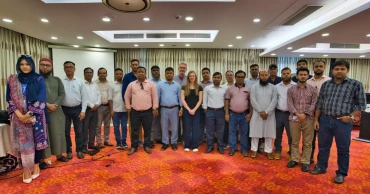
This concern was raised during the closing ceremony of a three-day training workshop titled ‘Hatchery Management’, held from June 16 to 18 at a hotel in Gulshan, Dhaka.
The event was part of the PoultryTechBangladesh project and was jointly organized by Larive International, LightCastle Partners, Axon Limited, and Royal Pas Reform, with support from the Embassy of the Kingdom of the Netherlands.
The objective of the workshop was to provide practical recommendations and technical guidance to hatchery owners, staff, and other stakeholders on building and operating modern, high-quality hatcheries aligned with global standards.
In addition to production fluctuations, the training highlighted several pressing challenges in the sector: Hatching inefficiencies, inadequate storage and transportation, poor hatchery management, lack of modern incubation technology, environmental impact and disease outbreaks, limited access to advanced technology, shortage of skilled manpower, marketing and distribution challenges
Speakers emphasized that these issues can be addressed through improved production planning and farm management tailored to market demand.
Osman Haruni, Senior Policy Advisor at the Embassy of the Netherlands in Bangladesh; Mostafa Kamal, Secretary of the Bangladesh Poultry Industries Central Council (BPICC); and Zahidul Islam, Managing Director of Axon Limited, were among the distinguished speakers at the event.
Shariatpur poultry farmers' dreams now stretch beyond Padma Bridge
The keynote presentation on the PoultryTechBangladesh project was delivered by Naziba Ali, Business Analyst at LightCastle Partners.
Participants highlighted that hatchery quality relies heavily on the use of advanced equipment, accurate hatching and incubation techniques, a conducive production environment, and a well-trained workforce. The workshop also stressed the importance of strengthening collaboration between Dutch technology providers and Bangladeshi companies to build a modern, tech-driven poultry sector.
Training sessions were conducted by Gerd de Lange, Senior Poultry Specialist, and Lotte Hebnick, Incubation Specialist, both representing Royal Pas Reform, a global leader in hatchery solutions.
A notable feature of the training was its focus on practical, hands-on knowledge in addition to theoretical learning.
According to the latest data from BPICC, there are currently an estimated 90,000 to 100,000 hatcheries in Bangladesh. The sector employs around 6 million people, directly and indirectly. Demand for processed poultry products continues to rise steadily. Between 2016 and 2022, daily per capita chicken meat consumption increased from 17.3 grams to 26.2 grams. The commercial poultry industry is growing at an annual rate of approximately 15%, producing around 23.37 billion eggs and 1.46 million metric tons of poultry meat per year.
Industry representatives noted that the poultry sector contributes approximately 1.6% to Bangladesh’s GDP. With poultry product demand expected to double by 2050, the sector holds significant potential for growth. However, realizing this potential will require focused investment in hatchery modernization, infrastructure development, and workforce skill enhancement.
11 months ago

City Bank CEO Masrur Arefin elected new chairman of ABB
Masrur Arefin, managing director and CEO of City Bank PLC, has been elected as the new chairman of the Association of Bankers, Bangladesh (ABB), a leading organization for top bankers.
The appointment was made at a recent meeting of ABB's Board of Governors. He will serve in this interim capacity until the organization's next Annual General Meeting (AGM).
The position of ABB chairman became vacant following the recent resignation of Selim R.F. Hussain from his role as MD & CEO of BRAC Bank PLC.
City Bank to introduce inflation-adjusted wages in payroll
In the same meeting, Mohammad Ali, managing director and CEO of Pubali Bank, was elected as the new Vice Chairman of ABB. Abul Kashem Md. Shirin, managing director and CEO of Dutch-Bangla Bank PLC, will continue to serve in his previous role as Vice Chairman.
11 months ago

Garment exports to non-traditional markets mark 6.79pc increase in July-May
Bangladesh's garment industry is seeing promising shifts in its export landscape, with a notable surge in shipments to non-traditional markets.
Data released by the Export Promotion Bureau, compiled by the Bangladesh Garment Manufacturers and Exporters Association (BGMEA), reveals that garment exports to these emerging destinations climbed by 6.79 percent year-on-year, reaching $6.04 billion during the July-May period of the fiscal year 2024-25.
Non-traditional markets encompass all destinations outside of the long-standing major buyers: the European Union, the United States, Canada, and the United Kingdom. Within this diverse group, India showed significant growth with a 17.35 percent rise in exports, followed by Turkey at 31.75 percent, and Japan at 10.32 percent.
However, not all non-traditional markets saw an uptick; shipments to Russia, South Korea, the United Arab Emirates, and Malaysia experienced a decline during this period.
ICAB refutes ICMAB's claims on audit profession, alleges misinformation
Despite the growth in new markets, the European Union continues to be the powerhouse for Bangladesh's readymade garment (RMG) exports, commanding nearly half of all shipments at 49.91 percent, totaling an impressive $18.25 billion. The United States remains a strong second, with exports reaching $7.03 billion, marking a substantial 19.23 percent increase. Canada and the UK also contributed significantly, with exports of $1.20 billion and $4.04 billion respectively.
Looking at year-on-year growth for the major markets, RMG exports to the EU rose by 10.46 percent, the US by 15.97 percent, and Canada by 14.14 percent. The UK saw more modest growth at 3.96 percent. Within the EU, Germany led as the top export destination, receiving $4.58 billion in shipments, with Spain ($3.16 billion) and France ($2.00 billion) following.
On the product front, the knitwear segment of the garment sector showed robust performance with a 10.98 percent growth, while woven garment exports also saw a healthy increase of 9.30 percent. Overall, the cumulative RMG exports for the July-May period reached $36.56 billion, representing a strong 10.20 percent increase from the same period a year ago.
11 months ago

ICAB refutes ICMAB's claims on audit profession, alleges misinformation
The Institute of Chartered Accountants of Bangladesh (ICAB) has issued a strong condemnation and refutation of what it calls "misleading information" spread by the Institute of Cost and Management Accountants of Bangladesh (ICMAB) regarding audit rights and the professional standing of Chartered Accountants.
In a press release issued on Wednesday, ICAB stated that ICMAB's claims were made during a press conference held on Tuesday (June 17). The ICAB affirmed its commitment to upholding the highest standards of financial reporting, auditing, and corporate governance, emphasizing the indispensable role its members play in ensuring transparency, accountability, and sustainable economic growth for the nation.
The ICAB clarified several points to "set the record straight and reject the misrepresentations made by ICMAB."
FBCCI Board of Directors election scheduled for Sept 7
According to ICAB, there are currently 613 practicing Chartered Accountants (CAs), supported by an additional 145 CAs and over 12,000 professional staff working under 259 CA firms. While acknowledging that the number of active entities is much lower than the over 300,000 registered entities in Bangladesh.
The ICAB stated that the total DVC (Document Verification Code) generated for audited entities in 2024 was 57,993, which corresponded to the number of income tax returns filed. Therefore, ICAB asserts that ICMAB's statement about a shortage of auditors in Bangladesh is incorrect.
11 months ago

FBCCI Board of Directors election scheduled for Sept 7
The election to the Board of Directors of the Federation of Bangladesh Chambers of Commerce and Industry (FBCCI), the country’s apex trade body, is set to take place on September 7.
On that day, members of the General Assembly will elect the President, Senior Vice President, Vice Presidents and Directors of the FBCCI for the 2025–2026 and 2026–2027 terms through full participation of all eligible voters.
The FBCCI Election Board officially announced the election schedule on Wednesday (June 18).
The election will be conducted in accordance with the Trade Organisation Act 2022 and the recently formulated Trade Organisation Regulations 2025.
As per the updated regulations, the size of the FBCCI Board of Directors has been reduced from 80 to 46 members. Among these, there will be one President, one Senior Vice President, and two Vice Presidents.
Economy eyes gradual growth with steady recovery in key sectors: Finance Ministry
According to the election schedule, all member chambers and associations must submit the list of their nominated representatives for the FBCCI General Assembly by 5:00 pm on July 2.
The preliminary list of voters for the FBCCI Board election will be published today. The final voter list is scheduled for release on July 26.
The preliminary list of candidates for the positions of President, Senior Vice President, Vice Presidents, and Directors will be announced on August 8.
Following the process of verification, scrutiny, and analysis, the Election Board will publish the final list of candidates on August 14.
Candidates wishing to withdraw their nominations must inform the Election Board by 2:00 pm on August 16.
On the same day, the Board will release the definitive list of candidates contesting in the FBCCI Board of Directors election.
11 months ago

Dhaka stocks edge up, Chattogram faces decline
The Dhaka stock market gained ground with most shares edging up, while the Chattogram market declined on Wednesday, the fourth trading day of the week.
In the first hour of trading, the benchmark DSEX index of the Dhaka Stock Exchange (DSE) rose by 7 points. The Shariah-compliant DSES index gained 3 points, while the DS30 index, which tracks blue-chip companies, edged up by 2 points.
Share prices increased for the majority of companies on the DSE. Out of the traded scrips, 155 companies posted gains, 105 saw a decline, and 114 remained unchanged.
During the initial hour, the total turnover in Dhaka crossed Tk 80 crore in shares and mutual fund units.
Market swings amid volatile trading at DSE and CSE
In contrast, the Chattogram Stock Exchange (CSE) saw a 14-point drop in its overall index.
Among the 73 companies that participated in trading on the CSE, prices rose for 26, fell for 34, and remained unchanged for 13.
The CSE recorded trades worth over Tk 1 crore in the first hour.
11 months ago

10 Bangladeshi firms join Global Sourcing Expo in Sydney
Ten Bangladeshi companies participated in the three-day ‘Global Sourcing Expo Sydney 2025’ that began at the International Convention Centre in Sydney, Australia on Tuesday.
The 10 firms are participating in this international exhibition under an initiative of the Bangladesh High Commission in Australia, said a PID handout.
Eight apparel manufacturers and suppliers are showcasing their products with finance of the Export Promotion Bureau (EPB), while two other Bangladeshi firms from the garment sector are participating on their own initiative.
Bangladesh’s High Commissioner to Australia F M Borhan Uddin inaugurated the country’s exhibition booths at the exhibition.
First-ever 'Made in Bangladesh' Expo opens in Brazil
Some 600 manufacturers and suppliers from 12 countries are taking part in the Sydney expo. Such international trade fairs are held twice a year in Sydney and Melbourne, offering an important platform for showcasing products, exploring new markets, and establishing business links among importers, exporters, manufacturers and suppliers.
Readymade garments account for around 93 percent of Bangladesh’s total exports to Australia. Bangladesh is currently Australia’s 23rd largest trading partner.
11 months ago

Economy eyes gradual growth with steady recovery in key sectors: Finance Ministry
Bangladesh’s economy is set to grow steadily over the medium term, with key sectors — agriculture, industry, and services — showing signs of gradual recovery, according to a new projection by the Finance Ministry.
The Medium-Term Macroeconomic Policy Statement, released recently, estimates that the country’s real GDP growth will increase from 4.22 percent in FY2023-24 to 5.0 percent in FY2024-25, eventually reaching 6.5 percent by FY2027-28.
This growth outlook is underpinned by steady sectoral performance, improved macroeconomic stability, and the gradual recovery of demand-side components such as consumption, investment, exports, and imports.
The real sector of the economy, viewed through the supply-side lens, is composed of three major pillars — agriculture, industry, and services. Each plays a critical role in supporting economic expansion, job creation, and overall development.
The agriculture sector, although contributing only around 10 percent to GDP, plays a crucial role in food security and rural stability.
Its growth is projected to rise from 3.11 percent in FY2024-25 to 3.57 percent by FY2027-28.
Agricultural output will continue to provide a vital cushion against external shocks, while ensuring rural stability and livelihoods, according to the statement.
Live presentation of budget for FY26 advanced by an hour to 3pm: Finance Ministry
The industry sector, which accounts for about 37 percent of GDP, slowed to 3.51 percent in FY2023-24 due to global and domestic challenges. However, growth is expected to bounce back to 7.36 percent by FY2027-28.
This recovery is expected to be driven by improved domestic demand, increased investment, and a gradual rebound in export-oriented manufacturing — particularly in the garments and textiles sector.
The services sector, the largest contributor with roughly 52 percent of GDP, is expected to continue as the main growth driver.
Activities in trade, transport, communication, and finance are projected to contribute up to 3.4 percentage points to annual GDP growth.
On the demand side, the recovery of consumption and investment — the two largest components of GDP — will play a pivotal role in supporting economic momentum.
Private consumption, which accounts for roughly 65 percent of GDP, remains the primary driver of demand.
After a period of subdued activity in FY2022-23, consumption levels are showing signs of recovery, supported by easing inflation, increased remittance inflows, and stable employment conditions in key sectors.
NBR to be upgraded as independent and specialised body: Finance Ministry
Investment, encompassing both public and private components, is projected to rise from a growth rate of 4.83 percent in FY2024-25 to 8.33 percent by FY2027-28.
Total investment currently stands at about 33 percent of GDP. The government’s ongoing infrastructure drive — including transport, energy, and digital connectivity projects — coupled with private sector reinvestment, is expected to sustain the upward trajectory in capital formation.
External trade, which has remained volatile due to global uncertainties and supply chain realignments, is also showing signs of stabilisation.
Exports, currently contributing 12–13 percent of GDP, are witnessing modest recovery with increasing orders in the garments sector, while imports — comprising 17–18 percent of GDP — are rebounding as raw material inflows pick up for industrial use.
The medium-term growth outlook is predicated on several macroeconomic assumptions.
These include a gradual easing of inflationary pressures, continuation of stable macroeconomic and fiscal policies, sustained foreign exchange stability, and the implementation of structural reforms aimed at improving productivity and governance.
Particular emphasis has been placed on enhancing the investment climate, strengthening export competitiveness, and expanding digital and financial inclusion.
Government officials said successful implementation of these reforms will be critical in realising the projected growth path.
Besides, improved performance in the external sector — especially through a diversified export basket and strengthened remittance inflows — is expected to provide further resilience to the economy.
Finance Ministry engaging with different ministries to prepare revised ADP
While challenges remain, including global economic uncertainties, energy price volatility, and climate-related risks, Bangladesh’s economic fundamentals remain strong, they said.
If the current trajectory continues, Bangladesh is expected to reclaim a growth rate of 6.5 percent by FY2027-28 — reinforcing its status as one of South Asia’s most resilient emerging economies.
11 months ago