local-business
Govt prioritises local producers over commercial importers: NBR chief
National Board of Revenue (NBR) Chairman Md Abdur Rahman Khan on Thursday categorically said the government is firmly committed to supporting local producers rather than offering incentives to commercial importers.
“In principle, we have said there shall be a duty gap between our manufacturers and commercial importers,” he said while speaking at a pre-budget meeting held at the conference room of the Revenue Building in the capital.
The head of the revenue authority said the NBR's responsibility is to remove all obstacles for honest and compliant businesspeople.
“But just remember one thing, if anyone misuses any facility, that person will not be allowed to do business in Bangladesh anymore,” he warned.
He also mentioned that his organisation is ready to do everything for the sake of removing hurdles for trade and commerce in the country aiming to gain bigger revenue collection.
Expressing dissatisfaction with the very lower number of Value Added Tax (VAT) registration in the country, Abdur Rahman Khan said there is no reason to have a VAT registered number below six lakh. “This number should have crossed one crore mark long ago,” he said.
NBR lifts 5pc advance import tax on crude soybean and palm oil
To increase the VAT registered business entities, he said, the NBR started installing electronic fiscal devices (EFD) on its own and after getting impressive results later gave it to third parties. “But that also failed, we are working on various types of alternatives, you will see the result within the shortest possible time,” he said.
The NBR chairman said his organisation faced administrative constraints for various reasons, but efforts are underway to resolve them.
He also said he is under pressure from development partners due to the very low tax GDP ratio of the country. “Both in the morning and evening, the development partners are squeezing me for this very lower ratio… and the reality is that, there is no country in the world that collects such lower revenue,” he said.
Bangladesh’s tax-to-GDP ratio stands at 7.3%, significantly lower than neighboring countries like India (12%), Nepal (17.5%), Bhutan (12.3%), and Pakistan (7.5%).
This low ratio hampers the government’s ability to invest in critical sectors such as health, education, and social protection, thereby affecting economic growth and perpetuating poverty and inequality.
The NBR is actively working to improve this ratio by targeting tax evasion and increasing compliance. Currently, out of approximately 11.4 million Taxpayer Identification Number (TIN) holders, only 4 million have submitted their income tax returns. Efforts are underway to address this gap and enhance revenue collection.
Next budget to focus on removing non-tariff barriers: NBR Chairman
The government aims to raise the tax-to-GDP ratio to 11.2% by the fiscal year 2025-26. To achieve this, measures such as implementing a simplified 15% Value Added Tax (VAT) system are being considered.
Additionally, the International Monetary Fund (IMF) has emphasized the need for Bangladesh to increase its tax-to-GDP ratio, recover defaulted loans, and implement banking sector reforms.
1 year ago
Now US could collect over $1 billion in tariffs from Bangladeshi goods: CPD study
The United States could collect over $1 billion in tariffs on Bangladeshi goods if additional tariffs are implemented as the US imports 1,208 items from Bangladesh, while Bangladesh imports 2,515 items from the US, according to a study by the Centre for Policy Dialogue (CPD).
CPD presented the analysis during a dialogue titled "Trump's Reciprocal Tariffs: Implications for Bangladesh and Its Response," held on Thursday at a hotel in Dhaka.
FICCI calls for equitable energy tariff to safeguard investment, competitiveness
In terms of duties, Bangladesh collects from 2,215 items, while the US collects duties on 927 items on its imports. The total value of US imports from Bangladesh in 2024 stood at over $8.45 billion, while Bangladesh's imports from the US amounted to around $2.53 billion, based on 2024 export data.
CPD Distinguished Fellow Prof Mustafizur Rahman explained that Bangladesh imposes an average customs and other duties of 6.2 percent on US imports.
After accounting for rebates, he said, the weighted average tariff drops to 2.2 percent. In comparison, the weighted average tariff on US imports from Bangladesh is 15.1 percent, with duties on apparel imports alone amounting to $1.191 billion, he added.
Bangladesh’s exports reach $4.43 billion in Jan, up 5.7% year-on-year
The CPD suggested that Bangladesh should carefully monitor the impact of US tariffs on its export competitiveness, especially in relation to countries like Vietnam, Cambodia, and Thailand.
It also recommended exploring strategic options, such as engaging the US through the Trade and Investment Cooperation Forum Agreement (TICFA).
Besides, the CPD proposed that Bangladesh request a list of products on which the US would like to see duty-free or reduced-duty access when exporting to Bangladesh.
The CPD also noted that the USTR National Trade Estimates Report (March 2025) highlighted several concerns regarding Bangladesh's trade policies.
These include Bangladesh's failure to submit its trade-related transparency notification under the Trade Facilitation Agreement, which the country has ratified, as well as its lack of notification to the WTO on its customs valuation legislation and its unresponsiveness to the checklist of issues regarding the implementation of the WTO customs valuation agreement.
1 year ago
MRA, IFC ink deal to digitise microcredit and boost housing loans
The Microcredit Regulatory Authority (MRA) and International Finance Corporation (IFC) signed a deal for digital transformation in microcredit and enhanced housing loan facilities.
Under the program IFC will finance to enhance the capacity of microfinance institutions and the Microcredit Regulatory Authority (MRA) providing short- and medium-term housing loans and digital financial services (DFS) in Bangladesh’s microfinance sector.
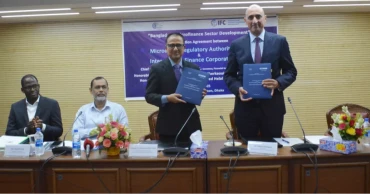
The MRA and the IFC have signed a project agreement worth approximately US $3.5 lakh, held at MRA headquarters in the capital on Wednesday.
Banks' CSR spending declines by 33 %, blame goes to loan scams
Prof Mohammad Helal Uddin, Executive Vice Chairman of MRA, and Mehdi Cherkaoui, South Asia Manager (FIG Upstream and Advisory) of IFC, signed the project document titled “Bangladesh Microfinance Sector Development (BMSD)”.
Md Saeed Kutub, additional secretary, graced the event as the guest of honour, while Prof Mohammad Helal Uddin presided over the ceremony attended by senior officials from the Ministry of Finance, Bangladesh Bank, CEOs and representatives of microfinance institutions, and officials from both IFC and MRA.
1 year ago
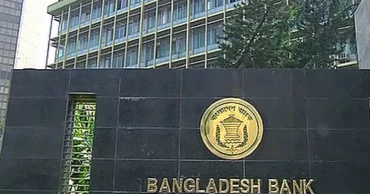
Banks' CSR spending declines by 33 %, blame goes to loan scams
Banks’ spending on corporate social responsibility (CSR) initiatives dropped by 33 percent in 2024 compared to the previous year, following a loan disbursement scam that shook the sector.
According to Bangladesh Bank's latest data, banks spent Tk 615.96 crore on CSR in 2024, which is 33 percent or Tk 308 crore less than the previous year.
In 2023, they spent Tk 924.32 crore in this sector. Prior to that, in 2022, the expenditure was Tk 1,129 crore. Compared to 2022, expenditure in 2024 decreased by Tk 513 crore or more than 45 percent.
According to regulations, the country's banks spend a portion of their profits on CSR activities. There is also a policy in place to ensure that CSR funds are used in the country's sustainable sectors.
But, the banks are not following the central bank's directives in this regard. Priority sectors like education and health are being neglected in the allocation of funds.
Simultaneously, expenditure in these sectors has been consistently decreasing, falling by half, as revealed in the central bank report.
These findings emerged from an analysis of the Bangladesh Bank's published report on CSR on Tuesday (April 15).
As per the existing rules, only banks that generate a net profit can undertake CSR expenditure. The percentage of profit to be spent or whether to spend at all is the bank's own decision. If they do spend, they are required to do so by the policy.
Bangladesh Bank's guidelines state that 30 percent of the total CSR expenditure of banks and financial institutions should be spent on the education sector, 30 percent on the health sector, and 20 percent on mitigation and adaptation to environmental and climate change.
The remaining 20 percent can be spent on income-generating initiatives, disaster management, infrastructure development, sports, entertainment and other sectors.
According to the report's data, the 61 scheduled banks, during the discussed period (2024), disregarded the directives and spent the highest amount, 54 percent or Tk 330.52 crore, in the 'other' sector.
Only 17.5 percent or Tk 108 crore was spent on education, 25.16 percent or Tk 155 crore on health and a mere 3.62 percent or Tk 22.36 crore on environmental and climate change mitigation.
In 2024, six banks did not spend any money on CSR. These banks are BASIC Bank, Bangladesh Krishi Bank, Rajshahi Krishi Unnayan Bank, Bangladesh Commerce Bank, National Bank and Padma Bank.
According to the rules, 14 banks ensured 30 percent expenditure in the education sector, 21 banks in the health sector, and 9 banks in the environmental and climate change mitigation-adaptation sector. Besides, 44 banks violated the policy by spending more than 20 percent in other sectors.
The report's data indicates that 8 banks did not achieve a net profit in 2023. These banks are BASIC Bank, Bangladesh Krishi Bank, Rajshahi Krishi Unnayan Bank, Bangladesh Commerce Bank, ICB Islamic Bank, Citizens Bank, National Bank, and Padma Bank. Despite not achieving a net profit, Citizens Bank and ICB Islamic Bank undertook CSR expenditure.
Thirteen banks licensed after 2013 have a condition to spend at least 10 percent of the previous year's net profit on CSR in the following year. If a bank does not have a net profit, it does not have to spend on CSR.
Bad loans must be cut to ensure good governance in banks: Speakers
Among these banks, NRB and Community Bank spent more than 10 percent last year. Padma and the new Citizen Bank, which were weakened due to various irregularities, did not do CSR in 2023 because they did not earn a net profit.
Besides, nine banks made a net profit but did not comply with the central bank's conditions. SBAC, Midland, Modhumoti, Simanto, NRB Commercial, Union, Meghna, Bengal Commercial Bank and Global Islami Bank are the banks.
1 year ago
FICCI calls for equitable energy tariff to safeguard investment, competitiveness
The Foreign Investors’ Chamber of Commerce and Industry (FICCI) on Tuesday expressed concern over the revised energy tariff for new industrial units.
The organisation issued a statement stating that the Bangladesh Energy Regulatory Commission (BERC) introduced a revised gas tariff structure distinguishing new, committed, and existing customers within the same industry category.
It said the FICCI fully supports the government’s objective of ensuring a sustainable and reliable energy supply, the newly announced tariff mechanism risks creating unintended barriers for new and expanding industries.
Under the current proposal, businesses with new Gas Sales Agreements (GSAs), increased demand, or recent connections will face significantly higher tariffs compared to existing customers, even within the same industrial classification.
President of FICCI Zaved Akhtar said a transparent and equitable energy pricing framework is fundamental to sustaining investor confidence and industrial growth.
“While we understand the evolving demands of energy management, we urge BERC to revisit this approach and ensure that policy changes align with the broader goals of economic development and FDI attraction,” he said.
Jahrat Adib Chowdhury made Deputy CEO of Banglalink
The FICCI president further said the provision to treat any new Gas Sales Agreement as a new connection, even for long-standing industrial users — introduces ambiguity and could lead to arbitrary reclassification.
“This could inadvertently disrupt existing business continuity and create administrative and operational uncertainty. New Gas Sales Agreement with existing customers should not be falling under the tariff for new connections,” he pointed out.
1 year ago

Do you consider Bangladesh as a cashless economy?
The concept of a cashless economy refers to an economic system where financial transactions are carried out through digital means rather than physical currency. In recent years, Bangladesh has witnessed rapid growth in digital financial services, leading many to believe that the country is moving towards a cashless future. However, the question remains: has Bangladesh truly become a cashless economy, or does the country still heavily depend on cash?
What is a cashless economy?
A cashless economy is a system where financial transactions are conducted digitally, eliminating the need for physical currency. Transactions are made using mobile banking apps, credit/debit cards, digital wallets, and QR codes. Popular examples in Bangladesh include mobile financial services like bKash and QR code payments at local vendors.
The benefits of a cashless economy include increased transparency, faster transactions, improved tax compliance, and enhanced financial inclusion. It also leads to greater economic efficiency by simplifying money flows and reducing handling costs.
Read more: Sanchayapatra at Maturity: Encashment or Renewal of Bangladesh’s National Savings Certificate
However, it also presents challenges such as reliance on technology, which can be vulnerable to failures and cyber threats. Digital exclusion is another issue, as people without smartphones or internet access may be left behind. Also, concerns about cybersecurity and data privacy need to be addressed to protect users from fraud and breaches.
While a cashless economy brings significant benefits, these challenges must be carefully managed for a successful transition.
Bangladesh’s Developments toward a Cashless Economy
Bangladesh has seen significant growth in mobile financial services (MFS) with platforms like bKash, Rocket, and Nagad, enabling millions to perform digital transactions. These services allow users to send and receive money, pay bills, and shop online. The COVID-19 pandemic accelerated this trend, pushing more people toward contactless transactions.
Read more: What to Consider Before Taking a Personal Loan from a Bangladeshi Bank
E-commerce has flourished as well, with businesses increasingly adopting mobile payments and card systems. Digital payments are now common in urban areas, extending from large stores and restaurants to ride-sharing services and even street vendors.
The government's initiatives, particularly the "Digital Bangladesh" vision and the "Cashless Bangladesh, Smart Bangladesh" campaign, have been crucial in this transformation. The introduction of QR code-based payments, like Bangla QR by Bangladesh Bank, has made it easy for even small and informal businesses to join the digital ecosystem. This low-cost solution allows customers and micro-merchants to make seamless transactions through various mobile apps and cards, paving the way for a more inclusive digital economy.
Bangladesh Facing Challenges and Limitations
Despite notable advancements, various obstacles continue to impede Bangladesh's complete transition to a cashless economy. A large portion of the rural population and informal sector still relies on cash, with many small business owners and daily wage workers hesitant to adopt digital payments due to limited digital literacy and concerns about taxation.
Read more: Buying US Dollar Investment Bonds: A Comprehensive Guide for NRBs
Uneven access to smartphones and reliable internet, particularly in remote areas, further exacerbates the issue. Even when digital tools are available, many users lack the necessary skills or trust to engage confidently with them. Additionally, fears around cybersecurity, fraud, and data privacy create barriers to adoption.
Financial institutions also face infrastructure challenges, including a shortage of point-of-sale (POS) terminals and inconsistent customer service, which affects user satisfaction and overall trust in digital systems.
Is Bangladesh a cashless economy?
Bangladesh is making strides toward a cashless economy, though full digitalisation remains a work in progress. Mobile financial services (MFS) and QR code payments have grown rapidly, with monthly transactions exceeding BDT 3,000 crore, as per Bangladesh Bank.
Read more: How to Invest in Bonds: A Comprehensive Guide
Urban areas lead the shift, while rural and low-income communities still rely heavily on cash. Initiatives like Bangla QR and personal retail accounts offer promise, particularly for micro-merchants and the informal sector.
However, for digital payments to be truly inclusive, the country needs stronger policy support, widespread financial literacy, improved infrastructure, and targeted awareness campaigns. These will help to bridge the gap and ensure equitable access to digital finance across all segments of society.
Final Lines
Bangladesh is progressing steadily on the path to becoming a cashless economy, but it is not there yet. The growing popularity of mobile banking, the government's proactive digital initiatives, and the development of low-cost, interoperable payment solutions are commendable.
Read more: How to Buy Bangladesh Government Treasury Bond: Everything You Need to Know
Yet, barriers such as cash reliance, digital exclusion, and security concerns continue to hold back full transformation. With the right investment, policy support, and public-private collaboration, Bangladesh has the potential to unlock the benefits of a truly cashless society and lead the way in digital financial innovation in South Asia.
1 year ago

Dhaka pushes for changing narratives; receives Tk 3,100 crore investment proposals
Executive Chairman of the Bangladesh Investment Development Authority (BIDA) Chowdhury Ashik Mahmud Bin Harun on Sunday said the Bangladesh Investment Summit 2025 helped the country receive initial investment proposals worth Tk 3,100 crore, stressing that time will say whether the Summit was successful or not.
“The idea is to build the pipeline and to change the narratives about Bangladesh. That is what we tried to push,” Ashik told reporters at the Foreign Service Academy, adding that the investors who joined the Summit were very happy and they returned home with required information.
Foreign investors eye consumer market, textiles, pharma, light engineering, renewable energy: BIDA Chairman
He said several additional investment proposals are currently in the pipeline.
Chief Adviser’s Press Secretary Shafiqul Alam and Deputy Press Secretary Abul Kalam Azad Majumder were, among others, present.
The BIDA Executive Chairman said they wanted to give the investors the right experience so that they talk about Bangladesh positively.
“We should do such summits regularly, at least once in a year. We would definitely say, clearly there were lots of interests,” he said.
Ashik said similar events will help create positive interest and momentum among the investors and hoped that the next government will continue this.
bKash wins BIDA’s ‘Excellence in Investment Award 2025’
Bangladesh hosted the global investors and top executives through the Bangladesh Investment Summit 2025 from April 7-10, aiming to spotlight the country’s evolving investment landscape, poised for transformative opportunities and unprecedented growth.
Global investment leaders, executives and industry pioneers engaged in discussion as Bangladesh redefines the future of investment in one of the world’s most dynamic markets.
Foreign investors express keen interest in Bangladesh: BIDA
There were 710 participants at the Summit including over 415 foreigners from 50 countries.
Around Tk 5 crore was spent to organise the four-day Summit, of which around Tk 1.5 crore came from the government and the remaining Tk 3.5 crore from partner organisations.
The BIDA Executive Chairman said the big political parties and their leaderships were completely aligned with the Summit.
1 year ago

Business as usual at Darshana port despite India's halt of transshipment services
After cancellation of transshipment by India, Darshana rail port in Chuadanga witnesses no impact on exports and imports as the port is only used for bilateral trade between Bangladesh and India, with no commercial linkage to third countries such as Nepal or Bhutan.
“At Darshana, all imports and exports take place exclusively with India. We have no trade connections with Nepal or Bhutan. So, the suspension of the transshipment facility does not affect us,” said Atiar Rahman Habu, general secretary of the C&F Agents’ Association at Darshana Rail Port.
However, he noted a slight slowdown in port activities since August 5. “Goods movement is continuing, but the pace is not what it used to be. Traders are waiting for things to return to normal,” he said.
Transshipment Facility: Four Bangladeshi trucks sent back from Benapole Port
1 year ago

DCCI, Singapore delegation discuss boosting bilateral cooperation
Enhanced bilateral cooperation in logistics, infrastructure and investment topped the agenda during a meeting between the Dhaka Chamber of Commerce and Industry (DCCI) and a visiting Singaporean business delegation on Thursday.
The 12-member team was led by Derek Loh, non-resident High Commissioner of Singapore to Bangladesh.
They met with DCCI President Taskeen Ahmed at the Chamber office during their visit.
Welcoming the delegation, Taskeen Ahmed highlighted Singapore's significant investment footprint in Bangladesh, noting it is the second-largest foreign investor with an investment of nearly USD 1.78 billion across various sectors.
The bilateral trade between the two countries reached USD 2.64 billion in the last fiscal year.
Taskeen said Singapore’s global reputation in efficient port and logistics management presents strong potential for collaboration.
Adoption of IFRS can open doors to international finance, investment: DCCI President
He invited Singaporean investors to explore opportunities in Bangladesh’s port operations, logistics, infrastructure, renewable energy, IT, agriculture and healthcare sectors.
Taskeen also urged Singapore’s support in enhancing the skills of Bangladeshi SME entrepreneurs to increase export competitiveness.
Technical assistance in modernising the jute and agriculture sectors was also sought.
On the global front, Taskeen welcomed the US decision to suspend the imposition of additional tariffs for 90 days, calling it a relief for global trade, while hoping for a long-term resolution through diplomatic dialogue.
High Commissioner Derek Loh emphasised the importance of reducing production and logistics costs to make business operations more competitive.
He expressed Singapore’s interest in working closely with Bangladesh to boost port efficiency and infrastructure development.
Derek Loh also stressed the need for reforms and automation in Bangladesh’s revenue sector and highlighted the benefits of adopting ESG (Environmental, Social and Governance) standards in industries.
While ESG compliance may initially increase investment costs, Loh said it will improve export competitiveness in the long term.
DCCI proposes single-digit VAT rate in budget recommendations
He added that Singapore is keen on supporting Bangladesh in strengthening its logistics capacity and has recently increased investments in renewable energy, citing its potential to lower production costs.
DCCI Senior Vice President Razeev H Chowdhury, Vice President Md. Salem Sulaiman, and members of the Board of Directors were also present at the meeting.
1 year ago
Bad loans must be cut to ensure good governance in banks: Speakers
Economists, researchers and academics have emphasised curtailing non-performing loans to ensure good governance in the banking sector and make the country's economy vibrant.
They also said that growing non-performing loans create challenges for banks and the economy of the country while global trate war is pushing the world towards chaos.
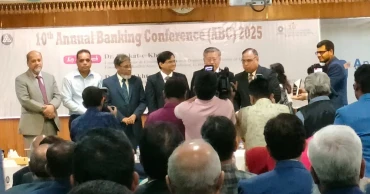
They made the remarks in a session on the 2nd day of ‘10th Annual Banking Conference-2025, organised by Bangladesh Institute of Bank Management (BIBM) at its Mirpur office.
Professor Dr. Barkat A Khoda was keynote speaker at the inaugural session of the second day.
Several sessions including FinTech and Financial Sector, Islami Banking and Governance, Risk Management and Bank Performance were held on the 2nd day.
The conference sessions cover contemporary issues and sustainability concerns on banking, finance and the economy both in the national and international context.
Speaking at an event Dr. Shah Ahsan Habib, senior Professor of BIBM said that the global economic and financial landscape is undergoing unprecedented transformation.
Bad loans in banking sector hits Tk6.75 lakh crore: White Paper
“We are witnessing a paradigm shift, a new wave of economic nationalism, protectionism, and currency uncertainty that is challenging for the foundation of the International Monetary Order,” he said.
The economy in today’s context reminds us of a long-gone yet defining period in economic history: ‘Interwar Period’ or the period between the First and Second World War. That time was marked by suspended gold convertibility, monetary fragmentation, and the notorious “beggar-thy-neighbour” policies, he pointed out.
“We know that Beggar-thy-neighbour policies were the economic strategies where a country tries to improve its own economy at the expense of others, often through tariffs or currency devaluation, so we have to prepare for any such previous situation,” he added.
He said that the leading economies were engaged not with cooperation, but with tariffs, trade barriers, and exchange controls now. In conséquences, a great economic depression like 1930 could be repeated. So there is need to prepare for a bad situation.
Md. Sabur Khan, chairman, Daffodil International University, Mohammad Abdul Mannan, chairman, First Security Islami Bank, Dr. Mahmood Osman Imam, Professor and dean, Business Studies, University of Dhaka chaired different sessions of the event on Thursday.
Around 1000 officials of different banks, economists, academicians and panelists participated in the two days session of the conference.
IMF voices concern over rising bad loans in banks
The annunal conference has been thr hallmark of BIBM since 2012. The two- day event brings together experts, academicians and researchers from all over the world to exchange and share knowledge, experience and research outputs on banking and related issues.
1 year ago