local-business

City Bank to introduce inflation-adjusted wages in payroll
The City Bank, one of the first-generation private commercial banks, has announced an initiative to adjust employees' salaries in line with annual inflation, to ensure the support and well-being of its employees.
The bank's board of directors has approved an annual increment of Tk 162 crore for 2024; including PMP adjustments and bonuses, which will total Tk 300 crore by the end of 2025.
This move would significantly raise the bank's total payroll expenditure of Tk 1,210 crore annually by the end of next year.
The decision was taken based on the results of a salary survey conducted by Cerebrus Consultants Limited, comparing City Bank's compensation packages with BRAC Bank, EBL, MTBL, Prime Bank and Dhaka Bank.
Read: City Bank Director Rubel Aziz to sell 34 lakh shares by October 31
City Bank has taken the initiative to restructure its payscale on the basis of fairness, in line with the current market situation.
Employees whose salaries are significantly lower than the current market will receive higher increments under this move; And those whose salaries are close to the current market average will receive a relatively small increment, said a top official of the bank.
1 year ago

NCC Bank initiates digital banking transformation partnering FloraBank
National Credit and Commerce Bank PLC (NCCB) has announced a landmark digital transformation initiative, marking a significant step forward in its commitment to enhanced technological infrastructure and superior customer experiences.
NCCB formalized its partnership with Flora Systems Limited through the Agreement signing ceremony at NCCBL Headquarters, Motijheel. This partnership aims to bolster NCCB's operational efficiency and service quality via the deployment of Flora Systems' advanced core banking solutions.
Concerns raised over interviewees for BFIU head position
The agreement was signed by M Shamsul Arefin, Managing Director, NCCBL and Mustafa Rafiqul Islam, Chairman & Managing Director, Flora Systems Limited.
NCCB has been utilizing FloraBank CBS since 2008, having replaced the foreign CBS MicroBanker. For this latest upgrade, Flora Systems successfully competed against globally renowned core banking solutions from Oracle, Temenos and others, underscoring the robustness and competitive value of Flora Systems' locally developed CBS.
As part of the arrangement, Flora Systems will implement its FloraBank Core Banking System (CBS) across NCCB’s operational landscape, upgrading the system from version 18.4 to 22.4. This transition is self-assured to strengthen service quality, enhance operational efficiency, and strengthen security, aligning with NCCB’s focus on innovation and customer-centric solutions.
FloraBank CBS is recognized as Bangladesh’s leading core banking platform, designed to support secure, multi-currency transactions, comprehensive security measures, and robust fraud prevention tools to ensure a secure financial environment. This locally developed solution is currently deployed as a full CBS solution across 8 major banks in Bangladesh, with additional services provided to 7 other financial institutions.
Another 4% hike in annual increment recommended for RMG workers
Beyond the core banking upgrade, Flora Systems through its FloraBank CBS will introduce a comprehensive suite of digital banking services, including an integrated Treasury System, upgraded BEFTN, BACH & MICR with Nikash, AML and Screening System, MIS and Regulatory Reporting with advanced design tools, Fixed Asset Management, Agent Banking, Internet Banking, Mobile Wallet, Management Dashboards, and additional features to further enhance NCCB’s digital capabilities.
This strategic digital transformation with Flora Systems Limited is a testament to NCCB’s dedication to adopting innovative, technology-driven banking solutions that will empower its customers and improve service delivery.
1 year ago
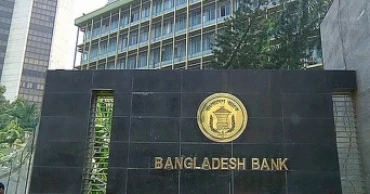
Fresh designs, new era: Bangladesh Bank to launch new notes
The much-hyped launch of new Bangladeshi currency notes is on the horizon, with denominations of Tk 20, Tk 100, Tk 500, and Tk 1,000 expected to grace the market within the next six months.
Bangladesh Bank made the disclosure, sparking widespread curiosity about the design elements of the forthcoming notes.
The introduction of new notes is certain. But, it is too early to confirm the exact design specifications, said Husne Ara Shikha, spokesperson and executive director of the central bank.
With Mujib or No Mujib?
Sources close to the central bank hinted at a potential shift in design philosophy, suggesting that the iconic portrait of Sheikh Mujibur Rahman might no longer feature on the new notes.
Speculations abound that the new currency could instead highlight Bangladesh’s national emblem or the graffiti from the July Revolution, reflecting a distinct cultural and historical ethos.
They said the government has approved the printing of new currency notes, and they are expected to be introduced within six months after completing the necessary processes.
Design Overhaul
Additional insights from the Security Printing Corporation and the Ministry of Finance suggest that the proposed changes are poised to reshape the visual identity of Bangladesh’s banknotes.
If implemented, the designs would shift from portraying Sheikh Mujibur Rahman to showcasing religious sites, traditional Bengali motifs, and, intriguingly, the evocative imagery of the July Revolution’s graffiti.
Read: BB raises limit for private travel foreign currency exchange
1 year ago

EU, Bangladesh discuss ILO Conventions, money recovery
Commerce Adviser Sheikh Bashir Uddin has said Bangladesh has a clear roadmap to implement conventions of the International Labour Organization (ILO) as the country has the full admiration to it.
He said this when European Union Ambassador and head of delegation Michael Miller paid a courtesy call on him at his office in Dhaka on Tuesday.
Bashir Uddin issues like bilateral trade, increased mutual cooperation, and implementation of the ILO convention and return of laundered money came up at the meeting for discussion.
The adviser said Bangladesh has a huge population, mostly of youths, and the government wants an economic emancipation by utilising them after making them skilled human resources.
Addressing the price hike of commodities, the adviser said they slapped tax on import to stablise local market.
Read more: Bangladesh, South Korea eye stronger ties through bilateral trade and investment
The European Union Ambassador said the free trade contract between the countries will play a vital role in speeding up the trade.
The direct investment from Europe to Bangladesh will escalate if the atmosphere of investment is developed.
Michael Miller expressed keenness in assisting Bangladesh in returning back the laundered and stolen money by logistics and experts.
1 year ago
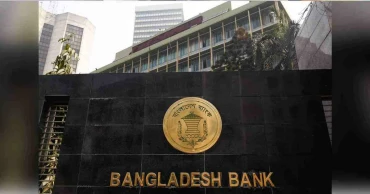
IMF suggests upward policy rate in 2025 to restrain inflation: BB
With Bangladesh facing higher inflation for a long time, the International Monetary Fund (IMF) has advised keeping the policy interest rate on the rise until inflation decreases.
Bangladesh Bank Spokesperson and Executive Director Huseara Shikha hinted this while talking to reporters at her office on Tuesday.
She said this ahead of a delegation led by IMF mission Chief Chris Papadakis, scheduled to visit Bangladesh from December 3 to 17 to review the IMF conditions.
The IMF says that inflation in Bangladesh is currently above 11 percent. It will remain around 10 percent throughout 2025, and after that, the international donor agency believes it may come down to 6 to 7 percent.
The fourth tranche of the US $4.7 billion loan program depends on fulfilling the conditions given by the global lender.
Read: BB Governor projects inflation reduction in 8 months
The IMF imposed conditions on Bangladesh for providing this loan.
Although almost all the conditions given by the lender are on track to be met, it is well behind the revenue collection target. However, the installment has already been released after showing progress in fulfilling most of the conditions.
Earlier, in January 2023, the IMF approved a $4.7 billion loan for Bangladesh. It was supposed to provide this loan to Bangladesh subject to conditions.
The IMF delegation is reviewing each installment of this loan, which was given in seven installments, before releasing it.
1 year ago
Bangladesh Bank approves Tk 3,000 crore low-interest loan for ICB
The Investment Corporation of Bangladesh (ICB) has received approval from Bangladesh Bank for a Tk 3,000 crore loan at a reduced interest rate of 4%, down from the initial 10%.
Two-thirds of the loan will be utilised for repaying the corporation's existing debts, while the remaining amount will be invested in the capital market, said ICB Chairman Abu Ahmed confirming the information on Tuesday.
Earlier, on November 13, the government provided a sovereign guarantee to facilitate the loan.
Based on this guarantee, Bangladesh Bank issued a formal letter to ICB on November 27, sanctioning the Tk 3,000-crore loan at a 10% interest rate with a tenure of 18 months.
Read: ICB Asset Management AGM approves 110% dividend
ICB later informed Bangladesh Bank that the 10% interest rate was unsustainable for the institution and requested a reduction to 4%.
Following the proposal, the central bank approved the loan at the revised interest rate.
The financial support aims to strengthen ICB’s capacity to meet its obligations while bolstering investments in the capital market, aligning with broader economic stability goals, Abu Ahmed said.
1 year ago

Siam Ahmed appointed brand ambassador of Walton Cables
Actor Siam Ahmed has been appointed as the promotional ambassador for Walton Cables, a product of the global electronics brand Walton.
In this regard, an agreement between Siam and Walton was officially signed at the Walton Corporate Office on Thursday (Nov 28, 2024).
Walton records Tk 149.03cr profit in July-Sept, 2024
On behalf of Walton Hi-Tech, Senior Executive Director and film actor Amin Khan signed the deal with Siam Ahmed.
The event was attended by Walton Hi-Tech Additional Managing Director Eva Rezwana, Business Coordinator to Walton Hi-Tech’s Chairman Abdullah-Al-Mamun, Deputy Chief Marketing Officer Zoheb Ahmed, Walton Cables’ Chief Business Officer Razu Ahmed, and other senior officials of the company.
Walton gets huge responses from global buyers in Canton Fair
Addressing the function, Siam Ahmed said, “Walton is our pride. They are leading the country’s electronics sector and also earning significant foreign currency through exports. They are brightening the image of Bangladesh on the global stage. I’m thrilled to join Walton’s vast family. Thanks to Walton Cables.”
Film actor Amin Khan said, “Siam Ahmed is one of the most talented actors in our film industry. We are very happy to have him as Walton Cables’ brand ambassador. Walton Cables will move forward with Siam Ahmed, and he will take the brand to new heights.”
1 year ago
Bangladesh Bank provides Tk 22,500 crore liquidity support to banks
The Bangladesh Bank (BB) has provided Tk 22,500 crore in liquidity support to several banks facing a liquidity crunch, said Governor Dr Ahsan H Mansur on Thursday.
Speaking at a press conference held at the Jahangir Alam Conference Hall within the BB headquarters, the governor explained the rationale behind the central bank's actions.
Dr Mansur acknowledged that the Bangladesh Bank had temporarily deviated from its policy of not printing money to inject liquidity into the banking sector.
He, however, stressed that this move was a temporary measure aimed at stabilising the sector and ensuring financial flows remained uninterrupted. “The tight monetary policy remains intact and our efforts to curb excess liquidity in the market will continue.”
Moody’s downgrade doesn’t reflect economic progress since July upsurge: Bangladesh Bank
Addressing concerns about potential misuse of newly injected funds, the governor said that the current measures do not signify a return to practices seen in the recent past, where money printing led to alleged misappropriations.
“This time, we have ensured that funds are allocated transparently and securely, eliminating opportunities for pilferage,” Dr Mansur said.
The governor also stressed the central bank’s commitment to safeguarding depositors' interests. “The deposit of every person in every bank is safe and secure. We are unwavering in our efforts to maintain depositor confidence,” he asserted.
The central bank is providing liquidity support to address the temporary cash shortages in banks, enabling customers to withdraw the required funds, said the Bangladesh Bank Governor. To facilitate this support, the central bank will temporarily print money to meet the provisional needs of different banks, he added.
Dhaka Stock Exchange sees downtrend: DSEX drops by 51.08 points
The governor also reassured the public that all deposits in banks are secure and urged people not to panic or withdraw money unnecessarily.
He hinted that the additional liquidity introduced into the market would be managed through various types of bonds to prevent inflationary pressures.
1 year ago

Gold price reduced by Tk1,890 per bhori, remains over Tk 140,000
The Bangladesh Jewelers Association (BAJUS) has lowered the price of gold by Tk 1,890 per bhori for the local market.
The decision was made by the Standing Committee on Pricing and Price Monitoring of the Bangladesh Jewelers Association during a meeting in Dhaka on Monday, according to a statement from the association.
The new rate will be effective from tomorrow (Tuesday, November 26), it added.
According to the new price, the good quality 22-carat gold will be sold at Tk 140,376, down from Tk 142,266 earlier.
The price of 21-carat solid gold is Tk133,996 per bhori, 18-carat is Tk114,855 per bhori and traditional gold price is Tk 94,326.
The price of gold has decreased but the price of silver has been kept unchanged.
By category, currently, a bhori of 22-carat silver price is Tk2,577, 21-carat price is Tk2,449, 18-carat price is Tk2,111, and traditional method silver price is Tk1,586.
(1 bhori = 11.664 grams)
1 year ago
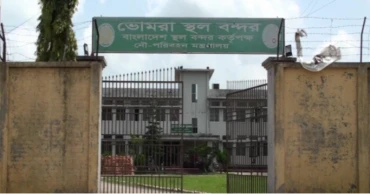
6,520 MT of Indian rice imported through Satkhira's Bhomra in 8 days
Bangladesh imported 6,520.21 metric tonnes (MT) of rice from India through Bhomra Land Port in Satkhira over the past 8 days that authorities hope would help stabilise the country’s rice market.
The import began on November 13 after the withdrawal of customs duties on rice imports by the National Board of Revenue (NBR).
According to sources at the port authority, after the duty withdrawal, 12 companies approved by the Ministry of Food started importing through Bhomra.
Read: 131MT rice imported from India through Hili Land Port
Among the imports, Dhaka-based Old Paltan Majumdar Agrotech International imported around 1,861.47 MT of rice in four shipments. These included 770 MT on November 13, 368.5 MT on November 16, 380.97 MT on November 17, and 342 MT on November 18.
Mukul Enterprise from Kalai of Satkhira, imported 300 MT in three shipments: 100 MT each on November 13, 14, and 17. Ismail Hossain Milon from Jhikargacha of Jashore, imported 100 MT on November 13, while Abul Monsur Khan from Bogura brought in a total of 500 MT across three dates: 150 MT on November 14 and 16, and 200 MT on November 18.
Abu Musa, general secretary of Bhomra Customs C&F Agents Association, said the Indian government had imposed a ban on rice exports to Bangladesh on July 20, 2023.
Read: Rice import from India through Benapole port resumes after 2 years
Recently the country lifted the ban allowing export to Bangladesh, he said.
Abul Kalam Azad, deputy commissioner of Bhomra Land Customs Station, 6,520.21 MT of rice was imported from India through the port in eight days from November 13.
If this trend continues, rice imports through this port will increase in the future, he said.
1 year ago