World-Business

China's foreign trade demonstrates resilience despite challenging global environment
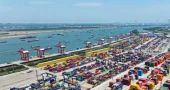
China's foreign trade has demonstrated resilience and vitality this year despite a complex external environment, with growth in both the scale and quality of trade in goods, the Chinese Ministry of Commerce said on Thursday.
According to Ministry spokesperson He Yadong, in the first five months of this year, China's imports and exports with Belt and Road partner countries increased by 4.2 percent, ASEAN member states by 9.1 percent, and African nations by 12.4 percent.
He said at a regular press briefing that these figures demonstrate China's trade network is becoming increasingly diverse, with emerging markets contributing to incremental growth.
The country's high-tech and high-value-added products have become more competitive, with exports of electromechanical products rising 9.3 percent in the first five months of the year, accounting for 60 percent of China's total exports.
During the same period, imports and exports by private enterprises grew 7 percent, accounting for 57.1 percent of China's total foreign trade.
In the face of a complex and volatile external environment, China will steadfastly expand its high-standard opening-up and address the uncertainty of drastic changes in the external environment with the certainty of its own high-quality development, the spokesperson said.
China looks forward to working with more trade partners to address risks and challenges, and to promote mutually beneficial cooperation, he added.
11 months ago
China’s resource edge reshapes global trade dynamics
China’s dominance over critical minerals in global supply chains was a powerful bargaining chip in trade talks between Beijing and Washington that concluded with both sides saying they have a framework to pursue a deal.
China has spent decades building the world's main industrial chain for mining and processing such materials, which are used in many industries such as electronics, advanced manufacturing, defense and health care.
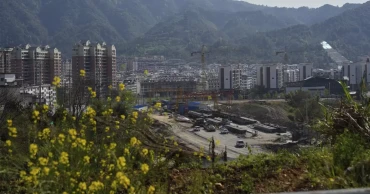
Mines and factories in and around Ganzhou, a key production hub for rare earths, underpin China's control over the minerals. Many residents grew up collecting rocks containing the valuable minerals from the forested hills surrounding the southern city and today make a living from mining, trading or processing them.
Critical minerals as a trade issue
Responding to ever higher tariffs and other controls on advanced technology, China told exporters of certain key rare earths and other critical minerals to obtain licenses for every shipment abroad. Approvals can take weeks, leading to supply chain disruptions in the U.S. and other countries.
President Donald Trump said Wednesday that China would make it easier for American industry to obtain much-needed needed magnets and rare earth minerals, clearing the way for talks to continue between the world’s two biggest economies. In return, Trump said, the U.S. will stop efforts to revoke the visas of Chinese nationals on U.S. college campuses.
But details remain scarce. Beijing has not confirmed what the negotiators agreed to, and Chinese President Xi Jinping and Trump himself have yet to sign off on it.
The Chinese Commerce Ministry said Saturday it had approved a “certain number” of export licenses for rare earth products, apparently acknowledging Trump’s personal request to Xi during a phone call last week. And on Wednesday, the Ganzhou-based rare-earth conglomerate JL MAG Rare-Earth Co. confirmed it had obtained some export licenses for shipments to destinations including the U.S., Europe and Southeast Asia.
Experts say, however, Beijing is unlikely to do away with the permit system enabling it to control access to those valuable resources.
The only scenario in which China might deregulate its critical minerals export is if the U.S. first fully removes tariffs imposed on Chinese goods as part of the trade war, said Wang Yiwei, a professor of international affairs at Renmin University, echoing the Chinese government’s earlier stance.
“Without that,” he said, “it will be difficult to blame China for continuing to strengthen its export controls.”
US and China agree to resolve their trade disputes
An industry built over decades with government support
In 1992, Deng Xiaoping, the leader who launched China's ascent as the world's biggest manufacturing power, famously said “the Middle East has oil, China has rare earths,” signaling a desire to leverage access to the key minerals.
Several generations later, Beijing has made its rich reserves of rare earths, a group of 17 minerals that are abundant in the earth’s crust but hard, expensive and environmentally polluting to process, a key element of China's economic security. In 2019, during a visit to a rare earth processing plant in Ganzhou, Xi described rare earths as a “vital strategic resource.”
China today has an essential monopoly over “heavy rare earths,” used for making powerful, heat-resistance magnets used in industries such as defense and electric vehicles.
The country also produces around 80% of the world’s tungsten, gallium and antimony, and 60% of the world’s germanium -– all minerals used in the making of semiconductors, among other advanced technologies.
The risks of dependency on Chinese suppliers first came into focus in 2010, when Beijing suspended rare earths exports to Japan due to a territorial dispute. The ban was lifted after about two months, but as a precaution, Japan invested in rare earths processing plants in other countries and began stockpiling the materials.
Beijing's across-the-board requirement for export licenses for some critical minerals has put pressure on world electronics manufacturers and automakers.
Some auto parts makers in Europe have shut down production lines due to delays in supply deliveries, according to the European Association of Automotive Suppliers. In the U.S., Tesla CEO Elon Musk said a shortage of rare earths is affecting his company’s work on humanoid robots.
China's critical minerals resources are dwindling
In the drab industrial hub of Ganzhou, cradled by the scenic Dayu Mountains, the U.S.-China trade war is still a distant stressor. Miners and small mineral traders interviewed by The Associated Press said they are more concerned about depleting the mountains' once-abundant resources.
US and China in trade talks in London after Trump's phone call
Zhong, a tungsten factory manager in Ganzhou who would only give his last name, worked his way up to manager from a miner, but he's unsure there is a future for him and others in the industry.
“I find growing difficulties to source tungsten these days,” he said, adding that smaller mines and trading companies are slowly disappearing as the resources are dwindling. Tungsten is an ultra-hard metal used in armor-piercing ammunition, nuclear reactors and semiconductors.
At least five tungsten mines have closed in the area in recent years, according to state media. Remaining reserves are deeper and harder to extract and process after decades of exploitation, said Li Shangkui, chairman of the Ganzhou-based Jiangxi Yuean Advanced Materials Co., Ltd.
Processing factories in Ganzhou now routinely source materials from other provinces or other countries. Zhong’s plant imports some raw materials from places like Africa and Cambodia.
Major state-owned and private companies in Ganzhou are also ramping up investments abroad. Tungsten producer Ganzhou Haisheng, for instance, announced last year a $25 million investment in a new tungsten plant in Thailand.
Whatever the challenges in procuring raw materials, China likely will seek to maintain its dominance in critical minerals, said Fabian Villalobos, an engineer and critical minerals expert at the RAND think tank.
The U.S. lags far behind China on critical minerals
Between 2020 and 2023, the U.S. imported at least 70% of the rare earth compounds it used from China, according to the U.S. Geological Survey. It has diversified its sources in recent years, but still mainly relies on China.
Since beginning his second term in office, Trump has made improving access to critical minerals a matter of national security. But the U.S. has an incredibly long way to go to catch up with China, experts say.
The sole operational U.S. rare earths mine, in Mountain Pass, California, is unable to separate heavy rare earths. It sends its ore to China for processing. The U.S. Defense Department has provided funding to the mine's owner, MP Materials, to build new separation facilities. It will take months to build and still only produce a fraction of what is needed.
Friction over the issue has opened the way for government-backed financing that was unavailable before, said Mark Smith, who ran the Mountain Pass mine in the early 2010s and now leads NioCorp. It's seeking about $780 million in financing through the U.S. Export-Import Bank to build a processing facility in Nebraska for critical minerals including rare earths.
The Defense Department has committed $439 million to building domestic rare earth supply chains, but building a complete mining and processing industrial chain like China's could take decades.
“There are going to be some real issues here unless we can figure out how to get along with China for a period of time while we're developing our own resources and our mainstream processing,” Smith said.
China’s trade surges 2.5% in first five months of 2025
The spotlight on critical minerals also provides opportunities for smaller miners to invest in extracting and processing some critical minerals, such as tungsten, considered “niche” because they are needed in relatively small amounts in key industries, said Milo McBride, an expert on sustainability and geopolitics at the Carnegie Endowment for International Peace.
“For many of these companies, the business strategy hedges on a scenario where the U.S. and China become more confrontational and where trade relations become more uncomfortable,” McBride said. “And all of a sudden, what was once an uneconomic project somewhere outside of China starts to make more sense.”
11 months ago

Google offers more buyouts amid AI shift, antitrust pressure
Google has offered buyouts to another swath of its workforce across several key divisions in a fresh round of cost cutting coming ahead of a court decision that could order a breakup of its internet empire.
The Mountain View, California, company confirmed the streamlining that was reported by several news outlets. It’s not clear how many employees are affected, but the offers were made to staff in Google's search, advertising, research and engineering units, according to The Wall Street Journal.
AP reported that Google employs most of the nearly 186,000 workers on the worldwide payroll of its parent company, Alphabet Inc.
“Earlier this year, some of our teams introduced a voluntary exit program with severance for US-based Googlers, and several more are now offering the program to support our important work ahead," a Google spokesperson, Courtenay Mencini, said in a statement.
US and China agree to resolve their trade disputes
“A number of teams are also asking remote employees who live near an office to return to a hybrid work schedule in order to bring folks more together in-person,” Mencini said.
Google is offering the buyouts while awaiting for a federal judge to determine its fate after its ubiquitous search engine was declared an illegal monopoly as part of nearly 5-year-old case by the US Justice Department.
US District Judge Amit Mehta is weighing a government proposal seeking to ban Google paying more than $26 billon annually to Apple and other technology companies to lock in its search engine as the go-to place for online information, require it to share data with rivals and force a sale of its popular Chrome browser.
The judge is expected to rule before Labor Day, clearing the way for Google to pursue its plan to appeal last year's decision that labeled its search engine as a monopoly.
Like several of its peers in Big Tech, Google has been periodically reducing its headcount since 2023 as the industry began to backtrack from the hiring spree that was triggered during pandemic lockdowns that spurred feverish demand for digital services.
11 months ago
US and China agree to resolve their trade disputes
Senior U.S. and Chinese negotiators have agreed on a framework to get their trade negotiations back on track after a series of disputes that threatened to derail them, Chinese state media said Wednesday.
The announcement followed two days of talks in the British capital that ended late Tuesday.
The meetings appeared to focus on finding a way to resolve disputes over mineral and technology exports that had shaken a fragile truce on trade reached in Geneva last month. It’s not clear whether any progress was made on the more fundamental differences over China’s sizeable trade surplus with the United States.
President Donald Trump spoke with Chinese leader Xi Jinping by phone last week to try to calm the waters.
Li Chenggang, a vice minister of commerce and China’s international trade representative, said the two sides had agreed in principle on a framework for implementing the consensus reached between the two leaders and at the talks on Geneva, the official Xinhua News Agency said.
Further details, including any plans for a potential next round of talks, were not immediately available.
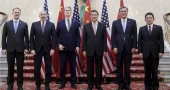
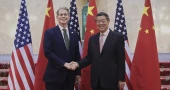
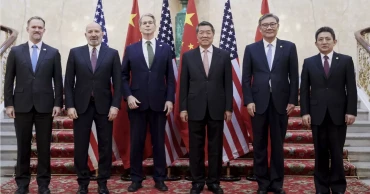
Li and Wang Wentao, China’s commerce minister, were part of the delegation led by Vice Premier He Lifeng. They met with U.S. Commerce Secretary Howard Lutnick, Treasury Secretary Scott Bessent and Trade Representative Jamieson Greer at Lancaster House, a 200-year-old mansion near Buckingham Palace.
Wendy Cutler, a former U.S. trade negotiator, said the disputes had frittered away 30 of the 90 days the two sides have to try to resolve their disputes.
Tokyo stocks rise on hopes for progress in US-China trade talks
They agreed in Geneva to a 90-day suspension of most of the 100%-plus tariffs they had imposed on each other in an escalating trade war that sparked fears of recession. The World Bank, citing a rise in trade barriers, cut its projections Tuesday for U.S. and global economic growth this year.
“The U.S. and China lost valuable time in restoring their Geneva agreements,” said Cutler, now vice president at the Asia Society Policy Institute. “Now, only sixty days remain to address issues of concern, including unfair trade practices, excess capacity, transshipment and fentanyl.”
Since the Geneva talks, the U.S. and China have exchanged angry words over advanced semiconductors that power artificial intelligence, visas for Chinese students at American universities and rare earth minerals that are vital to carmakers and other industries.
China, the world's biggest producer of rare earths, has signaled it may ease export restrictions it placed on the elements in April. The restrictions alarmed automakers around the world who rely on them. Beijing, in turn, wants the U.S. to lift restrictions on Chinese access to the technology used to make advanced semiconductors.
Cutler said it would be unprecedented for the U.S. to negotiate on its export controls, which she described as an irritant that China has been raising for nearly 20 years.
“By doing so, the U.S. has opened a door for China to insist on adding export controls to future negotiating agendas,” she said.
In Washington, a federal appeals court agreed Tuesday to let the government keep collecting tariffs that Trump has imposed not just on China but also on other countries worldwide while the administration appeals a ruling against his signature trade policy.
US and China in trade talks in London after Trump's phone call
Trump said earlier that he wants to “open up China,” the world’s dominant manufacturer, to U.S. products.
“If we don’t open up China, maybe we won’t do anything,” Trump said at the White House. “But we want to open up China.”
11 months ago
Tokyo stocks rise on hopes for progress in US-China trade talks
Tokyo stocks ended higher Tuesday, lifted by hopes for easing tensions as the United States and China prepare to hold trade talks for a second day.
Japan's benchmark Nikkei stock index, the 225-issue Nikkei Stock Average, ended up 122.94 points, or 0.32 per cent, from Monday at 38,211.51, Xinhua reports.
The broader Topix index, meanwhile, finished 0.83 point, or 0.03 per cent, higher at 2,786.24.
US and China in trade talks in London after Trump's phone call
On the stock market, sentiment was lifted after senior US officials made positive remarks following the conclusion of the first day of high-level trade talks between the world's two largest economies in London on Monday, analysts said.
But gains were limited as investors cautiously awaited the outcome of negotiations to see whether Washington and Beijing can come up with specific agreements, they added.
11 months ago

US and China in trade talks in London after Trump's phone call
High-level delegations from the United States and China met in London on Monday to try and shore up a fragile truce in a trade dispute that has roiled the global economy,
A Chinese delegation led by Vice Premier He Lifeng held talks with U.S. Commerce Secretary Howard Lutnick, Treasury Secretary Scott Bessent and Trade Representative Jamieson Greer at Lancaster House, an ornate 200-year-old mansion near Buckingham Palace.
Wang Wentao, China’s commerce minister, also was part of Beijing's delegation.
The talks, which may continue Tuesday, follow negotiations in Geneva last month that brought a temporary respite in the trade war.
The two countries announced May 12 they had agreed to a 90-day suspension of most of the 100%-plus tariffs they had imposed on each other in an escalating trade war that had sparked fears of recession.
The U.S. and China are the world's biggest and second-biggest economies. Chinese trade data shows that exports to the United States fell 35% in May from a year earlier.
China’s trade surges 2.5% in first five months of 2025
Since the Geneva talks, the U.S. and China have exchanged angry words over advanced semiconductors that power artificial intelligence, visas for Chinese students at American universities and " rare earth ” minerals that are vital to carmakers and other industries.
President Donald Trump spoke at length with Chinese leader Xi Jinping by phone last Thursday in an attempt to put relations back on track. Trump announced on social media the following day that the trade talks would resume in London.
Rare earths were expected to be a focus of the talks. The Chinese government started requiring producers to obtain a license to export seven rare earth elements in April. Resulting shortages sent automakers worldwide into a tizzy. As stockpiles ran down, some worried they would have to halt production.
Beijing indicated Saturday that it is addressing the concerns, which have come from European companies as well as U.S. firms.
Kevin Hassett, a U.S. economic adviser, told CNBC on Monday that he expected a short meeting with “a big, strong handshake” on rare earths.
The U.K. government says it is providing the venue and logistics but is not involved in the talks, though British Treasury chief Rachel Reeves met with both Bessent and He on Sunday, and U.K. Business Secretary Jonathan Reynolds was due to meet Wang.
Wall Street climbs after strong iobs report, secures second weekly win
“We are a nation that champions free trade and have always been clear that a trade war is in nobody’s interests, so we welcome these talks,” the British government said in a statement.
11 months ago
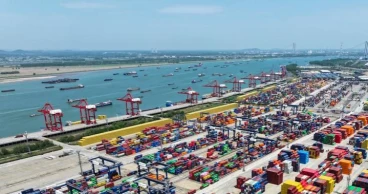
China’s trade surges 2.5% in first five months of 2025
China's total goods imports and exports in yuan-denominated terms rose to 17.94 trillion yuan (about 2.5 trillion U.S. dollars) in the first five months of 2025, up 2.5 percent year on year, official data showed Monday.
The growth rate marked an increase of 0.1 percentage points compared to that registered in the first four months of 2025, according to the General Administration of Customs.
During the first five months of 2025, China's exports rose 7.2 percent year on year to 10.67 trillion yuan while imports fell 3.8 percent to 7.27 trillion yuan.
In May alone, China's total goods imports and exports in yuan-denominated terms rose 2.7 percent year on year, the data showed.
Last month, goods exports rose 6.3 percent year on year, while imports went down 2.1 percent, according to the data.
11 months ago
Wall Street climbs after strong iobs report, secures second weekly win
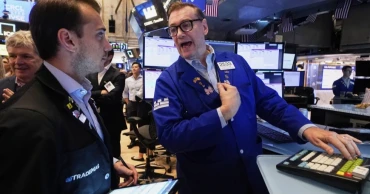
U.S. stocks advanced on Friday, boosted by a stronger-than-expected jobs report, helping Wall Street notch a second straight winning week.
All 11 sectors in the S&P 500 posted gains, pushing the index closer to its all-time high. After recovering from a decline two months ago, the benchmark index is now within 2.3% of its record.
S&P 500: Gained 61.06 points (1%) to close at 6,000.36Dow Jones Industrial Average: Rose 443.13 points (1%) to 42,762.87Nasdaq Composite: Added 231.50 points (1.2%) to finish at 19,529.95Tech stocks led the rally, with major players like Nvidia up 1.2% and Apple climbing 1.6%. Tesla rebounded 3.7%, recouping some of Thursday’s losses sparked by a social media spat between Elon Musk and Donald Trump.
Circle Internet Group, the issuer of a major cryptocurrency, surged 29.4%, extending its explosive 168% gain from its NYSE debut on Thursday.
Solid Jobs Data Eases Worries—For NowThe U.S. added 139,000 jobs last month, a slowdown but still a healthy sign amid the uncertainty created by President Trump’s ongoing trade disputes. Despite concerns about tariff impacts, the labor market remains relatively strong.
Wall Street edges up as Trump’s metal tariffs kick in
Chris Zaccarelli, CIO of Northlight Asset Management, commented, “Everything seems to be operating smoothly for now, but we haven’t yet seen the full impact of the tariffs.”
While the U.S. government also faces potential setbacks from the Trump-Musk feud, many businesses are already feeling the tariff squeeze. Lululemon Athletica shares plunged 19.8% after the yoga apparel brand slashed profit forecasts, citing rising costs from tariffs and stiff competition from emerging labels.
Lululemon is one of many companies warning that increased costs and cautious consumer behavior due to tariffs could hurt future earnings.
Trade Hopes Fuel Market RecoveryInvestor optimism that Trump will ease tariffs if trade deals are reached has been a key driver behind the market’s recent rebound. Talks with China resume Monday in London as U.S. officials meet with a Chinese delegation for further negotiations.
Tariffs are already impacting imports, exports, and raw material prices—particularly steel—raising the possibility of more significant economic effects if duties increase further.
Economic Headwinds and Fed PolicyThe U.S. economy contracted in Q1, and recent data from the Institute for Supply Management indicates both manufacturing and services sectors also shrank last month. The OECD has revised its forecast for U.S. growth in 2025 down to 1.6%, from 2.8% in 2024.
The Federal Reserve remains cautious, keeping its benchmark interest rate unchanged as it watches inflation and tariffs. The Fed is walking a fine line: while cutting rates might stimulate the economy, it could also drive inflation higher—especially with rising import costs.
After three rate cuts in late 2024, the Fed has held rates steady this year and is expected to do so again at its June meeting. Still, many traders believe the central bank will need to cut rates later in 2025 to support the slowing economy.
Asian shares shoot higher as US stocks inch toward their records
Bond Market MovesTreasury yields rose sharply:
10-year yield climbed to 4.51% (from 4.39%)2-year yield increased to 4.04% (from 3.92%)The two-year yield often reflects expectations around Fed policy decisions.
Global MarketsEuropean markets ended mostly higher on Friday, tracking Wall Street’s positive momentum.
11 months ago
Wall Street edges up as Trump’s metal tariffs kick in
Markets on Wall Street inched up quietly early Wednesday as President Donald Trump's 50 per cent tariffs on imports of steel and aluminium were due to kick in and US and European trade officials met in Paris to negotiate their tariff spat.
Futures for the S&P 500, the Dow Jones Industrial Average and Nasdaq all rose 0.2 per cent in light trading before the bell, reports AP.
Meanwhile, the European Union’s top trade negotiator, Maroš Šefčovič, met Wednesday with his American counterpart, US Trade Representative Jamieson Greer, on the sidelines of a meeting of the Organisation for Economic Cooperation and Development.
Šefčovič said talks were "advancing in the right direction at pace.” Few expect Brussels and Washington to reach a substantive trade agreement in Paris because the issues dividing them are too difficult to resolve quickly.
There has been no official update on the status of the steel and aluminium tariffs as of early Wednesday morning. Those tariffs are expected to hit a broad range of businesses hard and likely push up prices for consumers.
Foreign-made steel and aluminium is used in household products like soup cans and paper clips as well as big-ticket items like a stainless-steel refrigerators and cars.
Asian shares shoot higher as US stocks inch toward their records
Hopes remain high on Wall Street that Trump will reach trade deals with other countries that will ultimately lower tariffs, particularly with the world’s second-largest economy. The US side said Trump was expecting to speak with Chinese leader Xi Jinping this week.
In equities trading, Wells Fargo rose 2.5 per cent after the Federal Reserve lifted its asset cap on Tuesday and said the bank is no longer subject to the harsh restraints placed on it in 2018 for having a toxic sales and banking culture.
Shares of Dollar Tree dipped 1.8 per cent before the bell despite Wednesday's strong first-quarter sales and profit report.
Investors were spooked by the discount retailer's forecast, which estimated as much as a 50 per cent drop in second-quarter earnings per share due to cost pressures from higher tariffs.
CrowdStrike, the cybersecurity company that Delta Air Lines has sued for a technology outage last summer, fell seven per cent after it issued lighter second-quarter guidance than analysts were expecting.
Elsewhere, in Europe at midday, Germany’s DAX and the CAC 40 in Paris each gained 0.7 per cent, while Britain’s FTSE 100 inched up 0.2 per cent.
South Korea’s Kospi led gains in Asia, jumping 2.7 per cent to 2,770.84 after the liberal opposition candidate Lee Jae-myung was elected president.
Tokyo's Nikkei 225 index surged 0.8 per cent to 37,747.45 on gains for technology and pharmaceutical companies.
Toyota Motor Corp.'s shares rose 1.9 per cent after it announced it was buying Toyota Industries Corp., a maker of auto parts and lift trucks, for $33 billion and taking it private. Toyota Industries' shares tumbled nearly 12 per cent.
Chinese shares were modestly higher. The Hang Seng in Hong Kong added 0.6 per cent to 23,654.03, while the Shanghai Composite index gained 0.4 per cent to 3,376.20.
In Australia, the S&P/ASX 200 closed 0.9 per cent higher at 8,541.80.
Taiwan's Taiex climbed 2.3 per cent.
In energy trading, US benchmark crude oil added three cent to $63.44 per barrel. Brent crude, the international standard, rose five cents to $65.68 per barrel.
The US dollar rose to 144.19 Japanese yen from 144 yen. The euro rose to $1.1386 from $1.1370.
1 year ago

Asian shares shoot higher as US stocks inch toward their records
Shares advanced Wednesday in Asia after U.S. stocks drifted closer to their records, while U.S. futures edged lower.
South Korea’s Kospi led gains in the region, jumping 2.4% to 2,763.32 after the liberal opposition candidate Lee Jae-myung was elected president.
Lee's victory caps months of political turmoil triggered by the stunning but brief imposition of martial law by the now-ousted conservative leader Yoon Suk Yeol. Top priorities will include government spending and trade negotiations with the United States.
“Regardless of his political roots, boosting growth will be a key challenge. Even before President Trump’s tariffs hit exports, the economy contracted by 0.2% quarter on quarter, seasonally adjusted, in the first three months of the year. The figures highlighted fragile business activity and private consumption,” Min Joo Kang of ING Economics said in a report.
Tokyo's Nikkei 225 index surged 1% on gains for technology and pharmaceutical companies.
Toyota Motor Corp.'s shares rose 2% after it announced it was buying Toyota Industries Corp., a maker of auto parts and lift trucks, for $33 billion and taking it private. Toyota Industries' shares tumbled 12.5%.
Chinese shares were modestly higher. The Hang Seng in Hong Kong added 0.6% to 23,650.12, while the Shanghai Composite index gained 0.3% to 3,372.85.
Taiwan's Taiex climbed 2.1%.
Asian markets rise as US stock indexes near records amid easing trade tensions
Investors were watching for updates on President Donald Trump’s tariffs, including the imposition of 50% tariffs on imports of steel and aluminum due to take effect Wednesday. With industries lobbying for him to expand that protection to products made from those materials, analysts say prices of many basic items will likely rise.
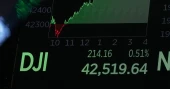
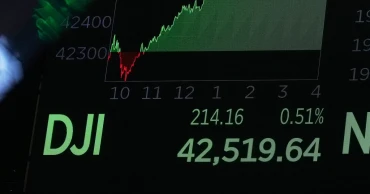
On Tuesday, the S&P 500 rose 0.6% and was less than 3% away from its all-time high set earlier this year, at 5,970.37. The Dow Jones Industrial Average added 0.5% to 42,519.64. The Nasdaq composite rose 0.8% to 19,398.96.
Dollar General jumped 15.8% for one of the market’s bigger gains after reporting stronger profit and revenue for the start of the year than analysts expected.
Many companies have cut or withdrawn their financial forecasts for the upcoming year because of the uncertainty caused by Trump’s on-again-off-again rollout of tariffs. The Organization for Economic Cooperation and Development said on Tuesday that it’s forecasting 1.6% growth for the U.S. economy this year, down from 2.8% last year.
A report on Tuesday morning showed U.S. employers were advertising more job openings at the end of April than economists expected, the latest signal that the labor market remains resilient. It set the stage for a more important report coming on Friday, which will show how much hiring and firing U.S. employers did in May.
On the trade front, hopes are still high on Wall Street that Trump will reach trade deals with other countries that will ultimately lower tariffs, particularly with the world’s second-largest economy.
The U.S. side said President Donald Trump was expecting to speak with Chinese leader Xi Jinping this week. A Chinese foreign ministry spokesperson said Tuesday that they had no information on that.
Tech stocks helped lead the way again as Nvidia rose 2.9%, and Broadcom climbed 3.3%. The chip companies have recovered their sharp losses from earlier this year borne amid worries their stock prices had shot too high.
Treasury yields held relatively steady following the encouraging report on the U.S. job market.
It’s a cooldown from a sharp rise for yields over the last two months. Yields had been climbing in part on worries about how the U.S. government may be set to add trillions of dollars to its debt through tax cuts.
Asian shares mostly decline as uncertainty grows about what's next with Trump's tariffs
Higher Treasury yields make it more expensive for U.S. households and businesses to borrow money and can discourage investors from paying high prices for stocks and other investments.
In other dealings early Wednesday, U.S. benchmark crude oil lost 19 cents to $63.22 per barrel. Brent crude, the international standard, fell 16 cents to $65.47 per barrel.
The U.S. dollar fell to 143.86 Japanese yen from 144.00 yen. The euro rose to $1.1383 from $1.1370.
1 year ago