World-Business

Elon Musk sells $3.58B worth of Tesla stock, purpose unknown
Elon Musk sold another $3.58 billion worth of Tesla stock this week, but it wasn't clear where the proceeds were being spent.
The Tesla CEO, and new owner of Twitter, sold the shares from Monday through Wednesday, according to a filing posted Wednesday night by the U.S. Securities and Exchange Commission.
Musk has sold nearly $23 billion worth of Tesla stock since April, with much of the money likely going to help fund his $44 billion acquisition of Twitter.
The sale comes as shares of the electric vehicle and solar panel maker have collapsed, losing over half their value since Musk first disclosed in April that he was buying up Twitter stock.
The falling shares have bumped Musk from his status as the world's wealthiest person, with his net worth falling to $174 billion, according to Forbes. He was passed last week by French fashion and cosmetics magnate Bernard Arnault.
The takeover of Twitter has not been smooth, and some big companies have halted advertising on the social media platform. Musk has said that Twitter had “a massive drop in revenue" due to the advertiser losses.
Read more: Elon Musk tweets to ask if he should sell some Tesla stock
Investors have been punishing Tesla stock of late as Musk has spent much of his time running Twitter, raising fears that he's distracted from the car company.
Wedbush analyst Dan Ives said Musk is now a villain in the eyes of Tesla investors. He said Tesla's fundamentals remain healthy but his behavior with Twitter is hurting the company's brand. “The Twitter overhang is a nightmare that is growing with no one but Musk to blame,” Ives wrote in an email.
A message was left with Tesla Wednesday night seeking comment on the stock sale.
Read more: Elon Musk takes over Twitter: what to expect?
3 years ago
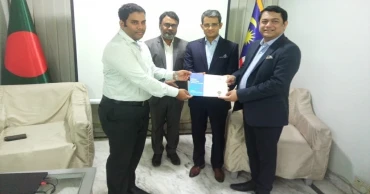
5th BMCCI LegalTalk seminar on tax law, foreign investment held
Bangladesh-Malaysia Chamber of Commerce and Industry (BMCCI) organised the 5th LegalTalk seminar on tax law and foreign investment issues in the capital Saturday.
Barrister Tanjib Alam, head of the chamber of Tanjib Alam and Associates, discussed the issues.
BMCCI Secretary General Md. Motaher Hoshan Khan welcomed the participants.
Tanjib Alam said: "Foreign investors do not consider our country as an emerging one. At the same time, other companies that have invested in our country are discouraged by their past bitter experiences."
"As the investment-related laws in our country contradict each other, the investors cannot easily get their profits. Investors also lose enthusiasm due to the unprofessional behaviour of the government departments," he added.
At the end of the programme, BMCCI President Syed Almas Kabir and the guests distributed the certificates among the participants.
3 years ago

FBCCI partners with CNN to promote trade, investment opportunities in Bangladesh globally
The Federation of Bangladesh Chamber of Commerce and Industries (FBCCI) will organise the "Bangladesh Business Summit 2023" in March 2023 to celebrate its 50th anniversary.
To cover this mega event globally, the FBCCI signed a memorandum of understanding (MoU) with US-based multinational news channel Cable News Network – better known as CNN – as its international media partner Saturday.
Under this agreement, CNN will promote trade potential and investment opportunities in Bangladesh globally.
Read: FBCCI signs MoU with Greater New York Chamber of Commerce and Industry
FBCCI President Md Jashim Uddin and CNN South Asia Sales Director Abhijeet Dhar signed the MoU in the capital. Prime Minister's Private Industry and Investment Adviser Salman Fazlur Rahman was present at that time.
Salman said: "The business representatives and investors of different countries can learn about the success and potential of Bangladesh through the business summit, which will attract foreign investors."
"Besides national and international investment, the small and mid-size enterprise (SME) sector will get special attention at the summit."
Read: Thai AirAsia launches Dhaka-Bangkok flight
Jashim said potential sectors like textile, digital economy, circular economy, and the blue economy will be showcased at the summit.
Entrepreneurs who have contributed to the country's economy and freedom fighter businessmen will get recognition from the FBCCI.
Through this summit Bangladesh can benefit from industry relocations across the world, Jashim said.
Read More: FBCCI for building skilled workforce for achieving SDGs
The director general of the World Trade Organization, the trade commissioner of the European Union, the chairman of Jetro, SEOs of several multinational companies, ministers of several countries, and business representatives will attend the summit.
3 years ago

Tata Sons to merge debt-laden Air India with Vistara
India's oldest and largest conglomerate, Tata Sons, will merge its Air India with Vistara, which it jointly runs with Singapore Airlines, in a major step toward revamping the country’s debt-laden national carrier.
The merger will strengthen Singapore Airlines' foothold in India's fast-growing aviation market, the company said in a statement. It is also expected to bolster the Tata Group's competitive position in the market against the country's dominant carrier, IndiGo.
Singapore Airlines is investing $250 million in Air India as part of the deal, giving it a 25.1% stake in the group, with the rest owned by the Tata Group. Both companies aim to complete the merger by March 2024, subject to regulatory approvals, Singapore Airlines said in its statement.
“We will work together to support Air India's transformation program, unlock its significant potential, and restore it to its position as a leading airline on the global stage,” Singapore Airlines' CEO Goh Choon Phong said in the statement.
Air India is India’s largest international carrier and second largest domestic carrier. The merger is an “important milestone” in its restructuring after Tata Sons regained ownership of it in January, said Tata's chairman, Natarajan Chandrasekaran.
In taking over Air India, Tata absorbed about a quarter of its more than $8.2 billion debt burden.
Between them, Air India and Vistara have 218 aircraft serving 38 international and 52 domestic routes. The merger will make Air India the only carrier in the country with both full-service and low-cost passenger services.
IndiGo, a low-cost carrier founded in 2006, is India’s largest passenger airline with a market share of 56.7% as of October.
Tata pioneered commercial aviation in India when it launched the airline in 1932, before it was taken over by the government in 1953. In addition to Air India and Vistara, the Tata Group runs a budget airline, Air Asia India in cooperation with Malaysia's Air Asia Berhad.
The Indian conglomerate is a sprawling collection of nearly 100 companies that includes the country’s largest automaker, its largest private steel company and a leading outsourcing firm. The companies employ more than 350,000 people around the world.
3 years ago

Where is Alibaba founder Jack Ma? In Tokyo, according to Financial Times
Following Beijing’s crackdown on the tech industry, Chinese entrepreneur Jack Ma has been residing in Tokyo for almost six months, according to a Financial Times report published yesterday (November 29, 2022).
The co-founder of Alibaba Group Holding has made frequent journeys to the United States and Israel in addition to visits to the countryside during his time in Japan, according to Financial Times. Ma is a close friend of Alibaba investor and billionaire Masayoshi Son, who founded the Tokyo-based SoftBank Group.
Formerly the richest and most well-known tech figure in China, Ma withdrew from the public eye in recent years after getting into issue with Beijing over his criticism of government regulation, which halted the initial public offering (IPO) of fintech behemoth Ant Group.
Read: Chinese e-tycoon Jack Ma ends silence with online video
After that, China’s private sector came under intense scrutiny, with a focus on limiting the influence of internet companies. Since then, Jack Ma’s infrequent public appearances have drawn a lot of attention.
According to the Financial Times, Ma has restricted himself to a small number of exclusive clubs in Tokyo’s downtown Ginza and Marunouchi neighbourhoods. The report also noted that he has enthusiastically taken up collecting modern art and brought along his personal chef and security team.
In the early stages of the Covid-19 outbreak, Ma, who had previously been a well-known regular at business conventions, oversaw massive international donations of protective gear and other supplies that the world required.
Read: FM thanks Jack Ma, invites him to visit Bangladesh
A report in July said that Ma intended to cede control of Ant Group in order to placate Chinese regulators and resurrect the IPO of the digital payments division.
For the first time ever, Alibaba reported flat sales growth in August as China struggled with a slowing economy and resurgent Covid-19 cases.
The behemoth firm has been placed on a watchlist by US regulators, and if Jack ma's e-commerce venture Alibaba does not abide by disclosure orders, its shares would plummet and it might be delisted from the New York Stock Exchange.
Read More: Alibaba appoints new CFO, reshuffles e-commerce businesses.
3 years ago

Thai AirAsia launches Dhaka-Bangkok flight
Thai AirAsia, a subsidiary of Malaysia-based AirAsia Aviation Group, has launched the Dhaka-Bangkok flight.
The inaugural flight from Bangkok's Don Mueang Airport landed at Dhaka's Hazrat Shahjalal International Airport Friday at midnight.
The airline will operate four weekly flights between Dhaka and Don Mueang.
The incoming flight carried several eminent passengers, including Thai AirAsia officials.
Read: 'Air Incheon-Korean Airlines’ introduces direct cargo flight from Bangladesh to South Korea
Thai Air Asia CEO Santisuk Klongchaiya, Regional Commercial Head Tansita Akrarittipirom and its senior executives of corporate communications were part of the delegation.
Thai AirAsia's inaugural flight launching ceremony was held at a Dhaka hotel Saturday. Md Mahbub Ali, state minister for civil aviation and tourism, was the chief guest at the event.
Civil Aviation Authority of Bangladesh Chairman Air Vice Marshal M Mafidur Rahman, Thai Ambassador to Bangladesh Makawadee Sumitmor, Malaysian High Commissioner to Bangladesh Haznah Md Hashim, and Santisuk were also present.
Read More: 'Air Incheon-Korean Airlines’ introduces direct cargo flight from Bangladesh to South Korea
Thai Air Asia GSA, TAS Aviation Chairman KM Mozibul Hoque, Vice-Chairman and CEO Sheikh Mamunul Hoque, Managing Director Morsedul Alam Chaklader; directors Kazi Shah Muzakker Ahmadul Hoque, Md Atiqur Rahman Masud, Anwar Abedin Manik and other members of the company also joined the event.
AirAsia, voted the world's best low-cost airline for 13 years in a row in Skytrax awards, has been operating 14 weekly flights between Dhaka and Kuala Lumpur since 2015.
3 years ago

HBL President & CEO Aurangzeb visits Bangladesh on Nov 22-23
Muhammad Aurangzeb, President & CEO of Habib Bank Limited, a seasoned banker with over 30 years of experience, will visit Dhaka on November 22-23.
During his visit he will engage with government, regulatory bodies, clients and partners to focus on technology-driven, client-centric banking solutions and foster foreign direct investment in the country, said a media release on Saturday.
Faisal Lalani, Head of International Banking - HBL, will accompany him.
HBL, a bank of regional relevance with operations spread across multiple geographies, has been serving clients in Bangladesh for more than 45 years.
Aurangzeb joined HBL on 30 April 2018 as the President & CEO.
Read more: Challenges to studying abroad: Banks not opening student profiles
Prior to this responsibility at HBL, Aurangzeb was the CEO for JP Morgan’s Global Corporate Bank based in Asia, with a rich international banking experience of over 30 years in other senior management roles at ABN AMRO and RBS based in Amsterdam and Singapore.
He received his BS and MBA degrees from the Wharton School (University of Pennsylvania).
During his meetings with key stakeholders in Bangladesh, Aurangzeb will draw attention to the fact that HBL Bangladesh offers RMB/CNY (Renminbi) denominated account to its respected clients and how HBL's presence in China is enabling the bank to conduct business with state-owned firms and prominent financial institutions in China.
HBL will continue to play its part in the transformation of the banking system in Bangladesh, consistent with its vision of becoming a technology company with a banking licence.
Read more: HSBC introduces domestic foreign currency transaction through RTGS
The Aga Khan Fund for Economic Development (AKFED) owns 51% shareholding and the management control of HBL while the remaining shareholding is held by individuals, local and foreign institutions and funds including CDC Group Plc and International Finance Corporation.
3 years ago
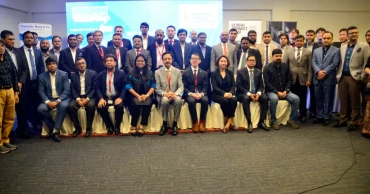
Bangladesh, Singapore businesses explore business prospects, investment opportunities
Bangladeshi businesses and their Singaporean counterparts discussed business prospects, trade, and investment opportunities between their countries at an international business networking event in Dhaka Wednesday.
They also spoke about how the firms of both countries can expand businesses for bilateral interests.
A delegation of the Singapore Business Federation (SBF), the apex business chamber promoting the interests of Singapore businesses in trade, investment and industrial relations, is now in Bangladesh to understand the country's investment climate.
To connect local businesses with global ones to boost bilateral growth and opportunities, Bangladeshi Charter Accountancy firm Howlader Maria and Co (HmAC) and, organised the event at a Dhaka hotel.
Read more: Bangladesh shares its aspirations with Singapore to emerge as facilitator of regional connectivity
Maria Howlader, founder and CEO of HmAC, Soo Wei Chai, executive director of Global Business Division and Young Business Leaders Network of SBF, business leaders, chief executives officers of different companies, and business firms from both countries were present at the meeting.
Businesses from Singapore have great opportunities to invest in Bangladesh, including in information technology, pharmaceuticals and hospitality as the country offers attractive tax exemptions and other facilities, participants from local businesses said.
The Singapore delegation from multiple sectors shared their investment plans and tried to find out business opportunities in different sectors such as IT, agriculture, and construction.
They also said Bangladeshi businesses can also expand their businesses by investing in Singapore.
Read more: Singapore upbeat about Bangladesh’s economic potential
Thanking the participants from both Singapore and Bangladeshi business houses, Maria said, "The networking event represents how we feel about doing business in Bangladesh and matching business to business" for further growth and expansion.
Maria said Bangladesh has many inspiring stories of growth and development, with a strong track record of growth and development even amid rising global uncertainties.
3 years ago

World Bank Vice President Martin Raiser arrives Saturday
World Bank Vice President for the South Asia Region Martin Raiser is scheduled to arrive in Dhaka on Saturday to discuss with the government the important reforms that can help the country stay on the resilient and inclusive growth path.
“I am glad to be back in Bangladesh and to continue discussing with the government the important reforms that can help the country stay on the resilient and inclusive growth path and create opportunities for the people,” said Raiser.
Read more: Bangladesh's strong growth could be at risk without urgent climate action: World Bank
He will be accompanied by the incoming Country Director for Bangladesh and Bhutan, Abdoulaye Seck, said the global lending agency on Friday.
During his three-day visit, Raiser will meet with Prime Minister Sheikh Hasina and Finance Minister AHM Mustafa Kamal, along with other senior government officials.
He will introduce Seck, who will assume the position of the World Bank Country Director for Bangladesh and Bhutan on January 1, 2023. They will also visit a World Bank-supported project.
“Bangladesh has an impressive record in many aspects of development, including poverty reduction, climate change adaptation and disaster-risk preparedness, and gender parity in school enrollment, to name a few, '' said Seck.
“I look forward to working closely with the government and people of Bangladesh as the country works toward the goal of achieving upper-middle income status by 2031.”
Read more: Currency depreciations risk intensifying global food, energy crisis: World Bank
A Senegalese national, Seck joined the World Bank in 1995 as an economist and has since held leadership positions in different countries.
Prior to taking this assignment, Seck served as the Country Director for Cameroon, the Central African Republic, Equatorial Guinea, Gabon, and the Republic of Congo.
He also served as the World Bank Country Manager for Afghanistan, Myanmar, and Moldova.
The World Bank was among the first development partners to support Bangladesh following its independence.
Since then, the World Bank has committed more than $37 billion in grants, interest-free, and concessional credits to the country. Bangladesh currently has the largest ongoing International Development Association (IDA) program totaling over $15.7 billion in 55 active projects.
3 years ago
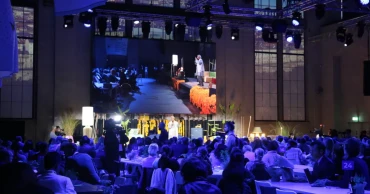
‘Social Business Academia Forum’ kicks off at Turin University
Institutions conceptualise and improve the practice of social business and examine the power of ‘3 Zeroes Clubs’ created by young people across the globe, said the Yunus Centre in a press release on Tuesday.
The University of Turin is co-hosting the Social Business Academia Forum (SBAF), with the Yunus Centre.
This Summit is the first in-person gathering of social business activists, entrepreneurs, academicians, researchers and students, since the pandemic started in 2020.
The Global Social Business Summit is always designed as a very intensive two-day event leading to many new social business initiatives.
After arriving in Turin, Professor Yunus was received by the founder of Italian NGO Sermig, Ernesto Olivero, before being taken to meet the staff of Sermig to share the experiences of social businesses with them.
Read more: Esports can help youths imagine a new civilization: Prof Yunus
Sermig was founded in 1964 in Turin by Ernesto Olivero and his wife Maria Cerrato and a few friends to defeat hunger, encourage dialogue, hospitality and peace. They transformed a weapons-producing factory during two world wars into one of Love and Peace.
Sermig has provided shelter and food for over 130,000 homeless people, broken families and women from severe socio-economic conditions. They have served over 30 million meals.
3 years ago