World-Business

Netflix aims to curtail password sharing - and bring in ads
An unexpectedly sharp drop in subscribers has Netflix considering changes to its service that it has long resisted: Minimizing password sharing and creating a low-cost subscription supported by advertising.
The looming changes announced late Tuesday are designed to help Netflix regain momentum it’s lost over the past year. Pandemic-driven lockdowns that drove binge-watching have lifted while deep-pocketed rivals such as Apple and Walt Disney began to chip away at its vast audience with their own streaming services.
Netflix’s customer base fell by 200,000 subscribers during the January-March quarter, the first contraction it’s seen since the streaming service became available throughout most of the world outside of China six years ago. The drop stemmed in part from Netflix’s decision to withdraw from Russia to protest the war against Ukraine, resulting in a loss of 700,000 subscribers. Netflix projected a loss of another 2 million subscribers in the current April-June quarter.
Also Read: Netflix shares drop 25 after service loses 200k subscribers
The erosion, coming off a year of progressively slower growth, has rattled another key constituency for Netflix — its shareholders. After revealing its disappointing performance, Netflix shares plunged by more than 25% in extended trading. If the stock drop extends into Wednesday’s regular trading session, Netflix shares will have lost more than half of their value so far this year — wiping out about $150 billion in shareholder wealth in less than four months.
Aptus Capital Advisors analyst David Wagner said it’s now clear that Netflix is grappling with an imposing challenge. “They are in no-(wo) man’s land,” Wagner wrote in a research note Tuesday.
The Los Gatos, California, company estimated that about 100 million households worldwide are watching its service for free by using the account of a friend or another family member, including 30 million in the U.S. and Canada. “”Those are over 100 million households already are choosing to view Netflix,” Hastings said. “We’ve just got to get paid at some degree for them.”
To prod more people to pay for their own accounts, Netflix indicated it will expand a trial program it has been running in three Latin American countries — Chile, Costa Rica and Peru. In this locations, subscribers can extend service to another household for a discounted price. In Costa Rica, for instance, Netflix plan prices range from $9 to $15 a month, but subscribers can openly share their service with another household for $3.
Netflix offered no additional information about how a cheaper ad-supported service tier would work or how much it would cost. Another rival, Hulu, has long offered an ad-supported tier.
While Netflix clearly believes these changes will help it build upon its current 221.6 million worldwide subscribers, the moves also risk alienating customers to the point they cancel the service.
Also Read: Squid game season-2 on Netflix cast plot probable release date
Netflix was previously stung by a customer backlash in 2011 when it unveiled plans to begin charging for its then-nascent streaming service, which has previously been bundled for free with its traditional DVD-by-mail service before its international expansion. In the months after that change, Netflix lost 800,000 subscribers, prompting a apology from Hastings for botching the execution of the spin-off.
Tuesday’s announcement was a sobering comedown for a company that was buoyed two years ago when millions of consumers corralled at home were desperately seeking diversions — a void Netflix was happy to fill. Netflix added 36 million subscribers during 2020, by far the largest annual growth since its video streaming service’s debut in 2007.
But Netflix CEO Reed Hastings now believes those outsized gains may have blinded management. “COVID created a lot of noise on how to read the situation,” he said in a video conference Tuesday.
Netflix began heading in a new direction last year when its service added video games at no additional charge in an attempt to give people another reason to subscribe.
Escalating inflation over the past year has also squeezed household budgets, leading more consumers to rein in their spending on discretionary items. Despite that pressure, Netflix recently raised its prices in the U.S., where it has its greatest household penetration — and where it’s had the most trouble finding more subscribers.
In the most recent quarter, Netflix lost 640,000 subscribers in the U.S. and Canada, prompting management to point out that most of its future growth will come in international markets. Netflix ended March with 74.6 million subscribers in the U.S. and Canada.
4 years ago

World Bank loan to bolster Bangladesh's economic growth
Bangladesh and the World Bank have signed a $250 million financing agreement to support the country’s reform efforts to sustain growth following the pandemic and to enhance resilience to future shocks, including climate change.
The Bangladesh First Recovery and Resilience Development Policy Credit — the first in a series of two credits — will help Bangladesh build a stronger fiscal and financial sector to sustain growth, the World Bank said in a release.
The credit is from the World Bank’s International Development Association (IDA), which provides concessional financing, has a 30-year term, including a five-year grace period.
It will help streamline the bank recovery framework with all scheduled banks to update recovery plans annually.
Read: Deal signed with World Bank for $250 million towards post-pandemic recovery
The programme supports the legislative framework on payments, which will contribute to a more efficient financial system.
The programme supports adjustments to the interest rates of public savings instruments such as the National Savings Certificate.
Mercy Tembon, World Bank Country Director for Bangladesh and Bhutan, said that Bangladesh has made a robust economic recovery from the pandemic.
“This programme will further support the government’s policies to make the economy more resilient and competitive as Bangladesh strives to become an upper-middle income country by 2031.”
The cancellation of 8,451 MW of investments in coal-fired electricity generation projects will accelerate the country’s transition to decarbonisation and a green economy.
The revised National Building Code will help the country reduce greenhouse gas emissions by improving energy efficiency in buildings.
Read: World Bank projects Ukraine's economy to shrink by 45 pct this year
The programme will support the National Tariff Policy to modernise taxes and foster a globally competitive export industry. It will help to better leverage digital technologies and enable non-resident firms to submit VAT returns, according to the World Bank.
The increased coverage of the electronic government (e-GP) system will improve efficiency of public procurement.
It will also support the coverage, speed, and efficiency of social protection programmes to help the government rapidly respond to extreme climate events such as floods and cyclones.
By using the government-to-person payment platform for cash transfers, the government can identify new and existing beneficiaries for emergency assistance while also capturing gender-disaggregated payment data.
4 years ago

Chinese yuan strengthens last week
China's yuan strengthened against a basket of currencies last week, according to the China Foreign Exchange Trade System (CFETS).
The CFETS yuan exchange rate composite index, which measures the yuan's strength relative to a basket of currencies, edged up 0.21 points from the previous week to 105.08, according to the CFETS.
Also Read: China to commit 1.5 bln yuan to initiate Kunming Biodiversity Fund: Xi
The index compares the yuan with the value of 24 currencies, including the U.S. dollar, euro and Japanese yen.
Last week also saw an index that measures the yuan against the Bank for International Settlements currency basket up 0.15 points from the previous week to 109.53.
The index measuring the yuan against the Special Drawing Rights basket fell 0.02 points week on week to 102.95.
Also Read: China's Single's Day sales hit 10 bln yuan in 96 seconds
4 years ago
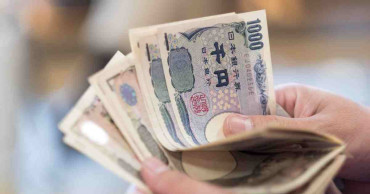
Japanese yen plunges to near 20-year low against U.S. dollar
The Japanese yen tumbled to a near 20-year low against the U.S. dollar on Wednesday, traders said, leading the government here to voice its concerns over such volatility in currency markets.
During Tokyo trading, the Japanese currency plunged to the lower 126 yen mark against the dollar, logging its weakest level since May 2002.
Read: 63 percent of Americans rate U.S. economy as bad: poll
The yen was moving mainly in the lower and mid-125 yen zone earlier in the day, they said.
Japan's top government spokesperson Chief Cabinet Secretary Hirokazu Matsuno told a press conference that such "rapid currency movements are undesirable."
Matsuno added that "Japan will monitor currency market developments, including the yen's recent depreciation, and their impact on the economy with vigilance."
Read: World Bank says war shocks to drag on Asian economies
The Japanese currency sank as rising U.S. Treasury yields are pushing investors to piling into the U.S. dollar, exacerbating concerns about a widening monetary policy gap between the Bank of Japan and the U.S. Federal Reserve.
4 years ago

63 percent of Americans rate U.S. economy as bad: poll
A whopping 63 percent of Americans rated the U.S. economy as bad, with 86 percent saying it was because of inflation, closely followed by gas prices at 82 percent, showed a new CBS News poll released on Sunday.
In terms of lowering gas prices, the majority of the respondents, at 65 percent, believed that the government "can do more."
Also Read: Global shares mixed with eyes on inflation, US economy
In addition, "pocketbook issues -- the economy and inflation -- rank as top priorities for Americans," said the survey, noting that " (Joe) Biden continues to get low marks on handling them."
Also Read: Trump addresses coronavirus' heavy impact on the US economy
4 years ago

World Bank says war shocks to drag on Asian economies
Disruptions to supplies of commodities, financial strains and higher prices are among the impacts of the war in Ukraine that will slow economies in Asia in coming months, the World Bank says in a report released Tuesday.
The report forecasts slower growth and rising poverty in the Asia-Pacific region this year as “multiple shocks” compound troubles for people and for businesses.
Growth for the region is estimated at 5%, down from the original forecast of 5.4%. The “low case” scenario foresees growth dipping to 4%, it said. The region saw a rebound to 7.2% growth in 2021 after many economies experienced downturns with the onset of the pandemic.
Also read: World Bank projects developing East Asia Pacific to grow 5 pct in 2022
The World Bank anticipates that China, the region’s largest economy, will expand at a 5% annual pace, much slower than the 8.1% growth of 2021.
Russia's invasion of Ukraine has helped drive up prices for oil, gas and other commodities, eating into household purchasing power and burdening businesses and governments that already are contending with unusually high levels of debt due to the pandemic, the report said.
The development lending institution urged governments to lift restrictions on trade and services to take advantage of more opportunities for trade and to end fossil fuel subsidies to encourage adoption of more green energy technologies.
“The succession of shocks means that the growing economic pain of the people will have to face the shrinking financial capacity of their governments,” said the World Bank's East Asia and Pacific Chief Economist Aaditya Mattoo. “A combination of fiscal, financial and trade reforms could mitigate risks, revive growth and reduce poverty.”
The report pointed to three main potential shocks for the region: the war, changing monetary policy in the U.S. and some other countries and a slowdown in China.
Also read: Sri Lanka wants Bangladeshi investment in tourism, agriculture sector
While rising interest rates make sense for cooling the U.S. economy and curbing inflation, much of Asia lags behind in its recovery from the pandemic. Countries like Malaysia may suffer outflows of currency and other financial repercussions from those changing policies, it said.
Meanwhile, China's already slowing economy could falter as outbreaks of COVID-19 provoke lockdowns like the one now in place in Shanghai, the country's biggest megacity. That is likely to affect many Asian countries whose trade relies on demand from China.
“These shocks are likely to magnify existing post-COVID difficulties," the report said. The 8 million households whose members fell back into poverty during the pandemic, “will see real incomes shrink even further as prices soar."
The report noted that regional economies fared better during the 2021 Delta variant waves of coronavirus than in the initial months of the pandemic in 2020, largely because fewer restrictions were imposed and widespread vaccinations helped limit the severity of the outbreaks.
On average, countries with a 1 percentage point higher vaccination rate had higher growth, it said.
4 years ago

Asian shares higher ahead of Russia-Ukraine peace talks
Asian shares were higher Tuesday after an advance on Wall Street ahead of another round of peace talks between Russia and Ukraine.
Crude oil prices fell further after sinking 7% on Monday.
Trading has remained choppy as investors try to gauge what’s next for inflation and the global economy as the repercussions of Russia’s invasion of Ukraine continue to play out.
Ukrainian forces claimed to have retaken a Kyiv suburb and an eastern town from the Russians in what is becoming a back-and-forth stalemate on the ground, while negotiators began assembling in Turkey for another round of talks Tuesday aimed at stopping the fighting.
Ukrainian President Volodymyr Zelenskyy said his country could declare neutrality to secure peace, but would prioritize protecting its sovereignty and territory.
Tokyo’s Nikkei 225 rose 0.6% to 28,110.73 and the Kospi in Seoul added 0.3% to 2,737.05. The Hang Seng in Hong Kong picked up 0.6% to 21,826.68, while the Shanghai Composite index lost 0.2% to 3,207.64 as the city entered a second day of a lockdown to combat a COVID-19 outbreak.
Read: Average US gas price rises 22% in two weeks to record $4.43
Australia’s S&P/ASX 200 surged 0.7% to 7,467.20. Its government plans to increase spending on national security while reducing costs for households, in part by reducing a tax on gasoline, Treasurer Josh Frydenberg said before presenting a budget proposal Tuesday.
Weaker oil prices helped push shares higher, said Yeap Jun Rong of IG.
“China, Japan, South Korea and Taiwan are major oil importers, hence lower oil prices may be deemed as positive for their economies,” Yeap said in a commentary.
U.S. crude oil lost 71 cents to $105.21 a barrel in electronic trading on the New York Mercantile Exchange. On Monday, it slumped 7% and Brent crude, the international standard, fell 6.8%.
Brent crude shed 84 cents to 108.65 per barrel in London.
The latest retreat in oil prices followed the news of China’s most extensive coronavirus lockdown in two years to control a growing outbreak in Shanghai. That could put a dent in global demand for energy.
Oil prices remain volatile amid the backdrop of Russia’s invasion of Ukraine. The United Arab Emirates’ energy minister doubled down Monday on an oil alliance with Russia, saying that nation, with its 10 million barrels of oil a day, is an important member of the global OPEC+ energy alliance.
Oil prices are up about 40% globally over concerns about tighter supplies as demand remains strong. Higher oil prices are also raising concerns that already persistently high inflation could be worsened, further threatening global economic growth.
On Wall Street, the S&P 500 rose 0.7% to 4,575.52. The Dow Jones Industrial Average eked out a 0.3% gain, closing at 34,995.89. The tech-heavy Nasdaq composite closed 1.3% higher, at 14,354.90.
Read: Global stocks mixed after West vows more Russia sanctions
Smaller company stocks were little changed. The Russell 2000 index inched up less than 0.1% to 2,078.06.
Tesla jumped 8% after saying it would seek shareholder approval to do another stock split. Plantronics jumped 52.6% after HP said it will buy the headset maker.
Bond yields eased back after shooting higher this month. The yield on the 10-year Treasury fell to 2.46% from 2.49% late Friday. Bond yields have been rising as Wall Street prepares for higher interest rates. The Federal Reserve has already announced a 0.25% hike of its key benchmark interest rate and is prepared to continue raising rates to help temper the impacts of rising inflation.
Investors will get more updates this week on just how much inflation is hurting consumers and businesses. The Conference Board will release its consumer confidence index for March on Tuesday. The Commerce Department will release its February report for personal income and spending on Thursday and the Labor Department will release its employment report for March on Friday.
In currency trading, the dollar slipped to 123.48 Japanese yen from 123.77 yen. The euro rose to $1.0989 from $1.0983.
4 years ago
.jpg)
Global stocks mixed after West vows more Russia sanctions
Global stock markets were mixed Friday after Western governments promised new sanctions on Russia and President Vladimir Putin tried to prop up Moscow’s sinking ruble by threatening to require Europe to use it to pay for gas exports.
London and Shanghai declined while Tokyo gained and Frankfurt was little-changed. Oil fell but stayed above $110 per barrel.
Wall Street futures declined a day after gaining as the number of Americans applying for unemployment fell to a 52-year low.
Western leaders meeting Thursday in Brussels promised more sanctions. President Joe Biden said they were meant to “increase the pain” on Putin, but the leaders released no details of possible new penalties.
Putin threatened to require European customers that rely on Russia gas supplies to pay in rubles. That would increase demand for the Russian currency, pushing up an exchange rate that has slumped under sanctions.
Read: Asian shares mostly lower as crude slides to $100 per barrel
European leaders on Thursday rejected that possibility, potentially setting up a clash over energy supplies.
Putin’s demand is a “cunning gambit” to frustrate sanctions while “elevating uncertainty for the West,” said Tan Boon Heng of Mizuho Bank in a report.
In early trading, the FTSE 100 in London fell 0.2% to 7,454.92 and the DAX in Frankfurt was off less than 0.1% at 14,267.95. The CAC in Paris sank 0.1% to 6,550.00.
On Wall Street, the future for the benchmark S&P 500 index gained 0.2%. That for the Dow Jones Industrial Average was up 0.1%.
On Thursday, the S&P 500 gained 1.4% and the Dow added 1%. The Nasdaq composite rose 1.9%.
In Asia, the Shanghai Composite Index lost 1.2% to 3,212.24 while the Nikkei 225 in Tokyo gained 0.1% to 28,149.84. The Hang Seng in Hong Kong fell 2.5% to 21,404.88.
Read: Yet another 4-decade inflation high is expected for February
The Kospi in Seoul was little-changed at 2,729.98 while Sydney’s S&P-ASX 200 gained 0.3% to 7,406.20.
India’s Sensex lost 0.8% to 57,152.53. New Zealand, Singapore and Bangkok advanced while Jakarta declined.
Russia’s Feb. 24 invasion of Ukraine sparked investor unease about the impact on prices of oil, gas, wheat and other commodities. Russia is the second-biggest crude exporter and both Moscow and Ukraine are major wheat suppliers.
Markets already were on edge about plans by the Federal Reserve and other central banks to fight surging inflation by rolling back ultra-low interest rates and other stimulus that is pushing up stock prices.
Oil prices are up more than 50% in 2022 due to worries about inflation and possible supply disruptions.
Benchmark U.S. crude lost $2.02 to $110.32 per barrel in electronic trading on the New York Mercantile Exchange. The contract fell $2.59 on Thursday to $112.34. Brent crude, the price basis for international oils, sank $1.78 to $113.52 per barrel in London. It lost $2.57 the previous session to $119.03 a barrel.
The dollar declined to 121.54 yen from Thursday’s 122.26 yen. The euro gained to $1.1021 from $1.0997.
4 years ago
.jpg)
Asian shares mostly lower as crude slides to $100 per barrel
Asian shares were mostly lower and oil prices fell Tuesday after another day of losses on Wall Street as anxiety over the war in Ukraine and an upcoming Federal Reserve meeting on interest rates keep global financial markets on edge.
Markets remain jumbled as investors try to gauge various economic impacts from the war in Ukraine, upcoming rate hikes by central banks and new virus lockdowns in China. Tokyo rose while markets in China, Australia and South Korea fell.
Stocks have fallen sharply in Hong Kong recently, sinking to near six-year lows after the neighboring city of Shenzhen was ordered into a shutdown to combat China’s worst COVID-19 outbreak in two years.
The Hang Seng index lost 2.4% early Tuesday to 19,068.49, while the Shanghai Composite gave up 2.1% to 3,157.14.
Also read: Asian shares extend losses as oil prices push higher
Tokyo's Nikkei 225 rose 0.3% to 25,385.11, while the Kospi in Seoul gave up 0.6% to 2,630.34. Australia's S&P/ASX 200 slid 0.6% to 7,108.80 and shares also fell in Taiwan and Bangkok.
Oil prices have tumbled, taking some pressure off the inflation sweeping the globe, with a barrel of U.S. crude falling below $100 per barrel after touching $130 last week.
U.S. crude shed $4.14 to $98.87 per barrel in electronic trading on the New York Mercantile Exchange. It tumbled $6.32 to $103.01 on Monday.
Brent crude, the standard for pricing international oils, gave up $3.90 to $103.00 per barrel.
Uncertainty about whether the world economy may be heading for a toxic combination of stagnating growth and persistently high inflation has cast recoveries from the pandemic in question as Russia’s invasion of Ukraine caused prices for oil, wheat and other commodities produced in the region to soar.
That has brought sharp day-to-day and hour-to-hour reversals across markets, as expectations for worsening inflation rise and fall.
“Markets appear to have been trafficking in an odd mix of hope, fear and uncertainty," Mizuho Bank said in a commentary.
Also read: Oil prices jump, shares sink as Ukraine conflict deepens
On Monday, negotiators from Russia and Ukraine met over video conference for a new round of talks, after the two sides expressed some optimism in the past few days. The talks ended without a breakthrough after several hours. The negotiators took “a technical pause,” Ukrainian presidential aide Mykhailo Podolyak said, and planned to meet again Tuesday.
Investors were already uneasy before the war began because central banks around the world are preparing to shut off the stimulus they pumped into the global economy after the pandemic struck.
The wide expectation is that the Federal Reserve will raise its key short-term interest rate by a quarter of a percentage point on Wednesday. It would be the first increase since 2018, and it would pull the federal funds rate off its record low of nearly zero.
On Monday, the S&P 500 gave up an early gain and closed 0.7% lower, at 4,173.11, while the Dow Jones Industrial Average was essentially unchanged at 32,945.24. The Nasdaq fell 2% to 12,581.22.
Small company stocks also fell. The Russell 2000 index slid 1.9% to 1,941.72.
The pullback came as the yield on the 10-year Treasury touched its highest level since the summer of 2019.
The yield on the 10-year Treasury climbed to 2.16% from 2.00% late Friday after earlier touching its highest level since July 2019. The two-year yield, which moves more on expectations for Fed policy changes, rose to 1.86% from 1.75%.
The Fed faces the challenge of raising rates just quickly and high enough to bat down inflation without overdoing it and causing a recession.
The war in Ukraine makes the balancing act even more difficult. It’s pushing inflation higher by raising prices for everything from nickel to natural gas. And it’s threatening to pull down on economic growth.
In currency dealings, the dollar rose to 118.34 Japanese yen, its highest level in about six years, from 118.18 yen late Monday. The dollar tends to serve as a safe haven in times of crisis, and the prospect of higher interest rates enhances its allure to investors.
The weaker yen is a boon to Japanese export manufacturers as it makes their products relatively cheaper and more competitive in overseas markets. Toyota Motor Corp.'s shares gained 2.5% early Tuesday,
The euro rose to $1.0979 from $1.0941.
4 years ago
.jpg)
Average US gas price rises 22% in two weeks to record $4.43
The average U.S. price of regular-grade gasoline shot up a whopping 79 cents over the past two weeks to a record-setting $4.43 per gallon (3.8 liters) as Russia’s invasion of Ukraine is contributing to already-high prices at the pump.
Industry analyst Trilby Lundberg of the Lundberg Survey said Sunday the new price exceeds by 32 cents the prior all-time high of $4.11 set in July 2008. But that’s still quite a ways from the inflation-adjusted record high of about $5.24 per gallon.
Read:Yet another 4-decade inflation high is expected for February
The price at the pump is $1.54 higher than it was a year ago.
Lundberg said gas prices are likely to remain high in the short term as crude oil costs soar amid global supply concerns following Russia’s invasion of Ukraine.
Prices at the pump were rising long before Russia invaded Ukraine as post-lockdown demand has pushed prices higher. Crude prices plummeted in early 2020 as economies around the world shut down because of COVID-19 — the price of futures even turned negative, meaning some sellers were paying buyers to take oil. Prices rebounded, however, as demand recovered faster than producers pulled oil out of the ground and inventories dried up.
Then, the price increase accelerated after war began.
Energy prices are also contributing to the worst inflation that Americans have seen in 40 years, far outpacing higher wages.
Nationwide, the highest average price for regular-grade gas is in the San Francisco Bay Area, at $5.79 per gallon. The lowest average is in Tulsa, Oklahoma, at $3.80 per gallon.
Read:Asia stocks mixed after Wall St falls, US bans Russian oil
According to the survey, the average price of diesel also spiked, up $1.18 over two weeks, to $5.20 a gallon. Diesel costs $2.11 more than it did one year ago.
4 years ago