Asia

North Korea launches 2 missiles to sea as allies hold drills
North Korea test-fired two short-range ballistic missiles in another show of force Tuesday, a day after the U.S. and South Korea began military drills that Pyongyang views as an invasion rehearsal.
The missiles launched from the southwestern coastal town of Jangyon flew across North Korea before landing in the sea off that country’s east coast, South Korea’s Joint Chiefs of Staff said in a statement. It said both missiles travelled about 620 kilometers (385 miles).
The reported flight distances suggest the missiles target South Korea, which hosts about 28,000 U.S. troops. South Korea’s military called the launches “a grave provocation” that undermines stability on the Korean Peninsula.
The U.S. Indo-Pacific Command said Tuesday’s launches don’t pose an immediate threat to its allies. But it said the North’s recent tests highlight the “destabilizing impact” of the North’s unlawful weapons programs and that the U.S. security commitment to South Korea and Japan remains “ironclad.”
READ: China’s Xi wants bigger global role after facilitating Saudi-Iran deal
Japanese Prime Minister Fumio Kishida told reporters that officials were still gathering details of the North Korean launches and there has been no immediate reports of damage in Japanese waters.
Pyongyang could further escalate its weapons tests over the coming days in a tit-for-tat response to the allies’ military drills, which are planned to run until March 23. Last week North Korean leader Kim Jong Un ordered his troops to be ready to repel what he called the “frantic war preparations moves” by his country’s rivals.
Worries about North Korea’s nuclear program have grown sharply after the North last year test-fired more than 70 missiles, many of them nuclear-capable weapons, and openly threatened to use them in potential conflicts with the United States and South Korea.
North Korea appears to be using long-stalled talks with the United States and the expanding U.S.-South Korean drills as a chance to enlarge its weapons arsenals to increase its leverage in future dealings with the United States.
The North Korean threats, along with China’s increasing assertiveness, have pushed the United States to seek to reinforce its alliances with South Korea and Japan. But some experts say a solidified Washington-Seoul-Tokyo cooperation could prompt Pyongyang, Beijing and Moscow to strengthen their own trilateral ties. China and Russia, embroiled in separate confrontations with the U.S., have repeatedly blocked U.S. and its allies’ bids to toughen U.N. sanctions on North Korea.
Tuesday’s launches were the North’s second weapons test this week. On Monday, North Korea said it had test-fired two cruise missiles from a submarine the previous day. It implied the cruise missiles were being developed to carry nuclear warheads, though outside experts debate whether North Korea possesses functioning nuclear-armed missiles.
READ: Malaysian ex-PM Muhyiddin hit with seventh graft charge
North Korea acquiring submarine-launched missile systems would be an alarming development because launches would be harder to detect and would provide the North retaliatory second attack capability. However, experts say it would take years, extensive resources and major technological improvements for the heavily sanctioned nation to build a fleet of submarines that could travel quietly and reliably execute strikes.
U.S. national security adviser Jake Sullivan said Monday that North Korea has been refining its submarine-launch capabilities since its first test in 2016 and that the United States were studying Sunday’s launches to assess what they mean in terms of the North’s capabilities.
“But of course, we’re not going to let any steps North Korea takes deter us or constrain us from the actions that we feel are necessary to safeguard stability on the Korean Peninsula,” Sullivan said.
The U.S.-South Korean joint exercises that started Monday include computer simulations involving North Korean aggression and other security scenarios and field exercises. The field exercises would return to the scale of the allies’ biggest springtime exercises that were last held in 2018, according to South Korean defense officials.
The two countries have been expanding their drills since last year as North Korean nuclear threats have been growing.
Jeon Ha Gyu, spokesperson of South Korea’s Defense Ministry, said Tuesday the U.S.-South Korea drills will proceed normally, regardless of whether “North Korea tries to disrupt them with provocations like missile launches.” U.S. State Department spokesperson Ned Price said Monday the United States has made clear it harbors no hostile intend toward North Korea and that the allies’ longstanding exercises are “purely defensive in nature.”
In their telephone talks Monday, the chief South Korean and U.S. nuclear envoys stressed that North Korea would face unspecified consequences for its provocations. They also urged North Korea to give up its nuclear program and instead care for its people’s livelihoods, saying its decades-long preoccupation with nuclear weapons has invited its current economic hardships and food shortage, according to Seoul’s Foreign Ministry.
Later this week, South Korean President Yoon Suk Yeol is to visit Tokyo for a summit with Kishida where the North Korean threat is expected to be a major topic. Their planned summit underscores how a shared urgency over security is pushing Seoul and Tokyo closer together following years of disputes stemming from Japan’s colonial rule of the Korean Peninsula before the end of World War II.
3 years ago

Social media companies must stand up to Myanmar junta's online terror campaign: UN experts
Myanmar's military junta is orchestrating an online campaign of terror and weaponising social media platforms to crush democratic opposition, UN experts said Monday.
"Online rhetoric has spilled into real-world terror, with military supporters using social media to harass and incite violence against pro-democracy activists and human rights defenders," the experts said. "Women have been targeted and severely harmed."
The experts include Thomas Andrews, special rapporteur on the situation of human rights in Myanmar, Ana Brian Nougrères, special rapporteur on the right to privacy, Reem Alsalem, special rapporteur on violence against women and girls, its causes and consequences; Dorothy Estrada-Tanck (Chair), Ivana Radačić (Vice-Chair), Elizabeth Broderick, Meskerem Geset Techane and Melissa Upreti of the Working Group on discrimination against women and girls.
Irene Khan, UN special rapporteur for freedom of opinion and expression; Pichamon Yeophantong (Chairperson), Damilola Olawuyi (Vice-Chairperson), Fernanda Hopenhaym, Elżbieta Karska, and Robert McCorquodale of the Working Group on human rights and transnational corporations and other business enterprises; Mary Lawlor, special rapporteur on the situation of human rights defenders; Clément Nyaletsossi Voule, special rapporteur on the rights to freedom of peaceful assembly and association, are the other UN experts.
According to the experts, pro-junta accounts regularly use hateful, sexualised, and discriminatory rhetoric in an attempt to discredit women activists and human rights defenders. "Gendered abuse has caused many women to cut back their online activism and retreat from public life," they said.
The UN experts said messaging and social media platforms – Telegram in particular – has become a hotbed of pro-military activity. "Since the coup, pro-junta actors have taken advantage of Telegram's lax approach to content moderation and gaps in its terms of service. They have attracted tens of thousands of followers by posting violent and misogynistic content."
They said women are often targets of so-called "doxxing," the act of publishing private information, including names and addresses, about individuals without their consent. These attacks are frequently accompanied by calls for violence or arrest by junta forces.
Doxxed women have also been accused of having sexual relations with Muslim men or supporting the Muslim population – a common ultranationalist, discriminatory and Islamophobic narrative in Myanmar.
"Failing to cement its grip on power by locking up political prisoners and gunning down peaceful protesters, the junta has escalated its ruthless suppression of dissent to virtual spaces," the experts said.
They said the junta was terrified of women's power to mobilise resistance to military rule in online spaces.
"Every day, women are being threatened online with sexualised violence because they are standing up for human rights, opposing the military's attempted rule, and fighting for a return to a democratic path. Doxxing and other forms of online harassment add to the multiple threats that women activists, human rights defenders and independent associations are already facing in Myanmar," the experts said.
After being made aware of these offences, and shortly before the publication of critical reports detailing abuse on its platform, Telegram blocked at least 13 pro-military accounts, although at least one of the worst offending channels is back online.
While welcoming Telegram's recent actions, the experts said, more needed to be done. "Unless Telegram fundamentally changes its approach to content moderation in Myanmar, it is likely that pro-military actors will simply open new accounts and continue their campaign of harassment.
The experts urged Telegram and other social media platforms to meet their responsibilities to identify, prevent, and mitigate human rights abuses.
Tech companies must ensure that their services do not contribute to human rights abuses, including gender-based violence and discrimination, arbitrary arrest, the right to privacy, and the suppression of freedom of expression, peaceful assembly, both online and offline, and association, they said.
3 years ago

Nepal's newly elected president takes oath of office
Nepal’s newly elected president — the third since the Himalayan nation abolished its centuries-old monarchy in 2008 and became a republic — took the oath of office Monday in Kathmandu.
Ram Chandra Poudel was elected Thursday by members of the Federal Parliament and provincial assemblies. Top officials, diplomats and Parliament members lined up to congratulate the new president at the ceremony where the military band played national songs and gave him a salute.
Outgoing President Bidhya Devi Bhandari, having completed the maximum completed two terms in office, passed the position on immediately after the swearing-in ceremony.
The president is largely a figurehead with little political power. But the election triggered a feud among partners in the governing alliance headed by Prime Minister Pushpa Kamal Dahal, who took office in December after a hung parliament left a fragile coalition government.
Dahal backed Poudel, who is also now the supreme commander of the Nepalese army, angering his main coalition partner, the Communist Party of Nepal (Unified Marxist Leninist), which backed Subash Chandra Nembang, its own candidate.
The party has since pulled out of the coalition, threatening Dahal’s control.
Dahal has since lost the support of three key political parties that were part of his initial coalition government, and must seek a vote of confidence in parliament later in March to continue in power.
There was no clear explanation of why Dahal decided to back the opposition candidate and endanger his alliance, but struggles for power among the main political parties are common. The country has had eight different governments in the past 10 years.
3 years ago

Malaysian ex-PM Muhyiddin hit with seventh graft charge
Former Malaysian Prime Minister Muhyiddin Yassin pleaded innocent Monday to a seventh corruption charge, this one alleging he received illegal proceeds of 5 million ringgit ($1.1 million) that was banked into his political party.
Muhyiddin is Malaysia's second leader to be indicted after leaving office and has denied wrongdoing. He slammed the case as “organized political persecution” to embarrass him and crush his Islamic-dominated opposition ahead of state elections. He denied abusing his power to award contracts to selected ethnic Malay contractors in return for bribes, and to approve an appeal by a business tycoon on the cancellation of his tax exemption.
Prime Minister Anwar Ibrahim rejected accusations that the charges were politically motivated. The anti-graft agency and the attorney-general’s chambers, whose chiefs were previously appointed by Muhyiddin, have denied there was political interference in the investigation and prosecution process.
Also Read: Malaysia ex-PM Muhyiddin charged with corruption, laundering
On Friday, Muhyiddin pleaded innocent to four charges of abusing his power to obtain 232.5 million ringgit ($51.4 million) bribes for his party and two charges of money laundering involving 195 million ringgit ($43 million).
After taking power in November, Anwar ordered a review of government projects approved by past administrations including Muhyiddin, who led Malaysia from March 2020 until August 2021. Anwar has said many of the projects awarded were overpriced and given without tender.
Anwar and Muhyiddin had fought for the premiership after the November general elections produced a hung parliament. Muhyiddin’s alliance includes a conservative Islamist party that won stronger-than-expected support from Malays, who account for about two-thirds of Malaysia’s 33 million people. The king later appointed Anwar as premier after he formed a unity government with several smaller parties, but his strength will be tested in six state elections due in the next few months.
Muhyiddin was the second former leader to be charged after ex-Prime Minister Najib Razak, who was hit with multiple charges after he lost in 2018 general elections. Najib began a 12-year prison term in August after losing his final appeal in the first of several graft trials related to the looting of the 1MDB state development fund.
Two senior members from Muhyiddin’s Bersatu party were recently charged with graft. The anti-graft agency has also frozen Bersatu’s party accounts.
If Muhyiddin, 75, is found guilty, he faces up to 20 years in prison for each of the corruption charges, 15 years each for money laundering and fines.
3 years ago

China’s Xi wants bigger global role after facilitating Saudi-Iran deal
President Xi Jinping called for China to play a bigger role in managing global affairs after Beijing scored a diplomatic coup by hosting talks that produced an agreement by Saudi Arabia and Iran to reopen diplomatic relations.
Xi spoke Monday following a legislative session that installed a government of loyalists to tighten his control over the economy and society.
China should “actively participate in the reform and construction of the global governance system” and promote “global security initiatives,” said Xi, the country’s most powerful leader in decades, in a speech at end of the annual meeting of China’s ceremonial legislature.
That will add “positive energy to world peace and development and create a favorable international environment for our country’s development,” Xi said.
Xi gave no details of the ruling Communist Party's ambitions, but his government has pursued increasingly assertive policies abroad since he took power in 2012. It has pressed for changes in the International Monetary Fund and other entities Beijing says fail to reflect the needs and desires of developing countries.
Beijing also has built on China’s growing heft as the second-largest economy to promote trade and construction initiatives that Washington, Tokyo, Moscow and New Delhi worry will expand its strategic influence at their expanse.
Xi's government rattled the United States and Australia in early 2022 when it signed a security agreement with the Solomon Islands that would allow Chinese navy ships and security forces to be stationed in the South Pacific island nation.
The foreign minister, Qin Gang, warned Washington last week of possible "conflict and confrontation” if the United States doesn't change course in relations that have been strained by conflicts over Taiwan, human rights, Hong Kong, security and technology.
Xi's speech Monday called for faster technology development and more self-reliance in a speech loaded with nationalistic terms. He referred eight times to “national rejuvenation,” or restoring China to its rightful historic role as an economic, cultural and political leader.
On Friday, Xi was named to another term in the ceremonial Chinese presidency after breaking with tradition in October and awarding himself a third-five year term as general secretary of the ruling party, putting himself on track to become leader for life. The National People's Congress session cemented Xi’s dominance by endorsing the appointment of his loyalists as premier and other government leaders in a once-a-decade change. Xi has sidelined potential rivals and loaded the top ranks of the ruling party with his supporters.
Xi said that before the ruling Communist Party took power in 1949, China was “reduced to semi-colonial, semi-feudal country, subject to bullying by foreign countries.”
“We have finally washed away the national humiliation, and Chinese people are the master of their own destiny,” Xi said. “The Chinese nation has stood up, become rich and is becoming strong.”
Xi also called for the country to “unswervingly achieve” the goal of “national reunification,” a reference to Beijing’s claim that Taiwan, the self-ruled island democracy, is part of its territory and is obliged to unite with China, by force if necessary.
3 years ago
Saudi Arabia’s golf case threatens to spill kingdom secrets
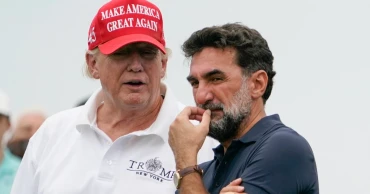
Officials who oversee Saudi Arabia's tens of billions of dollars in U.S. investments haven’t been shy about flaunting their ties with top American business and political figures, down to wearing MAGA caps as they swing golf clubs alongside former President Donald Trump. But they’ve been silent about many of the details of these relationships.
That’s changing as a result of a federal lawsuit in California pitting the Saudi-owned golf tour upstart LIV against the PGA Tour. A judge, citing what she described as the kingdom's hands-on management of LIV, found that when it came to the new golf league, Saudi officials and the Saudi government aren't shielded from U.S. courts the way sovereign nations usually are.
While Saudi Arabia is fighting the decision, insisting U.S. courts have no jurisdiction over its high officials, the ruling means lawyers for the PGA Tour would be able to question top officials about business secrets that the Saudis have held close, such as details of deal-making involving 2024 presidential candidate Trump and others.
U.S. District Judge Beth Labson Freeman found that the Saudis had smacked up against a commercial exception to U.S. laws on sovereign immunity.
Also Read: Oil giant Saudi Aramco has profits of $161B in 2022
Yasir al Rumayyan, appointed under Crown Prince Mohammed bin Salman to manage the oil-rich Saudi government’s $600 billion-plus stockpile of wealth, is “up to his eyeballs” in managing the golf tour, Labson Freeman declared.
The finding follows PGA Tour claims that al Rumayyan himself recruited LIV players, approved LIV contracts and was otherwise the golf league's decision-maker and manager. Lawyers for Saudi Arabia counter that Rumayyan's actions were those of an eager investor, not of someone actually running a business.
The case matters beyond the world of golf. Saudi Arabia has been assertive in U.S. business investments and political relationships and could now face court demands for greater transparency and accountability.
Also Read: Bangladesh welcomes renewed ties between Iran, Saudi Arabia: Momen
The insistence by Saudi officials that U.S. courts have little or no say over their actions is especially sensitive. Last year, the kingdom, with legal backing from the Biden administration, successfully argued that American courts had no authority to try the prince in a lawsuit over the 2018 killing of U.S.-based journalist Jamal Khashoggi. U.S. intelligence officials had concluded that aides and other Saudi officials sent by the prince killed Khashoggi. The slaying has opened a lasting rift between the Biden administration and Prince Mohammed, Saudi Arabia's de facto ruler.
Longstanding international law generally protects the leaders and government of one country from being hauled into another country's courts. Congress carved out commercial activity as an exception to that sovereign immunity in 1976.
-The PGA Tour argued in a filing Friday that Saudi Arabia and its sovereign wealth fund under the prince have a record of flip-flopping on insisting upon sovereign immunity, depending on whether doing so works to their advantage in various business deals and lawsuits.
Saudi Arabia's critics and independent legal experts and analysts say the kingdom may be in a tough spot legally.
“It seemed to me very clear that it wasn't immune" from U.S. courts when it came to operating the LIV golf tour and tournaments, said Donald Baker, a lawyer and a former head in the Justice Department's antitrust division who is not involved in the case.
Baker projected the case could lead to California's Northern District federal court seeking depositions from Saudi royals. Any decisions on whether other Saudi government business deals in the United States have similarly lost their immunity from U.S. courts would have to be made on a case-by-case basis, he said.
Sarah Leah Whitson, who runs the Democracy for the Arab World Now rights group founded by Khashoggi, said that "if they want to have sovereign immunity from their business transactions, it means they can sue people, they can demand that the judicial system enforces contracts and the laws governing contracts, but nobody can impose that against them. Nobody can hold them accountable.”
The Saudi-funded professional golf tour, now in its second season and with a slogan of “Golf, but louder,” is known for its blaring music, record multimillion-dollar purses, ties with Trump and unfriendly rivalry with the PGA Tour. Trump courses this year will host three LIV tournaments, in deals whose financial terms have not been publicly disclosed.
Saudi Arabia's immunity problem comes in an antitrust lawsuit that was initially brought by LIV players against the long-established PGA Tour. The case already has revealed that the Saudi government's sovereign wealth fund owns 93% of LIV.
A lawyer for Saudi Arabia's side of the case did not respond to an email from The Associated Press seeking comment. A LIV spokeswoman referred questions to the Saudi sovereign wealth fund, which also did not respond to requests for comment.
Under the now eight-year rule of Saudi Arabia's king, Salman, his son Prince Mohammed has made the kingdom's sovereign wealth fund a primary tool of Saudi investment at home and abroad. The prince is the fund's chairman. Saudi officials say the aim is to diversify the kingdom's oil-funded economy.
Under Prince Mohammed and fund governor al Rumayyan, the fund has more than $30 billion invested in Uber, Meta, luxury electric car brand and Tesla rival Lucid, Paypal, Costco and other publicly traded U.S. businesses.
The fund also has consolidated Saudis' relationship with the Trump family, using Trump golf courses and directing $2 billion to the investment firm of Trump son-in-law Jared Kushner.
Rumayyan sits on the board of Uber. He plays golf with Trump. He triggered one of Elon Musk's biggest tweet storms and legal cases, when Musk tweeted about what he later testified was the prospect of a Saudi sovereign wealth fund deal to take Tesla private.
The Saudi sovereign wealth fund also is spending heavily on sports. In addition to creating the LIV golf tour, the Saudis have bought the Newcastle United soccer team in Britain's Premier League and hosted Formula One races, horse races with record prize money, and other tournaments and matches, from snooker to boxing and chess.
Saudi Arabia is presenting itself as an energetic, youthful and business-friendly government. Human rights groups counter with the word “sportswashing,” saying the kingdom under Prince Mohammed's influence is trying to distance itself from the killing of Khashoggi, the jailing of other rights advocates, and a failed war in Yemen. U.S. critics paint Saudi Arabia's financial deals with Trump and Kushner as the oil kingdom backing one side in America's highly partisan politics.
“They're really trying to rebrand the kingdom ... using sport to reach a much wider public audience and trying to tap into some of the passion that people have," said Kristian Ulrichsen, a fellow for the Middle East at the Baker Institute in Houston.
To close the deal buying Newcastle United, Saudi Arabia's sovereign wealth fund provided what authorities said were “legally binding assurances” that the kingdom would not be involved in running the team, even though Rumayyan serves as team chairman. Rights advocates argued unsuccessfully for a reexamination of that deal in light of the rulings of the California federal court.
Critics — and the PGA Tour lawyers in Friday’s filing — also contend Saudi Arabia willingly waived sovereign immunity when it submitted government documents in another U.S. case, against a Saudi who had served as a top intelligence official under the previous king. The United States intervened to quash the case on the grounds it threatened to reveal national security secrets.
In the golf lawsuit, LIV players and the Saudi sovereign wealth fund, formally called the Public Investment Fund, argue that unfair practices by the PGA are harming LIV. PGA lawyers respond in filings that it's the reputations of Saudi Arabia and Prince Mohammed that are scaring away business.
3 years ago

Israeli forces kill 3 Palestinian militants in West Bank
Israeli forces shot and killed three Palestinian militants Sunday who opened fire on troops in the occupied West Bank, the military said, the latest bloodshed in a year-long wave of violence in the region.
The Al-Aqsa Martyrs Brigade, an armed offshoot of Palestinian President Mahmoud Abbas' Fatah party, claimed the men killed as members.
The Palestinian Health Ministry said the men were killed by Israeli fire near the city of Nablus and identified them as Jihad Mohammed al-Shami, 24, Uday Othman al-Shami, 22 and Mohammed Raed Dabeek, 18.
The military said it confiscated three M16 rifles from the militants after the shootout and that one gunman turned himself in and was arrested.
Also Read: Palestinian killed by Israeli fire in West Bank
The deaths Sunday bring to 80 the number of Palestinians killed since the start of the year, as Israel has stepped up arrest raids in the West Bank. A spasm of Palestinian attacks against Israelis has killed 14 people in 2023.
The fresh violence follows an Israeli military raid last week on the West Bank village of Jaba, where three Palestinian militants were killed. Hours later, a Palestinian gunman opened fire on a busy Tel Aviv thoroughfare at the start of the Israeli weekend, wounding three people before being shot and killed.
The current round of violence is one of the worst between Israelis and Palestinians in the West Bank in years. It began last spring after a series of Palestinian attacks against Israelis that triggered near-nightly Israeli raids in the West Bank.
Nearly 150 Palestinians were killed in the West Bank and east Jerusalem in 2022, making it the deadliest year in those areas since 2004, according to the leading Israeli rights group B'Tselem. Palestinian attacks against Israelis during that same time killed 30 people.
The military says most of the Palestinians killed were militants. But stone-throwing youths protesting the incursions and others not involved in confrontations have also been killed.
Israel says the raids are essential to dismantle militant networks and prevent future attacks. But attacks appear to be intensifying rather than slowing down.
The Palestinians view the raids as a tightening by Israel of its 55-year, open-ended occupation of lands they seek for their future state.
Israel captured the West Bank, the Gaza Strip and east Jerusalem in the 1967 Mideast war. The Palestinians seek those territories for their future independent state.
3 years ago

China denies hidden motives after hosting Iran-Saudi talks
After hosting talks at which Iran and Saudi Arabia agreed to reestablish diplomatic relations, China said Saturday it has no hidden motives and isn’t trying to fill any “vacuum” in the Middle East.
The agreement announced Friday to reestablish Iran-Saudi ties and reopen embassies after seven years was seen as a major diplomatic victory for China, as Gulf Arab states perceive the United States as reducing its presence in the Middle East.
The Foreign Ministry quoted an unidentified spokesperson as saying China “pursues no selfish interest whatsoever” and opposes geopolitical competition in the region.
Also Read: Negotiated with China, rivals Saudi Arabia and Iran agree to resume ties
China will continue to support Mideast countries in “resolving differences through dialogue and consultation to jointly promote lasting peace and stability,” the spokesperson said.
“We respect the stature of Middle East countries as the masters of this region and oppose geopolitical competition in the Middle East,” said the statement posted on the Foreign Ministry's website.
“China has no intention to and will not seek to fill so-called vacuum or put up exclusive blocs,” it said, in an apparent reference to the U.S. “China will continue to contribute its insights and proposals to realizing peace and tranquility in the Middle East and play its role as a responsible major country in this process.”
Following Friday's announcement, China's senior diplomat Wang Yi said the agreement showed China was a "reliable mediator" that had “faithfully fulfilled its duties as the host.”
Notably, Wang also stated that “this world has more than just the Ukraine question and there are still many issues affecting peace and people's lives.”
China has been heavily criticized for failing to condemn Russia's invasion and for accusing the U.S. and NATO of provoking the conflict. A Chinese proposal calling for a cease-fire and peace negotiations between Russia and Ukraine went nowhere, largely because of China's perceived backing of Russia.
However, in the Middle East, China is viewed as a neutral party, with strong ties to both Iran and Saudi Arabia, as well as Israel and the Palestinian Authority.
China last month hosted Iran’s hard-line President Ebrahim Raisi, and is a top purchaser of Saudi oil. Chinese leader Xi Jinping visited Riyadh in December for meetings with oil-rich Gulf Arab nations crucial to China’s energy supplies, and China's special envoy for the Middle East — a position specially created in 2002 — has made frequent trips to the region.
China sells drones and other weaponry to countries in the region, but nowhere on the scale of the United States.
In coordination with fellow authoritarian state Russia, China has sought to steadily chip away at the U.S.-led Western liberal order, taking advantage of opportunities when Washington's attention has strayed.
Earlier, it moved aggressively to build ties in the South Pacific, signing a security agreement with the Solomon Islands that could see Chinese naval ships and security forces taking up a presence in the country. The U.S., Australia and others moved swiftly to shore up ties in the Pacific, and China's efforts to ink similar agreements with other island nations ultimately foundered.
Xi, whose administration in recent days has warned of “conflict and confrontation” with the U.S., was credited in a trilateral statement with facilitating the Iran-Saudi talks through a “noble initiative” and having personally agreed to sponsor the negotiations that lasted from Monday through Friday.
3 years ago

Indonesia’s Merapi volcano spews hot clouds in new eruption
Indonesia’s Mount Merapi erupted Saturday with avalanches of searing gas clouds and lava, forcing authorities to halt tourism and mining activities on the slopes of the country’s most active volcano.
Merapi, on the densely populated island of Java, unleashed clouds of hot ash and a mixture of rock, lava and gas that traveled up to 7 kilometers (4.3 miles) down its slopes. A column of hot clouds rose 100 meters (yards) into the air, said the National Disaster Management Agency’s spokesperson Abdul Muhari.
The eruption throughout the day blocked out the sun and blanketed several villages with falling ash. No casualties have been reported.
It was Merapi’s biggest lava flow since authorities raised the alert level to the second-highest in November 2020, said Hanik Humaida, the head of Yogyakarta’s Volcanology and Geological Hazard Mitigation Center.
Also Read: Indonesia landslide deaths climb to 21; dozens still missing
She said residents living on Merapi’s slopes were advised to stay 7 kilometers (4.3 miles) away from the crater’s mouth and be aware of the danger posed by lava.
Tourism and mining activities were halted.
The 2,968-meter (9,737-foot) mountain is about 30 kilometers (18 miles) from Yogyakarta, an ancient center of Javanese culture and the seat of royal dynasties going back centuries. About a quarter million people live within 10 kilometers (6 miles) of the volcano.
Merapi is the most active of more than 120 active volcanoes in Indonesia and has repeatedly erupted with lava and gas clouds recently. Its last major eruption in 2010 killed 347 people and displaced 20,000 villagers.
Also Read: Indonesia fuel depot fire kills 19; 3 still missing
Indonesia, an archipelago of 270 million people, is prone to earthquakes and volcanic activity because it sits along the “Ring of Fire,” a horseshoe-shaped series of seismic fault lines around the Pacific Ocean.
An eruption in December 2021 of Mount Semeru, the highest volcano on Java island, left 48 people dead and 36 missing.
3 years ago

Japan marks 12 years from tsunami and nuclear disaster
Japan on Saturday marked the 12th anniversary of the massive earthquake, tsunami and nuclear disaster with a minute of silence, as concerns grew ahead of the planned release of the treated radioactive water from the wrecked Fukushima nuclear plant and the government's return to nuclear energy.
The 9.0 magnitude earthquake and tsunami that ravaged large parts of Japan's northeastern coast on March 11, 2011, left more than 22,000 people dead, including about 3,700 whose subsequent deaths were linked to the disaster.
A moment of silence was observed nationwide at 2:46 p.m., the moment the earthquake struck.
Some residents in the tsunami-hit northern prefectures of Iwate and Miyagi walked down to the coast to pray for their loved ones and the 2,519 whose remains were never found.
In Tomioka, one of the Fukushima towns where initial searches had to be abandoned due to radiation, firefighters and police use sticks and a hoe to rake through the coastline looking for the possible remains of the victims or their belongings.
Also Read: S. Korea pushes to end Japan disputes over forced laborers
At an elementary school in Sendai, in Miyagi prefecture north of Fukushima, participants released hundreds of colorful balloons in memory of the lives lost.
In Tokyo, dozens of people gathered at an anniversary event in a downtown park, and anti-nuclear activists staged a rally.
The earthquake and tsunami that slammed into the coastal Fukushima Daiichi nuclear plant destroyed its power and cooling functions, triggering meltdowns in three of its six reactors. They spewed massive amounts of radiation that caused tens of thousands of residents to evacuate.
Over 160,000 people had left at one point, and about 30,000 are still unable to return due to long-term radiation effects or health concerns. Many of the evacuees have already resettled elsewhere, and most affected towns have seen significant population declines over the past decade.
At a ceremony, Fukushima Gov. Masao Uchibori said decontamination and reconstruction had made progress, but “we still face many difficult problems.” He said many people were still leaving and the prefecture was burdened with the plant cleanup and rumors about the effects of the upcoming release of the treated water.
The plant’s operator, Tokyo Electric Power Company Holdings, and the government are making final preparations to release into the sea more than 1.3 million tons of treated radioactive water, beginning in coming months.
Also Read: What’s happening at Fukushima plant 12 years after meltdown?
The government says the controlled release of the water after treatment to safe levels over several decades is safe, but many residents as well as neighbors China and South Korea and Pacific island nations are opposed to it. Fishing communities are particularly concerned about the reputation of local fish and their still recovering business.
In his speech last week, Uchibori urged the government to do utmost to prevent negative rumors about the water release from further damaging Fukushima’s image.
Prime Minister Fumio Kishida renewed his pledge to support the ongoing reconstruction efforts.
“The discharge of the treated water is a step that cannot be delayed,” Kishida told reporters after the ceremony. He repeated an earlier pledge that “a release will not be carried out without understanding of the stakeholders."
Kishida's government has reversed a nuclear phase-out policy that was adopted following the 2011 disaster, and instead is pushing a plan to maximize the use of nuclear energy to address energy supply concerns triggered by Russia’s war on Ukraine while meeting decarbonization requirements.
Uchibori's goal is to bolster the renewable energy supply to 100% of the Fukushima prefectural needs by 2040. He said last week that while the energy policy is the central government’s mandate, he wants it to remember that Fukushima continues to suffer from the nuclear disaster.
3 years ago