Asia
Russia launches smallest nighttime attack on Ukraine in months in run-up to possible peace talks
Russia launched 10 Shahed and decoy drones at Ukraine in nighttime attacks, the Ukrainian air force said Tuesday, in its smallest drone bombardment this year as the warring countries prepare for possible peace talks in Turkey.
The Kremlin hasn’t directly responded to Ukrainian President Volodymyr Zelenskyy’s challenge for Russian leader Vladimir Putin to meet him in person at the negotiations in Istanbul on Thursday.
Kremlin spokesman Dmitry Peskov refused for the second straight day Tuesday to tell reporters whether Putin will travel to Istanbul and who else will represent Russia at the potential talks. “As soon as the president considers it necessary, we will make an announcement,” Peskov said.
Russia declares a 72-hour ceasefire in Ukraine marking Victory Day in World War II
Russia has said it will send a delegation to Istanbul without preconditions.
The U.S. has been applying stiff pressure on both sides to come to the table since President Donald Trump came to power in January with a promise to end the war.
Military analysts say both sides are preparing a spring-summer campaign on the battlefield, where a war of attrition has killed tens of thousands of soldiers on both sides along the roughly 1,000-kilometer (620-mile) front line. The Institute for the Study of War, a Washington think tank, said Monday that Russia is “quickly replenishing front-line units with new recruits to maintain the battlefield initiative.”
Russia launches nearly 150 drones against Ukraine
Zelenskyy will not be meeting with any Russian officials in Istanbul other than Putin, Mykhailo Podolyak, an adviser to Zelenskyy, said Tuesday on a YouTube show run by prominent Russian journalists in exile.
Lower-level talks would amount to simply “dragging out” any peace process, Podolyak said. European leaders have recently accused Putin of dragging his feet in peace efforts while he attempts to press his bigger army’s battlefield initiative and capture more Ukrainian land.
Russia effectively rejected an unconditional 30-day ceasefire demanded by Ukraine and Western European leaders from Monday, when it fired more than 100 drones at Ukraine. Putin instead offered direct peace talks with Ukraine in Istanbul on Thursday.
Russia shunned the ceasefire proposal tabled by the U.S. and European leaders but offered direct talks with Ukraine.
Putin has repeatedly questioned the legitimacy of the Ukrainian government, especially Zelenskyy himself, saying his term expired last year. Under Ukraine’s constitution, it is illegal for the country to hold national elections while it’s under martial law, as it now is.
In a further complication, a Ukrainian decree from 2022 rules out negotiations with Putin.
U.S. Secretary of State Marco Rubio spoke Monday with the top diplomats from the United Kingdom, France, Germany and Poland, who were meeting in London, to assess “the way forward for a ceasefire and path to peace in Ukraine,” spokesperson Tammy Bruce said.
Those European countries had pledged further sanctions on Russia if it didn’t comply with a full ceasefire that Ukraine had accepted from Monday, but they made no announcement of additional punitive measures.
Trump says Zelenskyy is prolonging war in Ukraine by resisting calls to cede Crimea to Russia
7 months ago
Grieving mother elephant stands watch for hours after calf crushed by truck
A mother elephant’s heartbreaking vigil beside her calf, killed in a road accident, has drawn widespread sorrow and outrage online.
The tragic incident took place on May 11 — Mother’s Day — along the Gerik-Jeli East-West Highway in Malaysia’s Perak state, when a baby elephant was fatally struck by a truck while crossing the road.
A viral video posted by Instagram user @jklamlam shows the gut-wrenching scene: the calf lies motionless beneath the truck while the mother stands guard, refusing to leave.
The footage, recorded on a poorly lit road at night, later shows traffic building up as vehicles wait for rescuers to respond. Even after dawn, the grieving elephant remained by her baby’s side, unmoved by attempts to lead her away, reports the Indian Express.
“This tragedy shows the serious danger wildlife face from growing road networks. Since 2020, eight elephants have been killed on Malaysian roads, including three in 2025 alone. The Gerik-Jeli Highway cuts through key habitats like Royal Belum State Park and Temengor Forest, making it a frequent site for animal crossings,” the Instagram post stated.
“Conservationists, including WWF-Malaysia, are urging immediate action — like speed bumps and dedicated wildlife crossings — to prevent more tragedies,” it added.
The video, which has garnered nearly 400,000 views, sparked an emotional response on social media. One user wrote, “My heart breaks with hers. I am so sorry we failed you and your baby, sweet mama. We do not deserve to share this earth with such noble beings.”
Another commented, “Wow they did this! There is absolutely no way you don’t see a baby elephant crossing the road!! And what did they do to this poor mom?”
7 months ago
14 people die from drinking toxic liquor in India
At least 14 people died and six were hospitalized in critical condition after consuming toxic liquor overnight in northern India, police said Tuesday.
Seven people were arrested on allegations they supplied the toxic liquor in five villages around 19 kilometers (12 miles) from the city of Amritsar in northern Punjab, senior police officer Maninder Singh said.
The police have launched a crackdown to destroy the network of spurious liquor supplies in the area following the incident, Singh said.
The local administration deployed medics to the villages to check on people who drank the contaminated liquor, said Sakshi Sawhney, a senior government official in Amritsar.
Those showing symptoms are being shifted to hospitals to ensure the death toll doesn’t rise, said Sawhney.
Detained Philippines ex-President Duterte poised to win mayoral race in his home city
Investigators have not said what ingredients were suspected of causing the deaths and sickness.
In India, deaths from consumption of contaminated liquor manufactured locally is rampant, mainly in rural areas, as people lap them up for cheaper prices.
7 months ago
Detained Philippines ex-President Duterte poised to win mayoral race in his home city
Despite his detention thousands of miles away in the International Criminal Court, former Philippines President Rodrigo Duterte appeared to have been elected as mayor in his home city by a landslide, according to preliminary results on Tuesday.
At least five candidates backed by his family were also among those leading the race for 12 Senate positions, in a stronger-than-expected showing in Monday's midterm elections. Pre-election surveys had indicated only two of them would emerge victorious.
The results come as a boost for Duterte’s daughter, Vice President Sara Duterte, ahead of an impeachment trial in the Senate in July over a raft of charges including alleged misuse of public funds and plotting to assassinate President Ferdinand Marcos Jr., his wife and the House speaker.
Sara Duterte is considered a strong contender for the 2028 presidential race. But if convicted by the Senate, she will lose her job and be disqualified from holding public office forever. To be acquitted, she needs at least nine of the 24 senators to vote in her favor.
The official election results will be known within a week. But the partial and unofficial count by election watchdog Parish Pastoral Pastoral Council for Responsible Voting showed Duterte garnering more than half a million votes in his stronghold Davao City, nearly eight times more than his closest rival.
His youngest son, Sebastian, the incumbent mayor of Davao, is also leading the unofficial vote count in the race for Davao vice mayor. His eldest son, Paolo, who is seeking reelection as a member of the House of Representatives, and two grandsons in local races were also in the lead, in an indication of the family's continued influence.
Japan, Philippines to urge Trump: Maintain US engagement in Asia
“Duterte landslide in Davao!” his youngest daughter Veronica posted on Facebook.
Duterte, nicknamed “the Punisher” and “Dirty Harry,” served as Davao's mayor for two decades before becoming president. He has been in the custody of the International Criminal Court since March, awaiting trial for crimes against humanity over a brutal war on illegal drugs that left thousands of suspects dead during his 2016-2022 presidency.
The impeachment and Rodrigo Duterte’s arrest and transfer to the tribunal in The Hague came after Marcos and Sara Duterte’s ties unraveled over political differences and their competing ambitions. Duterte supporters slammed Marcos's government for arresting and surrendering the former leader to a court whose jurisdiction his supporters dispute.
Under Philippine law, candidates facing criminal charges, including those in detention, can run for office unless they have been convicted and have exhausted all appeals.
Afghans arrive in the Philippines to complete visa processing for resettlement in US
Sara Duterte had told reporters after voting on Monday that she was in talks with her father's lawyers on how he could take his oath as mayor despite being behind bars. She had said the vice mayor, widely expected to be Sebastian, would likely be the acting mayor.
7 months ago
After days of heavy firefights, calm reported along Indian and Pakistan borders
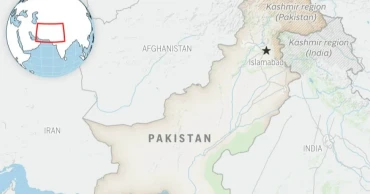
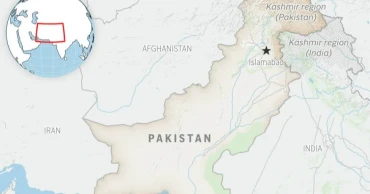
Indian and Pakistani authorities said Monday there was no firing reported overnight along the heavily militarized region between their countries, the first time in recent days the two nations were not shooting at each other.
India and Pakistan reached an understanding to stop all military actions on land, in the air and at the sea Saturday in a U.S.-brokered ceasefire to stop the escalating hostilities between the two nuclear-armed rivals that threatened regional peace.
“The night remained largely peaceful across Jammu and Kashmir, and other areas along the international border,” the Indian army said in a statement, adding that no incidents had been reported.
Senior military officials from India and Pakistan spoke via a hotline on Monday, the state-run Pakistan Television reported. It gave no details, but the two sides were to assess if the ceasefire was holding and how to ensure its implementation. There were fears it would not hold after they accused each other of violations just hours after it was announced.
Local government officials in Pakistan-administered Kashmir reported no incidents of cross-border firing along the Line of Control and said that civilians displaced by recent skirmishes between Pakistani and Indian forces were returning to their homes.
Pakistan’s military spokesperson, Lt. Gen. Ahmad Sharif, said late Sunday that Pakistan remains committed to upholding the ceasefire and will not be the first to violate it.
India, Pakistan military officials to hold talks as ceasefire brings border calm
Soon after the ceasefire announcement on Saturday, Pakistan reopened all of its airports and restored flight operations. India followed up Monday with reopening of all the 32 airports that were shut temporarily across northern and western regions due to the flare up in tensions.
“It's informed that these airports are now available for civil aircraft operations with immediate effect,” the Airports Authority of India said in a statement.
The militaries of the two countries have been engaged in one of their most serious confrontations in decades since last Wednesday, when India struck targets inside Pakistan it said were affiliated with militants responsible for the massacre of 26 tourists in Indian-controlled Kashmir. The tourists, mostly Indian Hindu men, were brutally killed in front of their families in the meadow town of Pahalgam last month.
India accused Pakistan of backing the militants who carried out the massacre, a charge Islamabad denied. The incident first led to a spat of tit-for-tat diplomatic measures by both the nations, sending their bilateral ties to a near historic low.
The two expelled each other’s diplomats, shut their airspace, land borders, and suspended a crucial water treaty.
After Wednesday's strikes in Pakistan, both sides exchanged heavy fires along their de facto border in the restive Kashmir region followed by missile and drone strikes into each other’s territories, mainly targeting military installations and airbases. Dozens of civilians were killed on both the sides in heavy shelling, the two countries said.
The Indian military on Sunday for the first time claimed its strikes into Pakistan-controlled Kashmir and Pakistan last week killed more than 100 militants, including prominent leaders.
India alleges over 100 militants killed in strikes inside Pakistan
Lt. Gen. Rajiv Ghai, the director general of India’s military operations, said India’s armed forces struck nine militant infrastructure and training facilities, including sites of the Lashkar-e-Taiba group that India blames for carrying out major militant strikes in India and the disputed region of Kashmir.
Ghai said at least 35 to 40 Pakistani soldiers were killed in clashes along the Line of Control, the de facto border that divides the disputed Kashmir region between India and Pakistan. Five Indian soldiers were also killed, he said.
Pakistan’s Information Minister Attaullah Tarar on Thursday said his country’s armed forces had killed 40 to 50 Indian soldiers along the Line of Control. Pakistani military also claimed to have shot down five Indian fighter jets and inflected heavy losses on Indian military installations by targeting 26 locations in India.
The Associated Press couldn’t independently verify the claims made by India and Pakistan.
Air Chief Marshal AK Bharti, the director general India’s air operations told a news conference on Monday that despite “minor damage (s) incurred, all our military bases and air defense systems continue to remain fully operational, and ready to undertake any further missions, should the need so arise.”
Bharti reiterated that New Delhi’s fight was “with terrorists, and not with Pakistan military or its civilians.”
7 months ago
India, Pakistan military officials to hold talks as ceasefire brings border calm
Military operations chiefs of India and Pakistan are scheduled to hold talks on Monday to determine the next steps in maintaining peace along their volatile border, as a recently brokered ceasefire holds firm following the fiercest cross-border exchanges in nearly three decades.
The scheduled conversation between the director generals of military operations (DGMOs) from both countries is set for 1200 hours (0630 GMT), India’s foreign ministry confirmed on Saturday. The dialogue comes after a fragile calm returned to the border area, which had been rocked by intense shelling and firing for four consecutive days.
Sunday night passed without reports of explosions or projectile fire, marking the first peaceful night in several days, according to the Indian Army. Nevertheless, security concerns persist, with some schools in the region remaining closed as a precautionary measure.
The ceasefire, announced on Saturday, came after mounting diplomatic pressure led by U.S. President Donald Trump. Washington played a critical role in facilitating the pause in hostilities between the two nuclear-armed neighbours.
Despite the relative calm, tensions linger. On Sunday, India’s military reportedly sent a message via the established hotline to Pakistan, raising concerns about ceasefire violations observed the previous day. A senior Indian Army officer warned that any further provocations would be met with a response.
Trump poised to accept luxury jet from Qatar’s Royal family, may be used as Air Force One
Pakistan’s military, however, denied any breach of the ceasefire agreement.
The Himalayan region, where the border clashes occurred, has long been a flashpoint between India and Pakistan, both of whom claim it in full but govern separate parts. While previous ceasefires have been declared, few have lasted long without violations.
Monday’s DGMO-level dialogue is seen as a crucial test of both sides’ willingness to de-escalate tensions and return to sustained peace.
Source: With inputs from agencies
7 months ago
South Korean conservative party fails in a bid to switch presidential candidates
South Korea’s embattled conservative party canceled then reinstated the presidential candidacy of Kim Moon Soo within hours as internal turmoil escalated ahead of the June 3 election.
Saturday's chaotic U-turn, after a failed attempt to replace Kim with former Prime Minister Han Duck-soo, underscored the People Power Party’s leadership crisis following the ouster of former President Yoon Suk Yeol over his martial law imposition in December, which possibly doomed the conservatives’ chances of winning another term in government.
Kim, a staunch conservative and former labor minister under Yoon, was named the PPP’s presidential candidate on May 3 after winning 56.3% of the primary vote, defeating a reformist rival who had criticized Yoon’s martial law. But the PPP’s leadership, dominated by Yoon loyalists, had spent the past week desperately pressuring Kim to step aside and back Han, whom they believed stood a stronger chance against liberal Democratic Party frontrunner Lee Jae-myung.
After talks between Han and Kim failed to unify their candidacies, the PPP’s emergency committee took the unprecedented step early Saturday of nullifying its primary, canceling Kim’s nomination and registering Han as both a party member and its new presidential candidate. However, the replacement required approval through an all-party vote conducted through an automated phone survey, which ultimately rejected the switch on Saturday night.
“While we cannot disclose the figures, the vote on switching the candidate was rejected by a narrow margin,” party spokesman and lawmaker Shin Dong-wook said. Kim, who had denounced the party’s attempt to replace him as an “overnight political coup,” was immediately reinstated as the candidate and plans to officially register with election authorities on Sunday, according to the party.
“Now everything will return to its rightful place,” Kim said in a statement.
North Korea fires multiple missiles into eastern sea: South Korea
Kim, 73, was a prominent labor activist in the 1970s and ’80s, but joined a conservative party in the 1990s, saying he gave up his dream of becoming a "revolutionist” after witnessing the collapse of communist states. Since then, he has served eight years as governor of South Korea’s Gyeonggi province and completed three terms in the National Assembly.
Han served as acting president after Yoon was impeached by the legislature in December and officially removed by the Constitutional Court in April. He resigned from office May 2 to pursue a presidential bid, arguing his long public service career qualifies him to lead the country amid growing geopolitical uncertainty and trade challenges intensified by the policies of U.S. President Donald Trump.
Han, who had called for unity after being promoted as the candidate, said in a statement that he “humbly accepts” the voice of party members.
North Korea threatens a response to US flying long-range bombers over South Korea
Han and Kim have lagged well behind Lee in recent opinion polls. Lee, who spearheaded the Democrats’ efforts to oust Yoon, ridiculed the PPP efforts to switch candidacies, telling reporters Thursday, “I have heard of forced marriages but never heard of forced unity.”
7 months ago
India and Pakistan trade accusations of ceasefire breaches after agreement
Just hours after announcing a ceasefire following several days of intense cross-border military conflict, India and Pakistan have begun accusing one another of violating the agreement.
Explosions were reported in Indian-administered Kashmir, prompting India's Foreign Secretary Vikram Misri to state that there had been "repeated breaches of the agreement reached earlier." In response, Pakistan’s Foreign Ministry asserted that while it remains "committed to the sincere implementation of the ceasefire," violations by Indian forces were occurring in some areas.
The recent escalation marked the most intense military standoff between the nuclear-armed neighbors in decades. The conflict was triggered when India launched strikes on locations within Pakistan and Pakistan-administered Kashmir, following a deadly militant attack in Pahalgam last month. Pakistan has denied any involvement in the incident.
After four days of military exchanges, both countries agreed to an immediate ceasefire. The deal was publicly announced by U.S. President Donald Trump via Truth Social, crediting U.S. diplomatic efforts. Pakistan’s Foreign Minister confirmed the agreement, noting that diplomatic support from "three dozen countries" contributed to the deal.
Despite the ceasefire declaration, residents in Srinagar and Jammu reported fresh explosions, with visuals of bright flashes in the sky. Misri said Indian forces were responding appropriately to what he called violations by Pakistan and urged Islamabad to uphold the terms of the agreement.
Pakistan’s Foreign Ministry reiterated its dedication to peace, calling on ground troops to act with restraint and suggesting that any issues should be resolved through proper communication channels.
Kashmir remains a deeply disputed region, claimed fully by both India and Pakistan but controlled in parts by each since their partition in 1947. The territory has been the source of two wars between the nations.
India’s External Affairs Minister S. Jaishankar confirmed that both sides had agreed to cease hostilities and emphasized India’s unwavering stance against terrorism. Pakistan’s Prime Minister Shehbaz Sharif echoed this, describing the ceasefire as a step toward broader stability.
India accuses Pakistan of breaching ceasefire along their border
U.S. Secretary of State Marco Rubio confirmed that India and Pakistan will begin broader discussions at a neutral venue, following intense 48-hour negotiations involving U.S. officials and both prime ministers. UN Secretary General António Guterres and UK Prime Minister Sir Keir Starmer both welcomed the truce, with hopes it would hold long-term.
The flare-up followed a militant attack on April 22 in Pahalgam that killed 26 people, including 25 Indians and one Nepali tourist. Survivors claimed the assailants specifically targeted Hindu men.
CA Prof Yunus lauds Modi, Sharif for ceasefire
India’s military strikes, described by its defense ministry as part of efforts to punish the perpetrators, were labeled "unprovoked" by Pakistan. Islamabad reported 36 fatalities from Indian strikes, while India said 21 civilians were killed due to Pakistani shelling. Both nations accused each other of targeting key military facilities during overnight fighting on Friday.
Source: With inputs from BBC
7 months ago
India and Pakistan agree to ceasefire in US-mediated talks
India and Pakistan on Saturday agreed to a ceasefire following US-led talks to end the most serious military confrontation between the nuclear-armed rivals in decades.
The ceasefire deal follows weeks of clashes, missile and drone strikes across their borders that were triggered by a gun massacre of tourists last month that India blames on Pakistan, which denies the charge. Dozens of civilians have been killed on both sides.
The first word of the truce came from US President Donald Trump, who posted on his Truth Social platform that he was pleased to announce that India and Pakistan had agreed to a full and immediate ceasefire.
"After a long night of talks mediated by the United States, I am pleased to announce that India and Pakistan have agreed to a FULL AND IMMEDIATE CEASEFIRE. Congratulations to both Countries on using Common Sense and Great Intelligence. Thank you for your attention to this matter!” US President Donald Trump said through his verified social media handle.
Operation Sindoor: Modi chairs meeting with military chiefs, Rajnath Singh
Pakistan’s Foreign Minister Ishaq Dar announced the ceasefire on Geo News. He said Saudi Arabia and Turkey played an important role in facilitating the deal.
Indian Foreign Secretary Vikram Misri said the head of military operations from both countries spoke Saturday afternoon.
“It was agreed between them that both sides would stop all firing and military action on land, and in the air and sea. Instructions have been given on both sides to give effect to this understanding.” The top military officials would speak again on May 12, Misri added.
The deal has brought a swift conclusion to military escalation.
India said it targeted Pakistani air bases early Saturday after Islamabad fired several high-speed missiles at military and civilian infrastructure in the country’s Punjab state. Pakistan said it intercepted most missiles and responded with retaliatory strikes on India.
7 months ago
India-Pakistan clash sees use of Chinese missiles, French jets, Israeli drones and more
Tensions between nuclear-armed neighbors India and Pakistan have sharply escalated following Indian missile and bomb strikes on targets in Pakistan and Pakistan-administered Kashmir.
Pakistan’s leadership has condemned the strikes as an act of war.
The two countries have released few specific details, and conflicting accounts of the events have only added to the confusion.
According to the Soufan Center, a security-focused think tank, the conflict is being complicated by a surge in misinformation: “The internet has been flooded with disinformation, false claims, and manipulated photos and videos,” it said.
“This information warfare is compounded by both sides’ commitment to save face,” the center added.
While independent verification of the various claims is currently not possible due to the ongoing conflict, a clearer picture emerges through official statements and known military capabilities.
Disinformation and the Use of Foreign Military Hardware
Pakistan said Saturday it had used hypersonic missiles launched from a JF-17 Thunder fighter jet—a platform jointly developed with China—to destroy an Indian S-400 air defense system in the border state of Punjab. India denied any damage and promised to present evidence later.
Praveen Donthi, a senior analyst with the International Crisis Group, commented that while the countries have not officially declared war, they are “effectively at war,” with misinformation contributing to fear, especially among residents in border regions.
“It’s become a remorseless race for military one-upmanship,” he noted.
Operation Sindoor: Modi chairs meeting with military chiefs, Rajnath Singh
On the same day, Pakistan said it had used its Fatah-II missiles to strike an Indian missile depot and two airbases. Indian officials acknowledged targeting Pakistani military installations in return.
Though neither side has revealed full details on the extent of the damage, Pakistan claimed it intercepted most of India’s missiles and launched counterattacks.
Pakistan Claims It Downed Five Indian Fighter Jets
In response to an Indian strike launched early Wednesday—following a deadly attack on tourists in Indian-administered Kashmir—Pakistan’s military spokesperson Lt. Gen. Ahmed Sharif claimed that its air force had downed five Indian warplanes: three French Rafales, one Russian-made SU30MKI, and a MiG-29.
He asserted that no Pakistani aircraft were lost and all returned safely.
Prime Minister Shehbaz Sharif echoed the claim, telling Parliament that Pakistan had the chance to shoot down 10 Indian jets but opted to down only the five that attacked its territory. He said India deployed about 80 aircraft in total for the operation.
India has not confirmed any aircraft losses, but debris from three planes has been found in separate areas.
Lack of Visual Evidence Clouds the Situation
India operates all three of the fighter jet models Pakistan claims to have shot down, according to the International Institute for Strategic Studies' Military Balance report. These jets are capable of both air-to-air combat and ground attacks.
Both countries maintain their aircraft did not cross into the other’s airspace. If Pakistan's version is accurate, its pilots likely engaged Indian jets from long range, rather than in a traditional dogfight. Pakistan may also have used surface-to-air missiles to down the aircraft—an approach seen as effective in modern warfare, as demonstrated in Ukraine.
Pakistan is known to have numerous Chinese-made surface-to-air missile systems.
Spotlight on Chinese Military Exports
Pakistan’s air force includes a mix of U.S.-made F-16s, French Mirages, and newer Chinese models such as the J-10C and the JF-17. Alongside U.S.-supplied missiles, Pakistan fields Chinese weapons like the PL-12 and PL-15, both of which are capable of engaging targets beyond visual range.
Foreign Minister Ishaq Dar told lawmakers the J-10C was responsible for downing the Indian aircraft, suggesting the use of Chinese weaponry.
Lisa Curtis, head of the Indo-Pacific security program at the Center for a New American Security, noted: “It’s interesting that Pakistan is saying it is using Chinese jets that it has imported from China to shoot down Indian aircraft.”
She pointed out that in 2019, during a previous military standoff, “it was a Pakistani F-16 provided by the United States that was used to shoot down an Indian aircraft.” This shift indicates Pakistan is now relying more on Chinese equipment than in the past, she added.
News of the engagement led to a stock surge for AVIC Chengdu Aircraft—the Chinese company that manufactures both the J-10C and JF-17—on the Shenzhen Stock Exchange. Meanwhile, shares of France’s Dassault Aviation, which makes the Rafale, fell sharply on Wednesday before recovering the next day.
Conflicting Narratives from Both Sides
India has yet to specify which military assets were used in its strikes. The Defense Ministry stated the attacks hit nine sites linked to plots against India. At a Wednesday briefing, India released video footage of eight strikes—four in Pakistan-controlled Kashmir and four within Pakistan proper.
Pakistan, however, claimed the attacks killed 31 civilians, including women and children, in areas such as Pakistan-administered Kashmir and the Punjab province. It also said two mosques were among the structures hit.
While both nations have acknowledged the use of missiles, video footage suggests that bombs—possibly dropped by drones—were also involved. Pakistan reported it had also shot down an unspecified number of drones.
Indian authorities described their strikes as precise, and footage appears to confirm that specific targets were hit with limited collateral damage, rather than widespread bombing.
7 months ago