Asia

India, Philippines Strengthen Defense, Maritime Cooperation with New Pact
India and the Philippines on Tuesday announced an upgraded strategic partnership aimed at strengthening cooperation in trade, defense, and maritime security.
The agreement was made following bilateral talks in New Delhi between Indian Prime Minister Narendra Modi and visiting Philippine President Ferdinand Marcos.
According to Indian Foreign Ministry spokesperson Randhir Jaiswal, the two nations also agreed to enhance collaboration in areas such as space, tourism, culture, and digital technologies.
Following the talks, Prime Minister Modi said both countries are committed to promoting peace, security, prosperity, and a rules-based order in the Indo-Pacific region. President Marcos echoed similar views, saying the strategic partnership would extend beyond bilateral interests.
“We want to work with you for a free and open Indo-Pacific,” Marcos told Modi.
President Marcos is on a five-day visit to India, which began on Monday. The visit comes amid growing defense ties between the two nations. On Sunday, India and the Philippines conducted joint naval exercises in the disputed South China Sea for the first time — a move that drew criticism from China.
India has also supplied the BrahMos supersonic cruise missile system to the Philippines as part of its expanding defense cooperation..
Source: Agency
9 months ago

Kolkata’s ‘Mini Bangladesh’ counts over Rs 1,000 crore losses as Bangladeshi tourist influx dries up
Once a bustling destination for Bangladeshi travellers, Kolkata’s ‘mini Bangladesh’ is still reeling a year after the fall of the Hasina government brought cross-border tourism to near-zero.
The bustling neighbourhood, nestled between Free School Street and Marquis Street near New Market, has suffered financial losses exceeding Rs 1,000 crore, with businesses still struggling to recover.
The area had long attracted Bangladeshi visitors with its affordable hotels, familiar food, convenient transport links, and access to healthcare. But over the past year, the lively streets have quieted dramatically.
According to local business associations, the true extent of the economic impact could be far greater.
“Business from hotels, eateries, retail, travel agents, forex, medical care and transport is worth Rs 3 crore daily. If we factor in the losses in New Market and Burrabazar, it will cross Rs 5,000 crore,” said Hyder Ali Khan, general secretary of the Free School Street Traders' Association.
With Bangladeshi arrivals reduced to a trickle, many hotels, restaurants, currency exchanges and travel agencies have either closed down or shifted focus to local customers. “Even a year ago, multiple buses would arrive with tourists at the same time, making parking difficult. Today, several days pass by without a single tourist arriving,” said Prabir Biswas, manager of a Marquis Street travel agency.
Currency exchange services that depended heavily on Bangladeshi taka transactions are now largely inactive. “We are struggling to stay afloat. We were completely dependent on Bangladeshi tourists,” said Mohammad Intezar, secretary of the Currency Exchangers Association on Marquis Street.
Traders estimate that nearly 40% of the area’s small and mid-sized eateries have shut down. Larger restaurants continue to operate under immense financial strain. “Business has dropped to 20% and it’s becoming unviable for most of us. We are hanging on somehow, waiting for a turnaround,” said NC Bhowmik, owner of Radhuni Restaurant.
For many, the blow came just after they had invested heavily to rebuild post-Covid. “Expecting a boom after the pandemic, many of us had invested heavily. We even took loans to renovate and modify business,” said the younger brother of a popular eatery owner. “The business was doing well before this turmoil. My elder brother has fallen sick because of this stress. We have to pay EMIs of Rs 1.5 lakh, and there’s barely any income,” he added.
The fallout has also devastated the informal economy that had grown around Bangladeshi tourism. Homestay operators, cooks, guides and drivers have seen their livelihoods disappear. “I bought two commercial vehicles when demand surged after pandemic. The business was flourishing and I often had to turn away customers. Now I barely get five to six bookings a month — and that too from locals who don’t want to pay as much. I have to pay EMIs,” said Elliot Road resident Farhan Rasul.
Source: Times of India
9 months ago
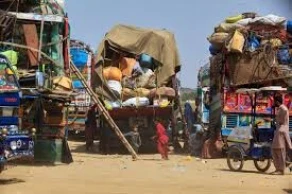
Pakistan resumes forced deportation of 1.4 million Afghan refugees amid UN concern
Pakistani authorities have resumed the forced repatriation of Afghan refugees after the federal government declined to extend the stay of nearly 1.4 million Afghans holding Proof of Registration (PoR) cards, officials said on Monday.
The legal status of these PoR card holders expired at the end of June. Many had appealed for a one-year extension to settle matters such as property sales and business closures before returning to Afghanistan.
Alongside PoR card holders, an estimated 800,000 Afghans with Afghan Citizen Cards are also being targeted. Police in provinces including Punjab, Balochistan, and Sindh say these individuals are living in the country without valid documents and are being detained ahead of deportation.
The renewed deportation campaign has drawn criticism from the UN refugee agency (UNHCR), which warned of the risks of mass returns. At least 1.2 million Afghans have already been forced to return from Pakistan and Iran this year, according to a June UNHCR report, raising concerns about potential instability in Afghanistan, which has been under Taliban rule since 2021.
A government notification dated July 31 confirmed that Afghans with expired PoR cards are to be repatriated. The notice emphasized that those without valid passports and Pakistani visas are staying illegally under immigration law.
First group of Syrian refugees returns from Lebanon under new UN-backed plan
Police officials, speaking anonymously, said detentions are being carried out through house-to-house visits and random checks, but not via mass arrests.
“Yes, the Afghan refugees living in Pakistan illegally are being sent back in a dignified way,” said Shakeel Khan, commissioner for Afghan refugees in Khyber Pakhtunkhwa province. He described the operation as the most significant repatriation effort so far under Islamabad’s direction.
Rehmat Ullah, a 35-year-old Afghan resident of Peshawar, said his family had lived in Pakistan for decades and is now preparing to return. “I have five children and my concern is that they will miss their education,” he said. “I was born here, my children were born here, and now we are going back.”
Millions of Afghans have sought refuge in Pakistan over the past four decades due to war, instability, and economic hardship. The current drive follows a 2023 nationwide crackdown on undocumented foreigners.
Pakistan's Deputy PM due Aug 23; bilateral talks with Adviser Hossain Aug 24
The Interior Ministry, which oversees the campaign, has not issued a comment.
UNHCR spokesperson Qaiser Khan Afridi voiced concern, calling the deportations a violation of international obligations. “Sending people back in this manner is tantamount to refoulement,” he said in a statement, urging Pakistan to ensure a “voluntary, gradual, and dignified” return process.
“We call on the government to halt the forcible return,” he added. “Such large-scale and hasty repatriations could endanger Afghan lives and risk broader regional instability.”
Source: Agency
10 months ago
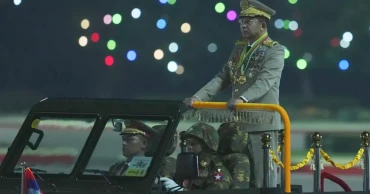
Myanmar lifts emergency rule, reshuffles leadership ahead of year-end polls
Myanmar’s military junta on Thursday announced the end of the state of emergency imposed after its 2021 coup and unveiled a leadership reshuffle aimed at preparing for a general election expected in December.
The announcement, which came as the latest six-month extension of emergency rule expired at midnight, included the dissolution of the State Administration Council and the transfer of all administrative powers to the military-controlled National Defense and Security Council (NDSC).
Senior Gen. Min Aung Hlaing, the head of the military government, stepped down from his roles as chairman of the military council and prime minister. However, he retained influence by assuming the position of acting president and taking the helm of a newly formed body, the State Security and Peace Commission, further solidifying his control over the country’s political future.
Maj. Gen. Zaw Min Tun, the military’s spokesperson, said the emergency rule was lifted to facilitate the election process, stating that elections would be held within six months of the decree’s expiration.
Despite the announcements, the prospects for credible polls remain bleak, with much of the country engulfed in civil war and fierce opposition to military rule. Armed resistance has escalated since the coup, and opposition forces have vowed to disrupt any election they see as illegitimate.
OIC wants speedy repatriation of Rohingyas to Myanmar
The military seized power on February 1, 2021, overthrowing the elected government led by Aung San Suu Kyi and her National League for Democracy (NLD). The coup was justified on claims of electoral fraud, though international observers found no significant irregularities in the 2020 election.
Since the takeover, at least 7,013 people have been killed and over 29,000 arrested by security forces, according to the Assistance Association for Political Prisoners. The military contests these figures.
Although the junta has pledged elections since 2023, the timeline has been repeatedly delayed. The latest plan targets a December 2025 vote but lacks a specific date.
Critics argue the proposed election cannot be free or fair, with most NLD leaders in detention and no independent media allowed to operate. The National Unity Government (NUG), formed by pro-democracy groups and ethnic organizations, dismissed Thursday’s developments as steps toward a “sham” election.
“This is part of the regime’s strategy to manufacture a fake election,” said NUG spokesperson Nay Phone Latt. “Revolutionary forces will continue the struggle based on our roadmaps until our objectives are achieved.”
Source: Agency
10 months ago
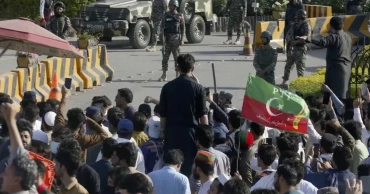
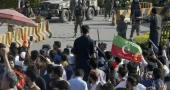
Nearly 200 Imran Khan supporters, opposition leader sentenced over 2023 unrest
A court in eastern Pakistan has handed 10-year prison sentences to opposition leader Omar Ayub and nearly 200 supporters of jailed former Prime Minister Imran Khan for their alleged roles in the 2023 riots sparked by Khan’s arrest, officials said Thursday.
The verdict, delivered in the city of Faisalabad in Punjab province, covers three separate cases involving 196 individuals. The charges stem from the nationwide violence that broke out on May 9, 2023, following Khan’s detention.
Although the unrest eased after Khan’s release under a Supreme Court order, a lower court convicted him in August 2023. Since then, he has not been seen in public, and several of his supporters have faced prosecution in military courts.
Among those sentenced on Thursday were at least six members of the National Assembly and a senator from Khan’s Pakistan Tehreek-e-Insaf (PTI) party.
“They were accused of attacking military personnel, government buildings, and vehicles during the riots,” said defense lawyer Changaiz Kakar. He noted this was the first time such a large number of political activists had been sentenced collectively, adding that appeals would be lodged against the convictions.
India says 3 militants killed in Kashmir linked to massacre that triggered Pakistan clash
PTI Chairman Gohar Ali Khan condemned the rulings, calling the cases “fabricated.” He said the timing of the verdicts—just before planned rallies marking the third anniversary of Khan’s conviction—was politically motivated.
Imran Khan was removed from office in 2022 through a no-confidence vote led by current Prime Minister Shahbaz Sharif. Following his ouster, Khan accused the military and Sharif of conspiring against him under a U.S.-backed plot—allegations both parties have rejected.
Source: Agency
10 months ago
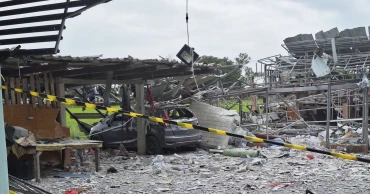
Fireworks workshop explodes in central Thailand, killing at least 9
A powerful explosion at a fireworks manufacturing site in central Thailand's Suphan Buri province killed at least nine people on Wednesday, according to local authorities.
The blast occurred roughly 95 kilometers northwest of Bangkok, in the heart of Thailand’s central rice-producing region. The exact cause of the explosion has yet to be determined.
The Samerkun Suphan Buri Rescue Foundation confirmed nine fatalities and reported that two individuals were critically injured and taken to hospital. Meanwhile, the provincial public relations office stated that one person was injured. Authorities have yet to determine how many people may still be missing.
Police Senior Sergeant Major Pinyo Chanmanee said the explosion took place inside a building used for fireworks production. However, it remains unclear whether the facility was officially licensed to manufacture fireworks.
Images and footage from the scene showed wooden structures completely destroyed, surrounded by green paddy fields.
Thailand-Cambodia ceasefire holds amid tensions, US trade pressure key to truce
This is not the first such incident in the area. A similar explosion in January 2024 in the same region killed approximately 20 people. In July 2023, a major blast at a fireworks warehouse in southern Thailand claimed at least 10 lives and injured more than 100 others.
Authorities are continuing investigations to determine the cause of Wednesday’s deadly explosion.
10 months ago
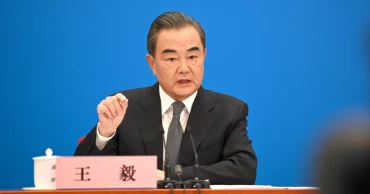
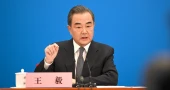
Chinese FM urges U.S. to respect core interests, avoid confrontation
China and the United States should respect each other's core and major interests, and avoid falling into confrontation and conflict, Chinese Foreign Minister Wang Yi said in Beijing on Wednesday.
Wang, also a member of the Political Bureau of the Communist Party of China Central Committee, made the remarks when meeting with a delegation of the Board of Directors of the U.S.-China Business Council.
He also called on the two sides to establish more channels for communication and consultation, view each other with an objective, rational and pragmatic attitude, and foster correct strategic perceptions.
10 months ago

Thailand-Cambodia ceasefire holds amid tensions, US trade pressure key to truce
A fragile ceasefire between Thailand and Cambodia largely held on Tuesday despite renewed skirmishes along the border, following a U.S.-backed diplomatic push to halt the deadly conflict.
The truce, brokered in Malaysia and effective from midnight Monday, was tested almost immediately as Thailand accused Cambodia of launching attacks at several points early Tuesday. Cambodia denied the accusations, insisting there had been no new firing.
Thailand's government later acknowledged renewed clashes at Phu Makhuea, a contested mountain area near Sisaket province, with gunfire continuing into Wednesday morning. However, no heavy artillery was reportedly used. Thai Prime Minister’s Office spokesperson Jirayu Houngsub confirmed the military was "responding and controlling the situation."
Military commanders from both sides met Tuesday morning and agreed to stop troop movements, avoid escalation, and coordinate ahead of a joint border committee meeting scheduled in Cambodia on August 4, according to Thai army spokesman Maj. Gen. Winthai Suvaree.
Cambodian Defense Minister Tea Seiha confirmed that he had discussed the ceasefire implementation with his Thai counterpart and assured that Cambodia was observing the truce. He also said Cambodian officials would lead a diplomatic delegation to monitor the situation on the ground.
Meanwhile, the Thai government filed complaints with Malaysia, the United States, and China regarding Cambodia’s alleged ceasefire violations.
Signs of calm began to return along the border, with many of the estimated 260,000 displaced people starting to go back to their homes.
The ceasefire follows a high-level meeting in Malaysia between Cambodian Prime Minister Hun Manet and Thailand’s acting Prime Minister Phumtham Wechayachai. The talks, chaired by Malaysian Prime Minister Anwar Ibrahim under ASEAN’s leadership, resulted in an “unconditional” ceasefire agreement. At least 41 people had died in the recent violence.
Tense calm holds between Thailand and Cambodia after ceasefire as displaced residents begin returning
U.S. Secretary of State Marco Rubio welcomed the ceasefire, emphasizing Washington's support for a full cessation of hostilities. President Donald Trump personally called both Hun Manet and Phumtham, offering congratulations and promising U.S. participation in monitoring the ceasefire alongside Malaysia.
Trump also linked the peace process to upcoming trade decisions, saying that discussions on tariffs for Thai exports to the U.S. could now proceed. Cambodia and Thailand are both facing a 36% tariff on exports to the U.S., set to take effect this Friday. Trump had earlier warned that continued fighting could derail trade negotiations.
The recent border conflict began Thursday after a landmine explosion injured five Thai soldiers. Tensions had been building since May when a Cambodian soldier was killed in a separate incident, straining diplomatic ties and fueling political unrest in Thailand.
Along the border, residents welcomed the ceasefire with caution. Soklang Slay, a Cambodian man returning to his home in Oddar Meanchey province, said, “I am very concerned that new fighting may break out. Thailand often provokes the fighting but blames Cambodia. I really don’t want to see any new fighting.”
He had built a bunker for his family but was forced to flee after the shelling intensified.
In Thailand’s Surin province, village chief Kritsada Jindasri said gunfire and explosions were heard Monday night before quiet resumed. “We are still cautious. We still don’t totally believe it will stop,” he said. His brother Jirayu, who had taken shelter with relatives, echoed the sentiment: “I still don’t feel comfortable... If it breaks out again, I’ll have to go.”
Bangladesh welcomes announcement of Thailand- Cambodia ceasefire
Experts warn that the ceasefire is tenuous. Cambodian political analyst Kokthay Eng credited Trump’s economic pressure for halting the bloodshed but said the situation remains delicate. “It is risky and will require clear markers to build traction,” added Southeast Asia expert Bridget Welsh, stressing the need for a formal border survey.
Source: Agency
10 months ago
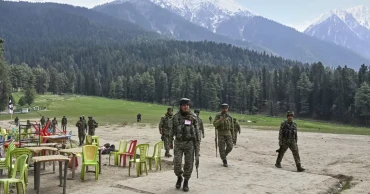
India says 3 militants killed in Kashmir linked to massacre that triggered Pakistan clash
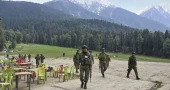
Three suspected militants killed in a gunfight in Kashmir were behind a deadly shooting spree earlier this year that left over two dozen people dead and triggered a military confrontation between India and Pakistan, an Indian government official said Tuesday.
Home Minister Amit Shah, addressing the lower house of Parliament, said the three men — all Pakistani nationals — were killed Monday in a joint operation by Indian military, paramilitary, and police forces on the outskirts of Srinagar, the region’s main city. The Associated Press was unable to independently confirm the claim.
Shah said cartridges recovered from the scene matched those used in the April massacre. According to him, the bodies were identified by local residents who had previously sheltered and fed the militants.
It remains unclear whether those locals are being treated as accomplices. Pakistan’s government has yet to respond officially.
However, state-run Pakistan Radio, in a report following Monday’s encounter, accused India of staging "fake encounters" involving Pakistani nationals held in Indian jails. No further evidence was provided to support the claim.
Islamabad has long alleged that Indian forces orchestrate staged shootouts in Kashmir, sometimes using Pakistani prisoners to portray them as militants. India, in turn, has consistently denied these accusations, accusing Pakistan of sending armed fighters across the border to foment violence.
Bangladeshi immigrant among 4 killed in shooting at New York City office tower
The April 22 massacre, which killed 26 people most of them Hindu tourists was one of the deadliest in the region in recent years. India blamed the attack on Pakistan, which denied any involvement and called for an independent investigation.
The incident sparked cross-border military exchanges that brought the two nuclear-armed neighbors to the verge of their third war over Kashmir. The four-day confrontation ended with a U.S.-brokered ceasefire on May 10, after leaving dozens dead on both sides. It was the worst escalation in decades.
Prior to the April attack in the resort town of Pahalgam, the level of violence in Kashmir had significantly decreased.
In recent years, clashes were mostly concentrated in the mountainous Jammu region rather than the Kashmir Valley, which has historically been the core of the anti-India insurgency.
India and Pakistan both administer parts of the Himalayan territory of Kashmir but claim it in full. An armed rebellion has been ongoing in the Indian-administered part of the region since 1989. New Delhi accuses Islamabad of backing and arming militant groups — an allegation Pakistan denies.
Many Muslim residents of Indian-controlled Kashmir support the rebels’ cause, seeking either unification with Pakistan or complete independence. The conflict has claimed tens of thousands of lives, including civilians, militants, and security personnel.
10 months ago
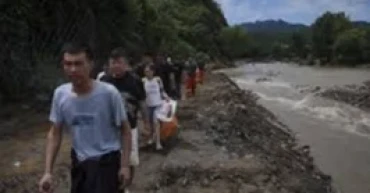
Torrential rain triggers deadly flooding, evacuations in Beijing region
Intense rainfall nearly equal to a full year’s worth has caused severe flooding and landslides across the Beijing region, leaving at least 38 people dead as of Tuesday. The downpours led to widespread evacuations, washed away vehicles, disrupted power supply, and continued to pose flood risks in Beijing, Hebei province, and nearby Tianjin until Tuesday evening.
State media showed videos of floodwaters inundating homes in rural areas and rescue teams transporting the injured and navigating damaged roads.
According to Xinhua News Agency, Chinese Premier Li Qiang acknowledged the severe casualties in Beijing’s Miyun district and urged intensified rescue efforts.
The Beijing Daily reported that the capital received 54.3 centimeters (21.4 inches) of rain over four days — nearly its annual average of 60 centimeters (23.6 inches).
The storm caused power outages in more than 130 villages, disrupted communication infrastructure, and damaged over 30 road sections. By midnight, rainfall in Beijing averaged 16 centimeters (6 inches), with some areas in Miyun recording as much as 54 centimeters (21 inches).
Flash floods in Miyun swept away vehicles and toppled power poles. Over 80,000 people were evacuated across Beijing, including around 17,000 in Miyun alone, officials said.
The city reported 28 deaths in Miyun and two in Yanqing district on Monday. Meanwhile, in Hebei province, state broadcaster CCTV said four more people were confirmed dead on Tuesday following a landslide in rural Luanping county, where eight had been previously reported missing. Four of the deceased had already been found on Monday.
Rescue teams also reported additional landslides in the area on Tuesday but said no new fatalities had been confirmed.
In Taishitun, a town about 100 kilometers (60 miles) northeast of central Beijing, flood damage was clearly visible — streets remained waterlogged, with mud stains marking buildings and uprooted trees piled along roads.
10 months ago