Africa
78 dead at abandoned South Africa gold mine
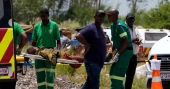
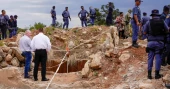
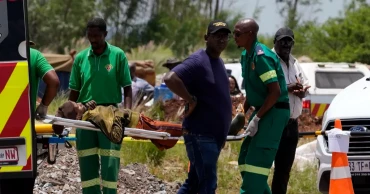
Rescuers and volunteers have pulled at least 78 dead miners and more than 160 survivors from an abandoned South African gold mine, where they have languished for over two months during a standoff with authorities who demanded they surrender to police because they were mining illegally.
Hundreds are still believed to be trapped Wednesday and the death toll is expected to rise in a disaster that has focused criticism on the South African government’s decision to try to “smoke them out” by cutting off food and other supplies for a time.
Civic groups claim authorities also removed the ropes and pulley systems that the miners used to enter and exit at least one shaft and send down supplies.
The groups say the government's weekslong refusal to stage a rescue effectively left scores of miners to die of starvation or dehydration. A rescue is now underway — after a court order — but only a few miners can be pulled up at a time, and the operation could take 10 days.
South African authorities have argued that the miners were always able to exit through another shaft at Buffelsfontein Gold Mine, one of the deepest in the mineral-rich country.
But activists said that would involve a dangerous trek underground that could take days for some, and many became too weak or ill after months underground with little food and water. Police contend some miners refused to come out.
Rescuers attempt to free survivors from trapped South African miners
Authorities ordered to launch a rescue operation
In response to a request by a relative of one of the miners, a court last week ordered a rescue operation, which began Monday. A specialist mining rescue company has been dropping a small cage thousands of meters (feet) into the mine to retrieve survivors and bodies.
But no personnel from the company entered the shaft because they consider it too dangerous — instead community volunteers headed down in the cage to help the miners out.
Police first tried to force the miners out of the closed mine near the town of Stilfontein, southwest of Johannesburg, in November by cutting off their supplies. The move, part of a larger crackdown on illegal mining, began a standoff between authorities and the miners and members of the community.
A court ruled that authorities had to allow supplies in — but civic groups argue that officials needed to do more at that point because even without police interference the miners weren't able to get enough food and water into the mine and the situation was becoming dire.
The mine is 2.5 kilometers (1.5 miles) deep with multiple shafts, many levels and a maze of tunnels. A group representing the miners said there are numerous groups in various parts of the mine and estimated that more than 500 miners were underground when the rescue started.
It's unclear exactly how long they've been underground, but relatives say some of them have been there since July.
Chinese gold mining endangers Congo's protected UN heritage site
A rising death toll
Police said Wednesday that 78 bodies have been recovered so far, and 166 survivors brought out since the official rescue operation began. A community group says another nine bodies were recovered on Friday and an unconfirmed number in the previous weeks after members of the community attempted to rescue miners themselves.
Civic groups representing the miners say at least 100 have died.
The official rescue is now proceeding slowly because only a few people can fit in the cage at a time and because the shaft is so deep.
Authorities have argued that the miners could have exited if they wanted to — and police say more than 1,000 did before the rescue operation — but they didn't because they feared arrest. Police say they have arrested everyone who has surfaced both before and after the rescue operation.
They will face charges of illegal mining and trespassing. Authorities seized gold, explosives, firearms and more than $2 million in cash from the miners.
1 year ago
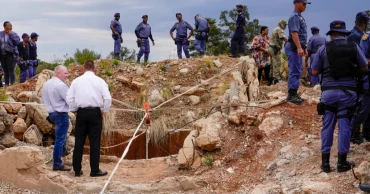
Rescuers attempt to free survivors from trapped South African miners
Efforts are underway to rescue survivors from one of South Africa’s deepest mines, where hundreds of illegal miners have been trapped underground for months.
A cage-like structure was sent down to the Buffelsfontein Gold Mine in a bid to bring out the survivors. Authorities believe over 100 miners have died from starvation or dehydration, AP reports.
Since Friday, 18 bodies and 26 survivors have been recovered from the mine. However, more than 500 miners are feared to still be trapped underground. While police are uncertain about the exact number, it is estimated that hundreds remain inside.
The mine, located near Stilfontein, southwest of Johannesburg, has been at the center of a standoff between miners, police, and local communities since November. The conflict began when authorities launched an operation to remove illegal miners. Some miners have reportedly been underground since July or August of the previous year.
Chinese gold mining endangers Congo's protected UN heritage site
Authorities insist the miners are refusing to leave, but rights organizations have contested this claim. They have criticized police for cutting off food and water supplies to force the miners out. Activists argue that many miners are unable to climb out because the shaft is too steep, and the ropes and pulley systems they used to enter have been removed.
Illegal mining is widespread in South Africa, especially in abandoned, gold-rich mines. Miners often stay underground for months, relying on supplies sent from the surface by others. Some miners have escaped since November, but many fear arrest if they emerge.
Rights groups say the miners’ only escape route is a dangerous journey to another shaft, a trek that can take days. The mine, 2.5 kilometers deep, is a maze of tunnels and multiple shafts. In December, a mining advocacy group took authorities to court to ensure food, water, and medicine were delivered to the trapped miners.
Two cellphone videos released by the group show emaciated miners and numerous dead bodies. South African authorities continue to face scrutiny for their response to the crisis.
1 year ago
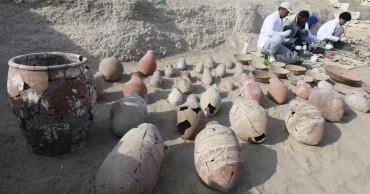
Egypt unveils ancient rock-cut tombs and burial shafts in Luxor
Egypt unveiled several discoveries near the famed city of Luxor on Wednesday, including ancient rock-cut tombs and burial shafts dating back 3,600 years.
They were unearthed at the causeway of Queen Hatshepsut’s funerary temple at Deir al-Bahri on the Nile’s West Bank, according to a statement released by Zahi Hawass Foundation for Antiquities & Heritage. It said it worked in tandem with the Supreme Council of Antiquities on the site since September 2022.
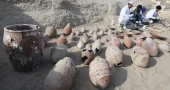
Artifacts found at the tombs included bronze coins with the image of Alexander the Great dating to the Time of Ptolemy I (367-283), children’s toys made of clay, cartonnage and funerary masks that covered mummies, winged scarabs, beads and funerary amulets.
Hawass told reporters that the discoveries could “reconstruct history” and offer an understanding of the type of programs ancient Egyptians designed inside a temple.
The archaeologists also found the remains of Queen Hatshepsut’s Valley Temple, rock-cut tombs dating back to the Middle Kingdom (1938 B.C. - 1630 B.C.), burial shafts from the 17th dynasty, the tomb of Djehuti-Mes and part of the Assassif Ptolemaic Necropolis.
The rock-cut tombs had been previously robbed during the Ptolemaic period and later. Still, the Egyptian teams uncovered some artifacts such as pottery tables that were used to offer bread, wine and meat.
A grand museum displaying Egypt's ancient treasures is opening for a trial run
Inside the burial shafts dating back to 1580 B.C. - 1550 B.C., anthropoid wooden coffins were found, including one that belonged to a young child. It remained intact since its burial some 3,600 years ago. War archery bows were also found inside the burial chamber, indicating that those who owned the tombs had military backgrounds and fought to liberate Egypt from the Hyksos.
Not many artifacts from Djehuti Mes’s tomb were found, but the tomb itself reveals more about Djehuti Mes, who oversaw Queen Teti Sheri’s palace. The date engraved on the Djehuti Mes’ funerary stelae indicates that the tomb goes back to the 9th year of King Ahmose I’s reign (1550 B.C. - 1525 B.C.).
Part of the extended Ptolemaic necropolis that occupied the site of the causeway and the Valley Temple was also uncovered. The tombs in the cemetery were built of mud bricks over the remains of Queen Hatshepsut’s temple. A large part of the necropolis was unearthed earlier in the 20th century but wasn’t properly documented.
Egypt’s currency edges higher against the US dollar after price hikes
In November, Egyptian and American archaeologists excavated an ancient tomb with 11 sealed burials near Luxor. The tomb, which dates to the Middle Kingdom, was found in the South Asasif necropolis, next to the Temple of Hatshepsut.
1 year ago
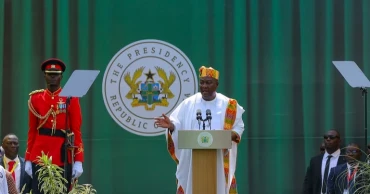
Mahama sworn in as Ghana's president for third time against backdrop of economic crisis
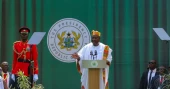
John Mahama was sworn in as president of Ghana for a third time Tuesday against the backdrop of the country’s worst economic crisis in a generation. Thousands of Ghanaians from all walks of life attended the ceremony in the capital.
Mahama, the opposition leader who started his political career as the communications minister, won the presidential election late last year after pledging to tackle the economic crisis, corruption and unemployment.
Mahama, 66, who was previously Ghana's president between July 2012 and January 2017, will replace current President Nana Akufo-Addo. Mahama was first sworn in as president when President John Evans Atta Mills died in July 2012. He served the rest of that term and then won an election in 2012.
Mahama promised to “reset” the country on various fronts during a campaign that prioritized the economy and largely appealed to young Ghanaians who saw the vote as a way out of the country’s economic crisis.
“There is a seismic shift happening within the system of global economic dominance,” he said Tuesday in his address at the Independence Square in Accra. ”Now more than ever before, we need to strengthen our ties with our neighbors to ensure that we are working together to keep our sub-region safe.”
The ceremony was attended by several African leaders, including Rwanda's Paul Kagame, Kenya's William Ruto, Congo's Felix Tshisekedi and Burkina Faso's Capt. Ibrahim Traore.
Dhaka seeks enhanced trade, economic cooperation with Ghana
In his address, Mahama said he will focus on economic restoration and stabilization of the macroeconomic environment, as well as on good governance and the fight against corruption.
The election in December for both president and members of parliament was held against the backdrop of the country’s worst cost-of-living crisis in a generation and was seen as a litmus test for democracy in a region shaken by extremist violence and coups. West Africa’s regional bloc of ECOWAS said the election was generally peaceful, a continuing trend in Ghana.
Andrew Takyi, founder of a local fintech company, Zee Pay, told The Associated Press: “l am hopeful that President Mahama will use the 24-hour economy he campaigned on to improve the country. He can use that to widen the tax base of small and medium enterprises to improve revenue.”
Innocent Appiah, a senior media research officer at the Precious Minerals Marketing Company, said he expects the Mahama administration to “prioritize transparency and accountability in the extractive industry, ensuring that the PMMC plays a more effective role in regulating and monitoring the sector.”
Visiting Ghanaian foreign minister meets her Bangladeshi counterpart
“I anticipate policies that promote value addition, local content development and community engagement, ultimately leading to increased revenue generation and socio-economic benefits for Ghanaians,” he said.
Enyonam Agble, a trader attending the inauguration, said: “There was so much corruption under President Akufo-Addo and all we want is the recovery of all that had been stolen to rebuild the country.”
1 year ago
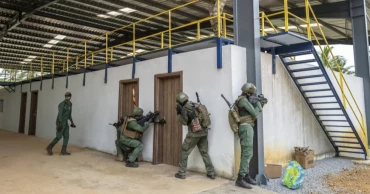
As latest African country Ivory Coast asks French troops to leave
Ivory Coast announced on Tuesday that French troops will leave the country after a decadeslong military presence, the latest African nation to downscale military ties with its former colonial power.
Ivorian President Alassane Ouattara said the pullout would begin in January 2025. France has had up to 600 troops in Ivory Coast.
“We have decided on the concerted and organized withdrawal of French forces in Ivory Coast,” he said, adding that the military infantry battalion of Port Bouét that is run by the French army will be handed over to Ivorian troops.
Outtara's announcement follows that of other leaders across West Africa, where France’s militaries are being asked to leave. Analysts have described the requests for French troops to leave Africa as part of the wider structural transformation in the region’s engagement with Paris.
France has suffered similar setbacks in several West African countries in recent years, including Chad, Niger and Burkina Faso, where French troops that have been on the ground for many years have been kicked out.
Several West African nations — including coup-hit Mali, Burkina Faso and Niger — have recently asked the French to leave. Among them are also most recently Senegal, and Chad, considered France’s most stable and loyal partner in Africa.
Read: At least 24 killed by flooding, landslides after days of heavy rains in Ivory Coast’s largest city
The downscaling of military ties comes as France has been making efforts to revive its waning political and military influence on the continent by devising a new military strategy that would sharply reduce its permanent troop presence in Africa.
France has now been kicked out of more than 70% of African countries where it had a troop presence since ending its colonial rule. The French remain only in Djibouti, with 1,500 soldiers, and Gabon, with 350 troops.
Analysts have described the developments as part of the wider structural transformation in the region’s engagement with Paris amid growing local sentiments against France, especially in coup-hit countries.
After expelling French troops, military leaders of Niger, Mali and Burkina Faso have moved closer to Russia, which has mercenaries deployed across the Sahel who have been accused of abuses against civilians.
Read more: Ivory Coast issues arrest warrant for presidential candidate
However, the security situation has worsened in those countries, with increasing numbers of extremist attacks and civilian deaths from both armed groups and government forces.
1 year ago
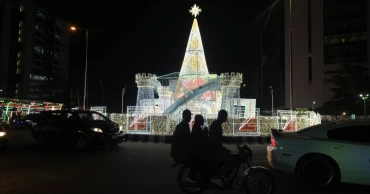
Stampedes in Nigeria kill 32 during Christmas food distribution
The death toll from stampedes during two Christmas charity events in Nigeria has increased from 13 to 32, police said Sunday. The victims, including at least four children, collapsed during crowd surges as people grew desperate for food items while the country grapples with the worst cost-of-living crisis in a generation.
The dead included 22 people in southeastern Anambra state’s Okija town, where a philanthropist on Saturday organized a food distribution, local police spokesman Tochukwu Ikenga said. Ten others died in the capital, Abuja, during a church-organized similar charity event.
Police said they were investigating the two incidents, only days after another stampede in which several children were killed.
Gunmen kidnap some 50 people in Nigeria
Africa’s most populous country is seeing a growing trend by local organizations, churches and individuals to organize charity events ahead of Christmas to ease economic hardship caused by a cost-of-living crisis.
Witnesses of the Abuja stampede told The Associated Press there was a crowd surge at one of the church gates, as dozens tried to enter the premises at around 4 a.m., hours before gift items were to be shared.
South Africa refuses aid for thousands of illegal miners trapped
Some of them, including older people, waited overnight to get food, said Loveth Inyang, who rescued one baby from the crush.
The stampedes prompted growing calls for authorities to enforce safety measures at such events. Nigerian police also mandated that organizers obtain prior permission.
1 year ago

Niger junta suspends BBC for alleged false attack coverage
Niger's military junta has suspended the BBC for three months, accusing the broadcaster of disseminating false information in its coverage of an extremist attack that purportedly claimed the lives of dozens of Nigerien soldiers and civilians, according to authorities on Thursday, reports AP.
Raliou Sidi Mohamed, Niger’s communications minister, stated in letters addressed to radio stations that rebroadcast BBC content that the broadcaster was “spreading false information aimed at destabilising social calm and undermining troops' morale.” Mohamed instructed these stations to halt all BBC programming “with immediate effect.
”In Nigeria's lithium boom, many mines are illegal and children do much of the work
The BBC declined to comment on the suspension.
The BBC, widely popular in Niger, airs several programmes, including Hausa-language content, through local radio partners to cater to a significant audience across the region. On Wednesday, the broadcaster reported in Hausa on its website that armed attackers had killed over 90 Nigerien soldiers and more than 40 civilians in two villages near the border with Burkina Faso.
Similarly, the French broadcaster Radio France Internationale (RFI) reported on the attack, describing it as a jihadi assault and providing the same death toll figures. However, Niger's authorities denied the occurrence of any attack in the area. In a statement broadcast on state television, they announced plans to file a complaint against RFI for “incitement to genocide.”
For over a decade, Niger and its neighbours Burkina Faso and Mali have faced insurgencies led by jihadist groups affiliated with al-Qaida and the Islamic State. In recent years, military coups in these nations have resulted in the expulsion of French forces and a pivot towards security partnerships with Russia’s mercenary groups. Despite these changes, analysts note that the security situation in the Sahel has deteriorated, with an unprecedented rise in attacks and civilian casualties attributed to both Islamic militants and government forces.
In addition to grappling with security challenges, the juntas in these nations have intensified crackdowns on political dissent and press freedom. Earlier in the year, Malian authorities prohibited media coverage of political parties and associations, while Burkina Faso suspended both the BBC and Voice of America radio stations over their reporting on a mass killing of civilians by state forces.
Gunmen kidnap some 50 people in Nigeria
Niger itself banned French broadcasters France 24 and RFI in August 2023, a month after its military leaders seized power in a coup.
Sadibou Marong, head of Reporters Without Borders' sub-Saharan Africa office, observed in September that the juntas typically impose media censorship whenever security issues or state abuses are reported in an unfavourable light. He added that obtaining reliable, impartial information on government actions or covering the security situation in these nations has become increasingly challenging.
1 year ago
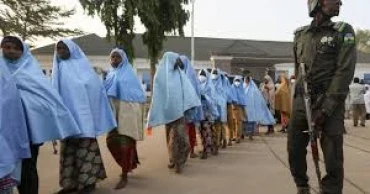
Gunmen kidnap some 50 people in Nigeria
Gunmen abducted at least 50 people, including women and children, in northwestern Nigeria's Zamfara state over the weekend, residents and police confirmed on Tuesday. The latest mass kidnapping highlights the ongoing insecurity in the region, where armed groups operate with little resistance.
The raid occurred in Maradun, lasting over two hours, according to community leader Halliru Attahiru, whose niece was among those taken. “Several women and small children were kidnapped,” Attahiru said, adding that authorities have yet to respond. Tasiu Hamisu, another resident, reported that gunmen targeted a house where 20 individuals were abducted, operating without any security interference.
Zamfara police spokesperson Yazid Abubakar confirmed the incident but did not provide further details. No group has claimed responsibility, but locals suspect the involvement of bandit groups known for mass kidnappings and ransom demands. These groups, often former herders in conflict with settled communities, have become a persistent threat in the conflict-prone northern region.
Kidnappings for ransom have surged in northwestern Nigeria, with armed groups exploiting weak security to target villages and travelers. Most victims are released after paying hefty ransoms. Earlier this year, more than 130 schoolchildren were freed after being held captive for over two weeks in neighboring Kaduna state.
Read: Over 100 killed as gasoline tanker explodes in Nigeria
The military has pledged to intensify efforts to combat insecurity in northern Nigeria, with Army Chief Olufemi Oluyede emphasizing renewed operations to address the crisis. However, the persistence of abductions, including the infamous 2014 Chibok schoolgirl kidnapping, underscores the scale of the challenge. Nearly 100 of the 276 girls abducted from Chibok remain in captivity a decade later.
Since then, over 1,500 students have been kidnapped, with armed groups using ransoms to fund other crimes and extend their influence in Nigeria's resource-rich but poorly secured northern regions.
Source: With inputs from agencies
1 year ago
Chinese gold mining endangers Congo's protected UN heritage site
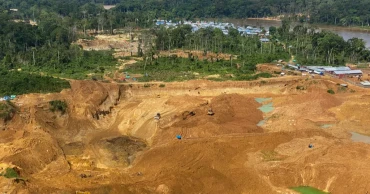
Scattered along the banks of the Ituri River, buildings cram together, cranes transport dirt and debris scatters the soil. The patches of trees are a scant reminder that a forest once grew there.
Nestled in eastern Congo's Ituri province, the Chinese-run gold mine is rapidly encroaching on an area that many say it shouldn’t be operating in at all - the Okapi Wildlife Reserve, an endangered World Heritage site.
A gold mining town in Congo has become an mpox hot spot as a new strain spreads
The original boundaries of the reserve were established three decades ago, by Congo’s government and encompassed the area where the Chinese company now mines. But over the years under opaque circumstances, the boundaries shrunk, allowing the company to operate inside the plush forest.
The reserve was already on the endangered list, amid threats of conflict and wildlife trafficking. Now the rapid expansion of the Chinese mines threatens to further degrade the forest and the communities living within. Residents and wildlife experts say the mining's polluting the rivers and soil, decimating trees and swelling the population, increasing poaching, with little accountability.
“It is alarming that a semi-industrial mining operation is being given free rein in what’s supposed to be a protected World Heritage Site, that was already on the danger list,” said Joe Eisen, executive director, of Rainforest Foundation UK.
Fire in gold mine kills at least 27, Peruvian officials say
Spanning more than 13,000 square kilometers (5,000 square miles), the reserve became a protected site in 1996, due to its unique biodiversity and large number of threatened species, including its namesake, the okapi, a forest giraffe, of which it holds some 15% of the world’s remaining 30,000. It's part of the the Congo Basin rainforest — the world’s second-biggest — and a vital carbon sink that helps mitigate climate change. It also has vast mineral wealth such as gold and diamonds.
Mining is prohibited in protected areas, which includes the reserve, according to Congo's mining code.
Issa Aboubacar, a spokesperson for the Chinese company, Kimia Mining Investment, said the group is operating legally. It recently renewed its permits until 2048, according to government records.
Congo's mining registry said the map they’re using came from files from the ICCN, the body responsible for managing Congo's protected areas, and it’s currently working with the ICCN on updating the boundaries and protecting the park.
The ICCN told The Associated Press that in meetings this year with the mining registry the misunderstandings around the boundaries were clarified and the original ones should be used.
An internal government memo from August, seen by AP, said all companies in the Reserve will be closed down, including Kimia Mining. However, it was unclear when that would happen or how.
The document has not previously been reported and is the first acknowledging that the current boundaries are wrong, according to environmentalists working in Congo.
Rights groups in Congo have long said the permits were illegally awarded by the mining ministry based on inaccurate maps.
Shifting boundaries and rules
Eastern Congo’s been beset by violence for decades and the Okapi Reserve’s endured years of unrest by local militia.
In 2012, in Epulu town, a local rebel group slaughtered several residents including two rangers, as well as 14 okapis, the latter were part of a captive breeding program.
The reserve’s also been threatened by artisanal — small scale — mining, by thousands of Indigenous peoples who live in and around the forest.
The Muchacha mine — the biggest in the reserve and one of the largest small and medium scale gold mines in the country — spans approximately 12 miles (19 kilometers) along the Ituri River and consists of several semi-industrial sites. Satellite images analyzed by AP show consistent development along the southwestern section of the Reserve, since it began operating in 2016, with a boom in recent years.
Joel Masselink, a geographer specializing in satellite imagery, who previously worked on conservation projects in the forest, said the mining cadastral — the agency responsible for allocating mineral licenses — is using a version of the reserve's maps in which the area's been shrunk by nearly a third. This has allowed it to award and renew exploration and extraction concessions, he said.
The mining cadastral told the U.N. that the boundaries were changed due to a letter from the Congolese Institute for the Conservation of Nature, the body in charge of protected areas in Congo, but didn’t provide a copy, said a report from U.N. experts. The ICCN told the AP it's never seen the letter and the boundaries used should be the original ones.
Changing World Heritage Site boundaries needs to be approved by UNESCO experts and the World Heritage Committee, which analyze the impact of the modification, a spokesperson for the World Heritage Center told AP. The Center said no request to modify the Reserve's boundaries had been made and that cases of boundary modifications to facilitate development were rare.
Landslide kills 12 women at illegal gold mine in Indonesia
Civil society groups in Congo accuse some government officials of intentionally moving the boundaries for personal gain. “We all knew that Muchacha was within the reserve,” said Alexis Muhima, executive director of the Congolese Civil Society Observatory for Peace Minerals. He said the discrepancy over the park's boundaries started when they realized the mine was producing large quantities of gold.
The U.N. report said mines are controlled by the military, and some members are under the protection of powerful business and political interests, with soldiers at times denying local officials access to the sites.
Residents, who once mined in the reserve, are infuriated by the double standard. “The community is worried, because the Chinese are mining in a protected area when it's forbidden for the community,” said Jean Kamana, the chief of Epulu, a village inside the Reserve.
Despite being a protected forest, people still mined there until authorities cracked down, largely after the Chinese arrived. Kimia Mining grants limited access to locals to mine areas for leftovers, but for a fee that many can't afford, say locals.
Muvunga Kakule used to do artisanal mining in the reserve while also selling food from his farm to other miners. The 44-year-old said he's now unable to mine or sell produce as the Chinese don't buy locally. He's lost 95% of his earnings and can no longer send his children to private school.
Some residents told The AP there are no other options for work and have been forced to mine secretly and risk being jailed.
Losing land, animals and income
During a trip to the reserve earlier this year, Kimia Mining wouldn’t let AP enter the site and the government wouldn't grant access to patrol the forest with its rangers.
But nearly two dozen residents, as well as former and current Kimia Mining employees from villages in and around the Reserve, told The AP the mining was decimating the forests and the wildlife and contaminating the water and land.
Five people who had worked inside Kimia's mines, none of whom wanted to be named for fear of reprisal, said when the Chinese finished in one area, they leave exposed, toxic water sources. Sometimes people would fall into uncovered pits and when it rains, water seeps into the soil.
Employees and mining experts say the Chinese use mercury in its operations, used to separate gold from ore. Mercury is considered one of the top ten chemicals of major public health concern by the U.N. and can have toxic effects on the nervous and immune systems.
One 27-year-old woman who worked as a cook for Kimia for six months and lives in Badengaido town, close to the mine, said the soil has become infertile. “(It's) poisoned by chemicals used by the Chinese," she said.
The AP could not independently verify her claim. However, a report from the University of Antwerp that researched the impact of conflict and mining on the Reserve said chemicals used to purify gold, such as mercury or cyanide, can enter the ecosystems and pollute the soil.
In the past, 15 kilograms (33 pounds) of peanut seeds would yield approximately 30 bags, but now it’s hard to get three, she said. The loss of income has made it challenging to afford school and medical care for her siblings.
Assana, a fisher who also worked in the mines and only wanted to use his first name, said it now takes four days to catch the same amount of fish he used to get in a day. While doing odd jobs for the company last year, the 38-year-old saw the Chinese repeatedly chop swaths of forest, making the heat unbearable, he said.
Between last January and May, the reserve lost more than 480 hectares (1,186 acres) of forest cover — the size of nearly 900 American football fields — according to a joint statement from the Wildlife Conservation Society and government agencies, which said it was concerned at the findings.
Aboubacar, Kimia’s spokesperson in Congo, said the company respects environmental standards and pays tax to the government for reforestation. Mining is a crucial revenue stream for Congo and it "can't place a higher value on the environment than on mining," he said.
Kimia is supporting the population and has employed more than 2,000 people, said Aboubacar.
Conservation is an uphill battle
Conservation groups are trying to protect the reserve, but say it's hard to enforce when there's ambiguity on the legalities.
“On the one hand, Congo's law clearly states that mining is illegal in protected areas. On the other hand, if a mine is operating with an official permit, then that creates confusion, and that becomes hard to enforce on the ground," said Emma Stokes, Vice President of field conservation for The Wildlife Conservation Society.
The internal memo, seen by AP, outlines discussions by a joint task force between the ICCN and Congo’s mining registry, which was created to try and resolve the boundary issue. The document said it will trigger the process of stopping all mining within the Reserve and integrate the agreed upon map from the joint commission into the mining registry's system.
UNESCO's requested a report from Congo by February, to provide clarity on what will be done to resolve the problem.
But this comes as little comfort to communities in the reserve.
Wendo Olengama, a Pygmy chief, said the influx of thousands of people into the Chinese-run mines has increased poaching, making it hard to earn money.
During the authorized hunting season, he could capture up to seven animals a day, eating some and selling others. Now it's hard to get two, he said.
Sitting in a small hut beside his wife, as she bounces their 3-year-old granddaughter on her lap, the couple says they want the Chinese company to provide business opportunities, such as cattle raising and teach people responsible hunting.
“If the situation persists, we'll live in misery,” said his wife, Dura Anyainde. "We wont have food to eat.”
1 year ago
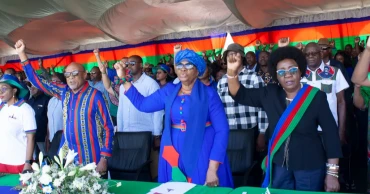
Namibia votes potentially electing its first female president
A 72-year-old woman who joined Namibia's independence movement in the 1970s is a strong contender to become its first female leader as the country votes in a presidential election on Wednesday.
Netumbo Nandi-Ndaitwah is the current vice president and the ruling SWAPO party's candidate for president and leads after the results of special early voting among citizens overseas and the armed forces were announced earlier this month.
But SWAPO, which has governed the southern African country and held the presidency for 34 years since independence from apartheid South Africa in 1990, faces growing frustration caused by high unemployment and economic hardship, especially among young people.
That is a common theme that has led to momentous election upsets in other countries in the region this year. In neighboring South Africa, the African National Congress that ruled for three decades lost its majority in a landmark election result in June. Botswana's ruling party lost in a landslide last month after 58 years in power, and Mauritius delivered a surprising heavy defeat for its incumbent party this month.
Mozambique's long-ruling Frelimo party was declared the winner in an election there in October, prompting violent and ongoing protests and claims of vote rigging.
About 1.4 million people — approximately half the Namibian population — are registered to vote to decide the president and the makeup of Parliament. The country on the southwestern coast of Africa is a former German colony that came under South African control after World War I. SWAPO was at the forefront of the battle for independence.
Fourteen other candidates are also running for president, including Panduleni Itula, a former dentist who was SWAPO’s closest challenger four years ago when he ran as an independent. A runoff will be held if a candidate doesn’t win more than 50% of the votes, which has never happened before in Namibia.
President Hage Geingob died in office in February and Geingob's vice president, Nangolo Mbumba, became head of state.
While Nandi-Ndaitwah represents the rare chance for a female leader in Africa, SWAPO's popularity has slipped and the party won the presidency with its lowest share of the vote ever in the last national election in 2019.
Nandi-Ndaitwah, who received part of her education in the then-Soviet Union while in exile during the fight for independence, has promised to create more jobs and tackle the 20% unemployment rate for young people and graduates. She has pledged to spend approximately 85 billion Namibian dollars ($4.7 billion) over the next five years to create more than 500,000 jobs, a goal that her critics call unrealistic.
Issues affecting women, including reproductive rights, equal pay and healthcare, are also likely to rank high for voters in a country that has the Kalahari Desert running through its center and the Namib Desert along its coast and has one of the sparsest populations in the world. Just over 3 million people live in Namibia, which is more than twice the size of Germany.
1 year ago