Africa
Tunisia's President Saied poised to win second term
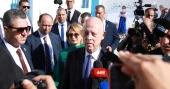
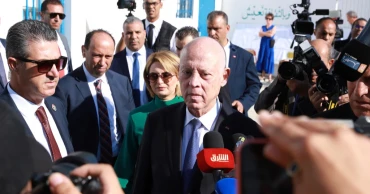
Tunisia’s incumbent president said he would wait for official results before declaring victory while acknowledging exit polls showing him winning by a landslide in an election Sunday marred by earlier arrests of his opponents.
President Kais Saied's supporters jubilantly honked and celebrated after voting ended and public television broadcast images of the president pledging to pursue traitors and those acting against Tunisia, much like he has throughout his tenure.
“We’re going to cleanse the country of all the corrupt and schemers," Saied said at his campaign headquarters.
Tunisia's public television broadcast exit polls from Sigma Conseil, an independent firm that has historically published figures not far off official tallies, showing Saied winning more than 89% of the vote over imprisoned businessman Ayachi Zammel and Zouhair Maghzaoui, a leftist who supported Saied before choosing to run against him.
In the North African country known as the birthplace of the Arab Spring, much of the opposition chose to boycott the election. They called it a sham with Saied's leading critics imprisoned alongside journalists, lawyers, activists and leading civil society figures. They emphasized the low turnout in Sunday's election. Official results are expected on Monday.
At the time polling stations closed, only 2.7 million voters, 27.7% of the electorate, had cast ballots — far fewer than the 49% who participated in the first round of the last presidential race in 2019.
Supporters of the president — who rode anti-establishment backlash to win a first term five years ago — said his second win would send a clear message to the political class that preceded his ascendance.
“We're tired of the governance we had before. We want a leader who wants to work for Tunisia. This country was on the road to ruin,” said Layla Baccouchi, a Saied supporter.
The election was Tunisia's third since the nation became known as the birthplace of the Arab Spring uprisings that toppled dictators throughout the region. Weeks after a fruit vendor set himself ablaze to protest police humiliation and corruption, President Zine El Abidine Ben Ali was ousted and fled the country.
In the years that followed, Tunisia enshrined a new democratic constitution, created a Truth and Dignity Commission to bring justice to citizens tortured under the former regime and saw its leading civil society groups win the Nobel Peace Prize for brokering political compromise. But its new leaders were unable to buoy its struggling economy and quickly became unpopular amid constant political infighting and episodes of violence.
Observers judged the country's first two post-Arab Spring elections as free and fair. However the lead-up to this year's race saw the arrests of several declared challengers and the ongoing incarceration of his most prominent right-wing and Islamist critics.
Dozens of candidates had expressed interest in challenging the president and 17 submitted preliminary paperwork to run in Sunday’s race. However, members of the election commission, all of whom are appointed by the president, approved only the three. Zammel was subsequently charged with violating election laws and sentenced to years behind bars.
The president's detractors have routinely staged protests since July 2021, when he used emergency powers to suspend parliament and later rewrote the constitution giving himself more power. Since then, dozens of his opponents have been imprisoned on charges including inciting disorder, undermining state security and violating a controversial anti-fake news law that critics say is used to stifle dissent.
Among the changes enshrined in Saied's constitution, which voters approved via referendum the following year, was allowing the president to appoint all members of Tunisia's election authority, ISIE. It has faced scrutiny this year for ignoring court rulings ordering it put candidates it rejected back on the ballot and denying election monitors permission to observe the polls.
Such conditions led many to boycott the race, including Siwar Gmati, a 27-year-old who works for I Watch, one of the non-governmental organizations whose application to monitor the polls was rejected.
“We, as young people, are more attached to what the revolution brought to us,” Gmati said at a Friday protest. “We were raised after the revolution to speak our minds.”
Apart from Friday's protest and Sunday's celebration in downtown Tunis, there were few signs that an election was even underway throughout campaign season. The mood was a pronounced departure from the country's past two presidential elections, which were Tunisia's first contested races in decades.
Critics have called years of crackdown on Saied's opponents democratic backsliding and a reversal the progress made after the Arab Spring. Additionally, the country’s economy continues to face major challenges. Unemployment has steadily increased to one of the region’s highest at 16%, the government owes billions to international lenders and an increasing number of Tunisians attempted to migrate to Europe without authorization each year from 2019 to 2023.
1 year ago

Boat capsizes in eastern Congo lake, killing at least 50 people, witnesses say
A boat carrying scores of passengers capsized on Lake Kivu in eastern Congo on Thursday, killing at least 50 people, witnesses told The Associated Press.
It was not immediately clear exactly how many people were on board or how many perished but witnesses said they saw rescue services recover at least 50 bodies from the water. They said 10 people survived and were taken to the local hospital.
The boat, overloaded with passengers, sank while trying to dock just meters (yards) away from the port of Kituku, the witnesses said.
It was the latest deadly boat accident in the central African country, where overcrowding is often to blame, including one this summer when an overloaded boat sank near the capital and 80 passengers lost their lives.
1 year ago
Brick by brick, Morocco rebuilds 12th-century mosque destroyed by 2023 earthquake
The hand-carved domes and brick-laid arches had almost all been put back together when an earthquake shook Morocco so violently that they caved in on themselves and crashed to the earth.
After nearly 900 years, the Great Mosque of Tinmel lay in pieces — its minaret toppled, its prayer hall full of rubble, its outer walls knocked over.
But even in ruins, it remained holy ground for the residents of Tinmel. Villagers carried the sheet-laden bodies of the 15 community members killed in the quake down the hillside and placed them in front of the decimated mosque.
Among the mourners was Mohamed Hartatouch, who helped carry the remains of his son Abdelkrim. A 33-year-old substitute teacher, he died under bricks and collapsed walls while the village waited a day and a half for rescue crews to arrive.
“It looked like a storm. I wasn’t able to feel anything,” the grieving father said, remembering the day after the quake.
One year later, the rubble near Hartatouch’s half-standing home has been swept aside and Tinmel residents are eager to rebuild their homes and the mosque. They say the sacred site is a point of pride and source of income in a region where infrastructure and jobs were lacking long before the earthquake hit.
“It’s our past,” Redwan Aitsalah, a 32-year-old construction worker, said the week before the earthquake’s anniversary as he reconstructed his home overlooking the mosque.
The September 2023 quake left a path of destruction that will take Morocco years to recover from. It killed nearly 3,000 people, knocked down almost 60,000 homes and leveled at least 585 schools. The damage will cost about $12.3 billion to rebuild, according to government estimates.
Stretches of road were left unnavigable, including Tizi N’Test, the steep mountain pass that weaves from Marrakech to Tinmel and some of the hardest-hit villages near the earthquake’s epicenter.
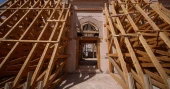
Workers are now sifting through the rubble searching for the mosque's puzzle pieces. They are stacking useable bricks and sorting the fragments of remaining decorative elements arch by arch and dome by dome, preparing to rebuild the mosque using as much of the remains as possible.
Though incomparable to the human loss and suffering, the restoration effort is among Morocco’s priorities as it attempts to rebuild.
The country’s Ministry of Islamic Affairs and Ministry of Culture have recruited Moroccan architects, archaeologists and engineers to oversee the project. To assist, the Italian government has sent Moroccan-born architect Aldo Giorgio Pezzi, who had also consulted on Casablanca’s Hassan II Mosque, one of Africa's largest.
“We will rebuild it based on the evidence and remains that we have so it returns to how it was,” Morocco’s Minister of Islamic Affairs Ahmed Toufiq told The Associated Press.
The Great Mosque was a marvel of North African architecture with lobed arches, hand-carved moldings and the adobe-style bricks made of rammed earth used to construct most the area’s structures.
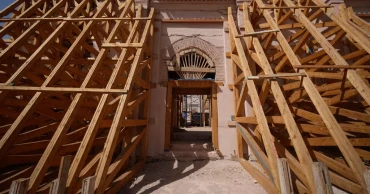
It was undergoing an 18-month-long restoration project when the quake struck, causing its ornate domes and pillars to cave in. Its clay-colored remnants lay in pieces beneath scaffolding erected by restoration workers from villages throughout the region, five of whom also died.
“The mosque withstood centuries. It’s the will of God,” Nadia El Bourakkadi, the site’s conservationist, told local media. The temblor leveled it months before repairs and renovations were to be completed.
Like in many of the area’s villages, residents of Tinmel today live in plastic tents brought in as temporary shelter post-earthquake. Some are there because it feels safer than their half-ruined homes, others because they have nowhere else to go.
Officials have issued more than 55,000 reconstruction permits for villagers to build new homes, including for most of the homes in Tinmel. The government has distributed financial aid in phases. Most households with destroyed homes have received an initial $2,000 installment of rebuilding aid, but not more.
Many have complained that isn’t enough to underwrite the initial costs of rebuilding. Less than 1,000 have completed rebuilding, according to the government’s own figures.
Despite the extent of their personal losses, Moroccans are also mourning the loss of revered cultural heritage. Centuries-old mosques, shrines, fortresses and lodges are scattered throughout the mountains. Unlike Tinmel, many have long been neglected as Morocco focuses its development efforts elsewhere.
The country sees Tinmel as the cradle of one of its most storied civilizations. The mosque served as a source of inspiration for widely visited sacred sites in Marrakech and Seville. Pilgrims once trekked through the High Atlas to pay their respects and visit. Yet centuries ago it fell into disrepair as political power shifted to Morocco’s larger cities and coastline.
“It was abandoned by the state, but materials were never taken from it,” said Mouhcine El Idrissi, an archaeologist working with Morocco’s Ministry of Culture. “People here have long respected it as a witness to their glorious and spiritual past.”
Some of the historic sites of the High Atlas have long been a lure to tourists. But the earthquake shone a spotlight on the vast disparities plaguing the primarily agricultural region. Long marginalized, poverty and illiteracy rates are higher than the nationwide average, according to census data and an October 2023 government report on the five earthquake-hit provinces.
“The mountainous areas most affected were those already suffering from geographical isolation,” Civil Coalition for the Mountain, a group of Moroccan NGOs, said in a statement on the earthquake’s anniversary. “The tragedy revealed structural differences, and a situation caused by development policies that have always kept the mountains outside the scope of their objectives.”
“There’s a Morocco that exists in Rabat and Marrakech, but we’re talking about another Morocco that’s in the mountains,” added Najia Ait Mohannad, the group’s regional coordinator. “Right now, the most urgent need is rebuilding houses.”
The government has promised “a well-thought-out, integrated and ambitious program" for the reconstruction and general upgrading of the affected regions, both in terms of infrastructure reinforcement and improving public services. It has also pledged to rebuild “in harmony with the region’s heritage and respecting its unique architectural features” and “to respect the dignity and customs” of the population.
For the village’s residents, the landmark could stand as a symbol of reinvestment in one of Morocco’s poorest regions, as well as a tribute to a glorious past.
For now, it stands in disrepair, its enchanting ruins upheld by wooden scaffolding, while down the hill, villagers hang laundry and grow vegetables amid the remnants of their former homes and the plastic tents where they now live.
1 year ago

Rwanda begins vaccinations against mpox amid a call for more doses for Africa
Rwanda has started a vaccination campaign against mpox with 1,000 doses of the vaccine it obtained from Nigeria under an agreement between the two countries, the African health agency said Thursday.
The vaccinations started Tuesday targeting seven districts with “high risk populations” who neighbor Congo, Dr. Nicaise Ndembi from the Africa Centres for Disease Control and Prevention (Africa CDC) said. Nigeria donated the 1,000 doses to Rwanda from an allotment of 10,000 it had received from the United States.
Congo has been at t he epicenter of an outbreak on the African continent, where 2,912 new mpox cases and 14 new deaths have been recorded in the last one week, bringing the total number of cases to 6,105 with 738 deaths since the beginning of the year.
“This outbreak must be stopped very quickly,” Africa CDC director-general Dr. Jean Kaseya said Thursday.
Rwanda and other countries are now requesting more doses than they originally indicated that they needed, Kaseya said. African experts have estimated the continent might need about 10 million vaccines to stop the ongoing outbreaks.
The Japanese government has signed an agreement with the government in Congo to provide 3 million doses of the mpox vaccine.
The World Health Organization Director-General Tedros Adhanom Ghebreyesus on Thursday urged more countries to contribute to the response.
“International collaboration and support are needed to stop the spread of the virus,” he wrote on X social media platform.
Congo is expected to start its vaccination campaign in the first week of October. Some 165,000 doses have so far been delivered to Congo, with hundreds of thousands more pledged by European countries.
“We also need this vaccine to start to be manufactured in Africa, and we are working strongly and closely with our manufacturers and also our partners to have these vaccines manufactured from one of the African countries,” Kaseya said.
WHO said Friday it had granted its first authorization for use of a vaccine against mpox in adults, calling it an important step toward fighting the disease in Africa.
The approval of the vaccine made by Bavarian Nordic A/S means that donors like vaccines alliance Gavi and UNICEF can buy it. But supplies are limited because there’s only a single manufacturer.
1 year ago
A gold mining town in Congo has become an mpox hot spot as a new strain spreads
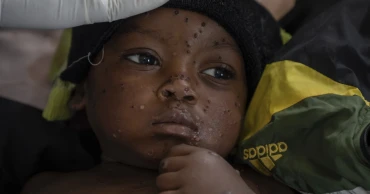
Slumped on the ground over a mound of dirt, Divine Wisoba pulled weeds from her daughter's grave. The 1-month-old died from mpox in eastern Congo in August, but Wisoba, 21, was too traumatized to attend the funeral.
In her first visit to the cemetery, she wept into her shirt for the child she lost and worried about the rest of her family. "When she was born, it was as if God had answered our prayers — we wanted a girl," Wisoba said of little Maombi Katengey. "But our biggest joy was transformed into devastation."
Her daughter is one of more than 6,000 people officials suspect have contracted the disease in South Kivu province, the epicenter of the world's latest mpox outbreak, in what the World Health Organization has labeled a global health emergency. A new strain of the virus is spreading, largely through skin-to-skin contact, including but not limited to sex. A lack of funds, vaccines and information is making it difficult to stem the spread, according to alarmed disease experts.
Mpox — which causes mostly mild symptoms like fever and body aches, but can trigger serious cases with prominent blisters on the face, hands, chest and genitals — had been spreading mostly undetected for years in Africa, until a 2022 outbreak reached more than 70 countries. Globally, gay and bisexual men made up the vast majority of cases in that outbreak. But officials note mpox has long disproportionately affected children in Africa, and they say cases are now rising sharply among kids, pregnant women and other vulnerable groups, with many types of close contact responsible for the spread.
Health officials have zeroed in on Kamituga, a remote yet bustling gold mining town of some 300,000 people that attracts miners, sex workers and traders who are constantly on the move. Cases from other parts of eastern Congo can be traced back here, officials say, with the first originating in the nightclub scene.
Since this outbreak began, one year ago, nearly 1,000 people in Kamituga have been infected. Eight have died, half of them children.
Challenges on the ground
Last month, the World Health Organization said mpox outbreaks might be stopped in the next six months, with governments' leadership and cooperation.
But in Kamituga, people say they face a starkly different reality.
There's a daily average of five new cases at the general hospital, which is regularly near capacity. Overall in South Kivu, weekly new suspected cases have skyrocketed from about 12 in January to 600 in August, according to province health officials.
Even that's likely an underestimate, they say, because of a lack of access to rural areas, the inability of many residents to seek care, and Kamituga's transient nature.
Locals say they simply don't have enough information about mpox.
Before her daughter got sick, Wisoba said, she was infected herself but didn't know it.
Painful lesions emerged around her genitals, making walking difficult. She thought she had a common sexually transmitted infection and sought medicine at a pharmacy. Days later, she went to the hospital with her newborn and was diagnosed with mpox. She recovered, but her daughter developed lesions on her foot.
Nearly a week later, Maombi died at the same hospital that treated her mother.
Wisoba said she didn't know about mpox until she got it. She wants the government to invest more in teaching people protective measures.
Local officials can't reach areas more than a few miles outside Kamituga to track suspected cases or inform residents. They broadcast radio messages but say that doesn't reach far enough.
Kasindi Mwenyelwata goes door to door describing how to detect mpox — looking for fevers, aches or lesions. But the 42-year-old community leader said a lack of money means he doesn't have the right materials, such as posters showing images of patients, which he finds more powerful than words.
ALIMA, one of the few aid groups working on mpox in Kamituga, lacks funds to set up programs or clinics that would reach some 150,000 people, with its budget set to run out at year's end, according to program coordinator Dr. Dally Muamba.
If support keeps waning and mpox spreads, he said, "there will be an impact on the economy, people will stop coming to the area as the epidemic takes its toll. ... And as the disease grows, will resources follow?"
The vaccine vacuum
Health experts agree: What's needed most are vaccines — even if they go only to adults, under emergency approval in Congo.
None has arrived in Kamituga, though it's a priority city in South Kivu, officials said. It's unclear when or how they will. The main road into town is unpaved — barely passable by car during the ongoing rainy season.
Once they make it here, it's unclear whether supply will meet demand for those who are at greatest risk and first in line: health staff, sex workers, miners and motorcycle taxi drivers.
Congo's government has budgeted more than $190 million for its initial mpox response, which includes the purchase of 3 million vaccine doses, according to a draft national mpox plan, widely circulating among health experts and aid groups this month and seen by The Associated Press. But so far, just 250,000 doses have arrived in Congo and the government's given only $10 million, according to the finance ministry.
Most people with mild cases recover in less than two weeks. But lesions can get infected, and children or immunocompromised people are more prone to severe cases.
Doctors can ensure lesions are clean and give pain medication or antibiotics for secondary infections such as sepsis.
But those who recover can get the virus again.
A new variant, a lack of understanding
Experts say a lack of resources and knowledge about the new strain makes it difficult to advise people on protecting themselves. An internal report circulated among aid groups and agencies and seen by AP labeled confidence in the available information about mpox in eastern Congo and neighboring countries low.
While the variant is known to be more easily transmissible through sex, it's unclear how long the virus remains in the system. Doctors tell recovered patients to abstain from sex for three months, but acknowledge the number's largely arbitrary.
"Studies haven't clarified if you're still contagious or not ... if you can or can't have sex with your wife," said Dr. Steven Bilembo, of Kamituga's general hospital.
Doctors say they're seeing cases they simply don't understand, such as pregnant women losing babies. Of 32 pregnant women infected since January, nearly half lost the baby through miscarriage or stillbirth, hospital statistics show.
Alice Neema was among them. From the hospital's isolation ward, she told AP she'd noticed lesions around her genitals and a fever — but didn't have enough money to travel the 30 miles (50 kilometers) on motorbike for help in time. She miscarried after her diagnosis.
As information trickles in, locals say fear spreads alongside the new strain.
Diego Nyago said he'd brought his 2-year-old son, Emile, to the hospital for circumcision when he developed a fever and lepasions.
It was mpox — and today, Nyago is grateful he was already at the hospital.
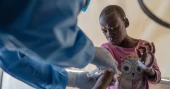
"I didn't believe that children could catch this disease," he said as doctors gently poured water over the boy to bring his temperature down. "Some children die quickly, because their families aren't informed.
"Those who die are the ones who stay at home."
1 year ago

Trains collide in Egypt's Nile Delta leaving 3 dead, 29 injured
Two passenger trains collided in Egypt’s Nile Delta on Saturday, killing at least three people, two of them children, authorities said.
The crash happened in the city of Zagazig, the capital of Sharqiya province, the country's railway authority said in a statement. Egypt's Health Ministry said the collision injured at least 40 others.
Train derailments and crashes are common in Egypt, where an aging railway system has also been plagued by mismanagement. In recent years, the government announced initiatives to improve its railways.
In 2018, President Abdel Fattah el-Sissi said some 250 billion Egyptian pounds, or $8.13 billion, would be needed to properly overhaul the North African country’s neglected rail network.
Video from the site of the crash showed a train car crumpled by the impact, surrounded by crowds. Men tried to lift the injured through the windows of a passenger car.
Last month, a train crashed into a truck crossing the train tracks in the Mediterranean province of Alexandria, killing two people.
1 year ago

Mpox deaths rise by 107 in a week as Africa CDC calls the toll unacceptable
African countries recorded more than 100 mpox-related deaths in the past week, the continental health body said Thursday as it described the rising toll as “not acceptable.”
Dr. Jean Kaseya, director-general of the Africa Center for Disease Control and Prevention, said 107 new deaths and 3,160 new cases had been recorded in the past week, just a week after his agency and the U.N. World Health Organization launched a continental response plan.
“In the one week, we lost 107 (people). It’s too much. It’s not acceptable.” he said as he emphasized the need for stronger cross-border surveillance.
Mpox belongs to the same family of viruses as smallpox but causes milder symptoms like fever, chills and body aches. People with more serious cases can develop lesions on the face, hands, chest and genitals.
In testing for the disease, men recorded the highest positivity rate at 63%, while children under the age of 15 were at 41%.
Kaseya said there was need for increased testing and resources to support it, adding that the continent was not testing enough and that it "cannot rely on only confirmed cases for decision-making and response.”
Mpox can be transmitted from mother to child during pregnancy, and Kaseya said more research is needed to determine how common this is.
The number of cases has been rising rapidly, WHO Director General Tedros Adhanom Ghebreyesus said last month, but until recently there have been relatively few deaths. The increased number of cases come a month after WHO declared outbreaks in 12 African countries a global emergency.
The estimated budget for the six-month plan put forward by Africa CDC and WHO is almost $600 million, with 55% allocated to the response to mpox in 14 affected nations and boosting readiness in 15 others.
Some African Union member states have already contributed to the response plan budget, a step that Kaseya lauded as showing ownership by the continent.
Africa is in the process of receiving vaccines. Some 250,000 doses have already been delivered to Congo, but these are just a fraction of the 3 million doses authorities have said are needed to end the outbreak there, the epicenter of the global health emergency.
EU countries pledged to donate more than 500,000 doses, but the timeline for delivery remained unclear.
The recommended course of vaccination requires two doses. Kaseya said this would still be ideal despite the high level of need, because “we don’t want to compromise on protection of our people.”
The director-general said he would be travelling to Congo to get vaccinated when the exercise kicks off in the first week of October “to show the African people and Congolese people that the vaccine is safe.”
Africa CDC has so far recorded 5,731 confirmed mpox cases and 724 associated deaths since the beginning of the year.
1 year ago
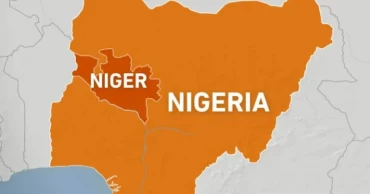
Fuel tanker collision in Nigeria caused an explosion that killed at least 48 people
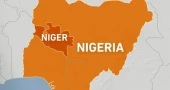
A fuel tanker collided head-on with another truck in Nigeria on Sunday causing an explosion that killed at least 48 people, the country’s emergency response agency said.
The fuel tanker was also carrying cattle in the Agaie area in north-central Niger state and at least 50 of them were burned alive, Abdullahi Baba-Arab, director-general of the Niger State Emergency Management Agency, said.
Search and rescue operations were underway at the scene of the accident, Baba-Arab said.
Baba-Arab said initially that 30 bodies were found but in a later statement said an additional 18 bodies of victims who were burned to death in the collision were found. He said the dead had been given a mass burial.
Mohammed Bago, governor of Niger state, said residents of the affected area should remain calm and asked road users to "always be cautious and abide by road traffic regulations to safeguard lives and property.”
With the absence of an efficient railway system to transport cargo, fatal truck accidents are common along most of the major roads in Nigeria, Africa’s most populous country.
In 2020 alone, there were 1,531 gasoline tanker crashes resulting in 535 fatalities and 1,142 injuries, according to Nigeria’s Federal Road Safety Corps.
1 year ago

Algeria's aging president expected to breeze second term in Saturday's election
Algerians head to the polls Saturday to cast votes for president and determine who will govern their gas-rich North African nation — five years after pro-democracy protests prompted the military to oust the previous president after two decades in power.
Algeria is Africa's largest country by area and, with almost 45 million people, it's the continent's second most populous after South Africa to hold presidential elections in 2024 — a year in which more than 50 elections are being held worldwide, encompassing more than half the world's population.
Since elections were scheduled in March — ahead of the predicted schedule — there has been little suspense as military-backed President Abdelmadjid Tebboune appears poised to breeze to victory against the two challengers running against him: an Islamist and a leftist.
The hot summer campaign has sparked little enthusiasm, apart from on public television, where it's required that candidate and surrogate appearances be covered. On TV, election season has been presented as a vibrant affair.
“Voting has no meaning in Algeria like in the big democracies,” 28-year-old Kaci Taher told The Associated Press a month before the election. “Where I come from, the results and quotas are fixed in advance in the back room of the government, so what’s the point of taking part in the electoral farce?”
“Uncle Tebboune," as his campaign has framed the 78-year-old, was elected in December 2019 after nearly a year of weekly demonstrations demanding the resignation of former President Abdelaziz Bouteflika. Their demands were met when Bouteflika resigned that April and was replaced by an interim government of his former allies, which called for elections later in the year.
Protestors opposed holding elections too soon, fearing the candidates running that year each were close to the old regime and would perpetuate the corruption-ridden system they wanted to end. Tebboune, a former prime minister seen as close to Algeria's politically powerful military, emerged the winner. But his victory was marred by low voter turnout, widespread boycotts from protestors and Election Day tumult, during which crowds sacked voting stations and police broke up demonstrations.
This year, Tebboune ran as an independent candidate with the support of several political parties including the National Liberation Front, which has dominated Algerian politics since the country wrested independence from France after more than a decade of war in 1962.
The southwestern Algeria native and political veteran has framed his first term in office as a turning point, telling voters in a campaign rally the week before polls that he “put Algeria back on track." To cement his legitimacy both domestically and to Algeria's allies, he hopes more of the country's 24 million eligible voters will participate in Saturday's election than in his first, when 39.9% turned out to vote.
“It seems that what matters most to ‘le pouvoir’ in this election is voter turnout to lend legitimacy to their candidate, whose victory is a foregone conclusion,” said Algerian sociologist Mohamed Hennad, employing a term frequently used to describe the military-backed political establishment.
Twenty-six candidates submitted preliminary paperwork to run in the election, although only two were ultimately approved to challenge Tebboune. Like the president, both have also emphasized turnout. Neither political novices, they have avoided directly criticizing Tebboune on the campaign trail.
Abdelali Hassani Cherif, a 57-year-old engineer from the Islamist party Movement of Society for Peace has made populist appeals to Algerian youth, running on the slogan “Opportunity!” and calling for efforts to boost employment and reform education, where French language has long played a major role in addition to Arabic.
Youcef Aouchiche, a 41-year-old former journalist running with the Socialist Forces Front, campaigned on a “vision for tomorrow,” and referenced human rights issues plaguing journalists, activists and critics of the government in Tebboune's Algeria. It's the first time since 1999 that his party, which enjoys strong support among ethnic minorities in central Algeria, has put forth a candidate.
Andrew Farrand, the Middle East and North Africa director at the geopolitical risk consultancy Horizon Engage, said both opposition candidates were more aimed at the 2025 legislative elections than the 2024 presidential contest. Because Algerian law funds political parties based on the number of seats they win in legislative elections, they hope campaigning will position them for a strong performance in 2025.
“It’s a long game: How can I mobilize my base? How can I build up a campaign machine? And how can I get into the good graces of the authorities so that I can be in a position to increase my seats?” he said. “We’ve seen that in their choice not to overtly criticize president … paired with a very strong message to Algerians to come out and vote.”
Besides Aouchiche and Cherif, others boycotted the contest, denouncing it as a rubber stamp exercise that could only entrench the power of Tebboune and the elites that rule the country.
1 year ago
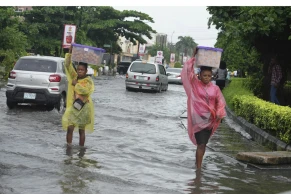
Floods in Nigeria have killed scores and washed away farmland, raising food security concerns
Weeks of flooding have killed nearly 200 people in Nigeria and washed away homes and farmlands, the country's disaster management agency said, further threatening food supplies, especially in the hard-hit northern region.
The floods blamed on poor infrastructure and badly maintained dams have killed 185 people and displaced 208,000 in 28 of Nigeria’s 36 states, the National Emergency Management Agency said in an update Friday, triggering frantic efforts to evacuate hundreds of thousands to makeshift shelters.
Nigeria records flooding every year mostly as a result of failure to follow environmental guidelines and inadequate infrastructure. The worst floods the country has seen in a decade were in 2022 when more than 600 people were killed and over 1 million displaced.
However, unlike in 2022 when the floods were blamed on heavier rainfall, the Nigerian Meteorological Agency predicted delayed or normal rains in most parts of the country this year and said the current floods were more a result of human activities.
“What we are doing is causing this climate change so there is a shift from the normal," said Ibrahim Wasiu Adeniyi, head of the central forecasting unit. "We have some who dump refuse indiscriminately, some build houses without approvals along the waterways,” he added.
The Nigeria disaster response agency warned the flooding could get worse in the coming weeks as the flood waters flow downwards to the central and southern states.
“People (in flood-prone areas) need to evacuate now … because we don’t have time any longer,” its spokesperson, Manzo Ezekiel, said.
In Jigawa, the worst-hit state, which has recorded 37 deaths, the impact of the floods has been “devastating” and authorities are converting public buildings and schools as shelters for those displaced, according to Nura Abdullahi, head of emergency services in the state.
The floods have so far destroyed 107,000 hectares of farmland, especially in northern states, among the most affected and where most of Nigeria’s harvests come from.
Many farmers in the region are already unable to farm as much as they would like either because of decreasing inputs as families struggle amid Nigeria’s economic hardship or as a result of violent attacks that have forced them to flee.
As a result, Nigeria has the highest number of hungry people in the world, with 32 million — 10% of the global burden — facing acute hunger in the country, according to the U.N. food agency.
Resident Abdullahi Gummi in Zamfara state’s Gummi council area said the floods destroyed his family's farmlands which are also their source of income. “We spent around 300,000 naira ($188) on planting, but everything is gone," Gummi said.
1 year ago