Africa
Female suicide bombers kill at least 18 in coordinated attack in Nigeria, authorities say
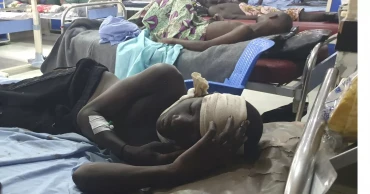
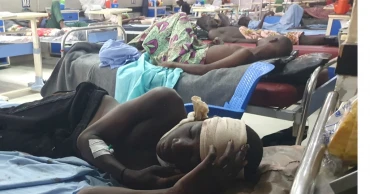
Female suicide bombers targeted a wedding, a funeral and a hospital in coordinated attacks in northern Nigeria that killed at least 18 people, local authorities said Sunday.
No one immediately claimed responsibility for the the attacks in Borno state, which has been heavily affected by the insurgency launched in 2009 by Boko Haram. The extremist group previously has used women and girls in suicide bombings, prompting suspicions that some attackers come from the many thousands of people the militants have kidnapped over the years, including schoolchildren.
The first suicide bomber detonated a device during a marriage celebration in the northeastern town of Gwoza, Barkindo Saidu, director-general of the Borno State Emergency Management Agency, told reporters.
“Minutes later, another blast occurred near General Hospital,” Saidu said, and the third bomber at the funeral service was disguised as a mourner. Children and pregnant women were among those killed. At least 30 others were wounded, and Saidu said that injuries included abdominal ruptures and skull fractures.
Russian bombers fly over Belarus amid Ukraine tensions
Nigerian President Bola Tinubu said in a statement that the attacks were “desperate acts of terror” and “an isolated episode."
The insurgency, which has spilled across borders around Lake Chad, has killed more than 35,000 people, displaced 2.6 million others and created a humanitarian crisis.
Boko Haram, with one branch allied to the Islamic State group, wants to install an Islamic state in Nigeria, West Africa’s oil giant of 170 million people divided almost equally between a mainly Christian south and a predominantly Muslim north.
US says drone kills IS bombers targeting Kabul airport
The resurgence of suicide bombings in Borno raised significant concerns about the security situation in the region.
Authorities imposed a curfew in the city. Gwoza is near Chibok, where 276 schoolgirls were abducted in 2014. Nearly 100 of the girls are still in captivity.
Since then, at least 1,500 students have been kidnapped across Nigeria as armed groups find the practice a lucrative way to fund their criminal activities and take control of villages.
3 dead US fire bombers retrieved from Australian forest
1 year ago
Female suicide bombers kill at least 18 in coordinated attack in Nigeria, authorities say
Female suicide bombers targeted a wedding, a funeral and a hospital in coordinated attacks in northern Nigeria that killed at least 18 people, local authorities said Sunday.
The first bomber detonated during a marriage celebration in the northeastern town of Gwoza, Barkindo Saidu, director-general of the Borno State Emergency Management Agency, told reporters.
“Minutes later, another blast occurred near General Hospital,” Saidu said, and the third bomber at the funeral service was disguised as a mourner. Children and pregnant women were among those killed. At least 30 others were wounded, and Saidu said injuries included abdominal ruptures and skull fractures.
No one immediately claimed responsibility for the the attacks. Borno state has been heavily affected by the insurgency launched in 2009 by the Boko Haram Islamic extremist group.
In the past, Boko Haram has used women and girls in suicide bombings, prompting suspicions that some attackers come from the many thousands of people the extremists have kidnapped over the years, including schoolchildren.
Nigerian President Bola Tinubu in a statement called the attacks “desperate acts of terror” and “an isolated episode."
The insurgency, which has spilled across borders around Lake Chad, has killed over 35,000 people, displaced over 2.6 million and created a massive humanitarian crisis.
Boko Haram, with one branch allied to the Islamic State group, wants to install an Islamic state in Nigeria, West Africa’s oil giant of 170 million people divided almost equally between a mainly Christian south and a predominantly Muslim north.
The resurgence of suicide bombings in Borno raised significant concerns about the security situation in the region.
Authorities imposed a curfew in the city. Gwoza is a few kilometers from Chibok, where 276 schoolgirls were abducted in 2014. Nearly 100 of the girls are still in captivity.
Since then, at least 1,500 students have been kidnapped across Nigeria as armed groups find the practice a lucrative way to fund their criminal activities and take control of villages.
1 year ago
Mauritanians vote for president with the incumbent ally of the West favored to win
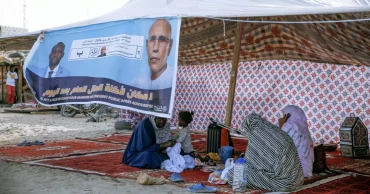
Mauritanians went to the polls on Saturday to elect their next president, with the incumbent Mohamed Ould Ghazouani widely expected to win after positioning Mauritania as a strategic ally of the West in a region swept by coups and violence.
Ghazouni, who is seeking reelection on the pledge of providing security and economic growth, is a former army chief and the current president of the African Union. He came to power in 2019 following the first democratic transition in the country’s history, and on Saturday promised to respect the results of the vote.
“The last word belongs to the Mauritanian voters," Ghazouni said after voting in Ksar, the suburb of the capital. “I commit myself to respecting their choice.”
Although his opponents accused him of corruption and mismanagement, he remains popular among Mauritanians who see him as a beacon of stability. The vote is taking place in a particularly tense regional climate, with Mauritania’s neighboring countries shaken by military coups and jihadi violence.
Iran to hold runoff election with reformist Pezeshkian and hard-liner Jalili after low-turnout vote
“We must not let ourselves be fooled by the slogans of the candidates who are not reassuring,” said Marième Brahim, a 38-year-old company executive, who voted for Ghazouni. “Mauritania must vote for continuity and stability and its security in a troubled environment and it is not these candidates without experience in governance who will give us confidence.”
Two million people are eligible to vote in a nation of 5 million. Ghazouani is facing six opponents, including an anti-slavery activist, leaders of several opposition parties and a neurosurgeon, who accused the government of corruption and clientelism.
Mauritania is rich in natural resources such as iron ore, copper, zinc, phosphate, gold, oil and natural gas. It is poised to become a gas producer by the end of the year, with the planned launch of the BP-operated Greater Tortue Ahmeyin offshore gas project at the border with Senegal.
Yet almost 60% of the population live in poverty, according to the United Nations, working as farmers or employed in the informal sector. With few economic opportunities for young people at home, many are attempting to cross the Atlantic to reach Europe, and some are even trying to get to the United States through Mexico.
Macron dissolves the French parliament and calls a snap election after defeat in EU vote
Mohamed Lemine Ould Moktar, 45, who voted for an opposition candidate, has two young sons who remain unemployed despite having university diplomas.
″I just voted for change, we have had enough of identical regimes which squander the people’s assets and maintain corruption," said Ould Moktar. “Just look at more than 40,000 young Mauritanians take the path of immigration to the United States by jumping the border wall between Mexico and the United States. This is why I am voting for change.”
Saturday's vote was unfolding peacefully, according to observers, with the polls due to close at 7 p.m. Partial results were expected on Sunday.
“We have not noticed any anomalies or problems," declared Taghiyouallah Ould Ledhem, spokesman for CENI, the independent electoral commission. "People are voting smoothly and easily, we have not received any complaints so far.”
Modi’s narrow win suggests Indian voters saw through religious rhetoric, opting instead to curtail his political power
1 year ago
Egypt, EU hold an investment conference to help Cairo battle inflation and foreign currency crisis
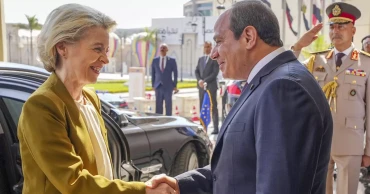
Egypt and the European Union on Saturday opened a two-day investment conference to advance the implementation of their strategic partnership agreement that includes a 7.4 billion-euro ($8 billion) aid package for the cash-strapped Middle Eastern nation.
The March aid package includes both grants and loans over the next three years for the Arab world’s most populous country. Most of the funds — 5 billion euros ($5.4 billion) — are macro-financial assistance to help Egypt shore up its economy, which is hit by a staggering shortage of foreign currency and soaring inflation.
In his opening remarks, President Abdel Fattah el-Sissi said the conference “sends a powerful message of confidence and support from the European Union for the Egyptian economy and the economic reform measures implemented over the past 10 years.”
The EU, represented by Executive Vice-President Valdis Dombrovskis, and Egypt will sign a memorandum of understanding for the short-term macro-financial assistance of up to €1 billion ($1.07 billion) to support Egypt’s economic reform program, the EU mission in Cairo said in a statement.
Other investment deals worth 40 billion euros ($42.8 billion) are scheduled to be signed with European companies as well as bilateral cooperation agreements with the EU to advance employment and skills, vaccines manufacturing, food security and sustainable development, it said.
Egypt agrees to send aid trucks through Israeli crossing to Gaza but impact is unclear
“In just 100 days, we have already brought new energy into our partnership. And this is just the beginning,” European Commission President Ursula von der Leyen, who attended the conference, said. “We are backing our new partnership with substantial public investments. But what truly makes a difference is that the private sector is also on board.”
El-Sissi’ government embarked on a massive reform program in 2016 in return for loans from the International Monetary Fund. The reform has centered on floating the local currency, substantial cuts in state subsidies on basic goods, reducing public investment and allowing the private sector to become the engine of growth.
Most recently, the government once again floated the pound and sharply increased the main interest rate in March. Commercial banks are now trading the U.S. currency at more than 47 pounds, up from about 31 pounds.
The measures are meant to combat ballooning inflation and attract foreign investment. They were also needed to meet IMF demands in order to increase its bailout loan from $3 billion to $8 billion.
Israeli forces take control of the Gaza side of the Rafah border crossing with Egypt
The currency devaluation and subsidies cuts have inflicted further pain on Egyptians already struggling with skyrocketing prices over the past years. Nearly 30% of Egyptians live in poverty, according to official figures.
The EU deal, which has drawn criticism from rights groups over Egypt’s human rights record, came as concerns grow that economic pressure on Egypt and conflicts in neighboring countries could drive more migrants to European shores.
Over a dozen rights groups, including Human Rights Watch and Amnesty International, urged the EU in a letter earlier this month to ensure that its bailout package "secures concrete, measurable, structural, and timebound human rights progress and reforms in the country.”
Biden urges Egypt, Qatar leaders to press Hamas to come to agreement for Israeli hostages in Gaza
Egyptian authorities have carried out a relentless crackdown on dissent for a decade, and rights groups have repeatedly called for Western governments to link improving rights conditions to financial assistance.
1 year ago
A mother's pain as the first victim of Kenya's deadly protests is buried
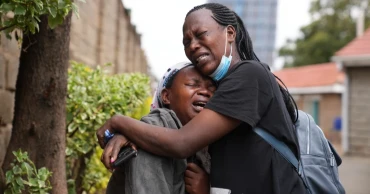
Edith Wanjiku holds onto one of the few photos she’s left with of her teenage son Ibrahim Kamau. His life was cut short by two gunshot wounds to his neck that were sustained during Kenya’s deadly protests on Tuesday in which more than 20 people were killed.
The 19-year-old Kamau was among thousands of protesters who stormed parliament while calling for legislators to vote against a finance bill that would increase taxes. Police opened fire and several people were killed on the spot.
Kamau had just completed high school and planned to study electrical works.
“He was operating a motorcycle taxi while he waits to join college,” Wanjiku told The Associated Press during her son’s funeral on Friday.
Kamau was the first victim of Tuesday's protests to be buried in a Muslim ceremony that was attended by hundreds, including the area's member of parliament, Yusuf Hassan.
As Wanjiku stood outside the Muslim cemetery in Nairobi’s Kariakor neighborhood, she was overwhelmed by emotions and had to be whisked away to sit down.
“It is so painful. I’m still in disbelief and keep hoping he will wake up,” she says.
The mother of four struggled to educate Kamau and his older sister by doing menial work while living in Nairobi’s Biafra slum.
“I don’t even have many photos of him, because I lost them when our house burned down some years back,” she says.
Tuesday’s deadly protests were called by young people who felt let down by legislators who voted for a controversial finance bill during its second reading. They had hoped to convince the legislators not to pass the bill in the final vote and when it sailed through, they stormed into parliament and burnt part of the building.
Human rights groups have accused police of brutality and killings during the protests. The policing oversight body IPOA on Wednesday released preliminary findings on investigations into police conduct during the protests that showed plainclothes officers shooting at protesters. The body has summoned some officers to record statements.
1 year ago
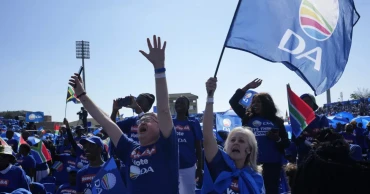
South Africa's new government brings Black and white together. It's also reviving racial tensions
In a country where racial segregation was once brutally enforced, South Africa's new coalition government has brought a Black president and a white opposition leader together in an image of unity.
Yet the power-sharing agreement sealed a week ago between President Cyril Ramaphosa's African National Congress party and the Democratic Alliance, one of South Africa's few white-led parties, has unwittingly renewed some racial rifts.
Many Black South Africans have expressed discomfort with a white-led party being back in power, even in a coalition. The country is haunted by the apartheid system of white minority rule that ended 30 years ago but is still felt by millions among the Black majority who were ruthlessly oppressed by a white government and remain affected by unresolved issues of poverty and inequality.
South Africa is now faced with the likelihood of seeing more white people in senior government positions than ever since apartheid ended. White people make up around 7% of the country’s population of 62 million.
The ANC liberated South Africa from apartheid in 1994 under Nelson Mandela, the country's first Black president. Its three-decade political dominance ended in the landmark May 29 election, forcing it to form a coalition. The DA, with its roots in liberal white parties that stood against apartheid, won the second largest share of votes.
Both have promoted their coming together in a multi-party coalition as a new unity desperately needed in a country with vast socioeconomic problems.
But history lingers. The DA suspended one of its white lawmakers Thursday, days after being sworn into Parliament, over racist slurs he made in a social media video more than a decade ago. Renaldo Gouws — reportedly a student in his 20s at the time — used an especially offensive term for Black people that was infamous during apartheid and is now considered hate speech.
Gouws faces disciplinary action from his party, and the South African Human Rights Commission said it will take him to court. The DA, which previously fended off allegations of favoring whites, is again under scrutiny.
The Congress of South African Trade Unions, an important political ally of the ANC, asserted that Gouws’ outburst was symptomatic of a DA that is “soft on racists.” The DA “needs to reflect on and address this if it wants to be accepted as a partner in the government of national unity by ordinary South Africans,” it said.
DA leader John Steenhuisen denied in a television interview that his party is dedicated only to white interests, saying it wouldn’t have won the second largest share of votes in a Black majority country if it was. The DA has Black and white lawmakers and supporters, but its only Black leader left the party in 2019, questioning its commitment to Black South Africans.
Political analyst Angelo Fick said the DA does have a “sense of whiteness” in the eyes of many South Africans and has created that by being “utterly disinterested in speaking to the concerns about race from Black South Africans.”
Shortly before Gouws' case, racially charged language came from another direction when the MK Party of former President Jacob Zuma — once an ANC leader — called Ramaphosa a “house negro” for entering into the agreement with the DA. Zuma's party also referred to white DA chairperson Helen Zille as Ramaphosa's “slave master.”
The MK Party and the Economic Freedom Fighters — the third and fourth biggest parties in Parliament — have refused to join what the ANC calls a government of national unity open to all. They said the fundamental reason is the DA, which they say is committed only to the well-being of South Africa's white minority.
“We do not agree to this marriage of convenience to consolidate the white monopoly power over the economy,” EFF leader Julius Malema said.
Malema has sometimes provoked racial tensions in demanding change, once saying, “We are not calling for the slaughtering of white people, at least for now,” and that South Africa’s “white man has been too comfortable for too long.”
He now says his party is not against white people but against a perceived “white privilege” that leaves 64% of Black people in poverty compared with 1% of white people, according to a 2021 report by the South African Human Rights Commission.
Malema represents a new opposition to the ANC by many Black South Africans frustrated over the race-based inequality that's evident after 30 years of freedom. White people generally live in posh neighborhoods. Millions of Black people live in impoverished townships on the outskirts.
That frustration led many voters to give up on the ANC. The concerns about teaming up with the DA could weaken the party even further.
In his inauguration speech Wednesday, Ramaphosa recognized the “toxic” divisions that remain decades after Mandela preached racial reconciliation. “Our society remains deeply unequal and highly polarized,” Ramaphosa said.
The ANC is trying to use the coalition as a kind of reboot of Mandela's ideals.
“To us, it doesn’t matter whether the cat is black or white," ANC Secretary-General Fikile Mbalula said of the agreement with the DA. Mandela had used the phrase to signal he was open to all races serving in South Africa's government.
“Fundamentally," Mbalula said, “the question is how do we move the country forward.”
1 year ago
France's Macron, African leaders push for vaccines for Africa after COVID-19 exposed inequalities
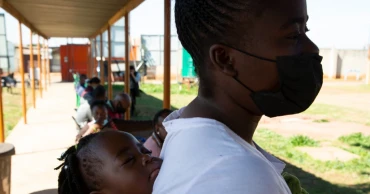
French President Emmanuel Macron is joining several African leaders on Thursday to kick off a planned $1 billion project to accelerate the rollout of vaccines in Africa, after the coronavirus pandemic exposed gaping inequalities in access to them.
The launch of the African Vaccine Manufacturing Accelerator, which will provide financial incentives to vaccine manufacturers, offered a momentary break for Macron from domestic political concerns as legislative elections loom on June 30 and July 7.
Many African leaders and advocacy groups say Africa was unfairly locked out of access to COVID-19 treatment tools, vaccines and testing equipment — that many richer countries bought up in huge quantities — after the pandemic swept the world starting in 2020.
WHO, advocacy groups and others want to help Africa get better prepared for the next pandemic, which many health experts say is inevitable. When the coronavirus pandemic began, South Africa was the only country in Africa with any ability to produce vaccines, officials say, and the continent produced a tiny fraction of all vaccines worldwide.
WHO failed in its efforts to help countries agree to a “pandemic treaty” — to improve preparedness and response to pandemics — before its annual meeting last month. The project was shelved largely over disagreements about sharing of information about pathogens that cause epidemics and the high-tech tools used to fight them.
Negotiators will resume work on the treaty in hopes of clinching a deal by the next WHO annual meeting in 2025.
Thursday’s event in Paris also aims to give a funding shot-in-the-arm to Gavi, the Vaccine Alliance, a public-private partnership that helps get needed vaccines to developing countries around the world.
Gavi says the project aims to make up to US$ 1 billion available over the next ten years help boost Africa’s manufacturing base, to improve global vaccines markets and improve preparedness and response to pandemics and outbreaks like HIV, malaria, TB and COVID-19.
The Geneva-based alliance says the accelerator will inject funds into manufacturers in Africa once they hit supply and regulatory milestones, with an aim to use market forces to drive down prices and encourage investment upstream.
Officials say the project will explore issues like technology transfer — which has been resisted by some Western countries with powerful pharmaceutical companies — as well as the possible creation of a African medicines agency and tackling regulatory hurdles faced in Africa’s patchwork of legal systems.
1 year ago

Ramaphosa is sworn as South African president for second term
Cyril Ramaphosa was sworn in for a second term as South Africa's president on Wednesday in a ceremony in the administrative capital, Pretoria, after his reelection with the help from a coalition of parties, a first in the country's 30-year rule.
Ramaphosa is now set to appoint a Cabinet in a new coalition government after his African National Congress party lost its parliamentary majority in an election last month. He was reelected president by lawmakers on Friday after the main opposition party and a smaller third party joined the ANC in an agreement to co-govern Africa's most industrialized economy.
He will have to guide the first coalition government in which no party has a majority. At least three parties will make up what the ANC is calling a government of national unity, with more invited to join.
Ramaphosa was administered the oath of office in a public ceremony at the Union Buildings, the seat of government, by Chief Justice Raymond Zondo.
King Mswati III of Eswatini, Nigerian President Bola Tinubu, Zimbabwe President Emerson Mnangagwa and former Kenyan Prime Minister Raila Odinga were among many dignitaries who attended the inauguration ceremony as Ramaphosa begins what promises to be a tough final term in office.
The ceremony included a 21-gun salute by the presidential guard and a flyover by the South Africa Air Force over the Union Buildings. South African musicians and cultural dancers entertained thousands of citizens who attended the swearing-in.
Addressing the nation, Ramaphosa said that the people had spoken and their will would be adhered to.
“The voters of South Africa did not give any single party the full mandate to govern our country alone. They have directed us to work together to address their plight and realize their aspirations," he said.
Ramaphosa said the people of South Africa “have also been unequivocal in expressing their disappointment and disapproval of our performance in some of the areas in which we have failed them.” He also recognized the society “remains deeply unequal and highly polarized,” which could ”easily turn into instability.”
“The lines drawn by our history, between black and white, between man and woman, between suburbs and townships, between urban and rural, between the wealthy and the poor, remain etched in our landscape,” he said.
He also promised that the new government would create new work opportunities to face the crippling unemployment as well as work on providing people with basic service s like housing, healthcare and clean water.
While Ramphosa's words were meant to reassure an already economically strained population, the new administration could prove challenging to lead.
It is made up of parties that are ideologically opposed and don’t see eye to eye on how to address the country’s many challenges, including land redistribution policies and proposed solutions to the electricity crisis, as well as their contrary views on affirmative action.
Major players such as the Democratic Alliance and the Inkatha Freedom Party have already joined the coalition, and others like the Patriotic Alliance, the GOOD Party and the Pan Africanist Congress are expected to follow.
However, the third largest party, led by former President Jacob Zuma, the uMkhonto weSizwe Party, and the leftist Economic Freedom Fighters party have refused to be part of it.
It is unclear when the formation of the new Cabinet would be announced.
1 year ago

South Africa's President Ramaphosa is reelected for second term after a dramatic late coalition deal
South African President Cyril Ramaphosa was reelected by lawmakers for a second term on Friday, after his party struck a dramatic late coalition deal with a former political foe just hours before the vote.
Ramaphosa, the leader of the African National Congress, won convincingly in Parliament against a surprise candidate who was also nominated — Julius Malema of the far-left Economic Freedom Fighters. Ramaphosa received 283 votes to Malema's 44 in the 400-member house.
The 71-year-old Ramaphosa secured his second term with the help of lawmakers from the country's second biggest party, the Democratic Alliance, and some smaller parties. They backed him in the vote and got him over the finish line following the ANC's loss of its long-held majority in a landmark election two weeks ago that reduced it to 159 seats in Parliament.
During a break in what turned out to be a marathon parliamentary session, the ANC signed the last-minute agreement with the DA, effectively ensuring Ramaphosa stays on as the leader of Africa's most industrialized economy. The parties will now co-govern South Africa in its first national coalition where no party has a majority in Parliament.
The deal, referred to as a government of national unity, brings the ANC together with the DA, a white-led party that had for years been the main opposition and the fiercest critic of the ANC. At least two other smaller parties also joined the agreement.
Ramaphose called the deal — which sent South Africa into uncharted waters — a "new birth, a new era for our country" and said it was time for parties "to overcome their differences and to work together."
"This is what we shall do and this is what I am committed to achieve as the president," he said.
The ANC — the famed party of Nelson Mandela — had ruled South Africa with a comfortable majority since the end of the apartheid system of white minority rule in 1994.
But it lost its 30-year majority in the humbling national election on May 29, a turning point for the country. The vote was held against the backdrop of widespread discontent from South Africans over high levels of poverty, inequality and unemployment.
Analysts warn there might be complications ahead, though, given the starkly different ideologies of the ANC, a former liberation movement, and the centrist, business-friendly DA, which won 21% of the vote in the national election, the second largest share behind the ANC's 40%.
For one, the DA disagreed with the ANC government's move to accuse Israel of genocide in Gaza in a highly sensitive case at the United Nations' top court.
The DA leader John Steenhuisen was the first to confirm the agreement.
"From today, the DA will co-govern the Republic of South Africa in a spirit of unity and collaboration," he said as he stepped away from Friday's proceedings for a speech carried live on television in which he said a deal was signed and that the DA lawmakers would vote for Ramaphosa for president.
The Parliament session started at 10 a.m. in the unusual setting of a conference center near Cape Town's waterfront, after the city's historic National Assembly building was gutted in a fire in 2022. The house first went through the hourslong swearing-in of hundreds of new lawmakers and electing a speaker and a deputy speaker.
The vote for president started late at night, with the results announced well after 10 p.m. Ramaphosa finished his acceptance speech as the clock ticked past midnight and into Saturday.
Former President Jacob Zuma's MK Party boycotted the session but that did not affect the voting as only a third of the house is needed for a quorum.
ANC Secretary-General Fikile Mbalula said the party was open to talking with anyone else who wanted to join the unity government. There are 18 political parties represented in Parliament and he said the multi-party agreement would "prioritize the country across the political and ideological divide."
Some parties, including Malema's EFF, refused to join.
The two other parties that joined the coalition deal were the Inkatha Freedom Party and the Patriotic Alliance, which has drawn attention partly because its leader, Gayton McKenzie, served a prison sentence for bank robbery.
McKenzie said he had been given a second chance in life and that South Africa also had one now, a chance to solve its deep socioeconomic problems.
The ANC had faced a deadline to strike a coalition agreement as Parliament had to vote for the president within 14 days after election results were declared on June 2. The ANC had been trying to strike a coalition agreement for two weeks and the final negotiations went on overnight Thursday to Friday, party officials said.
South Africa has not faced that level of political uncertainty since the ANC swept to power in the 1994 first all-race election that ended nearly a half-century of racial segregation. Since then, every South African leader has come from the ANC, starting with Mandela.
The new unity government also harked back to the way Mandela, South Africa's first Black president, invited political opponents to be part of a unity government in 1994 in an act of reconciliation when the ANC had a majority. Ramaphosa had played a key role in those negotiations as a young politician.
This time, the ANC's hand was forced.
"The ANC has been very magnanimous in that they have accepted defeat and have said, 'let's talk,'" PA leader McKenzie said.
1 year ago

South African political party led by Zuma seeks to halt parliament election of country's president
South Africa's third biggest political party, led by former president Jacob Zuma, has filed legal papers seeking to halt the first sitting of Parliament scheduled for Friday to elect the country's president.
Zuma’s uMkhonto weSizwe Party has said none of its 58 newly elected lawmakers will attend the sitting. The party earlier filed objections with the Independent Electoral Commission alleging widespread irregularities in national elections last month. The party received just over 14% of the vote.
The party, also known as MK, has not publicly offered evidence to back up its allegations. The commission has said it has addressed all objections.
Sudanese RSF paramilitaries clash with the army, leaving at least 100 people dead
The legal challenge now asks the Constitutional Court to set aside the commission's decision to declare the election free and fair, and to order the president to call another election.
The election saw the ruling African National Congress party lose its majority in parliament for the first time since taking power three decades ago at the end of the apartheid era.
The ANC now seeks to form a government of national unity with various opposition parties,
The outcome of those talks will determine who parliament chooses as South Africa's president. President Cyril Ramaphosa, Zuma's rival, is seeking re-election for a second term.
1 year ago