Africa
.jpg)
Omicron may be driving S Africa's surge; wary world watches
Dr. Sikhulile Moyo was analyzing COVID-19 samples in his lab in Botswana last week when he noticed they looked startlingly different from others. Within days, the world was ablaze with the news that the coronavirus had a new variant of concern, which appears to be driving a dramatic surge in South Africa, providing a glimpse of where the pandemic might be headed.
New cases in South Africa have burgeoned from about 200 a day in mid-November to more than 11,500 on Thursday. In the week since omicron was discovered to be present in the country's most populous province, Gauteng, infections have surged 300%, Health Minister Joe Phaahla said Friday.
The variant has also now spread to all of the other eight provinces, he added. Even with the rapid increase, infections are still below the 25,000 daily new cases that South Africa reported in the previous surge in June and July.
Little is known about the new variant, but the spike in South Africa suggests it might be more contagious, said Moyo, the scientist who may have been the first to identify the new variant, though researchers in neighboring South Africa were close on his heels. Omicron has more than 50 mutations — and scientists have called it a big jump in the evolution of the virus.
Read: India reports first two Covid cases of Omicron variant
It's not clear if the variant causes more serious illness or can evade the protection of vaccines. Phaahla noted that only a small number of people who have been vaccinated have gotten sick, mostly with mild cases, while the vast majority of those who have been hospitalized were not vaccinated.
South Africa's hospitals are so far coping with the new surge, he said. Even hospitals in Gauteng province, which accounts for more than 70% of all new daily infections, have the capacity to handle the new admissions, he said.
This picture could change because most of those infected thus far have been younger people, who generally do not get as sick as older patients. But Moyo expressed hope that vaccines would not be sidelined by the new variant.
"I have a lot of hope from the data that we see, that those vaccinated should be able to have a lot of protection," he said.
That dovetails with what officials from the World Health Organization in Asia said Friday.
While warning that cases could well rise quickly because of omicron, Dr. Takeshi Kasai, the WHO regional director for the Western Pacific, said the measures used against the delta variant — which itself caused surges the world over — should remain at the core of the response.
"The positive news in all of this is that none of the information we have currently about omicron suggests we need to change the directions of our response," Kasai told reporters.
Read: US reports 1st case of omicron variant in returning traveler
That means continuing to push for higher vaccination rates, abiding by social-distancing guidelines, and wearing masks, among other measures, said WHO Regional Emergency Director Dr. Babatunde Olowokure.
While more than three dozen countries worldwide have reported omicron infections, the numbers so far are small outside of South Africa. That has led many countries to race to impose travel restrictions on visitors from southern Africa — a move the WHO officials said may buy some time, though the agency has previoulsy urged against border closures.
The travel restrictions have been severely criticized by South Africa, which says it is being punished for being transparent and moving so quickly to alert the world to omicron. WHO said it was notified by the country on Nov. 24 about the new variant.
"What we must reemphasize is that while our scientists and those in Botswana were the first discover and report on the variant, no one knows where it originated," Phaahla said.
4 years ago

In omicron hot spot, somber mood as S Africa faces variant
The overcast, drizzly skies match the somber mood at the Tshwane University of Technology, a hot spot in South Africa's latest surge of COVID-19 cases, apparently driven by the new omicron variant that is leading countries around the world to impose new restrictions.
After several students tested positive, the university postponed some exams, and officials in the larger metropolitan area of Tshwane, which includes the capital of Pretoria, are pushing vaccinations, especially among younger adults who have been slow to get the shots.
At TUT, as the university is known, few students wanted to speak about the new variant that has cast a pall. Many were not vaccinated — only 22% of 18- to 34-year-olds in South Africa are — and some seemed to be rethinking that, though notably the university's vaccination center was closed for the weekend.
Manqoba Zitha, a student who has gotten the shot, said he will be pushing fellow classmates to do the same.
"I'm trying to encourage them so that they can vaccinate, so they can stay away from coronavirus because it's there, it's killing people, and now numbers are rising," said Zitha. "Now when we are watching TV we can see that people are getting coronavirus. So they must vaccinate!"
Nearly two years into the pandemic, the world is racing to contain the latest variant, first identified in southern Africa but popping up around the globe. Countries are imposing restrictions or bans on travelers from several countries — much to the South African government's dismay — and re-imposing measures like mask mandates that some hoped were a thing of the past.
The World Health Organization named the new version of the virus "omicron" and classified it as a highly transmissible variant of concern, though its actual risks are not yet understood. Early evidence suggests it poses an increased risk that people who have already had COVID-19 could catch it again, the WHO said. It could take weeks to know if current vaccines are less effective against it.
READ: What is this new COVID variant in South Africa?
Still, some experts are hopeful that vaccines will be at least somewhat effective at preventing serious illness and death — and continue to encourage people to get inoculated.
Gauteng province — home to Pretoria and South Africa's largest city of Johannesburg — is the center of the new surge. So far, cases there appear to be mild, according to doctors, and hospital admissions have not spiked.
But experts warn the early round of infections has been among the young and the situation may become more serious if the new surge affects older, unvaccinated South Africans. In all, 41% of those aged 18 and over are vaccinated — but young people have been particularly slow to step forward.
At least three South African universities — the University of Cape Town, Johannesburg's University of the Witwatersrand and the University of Free State in Bloemfontein — have announced that vaccinations will be mandatory for students starting next year. Some experts think further measures will be needed.
"I do think that the decision that South Africa is going to have to make is probably around mandatory vaccination," said Mosa Moshabela, professor of public health at the University of KwaZulu-Natal in Durban.
Demand for the vaccine has been so sluggish that the government recently requested slower deliveries to allow it time to use up its current stock of 19 million doses of the Pfizer-BioNTech and Johnson & Johnson shots.
A new surge was long anticipated and even a new variant, but the speed with which omicron hit came as a "shock" to South Africa's health experts.
While numbers of confirmed cases are still relatively low, they have been increasing at a high rate. The new spike started after some student parties in Pretoria. Numbers quickly jumped from a few hundred cases a day to thousands. South Africa announced 3,220 new cases Saturday, of which 82% are in Gauteng, according to the National Institute for Communicable Diseases. That's still well below the peak of the last wave, when more than 25,000 were confirmed in a day.
READ: World races to contain new COVID threat, the omicron variant
As many as 90% of the new cases in Gauteng province are caused by omicron, Tulio de Oliveira, director of the KwaZulu-Natal Research Innovation and Sequencing Platform, said in a tweet, citing the results of diagnostic tests.
"We did expect that we may see a new or a different variant gaining momentum in the fourth wave ... but we did not really expect to see a variant with the kind of multiplicity of mutations. And that is capable of becoming highly transmissible and escape or evade immunity at the same time," said Moshabela, the expert from the University of KwaZulu-Natal. "This was really the shock that we had."
Although the current cases are concentrated in Pretoria and Johannesburg, tests show that omicron is already in all of South Africa's nine provinces.
South African President Cyril Ramaphosa met over the weekend with health officials and is scheduled to address the nation on Sunday night about the increased cases.
Back at TUT, Nhlanhla Africa Maphosa, a 25-year-old management student, is still trying to digest the news and what it will mean for his studies.
"It was just last week when they checked stats then they realize that so many students were affected by COVID-19 at the main campus," Maphosa said. "We're not that sure of the stats. ... But what we can say is that a high level or a high percentage of students has got COVID-19."
4 years ago

South African scientists brace for wave propelled by omicron
Worried scientists in South Africa are scrambling to combat the lightning spread across the country of the new and highly transmissible omicron COVID-19 variant as the world grapples with its emergence.
In the space of two weeks, the omicron variant has sent South Africa from a period of low transmission to rapid growth of new confirmed cases. The country's numbers are still relatively low, with 2,828 new confirmed cases recorded Friday, but omicron's speed in infecting young South Africans has alarmed health professionals.
"We're seeing a marked change in the demographic profile of patients with COVID-19," Rudo Mathivha, head of the intensive care unit at Soweto's Baragwanath Hospital, told an online press briefing.
"Young people, in their 20s to just over their late 30s, are coming in with moderate to severe disease, some needing intensive care. About 65% are not vaccinated and most of the rest are only half-vaccinated," said Mathivha. "I'm worried that as the numbers go up, the public health care facilities will become overwhelmed."
She said urgent preparations are needed to enable public hospitals to cope with a potential large influx of patients needing intensive care.
"We know we have a new variant," said Mathivha. "The worst case scenario is that it hits us like delta ... we need to have critical care beds ready."
READ: What is this new COVID variant in South Africa?
What looked like a cluster infection among some university students in Pretoria ballooned into hundreds of new cases and then thousands, first in the capital city and then to nearby Johannesburg, South Africa's largest city.
Studying the surge, scientists identified the new variant that diagnostic tests indicate is likely responsible for as many as 90% of the new cases, according to South Africa's health officials. Early studies show that it has a reproduction rate of 2 — meaning that every person infected by it is likely to spread it to two other people.
The new variant has a high number of mutations that appear to make it more transmissible and help it evade immune responses. The World Health Organization looked at the data on Friday and named the variant omicron, under its system of using Greek letters, calling it a highly transmissible variant of concern.
"It's a huge concern. We all are terribly concerned about this virus," Professor Willem Hanekom, director of the Africa Health Research Institute, told The Associated Press.
"This variant is mostly in Gauteng province, the Johannesburg area of South Africa. But we've got clues from diagnostic tests ... that suggest that this variant is already all over South Africa," said Hanekom, who is also co-chair of the South African COVID Variant Research Consortium.
"The scientific reaction from within South Africa is that we need to learn as much as soon as possible. We know precious little," he said. "For example, we do not know how virulent this virus is, which means how bad is this disease that it causes?"
A key factor is vaccination. The new variant appears to be spreading most quickly among those who are unvaccinated. Currently, only about 40% of adult South Africans are vaccinated, and the number is much lower among those in the 20 to 40-year-old age group.
READ: World races to contain new COVID threat, the omicron variant
South Africa has nearly 20 million doses of vaccines — made by Pfizer and Johnson & Johnson — but the numbers of people getting vaccines is about 120,000 per day, far below the government's target of 300,000 per day.
As scientists try to learn more about omicron, the people of South Africa can take measures to protect themselves against it, said Hanekom.
"This is a unique opportunity. There's still time for people who did not get vaccinated to go and get the vaccine, and that will provide some protection, we believe, against this infection, especially protection against severe infection, severe disease and death," he said. "So I would call on people to vaccinate if they can."
4 years ago
.jpg)
What is this new COVID variant in South Africa?
WHAT IS THIS NEW COVID-19 VARIANT?
South African scientists identified a new version of the coronavirus this week that they say is behind a recent spike in COVID-19 infections in Gauteng, the country’s most populous province. It’s unclear where the new variant first emerged, but scientists in South Africa first alerted the World Health Organization and it has now been seen in travelers to Belgium, Botswana, Hong Kong and Israel.
Health Minister Joe Phaahla said the variant was linked to an “exponential rise” of cases in the last few days, although experts are still trying to determine if the new variant is actually responsible.
From just over 200 new confirmed cases per day in recent weeks, South Africa saw the number of new daily cases rocket to 2,465 on Thursday. Struggling to explain the sudden rise in cases, scientists studied virus samples from the outbreak and discovered the new variant.
In a statement on Friday, the WHO designated it as a “variant of concern,” naming it “omicron” after a letter in the Greek alphabet.
After convening a group of experts to assess the data, the U.N. health agency said that “preliminary evidence suggests an increased risk of reinfection with this variant,” as compared to other variants.
“The number of cases of this variant appears to be increasing in almost all provinces in South Africa,” the WHO said.
WHY ARE SCIENTISTS WORRIED ABOUT THIS NEW VARIANT?
It appears to have a high number of mutations — about 30 — in the coronavirus’ spike protein, which could affect how easily it spreads to people.
Sharon Peacock, who has led genetic sequencing of COVID-19 in Britain at the University of Cambridge, said the data so far suggest the new variant has mutations “consistent with enhanced transmissibility,” but said that “the significance of many of the mutations is still not known.”
READ: 7 cases of Indian Covid variant detected in Nawabganj: Doctor
Lawrence Young, a virologist at the University of Warwick, described omicron as “the most heavily mutated version of the virus we have seen,” including potentially worrying changes never before seen all in the same virus.
Dr. Anthony Fauci, the U.S.′ top infectious diseases doctor, said American officials had arranged a call with their South African counterparts later on Friday to find out more details and said there was no indication the variant had yet arrived in the U.S.
WHAT’S KNOWN AND NOT KNOWN ABOUT THE VARIANT?
Scientists know that omicron is genetically distinct from previous variants including the beta and delta variants, but do not know if these genetic changes make it any more transmissible or dangerous. So far, there is no indication the variant causes more severe disease.
It will likely take weeks to sort out if omicron is more infectious and if vaccines are still effective against it.
Peter Openshaw, a professor of experimental medicine at Imperial College London said it was “extremely unlikely” that current vaccines wouldn’t work, noting they are effective against numerous other variants.
Even though some of the genetic changes in omicron appear worrying, it’s still unclear if they will pose a public health threat. Some previous variants, like the beta variant, initially alarmed scientists but didn’t end up spreading very far.
“We don’t know if this new variant could get a toehold in regions where delta is,” said Peacock of the University of Cambridge. “The jury is out on how well this variant will do where there are other variants circulating.” To date, delta is by far the most predominant form of COVID-19, accounting for more than 99% of sequences submitted to the world’s biggest public database.
HOW DID THIS NEW VARIANT ARISE?
The coronavirus mutates as it spreads and many new variants, including those with worrying genetic changes, often just die out. Scientists monitor COVID-19 sequences for mutations that could make the disease more transmissible or deadly, but they cannot determine that simply by looking at the virus.
Peacock said the variant “may have evolved in someone who was infected but could then not clear the virus, giving the virus the chance to genetically evolve,” in a scenario similar to how experts think the alpha variant — which was first identified in England — also emerged, by mutating in an immune-compromised person.
ARE THE TRAVEL RESTRICTIONS BEING IMPOSED BY SOME COUNTRIES JUSTIFIED?
Maybe. As of noon Friday, travelers arriving in the U.K. from South Africa, Namibia, Botswana, Lesotho, Eswatini and Zimbabwe will have to self-isolate for 10 days. European Union nations also moved quickly on Friday to ban air travel from southern Africa, and the U.S. also said it would ban travel from South Africa and seven other African nations by non-US citizens beginning Monday.
Given the recent rapid rise in COVID-19 in South Africa, restricting travel from the region is “prudent” and would buy authorities more time, said Neil Ferguson, an infectious diseases expert at Imperial College London.
READ: People need to be informed about Covid variants: Raushon
Jeffrey Barrett, director of COVID-19 Genetics at the Wellcome Sanger Institute, thought that the early detection of the new variant could mean restrictions taken now would have a bigger impact than when the delta variant first emerged
“With delta, it took many, many weeks into India’s terrible wave before it became clear what was going on and delta had already seeded itself in many places in the world and it was too late to do anything about it,” he said. “We may be at an earlier point with this new variant so there may still be time to do something about it.”
4 years ago

South African scientists detect new virus variant amid spike
A new coronavirus variant has been detected in South Africa that scientists say is a concern because of its high number of mutations and rapid spread among young people in Gauteng, the country's most populous province, Health Minister Joe Phaahla announced Thursday.
The coronavirus evolves as it spreads and many new variants, including those with worrying mutations, often just die out. Scientists monitor for possible changes that could be more transmissible or deadly, but sorting out whether new variants will have a public health impact can take time.
South Africa has seen a dramatic rise in new infections, Phaahla said at an online press briefing.
“Over the last four or five days, there has been more of an exponential rise,” he said, adding that the new variant appears to be driving the spike in cases. Scientists in South Africa are working to determine what percentage of the new cases have been caused by the new variant.
Currently identified as B.1.1.529, the new variant has also been found in Botswana and Hong Kong in travelers from South Africa, he said.
Also read: Can new variants of the coronavirus keep emerging?
The World Health Organization's technical working group is to meet Friday to assess the new variant and may decide whether or not to give it a name from the Greek alphabet.
The British government announced that it was banning flights from South Africa and five other southern African countries effective at noon (1200GMT) on Friday, and that anyone who had recently arrived from those countries would be asked to take a coronavirus test.
U.K. Health Secretary Sajid Javid said there were concerns the new variant “may be more transmissible” than the dominant delta strain, and “the vaccines that we currently have may be less effective" against it.
The new variant has a “constellation” of new mutations, said Tulio de Oliveira, from the Network for Genomic Surveillance in South Africa, who has tracked the spread of the delta variant in the country.
The "very high number of mutations is a concern for predicted immune evasion and transmissibility,” said de Oliveira.
“This new variant has many, many more mutations," including more than 30 to the spike protein that affects transmissibility, he said. "We can see that the variant is potentially spreading very fast. We do expect to start seeing pressure in the healthcare system in the next few days and weeks.”
De Oliveira said that a team of scientists from seven South African universities is studying the variant. They have 100 whole genomes of it and expect to have many more in the next few days, he said.
“We are concerned by the jump in evolution in this variant," he said. The one piece of good news is that it can be detected by a PCR test, he said.
After a period of relatively low transmission in which South Africa recorded just over 200 new confirmed cases per day, in the past week the daily new cases rapidly increased to more than 1,200 on Wednesday. On Thursday they jumped to 2,465.
Also read: Global Covid cases approaching 207 mln as concerns mount over Delta variant
The first surge was in Pretoria and the surrounding Tshwane metropolitan area and appeared to be cluster outbreaks from student gatherings at universities in the area, said health minister Phaahla. Amid the rise in cases, scientists studied the genomic sequencing and discovered the new variant.
“This is clearly a variant that we must be very serious about,” said Ravindra Gupta, professor of clinical microbiology at the University of Cambridge. “It has a high number of spike mutations that could affect transmissibility and immune response.”
Gupta said scientists in South Africa need time to determine if the surge in new cases is attributable to the new variant. “There is a high probability that this is the case," he said. “South African scientists have done an incredible job of identifying this quickly and bringing it to the world's attention.”
South African officials had warned that a new resurgence was expected from mid-December to early January and had hoped to prepare for that by getting many more people vaccinated, said Phaahla.
About 41% of South Africa's adults have been vaccinated and the number of shots being given per day is relatively low, at less than 130,000, significantly below the government's target of 300,000 per day.
South Africa currently has about 16.5 million doses of vaccines, by Pfizer and Johnson & Johnson, in the country and is expecting delivery of about 2.5 million more in the next week, according to Nicholas Crisp, acting director-general of the national health department.
“We are getting in vaccines faster than we are using them at the moment,” said Crisp. “So for some time now, we have been deferring deliveries, not decreasing orders, but just deferring our deliveries so that we don’t accumulate and stockpile vaccines.”
South Africa, with a population of 60 million, has recorded more than 2.9 million COVID-19 cases including more than 89,000 deaths.
To date, the delta variant remains by far the most infectious and has crowded out other once-worrying variants including alpha, beta and mu. According to sequences submitted by countries worldwide to the world’s biggest public database, more than 99% are delta.
4 years ago

Ethiopian leader called war 'epitome of hell.' Now he's back
Ethiopian Prime Minister Abiy Ahmed is already a veteran at surprising the world in just three years in power. He's done it again this week by announcing that, after a year of waging war, he will lead it from the battlefront.
Abiy’s rule has been short in the vast sweep of Ethiopian history, but he has spent almost all his life preparing for it. Told as a child by his mother that she believed he would lead Ethiopia, he now speaks of martyrdom, if needed, to hold the nation together.
Abiy rocketed to office out of seemingly nowhere in 2018 with vows of dramatic reforms to a long-repressive national government. He also announced he would make peace with neighboring Eritrea after years of bitter conflict. For that, the youthful prime minister was awarded the Nobel Peace Prize.
Then, less than a year later, Abiy announced his military was at war with the leaders of Ethiopia’s northern Tigray region, who had dominated the previous national government but quickly found friction with the prime minister. Political differences turned to gunfire in November 2020.
Read: People fleeing Ethiopia allege attacks, forced conscription
Tens of thousands of people have been killed since then, and close to half a million people inside Tigray now face the world’s worst famine crisis in a decade, one that the United States has called “entirely man-made.”
The 45-year-old Abiy has now plunged into the fight, arriving at the battlefront on Tuesday, a government spokesman said.
The prime minister is no stranger to war. As a teenager, he joined fighters who eventually overthrew the country’s Marxist Derg regime, then signed up for the new government's military. He took part in Ethiopia’s war against Eritrea as a radio operator, serving at the border in Tigray, and later became a lieutenant colonel.
Now roles are dramatically reversed. The Tigray fighters Abiy once called friends are now the enemy, and the Eritrean soldiers he once fought have been allowed to join the war as Ethiopia's allies.
Years after his career turned from the military to politics, Abiy faces a battlefield challenge he has never faced before: Commanding an army.
But the prime minister is known as a man with a sense of destiny.
He “clearly has a personal sense of his right to be ruler of Ethiopia and take on the responsibility it entails,” said Christopher Clapham, a retired professor associated with the University of Cambridge.
Overseeing the fracture of Ethiopia, a nation with a 3,000-year history, would be a “massive blow” to Abiy, Clapham said, and by heading to the battlefront he is following the tradition of emperors.
Read:Urgent efforts to calm Ethiopia as war reaches one-year mark
But emperors can fall, and governments, too. The rival Tigray forces, whose advance on Ethiopia’s capital in recent weeks prompted a national state of emergency, want to see Abiy gone, by force if needed.
The deeply religious prime minister came to office preaching national unity, and representing it as well. The son of a Christian and Muslim and of mixed ethnic heritage, he shocked Africa's second-most populous country by apologizing for the past government's abuses. Tigrayans have recalled cheering him on, at first.
“War is the epitome of hell for all involved,” Abiy said in his Nobel address in those earlier days.
Now the hardened positions by the warring sides, each believing they can be victorious, have tested the efforts of mediators from the United States and African Union. Abiy believes the Tigray forces will be pushed back into their region, U.S. envoy Jeffrey Feltman said this week. But he added, “I question that confidence.”
The war front, Feltman said, is edging closer to Ethiopia’s capital, with the Tigray fighters newly on the move toward Debre Sina, less than a day’s drive from Addis Ababa. The fighters are also trying to cut off a crucial supply line from neighboring Djibouti, a further threat to Africa’s diplomatic capital.
Accordingly, a growing number of countries have told their citizens to leave immediately. And the U.S. has told Americans again and again that no Afghanistan-style evacuation is coming for them.
The war, Abiy said in announcing his move to the battlefront, “is a struggle that determines whether we exist or not. But we will definitely win. It is unthinkable for Ethiopia to be defeated. We are in a time when it requires to lead the country by paying the sacrifice.”
He called on fellow Ethiopians to meet him there.
4 years ago

Sudan's military agrees to reinstate ousted PM
A deal was reached between Sudan's military and civilian leaders to reinstate Prime Minister Abdalla Hamdok, who was deposed in a coup last month, military and government officials said Sunday.
The officials also said that government officials and politicians arrested since the Oct. 25 coup will be released as part of the deal between the military and political parties, including the largest Umma Party.
Read: Al-Jazeera says bureau chief detained by Sudanese forces
Hamdok will lead an independent technocratic Cabinet, the officials said. They said the U.N., the U.S. and others played “crucial roles” in crafting the agreement. They spoke on condition of anonymity to discuss the deal before the official announcement.
The coup, more than two years after a popular uprising forced the removal of longtime autocrat Omar al-Bashir and his Islamist government, has drawn international criticism. The United States, its allies and the United Nations have condemned the use of excessive force against anti-coup protesters.
Sudanese have been taking to the streets in masses since the military takeover, which upended the country’s fragile transition to democracy. The agreement comes just days after doctors said at least 15 people were killed by live fire during anti-coup demonstrations.
The military has tightened its grip on power, appointing a new, military-run Sovereign Council. The council is chaired by coup leader Gen. Abdel-Fattah Burhan.
The Sovereign Council will meet later Sunday before announcing the deal, the officials said.
Read: Sudan forces disperse anti-coup protesters, arrest dozens
A national initiative formed after the coup that includes political parties and public figures said in a statement that Hamdok would be reinstated and will form a technocratic Cabinet. It said the deal would be signed later Sunday along with a political declaration. It did not elaborate.
Mohmmed Youssef al-Mustafa, a spokesman for the Sudanese Professionals Association, said there is a deal but the SPA would comment when it is announced officially.
The group called on people to take to the streets Sunday to reiterate their demands for civilian democratic rule and denounce any partnership with the military.
4 years ago
.jpg)
Extremist attack in Burkina Faso kills at least 20
An attack by jihadis on a gendarme post in northern Burkina Faso killed at least 19 officers and one civilian Sunday, the ministry of security said.The attack took place in Inata town in Soum province, near Burkina Faso’s border with Mali, Minister of Security Maxime Kone said on state television.The post “faced a cowardly and barbaric attack, an attack during which our forces, with a lot of dignity and devotion kept their position during the fighting,” he said.Kone told The Associated Press via text message that the death toll was “provisional” and likely to rise. A soldier, who spoke on condition of anonymity because he was not permitted to speak to the media, said a military helicopter flying overhead had seen a lot of bodies.The attack is the latest in a series of violent incidents across the conflict-riddled nation, which has been overrun by jihadi groups linked to al-Qaida and the Islamic State for more than five years. Violence by the groups has killed thousands and displaced more than 1.4 million people.Soum province, one of the epicenters of the violence, has seen an uptick in fighting in recent weeks after months of relative calm, due to negotiations between the national security service and some jihadi groups surrounding last year’s presidential election.But since October, explosives have been found outside the main town of Djibo and there has been a resurgence of irregular jihadi checkpoints who force people to show identification and sometimes kidnap them, according to a local government official who spoke on condition of anonymity because he feared for his safety.The latest attack was a significant blow because the gendarme detachment in Inata was the only one that stood its ground for two years while troops at surrounding bases retreated when jihadi violence escalated, said Heni Nsaibia, senior researcher at the Armed Conflict Location & Event Data Project.“Unfortunately this two-year stand may today have come to an end, unless measures are taken. I think these regular large-scale attacks which take place on a weekly basis are indicative of the uphill battle that the Burkinabes are facing to effectively regain ground and stabilize a very fragile security situation,” he said.According to a widely circulated internal military report from Nov. 12, the detachment in Inata had been out of supplies for two weeks and nearly starved, surviving by killing animals around the base.Ill-equipped and undertrained security forces are struggling to stem the violence. Last week in the Sahel’s Seno province, Goudoubou refugee camp, which housed some 13,000 Malians, was forced to close after a series of security breaches, according to the U.N. An internal U.N. document discussing the security situation in the Sahel and seen by AP, said that despite the security forces “best efforts” they have not been able to secure the area and are unlikely to moving forward.
4 years ago
.jpg)
Kosovo governing party loses capital in runoff mayoral vote
Kosovo's governing party suffered a heavy blow Sunday by losing the capital's mayoral post in runoff municipal elections held in almost two-thirds of the country after center-right opposition parties dominated in the first round.
About 1.26 million voters in the small Balkan nation were eligible to cast ballots in the second round to elect mayors in 21 out of 38 municipalities. Preliminary turnout was 38% Sunday.
The voting was peaceful. Police reported minor incidents not affecting the vote.
The governing left-wing Self-Determination Party, or Vetevendosje!, of Prime Minister Albin Kurti lost the race in Pristina where it had nominated its former health minister, Arben Vitia. It won in four other communes, one more than 2017.
READ: Bangladesh, Kosovo explore investment, trade opportunities
The center-right Democratic League of Kosovo won in Pristina. The league, the center-right opposition Democratic Party of Kosovo of former independence fighters and the Alliance for Kosovo’s Future together won 21 mayoral seats.
The Srpska List party of Kosovo’s ethnic Serb minority, which is close to the Serbian government in Belgrade, won one more mayoral post, adding to nine it won in the first round in the northern Kosovo districts.
Dukagjin Gorani, an independent analyst, said a landslide loss for the governing party could have a negative impact “on the overall legitimacy of both the political party and the government.”
“One might also expect early parliamentary elections, sometimes next year,” Gorani added.
READ: Kosovo soccer federation head sentenced to 9 months in jail
A European Union team was monitoring the election.
Kosovo, which has a majority ethnic Albanian population, declared independence from Serbia in 2008. Serbia has not recognized the move.
4 years ago
Al-Jazeera says bureau chief detained by Sudanese forces
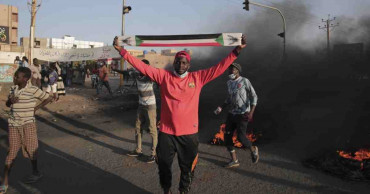
The Qatar-based satellite news network Al-Jazeera said Sunday its bureau chief in Sudan was detained by security forces, a day after mass protests across the country against last month’s military coup.
The network said on Twitter that Sudanese forces raided the home of El Musalmi El Kabbashi and detained him.
The development comes after security forces fired live ammunition and tear gas Saturday to disperse protesters denouncing the military’s tightening grip on the country.
Read: Dhaka wants inclusive Indian Ocean, not unilateral dominance
The Sudan Doctors Committee said a 15-year-old protester died Sunday of gunshot wounds to his stomach and thigh, raising the death toll to six people.
In a later statement, Al-Jazeera said El Kabbashi had been arrested at his home in Khartoum, the Sudanese capital. The broadcaster said it held the Sudanese military responsible for his safety.
“Al-Jazeera condemns in the strongest terms the reprehensible actions of the military and calls on the authorities to release El Kabbashi immediately and to allow its journalists to operate unhindered, free to practice their profession without fear or intimidation,” the channel said.
Sudanese officials could not be immediately reached for comment.
Thousands of pro-democracy protesters took to the streets across Sudan on Saturday to rally against the military coup last month. The takeover has drawn international criticism and massive protests in the streets of the capital of Khartoum and elsewhere in the country.
Read: Japan’s former princess leaves for US with commoner husband
The killings Saturday took place in Khartoum and its twin city of Omdurman. The dead included four people killed by gunshots and one who died from being hit by a tear gas canister. The 15-year-old who died of his wounds Sunday brought to six the number of fatalities, the doctors committee said. Several other protesters were wounded, including from gunshots, it said.
That brought the tally since the Oct. 26 coup to at least 21 protesters dead, according to the medical group.
4 years ago