Africa
11 killed in Kenya plane crash en route to Maasai Mara
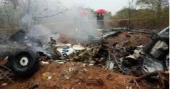
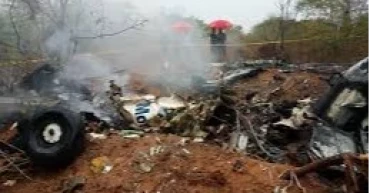
Eleven people, mostly foreign tourists, were killed Tuesday when a plane crashed in Kenya’s coastal Kwale region while flying to Maasai Mara National Reserve.
Mombasa Air Safari confirmed that eight Hungarian and two German passengers, along with the Kenyan pilot, were on board. The aircraft went down in a hilly, forested area about 40 kilometers (25 miles) from Diani airstrip. Authorities said the pilot failed to communicate after takeoff, and air traffic controllers tried unsuccessfully to contact him for 30 minutes before locating the wreckage.
Kwale County Commissioner Stephen Orinde said investigators are examining the cause of the crash, which occurred at 5:30 a.m. local time, though the Transport Ministry later cited 8:35 a.m. Heavy rain was reported in the region at the time. Witnesses described hearing a loud bang, and the plane burst into flames, leaving only charred remains at the site.
The Kenya Civil Aviation Authority initially reported 12 people aboard the Cessna Caravan-type aircraft.
Maasai Mara National Reserve, located west of the coast, is a two-hour flight from Diani and is a major tourist destination, famous for the annual wildebeest migration from Tanzania’s Serengeti. The Kenyan coastline is also popular for its white sand beaches along the Indian Ocean.
A 2018 International Civil Aviation Organization safety oversight audit noted that Kenya fell below the global average in accident investigation standards.
Source: AP
4 months ago

World’s oldest leader, Paul Biya, secures Cameroon election win at 92
Cameroon’s Constitutional Council on Monday confirmed President Paul Biya, the world’s oldest leader at 92, as the winner of the Oct. 12 presidential election.
Biya, in power since 1982, received 53.66% of the votes, while former ally-turned-opponent Issa Tchiroma Bakary won 35.19%, with a voter turnout of 57.7%.
The announcement followed violent clashes between security forces and opposition supporters. At least four protesters were killed and hundreds arrested in cities including Douala, Garoua, and Maroua. Tchiroma had earlier claimed victory based on party-collected results, which Biya dismissed.
The election has stirred tensions, particularly among young Cameroonians who make up over 70% of the nearly 30 million population. Critics accuse Biya of using state machinery to influence the vote and of sidelining strong rivals.
Biya’s long tenure has coincided with persistent crises, including Boko Haram attacks in the north and a secessionist insurgency in the English-speaking regions, which has killed thousands and displaced over a million. Despite modest economic growth, many young people remain in informal jobs and see little benefit from the nation’s oil wealth.
Experts warn that dissatisfaction among youth and continued unrest could threaten stability in Cameroon as hopes for meaningful political change remain unfulfilled.
4 months ago
Mali faces fuel crisis as militants enforce blockade
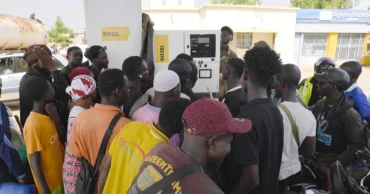
Mali is grappling with a severe fuel shortage after jihadi militants imposed an unusual blockade on imports, heightening pressure on the landlocked West African nation.
Education Minister Amadou Sy Savane said late Sunday that schools across the country will remain closed for two weeks, citing fuel scarcity that prevents teachers and other workers from commuting.
The blockade, targeting fuel imports from Senegal and Ivory Coast, has disrupted Mali’s economy and military operations. Hundreds of fuel trucks remain stranded at the borders, while rising fuel prices are deepening hardships for millions of Malians.
Militants from the al-Qaida-linked Jama’at Nusrat al-Islam wal-Muslimin (JNIM) launched the ban in early September, retaliating against government measures earlier this year that limited fuel supply to remote areas to pressure insurgents.
Analysts say the blockade is a show of strength and a tactic to undermine the Malian military junta, which has struggled to contain decades-long jihadi threats. JNIM’s operations have forced transport companies to halt fuel deliveries along major routes.
Mali’s 2020 military coup promised stability, but violence has surged, with some attacks this year the deadliest in over three years, according to the Armed Conflict Location & Event Data Project. Despite support from Russian mercenaries and partnerships with neighboring Niger and Burkina Faso, the security situation remains dire.
The fuel crisis has forced residents in Bamako to queue for hours, sometimes overnight, at gas stations. The military has attempted to escort fuel trucks to the capital while striking JNIM positions, but attacks continue to disrupt deliveries.
Experts warn that the ongoing blockade is worsening economic and social conditions in one of the world’s least developed nations, where nearly half of the population lives below the poverty line despite Mali being a leading gold producer.
4 months ago
Ivory Coast votes as Ouattara seeks fourth term amid opposition ban
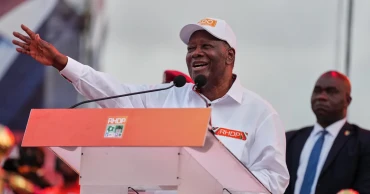
Voters in Ivory Coast went to the polls Saturday as President Alassane Ouattara pursues a fourth term, with key opposition figures barred from contesting, raising concerns over the credibility of the election.
Five candidates are officially running for the presidency, but the 83-year-old Ouattara, who has led the world’s top cocoa-producing nation since 2011, is widely expected to retain power. If re-elected, he will extend his nearly two-decade rule. His party, the Rally of Houphouetistes for Democracy and Peace (RHDP), also holds a parliamentary majority.
Ouattara has overseen post-civil war economic recovery, achieving annual growth of around 6%, driven largely by cocoa exports. Despite these gains, about 37.5% of the country’s 30 million people still live in poverty, and youth unemployment remains high.
Ouedraogo Issiaka, a scrap metal dealer in Abidjan, said he voted to “show my support” for Ouattara but sympathized with those whose preferred candidates were excluded.
Polling stations opened shortly after 0800 GMT following minor delays. Some 8.7 million voters were registered, with turnout in previous elections only slightly above 50%.
The election campaign has been overshadowed by the exclusion of major opposition figures, including former Credit Suisse executive Tidjane Thiam and former President Laurent Gbagbo, whose supporters have protested and faced arrests. Analysts warn the disqualifications echo past electoral crises that claimed thousands of lives in 2010–2011 and nearly 100 in 2020.
Ouattara has denied suppressing opposition, while international scrutiny has been limited. “The geopolitical context is favorable to him,” said Séverin Yao Kouamé, a University of Bouaké professor, citing other global priorities.
Among the candidates challenging Ouattara are former first lady Simone Gbagbo and ex-commerce minister Jean-Louis Billion. They have promised new agricultural policies and job creation, but analysts consider their chances of winning slim.
At his final rally in Abidjan on Thursday, Ouattara told supporters, “The growth has been huge, but we need to continue.” The former IMF deputy managing director has invested heavily in infrastructure and public services, earning backing from his supporters.
Vote counting will start immediately after polling ends, with provisional results expected within 48 hours.
4 months ago
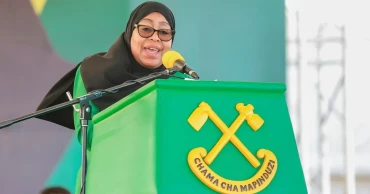
Tanzania’s first female president faces criticism over renewed repression
Hopes that Tanzania’s first woman president Samia Suluhu Hassan would ease political repression have faded as she seeks a fresh mandate in elections on Oct. 29, with critics warning of intensified crackdowns on opposition leaders and activists.
Hassan, who assumed office in 2021 after the death of former President John Pombe Magufuli, initially moved to create political space and engage opponents. However, opponents now accuse her of showing an authoritarian streak similar to her predecessor’s rule.
Amnesty International said this week that repression has “intensified” under Hassan, citing arbitrary arrests, enforced disappearances and extrajudicial killings.
Hassan’s ruling Chama cha Mapinduzi (CCM) party has been in power since independence in 1961 and has never handed over leadership through elections. The main opposition party Chadema has long tried to challenge the dominance but faces growing restrictions.
Chadema leader Tundu Lissu, who survived an assassination attempt in 2017, remains jailed on treason charges. The party has refused to participate in the polls without key reforms, leading election authorities to bar it from the race. Another popular politician, Luhaga Mpina of the ACT-Wazalendo party, has also been disqualified from contesting.
With only minor rivals on the ballot, Hassan is expected to easily win, according to the Armed Conflict Location and Event Data project, which tracks political violence.
The group said CCM aims to avoid the electoral pressure faced by ruling parties elsewhere in Africa and has “neutered Tanzania’s opposition through administrative, legal, and extra-legal means” since it received its lowest vote share in 2015.
Rights concerns have deepened in recent months. A UN panel of experts reported more than 200 enforced disappearances since 2019 and voiced alarm over “a pattern of repression” ahead of the election. Two East African activists who traveled to Tanzania to attend Lissu’s trial said they were sexually assaulted before being deported.
The disappearance of Humphrey Polepole, a former ambassador to Cuba who resigned after criticizing the government, has also raised concern. He was reportedly taken from his home in Dar es Salaam earlier this month and has not been seen since.
It was not possible to obtain a comment from Hassan, and the presidential office did not respond to questions emailed by the AP.
Analysts say Hassan briefly lifted hopes by reversing harsh Magufuli-era restrictions, including the ban on opposition rallies. Yet she has since shown a willingness to tighten control. Amnesty’s Roland Ebole said her role as head of state and commander-in-chief “places her directly in charge” of the security agencies and the ongoing abuses.
Hassan has sought to consolidate her power inside CCM by reshuffling her security chiefs, including appointing three different directors to the intelligence service in about three years.
She is campaigning under the slogan “Work and Dignity,” promising expanded opportunities in farming and livestock. Her policy platform, known as the “Four Rs,” calls for reconciliation, reforms, rebuilding and resilience.
Foreign investment has picked up after years of strained relations with international businesses under Magufuli’s policies. Yet critics argue Hassan has not used that momentum to become a unifying leader.
Many Tanzanians still express hope for genuine change.
“We expected more freedom, especially for political rallies and the press,” said a resident of Dar es Salaam who asked not to be identified for fear of retaliation. “However, it feels like things are going back to the old ways.”
4 months ago
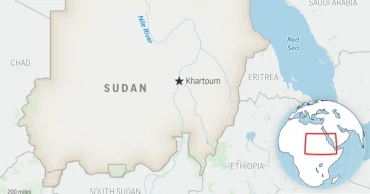
Sudan capital hit by paramilitary drone strikes for third straight day
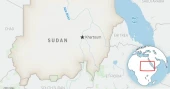
Sudan’s capital, Khartoum, came under drone attack for the third consecutive day on Thursday, as the paramilitary Rapid Support Forces (RSF) targeted the city and its main airport, military officials and local media reported.
The assault came just a day after Badr Airlines operated the first passenger flight to Khartoum in two years, following extensive repairs to the war-damaged airport.
A military official, speaking on condition of anonymity, said air defenses intercepted the drones before they could cause damage. Both the RSF and the Sudanese army have yet to issue statements on the incident.
The RSF has continued its campaign to pressure Sudan’s military as the country’s prolonged conflict — which began in 2023 when the two former allies turned against each other — shows little sign of resolution.
Although government forces recaptured Khartoum from the RSF in March, fighting has intensified across other regions, particularly in Darfur and Kordofan, where famine and displacement have reached catastrophic levels.
The United Nations and the International Organization for Migration on Thursday urged “urgent international attention on the crisis in Sudan,” calling for an immediate ceasefire, civilian protection, and unrestricted humanitarian access.
According to the World Health Organization, at least 40,000 people have been killed since the war began, while around 30 million now depend on humanitarian aid — making Sudan the world’s largest humanitarian crisis.
El-Fasher, the capital of North Darfur, has been under siege for more than a year, trapping an estimated 260,000 civilians.
“What I witnessed in Darfur and elsewhere this week is a stark reminder of what is at stake: children facing hunger, disease and the collapse of essential services,” said UNICEF Deputy Executive Director Ted Chaiban. “Entire communities are surviving in conditions that defy dignity,” he added.
4 months ago
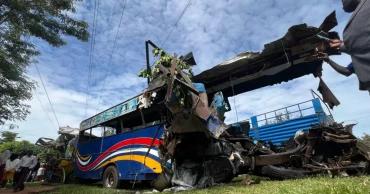
At least 46 killed in multi-vehicle crash in western Uganda
At least 46 people were killed in a major road accident early Wednesday on a highway in western Uganda, police said, in one of the country’s deadliest crashes in recent years.
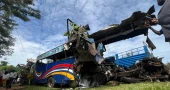
The crash involved two buses and two other vehicles on the highway to Gulu, a major city in northern Uganda. Police initially reported 63 deaths but later revised the toll, explaining that some people found unconscious at the scene were still alive. Several others were injured in the incident.
Police said the accident occurred when two bus drivers, traveling in opposite directions, attempted to overtake other vehicles and collided head-on near the town of Kiryandongo. “In the process, both buses met head-on during the overtaking maneuvers,” the statement said.
Fatal road accidents are common in Uganda and across East Africa, where roads are often narrow and poorly maintained. Police frequently cite speeding and careless overtaking as leading causes. In August, a bus carrying mourners in southwestern Kenya overturned, killing at least 25 people.
Irene Nakasiita, a Red Cross spokeswoman, described victims with broken limbs and severe bleeding, calling the crash “uncommonly high in magnitude.” She said the scene was too gruesome to share publicly. Most of the injured were receiving treatment at a nearby government hospital.
Uganda recorded 5,144 road fatalities in 2024, up from 4,806 in 2023 and 4,534 in 2022, according to official police data. Careless overtaking and speeding accounted for 44.5% of all crashes last year.
Road safety campaigners also pointed to weak enforcement of traffic rules, especially for heavy vehicles traveling at night. Joseph Beyanga, known as Joe Walker, said the Kiryandongo crash underscores the ongoing challenges in curbing road carnage. He organizes awareness walks from Kampala into rural areas and plans a memorial walk in November to honor victims of past crashes.
Police urged motorists to exercise maximum caution and avoid dangerous overtaking, stressing that such carelessness remains a leading cause of deadly accidents in the country.
Source: AP
4 months ago
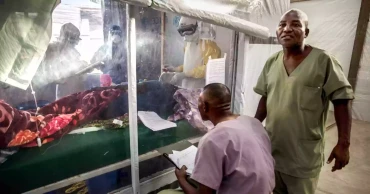
Congo declares last Ebola patient recovered as outbreak nears end
The World Health Organization (WHO) announced that the last Ebola patient in Congo’s recent outbreak was discharged over the weekend, with no new cases reported since Sept. 25.
Sunday’s update began a 42-day countdown to officially declare the outbreak over if no further cases emerge.
The outbreak, first identified on Sept. 4 in the remote Bulape health district of Kasai province, accounted for 64 cases—53 confirmed and 11 probable—and 43 deaths. Only 19 patients survived, including the latest patient discharged on Sunday.
“The recovery of the last patient just six weeks after the outbreak was declared is a remarkable achievement,” said Dr. Mohamed Janabi, WHO regional director for Africa, highlighting the role of national expertise, partnerships, and determination in saving lives.
The WHO said it would remain in the area, working with the government to maintain vigilance and respond to any potential new cases.
This marked the first Ebola outbreak in 18 years in Kasai, where poor road networks have historically made it difficult for health workers to reach patients.
4 months ago
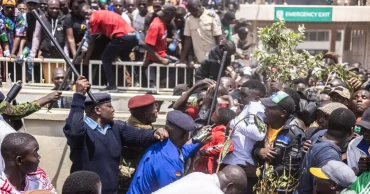
Kenya deploys heavy security ahead of Raila Odinga’s final public viewing
Kenyan authorities have deployed extensive security in the western city of Kisumu ahead of the last public viewing of former Prime Minister Raila Odinga’s body, following the deaths of five people during earlier funeral events.
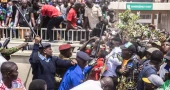
Military personnel, police officers, and air surveillance teams were stationed Saturday at the city’s soccer stadium, where thousands of mourners had stayed overnight for a chance to pay their respects.
Odinga, who died Wednesday in India at the age of 80, was a veteran politician widely respected in Kenya and internationally for his efforts to advance democracy, earning praise from figures including former U.S. President Barack Obama. He is scheduled to be buried Sunday at his family home in Bondo, western Kenya.
Supporters have turned out in large numbers since Odinga’s body arrived in the country Thursday. During the first public viewing, police fired live rounds and tear gas, killing three people. On Friday, a stampede after the state funeral service killed two more and injured 163.
Widow Ida Odinga urged mourners to grieve peacefully, while his brother Oburu pleaded with the public not to provoke authorities. “Raila should not be teargassed in death. He has been teargassed enough when he was alive,” he said.
Odinga ran for Kenya’s presidency five times over three decades, never winning, but remained a key figure in advancing Kenya’s multiparty democracy. His body lay in state at parliament Friday, an honor typically reserved for sitting or former presidents.
President William Ruto eulogized Odinga as a patriotic and selfless leader who helped stabilize Kenya. Though the two were political rivals in past elections, including the disputed 2007 vote and 2022 election, they reached a political agreement this year allowing opposition members to join the Cabinet following anti-government protests.
4 months ago
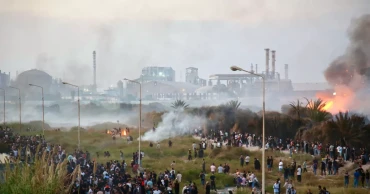
Tear gas fired as Tunisians protest pollution in Gabes
Police fired tear gas as thousands of protesters clashed with security forces in the southern Tunisian city of Gabes on Wednesday, demanding action over worsening air pollution from a nearby phosphate-processing plant.
The unrest erupted when demonstrators tried to march toward the industrial complex, located in a restricted military zone. Several protesters and police officers were injured as tensions flared in the city of over 400,000 people, a hub of Tunisia’s phosphate industry.
The protest followed a recent gas leak near the state-run Chemical Group of Tunisia (GCT) plant that sent dozens, including children, to hospitals, reigniting anger over decades of unchecked industrial pollution.
Residents accuse the plant of poisoning the city’s air and sea, blaming it for high cancer and respiratory illness rates. Despite repeated government promises to relocate or modernize the complex, activists say little has changed.
President Kais Saied has ordered an urgent probe, vowing accountability for the failures that led to the leaks.
4 months ago