africa
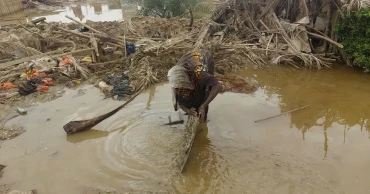
Cholera outbreak in Sudan has killed at least 22 people, health minister says
Sudan has been stricken by a cholera outbreak that has killed nearly two dozen people and sickened hundreds more in recent weeks, health authorities said Sunday. The African nation has been roiled by a 16-month conflict and devastating floods.
Health Minister Haitham Mohamed Ibrahim said in a statement that at least 22 people have died from the disease, and that at least 354 confirmed cases of cholera have been detected across the county in recent weeks.
Ibrahim didn’t give a time frame for the deaths or the tally since the start of the year. The World Health Organization, however, said that 78 deaths were recorded from cholera this year in Sudan as of July 28. The disease also sickened more than 2,400 others between Jan. 1 and July 28, it said.
Cholera is a fast-developing, highly contagious infection that causes diarrhea, leading to severe dehydration and possible death within hours when not treated, according to WHO. It is transmitted through the ingestion of contaminated food or water.
The cholera outbreak is the latest calamity for Sudan, which was plunged into chaos in April last year when simmering tensions between the military and a powerful paramilitary group exploded into open warfare across the country.
The conflict has turned the capital, Khartoum and other urban areas into battlefields, wrecking civilian infrastructure and an already battered health care system. Without the basics, many hospitals and medical facilities have closed their doors.
It has killed thousands of people and pushed many into starvation, with famine already confirmed in a sprawling camp for displaced people in the wrecked northern region of Darfur.
Sudan’s conflict has created the world’s largest displacement crisis. More than 10.7 million people have been forced to flee their homes since fighting began, according to the International Organization for Migration. Over 2 million of those fled to neighboring countries.
The fighting has been marked by atrocities including mass rape and ethnically motivated killings that amount to war crimes and crimes against humanity, according to the U.N. and international rights groups.
Devastating seasonal floods in recent weeks have compounded the misery. Dozens of people have been killed and critical infrastructure has been washed away in 12 of Sudan’s 18 provinces, according to local authorities. About 118,000 people have been displaced due to the floods, according to the U.N. migration agency.
Cholera is not uncommon in Sudan. A previous major outbreak left at least 700 dead and sickened about 22,000 in less than two months in 2017.
Tarik Jašarević, a spokesman for WHO, said the outbreak began in the eastern province of Kassala before spreading to nine localities in five provinces.
He said in comments to The Associated Press that data showed that most of the detected cases were not vaccinated. He said the WHO is now working with the Sudanese health authorities and partners to implement a vaccination campaign.
Sudan's military-controlled sovereign council, meanwhile, said Sunday it will send a government delegation to meet with American officials in Cairo amid mounting U.S. pressure on the military to join ongoing peace talks in Switzerland that aim at finding a way out of the conflict.
The council said in a statement the Cairo meeting will focus on the implementation of a deal between the military and the Rapid Support Forces, which required the paramilitary group to pull out from people’s homes in Khartoum and elsewhere in the country.
The talks began Aug. 14 in Switzerland with diplomats from the U.S., Saudi Arabia, Egypt, the United Arab Emirates, the African Union and the United Nations attending. A delegation from the RSF was in Geneva but didn’t join the meetings.
1 year ago
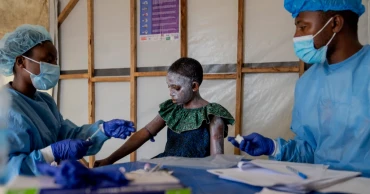
Congo's humanitarian crisis helped mpox spiral again into a global health emergency
Sarah Bagheni had a headache, fever, and itchy and unusual skin lesions for days, but she had no inkling that her symptoms might have been caused by mpox and that she might be another case in a growing global health emergency.
She also has no idea where to go to get medical help.
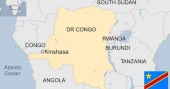
She and her husband live in the Bulengo displacement camp in eastern Congo, a region that is effectively ground zero for a series of mpox outbreaks in Africa.
This year's alarming rise in cases, including a new form of the virus identified by scientists in eastern Congo, led the World Health Organization to declare it a global health emergency on Wednesday. It said the new variant could spread beyond the five African countries where it had already been detected — a timely warning that came a day before Sweden reported its first case of the new strain.
In the vast central African nation of Congo, which has had more than 96% of the world's roughly 17,000 recorded cases of mpox this year — and some 500 deaths from the disease — many of the most vulnerable seem unaware of its existence or the threat that it poses.
“We know nothing about this,” Bagheni’s husband, Habumuremyiza Hire, said Thursday about mpox. “I watch her condition helplessly because I don’t know what to do. We continue to share the same room.”
Millions are thought to be out of reach of medical help or advice in the conflict-torn east, where dozens of rebel groups have been fighting Congolese army forces for years over mineral-rich areas, causing a huge displacement crisis. Hundreds of thousands of people like Bagheni and her husband have been forced into overcrowded refugee camps around Goma, while more have taken refuge in the city.
Conditions in the camps are dire and medical facilities are almost nonexistent.
Mahoro Faustin, who runs the Bulengo camp, said that about three months ago, administrators first started noticing people in the camp exhibiting fever, body aches and chills — symptoms that could signal malaria, measles or mpox.
There is no way of knowing how many mpox cases there might be in Bulengo because of a lack of testing, he said. There haven't been any recent health campaigns to educate the tens of thousands of people in the camp about mpox, and Faustin said he's worried about how many people might be undiagnosed.
“Just look at the overcrowding here,” he said, pointing to a sea of ramshackle tents. “If nothing is done, we will all be infected here, or maybe we are already all infected.”
Around 70% of the new mpox cases in the Goma area in the last two months that were registered at a treatment center run by Medair were from displacement camps, said Dr. Pierre Olivier Ngadjole, the international aid group's health advisor in Congo. The youngest of those cases was a month-old baby and the oldest a 90-year-old, he said.
In severe cases of mpox, people can develop lesions on the face, hands, arms, chest and genitals. While the disease originated in animals, the virus has in recent years been spreading between people via close physical contact, including sex.
Bagheni's best hope of getting a diagnosis for her lesions is a government hospital that's a two-hour drive away. That's likely out of the question, given that she already struggles with mobility having previously had both her legs amputated.
Seven million people are internally displaced in Congo, with more than 5.5 million of them in the country's east, according the U.N. refugee agency. Congo has the largest displacement camp population in Africa, and one of the largest in the world.
The humanitarian crisis in eastern Congo has almost every possible complication when it comes to stopping an mpox outbreak, said Dr. Chris Beyrer, director of Duke University’s Global Health Institute.
That includes war, illicit mining industries that attract sex workers, transient populations near border regions, and entrenched poverty. He also said the global community missed multiple warning signs.
“We’re paying attention to it now, but mpox has been spreading since 2017 in Congo and Nigeria,” Beyrer said, adding that experts have long been calling for vaccines to be shared with Africa, but to little effect. He said the WHO’s emergency declaration was “late in coming,” with more than a dozen countries already affected.
Beyrer said that unlike COVID-19 or HIV, there’s a good vaccine and good treatments and diagnostics for mpox, but “the access issues are worse than ever” in places like eastern Congo.
In 2022, there were outbreaks in more than 70 countries around the world, including the United States, which led the WHO to also declare an emergency that lasted until mid-2023. It was largely shut down in wealthy countries within months through the use of vaccines and treatments, but few doses have been made available in Africa.
The new and possibly more infectious strain of mpox was first detected this year in a mining town in eastern Congo, about 450 kilometers (280 miles) south of Goma. It's unclear how much the new strain is to blame, but Congo is now enduring its worst outbreak yet and at least 13 African countries have recorded cases, four of them for the first time.
The outbreaks in those four countries — Burundi, Kenya, Rwanda and Uganda — have been linked to Congo's, and Doctors Without Borders said Friday that Congo's surge “threatens a major spread of the disease” to other countries.
Salim Abdool Karim, an infectious disease expert who chairs the Africa Centers for Disease Control and Prevention's emergency committee, said the Congo outbreak has a particularly concerning change, in that it's disproportionately affecting young people. Children under 15 account for 70% of cases and 85% of all deaths in the country, the Africa CDC reported.
Unlike the 2022 global outbreak, which predominantly affected gay and bisexual men, mpox now appears to be spreading in heterosexual populations.
All of Congo’s 26 provinces have recorded mpox cases, according to the state-run news agency. But Health Minister Samuel-Roger Kamba said Thursday that the country doesn't have a single vaccine dose yet and he pleaded for "vigilance in all directions from all Congolese.”
Dr. Rachel Maguru, who heads the multi-epidemic center at Goma's North Kivu provincial hospital, said they also don't have drugs or any established treatments for mpox and are relying on other experts such as dermatologists to help where they can. A larger outbreak around the city and its numerous displacement camps already overburdened with an influx of people would be “terrible,” she said.
She also noted a pivotal problem: poor and displaced people have other priorities, like earning enough money to eat and survive. Aid agencies and stretched local authorities are already wrestling with providing food, shelter and basic health care to the millions displaced, while also dealing with outbreaks of other diseases like cholera.
1 year ago

Death toll in Uganda rubbish heap collapse reaches 24 as rescue teams find more victims
The death toll from a mountain of rubbish that collapsed in the Ugandan capital rose to 24 on Monday as rescuers with excavators continued searching for victims, according to the city authority.
At least four children are among those killed by the collapse at the Kiteezi landfill Friday, police told reporters.
The collapse is believed to have been triggered by heavy rainfall. The precise details of what happened were unclear, but the city authority said there was a “structural failure in waste mass.”
Irene Nakasiita, a spokeswoman for the Uganda Red Cross, said there was no hope of rescuing more people alive.
It was not clear how many people were unaccounted for. The Kiteezi landfill is a vast rubbish dumpsite in an impoverished hillside area that receives hundreds of garbage trucks daily. The city authority has been aiming to decommission it since declaring it full years ago.
It's also a kind of no-man's land in the city of 3 million, attractive to women and children who scavenge plastic waste they aim to sell. Others have built permanent homes nearby.
Ugandan President Yoweri Museveni ordered an investigation into the disaster, asking in a series of posts on the social platform X why people were living in close proximity to an unstable heap of garbage.
“Who allowed people to live near such a potentially hazardous and dangerous heap?” Museveni said, adding that effluent from the site is hazardous enough that people should not be living there.
1 year ago

Police hurl tear gas at protesters in Kenya as Cabinet ministers are sworn in
Police hurled tear gas at protesters calling for the president's resignation in the Kenyan capital on Thursday as a new Cabinet was sworn in.
The protests in Nairobi were organized by activists upset with President William Ruto even after he dismissed almost all of his ministers and added opposition members to what he called a “broad-based” government.
Businesses in the city were closed and public transport vehicles remained out of the central business district where they normally operate.
Police also mounted roadblocks on roads leading to the city. The president’s office, where the new ministers were sworn in on Thursday morning, also remained cordoned off.
Major towns and cities including the lakeside city of Kisumu — an opposition stronghold that has previously witnessed protests — remained calm with some residents telling journalists they were not protesting because the opposition figures had been incorporated into the new Cabinet.
Civil society groups, along with the Law Society of Kenya, called in a joint statement for the upholding of human rights during demonstrations and urged police to refrain from deploying nonuniformed police and using unmarked vehicles.
“We reiterate constitutional protection of all persons to peaceably and unarmed to protest, picket and to present petitions to the authorities,” the statement said.
Ruto earlier on Wednesday condemned the protests and urged Kenyans to stay away from them, saying those who want change can vote him out in 2027 elections.
Also Wednesday, activists planned an “8/8 Liberation March” and warned that demonstrators would treat nonuniformed police officers as criminals.
“We shall march for our rights, and tomorrow we shall liberate this country,” activist Kasmuel Mcoure said.
Protests in Kenya started on June 18 with initial calls for legislators to vote against a controversial finance bill that was proposing increased taxes amidst the high cost of living.
On June 25, protesters stormed parliament after legislators voted to pass the bill. More than 50 people have died since the protests started, according to the Kenya National Commission on Human Rights.
The president declined to sign the bill and sent it back to parliament saying he had “heard Kenyans who wanted nothing to do with the bill” but warned there would be revenue and expenditure consequences.
Protests continued with calls for the president to resign over bad governance, corruption, incompetence in his Cabinet and lack of accountability. Ruto dismissed all but one Cabinet minister but protests continued.
1 year ago

Seven people killed in stampede at a music concert in Congo’s capital, authorities report
Seven people were killed and many others were injured during a stampede at a music concert in Congo’s capital Saturday, authorities said.
The stampede occurred at the 80,000-capacity Stade des Martyrs stadium in the heart of Kinshasa where Mike Kalambayi, a popular Congolese gospel singer, was performing, Kinshasa Gov. Daniel Bumba said.
State television RTNC said seven people were killed in the chaos and some of those injured were admitted to intensive care.
Authorities did not comment on what caused the stampede, saying an investigation into the incident was underway. However, the local music management company that organized the event said the chaos erupted when “the security services tried to neutralize some troublemakers.”
An estimated 30,000 people attended the concert, which featured several other musicians and pastors, the management company Maajabu Gospel said in a statement.
Videos that appeared to be from the scene and broadcast of the event showed large crowds gathered outside the stadium in front of barricades as they waited to enter. Inside, people could be seen rushing to the center stage.
Congo has witnessed such stampedes in past years, often blamed on poor crowd control measures such as excessive use of force. Eleven people died in a similar crush at the same stadium last October during a music concert.
1 year ago

Mudslides in Ethiopia have killed at least 229. It’s not clear how many people are still missing
Mudslides triggered by heavy rain in a remote part of Ethiopia have killed at least 229 people, including many who tried to rescue survivors, local authorities said Tuesday, in what the prime minister called a "terrible loss."
Young children and pregnant women were among the victims in Kencho Shacha Gozdi district of southern Ethiopia, said Dagmawi Ayele, a local administrator, adding that at least five people have been pulled out alive.
The death toll rose sharply from the initial one of 55 late Monday. Search operations continued in the area, said Kassahun Abayneh, head of the communications office in Gofa Zone, the administrative area where the mudslides occurred.
Ethiopia's ruling party in a statement said it felt sorrow over the disaster. Prime Minister Abiy Ahmed said in a statement on Facebook that he was “deeply saddened by this terrible loss."
The federal disaster prevention task force has been deployed to assist in search and rescue efforts, Abiy's statement said.
It was not immediately clear how many people were still unaccounted for.
Many victims were buried on Monday as rescue workers searched the steep terrain for survivors of another mudslide the previous day. Markos Melese, director of the disaster response agency in Gofa Zone, said many rescuers remained missing.
"There are children who are hugging corpses, having lost their entire family, including mother, father, brother and sister," he said.
Some women wailed as rescuers attempted to dig through the thick mud with shovels.
Landslides are common during Ethiopia's rainy reason, which started in July and is expected to last until mid-September.
Deadly mudslides often occur in the wider East African region, from Uganda's mountainous east to central Kenya's highlands. In April, at least 45 people were killed in Kenya's Rift Valley region when flash floods and a landslide swept through houses and cut off a major road.
1 year ago
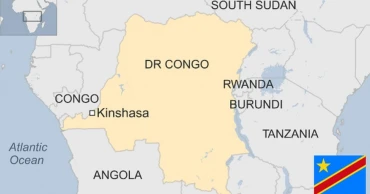
At least 72 people are killed in a militia attack near Congo's capital in a conflict over land
At least 72 people, including nine soldiers and a soldier's wife, were killed when armed men attacked a village in western Congo, local authorities said, as violence intensifies between rival communities.
Saturday's attack took place in the village of Kinsele, around 100 kilometers (60 miles) east of Kinshasa, the capital. Because of insecurity and poor infrastructure in the region, attacks can take days to be reported.
Kinsele is in the Kwamouth territory, where conflict has raged for two years between the Teke and Yaka communities, leading to hundreds of civilian deaths.
The attackers were with the Mobondo militia, a group presenting itself as defenders of the Yaka people.
“The search continues to find other bodies in the bush,” David Bisaka, the provincial deputy for the Kwamouth territory, told The Associated Press in a phone interview. He added that the army had "succeeded in routing this militia” for the second time in a week. The Mobondo militia first tried to attack the village on Friday.
Following Saturday’s attack, the dead included nine soldiers and the wife of a soldier, the head of a nearby village, Stanys Liby, told U.N.-funded Radio Okapi.
The conflict over land and customary claims in the Kwamouth territory erupted in June 2022 between so-called “native” and “non-native” communities, according to the advocacy group Human Rights Watch.
Tensions flared between the Teke, historical inhabitants of the region, and farmers from various other ethnic groups including the Yaka, who settled near the Congo River more recently.
Despite a cease-fire in April 2024 in the presence of Congo's President Felix Tshisekedi, clashes between the communities have continued and even intensified in recent weeks.
Congo's defense minister, Guy Kabombo Muadiamvita, on Monday visited Kwango province, where the attacked village is located, to “feel the reality on the ground,” the ministry said on social media platform X.
“The province of Kwango is the last security barrier to access the city province of Kinshasa,” the ministry said, adding that the minister “promised to spare no effort” against the militia.
Congo's army also struggles to contain more widespread violence in the vast country's east, which has seen decades of fighting between government forces and more than 120 armed groups. Many seek a share of the region’s gold and other resources.
Violence in the east has worsened in recent months. Earlier this month, a militia attack on a gold mine in northeastern Congo killed six Chinese miners and two Congolese soldiers.
1 year ago
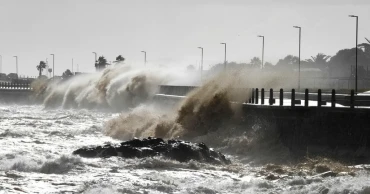
Nearly 1,000 homes in Cape Town destroyed by storms displacing around 4,000 people
Nearly 1,000 homes in informal settlements in Cape Town, South Africa, have been destroyed by gale-force winds, displacing around 4,000 people, authorities and an aid organization said as the city braces for a week of damaging storms.
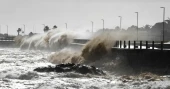
South African weather authorities said Monday that Cape Town and surrounding areas are expected to be hit by multiple cold fronts until at least Friday, bringing torrential rain, strong winds, flooding and possible mudslides. City authorities also warned of storm surges and high waves along the coastline and asked people to stay away from the beachfront.
Cape Town's disaster coordination team has been on alert since last Thursday, when the first front arrived.
The worst-hit areas are expected to be the poor, informal settlements on the edge of South Africa's second biggest city.
Thousands have been displaced in the township of Khayelitsha on the outskirts of Cape Town after strong winds destroyed homes and other structures. The Gift of the Givers local aid organization said it provided 10,000 meals and 3,000 blankets to displaced people in Khayelitsha over the weekend.
“The city is doing all it can to address the impacts as quickly as possible,” the City of Cape Town said.
Other areas have been flooded and the weather has caused power outages in more than 30 suburbs, the city said. It said it is monitoring dam levels to ensure they don't overflow and would consider a controlled release of some water with more heavy rain expected this week.
Cape Town, on the southwest tip of Africa, is often hit by cold fronts coming in from the Atlantic Ocean during its winter months in the middle of the year. They are especially damaging for informal settlements.
1 year ago
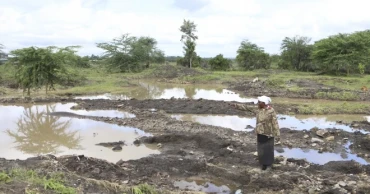
Kenya's dramatic flooding sweeps away a central part of the economy: Its farms
With dismay, Martha Waema and her husband surveyed their farm that was submerged by weeks of relentless rainfall across Kenya. Water levels would rise to shoulder height after only a night of heavy downpour.
The couple had expected a return of 200,000 shillings ($1,500) from their three acres after investing 80,000 shillings ($613) in maize, peas, cabbages, tomatoes and kale. But their hopes have been uprooted and destroyed.
"I have been farming for 38 years, but I have never encountered losses of this magnitude," said the 62-year-old mother of 10.
Their financial security and optimism have been shaken by what Kenya's government has called "a clear manifestation of the erratic weather patterns caused by climate change."
The rains that started in mid-March have posed immediate dangers and left others to come. They have killed nearly 300 people, left dams at historically high levels and led the government to order residents to evacuate flood-prone areas — and bulldoze the homes of those who don't.
Now a food security crisis lies ahead, along with even higher prices in a country whose president had sought to make agriculture an even greater engine of the economy.
Kenya's government says the flooding has destroyed crops on more than 168,000 acres (67,987 hectares) of land, or less than 1% of Kenya's agricultural land.
As farmers count their losses — a total yet unknown — the deluge has exposed what opposition politicians call Kenya's ill preparedness for climate change and related disasters and the need for sustainable land management and better weather forecasting.
Waema now digs trenches in an effort to protect what's left of the farm on a plain in the farthest outskirts of the capital, Nairobi, in Machakos County.
Not everyone is grieving, including farmers who prepared for climate shocks.
About 200 kilometers (125 miles) west of Waema's farm, 65-year-old farmer James Tobiko Tipis and his 16-acre farm have escaped the flooding in Olokirikirai. He said he had been proactive in the area that's prone to landslides by terracing crops.
"We used to lose topsoil and whatever we were planting," he said.
Experts said more Kenyan farmers must protect their farms against soil erosion that likely will be worsened by further climate shocks.
Jane Kirui, an agricultural officer in Narok County, emphasized the importance of terracing and other measures such as cover crops that will allow water to be absorbed.
In Kenya's rural areas, experts say efforts to conserve water resources remain inadequate despite the current plentiful rainfall.
At Jomo Kenyatta University of Agriculture and Technology, professor John Gathenya recommended practices such as diversifying crops and emphasizing the soil's natural water retention capacity.
"The soil remains the biggest reservoir for water," he said, asserting that using it wisely requires much less of an investment than large infrastructure projects such as dams. But soil needs to be protected with practices that include limiting the deforestation that has exposed parts of Kenyan land to severe runoff.
"We are opening land in new fragile environments where we need to be even more careful the way we farm," Gathenya said. "In our pursuit for more and more food, we are pressing into the more fragile areas but not with the same intensity of soil conservation that we had 50 years back."
1 year ago

Over 66 mln people food insecure in Greater Horn of Africa: report
Some 66.7 million people in the Greater Horn of Africa region are highly food insecure, according to a new report by the Food and Agriculture Organization of the United Nations (FAO) and the Intergovernmental Authority on Development (IGAD) released on Wednesday.
Out of the total, 39.1 million were from six of the eight IGAD member states, the FAO and IGAD said in the June report.
These are Djibouti, Kenya, Somalia, South Sudan, Sudan and Uganda.
Other countries where people are food insecure in the region are Burundi, the Central African Republic and the Democratic Republic of the Congo.
The number of food-insecure people in June, 66.7 million, fell almost 11 percent from the previous month's 74.9 million, according to the two institutions.
"Conflict, inflation, disease outbreaks and poor access to nutritious diets and safe water continue to severely impact the state of food security and nutrition in Eastern Africa," the report said.
Countries like Sudan, Somalia, Kenya, Ethiopia and South Sudan experienced heavy rainfall, as flooding exacerbated by lingering effects of previous droughts heightened severe levels of food insecurity, according to the two institutions.
The report said that the East and Central Africa region hosts a substantial number of refugees and internally displaced persons (IDPs), especially in countries such as Uganda, Kenya, and Ethiopia, where people grapple with food insecurity due to restricted access to essential resources and limited livelihood opportunities.
According to the United Nations Office for the Coordination of Humanitarian Affairs, severe climate events such as flooding and drought, conflicts and disease outbreaks are continuing to cause displacements and push millions of people into acute food insecurity.
1 year ago