Australia

Australia drops recognition of Jerusalem as Israel's capital
Australia has reversed a previous government's recognition of West Jerusalem as Israel's capital, the foreign minister said Tuesday.
The center-left Labor Party government Cabinet agreed to again recognize Tel Aviv as the capital and reaffirmed that Jerusalem's status must be resolved in peace negotiations between Israel and the Palestinians, Foreign Minister Penny Wong said.
Australia remained committed to a two-party solution to the conflict between Israelis and Palestinians, and “we will not support an approach that undermines this prospect,” Wong said.
Former conservative Prime Minister Scott Morrison formally recognized West Jerusalem as Israel's capital in December 2018, although the Australian embassy remained in Tel Aviv.
The change followed the then-U.S. President Donald Trump’s decision to shift the U.S. Embassy from Tel Aviv to Jerusalem. President Joe Biden has kept the embassy in Jerusalem as the U.S. steps back from its once-intense mediation between the Israelis and Palestinians, who have not held substantive peace talks in more than a decade.
Wong described Morrison’s move as out of step internationally and a “cynical” attempt to win a byelection in a Sydney locale with a large Jewish population.
Morrison’s Liberal Party ran Jewish candidate Dave Sharma who was defeated in the byelection but won the seat in the next general election.
Morrison’s government was elected out of office in May after nine years in power.
3 years ago
3 dead after 7.6 quake hits Papua New Guinea
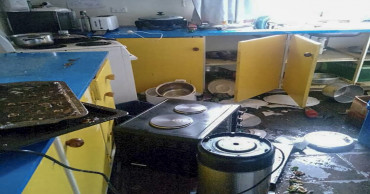
At least three people are dead after a powerful earthquake hit a remote part of Papua New Guinea Sunday morning, authorities say. Others were injured and infrastructure damaged in the magnitude 7.6 jolt that was felt across the Pacific country.
The three people died in a landslide in the gold-mining town of Wau, said Morobe Provincial Disaster Director Charley Masange. Other people had been injured from falling structures or debris, and there was damage to some health centers, homes, rural roads and highways, Masange told The Associated Press.
Masange said it could take some time to assess the full extent of the injuries and damage in the region. But he said the sparse and scattered population and lack of large buildings near the epicenter in the nation's largely undeveloped highlands may have helped prevent a bigger disaster, given the earthquake was so strong.
Read:Earthquake kills 65, triggers landslides in southwest China
One resident from the town closest to the epicenter described his ordeal to the AP.
Renagi Ravu was meeting with two colleagues at his home in Kainantu when the quake struck.
Ravu tried to stand up from his chair but couldn't maintain his balance and ended up in a kind of group hug with his colleagues, while plates and cups crashed from his shelves to the ground, he said. His children, ages 9 and 2, had their drinks and breakfast spill over.
Ravu, who is a geologist, said he tried to calm everybody as the shaking continued for more than a minute.
Ravu said that about 10,000 people live in and around his town, which is located 66 kilometers (41 miles) from the quake's epicenter.
He said people were feeling rattled.
“It's a common thing that earthquakes are felt here, but it usually doesn't last as long and is not as violent as this one,” Ravu said. “It was quite intense.”
Ravu was sorting through the damage to his home, which he said likely included a broken sewer pipe judging from the smell. He said friends elsewhere in Kainantu had messaged him with descriptions of cracked roads, broken pipes and fallen debris, but hadn't described major building collapses or injuries.
“They are starting to clean up their houses and the streets,” he said. Communication seems to have been affected, he added, with some cell towers likely to have fallen.
A magnitude 7.5 earthquake in 2018 in the nation’s central region killed at least 125 people. That quake hit areas that are remote and undeveloped, and assessments about the scale of the damage and injuries were slow to filter out.
Read: Strong undersea quake causes panic in western Indonesia
Felix Taranu, a seismologist at the Geophysical Observatory in the capital Port Moresby, said it was too early to know the full impacts of Sunday's earthquake, although its strength meant it “most likely caused considerable damage.”
According to the U.S. Geological Survey, the quake hit at 9:46 a.m. local time at a depth of 90 kilometers (56 miles). NOAA advised there was no tsunami threat for the region.
Papua New Guinea is located on the eastern half of the island of New Guinea, to the east of Indonesia and north of eastern Australia. It sits on the Pacific’s “Ring of Fire,” the arc of seismic faults around the Pacific Ocean where much of the world’s earthquakes and volcanic activity occurs.
3 years ago
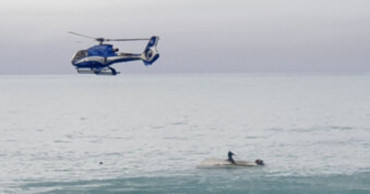
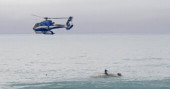
5 dead after New Zealand boat flips in possible whale strike
Five people died Saturday in New Zealand after the small charter boat they were aboard capsized, authorities say, in what may have been a collision with a whale. Another six people aboard the boat were rescued.
Police said the 8.5-meter (28-foot) boat overturned near the South Island town of Kaikōura. Police said they were continuing to investigate the cause of the accident.
Kaikōura Police Sergeant Matt Boyce described it as a devastating and unprecedented event.
“Our thoughts are with everyone involved, including the victims and their families, their local communities, and emergency services personnel,” Boyce said.
He said police divers had recovered the bodies of all those who had died. He said all six survivors were assessed to be in stable condition at a local health center, with one transferred to a hospital in the city of Christchurch as a precaution.
Kaikōura Mayor Craig Mackle told The Associated Press that the water was dead calm at the time of the accident and the assumption was that a whale had surfaced from beneath the boat.
He said there were some sperm whales in the area and also some humpback whales traveling through.
He said locals had helped with the rescue efforts throughout the day but the mood in the town was “somber” because the water was so cold and they feared for the outcome of anybody who had fallen overboard.
Read: Whale carcass washes ashore on Cox’s Bazar beach
Mackle said he’d thought in the past about the possibility of a boat and whale colliding, given the number of whales that frequent the region.
“It always plays on your mind that it could happen,” he said, adding that he hadn’t heard about any previous such accidents.
Mackle said the boat was a charter vessel typically used for fishing excursions. News agency Stuff reported the passengers belonged to a bird enthusiasts' group.
Police said they were still notifying the relatives of those who died, and couldn't yet publicly name the victims.
Vanessa Chapman told Stuff she and a group of friends had watched the rescue efforts unfold from Goose Bay, near Kaikōura. She said that when she arrived at a lookout spot, she could see a person sitting atop an overturned boat waving their arms.
She said two rescue helicopters and a third local helicopter were circling before two divers jumped out. She told Stuff that the person atop the boat was rescued and a second person appeared to have been pulled from the water.
Kaikōura is a popular whale-watching destination. The seafloor drops away precipitously from the coast, making for deep waters close to the shore. A number of businesses offer boat trips or helicopter rides so tourists can see whales, dolphins and other sea creatures up close.
Compliance agency Maritime New Zealand said it sent two investigators to the scene and would be conducting a thorough investigation once recovery operations had concluded.
Principal Investigator Tracy Phillips said the agency “offers its heartfelt condolences to the family and loved ones of the people who have died.”
3 years ago

New Zealand welcomes back first cruise ship since COVID hit
New Zealand on Friday welcomed the first cruise ship to return since the coronavirus pandemic began, signaling a long-sought return to normalcy for the nation’s tourism industry.
New Zealand closed its borders in early 2020 as it sought at first to eliminate COVID-19 entirely and then later to control its spread. Although the country reopened its borders to most tourists arriving by plane in May, it wasn’t until two weeks ago that it lifted all remaining restrictions, including those on maritime arrivals.
Many in the cruise industry question why it took so long.
Read: New Zealand's unemployment rate remains low at 3.3 pc
The end of restrictions allowed Carnival Australia’s Pacific Explorer cruise ship to dock in Auckland with about 2,000 passengers and crew Friday morning as part of a 12-day return trip to Fiji that left from Sydney.
“Amazing, isn’t it?” Tourism Minister Stuart Nash said in an interview with The Associated Press. “Its another step in the reopening of our borders and a step closer to resuming business as usual.”
Nash said it would take some time for international tourist numbers and revenue to return to their pre-pandemic levels, when the industry accounted for about 20% of New Zealand’s foreign income and more than 5% of GDP.
3 years ago

Australia losing animals, natural land as environment decays
A five-year government report found Australia’s environment continues to deteriorate due to climate change, resource extraction and other causes, prompting leaders on Tuesday to promise new laws and enforcement of them.
The State of the Environment report also adds political pressure on the government to set a more ambitious greenhouse gas reduction target when Parliament resumes next week for the first time since May 21 elections.
The previous conservative government received the report in December but decided against making it public before the elections.
The center-left Labor Party won on pledges including greater action on climate change.
It wants a target to reduce emissions by 43% below 2005 by the end of the decade enshrined in law when Parliament sits on July 26.
Read: Most major nations lag in acting on climate-fighting goals
Several unaligned lawmakers want a more ambitious target. Environment Minister Tanya Plibersek said the report sent a “very strong message that we need to do better, but she rejected calls for deeper emission cuts.
“On the 43% target, we made a promise to the Australian people. We’re going to keep the promise we made to the Australian people,” Plibersek told the National Press Club.
She said she would introduce new environmental protection laws to Parliament next year and the government would create an agency to enforce them.
The government will also set a target of having 30% of Australia’s land and surrounding sea declared protected areas. It wants to create an east Antarctic marine park.
“I am optimistic about the steps that we can take over the next three years. Legislating strong action on climate change is a great start,” Plibersek said.
The wide-ranging report found the number of Australian species listed as threatened had increased by 8% since the 2016 report.
That number will increase substantially after wildfires in 2019 and 2020 destroyed vast tracts of southeast Australian forests, the report said.
Read: Sri Lanka Parliament to choose president to lead past crisis
Kelly O’Shanassy, chief executive of the Australian Conservation Foundation, an environmental organization, said land clearing was the major cause of habitat loss.
“There’s nothing in this report we don’t know. This is the fourth State of the Environment Report and every time it’s told us that the environment is getting worse and worse and worse because we’re not taking the type of action we need,” O’Shanassy told Australian Broadcasting Corp.
She welcomed the government’s commitment to law reform.
“That’s what we need to do pretty quickly, otherwise these endangered species will go extinct and they’ll do that in our lifetimes,” O’Shanassy said.
3 years ago

Flood threat moves north as Sydney area emergency eases
Floodwaters were receding in Sydney and its surrounding area Thursday as heavy rain threatened to inundate towns north of Australia’s largest city.
Evacuation orders and official warnings to prepare to abandon homes were given to 60,000 people by Thursday, down from 85,000 on Wednesday, New South Wales state Premier Dominic Perrottet said.
Read:Sydney floods burden 50,000 around Australia’s largest city
But towns including Maitland and Singleton in the Hunter Valley, north of Sydney, were still threatened by inundation, Perrottet said.
Around 50 rescues were made in the past 24 hours, several of which involved people stranded in cars in floodwaters, he said.
Emergency Services Minister Steph Cooke said record-breaking rain that began around Sydney on Friday last week was easing.
“It is very pleasing to see that the weather situation is starting to ease after almost a week of relentless rain,” she said.
The weather system that had brought heavy rain to a vast swath of New South Wales was moving further from the coast out to sea north of Sydney, Bureau of Meteorology manager Diana Eadie said.
Read:After 3 feet of rain, 32,000 in Sydney area may need to flee
Bulga, a town about 180 kilometers (110 miles) north of Sydney by road, experienced its highest flood level since 1952, she said.
Taree, some 320 kilometers (200 miles) north of Sydney by road, was drenched by 305 millimeters (12 inches) of rain overnight — almost a third of the town’s annual rainfall average, Eadie said.
3 years ago

Sydney floods burden 50,000 around Australia’s largest city
Hundreds of homes have been inundated in and around Australia’s largest city in a flood emergency that was causing trouble for 50,000 people, officials said Tuesday.
Emergency response teams made 100 rescues overnight of people trapped in cars on flooded roads or in inundated homes in the Sydney area, State Emergency Service manager Ashley Sullivan said.
Days of torrential rain have caused dams to overflow and waterways to break their banks, bringing a fourth flood emergency in 16 months to parts of the city of 5 million people.
Evacuation orders and warnings to prepare to abandon homes were given to 50,000 people, up from 32,000 on Monday, New South Wales Premier Dominic Perrottet said.
Read: Sylhet flood situation improves as rivers recede
“This event is far from over. Please don’t be complacent, wherever you are. Please be careful when you’re driving on our roads. There is still substantial risk for flash flooding across our state,” Perrottet said.
The New South Wales state government declared a disaster across 23 local government areas overnight, activating federal government financial assistance for flood victims.
Emergency Services Minister Steph Cooke credited the skill and commitment of rescue crews for preventing any death or serious injury by the fourth day of the flooding emergency.
Parts of southern Sydney had been lashed by more than 20 centimeters (nearly 8 inches) of rain in 24 hours, more than 17% of the city’s annual average, Bureau of Meteorology meteorologist Jonathan How said.
Severe weather warnings of heavy rain remained in place across Sydney’s eastern suburbs on Tuesday. The warnings also extended north of Sydney along the coast and into the Hunter Valley.
The worst flooding was along the Hawkesbury-Nepean river system along Sydney’s northern and western fringes.
“The good news is that by tomorrow afternoon, it is looking to be mostly dry but, of course, we are reminding people that these floodwaters will remain very high well after the rain has stopped,” How said.
“There was plenty of rain fall overnight and that is actually seeing some rivers peak for a second time. So you’ve got to take many days, if not a week, to start to see these floodwaters start to recede,” How added.
Read: After 3 feet of rain, 32,000 in Sydney area may need to flee
Residents of Lansvale, in southwest Sydney, were surprised by the speed at which their area became inundated and the growing frequency of such flooding.
“Well, it happened in 1986 and ’88, then it didn’t happen for 28 years and, so, 2016 and 2020 and now it’s happened four times this year,” a Lansvale local identified only as Terry told Australian Broadcasting Corp. television of his home being flooded.
The wild weather and mountainous seas along the New South Wales coast thwarted plans to tow a stricken cargo ship with 21 crew members to the safety of open sea.
The ship lost power after leaving port in Wollongong, south of Sydney, on Monday morning and risked being grounded by 8-meter (26-foot) swells and winds blowing at 30 knots (34 mph) against cliffs.
An attempt to tow the ship with tugboats into open ocean ended when a towline snapped in an 11-meter (36-foot) swell late Monday, Port Authority chief executive Philip Holliday said.
The ship was maintaining its position Tuesday farther from the coast than it had been on Monday with two anchors and the help of two tugboats. The original plan had been for the ship’s crew to repair their engine at sea. The new plan was to tow the ship to Sydney when weather and sea conditions calmed as early as Wednesday, Holliday said.
“We’re in a better position than we were yesterday,” Holliday said. “We’re in relative safety.”
Perrottet described the tugboat crews’ response on Monday to save the ship as “heroic.”
“I want to thank those men and women who were on those crews last night for the heroic work they did in incredibly treacherous conditions. To have an 11-meter (36-foot) swell, to be undergoing and carrying out that work is incredibly impressive,” Perrottet said.
3 years ago
.jpg)
After 3 feet of rain, 32,000 in Sydney area may need to flee
More than 30,000 residents of Sydney and its surrounds have been told to evacuate or prepare to abandon their homes on Monday as Australia’s largest city braces for what could be its worst flooding in 18 months.
Parts of the city of 5 million people are facing a fourth flooding emergency in a year and a half after torrential rain since Friday caused dams to overflow and waterways to break their banks.
“The latest information we have is that there’s a very good chance that the flooding will be worse than any of the other three floods that those areas had in the last 18 months,” Emergency Management Minister Murray Watt told Australian Broadcasting Corp.
Read: 500,000 people on flood alert as rain lashes Sydney
The current flooding might affect areas that managed to stay dry during the previous floods, Watt added.
New South Wales state Premier Dominic Perrottet said 32,000 people were impacted by evacuation orders and warnings.
“You’d probably expect to see that number increase over the course of the week,” Perrottet said.
Emergency services had made 116 flood rescues in recent days, 83 of them since 9 p.m. Sunday, he said. Hundreds more requests for help were made by Monday morning.
Australia’s Bureau of Meteorology manager Jane Golding said some areas between Newcastle, north of Sydney, and Wollongong, south of Sydney had received more than a meter (39 inches) of rain in the previous 24 hours. Some has received more than 1.5 meters (59 inches).
“The system that has been generating this weather does show signs that it will ease tomorrow, but throughout today, expect more rain,” Golding said.
Rain was forecast across New South Wales's coast, including Sydney, all week, she said.
The flooding danger was highest along the Hawkesbury River, in northwest Sydney, and the Nepean River in Sydney’s west.
“The water is flowing really quickly,” Golding said. “It’s dangerous out on the rivers and we do have some more rain to fall which means the flash-flood risk is not over yet.”
State Emergency Services Commissioner Carlene York said strong winds had toppled trees, damaging rooves and blocking roads. She advised against unnecessary travel.
Theresa Fedeli, mayor of the Camden municipality on the Nepean River southwest of Sydney, said the repeated flooding was taking a toll on members of her community.
“It's just devastating. They just keep on saying ‘devastating, not again,'” Fedeli said.
“I just keep on saying ... ‘We've got to be strong, we will get through this.” But you know deep down it's really hitting home hard to a lot of people," she added.
Read:Australia commits to reducing greenhouse emissions by 43%
Perrottet said government and communities needed to adapt to major flooding becoming more common across Australia’s most populous state.
“We’re seeing these flood events more regularly, there’s no doubt about that,” Perrottet said.
"To see what we’re seeing right across Sydney, there’s no doubt these events are becoming more common. And governments need to adjust and make sure that we respond to the changing environment that we find ourselves in,” he added.
3 years ago
New Zealand secures major FTA deal with EU
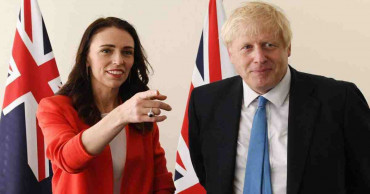
New Zealand and the European Union have concluded negotiations on a major free trade agreement (FTA), which covers market access into 27 European countries and removes duties on the majority of products New Zealand exports.
"Our EU-NZ FTA is expected to increase the value of New Zealand's exports to the EU by up to 1.8 billion NZ dollars (1.12 billion U.S. dollars) per year from 2035," New Zealand Prime Minister Jacinda Ardern said on Friday after the FTA signing in Brussels.
"It's a strategically important and economically beneficial deal that comes at a crucial time in our export-led COVID-19 recovery," Ardern said in a statement.
The deal delivers tangible gains for exporters into a restrictive agricultural market. It cuts costs and red tape for exporters and opens up new high-value market opportunities, she said.
Also Read: Dhaka, Tokyo to explore possibility of FTA
This is the fifth FTA New Zealand has concluded in the past five years and sits alongside upgrades to the existing agreements with China and Singapore, she said, adding that the increase in market access means 73.5 percent of New Zealand's global exports are now covered by an FTA, up from around 50 percent five years ago.
The deal provides duty-free access on 97 percent of the New Zealand's existing goods trade to the EU within seven years, 91 percent from day one, said New Zealand Trade and Export Growth Minister Damien O'Connor.
However, the meat and dairy industries, two of New Zealand's major export sectors, were disappointed as their gains in the trade deal were very limited.
The EU is New Zealand's fourth-largest trading partner with two-way goods and services trade worth 17.5 billion NZ dollars (10.9 billion U.S. dollars).
3 years ago
.jpg)
Australia commits to reducing greenhouse emissions by 43%
Australia’s new government on Thursday formally committed to a more ambitious greenhouse gas reduction target of 43% by the end of the decade in fulfillment of a key election pledge.
The previous conservative government was dumped by voters at the May 21 election after it stuck to a seven-year-old pledge to reduce Australia’s emissions by only 26% to 28% below 2005 levels by 2030.
Prime Minister Anthony Albanese said he had written to U.N. Framework Convention on Climate Change executive secretary Patricia Espinosa Cantellano to inform her of Australia’s new 2030 target.
Albanese said legislation to enshrine the new target in law would be introduced to the new Parliament which will sit for the first time on July 26. However the target did not depend on Parliament’s approval.
Investment in Australia’s energy sector had been held up during the previous government’s nine years in power due to the administration’s failure to agree on a climate policy, Albanese said.
“What businesses have been crying out for is investment certainty,” Albanese said. “The certainty that they need to invest over a longer time frame than the political cycle of three years.”
Australia is one of the world’s largest exporters of coal and liquified natural gas which makes reducing dependence on fossil fuels a politically vexed issue. The previous government was widely considered a laggard among wealthy countries in combating climate change.
Read: Climate change wipes out $525 bn over last 2 decades: Report
The United States has committed to reductions of between 50% and 52% below 2005 levels by 2030. Britain has pledged to cut emissions by 68% below 1990 levels.
Albanese’s government could face pressure in a new, greener Parliament to adopt an even more ambitious target.
Several seats have yet to be declared as counting continues following the election.
The center-left Labor Party administration will likely hold a narrow majority of 77 seats in the 151-seat House of Representatives where a majority of lawmakers is needed to form government.
Read: Climate change threatens access to water, sanitation
A record 16 lawmakers in the House will not be aligned with either the government or opposition.
The minor Greens party is on track to secure four seats, up from a single lawmaker in the last Parliament. The Greens want a 2030 reduction target of 75%. Newly elected independent lawmakers have called for a 60% target or at least 50%.
Greens senators could hold a balance of power in the upper chamber where major parties rarely hold a majority and need support from outside government to pass laws.
The 2030 commitment comes as much of Australia’s population faces soaring electricity and gas prices due in part to the Russia-Ukraine war.
Large parts of southeast Australia face the threat of blackouts for a range of reasons including an unusually cold start to the Southern Hemisphere winter and unscheduled outages of aging coal-fired generations that will be shut down within years and are not being adequately maintained.
3 years ago