Europe

Is Michelangelo’s David 'porn'? Come and see, Italian museum tells Florida parents
The Florence museum housing Michelangelo’s Renaissance masterpiece the David on Sunday invited parents and students from a Florida charter school to visit after complaints about a lesson featuring the statue forced the principal to resign.
Florence Mayor Dario Nardella also tweeted an invitation for the principal to visit so he can personally honor her. Confusing art with pornography was “ridiculous,” Nardella said.
The board of the Tallahassee Classical School pressured Principal Hope Carrasquilla to resign last week after an image of the David was shown to a sixth-grade art class. The school has a policy requiring parents to be notified in advance about “controversial” topics being taught.
The incredulous Italian response highlighted how the U.S. culture wars are often perceived in Europe, where despite a rise in right-wing sentiment and governance, the Renaissance and its masterpieces, even its naked ones, are generally free of controversy. Sunday’s front page of the Italian daily publication Corriere della Sera featured a cartoon by its leading satirist depicting David with his genitals covered by an image of Uncle Sam and the word “Shame.”
Carrasquilla believes the board targeted her after three parents complained about a lesson including a photo of the David, a 5-meter tall (17 foot) nude marble sculpture dating from 1504. The work, reflecting the height of the Italian Renaissance, depicts the Biblical David going to fight Goliath armed only with his faith in God.
Carrasquilla has said two parents complained because they weren’t notified in advance that a nude would be shown, while a third called the iconic statue pornographic.
Carrasquilla said in a phone interview Sunday that she is “very honored” by the invitations to Italy and she may accept.
“I am totally, like, wow,” Carasquilla said. “I’ve been to Florence before and have seen the David up close and in person, but I would love to go and be a guest of the mayor.”
Cecilie Hollberg, director of the Galleria dell’Accademia, where the David resides, expressed astonishment at the controversy.
“To think that David could be pornographic means truly not understanding the contents of the Bible, not understanding Western culture and not understanding Renaissance art,” Hollberg said in a telephone interview.
She invited the principal, school board, parents and student body to view the “purity” of the statue.
Tallahassee Classical is a charter school. While it is taxpayer-funded and tuition-free, it operates almost entirely independently of the local school district and is sought out by parents seeking an alternative to the public school curriculum.
About 400 students from kindergarten through 12th grade attend the three-year-old institution, which is now on its third principal. It follows a curriculum designed by Hillsdale College, a conservative Christian school in Michigan frequently consulted by Florida Gov. Ron DeSantis on educational issues.
Barney Bishop, chairman of Tallahassee Classical’s school board, has told reporters that while the photo of the statue played a part in Carrasquilla’s ouster, it wasn’t the only factor. He has declined to elaborate, while defending the decision.
“Parents are entitled to know anytime their child is being taught a controversial topic and picture,” Bishop said in an interview with Slate online magazine.
Several parents and teachers plan to protest Carrasquilla’s exit at Monday night’s school board meeting, but Carrasquilla said she isn’t sure she would take the job back even if it were offered.
“There’s been such controversy and such upheaval,” she said. “I would really have to consider, ‘Is this truly what is best?’”
Marla Stone, head of humanities studies at the American Academy in Rome, said the Florida incident was another episode in escalating U.S. culture wars and questioned how the statue could be considered so controversial as to warrant a prior warning.
“What we have here is a moral crusade against the body, sexuality, and gender expression and an ignorance of history,” Stone said in an email. “The incident is about fear, fear of beauty, of difference, and of the possibilities embedded in art.”
Michelangelo Buonarroti sculpted the David between 1501-1504 after being commissioned by the Cathedral of Florence. The statue is the showpiece of the Accademia, and helps draw 1.7 million visitors each year to the museum.
“It is incredibly sought-after by Americans who want to do selfies and enjoy the beauty of this statue,” Director Hollberg said.
The museum, like many in Europe, is free for student groups. There was no indication that any trip would be subsidized by the city or museum.
3 years ago

Germany, EU reach agreement in combustion engine row
Germany and the European Union announced Saturday that they have reached an agreement in their dispute over the future of cars with combustion engines, allowing the registration of new vehicles with such engines even after 2035 provided they use climate-neutral fuel only.
EU Commission Vice-President Frans Timmermans tweeted that “we have found an agreement with Germany on the future use of e-fuels in cars.”
German Transport Minister Volker Wissing tweeted that the way had been cleared for vehicles with internal combustion engines that only use climate-neutral fuels to be newly registered even after 2035.
“We secure opportunities for Europe by preserving important options for climate-neutral and affordable mobility," Wissing wrote.
An initial proposal by European Union member countries on new carbon dioxide emission standards for cars had been postponed amid opposition from Germany. The EU had wanted to ban the sale of all new cars with combustion engines from 2035.
Germany had demanded an exemption for cars that burn e-fuels, arguing that they are carbon neutral when produced using renewable energy and carbon captured from the air so they wouldn’t spew further climate-changing emissions into the atmosphere.
Wissing said they had agreed on concrete procedural steps and that a specific timetable has been made binding. “We want the process to be completed by fall 2024,” he added.
Timmermans also wrote that “we will work now on getting the CO2-standards for cars regulation adopted as soon as possible.”
The issue has driven an ideological wedge within the German government between Wissing’s libertarian Free Democratic Party, or FDP, and the environmentalist Green party, which had backed a complete ban on combustion engines.
Germany’s main opposition party, the center-right Union bloc, also opposed an EU-wide ban on combustion engine vehicles, warning that it would harm the country’s prized auto industry.
Critics say battery-electric technology is a better fit for passenger cars and precious synthetic fuels should be used only where no other option is feasible, such as in aviation.
The transport policy spokesman for the FDP in the European Parliament, Jan-Christoph Oetjen, called the agreement a great success, German news agency dpa reported.
“The nonsensical blanket ban on the internal combustion engine is thus off the table,” he said.
“We are keeping a cutting-edge technology and important jobs on the continent," Oetjen added.
Germany's Environment Minister Steffi Lemke, a member of the Greens, said it was good that an agreement had been reached. A further impasse would have severely damaged both confidence in the European Union's procedures and Germany’s reliability in terms of European policy, she said, according to dpa.
Lemke added that it was important that the automotive industry now has clarity regarding the switch to electromobility.
E-fuels will play an important role, “especially for those sectors that cannot easily switch to efficient electric motors,” Lemke said.
Ferdinand Dudenhoeffer, head of the CAR Center for Automotive Research in Duisburg, Germany, said the permission for e-fuels does not mean a significant change for the overall transformation to electric cars.
Still, he called the late agreement between Germany and the EU “the end of a sad episode.”
“The EU’s credibility has been severely damaged,” he added.
3 years ago
Russian strikes in Ukraine kill 10 civilians, wound 20 more
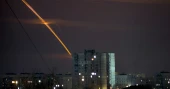
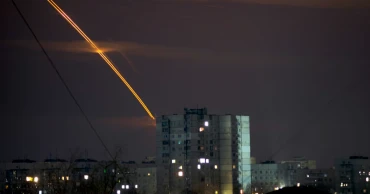
Russian long-range strikes killed at least 10 civilians and wounded 20 others in several areas of Ukraine on Friday, Ukraine’s presidential office said, as a senior Moscow official warned that the Kremlin's forces were prepared for an expected Ukrainian counteroffensive in the coming weeks.
Five people died in Kostiantynivka, a town in eastern Ukraine's Donetsk province, when a Russian missile hit an aid station. Ukrainian authorities last year established hundreds of so-called “points of invincibility,” where residents hard-pressed by the war could warm up, charge their cellphones and get snacks.
Local prosecutors said the Russians attacked Kostyantynivka with S-300 anti-aircraft missiles. The civilians who died were refugees, according to Donetsk Gov. Pavlo Kyrylenko.
Also Read: Ukraine using Soviet-era helicopters to pummel Russia from afar
As the mostly artillery war of the recent winter months stretched into its second spring, Russian forces also used air-launched missiles, exploding drones and gliding bombs in their attacks on several regions early Friday, Ukrainian air force spokesman Yurii Ihnat said.
Two civilians were killed and nine were wounded in the Sumy province town of Bilopillia by a nighttime rocket and artillery barrage and air strikes, the administration of the northeast region said.
In the southern Kherson region, which Ukrainian President Volodymyr Zelenskyy visited Thursday, Russian shelling killed one person in the main city, also called Kherson, and killed another person and wounded four others in the town of Bilozerka.
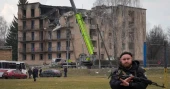
On Wednesday, a Russian drone attack struck a high school and dormitories south of Kyiv, killing at least nine people.
Kyiv’s forces are poised to use the improved spring weather and the arrival of modern weapons supplied by its Western allies, including tanks, to launch a counteroffensive aimed at dislodging Russian troops from occupied areas of Ukraine.
But Dmitry Medvedev, Russia’s former president and now the deputy head of Russia’s Security Council chaired by President Vladimir Putin, said the Russian military was ready to repel a counterattack.
“Our General Staff is assessing all that,” Medvedev said.
He also said that a Ukrainian attempt to seize Crimea, which Russia annexed in 2014, could trigger a nuclear response from Moscow.
“An attempt to split part of the state away means an encroachment at the very existence of the state,” he said. “Quite obviously, it warrants the use of any weapons. I hope our ‘friends’ across the ocean realize that.”
Though known for his bombastic pronouncements, Medvedev’s warning stems from the Russian security doctrine envisaging the use of nuclear weapons in response to a nuclear attack or an attack with conventional weapons that threatens “the very existence of the Russian state.”
Medvedev also said that Western experts operating weapons, such as the U.S.-made Patriot air defense missile systems supplied to Ukraine, would be legitimate targets for the Russian military. Ukrainian soldiers have received training in the U.S., although Russian officials have frequently claimed that foreign instructors are present in Ukraine.
“If Patriot or other weapons are delivered to the territory of Ukraine along with foreign experts, they certainly make legitimate targets, which must be destroyed,” Medvedev told reporters in video clips he posted on his messaging app channel. “They are combatants, they are the enemies of our state and they must be destroyed.”
“They must understand that as soon as an American or a Polish soldier shows up there, he must be killed,” he added.
The Kremlin’s goal is to “create a sanitary cordon” of up to 100 kilometers (60 miles) around Russian-held areas so short- and mid-range weapons can't strike them, according to Medvedev.
Moscow may even set its sights on grabbing a bigger chunk of Ukrainian territory, stretching all the way to the border with Poland, he said.
3 years ago
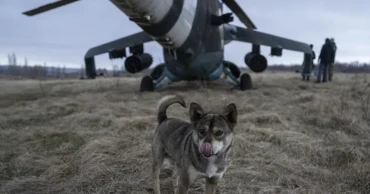
Ukraine using Soviet-era helicopters to pummel Russia from afar
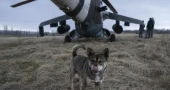
Skimming the treetops, three Soviet-era attack helicopters bank and swoop down on a field after an early-morning mission to the front lines in the fight against Russia’s invasion of Ukraine.
Each day, they might fly three or four sorties, says the commander, whose two-crew Mi-24 helicopter, built about 40 years ago, is older than he is.
“We are carrying out combat tasks to destroy enemy vehicles, enemy personnel, we are working with pitch-up attacks from a distance from where the enemy can’t get us with their air defense system,” said the commander, who spoke on condition of anonymity for operational security reasons, in line with military regulations.
The conflict in Ukraine is largely an artillery war, with territory being fought for inch by inch under a barrage of shells and missiles. But Ukraine’s aviation capabilities play a significant role in the fight, the pilot said.
“The importance of the helicopters is huge,” said the commander, who is part of Ukraine’s 12th Army Aviation Brigade.Footage from a camera attached to the helicopter during a recent combat mission shows it flying over fields pockmarked with craters from artillery bombing, and firing missiles at Russian trenches that cut through the landscape.
“We are shooting from the big distance and hit the target clearly, like there’s a cross on the target and (the missiles) go by themselves where they should go,” the commander said.
He would, however, like to fly a newer model.
“We need to master something new, something from abroad,” the commander said. “It has better characteristics. You can maneuver more on it, there are more rockets on it and the weapons are more powerful. We can do more tasks with better quality and with less risk for us.”
Several countries, including the United States and Britain, have pledged to send, or have already sent, helicopters to Ukraine as part of military aid since the start of the war sparked by Russia’s invasion in Feb 2022.
3 years ago

Serbia: 9 migrants found among aluminum rolls in truck
Serbia's customs authorities said Friday they discovered nine migrants hiding among aluminum rolls in a truck headed to Poland from Greece.
Customs officers on Serbia's border with North Macedonia spotted the migrants on Wednesday during a scan that showed human silhouettes in the back of the truck, a statement said.
The migrants were young men from Afghanistan, Pakistan and Syria, the statement added.
Serbia lies at the heart of the so-called Balkan land route that refugees and migrants use to try to reach Western Europe and start new lives there.
Migrants go from Turkey to Greece or Bulgaria, then to North Macedonia and Serbia. From Serbia they move on toward European Union member states Hungary, Croatia or Romania, or they go to Bosnia first and then on to Croatia.
Thousands of people fleeing violence or poverty pass through the Balkan region every year. They often face dangers in the hands of people-smugglers who help them cross borders undetected.
3 years ago

Violent French pension protests erupt as 1M demonstrate
More than 1 million people demonstrated across France on Thursday against unpopular pension reforms, and violence erupted in some places as unions called for new nationwide strikes and protests next week, coinciding with King Charles III's planned visit to France.
The Interior Ministry said the march in Paris — marred by violence, as were numerous marches elsewhere — drew 119,000 people, which was a record for the capital during the pension protests. Polls say most French oppose President Emmanuel Macron's bill to increase the retirement age from 62 to 64, which he says is necessary to keep the system afloat.
Building on the strong turnout, unions swiftly called for new protests and strikes on Tuesday when the British king is scheduled to visit Bordeaux on the second day of his trip to France. The heavy wooden door of the elegant Bordeaux City Hall was set afire and quickly destroyed Thursday evening by a members of an unauthorized demonstration, the Sud Ouest newspaper said.
Nationwide, more than a million people joined protest marches held in cities and towns around the country Thursday, the ministry said.
Interior Minister Gerald Darmanin, visiting police headquarters Thursday night as fires still burned in some Paris neighborhoods, gave assurance that security “poses no problem” and the British monarch will be “welcomed and welcomed well.”
He said there was “enormous degrading” of public buildings and commerce Thursday, “far more important than in precedent demonstrations.”
“There are troublemakers, often extreme left, who want to take down the state and kill police and ultimately take over the institutions,” the minister said.
The demonstrations were held a day after Macron further angered his critics by standing strong on the retirement bill that his government forced through parliament without a vote.
“While the (president) tries to turn the page, this social and union movement ... confirms the determination of the world of workers and youth to obtain the withdrawal of the reform,” the eight unions organizing protests said in a statement. It called for localized action this weekend and new nationwide strikes and protests Tuesday.
Strikes upended travel as protesters blockaded train stations, Charles de Gaulle Airport in Paris, refineries and ports.
In Paris, street battles between police and black-clad, masked groups who attacked at least two fast food restaurants, a supermarket and a bank reflected intensifying violence and drew attention away from the tens of thousands of peaceful marchers.
Police, pelted by Molotov cocktails, objects and fireworks, charged multiple times and used tear gas to disperse rioters. A haze of tear gas fumes covered part of the Place de l'Opera, where demonstrators converged at the march's end. Darmanin said radicals numbered some 1,500.
Read more: Nearly 1 million French march in 4th day of pension protests
Violence marred other marches, notably in the western cities of Nantes, Rennes and Lorient — where an administrative building was attacked and the courtyard of the police station was set afire and its windows broken — and in Lyon, in the southeast.
Thursday's nationwide protests were the ninth union-organized demonstrations since January, when opponents still hoped that parliament would reject Macron's measure to raise the retirement age. But the government forced it through using a special constitutional measure.
In an interview Wednesday, Macron refused to budge from his position that a new law is necessary to keep retirement coffers funded. Opponents proposed other solutions, including higher taxes on the wealthy or companies, which Macron says would hurt the economy. He insisted the government’s bill to raise the retirement age must be implemented by the end of the year.
The Constitutional Council must now approve the measure.
“We are trying to say before the law is enacted ... that we have to find a way out and we continue to say that the way out is the withdrawal of the law," the chief of the moderate CFDT trade union, Laurent Berger, told The Associated Press.
High-speed and regional trains, the Paris metro and public transportation systems in other major cities were disrupted. About 30% of flights at Paris Orly Airport were canceled.
The Eiffel Tower and the Versailles Palace, where the British monarch is to dine with Macron, were closed Thursday due to the strikes.
Violence, a recurring issue at protests, has intensified in recent days. Darmanin said that 12,000 security forces were in the French streets Thursday, with 5,000 in Paris,
The Education Ministry said in a statement that about 24% of teachers walked off the job in primary and middle schools on Thursday, and 15% in high schools.
At Paris' Gare de Lyon train station, several hundred strikers walked on railway tracks to prevent trains from moving, brandishing flares and chanting “and we will go, and we will go until withdrawal" and “Macron, go away.”
Read more: Anger spreads in France over Macron's retirement bill push
"This year perhaps maybe our holidays won’t be so great," said Maxime Monin, 46, who stressed that employees like himself, who work in public transport, are not paid on strike days. "But I think it’s worth the sacrifice.”
In the northern suburbs of Paris, several dozen union members blocked a bus depot in Pantin, preventing about 200 vehicles from getting out during rush hour.
Nadia Belhoum, a 48-year-old bus driver participating in the action, criticized Macron’s decision to force the higher retirement age through.
“The president of the Republic ... is not a king, and he should listen to his people," she said.
3 years ago

Prince William thanks Poland for generosity to Ukrainians
Britain's Prince William paid tribute on Thursday to Poles who lost their lives in past wars, and expressed gratitude to the nation for what it is doing today to provide humanitarian and military support to Ukraine.
The heir to the throne's visit to Poland underscores Britain’s support for both Ukraine and Poland, an ally on the front line of efforts to help refugees displaced by Russia’s war and to assist the Ukrainian military in fighting off the invasion.
William laid a wreath in Poland's national colors, white and red, at the Tomb of the Unknown Soldier, and bowed his head solemnly. The memorial honors Poles who lost their lives in wars including World War II, when Polish and British soldiers were allies.
A note on the wreath that he left read: “In memory of those who made the ultimate sacrifice."
He later headed to the presidential palace for a meeting with President Andrzej Duda, who has been a prominent ally of Ukrainian President Volodymyr Zelenskyy since Russia's full-scale invasion of Ukraine more than a year ago. Duda's office said their talks focused on humanitarian aid for Ukraine.
“The Prince of Wales thanked the Poles for their generosity and hospitality,” Duda's office said.
In the final stop on his two-day visit, the prince then went to a trendy food hall where he met with young Ukrainians working or continuing their studies in Poland.
William began his surprise visit Wednesday by meeting with British and Polish troops in Rzeszow, a city of 200,000 people in southeastern Poland that has become a hub for shipments of military and humanitarian aid bound for Ukraine.
“I just wanted to come here in person to say thank you for all that you’re doing, keeping everyone safe out here and keeping an eye on what’s going on,″ William said as he spoke to the troops.
He later traveled to a center in Warsaw that houses about 300 recent arrivals from Ukraine, meeting Ukrainians and playing table tennis with children.
Read more: UK PM Sunak makes surprise trip to Kyiv, boosts defence aid
The U.K. has been one of the most outspoken supporters of bolstering NATO’s eastern flank in the face of Russia’s aggression. The country sent troops to Poland and the Baltic states and provided more than 2.3 billion pounds ($2.8 billion) of military aid to Ukraine. It also has pledged 220 million pounds ($269 million) of humanitarian assistance.
Deploying the popular 40-year-old prince, a military veteran who also worked as a civilian air-sea rescue pilot, offers a more personal touch. While British political leaders have visited Poland regularly to trumpet their support for NATO and the Ukrainian cause, a senior royal like William is a symbol of the nation who can thank military personnel for their service without the baggage of party politics.
3 years ago

Asylum seeker accommodation in UK ‘racialised segregation and de facto detention’: Report
Asylum seekers in the United Kingdom who complain about poor conditions in Home Office assigned hotels were threatened with “being sent to Rwanda,” according to a new report by charity group Refugee Action.
The report, titled “Hostile Accommodation: How the Asylum System Is Cruel By Design”, consists 100 in-depth interviews with asylum seekers conducted in hotels in London, Manchester, the West Midlands, and Bradford, reports The Guardian.
It contains interviews with single persons and families, extensive casework records relating to problems in hotels and other asylum accommodations, and freedom of information (FOI) requests to council environmental health departments.
In addition to being advised not to complain about terrible living conditions or expect deportation to Rwanda, asylum seekers were also told that if they complained about the quality of food supplied to them, police would be contacted.
Read More: EU+ saw 1 million asylum applications, including record 34,000 from Bangladeshis, in 2022
They were also barred from taking photos of the food, it said.
The system of housing asylum seekers, which presently accommodates over 50,000 people, is “a nationwide system of racialised segregation and de facto detention,” said the report.
Asylum seekers are increasingly being kept in hotels for extended periods. One in every three people and one out of every four families with children stays in a hotel for more than a year.
In one example, a family of six lived in a single room for over a year. The report cautioned that if the new immigration bill, now being debated in parliament, is passed, the situation would deteriorate.
Read More: Online system to seek asylum in US is quickly overwhelmed
Individual cases highlighted in the report include a wheelchair user trapped on the 11th floor of a hotel because of a malfunctioning lift and an accommodation contractor who advised a GP not to write a health support letter for an asylum seeker advocating for a transfer because it would put a strain on the contractor’s accommodation system.
Infestations of pests and rodents were prevalent, as were moisture, mildew, and floods. Ceilings have also collapsed resulting in one woman holding a baby and a child being rushed to the hospital in two different occurrences.
“The government is running a system of de facto detention – holding and segregating people seeking asylum in accommodation that is harming their mental and physical health. This demoralising and brutal system costs the taxpayer millions per day but creates huge profits for contractors who are too often failing to make their housing habitable,” said Tim Naor Hilton, chief executive of Refugee Action.
Read More: UNHCR issues non-return advisory for Afghanistan
“We do not recognise the claims in the report suggesting hospitalisations, threats of deportation or restriction of movements, but where concerns are raised about any aspect of the service delivered by the hotel we work with the provider to ensure they are addressed in a timely manner,” a UK Home Office spokesperson said.
3 years ago
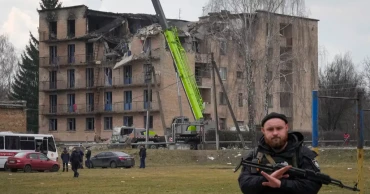
World Bank puts cost of rebuilding Ukraine at $411 billion
A World Bank report released Wednesday puts the cost of Ukraine's recovery and rebuilding from Russia's invasion at $411 billion over the next decade, with the cost of cleaning up the war rubble alone at $5 billion.
The report details some of the toll of Russia's war in Ukraine: at least 9,655 civilians confirmed dead, including 461 children; nearly 2 million homes damaged; more than one out of five public health institutions damaged; and 650 ambulances damaged or looted.
In all, the World Bank calculated $135 billion in direct damage to buildings and infrastructure so far, not counting broader economic damage.
The damage would be even worse if not for the strong defense mounted by the Ukrainian forces, Anna Bjerde, the World Bank vice president for Europe and Central Asia, noted in a call with reporters. She said the worst damage has been confined to the front-line regions of Donetsk, Kharkiv, Luhansk and Kherson.
As it is, the World Bank said, Russia's invasion has undone 15 years of economic progress in Ukraine, cutting Ukraine's gross domestic product by 29% and pushing 1.7 million Ukrainians into poverty.
The assessment was carried out by the government of Ukraine, the World Bank Group, the European Commission and the United Nations. The findings are meant to guide planning for financing and carrying out what is an ongoing recovery effort in Ukraine.
The report said it was essential to keep Ukraine's government and private business and recovery efforts going even as bombs fall and fighting persists. Postponing rebuilding and support "risks settling into a situation of low or no growth and facing huge social challenges once the war ends," it said.
Ukraine's energy sector has seen the greatest surge in damage recently, as a result of Russia's targeted strikes on the electrical grid and other energy hubs during the winter. Total damage to the energy sector is now five times greater than it was last summer, the World Bank said.
Longer term, the officials estimated a cost in the trillions of dollars to Ukraine's economy just from the many ways the war has interrupted education. That includes the more than 2 million children estimated to have fled the country.
3 years ago

China and Russia: explaining a long, complicated friendship
Chinese leader Xi Jinping just concluded a three-day visit with Russian President Vladimir Putin, a warm affair in which the two men praised each other and spoke of a profound friendship. It's a high point in a complicated, centuries-long relationship during which the two countries have been both allies and enemies.
Chinese and Russian states have loomed large in each other's foreign affairs since the 17th century, when two empires created a border with a treaty written in Latin.
Neighbors can be good friends, or bitter rivals. Sharing a border of thousands of miles, Beijing and Moscow have been both.
"China and Russia relations have always been uneasy," said Susan Thornton, a former diplomat and a senior fellow at the Paul Tsai China Center at Yale Law School.
"THE SOVIET UNION'S TODAY IS OUR TOMORROW"
The People's Republic of China was founded in 1949, following a brutal Japanese occupation during World War II and a bloody civil war between the Nationalist and Communist Parties.
Russia was part of the Soviet Union, a global superpower, while China was poor, devastated by war and unrecognized by most governments. Communist leader Mao Zedong was junior to Josef Stalin, who led the Soviet Union until his death in 1953.
The early People's Republic depended on the Soviet Union for economic aid and expertise. In 1953, the slogan that appeared in Chinese newspapers was "The Soviet Union's today is our tomorrow." The Soviets sent some 11,000 experts in 1954-58 to help China rebuild after its civil war, according to Joseph Torigian, an associate professor at American University's School of International Service.
The two countries also had a formal military alliance, but Moscow decided against giving China the technology for nuclear arms.
SINO-SOVIET SPLIT
But there were points of friction, especially after the death of Stalin.
In 1956, then-Soviet Premier Nikita Khrushchev condemned Stalin's "cult of personality" in an address to Communist Party members later known as the "secret speech." Mao, who had modeled himself on the former Soviet leader, took it personally.
When Mao decided to shell two outlying islands of Taiwan held by the Nationalist Party he had defeated in the Chinese civil war, he did not warn Khrushchev. Khrushchev saw it as a betrayal of the alliance, Torigian said. In 1959, the Soviet Union remained neutral during a border conflict between China and India, which led China to feel that it was not getting enough support from its ally.
The relationship soured until the two countries broke off their alliance in 1961 in the Sino-Soviet Split.
They quickly became open rivals. Beijing blasted Moscow for "phony communism" and revisionism, or straying from the Marxist path. Soldiers clashed along their borders in China's northeast and the western region of Xinjiang.
US-CHINA-RUSSIA TRIANGLE
The Sino-Soviet Split left Beijing isolated, but set the stage for outreach to the United States. In 1972, the revolutionary communist state welcomed President Richard Nixon for a visit that paved the way for global recognition of Mao's government and for the U.S. and China to enter into a tacit alignment against Moscow.
The 1990s led to a rapprochement between China and Russia after the collapse of the Soviet Union. The two countries formally settled their border disputes.
In the years since, the world has changed greatly, as have the fortunes of the two countries. China is now the world's second-largest economy, while Russia's economy was stagnating long before its invasion of Ukraine last year. Today, it is China facing the U.S. in a strategic competition fueled by intense nationalism on both sides.
Once again, Moscow and Beijing are finding common ground. Under Xi Jinping, "repairing the damage and cultivating the relationship has gone much faster than it has ever before," Thornton, the former diplomat, said.
LEADERS SEE EYE TO EYE
Meanwhile, the similarities between the two leaders, as well as their personal relationship, has helped ties grow.
Both Xi and Vladimir Putin see Western attempts to spread democracy as an attempt to de-legitimize themselves, and they believe that authoritarian regimes are better for confronting the challenges of the modern world. Russia supplies energy and China exports manufactured goods to Russia.
And while some analysts and commentators have started saying that China is now the senior partner in the relationship, given the history, it's not necessarily how that's viewed in China.
Russia's hold over China is not only historical, but also cultural. Students read translated Russian stories and poems in their literature classes, while many educated Chinese of an older generation learned Russian instead of English.
"Many Chinese people, including elites, have not yet realized the historic reversal of China's comprehensive national strength compared to Russia," wrote Feng Yujun, a prominent Russia scholar at Shanghai's Fudan University, in an article published last month that was shared widely. Feng declined to be interviewed.
"Although China's national strength is now ten times that of Russia, the biggest challenge is that many Chinese people are still subservient to Russia ideologically," he wrote.
3 years ago