Europe
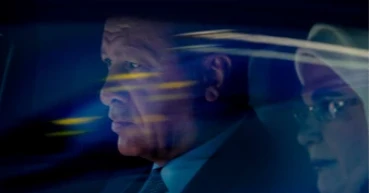
Erdogan hints Turkey may ratify Finland's NATO membership
Turkish President Recep Tayyip Erdogan suggested Wednesday that his country could soon ratify Finland’s application to join NATO, allowing for the possibility of the country joining the military alliance separately from Sweden.
Alarmed by Russia’s invasion of Ukraine a year ago, Finland and Sweden abandoned decades of nonalignment and applied to join the alliance. All 30 NATO members have approved their applications, and 28 have ratified their accession. Only Turkey and Hungary have failed to do so.
Turkey’s government accuses Sweden of being too soft on groups that it deems to be terror organizations and existential threats, including Kurdish groups. Ankara has said, however, that it has fewer problems with Finland's membership.
Asked by reporters whether Turkey could ratify Finland’s membership following a visit by Finnish President Sauli Niinisto later in the week, Erdogan responded: “God willing, if it is for the best.”
“Whatever the process is, the process will function. We will do our part. We will keep our promise. We will meet with the president on Friday and fulfill the promise we made,” he said.
Turkish officials have been angered by a series of separate demonstrations in Sweden, including a protest by an anti-Islam activist who burned the Quran outside the Turkish Embassy.
Niinisto is scheduled to arrive in Turkey along with Foreign Minister Pekka Haavisto on Thursday, when the two officials will tour areas affected by a devastating earthquake that hit parts of Turkey and Syria last month.
Niinisto and Erdogan are scheduled to meet in Istanbul on Friday.
3 years ago

Turkey floods kill 10 in earthquake-affected provinces
Floods caused by torrential rains hit two provinces that were devastated by last month’s earthquake, killing at least 10 people and increasing the misery for thousands who were left homeless, officials and media reports said Wednesday. At least five other people were reported missing.
One person was killed in the town of Tut in southeastern Adiyaman province, where surging waters swept away a container home sheltering a family of earthquake survivors, Gov. Numan Hatipoglu said.
The governor of neighboring Sanliurfa province, Salih Ayhan told HaberTurk television that four people were killed by the floods in his region. Later, rescuers found the bodies of five Syrian nationals inside a flooded basement apartment in Sanliurfa, the private DHA news agency reported.
Television footage from Sanliurfa showed flood waters surging along a street and sweeping away cars as well as a man being rescued from an underpass.
Several people were evacuated from a drenched campsite in where earthquake survivors were sheltering in tents. Patients were also evacuated from a hospital, HaberTurk reported.
Turkey's disaster management agency said more than a dozen professional divers were involved in the rescue efforts in each of the two provinces.
A magnitude 7.8 earthquake struck parts of Turkey and Syria on Feb. 6, killing more than 52,000 people — the vast majority in Turkey. More than 200,000 buildings in Turkey either collapsed or were severely damaged.
3 years ago

German arms industry seeks clarity on Ukraine weapons orders
Germany’s defense industry says it stands ready to ramp up its output, including the kinds of arms and ammunition needed by Ukraine, but needs clarity about what governments want before investing in further production capacity.
Ukraine became the world’s third largest importer of arms in 2022 after Russia’s invasion triggered a big flow of military aid to Kyiv from the United States and Europe, according to Swedish think tank SIPRI.
Some of those arms were transferred from Western military stocks to Ukraine, while in other cases Kyiv has purchased equipment with its own money or funds provided by allies. But there are concerns particularly over the rate at which Ukraine is using ammunition, straining the capacity of Western defense companies to keep both the Ukrainian military and their own resupplied.
“What’s important for us as an industry is to get predictability," the head of Germany’s arms manufacturing association said in an interview this week with The Associated Press.
Also Read: Germany warns of ‘consequences’ if China sends arms to Russia
“That means we have to be clearly told which products are needed within which time,” said Hans Christoph Atzpodien, managing director of the Federation of German Security and Defense Industries.
“And we are prepared,” he added. “The industry is much more flexible than it is given credit for.”
The association's members, which include major arms manufacturers such as Rheinmetall, can further boost production, such as by reactivating mothballed facilities and machines, and hiring more staff, he said.
“Of course we also need a firm basis in the form of orders, so that the investments can be carried out,” said Atzpodien, adding that proposals to bundle purchases at the European rather than the national level could help — provided this doesn't slow down the procurement process.
Likewise, German arms manufacturers are keen to see European countries harmonize their export rules to avoid being disadvantaged compared with competitors in some neighboring countries, he said.
After initially hesitating to send lethal weapons to Ukraine, Germany has become one of Kyiv's biggest arms suppliers. The shift has already seen Berlin provide Ukraine with dozens of self-propelled Gepard anti-aircraft guns, Iris-T missile systems, howitzers and millions of rounds of ammunition, but left some Germans deeply uneasy about the possibility of being dragged into a conflict with nuclear-armed Russia.
Still, Atzpodien said the final decision on where German-made arms can go should remain a matter for the government.
“As companies we agree that German weapons must never fall into the wrong hands," he said.
The German government declined to comment Monday on reports that Rheinmetall is in talks with Ukraine about building a tank factory in the country. The company's Leopard 2 tanks are urgently sought by Ukraine, which was recently promised several dozen from Western stocks, but officials wouldn't say whether this requires government approval.
Germany's own arms procurement has come under scrutiny after Chancellor Olaf Scholz pledged last year to increase defense spending to NATO’s target of 2% of GDP and create a 100-billion-euro ($107 billion) special fund.
On Tuesday, parliament’s commissioner for the military lamented the slow pace of Germany’s drive to modernize its armed forces. She noted that none of the 100 billion-euro special fund was actually spent last year, though some major orders were placed.
“It is also important to quickly replace equipment that was given to Ukraine” and to speed up maintenance of existing equipment, Eva Hoegl said as she presented her annual report.
“The Bundeswehr has too little of everything, and even less since Feb. 24 (2022),” she said. “We have too few tanks to be able to train sufficiently, to exercise … boats and ships are lacking, aircraft are lacking.”
Along with the cash coming its way because of the war in Ukraine — Germany's defense minister is also seeking to raise his budget by 10 billion euros a year — the German arms industry is hoping the conflict will mark a turning point in the way military spending is classified in Europe.
Some banks and investors in the European Union won't do business with the defense sector because of concerns that it is engaged in unsustainable activity that does more harm than good in the long run, much like fossil fuel producers.
Russia's attack on Ukraine had shown the value of military security, said Atzpodien.
“Our demand is that products we deliver to the German military or other NATO armed forces, for example, are recognized in such a way by the EU that they support sustainability,” he said. “A signal like that would be important so that actors on the financial markets can adjust to it accordingly.”
German arms manufacturers have already come up with a slogan to push their case, he added: “Security is the key to sustainability.”
3 years ago

UK leader in doghouse after letting pet roam free in park
U.K. Prime Minister Rishi Sunak and his family were spoken to by a police officer after letting their dog off the leash in London’s Hyde Park, police said Tuesday.
It comes after a video was shared on TikTok appearing to show the prime minister and his family allowing their Labrador, Nova, to roam freely in an area where rules say dogs must be kept on a leash.
It was unclear when the video was filmed.
“We are aware of a video showing a dog being walked off the lead in Hyde Park,” the Metropolitan Police force said in a statement. “An officer, who was present at the time, spoke to a woman and reminded her of the rules. The dog was put back on the lead.”
Police said they would take no further action.
Sunak has had two minor brushes with the law during his political career. In January, he was fined by police for taking off his seat belt to film a social media video in a moving car.
Last year, when he was Treasury chief, he was fined 50 pounds for breaching pandemic lockdown rules by briefly attending a party inside government offices. He was one of dozens of officials fined over the “partygate” scandal, including then Prime Minister Boris Johnson.
3 years ago
US: Russian fighter jet hits American drone over Black Sea
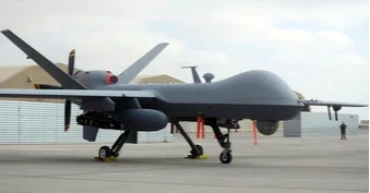
A Russian fighter jet on Tuesday struck the propeller of a U.S. surveillance drone over the Black Sea, causing American forces to bring down the unmanned aerial vehicle in international waters, the U.S. military said, an incident that highlighted soaring U.S.-Russian tensions over Moscow's war in Ukraine.
White House National Security spokesman John Kirby said U.S. President Joe Biden was briefed on the incident by national security adviser Jake Sullivan.
The U.S. European Command said in a statement that two Russian Su-27 fighter jets “conducted an unsafe and unprofessional intercept” of a U.S. MQ-9 drone that was operating within international airspace over the Black Sea.
It said one of the Russian fighters “struck the propeller of the MQ-9, causing U.S. forces to have to bring the MQ-9 down in international waters.” Prior to that, the Su-27s dumped fuel on and flew in front of the MQ-9 several times before the collision in “a reckless, environmentally unsound and unprofessional manner,” the U.S. European Command said in a statement from Stuttgart, Germany
“This incident demonstrates a lack of competence in addition to being unsafe and unprofessional,” it added.
There was no immediate reaction from Moscow, which has repeatedly voiced concern about U.S. intelligence flights close to the Crimean Peninsula, which Russia illegally annexed from Ukraine in 2014.
Amid the continuing fighting in Ukraine, A Russian missile struck an apartment building in the center of Kramatorsk on Tuesday, killing at least one person and wounding nine others in one of Ukraine’s major city strongholds in its eastern Donetsk region.
Ukrainian President Volodymyr Zelenskyy posted a video showing gaping holes in the façade of the low-rise building that bore the brunt of the strike.
The Ukrainian general prosecutor’s office and regional Gov. Pavlo Kyrylenko also reported on the attack, posting photos of the building with mounds of rubble in front of it. The impact damaged nine apartment blocks, a kindergarten, a local bank branch and two cars, Kyrylenko said.
The war, which erupted after Russia’s launched its full-scale invasion in February 2022, has brought heavy civilian casualties. Tuesday’s victims were among at least seven civilians killed and 30 wounded in 24 hours, Ukraine authorities said.
They included a 55-year-old woman killed when a Russian shell hit her car Tuesday in a border town in northeastern Ukraine.
“Russian troops are striking residential buildings, schools and hospitals, leaving cities on fire and in ruins,” Kyrylenko, the regional governor, said on Ukrainian television. “The Russians mark each meter (yard) of their advance in the region not only with their own blood, but also with the (lost) lives of civilians.”
Kramatorsk houses the local Ukrainian army headquarters. Ukrainian authorities say it has been regularly targeted by Russian shelling and other attacks in the past.
A missile strike on the city’s train station last April, which Kyiv and much of the international community blamed on Moscow, killed dozens of people and wounded more than 100.
Russian President Vladimir Putin, speaking Tuesday during a meeting with workers at a helicopter factory in southern Siberia, once again cast the conflict in Ukraine as an existential one for Russia, charging that unlike the West — which, he said, is seeking to advance its geopolitical clout — it’s fighting for its existence as a state.
“For us, it’s not a geopolitical task," Putin said, "it’s the task of survival of Russian statehood and the creation of conditions for the future development of our country.”
Ukrainian forces have also dug in, especially in the devastated eastern city of Bakhmut where Kyiv's troops have been fending off Russian attacks for seven months and which has become a symbol of Ukraine's resistance, as well as a focal point of the war.
Zelenskyy discussed the situation in Bakhmut with the top military brass and they were unanimous in their determination to face down the Russian onslaught, according to the presidential office.
“The defensive operation in (Bakhmut) is of paramount strategic importance to deterring the enemy. It is key for the stability of the defense of the entire frontline,” Valerii Zaluzhnyi, the commander-in-chief of the Armed Forces of Ukraine, said.
Putin emphasized that his country’s industries have survived the blow of Western sanctions. But he acknowledged those sanctions could bring longer-term problems for the Russian economy.
Russia had welcomed a Chinese peace proposal to end the fighting, but Kremlin spokesman Dmitry Peskov said Tuesday that Kyiv's refusal to have talks leaves Moscow with only military options.
Beijing has said it has a “no limits friendship” with Russia and has refused to criticize Moscow’s invasion, or even refer to it as an invasion.
“We must achieve our goals,” Peskov told reporters. “Given the current stance of the Kyiv regime, now it’s only possible by military means.”
However, Moscow’s pursuit of its goals in Ukraine has been slowed by poor war management and short resources after being beaten back at the end of last year in a Ukrainian counteroffensive, military analysts say.
The U.K. Ministry of Defense said Tuesday that Russia’s artillery ammunition shortages “have likely worsened to the extent that extremely punitive shell-rationing is in force on many parts of the front.”
That shortcoming, it said, has “almost certainly been a key reason why no Russian formation has recently been able to generate operationally significant offensive action.”
In other developments:
— The Russian parliament’s lower house on Tuesday gave final endorsement to a bill that extends punishment for showing disrespect toward participants in the “special military operation,” which is how the Kremlin officially describes its war in Ukraine. The change makes it punishable to spread allegedly fake information not only about the military, but also members of volunteer units, in an apparent reference to the Wagner Group military contractor. Those convicted of spreading such information face a prison term of up to 15 years. The bill is set to be approved by the upper house before President Vladimir Putin signs it into law.
— Iceland’s prime minister, Katrin Jakobsdottir, made an unannounced visit to Kyiv on Tuesday. She laid flowers at a ceremony for Ukrainian volunteers who have been killed in fighting since 2014, when Russia annexed Ukraine’s Crimean Peninsula and Russia-backed separatists started an insurgency in the eastern Donbas region. Jakobsdottir was expected to meet with President Zelenskyy during her visit.
3 years ago

Ukraine: Objects of war become new normal in Kyiv scenery
There are sandbags around the statues and anti-tank obstacles by the side of the streets, trenches in the nearby forests and land mine warnings in the woods. Signs painted on walls point to the nearest shelter, while air raid sirens occasionally wail across the city, which still sometimes comes under missile attack.
But against this backdrop of war, residents of the Ukrainian capital, Kyiv, are living their lives as normally as they can while Russia’s invasion of their country continues into its second year.
Although many fled in the opening stages of the war, residents have gradually returned to their homes as Russian forces were pushed back from north of the city last year, and the conflict became centered mainly in the eastern and southern parts of Ukraine.
Also Read: 5 dead in Ukraine after Russian missile barrage
Shops, restaurants and bars are open — even if customers have to wrap up their evenings early and rush home in time for the 11 p.m. curfew. Nobody pays attention to the angular steel anti-tank hedgehogs by the side of the road, or the occasional pile of sandbags.
3 years ago

Russian advance stalls in Ukraine’s Bakhmut, think tank says
Russia’s advance seems to have stalled in Moscow's campaign to capture the eastern Ukrainian city of Bakhmut, a leading think tank said in an assessment of the longest ground battle of the war.
The Washington-based Institute for the Study of War said there were no confirmed advances by Russian forces in Bakhmut. Russian forces and units from the Kremlin-controlled paramilitary Wagner Group continued to launch ground attacks in the city, but there was no evidence that they were able to make any progress, ISW said late Saturday.
The report cited the spokesperson of the Ukrainian Armed Forces’ Eastern Group, Serhii Cherevaty, who said that fighting in the Bakhmut area had been more intense this week than the previous one. According to Cherevaty, there were 23 clashes in the city over the previous 24 hours.
The ISW’s report comes following claims of Russian progress earlier this week. The U.K. Defense Ministry said Saturday that paramilitary units from the Kremlin-controlled Wagner Group had seized most of eastern Bakhmut, with a river flowing through the city now marking the front line of the fighting. The assessment highlighted that Russia’s assault will be difficult to sustain without more significant personnel losses.
Also Read: Ukraine rebounds from Russian barrage, restores power supply
The mining city of Bakhmut is located in Ukraine’s eastern Donetsk province, one of four regions of Ukraine that Russian President Vladimir Putin illegally annexed last year. Russia’s military opened the campaign to take control of Bakhmut in August, and both sides have experienced staggering casualties. Ukrainian President Volodymyr Zelenskyy has vowed not to retreat.
In its latest report Sunday, the U.K. Defense Ministry said Sunday that the impact of the heavy casualties Russia is continuing to suffer in Ukraine varies dramatically across the country. The ministry's intelligence update said that the major cities of Moscow and St. Petersburg remain “relatively unscathed,” particularly among members of Russia's elite. In contrast, in many of Russia’s eastern regions, the death rate as a percentage of the population is “30-40 times higher than in Moscow.”
The report highlighted that ethnic minorities often take the biggest hit. In the southern Astrakhan region, for example, about “75% of casualties come from the minority Kazakh and Tartar populations.”
Russia’s mounting casualties are reflected in a loss of government control over the country’s information sphere, ISW said. The think tank said that Russian Foreign Ministry spokesperson Maria Zakharova confirmed “infighting in the Kremlin inner circle” and that the Kremlin has effectively ceded control over the country’s information space, with Putin unable to readily regain control.
The ISW sees Zakharova’s comments, made at a forum on the “practical and technological aspects of information and cognitive warfare in modern realities” in Moscow, as “noteworthy” and in line with the think tank’s long standing assessments about the “deteriorating Kremlin regime and information space control dynamics.”
Elsewhere in Ukraine, Russian attacks over the previous day killed at least five people and wounded another seven across Ukraine’s Donetsk and Kherson regions, local Ukrainian authorities reported on Sunday morning.
Donetsk Gov. Pavlo Kyrylenko said that two people were killed in the region, one in the city of Kostyantynivka and one in the village of Tonenke. Four further civilians were wounded.
Local officials in the southern Kherson province confirmed that Russian forces fired 29 times on Ukrainian-controlled territory in the region on Saturday, with residential areas of the regional capital, Kherson, coming under fire three times. Three people died in the province and a further three were wounded.
In Ukraine’s northeastern Kharkiv province, the Kharkiv, Chuhuiv and Kupiansk districts came under fire, but no civilian casualties were reported.
The head of Ukraine’s southern Mykolaiv province Gov. Vitali Kim said Sunday morning that the town of Ochakiv, set at the mouth of the Dnieper River, came under artillery fire in the early hours of Sunday. Cars were set ablaze, while private houses and high-rise buildings sustained damage. No casualties were reported.
3 years ago

BBC crisis escalates as players, stars rally behind Lineker
The BBC was forced to scrap much of its weekend sports programming as the network scrambled to stem an escalating crisis over its suspension of soccer host Gary Lineker for comments criticizing the British government's new asylum policy.
Presenters, analysts and English Premier League players rallied in support of Lineker by boycotting the airwaves on Saturday, as Britain's national broadcaster was accused of political bias and suppressing free speech, and received praise from Conservative politicians.
The broadcaster said it would air only "limited sport programming" this weekend after hosts of many of its popular sports shows declined to appear in solidarity with Lineker. The former England captain was suspended from "Match of the Day," a popular soccer highlights show, after he criticized the government's plan to detain and deport migrants arriving by boat in a Twitter post that compared lawmakers' language about migrants to that used in Nazi Germany.
Instead of blanket coverage on Saturday of the most popular league in the world, the BBC had no preview shows on radio or TV and no early evening summary of the final scores of Premier League games. Lunchtime TV program "Football Focus" was replaced with a rerun episode of antiques show "Bargain Hunt," while early evening "Final Score" was swapped for "The Repair Shop."
"Match of the Day" — the late-night program that has been a British institution for 60 years — was reduced from the usual hour and a half of highlights and analysis to a 20-minute compilation of clips from the day's games, without commentary or punditry — just cheers and jeers from the stadium crowds for a soundtrack.
There will not be any post-match player interviews, either. The Professional Footballers' Association said some players wanted to boycott the show, and as a result "players involved in today's games will not be asked to participate in interviews with 'Match of The Day.'"
The union said it was a "common sense solution" to avoid players facing sanctions for breaching their broadcast commitments.
The BBC said it was "sorry for these changes which we recognize will be disappointing for BBC sport fans. We are working hard to resolve the situation and hope to do so soon."
British Prime Minister Rishi Sunak even weighed in, urging Lineker and the BBC to settle their disagreement.
"Gary Lineker was a great footballer and is a talented presenter. I hope that the current situation between Gary Lineker and the BBC can be resolved in a timely manner, but it is rightly a matter for them, not the government," he said.
Lineker, 62, was a household name in Britain even before he became chief "Match of the Day" presenter in 1999.
One of English soccer's most lauded players, he was the leading scorer at the 1986 World Cup and finished his international career with 48 goals in 80 matches for England.
After retiring from a career that included stints with Barcelona, Tottenham, Everton and Leicester, Lineker has become one of the U.K.'s most influential media figures and the BBC's best-paid star, earning 1.35 million pounds ($1.6 million) last year.
An enthusiastic social media user with 8.7 million Twitter followers, Lineker has long irked right-of-center politicians and activists with his liberal views, including criticism of Britain's decision to leave the European Union.
The latest controversy began with a tweet on Tuesday from Lineker's account describing the government's plan to detain and deport migrants arriving by boat as "an immeasurably cruel policy directed at the most vulnerable people in language that is not dissimilar to that used by Germany in the 30s."
The Conservative government called Lineker's Nazi comparison offensive and unacceptable, and some lawmakers said he should be fired.
In his statement, Sunak doubled down on the government's plan to deter people from making dangerous journeys across the English Channel in small boats, saying it was the only way to "break this cycle of misery once and for all."
On Friday, the BBC said Lineker would "step back" from "Match of the Day" until it had "an agreed and clear position on his use of social media." Lineker has yet to comment publicly, and on Saturday went to his hometown of Leicester to watch Leicester City play Chelsea in the Premier League. He was greeted with cheers from bystanders as he arrived for a match Chelsea won 3-1.
The 100-year-old BBC, which is funded by a license fee paid by all households with a television, has a duty to be impartial in its news coverage, and BBC news staff are barred from expressing political opinions.
Lineker, as a freelancer who doesn't work in news or current affairs, isn't bound by the same rules, and has sometimes pushed the boundaries of what the BBC considers acceptable. Last year, the BBC found Lineker breached impartiality rules with a tweet about the Conservatives' alleged Russian donations.
BBC neutrality has come under recent scrutiny over revelations that its chairman, Richard Sharp — a Conservative Party donor — helped arrange a loan for then Prime Minister Boris Johnson in 2021, weeks before Sharp was appointed to the BBC post on the government's recommendation.
Former BBC Director General Greg Dyke said the network "undermined its own credibility" by appearing to bow to government pressure.
Keir Starmer, leader of the main opposition Labour Party, said the BBC was "caving in" to political pressure from Conservative lawmakers.
"They got this one badly wrong and now they're very, very exposed," he said.
3 years ago

BBC crisis escalates as players, stars rally behind Lineker
The BBC faced an escalating crisis Saturday over its suspension of former soccer star and program host Gary Lineker for comments criticizing the British government's new asylum policy.
As a growing number of players and presenters rallied to Lineker’s support, Britain’s national broadcaster faced allegations of political bias and suppressing free speech, as well as praise from some Conservative politicians.
Presenters of the BBC's lunchtime “Football Focus” said they would not appear on the program in solidarity with Lineker, who was suspended from hosting highlights show “Match of the Day” over a Twitter post that compared lawmakers’ language about migrants to that used in Nazi Germany.
The BBC pulled “Football Focus” from its schedule on Saturday, replacing it with an episode of antiques show “Bargain Hunt.”
Also Read: Lineker off flagship BBC soccer show after Twitter posts
After a slew of Lineker’s colleagues announced they wouldn’t appear on the show without him, the BBC said “Match of the Day” would be aired Saturday without presenters or pundits.
Also Read: Indian officials probe BBC for 3rd day, alleging tax dodge
There will not be any post-match player interviews, either. The Professional Footballers’ Association said some players wanted to boycott the show as a gesture of support, and as a result “players involved in today’s games will not be asked to participate in interviews with ‘Match of The Day.’”
The union said it was a “common sense solution” to avoid players facing sanctions for breaching their broadcast commitments.
Play-by-play commentators scheduled to work games on Saturday also said they would not do so.
“Match of the Day,” which is broadcast on Saturday nights and shows highlights of Premier League games played that day, has been a national institution since the 1960s. Lineker, its chief presenter since 1999, is the network’s highest-paid star, as well as one of English soccer's most lauded players.
Lineker, whose club career included spells with Barcelona, Tottenham, Everton and Leicester, was the leading scorer at the 1986 World Cup and finished his international career with 48 goals in 80 matches for England.
The controversy began with a tweet on Tuesday from Lineker’s account — which has 8.7 million followers — describing the government’s plan to detain and deport migrants arriving by boat as “an immeasurably cruel policy directed at the most vulnerable people in language that is not dissimilar to that used by Germany in the 30s.”
The Conservative government called Lineker’s Nazi comparison offensive and unacceptable, and some lawmakers said he should be fired.
On Friday, the BBC said the 62-year-old Lineker would “step back” from “Match of the Day” until “we’ve got an agreed and clear position on his use of social media.” Lineker has yet to comment publicly.
The 100-year-old BBC, which is funded by a license fee paid by all households with a television, has a duty to be impartial in its news coverage, and BBC news staff are barred from expressing political opinions.
Lineker, as a freelancer who doesn’t work in news or current affairs, isn’t bound by the same rules, and has sometimes pushed the boundaries of what the BBC considers acceptable. Last year, the BBC found Lineker had breached impartiality rules with a tweet about the Conservatives’ alleged Russian donations.
BBC neutrality has come under recent scrutiny over revelations that its chairman, Richard Sharp — a Conservative Party donor — helped arrange a loan for then Prime Minister Boris Johnson in 2021, weeks before Sharp was appointed to the BBC post on the government’s recommendation.
Former BBC Director General Greg Dyke said the network had “undermined its own credibility” by appearing to bow to government pressure.
“The perception out there is going to be that Gary Lineker, a much-loved television presenter, was taken off air after government pressure on a particular issue,” Dyke told BBC radio.
3 years ago

Farmers, environmental activists hold demos in The Hague
Thousands of farmers and other anti-establishment demonstrators protested Saturday in a park in The Hague against Dutch government plans to reduce nitrate emissions, while elsewhere in the city climate activists angry at what they call state support for the fossil fuel industry broke through police lines to block a major road.
The simultaneous demonstrations — a few kilometers (miles) from one another — come days before Dutch voters go to the polls in provincial elections Wednesday that indirectly also elect the national parliament’s upper house and could have an effect on proposals for reducing nitrate pollution.
Police said they stopped an unknown number of tractors that were headed for the farmers' demonstration. The municipality banned all but two “symbolic” tractors from participating, citing safety concerns.
As thousands of people, many carrying the upside-down Dutch flags that have become synonymous with farmers' protests and balloons emblazoned with the logo of the far-right Forum for Democracy party, gathered peacefully in front of a stage for the demonstration, the two permitted tractors drove slowly across the park.
Earlier, Rotterdam broadcaster Rijnmond showed video of a convoy of tractors crossing the city’s Erasmus Bridge early Saturday, apparently on their way to The Hague. One of the tractors was emblazoned with a banner saying in Dutch “#proudofthefarmer.”
As the farmers were gathering in a park in the south of the city, Mayor Jan van Zanen gave police permission to use a water cannon on Extinction Rebellion protesters who blocked a major highway in the downtown area near where it runs past the temporary home of the Dutch parliament.
Police said demonstrators who refuse to leave the road would be detained. The highway was blocked in both directions, but police did not immediately use the water cannon.
The twin demonstrations prompted authorities to place army trucks near some crossroads ready to block the streets if tractors or other protest vehicles tried to drive into the city center.
Anger at moves to cut nitrate emissions have spread from the Netherlands to other European nations. Just over a week ago, farmers drove hundreds of tractors into the heart of the Belgian capital, Brussels, snarling traffic.
At protests in recent years, farmers have driven hundreds of tractors into the center of The Hague and also used them to blockade supermarket warehouses.
The government has said that nitrate emissions, which are produced by livestock, transport and industry, must be drastically reduced close to nature areas that are part of a network of protected habitats for endangered plants and wildlife stretching across the 27-nation European Union.
The coalition wants to cut emissions of pollutants, predominantly nitrates, by 50% nationwide by 2030. Ministers call the proposal an “unavoidable transition” that aims to improve air, land and water quality, and have warned that it will mean "that not all farmers can continue their business.”
3 years ago