Europe

Bulgaria detains 7 over deaths of 18 migrants found in truck
Authorities in Bulgaria have detained seven people in connection with an abandoned truck in which 18 people believed to be migrants were found dead, police said Saturday.
The bodies were discovered Friday in a secret compartment below a load of lumber in the truck, which was left on a highway not far from Bulgaria's capital, Sofia.
Borislav Sarafov, director of Bulgaria's National Investigation Service, confirmed that all the victims had died of suffocation. He called the case the country's deadliest involving smuggled migrants.
Police also found 34 survivors in the truck, most of them in very poor physical condition, Bulgarian Health Minister Assen Medzhidiev said.
All the passengers originally were from Afghanistan and had entered Bulgaria from Turkey while hoping to reach Western Europe, authorities said.
Sarafov said the people who died had perished 10 to 12 hours before the truck was found and that the smugglers had fled the scene after they noticed the deaths.
The seven suspects were detained at different locations across Bulgaria. Investigators were working to determine if the truck's driver was among them.
Also Read: Bodies of 18 migrants found in abandoned truck in Bulgaria
The investigation indicates the suspects belonged to a organized crime ring involved in smuggling migrants from the border with Turkey to the Bulgaria-Serbia border, Sarafov said. Passengers paid 5,000-7,000 euros each, he said.
Bulgaria, a Balkan country of 7 million and the poorest member of the European Union, is located on a major route for migrants from the Middle East and Afghanistan seeking to enter Europe from Turkey. Very few plan to stay, with most using Bulgaria as a transit corridor on their way westward.
Bulgaria has erected a barbed-wire fence along its 259-kilometer (161-mile) border with Turkey, but with the help of local traffickers many migrants still manage to enter.
3 years ago

UK’s Sunak set to say security guarantees need for Ukraine
British Prime Minister Rishi Sunak on Saturday will call on world leaders to “double down” on support for Ukraine, saying arms and security guarantees are needed to protect the country and the rest of Europe from Russian aggression now and in the future.
Sunak will deliver the message in a speech to the Munich Security Conference, an annual meeting of heads of state, defense ministers and other world leaders. This year’s meeting will focus on threats to the accepted rules of international relations a year after Russian troops invaded Ukraine.
Highlighting Britain’s recent commitment to provide battle tanks, advanced air defense systems and longer-range missiles to Ukraine, Sunak will urge other nations to follow suit before Russia launches an expected spring offensive.
“Now is the moment to double down on our military support,” Sunak said in excerpts released ahead of the speech. “When Putin started this war, he gambled that our resolve would falter. Even now he is betting we will lose our nerve.”
Sunak will also call on NATO to provide long-term security guarantees for Ukraine. Such commitments are necessary to shield Ukraine from future Russian aggression and to protect the system of international rules that have helped keep the peace since the end of World War II, Sunak is expected to say.
“It’s about the security and sovereignty of every nation,” Sunak says in the excerpts. “Because Russia’s invasion, its abhorrent war crimes and irresponsible nuclear rhetoric are symptomatic of a broader threat to everything we believe in.”
3 years ago

Finland could join NATO ahead of Sweden: Defense minister
Finland’s defense minister said Saturday that his country will join NATO without waiting for Sweden if its Nordic neighbor’s accession is held up by the Turkish government.
Mikko Savola told The Associated Press on Saturday that Finland would prefer that that the two countries join the alliance together, but it wouldn’t hold up the process if Turkey decides to approve Finland, but not Sweden, as it has warned.
“No, no. Then we will join,” Savola said in an interview on the sidelines of a security conference in Munich.
Since they broke with decades of non-alignment in the wake of Russia’s invasion of Ukraine last year, Finland and Sweden have insisted they want to join NATO together. But Turkey’s reluctance to accept Sweden unless it steps up pressure on Kurdish exile groups has made it more likely the two will have to join the alliance at different speeds.
“Sweden is our closest partner,” Savola said. “Almost every week our defense forces are practicing together and so on. It’s a very deep cooperation and we also trust fully each other. But it’s in Türkiye’s hands now.”
Speaking later Saturday at a panel in Munich, Finnish Prime Minister Sanna Marin struck a similar note.
“Of course, we cannot influence how some country would ratify, but our message is that we are willing to join and would prefer to join together,” she said.
All NATO countries except Turkey and Hungary have already given both countries the green light to join the alliance. Hungary has said it will do so soon, but Turkey says Sweden hasn’t done enough to meet Turkish national security concerns, causing a rift in NATO at a time when the U.S. and other allies are seeking to project a united front against Russia.
In recent weeks, NATO officials have played down the significance of the two nations joining simultaneously.
“The main is issue is not whether Finland and Sweden are joining at the same time. The main issue is that Finland and Sweden join as soon as possible, and it is of course a Turkish decision whether to ratify both protocols or only one protocol,” NATO Secretary-General Jens Stoltenberg told reporters in Munich on Friday.
Savola said he hopes Finland, which shares a 1,340-kilometer (830-mile) border with Russia, will become a member of the alliance before a NATO summit in July. Until then, Savola said, Finland isn’t worried about the security situation, noting Finland has a conscription army with a wartime strength of 280,000 soldiers, 95% of them reservists, and plans to buy F-35 fighter jets from the U.S., while also investing in its naval and land forces.
“We are strong and our willingness to defend the country is also strong,” Savola said.
Finland has supported Ukraine with weapons from the start of the war. Savola said the military support amounts to 600 million euros so far. The country has said it will participate in a joint effort by European countries to deliver Leopard 2 tanks to Ukraine, but hasn’t specified whether it will hand over any of its own tanks.
“There are many ways to join. There are those tanks, of course, training, spare parts and logistics,” he said. “We are making those decisions quite soon in Finland.”
3 years ago
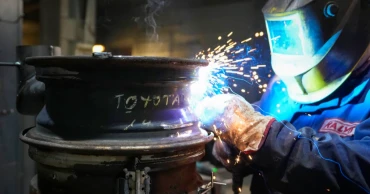
In Baltics, Poland, grassroots groups strive to help Ukraine
In a dusty workshop in northern Lithuania, a dozen men are transforming hundreds of wheel rims into potbelly stoves to warm Ukrainians huddled in trenches and bomb shelters. As the sparks subside, one welder marks the countertop: 36 made that day. Hours later, they've reached 60.
People from across Lithuania send old wheel rims to the volunteers gathering weekly in Siauliai, the Baltic country’s fourth-largest city. Two cars loaded with wood stoves wait outside the workshop ahead of the long night drive south.
Since Russia invaded Ukraine last February, Lithuania, Latvia and Estonia — three states on NATO’s eastern flank scarred by decades of Soviet-era occupation — have been among the top donors to Kyiv.
Linas Kojala, director of the Europe Studies Center in Lithuania's capital Vilnius, said Ukraine’s successful resistance “is a matter of existential importance” to the Baltic countries, which share its experience of Russian rule.
“Not only political elites, but entire societies are involved in supporting Ukraine,” Kojala told the AP.
In Siauliai, Edgaras Liakavicius said his team has sent about 600 stoves to Ukraine.
“Everybody here ... understands the situation of every man, every soldier, the conditions they live in now in Ukraine,” Liakavicius, who works for a local metal processing plant, told the AP.
Jaana Ratas, who heads an effort in Tallinn, Estonia to make camouflage nets for Ukrainian soldiers, echoed his words.
“My family and most Estonians, they still remember (the Soviet occupation),” she said.
Also Read: Ukrainian refugees safe, but not at peace, after year of war
Ratas chose a symbolic location for her project. Five days a week, Estonian and Ukrainian women gather at Tallinn’s Museum of Occupations and Freedom to weave the nets from donated fabrics.
Lyudmila Likhopud, a 76-year-old refugee from Ukraine’s Zaporizhzhia region, said the work has lifted her out of depression.
“I started feeling that I can be useful,” she told the AP.
In Latvia’s capital of Riga, Anzhela Kazakova — who ran a furniture store in the Black Sea port of Odesa — is one of 30 Ukrainian refugees working for Atlas Aerospace, a drone manufacturer that has supplied more than 300 kits to the Ukrainian army.
Ivan Tolchinsky, Atlas Aerospace’s founder and CEO, grew up in Ukraine's eastern Donetsk region, held by Kremlin-backed separatists since 2014. He had long petitioned both the EU and Ukraine to supply drones to Kyiv’s forces fighting the separatists. Final permission arrived a day before Moscow’s full-scale invasion, he said.
Atlas Aerospace has since increased production 20-fold, Tolchinsky said, and is planning to open a site in Ukraine despite withering Russian strikes on infrastructure.
Tolchinsky’s drones are just some of the weapons flowing to Kyiv from its Baltic allies. Together with their southern neighbor Poland — another NATO and European Union member with a history of Soviet oppression — the three small states rank among the biggest donors per gross domestic product helping Ukraine.
Lithuania, with a mere 2.8 million inhabitants, was the first country to send Stinger air defense missiles, according to Ukrainian Defense Minister Oleksiy Reznikov.
One of the latest Lithuanian initiatives is a crowdfunding drive to help Ukraine defend itself against Russian drones and missiles. Launched in late January, it initially aimed to raise 5 million euros by the Feb. 24 first anniversary of the invasion. That goal was reached within weeks, and organizers have since doubled it as donations keep flowing.
One fundraising group has grown into a major player that participates in international tenders purchasing military equipment for Kyiv.
“We have expanded 10 times in less than a year. (We used to supply) five drones in one batch, but now it’s 50 or more,” said Jonas Ohman, founder of the nongovernmental organization Blue/Yellow. The group recently won a bid for military optics, edging out rivals including the Indian military, and clinched a contract with an Israeli company for multi-purpose high sensitivity radars for Kyiv.
“It’s entirely another level now,” Ohman said.
In Poland, millions of zlotys have been raised to fund everything from advanced weapons to treating the wounded. Backed by over 220,000 contributors, journalist Slawomir Sierakowski was able to gather almost 25 million zlotys ($5.6 million) to buy an advanced Bayraktar drone for Ukraine.
Ohman, the head of the Lithuanian NGO, drew parallels between his compatriots’ readiness to help Kyiv and local partisan movements fighting Soviet rule after World War II.
“It is about personal responsibility in tough times," he said. “Just like in 1945 when (the) Soviets returned, the government was gone, but the struggle for freedom continued in the woods for years.”
___
Associated Press writer Joanna Kozlowska contributed to this report from London.
3 years ago

Ukraine invasion reshaped global alliances, renewed fears
Nearly a year after Russia invaded Ukraine, the battlefield has narrowed and stiff resistance has forced Moscow to scale back its military goals. But the diplomatic consequences of the war still reverberate worldwide.
The fighting has reshaped global alliances, renewed old anxieties and breathed new life into NATO and the bond between Europe and the United States.
The invasion drew Moscow closer to Beijing and the pariah states of Iran and North Korea. It also raised broad questions about sovereignty, security and the use of military power, while intensifying fears about China’s designs on Taiwan.
“The war underscores the interrelationship between diplomacy and the use of force in a way that has not been thought about in quite the same fashion for many, many years,” said Ian Lesser, vice president of the German Marshall Fund think tank.
When Russian forces invaded on Feb. 24, it “marked the complete end of the post-Cold War world,” Japanese Prime Minister Fumio Kishida said last month in a speech at Johns Hopkins University. “It has come to light that globalization and interdependence alone cannot serve as a guarantor for peace and development across the globe.”
Also Read: Key moments in a year of war after Russia invaded Ukraine
Russian President Vladimir Putin has claimed that Ukraine is an “integral part” of Russian history that never achieved “real statehood” — a stance that echoes Chinese President Xi Jinping’s position on Taiwan, a self-governed island that Beijing claims as its own.
Some six months after the invasion of Ukraine, China issued a white paper on Taiwan, saying the island “has been an integral part of China’s territory since ancient times.” The paper said Beijing seeks “peaceful reunification” but “will not renounce the use of force.”
China’s designs on Taiwan date to well before the war in Ukraine, but China stepped up its pressure over the past year or more, including firing ballistic missiles over the island and into Japanese waters in August in response to then-House Speaker Nancy Pelosi’s visit to Taipei.
If Russia is allowed to succeed in Ukraine, it could further embolden countries like China, with its visions of an international order “that diverge from ours and that we can never accept,” Kishida said.
He pledged to use Japan’s presidency of the G7 this year to strengthen “the unity of like-minded countries” against Russian aggression.
“If we let this unilateral change of the status quo by force go unchallenged, it will happen elsewhere in the world, including Asia,” he said.
A Chinese invasion of Taiwan would be far more complicated than Russia’s attack on Ukraine, said Euan Graham, a Singapore-based expert with the International Institute for Strategic Studies.
“Russia's incompetent performance on the battlefield in Ukraine has to give pause to any military or senior political leader in China about an adventure on a much more ambitious scale with Taiwan,” Graham said.
But the fear is real. Taiwan’s President Tsai Ing-wen extended the nation’s compulsory military service in a December announcement that referenced the war in Ukraine.
“They’ve drawn the lesson from Ukraine that you need to have a larger military reserve if there is a conflict,” Graham said.
North Korea, which has threatened to preemptively use nuclear weapons in a broad range of scenarios, was already a regional concern. But Russia’s suggestion that it could use nuclear weapons in Ukraine fueled new worries.
South Korea, which is under the protection of the American “nuclear umbrella,” last year expanded exercises with the U.S. military that had been downsized under the Trump administration. South Korea is also seeking stronger assurances that Washington will swiftly use its nuclear capabilities in the face of a North Korean nuclear attack.
North Korea has been strongly supportive of neighboring Russia. Late last year, the U.S. accused Pyongyang of supplying Russia with artillery shells.
Iran has also been helping Russia militarily, providing the bomb-carrying drones Moscow uses to strike power plants and civilian sites throughout Ukraine.
While Western allies have cooperated closely in their responses to the war, a major diplomatic challenge has been to convince much of the rest of the world of the invasion’s significance.
Only a handful of countries in Asia have taken tough action against Moscow, and many abstained from the United Nations resolution condemning the attack.
Just weeks before the invasion, China declared a “no limits” friendship with Russia. It has refused to criticize the war and has drawn closer to Russia, buying more of its oil and gas and helping Moscow to offset Western sanctions.
But there are signs of “complicated fault lines” in the China-Russia relationship, Jude Blanchette, an analyst with the Center for Strategic and International Studies, said in a call with reporters.
During September talks in Uzbekistan, the Chinese president raised unspecified “concerns” with Putin over the invasion, though at the same time promised “strong support” to Russia’s “core interests.”
“I think if Xi Jinping could snap his fingers, he would like to see the war end but in a way that Russia comes out of this with Putin in power and Russia continuing to be a strong strategic partner,” Blanchette said.
India, which is heavily reliant on Russia for military equipment, also abstained from the U.N. resolution and has continued to purchase Russian oil.
But as regional rival China moves closer to Russia, India has quietly drifted toward the U.S., especially within the four Quad nations that also include Japan and Australia, said Viraj Solanki, a London-based expert with the IISS think tank.
In Europe, the invasion has reinvigorated NATO after a barrage of criticism from Donald Trump during his presidency that led French President Emmanuel Macron to declare the alliance had experienced “brain death.”
NATO member countries and allies have rallied to support Ukraine, with several changing policies that prohibited the export of weapons to countries in conflict. Perhaps most remarkably, Germany shed post-World War II taboos and provided Leopard battle tanks.
The war also prompted Finland and Sweden to seek NATO membership, which most experts think will be approved this year.
NATO last year singled out China for the first time as a strategic challenge, although not a direct adversary. The alliance warned about China’s growing military ambitions, its confrontational rhetoric and its increasingly close ties to Russia.
Beyond NATO, the war has also underscored the importance of the relationship between the U.S. and European Union, which Lesser said has been “absolutely critical” to sanctions and export controls.
China insists that it is the U.S. that started the Ukraine crisis, partially through NATO’s expansion into more Eastern European countries. Beijing has also criticized the alliance for suggesting the war could influence China’s actions in Asia.
“NATO claims to be a regional defense organization, but it keeps breaking through the territory and field, stirring up conflicts, creating tension, exaggerating threats and encouraging confrontation,” Foreign Ministry Spokesman Wang Wenbin said Thursday.
The war’s long-term effects on global diplomacy are difficult to predict. But Lesser said one thing is certain: It will be “very hard for Russia to recover from the damage to its reputation on many levels.”
A core group of countries such as Syria, North Korea, Iran and Venezuela “may be inclined to stick with Russia,” he said. But in terms of broader diplomacy, Russia’s reputation ”has experienced an enormous blow.”
___
Associated Press writers Lorne Cook in Brussels and Jon Gambrell in Dubai, United Arab Emirates, contributed to this report.
3 years ago

Russian envoy claims West is determined to destroy Russia
A week before the anniversary of Russia’s invasion of Ukraine, the Kremlin’s U.N. ambassador claimed that the West is driven by its determination to destroy Russia and declared: “We had no choice other than to defend our country — defend it from you, to defend our identity and our future.”
Western ambassadors shot back, accusing Russia of using a Security Council meeting it called on lessons learned from the failure to resolve the conflict between Ukraine and Russian-backed separatists that began in 2014 to justify what France’s U.N. Ambassador Nicolas De Riviere called “the unjustifiable” – Russia’s invasion of its smaller neighbor on Feb. 24, 2022.
Friday's meeting in the council — the only international venue where Russia regularly faces Ukraine and its Western supporters — put a spotlight on the deep chasm between the warring parties as the conflict moves into its second year with no end in sight, tens of thousands of casualties on both sides, and new military offensives expected.
Russia’s U.N. Ambassador Vassily Nebenzia accused Western nations including France and Germany of “holding back” on implementing the Minsk agreements brokered by the two countries to end the conflict between Ukraine and the separatists in Luhansk and Donetsk in the country’s mostly Russian-speaking industrial east that flared in April 2014 after Russia’s annexation of Crimea.
“You knew very well that the Minsk process for you is just a smoke screen, so as to rearm the Kyiv regime and to prepare it for war against Russia in the name of your geopolitical interest,” Nebenzia said.
U.S. deputy ambassador Richard Mills accused Russia of failing to implement “a single commitment it made” in the Minsk agreements while the other signatories — France, Germany, Ukraine and the Organization for Security and Cooperation in Europe — “sought to implement them in good faith.”
France’s De Riviere said his country and Germany have worked “tirelessly” since 2015 to promote dialogue between parties. “The difficulties encountered in implementing these agreements can never serve as justification or mitigating circumstances for Russia’s choice to end the dialogue with violence,” he stressed.
De Riviere recalled that exactly a year ago, on Feb. 17, 2022, Russia’s Deputy Foreign Minister Sergey Vershinin reaffirmed to the council that the Minsk agreements were “the only international legal basis” to resolve the conflict in Ukraine, and that rumors of Russian military intervention were unfounded and stemmed from Western paranoia. Four days later, Russia recognized the independence of Donetsk and Luhansk, and on Feb. 24 it invaded Ukraine.
“The one and only lesson to be learned here is that Russia, by attacking Ukraine, has chosen alone, to put an end to dialogue and negotiation,” De Riviere said. “It took the decision alone to shatter the Minsk agreements, whose main objective, let us remember, was the reintegration of some regions of Donetsk and Luhansk under full Ukrainian sovereignty, in exchange for broad decentralization.”
Britain’s U.N. Ambassador Barbara Woodward also cited Vershinin’s statement to the council that allegations of a Russian attack were baseless a week before President Vladimir Putin ordered the invasion, and said the United Kingdom had learned some lessons.
“Russia lied when we warned of its intention to attack Ukraine,” she said. “Russia was planning for war while we called for diplomacy and de-escalation, and Russia continues to choose death and destruction while the world calls for a just peace.”
Russia’s Nebenzia blamed “a criminal policy by the Ukrainian leadership which was goaded by the collective West” for refusing to implement the Minsk agreements.
After a year of war, he told Western members of the Security Council, “Obviously, we will not be able to live in the future the way we did in the past.”
Nebenzia accused the West of “deep Russophobia," and a “determination to destroy my country, using others if possible.” And he claimed it is not interested “in building a European and Euro-Atlantic security system together with Russia” because “for you such a system can only be aimed against Russia.”
“We have no trust left in you and we are not able of believing any promises you make — not as regards a non-expansion of NATO in the east, or your desire not to interfere in our internal affairs, or your determination to live in peace,” Nebenzia said.
“You have shown that it’s impossible to negotiate with you," he said. “You’ve shown how treacherous you are by creating on our borders a neo-Nazi, neo-nationalist beehive and then stirring it up.”
Ukraine’s U.N. Ambassador Sergiy Kyslytsya accused Russia of violating the Minsk agreements, citing as an example the Minsk memorandum of Sept. 19, 2014 ordering all military, militias and mercenaries to leave Ukraine that was never implemented.
“The truth is that Putin has proved once and for all to be impossible to negotiate with,” he said. “Russia’s consistent undermining and final killing of the Minsk agreements make that crystal clear.”
Ukraine urges “healthy forces in Russia, if there are any, to come to their senses and force Putin to implement the demands of the U.N. General Assembly to immediately cease the use of force and to withdraw Russian military forces from Ukraine,” Kyslytsya said. “The dictator should give up and recede into the past.”
3 years ago

Bodies of 18 migrants found in abandoned truck in Bulgaria
Police in Bulgaria on Friday discovered an abandoned truck containing the bodies of 18 migrants, who appeared to have suffocated to death.
The Interior Ministry said that according to initial information, the truck was carrying about 40 migrants and the survivors were taken to nearby hospitals for emergency treatment.
Bulgarian Health Minister Assen Medzhidiev said most of the survivors were in very bad condition.
“They have suffered from lack of oxygen, their clothes are wet, they are freezing, and obviously haven’t eaten for days,” Medzhidiev said.
The truck was found abandoned on a highway near the capital, Sofia. The driver was not there, but police discovered the passengers in a secret compartment below a load of timber.
Authorities did not immediately give the nationalities of the migrants. Bulgarian media reported they all were from Afghanistan.
Bulgaria, a Balkan country of 7 million and the poorest member of the European Union, is located on a major route for migrants from the Middle East and Afghanistan seeking to enter Europe from Turkey. Very few plan to stay, with most using Bulgaria as a transit corridor on their way westward.
Bulgaria has erected a barbed-wire fence along its 259-kilometer (161-mile) border with Turkey, but with the help of local human traffickers many migrants still manage to enter.
Read more: 37 Bangladeshi migrants feared dead trying to reach Europe: Govt
In Britain in October 2019, police found the bodies of 39 people inside a refrigerated container that had been hauled to England. British police said all the victims, who ranged in age from 15 to 44, came from impoverished villages in Vietnam and were believed to have paid smugglers to take them on a risky journey to better lives abroad.
Police said they died of a combination of a lack of oxygen and overheating in an enclosed space. The truck discovered in the town of Grays, east of London, had arrived in England on a ferry from Zeebrugge in Belgium.
3 years ago
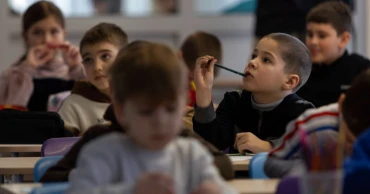
Ukrainian refugees safe, but not at peace, after year of war
Months after Russian forces occupied southern Ukraine's Kherson province last year, they started paying visits to the home of a Ukrainian woman and her Russian husband. They smashed their refrigerator and demanded possession of their car. One day, they seized the wife and her teenage daughter, put pillowcases over their heads and led them away.
The woman was locked up for days, her legs beaten with a hammer. The men accused her of revealing Russian soldiers’ locations. They subjected her to electric shocks and bore down on her feet with the heels of their military boots until two of her toes broke. She heard screams nearby and feared they came from her daughter.
More than once, with a bag on her head and her hands tied, a weapon was pointed at her head. She'd feel the muzzle at her temple, and a man started counting.
One. Two. Two and a half.
Then, a shot fired to the floor.
“Although at that moment, it seemed to me that it would be better in my head,” she told The Associated Press, recounting the torture that lasted five days, counted by the sliver of sunlight from a tiny window in the room. “The only thing that kept me strong was the awareness that my child was somewhere around.”
The Russian officials eventually released the woman and her daughter, she said, and she made her way home. She took a long shower and packed a bag, and the two fled the occupied area — first to Russian-occupied Crimea and then to mainland Russia, from where they crossed by land into Latvia and finally Poland.
Her body was still bruised, and she could barely walk. But in December in Warsaw, she reunited with a son. And she and her daughter joined the refugees who have fled their homes since Russia launched its full-scale invasion of Ukraine.
Nearly a year has passed since the Feb. 24, 2022, invasion sent millions fleeing across Ukraine’s border into neighboring Poland, Slovakia, Hungary, Moldova and Romania. Crowds of terrified, exhausted people boarded trains and waited for days at border crossings.
Across Europe, about 8 million refugees have been recorded, according to U.N. estimates based on data from national governments, and nearly 5 million of those have applied for temporary protection. Experts say those numbers are fluid — some people apply in more than one country — but they agree it's the largest movement of refugees in Europe since World War II. Unlike refugees from recent conflicts in the Middle East and Africa, the Ukrainians were largely met with an outpouring of sympathy and help.
Yet while the Ukrainian refugees have found safety, they have not found peace.
They suffer from trauma and loss — uprooted from their lives, separated from relatives, fearing for loved ones stuck in Russian-occupied areas or fighting on the frontline. Children are separated from fathers, grandparents, pets. Others have no family or homes to return to.
The woman from Kherson spoke to the AP this month at a Warsaw counseling center run in partnership with UNICEF. She insisted on anonymity; she fears for the safety of her husband and other relatives in Russian-occupied areas.
She doesn’t like to talk about herself. But she has a goal: For the world to see what Russian troops are doing.
“Even now, I am afraid,” she said, wiping her eyes with her pastel-color nails and fiddling over a tissue. “Do you understand?”
She is among the refugees seeking trauma treatment, most often from Ukrainian psychologists who themselves fled home and struggle with their own grief and loss. No agency has definitive numbers on refugees in treatment, but experts say the psychological toll of the conflict is vast, with rates of anxiety and depression skyrocketing.
At the Warsaw center, psychologists describe treating crying children, teenagers separated from everything they know, mothers unknowingly transferring trauma to their kids.
One patient, a boy from Mariupol, was used as a human shield. His hair has already begun to turn gray. The home of the counselor who treats him was destroyed by a Russian bomb.
Refugee mental health is a priority for aid organizations large and small, even as they work to meet needs for housing, work and education.
Anastasiia Gudkova, a Ukrainian providing psychological support to refugees at a Norwegian Refugee Council reception center in Warsaw, said the most traumatized people she meets come from Mariupol, Kherson and other occupied territories. Those who flee bombing in Kyiv, Kharkiv and Zaporizhzhia also arrive terrified.
But there’s pain for those even from relatively safer areas in western Ukraine, she said: “All Ukrainians, regardless of their location, are under a lot of stress.”
According to the U.N. refugee agency, 90% of the Ukrainians who have sought refuge abroad are women, children and the elderly.
The psychologists see women struggle to put on a brave face for children, trying to survive in countries where they often don’t speak the language. Many women with higher education have taken jobs cleaning other people’s homes or working in restaurant kitchens.
The luckiest ones are able to keep doing their old jobs remotely from exile or are beginning to envision new lives.
Last January, Anastasia Lasna was planning to open her own bakery in Mykolaiv after finding success with providing other businesses with her vegan foods and healthy desserts. Today she is running a food pantry of the Jewish Community Center in Krakow, which has helped some 200,000 Ukrainian refugees, and integrating herself into the southern Polish city’s growing Jewish community.
She has Israeli citizenship, but doesn’t want to live in another conflict-scarred land. Joined now in Krakow by her husband and her 6-year-old daughter, she cannot imagine returning to her former home.
“There is no future there,” she said.
But many refugees still dream of returning home. Their belief that Ukraine will eventually prevail helps them cope.
Last Feb. 23, Maryna Ptashnyk was in the Carpathian mountains celebrating her 31st birthday with her husband and daughter. For months, Russian forces had surrounded her country; waves of anxiety came as she pondered whether there would be “a big war.” So she switched off her phone for her special day.
It was the last night of peace for Ukraine, the last night of normality for Ptashnyk. The next morning, her husband, Yevhen, woke her and told her Kyiv was being bombed.
Now Yevhen is in the Ukrainian army, serving in an artillery unit near Soledar in eastern Ukraine, an area of brutal fighting. Ptashnyk lives alone with their 3-year-old daughter, Polina, in a small suburban Warsaw apartment.
Though Polina is settling well into a Polish preschool, her mother sees the stress.
“For the last year she often asks me about death, about when we will die,” she said.
Polina sees other children out with their fathers, but she’s seen hers only three times since the war began. On a recent visit home, she embraced him. “Daddy’s mine,” she said.
For the woman from Kherson, trying to face the trauma from her torture is just one challenge. She also must find work to afford an apartment in Warsaw, which is now home to more Ukrainian refugees than any other city.
The influx of people has exacerbated a housing shortage and caused rental prices to surge amid high inflation — an issue in many countries welcoming refugees.
The mother finds herself struggling to create a home, a sense of normalcy. The physical pain and scars haunt her, but some days the lack of moral support hurts the most.
Her husband's family in Russia supports the invasion. Worst of all, he and other loved ones remain trapped in the Russian-occupied territory.
“I am safe now, but it is very dangerous there," she said. “And I can’t know if they will survive.”
3 years ago

Key moments in a year of war after Russia invaded Ukraine
The war in Ukraine that began a year ago has killed thousands, forced millions to flee their homes, reduced entire cities to rubble and has fueled fears the confrontation could slide into an open conflict between Russia and NATO.
A look at some of the main events in the conflict.
2022
FEBRUARY
On Feb. 24, Russian President Vladimir Putin launches an invasion of Ukraine from the north, east and south. He says the “special military operation” is aimed at “demilitarization” and “denazification” of the country to protect ethnic Russians, prevent Kyiv’s NATO membership and to keep it in Russia’s “sphere of influence.” Ukraine and the West say it’s an illegal act of aggression against a country with a democratically elected government and a Jewish president whose relatives were killed in the Holocaust.
Russian troops quickly reach Kyiv’s outskirts, but their attempts to capture the capital and other cities in the northeast meet stiff resistance. Ukrainian President Volodymyr Zelenskyy records a video outside his headquarters to show he is staying and remains in charge.
MARCH
On March 2, Russia claims control of the southern city of Kherson. In the opening days of March, Russian forces also seize the rest of the Kherson region and occupy a large part of the neighboring Zaporizhzhia region, including the Zaporizhzhia Nuclear Power Plant, Europe’s largest.
The Russian army soon gets stuck near Kyiv, and its convoys — stretching along highways leading to the Ukrainian capital — become easy prey for Ukrainian artillery and drones. On March 16, Russia strikes a theater in the strategic port city of Mariupol where civilians had been sheltering, killing hundreds of people in one of the war’s deadliest attacks.
Moscow announces the withdrawal of forces from Kyiv and other areas March 29, saying it will focus on the eastern industrial heartland of the Donbas, where Russia-backed separatists have fought Ukrainian forces since 2014 following the illegal annexation of Crimea.
APRIL
The Russian pullback from Kyiv reveals hundreds of bodies of civilians in mass graves or left in the streets of the town of Bucha, many of them bearing signs of torture in scenes that prompt world leaders to say Russia should be held accountable for possible war crimes.
On April 9, a Russian missile strike on a train station in the eastern city of Kramatorsk kills 52 civilians and wounds over 100.
Intense battles rage for Mariupol on the Sea of Azov, and Russian air strikes and artillery bombardment reduce much of it to ruins.
On April 13, the missile cruiser Moskva, the flagship of the Russian Black Sea Fleet, is hit by Ukrainian missiles and sinks the next day, damaging national pride.
MAY
On May 16, Ukrainian defenders of the giant Azovstal steel mill, the last remaining Ukrainian stronghold in Mariupol, agree to surrender to Russian forces after a nearly three-month siege. Mariupol’s fall cuts Ukraine off from the Azov coast and secures a land corridor from the Russian border to Crimea.
On May 18, Finland and Sweden submit their applications to join NATO in a major blow to Moscow over the expansion of the military alliance.
JUNE
More Western weapons flow into Ukraine, including U.S.-supplied HIMARS multiple rocket launchers.
On June 30, Russian troops pull back from Snake Island, located off the Black Sea port of Odesa and seized in the opening days of the invasion.
JULY
On July 22, Russia and Ukraine, with mediation by Turkey and the United Nations, agree on a deal to unblock supplies of grain stuck in Ukraine’s Black Sea ports, ending a standoff that threatened global food security.
On July 29, a missile strike hits a prison in the Russia-controlled eastern town of Olenivka where Ukrainian soldiers captured in Mariupol were held, killing at least 53. Ukraine and Russia trade blame for the attack.
AUGUST
On Aug. 9, powerful explosions strike an air base in Crimea. More blasts hit a power substation and ammunition depots there a week later. signaling the vulnerability of the Moscow-annexed Black Sea peninsula that Russia has used as a major supply hub for the war. Ukraine’s top military officer later acknowledges that the attacks on Crimea were launched by Kyiv’s forces.
On Aug. 20, Darya Dugina, the daughter of Russian nationalist ideologist Alexander Dugin, dies in a car bomb explosion outside Moscow that the Russian authorities blame on Ukraine
SEPTEMBER
On Sept. 6, the Ukrainian forces launch a surprise counteroffensive in the northeastern Kharkiv region, quickly forcing Russia to pull back from broad areas held for months.
On Sept. 21, Putin orders mobilization of 300,000 reservists, an unpopular move that prompts hundreds of thousands of Russian men to flee to neighboring countries to avoid recruitment. At the same time, Russia hastily stages illegal “referendums” in Ukraine’s Donetsk, Luhansk, Kherson and Zaporizhzhia regions on whether to become part of Russia. The votes are widely dismissed as a sham by Ukraine and the West.
On Sept. 30, Putin signs documents to annex the four regions at a Kremlin ceremony.
OCTOBER
On Oct. 8, a truck laden with explosives blows up on the bridge linking Crimea to Russia’s mainland in an attack that Putin blames on Ukraine. Russia responds with missile strikes on Ukraine’s power plants and other key infrastructure.
After the first wave of attacks on Oct. 10, the barrage continues on a regular basis in the months that follow, resulting in blackouts and power rationing across the country.
NOVEMBER
On Nov. 9, Russia announces a pullback from the city of Kherson under a Ukrainian counteroffensive, abandoning the only regional center Moscow captured, in a humiliating retreat for the Kremlin.
DECEMBER
On Dec. 5, the Russian military says Ukraine used drones to target two bases for long-range bombers deep inside Russian territory. Another strike takes places later in the month, underlining Ukraine’s readiness to up the ante and revealing gaps in Russian defenses.
On Dec. 21, Zelenskyy visits the United States on his first trip abroad since the war began, meeting with President Joe Biden to secure Patriot air defense missile systems and other weapons and addressing Congress.
2023
JANUARY
On Jan. 1, just moments into the New Year, scores of freshly mobilized Russian soldiers are killed by a Ukrainian missile strike on the city of Makiivka. Russia’s Defense Ministry says 89 troops were killed, while Ukrainian officials put the death toll in the hundreds.
After months of ferocious fighting, Russia declares the capture of the salt-mining town of Soledar on Jan. 12, although Kyiv does not acknowledge it until days later. Moscow also presses its offensive to seize the Ukrainian stronghold of Bakhmut.
On Jan. 14, when Russia launches another wave of strikes on Ukraine’s energy facilities, a Russian missile hits an apartment building in the city of Dnipro, killing 45.
3 years ago

Proposed Italian sea rescue law puts more lives at risk: UN rights chief
UN human rights chief Volker Türk Thursday expressed serious concerns about a proposed law in Italy that could hinder the provision of life-saving assistance by humanitarian search and rescue (SAR) organisations in the Central Mediterranean, resulting in more deaths at sea.
“We all watch with horror the plight of those crossing the Mediterranean, and the desire to end that suffering is profound. But this is simply the wrong way to address this humanitarian crisis,” said Türk. “More people in distress will be made to suffer and more lives risk being lost because timely help is not available if this law is passed.”
“The law would effectively punish both migrants and those who seek to help them. This penalisation of humanitarian actions would likely deter human rights and humanitarian organisations from doing their crucial work,” the high commissioner added.
The proposed law – which was passed by the Chamber of Deputies of the Italian Parliament Wednesday and is scheduled to be considered by the Senate next week – also requires humanitarian rescue ships to head to port immediately after each rescue, foregoing additional rescues even if they are in the immediate vicinity of people in distress.
In the past, SAR vessels carried out multiple rescue operations over days. At the same time, Italy recently designated distant ports of disembarkation for people rescued at sea – sometimes days sailing away from the original rescue site – making it all the more difficult for vessels who may seek to conduct multiple rescues.
“Under international law, a captain is duty-bound to render immediate assistance to people in distress at sea, and states must protect the right to life,” said Türk. “But under this new proposal, a nearby SAR vessel would be obliged to ignore the distress calls of those at sea simply by having already saved others.”
Türk added: “Those left stranded at sea would be forced to endure prolonged exposure to the elements and risk losing their lives. Those who survive face increased delays in accessing adequate medical care and rehabilitation, including for victims of torture, sexual violence and other human rights violations.”
The high commissioner said the proposed law also risked increased interceptions and returns to Libya – a location the UN Human Rights Office repeatedly said cannot be considered a safe port of disembarkation.
Under the proposed law, crews on board the ships must register every person who is planning to ask for international protection. Non-governmental organisations that do not comply with the new rules would be subject to administrative sanctions, and fines and have their vessel seized.
The high commissioner urged the government of Italy to withdraw the proposed law, and to consult civil society groups, in particular search and rescue NGOs, to ensure any proposed legislation complies fully with international human rights law, international refugee law, and other applicable legal frameworks, including the UN Convention on the Law of the Sea and the International Convention on Maritime Search and Rescue.
Read more: Greece: 3 dead after boat with migrants hits rocks
3 years ago