Europe
NATO appoints outgoing Dutch Prime Minister Mark Rutte as its next secretary-general
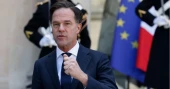
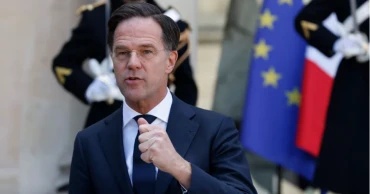
NATO appointed Mark Rutte as its next secretary-general on Wednesday, putting the outgoing Dutch prime minister in charge of the world’s biggest security organization at a critical time for European security as war rages in Ukraine.
Rutte’s appointment was sealed by NATO ambassadors during a meeting at the 32-nation alliance’s headquarters in Brussels. U.S. President Joe Biden and his counterparts will formally welcome him to their table at a summit in Washington on July 9-11.
Putin offers truce if Ukraine exits Russian-claimed areas and drops NATO bid. Kyiv rejects it
The outgoing Dutch premier will take over from the current secretary general, Norway’s Jens Stoltenberg, on Oct. 1. Stoltenberg spent more than a decade at the helm. His mandate was repeatedly extended, in part to provide continuity after Russia invaded Ukraine in 2022.
NATO defense ministers thrash out new security aid and training support plan for Ukraine
1 year ago

Costly election pledges in France stoke fears of splurges that risk pushing country deeper into debt
The promises are appealing -– and expensive.
Vying to oust the centrist government of President Emmanuel Macron in an upcoming two-round parliamentary election June 30 and July 7, French political parties of both the far right and far left are vowing to cut gasoline taxes, let workers retire earlier and raise wages.
Their campaign pledges threaten to bust an already-swollen government budget, push up French interest rates and strain France’s relations with the European Union.
France's Macron, African leaders push for vaccines for Africa after COVID-19 exposed inequalities
“The snap election could well replace Macron’s limping centrist government with one led by parties whose campaigns have abandoned any pretense of fiscal discipline,’’ economist Brigitte Granville of Queen Mary University of London wrote Thursday on the Project Syndicate website.
The turbulence began June 9 when voters handed Macron a defeat at the hands of Marine Le Pen’s hard right National Rally party in EU parliamentary elections. Macron promptly and surprisingly called a snap parliamentary election, convinced that French voters would rally to prevent the first far-right government from taking power in France since the Nazi occupation in World War II.
Macron is aligned against both Le Pen’s National Rally and the New Popular Front, a coalition of far- to center-left parties.
Macron says recognizing a Palestinian state is not a taboo for France
“The center has kind of evaporated,’’ said French economist Nicolas Veron, senior fellow at the Peterson Institute for International Economics. The National Rally and the New Popular Front are “radical in very different ways, but they’re both very far from the mainstream.’’
The political extremes are benefiting from widespread voter discontent about painful price rises, squeezed household budgets and other hardships. The French economy is sputtering: The International Monetary Fund expects it to eke out weak growth of 0.7% this year, down from an unimpressive 0.9% in 2023.
France gets its youngest-ever prime minister, Gabriel Attal, as Macron shakes up government
The political pledges to put money in voters’ pockets sent economists reaching for calculators. Their answer: The costs could be considerable, at least tens of billions of euros.
News of National Rally’s political ascendance sent France’s CAC 40 stock index tumbling to its worst week in more than two years, although the market calmed somewhat last week. Yields on French government bonds also rose on worries about the potential strain on government finances.
Macron acknowledged that National Rally’s economic pledges “perhaps make people happy,” but claimed they would cost 100 billion euros ($107 billion) annually. And the left’s plans, he charged, are “four times worse in terms of cost.’’
Jordan Bardella, the National Rally president gunning to become France’s prime minister in the election, poo-poos the figure cited by Macron, saying it was “pulled out of the government’s hat.” But Bardella has yet to detail how much his party’s plans would cost or to say how they’d be paid for.
Likewise, the New Popular Front’s 23-page list of campaign pledges doesn’t cost them out or detail how they’d be financed. But the coalition vows to “abolish the privileges of billionaires,” taxing high earners, fortunes and other wealth more heavily. It says it doesn’t intend to add to France’s debts.
Far-left leader Jean-Luc Mélenchon, whose France Unbowed party is fielding the largest number of candidates in the coalition, says its platform would require 200 billion euros ($214 billion) in public spending over five years but would generate 230 billion euros ($246 billion) in revenue by stimulating France’s economy.
Bardella vows to slash sales taxes — from 20% to 5.5% — on fuel, electricity and gas, “because I think there are millions of French people in our country who this year can no longer afford to heat themselves or are forced to limit their trips.” The Paris-based Institut Montaigne think tank estimates the cost of that pledge at between 9 billion and 13.6 billion euros ($9.6 billion to $14.5 billion) annually in lost revenue. France’s Finance Ministry estimates an even bigger dent in public coffers: 16.8 billion euros ($18 billion) per year.
On the left, the New Popular Front pledges to freeze prices for essentials — fuel, energy and foodstuffs — as part of a package to help some of France’s poorest. It’s also promising a considerable bump in the minimum wage, raising it by 200 euros ($214) to 1,600 euros ($1,711) net per month. The Institut Montaigne says that those two pledges together could amount to an annual hit of between 12.5 billion euros ($13.4 billion) and 41.5 billion euros ($44.4 billion) for public finances. It also warns that the wage bump could hurt the economy and jobs by making labor costlier.
Both the left and the right pledge to roll back pension reforms that Macron railroaded through parliament last year in the face of massive street protests, raising the retirement age from 62 to 64 to help finance the pension system. Doing so risks reopening the politically divisive question of how France can continue to adequately fund pensions as its population ages.
Even before the latest political turbulence, France was already under pressure to do something about its unbalanced government budget. The EU watchdogs have criticized France for running up excessive debts. France already is operating with a higher debt load than European neighbors, with its public debt at an estimated 112% of the size of its economy. That compares with less than 90% for the eurozone overall and just 63% for Germany.
The EU has long insisted that member states keep their annual deficits below 3% of gross domestic product. But those targets have often been ignored, even by Germany and France, the EU’s biggest economies.
France’s deficit last year stood at 5.5%. The EU’s Commission recommended that France and six other countries start an “excessive deficit procedure,’’ beginning a long process that can ultimately force a country to take corrective action.
The upcoming election is for the lower house of France’s parliament, the National Assembly. Macron would remain president until 2027 even if his party loses, which might require an awkward “cohabitation’’ with the National Rally on the far right or New Popular Front on the left.
Macron, who had sought to rein in France’s budget deficits, would have a greatly reduced say over economic policy, though he would still oversee foreign and defense policy. With a leftist or rightwing government calling the shots on economic policy, the country’s budget problems would likely go unresolved, leading to higher yields on French bonds.
The nightmare scenario would be a replay of what happened to the United Kingdom in September 2022 when then-Prime Minister Liz Truss spooked financial markets after proposing a wave of tax cuts without cutting any spending to offset them. Truss’ plan immediately sent the values of the British pound and U.K. government bonds tumbling. The Bank of England ultimately had to step in to stabilize financial markets, while Truss quit after just 45 days in office.
Something similar might happen if a right- or left-wing French government chose to ignore the EU’s budget rules and went on a spending spree that sent French bonds tumbling and interest rates higher. The European Central Bank might then be forced to buy French bonds to drive yields lower and calm markets.
“The ECB would be reluctant to come to the rescue of France itself unless and until any future government put in place a credible plan to bring the deficit down,’’ Andrew Kenningham, chief Europe economist for Capital Economics, wrote Thursday. “But if yields were spiraling out of control, it could also be forced to step in, just as the Bank of England did.’’
1 year ago
With its new pact with North Korea, Russia raises the stakes with the West over Ukraine
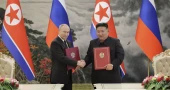
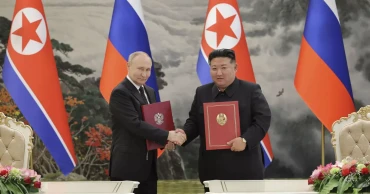
Behind the smiles, the balloons and the red-carpet pageantry of President Vladimir Putin's visit to North Korea last week, a strong signal came through: In the spiraling confrontation with the U.S. and its allies over Ukraine, the Russian leader is willing to challenge Western interests like never before.
The pact that he signed with North Korean leader Kim Jong Un envisions mutual military assistance between Moscow and Pyongyang if either is attacked. Putin also announced for the first time that Russia could provide weapons to the isolated country, a move that could destabilize the Korean Peninsula and reverberate far beyond.
He described the potential arms shipments as a response to NATO allies providing Ukraine with longer-range weapons to attack Russia. He bluntly declared that Moscow has nothing to lose and is prepared to go “to the end” to achieve its goals in Ukraine.
Putin's moves added to concerns in Washington and Seoul about what they see as an alliance in which North Korea provides Moscow with badly needed munitions for its war in Ukraine in exchange for economic assistance and technology transfers that would enhance the threat posed by Kim’s nuclear weapons and missile program.
A landmark pact
The new agreement with Pyongyang marked the strongest link between Moscow and Pyongyang since the end of the Cold War.
Kim said it raised bilateral relations to the level of an alliance, while Putin was more cautious, noting the pledge of mutual military assistance mirrored a 1961 treaty between the Soviet Union and North Korea. That agreement was discarded after the Soviet collapse and replaced with a weaker one in 2000 when Putin first visited Pyongyang.
Stephen Sestanovich, senior fellow at the Council on Foreign Relations noted that when Soviet leader Nikita Khrushchev signed the deal with Pyongyang in 1961, he also tested the world's biggest nuclear bomb, built the Berlin Wall and probably started thinking about moves that led to the Cuban missile crisis in 1962.
“The question for Western policymakers now is whether Putin is becoming comparably reckless,” Sestanovich said in a commentary. “His language in North Korea -- where he denounced the United States as a ‘worldwide neocolonialist dictatorship’ — might make you think so.”
South Korea responded by declaring it would consider sending arms to Ukraine in a major policy change for Seoul, which so far only has sent humanitarian assistance to Kyiv under a longstanding policy of not supplying weapons to countries engaged in conflict.
Putin insisted Seoul has nothing to worry about, since the new pact only envisions military assistance in case of aggression and should act as a deterrent to prevent a conflict. He strongly warned South Korea against providing lethal weapons to Ukraine, saying it would be a “very big mistake.”
US aircraft carrier arrives in South Korea as a show of force against nuclear-armed North Korea
“If that happens, then we will also make corresponding decisions that will hardly please the current leadership of South Korea,” he said.
Asked whether North Korean troops could fight alongside Russian forces in Ukraine under the pact, Putin said there was no need for that.
Potential weapons for Pyongyang
Last month, Putin warned that Russia could provide long-range weapons to others to hit Western targets in response to NATO allies allowing Ukraine to use its allies' arms to make limited attacks inside Russian territory.
He followed up on that warning Thursday with an explicit threat to provide weapons to North Korea.
“I wouldn’t exclude that in view of our agreements with the Democratic People's Republic of Korea,” Putin said, adding that Moscow could mirror the arguments by NATO allies that it’s up to Ukraine to decide how to use Western weapons.
“We can similarly say that we supply something to somebody but have no control over what happens afterward,” Putin said. “Let them think about it.”
Sue Mi Terry, senior fellow for Korea studies at the Council on Foreign Relations, warned that Moscow could share weapons technologies with Pyongyang to help improve its ballistic missile capabilities, noting there is evidence of this happening already, with Russia possibly providing help to North Korea with its successful satellite launch in November, two months after Kim last met Putin.
“This is deeply concerning because of the substantial overlap between the technologies used for space launches and intercontinental ballistic missiles,” Terry said in a commentary. “Russia can also provide North Korea with critical help in areas where its capabilities are still nascent, such as submarine-launched ballistic missiles.”
South Korea summons Russian ambassador as tensions rise with North Korea
While raising the prospect of arms supplies to Pyongyang that would violate U.N. sanctions, Putin also said Russia would take efforts at the world body to ease the restrictions — an apparent signal that Moscow may try to keep arms supplies to Pyongyang under the radar and maintain a degree of deniability to avoid accusations of breaching the sanctions.
Russia and North Korea have rejected assertions by the U.S. and its allies that Pyongyang has given Moscow ballistic missiles and millions of artillery shells for use in Ukraine.
Going ‘to the end’ in a confrontation with the West
By explicitly linking prospective arms shipments to Pyongyang to Western moves on Ukraine, Putin warned Kyiv's allies to back off as he pushes his goals in the war — or face a new round of confrontation.
“They are escalating the situation, apparently expecting that we will get scared at some point, and at the same time, they say that they want to inflict a strategic defeat on Russia on the battlefield,” Putin said. “For Russia, it will mean an end to its statehood, an end to the millennium-long history of the Russian state. And a question arises: Why should we be afraid? Isn’t it better, then, to go to the end?”
Russia-North Korea pact could dent China's influence, but Beijing still holds sway over both
Alexander Gabuev, director of the Carnegie Russia Eurasia Center in Berlin, said Putin’s statement reflected an attempt to discourage the U.S. and its allies from ramping up support for Kyiv as Russia pushes new offensives in several sectors of the front line.
“The situation is becoming increasingly dangerous, and Russia believes that it should quickly rap the West over its knuckles to show that its deeper engagement in the war will have a price,” he said in remarks carried by Dozhd, an independent Russian broadcaster.
He noted that Putin’s statement that Moscow wouldn’t know where its arms end up if sent to Pyongyang could have been a hint at North Korea’s role as an arms exporter.
Treading cautiously with China
Putin’s visits to North Korea handed a new challenge to Pyongyang’s top ally, China, potentially allowing Kim to hedge his bets and reduce his excessive reliance on Beijing.
China so far has avoided comment on the new pact, but many experts argue that Beijing won't like losing sway over its neighbor.
Ever since Putin invaded Ukraine, Russia has come to increasingly depend on China as the main market for its energy exports and the source of high-tech technologies in the face of Western sanctions. While forging a revamped relationship with Pyongyang, the Kremlin will likely tread cautiously to avoid angering Beijing.
“Whether this upgraded Russia–North Korea relationship will be without limits depends upon China,” which will watch events closely, said Edward Howell of Chatham House in a commentary. “Beijing will have taken stern note of Kim Jong Un’s claim that Russia is North Korea’s ‘most honest friend.’ Despite the likely increase in cooperation in advanced military technology between Moscow and Pyongyang, China remains North Korea’s largest economic partner.”
1 year ago
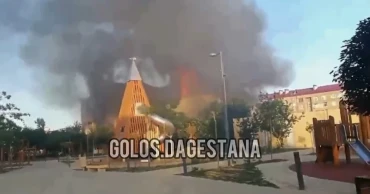
Gunmen kill 15 police officers and several civilians in Russia's southern Dagestan region
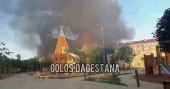
More than 15 police officers and several civilians, including an Orthodox priest, were killed by armed militants in Russia’s southern republic of Dagestan on Sunday, its governor Sergei Melikov said in a video statement early Monday.
The gunmen opened fire on two Orthodox churches, a synagogue and a police post in two cities, according to the authorities.
Russia’s National Anti-Terrorist Committee described the attacks in the predominantly Muslim region with a history of armed insurgency as terrorist acts.
Monday, Tuesday and Wednesday were declared days of mourning in the region.
Dagestan's Interior Ministry said a group of armed men shot at a synagogue and a church in the city of Derbent, located on the Caspian Sea. Both the church and the synagogue caught fire, according to state media. Almost simultaneously, reports appeared about an attack on a church and a traffic police post in the Dagestan capital, Makhachkala.
Ukrainian drones and missiles kill 4 in Russia and Crimea, after bombing of Kharkiv leaves 3 dead
Authorities announced a counter-terrorist operation in the region. The Anti-Terrorist Committee said five gunmen were “eliminated.” The governor said six “bandits” had been “liquidated.” The conflicting numbers couldn't be immediately reconciled and it wasn't clear how many militants were involved in the attacks.
There was no immediate claim of responsibility for the attacks. The authorities launched a criminal investigation on the charge of a terrorist act.
Russian state news agency Tass cited law enforcement sources as saying that a Dagestani official was detained over his sons' involvement in the attacks.
Three dead in Kharkiv attack, Russia launches new barrage of missiles on Ukrainian energy facilities
Melikov said in the video statement that the situation in the region was under control of the law enforcement and local authorities, and vowed that the investigation of the attacks will continue until “all the sleeping cells” of the militants are uncovered.
He claimed, without providing evidence, that the attacks might have been prepared from abroad, and referenced what the Kremlin calls “the special military operation” in Ukraine in an apparent attempt to link the attacks to it.
In March, gunmen opened fire on a crowd at a concert hall in suburban Moscow, killing 145 people. An affiliate of the Islamic State group claimed responsibility for the attack, but Russian officials also sought to link Ukraine to the attack without providing any evidence. Kyiv has vehemently denied any involvement.
Russia fires deputy defense minister jailed on bribery charges and extends his arrest
1 year ago

Fourth UK Conservative Party official reportedly investigated in widening election betting scandal
The chief data officer of Britain's Conservative Party has taken a leave of absence, British media reported Sunday, following growing allegations that the governing party's members have been using inside information to bet on the date of Britain’s July 4 national election.
The Sunday Times and others reported that Nick Mason is the fourth Conservative official to be investigated by the U.K.'s Gambling Commission for allegedly betting on the timing of the election before the date had been announced.
The Times alleged that dozens of bets had been placed with potential winnings worth thousands of pounds.
Two other Conservative election candidates, Laura Saunders and Craig Williams, are under investigation by the gambling watchdog. Saunders' husband Tony Lee, the Conservative director of campaigning, has also taken a leave of absence following allegations he was also investigated over alleged betting.
The growing scandal, which came just two weeks ahead of the national election, has dealt a fresh blow to Prime Minister Rishi Sunak's Conservative Party, which is widely expected to lose to the opposition Labour Party after 14 years in power.
Sunak said this week that he was “incredibly angry” to learn of the allegations and said that anyone found to have broken the law should be expelled from his party.
Saunders, a candidate standing in Bristol, southwest England, has said she will cooperate fully with the investigation. Williams was Sunak's parliamentary private secretary as well as a candidate.
Senior Conservative minister Michael Gove has condemned the alleged betting and likened it to “ Partygate,” the ethics scandal that contributed to Prime Minister Boris Johnson's ouster in 2022.
That controversy saw public trust in the Conservatives plummet after revelations that politicians and officials held lockdown-flouting parties and gatherings in government buildings during the COVID-19 pandemic in 2020 and 2021.
“It looks like one rule for them and one rule for us,” Gove told the Sunday Times. “That’s the most potentially damaging thing.”
Daisy Cooper, the deputy leader of the Liberal Democrats, said “people are sick and tired of this sleaze” and that Sunak must intervene and order an official inquiry.
The Conservative Party said it cannot comment because investigations are ongoing.
1 year ago

Ukrainian drones and missiles kill 4 in Russia and Crimea, after bombing of Kharkiv leaves 3 dead
Russian authorities said four people died in Ukrainian drone and missile attacks on Sunday, a day after Russia's bombing of Ukraine's second largest city of Kharkiv killed three people and left dozens in hospitals.
Three people — including two children — were killed by falling debris when five Ukrainian missiles were shot down in Sevastopol, a port city in Russia-annexed Crimea, said Mikhail Razvozhayev, the city's Moscow-installed governor. Close to a hundred people were injured, he said.
One person was killed and three injured in Russia’s Belgorod region, bordering Ukraine, when three Ukrainian drones attacked the city of Grayvoron, regional Gov. Vyacheslav Gladkov said.
Air defenses overnight shot down 33 Ukrainian drones over Russia’s western Bryansk, Smolensk, Lipetsk and Tula regions, the Russian Ministry of Defense said Sunday. No casualties or damage were reported.
The attacks came after Russia struck Kharkiv on Saturday afternoon with four aerial bombs, hitting a five-story residential building and killing three people. Regional Gov. Oleh Syniehubov said that 41 people were still being treated for injuries on Sunday.
In a video address following the attack, Ukrainian President Volodymyr Zelenskyy urged Ukraine’s partners to bolster its air defenses.
“Modern air defense systems for Ukraine — such as Patriots, accelerated training of our pilots for F-16s, and most importantly, sufficient range for our weapons — are truly necessary,” he said.
Two people were wounded by falling debris when two Russian missiles were shot down over the Kyiv region overnight, Ukraine’s air force commander Mykola Oleschuk said.
Regional Gov. Vadym Filashkin of Ukraine’s partly occupied Donetsk region said that Russian attacks on Saturday killed two people and wounded four.
1 year ago
Three dead in Kharkiv attack, Russia launches new barrage of missiles on Ukrainian energy facilities
At least three people were killed in a Russian bomb attack on Ukraine’s second city, Kharkiv, on Saturday afternoon, Ukrainian President Volodymyr Zelenskyy said.
Another 25 people were wounded in the attack, in which a guided aerial bomb hit a residential building, regional Gov. Oleh Syniehubov said. According to Syniehubov, 16 people — including two children — were hospitalized.
Russia has also continued to target Ukraine's energy infrastructure. Russia launched a new barrage of missiles and drones in an overnight attack on Ukraine, officials in Kyiv said Saturday, damaging energy facilities in the southeast and west and injuring at least two workers.
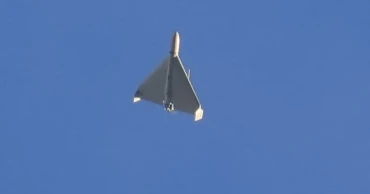
Ukraine is struggling with a new wave of rolling blackouts after relentless Russian attacks on energy infrastructure that started three months ago took out half the country’s power generation capacity. In its eighth major attack on energy facilities overnight, Russia fired 16 missiles and 13 Shahed drones, the Ukrainian air force said.
Ukraine’s air defenses intercepted 12 of the 16 missiles and all 13 drones launched by Russia, the air force said.
Putin says Russia wants a buffer zone in Ukraine's Kharkiv but has no plans to capture the city
State-owned power grid operator Ukrenergo said the strikes damaged equipment at facilities in southeastern Zaporizhzhia and the western Lviv region.
Two energy workers were injured in Zaporizhzhia when a fire broke out at an energy facility, according to regional Gov. Ivan Fedorov.
With no major changes reported along the 1,000-kilometer (600-mile) front line, where a recent push by the Kremlin’s forces in eastern and northeastern Ukraine has made only incremental gains, both sides have taken aim at infrastructure targets, seeking to curb each other’s ability to fight in a war that is now in its third year.
Moscow’s overnight attack on Zaporizhzhia and Lviv follows Ukrainian military strikes on three oil refineries in southern Russia overnight into Friday.
Air defenses destroyed five drones over the Sea of Azov and the country’s western Bryansk and Smolensk regions, the Russian Ministry of Defense said. A man was killed in shelling of Russia’s Belgorod region, which borders Ukraine, according to regional Gov. Vyacheslav Gladkov.
A Russian strike on Kharkiv's TV tower is part of an intimidation campaign, Ukraine's Zelenskyy says
The governor of eastern Ukraine's partly occupied Donetsk region said Saturday that Russian attacks had killed five people and wounded seven the previous day.
In the Russia-controlled part of the region, Moscow-installed Gov. Denis Pushilin said three people were killed and four were injured in shelling by Ukrainian forces Saturday morning.
A policeman was killed in the partly occupied region of Kherson as a result of a Russian drone attack on a checkpoint, the Ukrainian National Police said.
Russian missile strikes on the Ukrainian city of Kharkiv kill 6 and wound 11
1 year ago
As U.S.-supplied weapons show impact inside Russia, Ukrainian soldiers hope for deeper strikes
Weeks after the decision allowing Ukraine to use U.S.-supplied weapons for limited strikes in Russian territory, the country is having some success in halting Russia’s new push along the northeast front, but military commanders are clamoring for restrictions on long-range missiles to be lifted.
Deteriorating battlefield conditions forced the U.S. to permit Ukraine to use Western-supplied artillery and rocket systems to defend the eastern city of Kharkiv by targeting border regions where the Kremlin’s forces assemble and launch attacks. The impact was swift: Ukrainian forces pushed Russian positions back, won time to better fortify their own positions and even mounted small offensive actions.
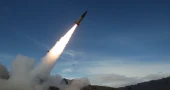
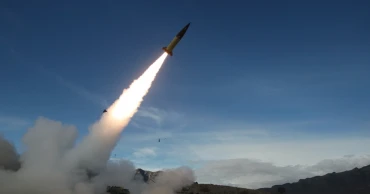
But commanders said that without the ability to use long-range guided missiles, such as ATACMS, their hands are tied.
“We could target (Russian) brigade command points and the entire northern grouping, because they are located 100 to 150 kilometers from the front line,” said Hefastus, an artillery commander in the Kharkiv region who goes by his callsign. “Normal ammunition can’t get at them. With this kind, we can do a lot to destroy their centers of command.”
The Ukrainian commanders interviewed spoke on condition that their callsigns be used, in line with brigade rules.
The U.S. expanded the scope of its policy to allow counterstrikes across a wider region Friday. But the Biden administration has not lifted restrictions on Ukraine that prohibit the use of U.S.-provided ATACMS to strike inside Russian territory, according to three U.S. officials familiar with the matter who spoke on condition of anonymity because they were not authorized to comment publicly. The U.S. began providing Ukraine with long-range ATACMS earlier this year, but with rules, including that they cannot be used to strike inside Russia and must be used within sovereign territory, which includes land seized by the Russians.
That prevents attacks on airfields and military infrastructure in Russia’s deep rear, underscoring a common Ukrainian complaint that Western allies anxious about potentially provoking Russia are undermining Ukraine's ability to fight effectively.
Three dead in Kharkiv attack, Russia launches new barrage of missiles on Ukrainian energy facilities
Ukrainian officials are pushing U.S. allies to be able to strike particular high-value targets inside Russia using ATACMS, which can reach over 100 kilometers (62 miles).
“Unfortunately, we still cannot reach, for example, airfields and their aircraft. This is the problem,” Yehor Cherniev, deputy chairman of the parliamentary committee on national security, defense and intelligence, said earlier this month. “That’s why we are asking (allies) to lift the restrictions to use long-range missiles against limited military targets in the territory of Russia.”
Since late May, Ukraine has been able to target Russian troops and air defense systems 20 kilometers (12 miles) from the border in the Kharkiv region. Moscow opened a new front in the region on May 10, capturing village after village in a sweeping advance that caught Ukrainian troops unprepared.
Though not a panacea, the move has greatly slowed Russia’s momentum, even allowing Ukrainian troops to make advances along the northeast border, including recently recapturing areas southwest of Vovchansk, according to local reports. Brigades there said high mobility army rocket systems, or HIMARS, were fired hours after permission was granted, destroying an air defense complex outfitted to launch the deadly missiles.
At the time, the stakes were high as Ukrainian military leaders anticipated another assault designed to divert troops from other intense battlegrounds in the Donetsk region. First Deputy Defense Minister Ivan Havryliuk told The Associated Press that at least 90,000 Russian troops deep in Russian territory were gearing up for a new assault.
“The HIMARS were not silent for the whole day,” Hefastus said, recalling the first hours when permission was granted to use the rocket systems. “From the first days, Ukrainian forces managed to destroy whole columns of troops along the border waiting for the order to enter Ukraine.”
“Before, we couldn’t target them. It was quite complicated. All warehouses with ammunition and other resources were located a 20-kilometer distance beyond what we could hit,” he said.
The dynamics shifted almost immediately, allowing Ukrainian forces to stabilize that part of the front line. Soldiers near a strategic area north of Kharkiv where fighting to push Russian troops back is ongoing said enemy troops had moved positions several kilometers back. Such claims could not be independently verified.
What happened this week in the UK election campaign, from a betting controversy to Farage's ambition
“Tactics have changed" as a result of Ukraine’s improved striking ability, said Kalina, a platoon commander for the Khartia Brigade. Before, they were only able to hit incoming infantry assaults; now, they can employ more artillery against Russian firing points.
The U.S. decision came in the 11th hour, after much lobbying by Ukrainian officials and right as troops were preparing for combat in anticipation of Russia opening a new front in the northeast.
Ukrainian officials are hoping to convince American allies to allow the use of ATACMS against specific targets.
“It seems pretty absurd when the enemy is so actively advancing on our territory and striking with all types of missiles and calibers at Ukrainian territory and we cannot strike back inside the enemy’s territory where they hold logistics and supplies,” said Lys Mykyta, the commander of a drone company in the 103rd Territorial Defense Brigade.
But Ukrainian officials said only desperate battlefield conditions are likely to convince American officials to walk back the restriction.
Climate protesters arrested over spraying orange paint over Stonehenge monument
The renewed invasion of the Kharkiv region, which drew in precious Ukrainian reserves, pushed the U.S. to have a change of heart on allowing self-defense strikes in Russian territory, Cherniev said.
“Probably, the decision about the ATACMS will also be changed based on the situation on the ground,” he said. “I hope the decision will be made as soon as possible.”
1 year ago
Italian coast guard recovers 14 more bodies of shipwreck victims off Calabria, dozens still missing
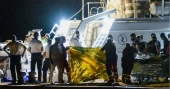
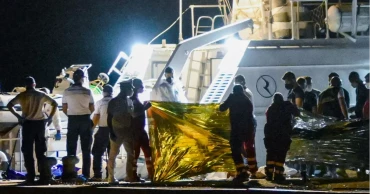
The Italian coast guard has recovered 14 more bodies from last week's shipwreck in the Ionian Sea off the southern Italian coastline, bringing to 34 the number of known victims from the sinking. Dozens are still missing and presumed dead.
The bodies, recovered on Friday, were transferred to a port in Calabria. Three coast guard ships were active in the air-and-sea search, some 190 kilometers (120 miles) from shore.
Survivors reported that the motorboat had caught fire, causing it to capsize off the Italian coast overnight last Sunday, about eight days after departing from Turkey with about 75 people from Iran, Syria and Iraq on board, according to the U.N. refugee agency and other U.N. organizations. Eleven survivors were being treated on shore.
Italian coast guard searches for dozens of migrants missing after their ship capsized
The latest deaths bring to more than 800 people who have died or went missing and are presumed dead crossing the central Mediterranean so far this year, an average of five dead a day, the U.N. agencies said.
Humanitarian groups have decried the deaths as evidence of the failure of European migration policy.
1 year ago

What happened this week in the UK election campaign, from a betting controversy to Farage's ambition
The U.K.'s general election campaign is less than two weeks away now, and the prevailing trends don't appear to have changed much.
The left-of-center Labour Party is the clear favorite to defeat Prime Minister Rishi Sunak's Conservatives, with Keir Starmer looking set to replace him as U.K. leader on the morning of July 5.
Given how condensed U.K. election campaigns are — it's not been a month since Sunak called the election for July 4 outside his residence at No. 10 Downing Street in the pouring rain — the leaders must be getting pretty tired.
At least the European Championship soccer tournament has arrived — as has summer. Both should provide a distraction for one and all.
Here are some things we’ve learned in the past week:
Fancy a flutter
Britain, it's often said, is a nation of gamblers. Mostly on horses, or the football. But the bookmakers can offer odds on almost anything.
Climate protesters arrested over spraying orange paint over Stonehenge monument
For general elections, there's a growing market over the date of the vote, as unlike most other democracies that decision rests solely in the hands of the prime minister.
All everyone knew was that Sunak had to call an election by January 2025. For months, he'd been saying that his “working assumption” was that it would be in the second half of the year.
Given the upcoming summer vacation period, most pundits and lawmakers in his Conservative Party, were predicting that it would likely take place in the fall. So it came as something of a surprise that Sunak announced the date on May 22.
It wasn't that much of a surprise to some people apparently. The Gambling Commission, the industry's regulator, has revealed that it's investigating allegations that a string of people with links to Sunak bet on the timing of the July 4 contest before he announced it.
The sums aren't massive but they are potentially hugely damaging for a party that, according to opinion polls, is facing a big defeat.
Four people are said to be involved, including one of Sunak's bodyguards, who has been suspended, and two candidates for Parliament, one of whose husband happened to be the party's campaign chief. He's been put on a leave of absence, but the candidates haven't been suspended from the party. There's a growing expectation that more people may be implicated.
French protesters are standing up to the far right ahead of the country's snap elections
Sunak has said that he's “incredibly angry” about the allegations and said that anyone involved in using inside information to bet on the date of the election should face the full force of the law as well as being expelled from party.
His opponents including, Keir Starmer have seized on the allegations and said Sunak should go further and suspend the candidates now.
The odds for a Starmer win are 33-1, which means anyone fancying a flutter on that outcome would have to bet 33 pounds just to get one pound in return.
Not really worth it, is it?
Footie fever
One thing that the public, including politicians, can bet on without knowing the outcome is Euro 2024, which is taking place in Germany.
Both England and Scotland have qualified for the monthlong tournament, though neither has impressed.
At least it's providing a distraction from the election coverage, for the leaders as well as the public. Three matches a day, all live on television. With summer finally making its presence felt, it's certainly going to be a boon for the pubs.
Both Sunak and Starmer are keen football fans. For the record, Sunak supports Southampton, which has just been promoted back to the Premier League. Starmer supports Arsenal, which was just nipped to the title by Manchester City.
Fistfight erupts in Italian Parliament as tensions rise over expanding regional autonomy
He'll be hoping that he goes one better, come the morning of July 5.
There's not much mileage in putting a bet on though. See above.
Farage's ambition
Nigel Farage, the self-styled political disruptor who was so instrumental in Britain's vote in 2016 to leave the European Union, has never readily undersold himself.
He was at it again this week, as his Reform U.K. party launched its manifesto for government, though it wasn't a manifesto in fact. Farage, who only became leader of the party on June 4, said that it was a “contract” with the British public.
Admitting that the document was “not something with which we’re going to govern the country,” Farage said he is aiming to become the leader of the opposition to Labour, which he claims has already won the election.
Seeking to woo Conservative voters from the right, he said he wants to scrap the country's commitments to “net zero” and get net migration to zero.
Though Reform U.K. is third in most opinion polls, it's not expected to win many seats in the House of Commons. Bookmakers — yes, them again — think he is favorite to finally win a seat in Parliament, when he contests the southeastern seaside town of Clacton. If he does, it won't be for a lack of trying. This is the eighth attempt by the 60-year-old Farage.
His aim is clear. He openly states he wants to be a candidate for prime minister by the next election, which will have to take place by 2029.
He really doesn't undersell himself.
Persistent polls
In two weeks time, the results will be in. The left-of-center Labour Party remains favorite to win the most seats in the 650-seat House of Commons. While major pollsters give varying figures, all show a double-digit Labour lead, with relatively little change since Sunak called the election.
According to Ipsos, Labour could win 453 seats and the Conservatives 115, with a Labour majority of 256, its biggest ever. Other pollsters have predicted something worse for the Conservatives, which have been in government since 2010.
There are signs from some leading Conservative figures that they think that's the most likely outcome. Even Treasury chief Jeremy Hunt said the Conservatives aren't pretending that the party winning the election is “the most likely outcome” and said his own political future is “too close to call” — his constituency is in a leafy area outside of London, a traditional Conservative safe seat.
1 year ago