Europe

Diagnosed with cancer: What we know about King Charles III’s health history
The announcement Monday that King Charles III has been diagnosed with cancer has come as a shock to many in Britain, largely because the 75-year-old monarch has generally enjoyed good health through the years.
Palace officials did not specify what kind of cancer the king has, or how serious his condition is. They only said that it was discovered during the king’s recent hospital treatment for an enlarged prostate, but isn’t prostate cancer.
Charles — who came to the throne after his mother Queen Elizabeth II died in September 2022 — has started a schedule of regular treatments and will postpone public-facing duties, officials said.
Here is a look at Charles’ health history, from contracting COVID-19 to a series of injuries sustained from playing polo and hunting over the decades:
PROSTATE TREATMENT
Charles was discharged from a private London hospital a week ago after undergoing treatment on an enlarged prostate.
Officials said the condition was benign, though the king canceled engagements and was urged to rest before the procedure.
An enlarged prostate is common in men over age 50 and affects thousands in the U.K. The condition affects how one urinates and isn’t usually a serious health threat. It’s not cancer and doesn’t lead to an increased risk of developing prostate cancer.
Read: Key events in the life of King Charles III
Palace officials said the king publicized details about his condition in an effort to encourage other men to have their prostates checked in line with public health advice.
COVID-19
Charles had COVID-19 twice, but officials said that he only suffered mild symptoms both times.
He isolated at home in Scotland in March 2020, during the early days of the pandemic in the U.K. and before vaccines were available. He remained in good health, though he lost his sense of taste and smell for a time. Charles later spoke of the “strange, frustrating and often distressing” experience of being isolated from friends and family during lockdown.
Charles contracted the coronavirus a second time in February 2022. He had been triple-vaccinated at the time.
SPORTS INJURIES
Charles was a keen polo player and suffered an array of injuries over years of sports and exercise.
In 1980 he was thrown and kicked by his pony during a polo match at Windsor and needed six stitches on his cheek.
In the 1990s he underwent several operations after he broke his right arm in a fall during a polo match and injured his left knee during another game.
Read: Diagnosed with cancer: What we know about King Charles III’s health history
In 2001 he was knocked unconscious and taken to the hospital in an ambulance when his horse threw him during a polo match he was playing with his sons Prince William and Prince Harry.
Charles also had various injuries from hunting accidents. He broke a rib when he fell from his horse in 1998, and in 2001 he fractured a small bone in his shoulder after another tumble.
The king retired from playing polo after more than 40 years in 2005.
‘SAUSAGE FINGERS’?
There has long been speculation about Charles’ swollen “sausage fingers,” with some suggesting they may be due to fluid build-up, arthritis or other conditions.
Whether the puffy digits are due to a health condition remains unexplained, but Charles has on more than one occasion jokingly referenced them himself.
In a BBC documentary on Charles’ coronation, the king was seen reassuring his son Prince William when he struggled to fasten one of the ceremonial robes. He jokingly told William not to worry, because “you haven’t got sausage fingers like mine.”
MINOR TREATMENTS
Charles has had other minor medical treatments over the years.
Read: King Charles III's image to appear on Australian coins this year
In 2008 he had a non-cancerous growth removed from the bridge of his nose in a minor, routine procedure. He had a hernia operation at a private hospital in 2003, and joked “hernia today, gone tomorrow” to waiting reporters when he was discharged the next day.
Charles, who has a degenerative disc at the base of his spine, has also spoken about his back pain. He is known to travel on royal tours with a cushion, and a velvet cushion is usually placed on his chair during state banquets at Buckingham Palace.
In his memoir “Spare,” Prince Harry wrote about Charles’ exercises at home to keep his “constant” neck and back pain in check.
2 years ago

A look at events surrounding the devastating earthquake that hit Turkey and Syria a year ago
A year ago, a devastating 7.8 magnitude earthquake struck southern Turkey and northwestern Syria, causing widespread destruction and the loss of over 59,000 lives.
A massive rebuilding effort is still trudging along a year later but many questions remain about the future of the devastated areas.
WHAT EXACTLY HAPPENED?
The Feb. 6, 2023, quake struck shortly after 4 a.m. and lasted for 85 seconds. It was followed by more than 570 aftershocks within 24 hours — including a magnitude 7.5 temblor to the north of the original epicenter in Turkey’s Kahramanmaras province.
According to the latest government figures released on Friday by Turkey's Environment and Urbanization Minister Mehmet Ozhaseki, some 680,000 homes either collapsed or were left too damaged to live in, leaving hundreds of thousands in desperate need of shelter.
The disaster led to a massive international rescue and aid operation involving dozens of countries and organizations. Early on, the hardest-hit areas were hard to get to, forcing residents to grab what tools they could to dig through the rubble. Rescue efforts in both countries were hampered by a lack of manpower and equipment. Damage to roads and airports, as well as bad weather, also obstructed the arrival of rescuers and aid.
In Syria’s northwestern Idlib province, the White Helmets rescue organization blamed the international community for the delays while the Turkish government faced criticism for its slow response, with many people waiting days for help.
Aid to Idlib, an opposition-held enclave, was initially restricted to one border crossing between Turkey and Syria, with the first aid shipment following the quake taking three days to reach survivors.
MOUNTING CASUALTIES AND DESTRUCTION
While TV images of survivors being pulled from the rubble raised hopes, the death toll climbed inexorably. The final count in Turkey reached 53,537 dead, the Interior Ministry said on Friday. The quake displaced some 3 million people and 11 provinces in Turkey were declared emergency zones.
In Syria, the United Nations said 6,000 people lost their lives, the majority in Idlib. Other estimates put the number higher. The earthquake followed more than a decade of civil war that had severely damaged Syria’s infrastructure. Some of the worst quake-hit areas were also those most devastated by the conflict, including the city of Aleppo.
Read: Turkey's parliament approves Sweden's NATO membership
The World Bank estimated the damage caused at $34.2 billion in Turkey and $5.1 billion in Syria. However, the cost of rebuilding and the impact on the economy was much greater — at least $100 billion in Turkey’s case.
CONSTANT SEISMIC RISKS
Turkey is crisscrossed by fault lines, making it one of the world’s most earthquake-prone countries. The East Anatolian fault system, where the disaster occurred, is near where the Anatolian, Arabian and African tectonic plates come together.
The deadliest quake to hit Turkey in recent memory prior to last February’s was the 1999 magnitude 7.6 tremor that struck south of Istanbul, killing an estimated 18,000 people.
In 2020, the country suffered several major quakes, including the last serious one on the East Anatolian fault — a magnitude 6.7 quake in the city of Elazig that killed 41.
The East Anatolian fault had last seen a quake of magnitude 7 or greater in 1822, when at least 10,000 were killed in Syria’s Aleppo.
WHY WAS THE DESTRUCTION SO HUGE?
Turkey strengthened building codes after the 1999 Istanbul quake but experts say that lax enforcement, poor planning and alleged irregularities since then aggravated the 2023 disaster. Also, use of substandard material and lack of proper inspections during Turkey’s construction boom in the past years made matters worse, according to experts.
In Hatay, the worst-hit province, many settlements there were built on risky alluvial ground. Additionally, government amnesties for shoddy construction allowed transgressors to pay fines rather than tear down or fix dangerous buildings.
The delayed search and rescue operation also led to a greater loss of life, according to critics.
MONTHS LATER, LITTLE AID TRICKLED INTO SYRIA
In the weeks after the earthquake, humanitarian aid started flowing into Syria and a U.N. appeal raised nearly $387 million in pledges.
Read: Astronauts from Turkey, Sweden and Italy launch to space station on latest chartered flight
But months later, as other crises emerged, priorities for Syria appeared to fall by the wayside. To this day, humanitarian agencies are struggling to draw the world’s attention back to the war-ravaged country as they face donor fatigue and shrinking budgets.
Last June, an annual international donor conference held in Brussels for Syria saw lukewarm results and the following month, the World Food Program announced it was slashing its aid in the war-wrecked country. In January, WFP ended its main food assistance scheme for Syria.
In many places, rubble remains where it fell as people struggle to survive in tents and prefabricated containers a year after the quake. Some 4 million people rely on humanitarian assistance amid a surge in violence in northern Syria.
Read more: Turkey detains 33 people suspected of spying on behalf of Israel
2 years ago
King Charles diagnosed with cancer: Buckingham Palace
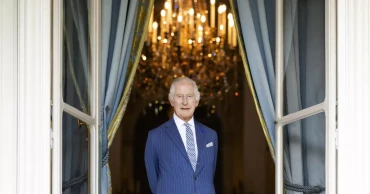
King Charles III has been diagnosed with a form of cancer and has begun treatment, Buckingham Palace said Monday.
The palace says the cancer is not related to the king’s recent treatment for a benign prostate condition. It did not say what form of cancer the 75-year-old monarch has.
The palace said “a separate issue of concern was noted” during Charles’ treatment for an enlarged prostate last month. “Diagnostic tests have identified a form of cancer,” it said
“His Majesty has today commenced a schedule of regular treatments, during which time he has been advised by doctors to postpone public-facing duties,” the palace said. “Throughout this period, His Majesty will continue to undertake State business and official paperwork as usual.”
Read: Diagnosed with cancer: What we know about King Charles III’s health history
It said Charles “remains wholly positive about his treatment and looks forward to returning to full public duty as soon as possible.”
The palace added that the king “has chosen to share his diagnosis to prevent speculation and in the hope it may assist public understanding for all those around the world who are affected by cancer.”
Read: King Charles III's image to appear on Australian coins this year
Charles became king in September 2022 when his mother Queen Elizabeth II died at the age of 96.
News of the king’s diagnosis comes as his daughter-in-law Kate, Princess of Wales, recovers from abdominal surgery that saw her hospitalized for about two weeks.
U.K. political leaders sent messages of support. Prime Minister Rishi Sunak tweeted: “Wishing His Majesty a full and speedy recovery. I have no doubt he’ll be back to full strength in no time and I know the whole country will be wishing him well.”
2 years ago

French farmers aim to put Paris 'under siege' in tractor protest. Activists hurl soup at 'Mona Lisa'
France's interior ministry on Sunday ordered a large deployment of security forces around Paris as angry farmers threatened to head toward the capital, hours after climate activists hurled soup at the glass protecting the “Mona Lisa” painting at the Louvre Museum.
French farmers are putting pressure on the government to respond to their demands for better remuneration for their produce, less red tape and protection against cheap imports.
Speaking after an emergency meeting on Sunday evening, Interior Minister Gerald Darmanin said 15,000 police officers are being deployed, mostly in the Paris region.
Darmanin said he ordered security forces to “prevent any blockade” of Rungis International Market — which supplies the capital and surrounding region with much of its fresh food — and the Paris airports as well as to ban any convoy of farmers from entering the capital and any other big city. He said that helicopters will monitor convoys of tractors.
Darmanin said possibly all eight highways heading to Paris will be blocked Monday from midday and urged car and truck drivers to “anticipate” blockades. “Difficulties will obviously be very important,” he said.
Farmers of the Rural Coordination union in the Lot-et-Garonne region, where the protests originated, said they plan to use their tractors Monday to head toward the Rungis International Market.
France's two biggest farmers unions said in a statement that their members based in areas surrounding the Paris region would seek to block all major roads to the capital, with the aim of putting the city “under siege,” starting Monday afternoon.
Earlier on Sunday, two climate activists hurled soup at the glass protecting the “Mona Lisa” in the Louvre museum and shouted slogans advocating for a sustainable food system.
In a video posted on social media, two women with the words “FOOD RIPOSTE” written on their T-shirts could be seen passing under a security barrier to get closer to the painting and throwing soup at the glass protecting Leonardo da Vinci’s masterpiece.
“What’s the most important thing?” they shouted. “Art, or right to a healthy and sustainable food?”
“Our farming system is sick. Our farmers are dying at work,” they added.
Louvre employees could then be seen putting black panels in front of the Mona Lisa and asking visitors to evacuate the room.
Paris police said that two people were arrested following the incident.
On its website, the “Food Riposte” group said the French government is breaking its climate commitments and called for the equivalent of the country's state-sponsored health care system to be put in place to give people better access to healthy food while providing farmers a decent income.
Angry French farmers have been using their tractors for days to set up road blockades and slow traffic across France. They also dumped stinky agricultural waste at the gates of government offices.
On Friday, the government announced a series of measures that farmers said don't fully address their demands. Those include “drastically simplifying” certain technical procedures and the progressive end to diesel fuel taxes for farm vehicles.
France's new prime minister, Gabriel Attal, visited a farm on Sunday in the central region of Indre-et-Loire. He acknowledged that farmers are in a difficult position because “on the one side we say ‘we need quality’ and on the other side ’we want ever-lower prices.'”
“What’s at stake is finding solutions in the short, middle and long term,” he said, “because we need our farmers.”
Attal also said his government is considering “additional” measures against what he called “unfair competition” from other countries that have different production rules and are importing food to France.
He promised “other decisions” to be made in the coming weeks to address farmers' concerns
2 years ago

Ukraine says corrupt officials stole $40 million meant to buy arms for the war with Russia
Employees from a Ukrainian arms firm conspired with defense ministry officials to embezzle almost $40 million earmarked to buy 100,000 mortar shells for the war with Russia, Ukraine's security service reported.
The SBU said late Saturday that five people have been charged, with one person detained while trying to cross the Ukrainian border. If found guilty, they face up to 12 years in prison.
The investigation comes as Kyiv attempts to clamp down on corruption in a bid to speed up its membership in the European Union and NATO. Officials from both blocs have demanded widespread anti-graft reforms before Kyiv can join them.
Ukrainian President Volodymyr Zelenskyy was elected on an anti-corruption platform in 2019, long before Russia’s full-scale invasion of Ukraine in February 2022. Both the president and his aides have portrayed the recent firings of top officials, notably that of Ivan Bakanov, former head of the State Security Service, in July 2022, as proof of their efforts to crack down on graft.
Security officials say that the current investigation dates back to August 2022, when officials signed a contract for artillery shells worth 1.5 billion hryvnias ($39.6 million) with arms firm Lviv Arsenal.
After receiving payment, company employees were supposed to transfer the funds to a business registered abroad, which would then deliver the ammunition to Ukraine.
However, the goods were never delivered and the money was instead sent to various accounts in Ukraine and the Balkans, investigators said.
Ukraine’s prosecutor general says that the funds have since been seized and will be returned to the country's defense budget.
2 years ago

Climate activists throw soup at glass protecting Mona Lisa in Paris as farmers' protests continue
Two climate activists hurled soup Sunday at the glass protecting the Mona Lisa at the Louvre Museum in Paris and shouted slogans advocating for a sustainable food system. This came amid protests by French farmers against several issues, including low wages.
In a video posted on social media, two women with the words "FOOD RIPOSTE" written on their t-shirts could be seen passing under a security barrier to get closer to the painting and throwing soup at the glass protecting Leonardo da Vinci's masterpiece.
How genocide officially became a crime, and why South Africa is accusing Israel of committing it
"What's the most important thing?" they shouted. "Art, or right to a healthy and sustainable food?"
"Our farming system is sick. Our farmers are dying at work," they added.
The Louvre employees could then be seen putting black panels in front of the Mona Lisa and asking visitors to evacuate the room.
Paris police said two people were arrested following the incident.
Protests against Germany's far right draw hundreds of thousands — in Munich, too many for safety
On its website, the "Food Riposte" group said the French government is breaking its climate commitments and called for the equivalent of the country's state-sponsored health care system to be put in place to give people better access to healthy food while providing farmers a decent income.
Angry French farmers have been using their tractors for days to set up road blockades and slow traffic across France to seek better remuneration for their produce, less red tape and protection against cheap imports. They also dumped stinky agricultural waste at the gates of government offices.
On Friday, the government announced a series of measures that farmers said do not fully address their demands. Those include "drastically simplifying" certain technical procedures and the progressive end to diesel fuel taxes for farm vehicles.
Some farmers threatened to converge on Paris, starting Monday, to block the main roads leading to the capital.
German citizenship to become easier; here are the details
New Prime Minister Gabriel Attal visited a farm on Sunday in the central region of Indre-et-Loire. He acknowledged farmers are in a difficult position because "on the one side we say 'we need quality' and on the other side 'we want ever-lower prices'."
"What's at stake is finding solutions in the short, middle and long term," he said, " because we need our farmers."
Attal also said his government is considering "additional" measures against what he called "unfair competition" from other countries that have different production rules and are importing food to France.
He promised "other decisions" to be made in the coming weeks to address farmers' concerns.
2 years ago

How genocide officially became a crime, and why South Africa is accusing Israel of committing it
In the aftermath of World War II and the murder by Nazi Germany of 6 million Jews in the Holocaust, the world united around a now-familiar pledge: Never again.
A key part of that lofty aspiration was the drafting of a convention that codified and committed nations to prevent and punish a new crime, sometimes called the crime of crimes: genocide.
The convention was drawn up in 1948, the year of Israel's creation as a Jewish state. Now that country is being accused at the United Nations' highest court of committing the very crime so deeply woven into its national identity.
The reason the genocide convention exists "is related directly to what the (Nazi) Third Reich attempted to do in eliminating a people, the Jewish people, not only of Germany, but of Eastern Europe, of Russia," said Mary Ellen O'Connell, a professor of law and international peace studies at Notre Dame University's Kroc Institute.
Now, in response to Israel's devastating military offensive in Gaza that was triggered by murders and atrocities perpetrated by Hamas militants on Oct. 7, South Africa has gone to the International Court of Justice and accused Israel of genocide. Israel rejects the claim and accuses Pretoria of providing political cover for Hamas.
South Africa also asked the 17-judge panel to make nine urgent orders known as provisional measures. They are aimed at protecting civilians in Gaza while the court considers the legal arguments of both sides. First and foremost is for the court to order Israel to "immediately suspend its military operations in and against Gaza."
Protests against Germany's far right draw hundreds of thousands — in Munich, too many for safety
On Friday, the court's American president, U.S. judge Joan E. Donoghue, will read out its decision at a public hearing.
Here is more information about the crime of genocide and other cases in the past.
WHAT IS GENOCIDE?
The 1948 Convention on the Prevention and Punishment of the Crime of Genocide, defines the crime as acts "committed with intent to destroy, in whole or in part, a national, ethnical, racial or religious group, as such." It lists the acts as killing; causing serious bodily or mental harm; deliberately inflicting conditions of life calculated to bring about the group's physical destruction in whole or in part; imposing measures intended to prevent births; and forcibly transferring children.
The text is repeated in the Rome Statute, the founding treaty of the International Criminal Court, as one of the crimes under its jurisdiction, along with war crimes, crimes against humanity and the crime of aggression. The ICC prosecutes individuals and is separate to the International Court of Justice, which rules in disputes between nations.
In its written filings and at a public hearing earlier this month, South Africa alleged genocidal acts by Israel forces including killing Palestinians in Gaza, causing serious mental and bodily harm, and deliberately inflicting conditions meant to "bring about their physical destruction as a group."
Israel has vehemently taken issue with South Africa's claims, arguing that it is acting in self-defense against what it calls the genocidal threat to its existence posed by Hamas.
HOW DO YOU PROVE GENOCIDE?
As well as establishing one or more of the underlying crimes listed in the convention, the key element of genocide is intent — the intent to destroy, in whole or in part, a national, ethnical, racial or religious group. It's tough to prove.
German citizenship to become easier; here are the details
"The most important thing is that whatever happens is done with the specific intent to destroy a group, so there's no plausible alternative reason why those crimes have been committed," said Marieke de Hoon, an associate professor of international law at the University of Amsterdam.
Said O'Connell: "Can you show that the widespread killing of these people was intended by the government? Or ... was the government waging a war and during that war large numbers of this particular group died, but that was not the intent of the government?"
At public hearings earlier this month and in its detailed written submission to the ICJ, South Africa cited comments by Israeli officials that it claimed demonstrate intent.
Malcolm Shaw, an international law expert on Israel's legal team, called the comments South Africa highlighted "random quotes not in conformity with government policy."
HAS THE ICJ EVER RULED BEFORE ON GENOCIDE?
In 2007, the court ruled that Serbia "violated the obligation to prevent genocide" in the 1995 Srebrenica massacre, when Bosnian Serb forces rounded up and murdered some 8,000 mostly Muslim men and boys in the Bosnian region.
Two other genocide cases are currently on the court's docket. Ukraine filed a case shortly after Russia's invasion nearly two years ago that accuses Moscow of launching the military operation based on trumped-up claims of genocide and that Russia was planning acts of genocide in Ukraine. In that case, the court ordered Russia to halt its invasion, an order that Russia flouted.
Another case involves Gambia, on behalf of Muslim nations, accusing Myanmar of genocide against the Rohingya Muslim minority. Gambia filed the case on behalf of the Organization of Islamic Cooperation.
Both Gambia and South Africa have filed ICJ cases in conflicts they are not directly involved in. That's because the genocide convention includes a clause that allows individual states — even uninvolved ones — to call on the United Nations to take action to prevent or suppress acts of genocide.
HAVE OTHER INTERNATIONAL COURTS PROSECUTED GENOCIDE?
Two now defunct U.N. tribunals — for the former Yugoslavia and Rwanda — both dealt with genocide, among other crimes.
NATO holds its biggest exercises in decades next week, involving around 90,000 personnel
The Yugoslav court convicted defendants including former Bosnian Serb leader Radovan Karadzic and his military chief Gen. Ratko Mladic on genocide charges for their involvement in the Srebrenica massacre.
The Rwanda tribunal, headquartered in Arusha, Tanzania, was the first international court to hand down a genocide conviction when it found Jean Paul Akayesu guilty of genocide and other crimes and sentenced him to life imprisonment in 1998. He was convicted for his role in Rwanda's 1994 genocide, when militants from the Hutu majority slaughtered some 800,000 people, mostly minority Tutsis. The tribunal convicted 62 defendants for their roles in the genocide.
The International Criminal Court has charged ousted Sudanese leader Omar al-Bashir with genocide in the Darfur region. He has not been handed to the court to stand trial. Al-Bashir's government responded to a 2003 insurgency with a campaign of aerial bombings and unleashed militias known as Janjaweed, who are accused of mass killings and rapes. Up to 300,000 people were killed and 2.7 million were driven from their homes.
A hybrid domestic and international court in Cambodia convicted three men members of the Khmer Rouge whose brutal 1970s rule caused the deaths of an estimated 1.7 million people. Two of them were found guilty of genocide.
2 years ago

Protests against Germany's far right draw hundreds of thousands — in Munich, too many for safety
A protest against the far right in the German city of Munich Sunday afternoon ended early due to safety concerns after approximately 100,000 people showed up, police said. The demonstration was one of dozens around the country this weekend that drew hundreds of thousands of people in total.
The demonstrations came in the wake of a report that right-wing extremists recently met to discuss the deportation of millions of immigrants, including some with German citizenship. Some members of the far-right Alternative for Germany party, or AfD, were present at the meeting.
In the western city of Cologne, police confirmed “tens of thousands” of people showed up to protest on Sunday, and organizers spoke of around 70,000 people. A protest Sunday afternoon in Berlin drew at least 60,000 people and potentially up to 100,000, police said, according to the German news agency dpa.
A similar demonstration Friday in Hamburg, Germany’s second-largest city, drew what police said was a crowd of 50,000 and had to be ended early because of safety concerns. And Saturday protests in other German cities like Stuttgart, Nuremberg and Hannover drew tens of thousands of people.
Although Germany has seen other protests against the far right in past years, the size and scope of protests being held this weekend — not just in major cities, but also in dozens of smaller cities across the country — are notable. The large turnout around Germany showed how these protests are galvanizing popular opposition to the AfD in a new way.
The AfD is riding high in opinion polls: recent surveys put it in second place nationally with around 23%, far above the 10.3% it won during the last federal election in 2021.
In its eastern German strongholds of Brandenburg, Saxony and Thuringia, the AfD is leading the polls ahead of elections this fall.
The catalyst for the protests was a report from the media outlet Correctiv last week on an alleged far-right meeting in November, which it said was attended by figures from the extremist Identitarian Movement and from the AfD. A prominent member of the Identitarian Movement, Austrian citizen Martin Sellner, presented his “remigration” vision for deportations, the report said.
The AfD has sought to distance itself from the extremist meeting, saying it had no organizational or financial links to the event, that it wasn’t responsible for what was discussed there and members who attended did so in a purely personal capacity. Still, one of the AfD’s co-leaders, Alice Weidel, has parted ways with an adviser who was there, while also decrying the reporting itself.
Prominent German politicians and elected officials voiced support for the protests Sunday, joining leaders from major parties across the spectrum who had already spoken out.
“The future of our democracy does not depend on the volume of its opponents, but on the strength of those who defend democracy,” German President Frank-Walter Steinmeier said in a video statement. Those turning out to protest, he added, “defend our republic and our constitution against its enemies.”
2 years ago

German citizenship to become easier; here are the details
German lawmakers on Friday (January 19, 2024) approved legislation easing the rules on gaining citizenship and ending restrictions on holding dual citizenship. The government argues the plan will bolster the integration of immigrants and help attract skilled workers.
Parliament voted 382-234 for the plan put forward by center-left Chancellor Olaf Scholz’s socially liberal coalition, with 23 lawmakers abstaining. The main center-right opposition bloc criticized the project vehemently, arguing that it would cheapen German citizenship.
The legislation will make people eligible for citizenship after five years in Germany, or three in case of “special integration accomplishments,” rather than eight or six years at present. German-born children would automatically become citizens if one parent has been a legal resident for five years, down from eight years now.
Restrictions on holding dual citizenship will also be dropped. In principle, most people from countries other than European Union members and Switzerland now have to give up their previous nationality when they gain German citizenship, though there are some exemptions.
Germany, France, Denmark, Netherlands, UK, Canada file joint declaration of intervention in case against Myanmar at International Court of Justice
The government says that 14% of the population — more than 12 million of the country’s 84.4 million inhabitants — doesn’t have German citizenship and that about 5.3 million of those have lived in Germany for at least a decade. It says that the naturalization rate in Germany is well below the EU average.
In 2022, about 168,500 people were granted German citizenship. That was the highest figure since 2002, boosted by a large increase in the number of Syrian citizens who had arrived in the past decade being naturalized, but still only a fraction of long-term residents.
Interior Minister Nancy Faeser said the reform puts Germany in line with European neighbors such as France and pointed to its need to attract more skilled workers. “We also must make qualified people from around the world an offer like the U.S., like Canada, of which acquiring German citizenship is a part,” she told reporters ahead of the vote.
The legislation stipulates that people being naturalized must be able to support themselves and their relatives, though there are exemptions for people who came to West Germany as “guest workers” up to 1974 and for those who came to communist East Germany to work.
The existing law requires that would-be citizens be committed to the “free democratic fundamental order,” and the new version specifies that antisemitic and racist acts are incompatible with that.
Bangladesh to become world’s 9th largest market by 2030 overtaking UK, Germany: PM Hasina
Scholz said in a video message that, at a time of mounting concern over the far right’s intentions toward immigrants, “we are telling all those who often have lived and worked for decades in Germany, who keep to our laws: You belong in Germany.”
The reform means that no one will have to “deny his roots,” he added.
The conservative opposition asserted that Germany is loosening citizenship requirements just as other countries are tightening theirs.
“This isn’t a citizenship modernization bill — it is a citizenship devaluation bill,” center-right Christian Democrat Alexander Throm told lawmakers.
People who have been in Germany for five or three years haven’t yet grown roots in the country, he said. And he argued that dropping restrictions on dual citizenship will “bring political conflicts from abroad into our politics.”
The citizenship law overhaul is one of a series of social reforms that Scholz’s three-party coalition agreed to carry out when it took office in late 2021. Those also include plans to liberalize rules on the possession and sale of cannabis, and make it easier for transgender, intersex and nonbinary people to change their gender and name in official registers. Both still need parliamentary approval.
In recent months, the government — which has become deeply unpopular as a result of persistent infighting, economic weakness and most recently a home-made budget crisis that resulted in spending and subsidy cuts — also has sought to defuse migration by asylum-seekers as a political problem.
The citizenship reform was passed the day after lawmakers approved legislation that is intended to ease deportations of unsuccessful asylum-seekers.
Germany's CO2 emissions are at their lowest in 7 decades, study shows
2 years ago

NATO holds its biggest exercises in decades next week, involving around 90,000 personnel
NATO will launch its biggest military exercises in decades next week with around 90,000 personnel set to take part in months of drills aimed at showing the alliance can defend all of its territory up to its border with Russia, top officers said Thursday.
The exercises come as Russia's war on Ukraine bogs down. NATO as an organization is not directly involved in the conflict, except to supply Kyiv with non-lethal support, although many member countries send weapons and ammunition individually or in groups, and provide military training.
Davos 2024: Zelenskyy trying to rally support for Ukraine’s fight
In the months before President Vladimir Putin ordered Russian troops into Ukraine in February 2022, NATO began beefing up security on its eastern flank with Russia and Ukraine. It's the alliance's biggest buildup since the Cold War. The war games are meant to deter Russia from targeting a member country.
The exercises – dubbed Steadfast Defender 24 – "will show that NATO can conduct and sustain complex multi-domain operations over several months, across thousands of kilometers (miles), from the High North to Central and Eastern Europe, and in any condition," the 31-nation organization said.
Troops will be moving to and through Europe until the end of May in what NATO describes as "a simulated emerging conflict scenario with a near-peer adversary." Under NATO's new defense plans, its chief adversaries are Russia and terrorist organizations.
France gets its youngest-ever prime minister, Gabriel Attal, as Macron shakes up government
"The alliance will demonstrate its ability to reinforce the Euro-Atlantic area via transatlantic movement of forces from North America," NATO's Supreme Allied Commander, U.S. General Christopher Cavoli, told reporters.
Cavoli said it will demonstrate "our unity, our strength, and our determination to protect each other."
The chair of the NATO Military Committee, Admiral Rob Bauer, said that it's "a record number of troops that we can bring to bear and have an exercise within that size, across the alliance, across the ocean from the U.S. to Europe."
Dutch anti-Islam lawmaker Geert Wilders has withdrawn a 2018 proposal to ban mosques and the Quran
Bauer described it as "a big change" compared to troop numbers exercising just a year ago. Sweden, which is expected to join NATO this year, will also take part.
U.K. Defense Secretary Grant Shapps has said that the government in London would send 20,000 troops backed by advanced fighter jets, surveillance planes, warships and submarines, with many being deployed in eastern Europe from February to June.
2 years ago