Europe

Anti-Muslim Twitter feed in Spain: 'A recipe for disaster'
The person who operates the Twitter account claims to be an Islamic fundamentalist living in Spain, empathizing with violent extremists and longing for the days, more than six centuries ago, when Muslims ruled the country.
The views are as fake as the account, part of a loose and informal effort by far-right nationalists in Spain to use social media to stir up anti-Muslim and anti-immigrant fervor and to undermine faith in Spain's multicultural democracy. In some cases, they exploit Twitter's loose rules to spread hateful messages and threats of violence, while in others they pose as Muslims as a way to disparage actual followers of Islam.
By harnessing the power of social media to communicate, coordinate and evangelize, those behind the so-called Reconquista movement are relying on the same playbook used by far-right extremists in the U.S., Brazil and other countries who have used social media to expand their power and recruit new followers.
Reconquista also borrows the same rhetoric used by far-right groups in the U.S., and even some of the same online memes, including Pepe the Frog, a crudely drawn amphibian who has become a mascot for white supremacist and antigovernment groups in the U.S. In one Reconquista meme, Pepe is shown wearing the garb of a 16th century Spanish conquistador.
As in the U.S. and other countries, the Spanish nationalists have seized on debates over trans rights, spreading misleading claims about the exploitation of children and supposed conspiracies to eradicate the idea of gender. They've also criticized COVID-19 vaccines, feminism, efforts to address climate change and support for Ukraine following Russia's invasion.
The remarkable overlap of tactics and interests isn't a coincidence, but reflects how far-right groups in many countries are learning from one another, copying each other's successes, said Joel Finkelstein, co-founder of the Princeton, N.J.-based Network Contagion Research Institute at Rutgers University, a group focused on identifying cyberthreats that published a report on Reconquista this week. The findings were first reported by The Associated Press.
“This is a recipe for disaster,” Finkelstein told the AP. ”All over the world we’re seeing different manifestations of the same kind of problem. The flags are all different, but it’s remarkable how similar the memes are.”
One concern, Finkelstein said, is that the rhetoric could lead to offline violence.
Reconquista takes its name from the successful effort by Christian leaders to reconquer vast parts of the Iberian peninsula from its Islamic rulers and expel Muslims during the Middle Ages. It's a term embraced by some on the far-right, who see their opposition to Islam and immigrants as a divinely ordained sequel of sorts to that bloody, centuries long conflict.
Anti-Muslim rhetoric from accounts linked to Reconquista soared after a Moroccan man attacked two Catholic churches in the southern city of Algeciras in January, killing a church officer and injuring a priest. The man, an unauthorized immigrant, is now jailed in the psychiatric ward of a Spanish prison awaiting the results of a judicial probe; authorities believe he acted alone.
Many of the violent threats against Muslims that spread on Twitter following the attack violated the platform’s rules, and in some cases the platform did act to remove the content or suspend the author. But often those behind the content simply created a new account days after they were suspended.
The far-right party Vox helped popularize Reconquista online, using the term repeatedly in Tweets ahead of the 2019 election. Vox, whose members express strongly anti-immigrant views, now holds 52 seats, or the third largest number, in Spain's 350-member lower legislative chamber. The party's Twitter account was briefly suspended in 2020 for accusing its critics of promoting pedophilia, and again in 2021 for inciting hatred against Muslims.
The party's leader, Santiago Abascal, has made several references to the Reconquista, as he did last year in a Tweet. “Today is the anniversary of the reconquest of Granada, an indelible memory of the day the recovery of the entire national territory was completed after eight centuries of Islamic invasion,” he wrote.
Supporters of La Reconquista often display Spanish flags in their profiles and some openly praise Francisco Franco, the fascist dictator whose rule ended more than 40 years ago. They often refer to Muslims as Moors, an outdated historical term for Muslims from North Africa. One uses a photo of ex-U.S. President Donald Trump as their profile picture.
“If loving Spain is very facha, well, I am very facha,” reads the Twitter bio of one supporter of La Reconquista, using a Spanish term for fascism.
“Reconquista style, but we won't only remove the moors but also those who opened their doors to them,” wrote another.
Spain has responded to the effort to rehabilitate Franco’s legacy by passing a law last year that made it a crime to glorify the dictator. In 2019 Franco’s body was exhumed from a tomb at a grandiose memorial complex built by the fascists. He was reburied in a nearby cemetery.
Far-right groups in several countries have sought to reshape public understanding of events like the holocaust, slavery and, more recently, the Jan. 6, 2021 attack on the U.S. Capitol. By ignoring the details of the historic Reconquista or Franco's dictatorship, La Reconquista seeks to legitimize its own anti-immigrant views as traditional Spanish values, according to Marc Esteve Del Valle, a professor at the University of Groningen in the Netherlands who has studied Reconquista’s use of the internet.
In that sense, the internet isn't just a place where Reconquista supporters find each other and share information, but a method of shaping public opinion and politics.
“The social networks are tools to organize, to mobilize. It's where the movement lives,” Esteve Del Valle said.
Twitter has drastically reduced its staff focused on ferreting out misinformation, hate speech and extremist content since it was bought by Elon Musk. The company did not respond to messages seeking comment about La Reconquista.
In recent years a number of informally organized far-right groups have used social media in similar ways.
In Italy, an anti-vaccine group known as V_V (after the movie “V for Vendetta”) has used Telegram to threaten nurses, doctors and others involved in efforts to save lives during the COVID-19 pandemic. In Germany, a similar group known as Querdenken used Facebook to encourage violence against vaccine supporters until it was kicked off the site. In Brazil, supporters of former President Jair Bolsonaro plotted on social media ahead of January's violent attack in Brasilia.
And in the U.S., social media played a critical role in spurring the deadly Jan. 6, 2021 riot at the U.S. Capitol, and is now being used by supporters of Trump in an effort to whitewash the events of that day.
Trump himself has helped build bridges between some of the groups, as when he praised the Spanish Vox Party during a video message played at a rally last year.
“We have to make sure that we protect our borders and do lots of very good conservative things,” Trump told the crowd. “Spain is a great country and we want to keep it a great country. So congratulations to Vox for so many great messages you get out to the people of Spain and the people of the world.”
3 years ago

Russia's Wagner boss threatens Bakhmut pullout in Ukraine
The owner of Russia’s Wagner military contractor threatened Friday to withdraw his troops next week from the protracted battle for the eastern Ukrainian city of Bakhmut, accusing Moscow's military command of starving his forces of ammunition and causing them heavy losses.
Yevgeny Prigozhin, a wealthy entrepreneur with longtime links to Russian President Vladimir Putin, claimed that Wagner had planned to capture Bakhmut by May 9, Russia's major Victory Day holiday celebrating the defeat of Nazi Germany in World War II.
It is not the first time Prigozhin has raged about ammunition shortages and blamed Russia’s military, with which he has long been in conflict. Known for his bluster, he has previously made unverifiable claims and threats he hasn’t carried out.
Prigozhin’s spokespeople also published a video of him Friday standing in front of about 30 uniformed bodies lying on the ground and saying they are Wagner fighters who died on Thursday alone. He angrily demands ammunition from Russian Defense Minister Sergei Shoigu and General Staff Chief Valery Gerasimov.
“These are someone’s fathers and someone’s sons,” Prigozhin says, pointing at the bodies and swearing. “The scum that doesn’t give us ammunition will eat their guts in hell.”
Wagner has spearheaded the struggle for control of Bakhmut, the longest — and likely bloodiest — battle of the war. More than eight months of fighting there is believed to have cost thousands of lives. A pullout by Wagner would be a huge blow to the Russian campaign.
For the Ukrainian side, Bakhmut has become an important symbol of resistance to Russia’s invasion. President Volodymyr Zelenskyy says its loss could begin building international support for a deal that could require Ukraine to make unacceptable compromises.
Prigozhin's spat with the Russian military leadership dates back to Wagner’s creation less than 10 years ago. During the war in Ukraine, he has chastised Russia's top military officials, publicly accusing them of incompetence — behavior that is highly unusual in Russia’s tightly controlled political system.
One general Prigozhin actively criticized was fired, but other top officials he has lashed out at appear to have retained the Kremlin’s trust. In January, Putin put Gerasimov in charge of the Russian forces in Ukraine, a move some observers also interpreted as an attempt to cut Prigozhin down to size.
Prigozhin alleged Friday that Russia’s regular army was supposed to protect the flanks as Wagner troops pushed forward but is “barely holding on to them,” deploying “tens and rarely hundreds” of troops.
Russia’s Defense Ministry did not immediately comment on the claims, and it was not possible to independently verify them.
“Wagner ran out of resources to advance in early April, but we’re advancing despite the fact that the enemy’s resources outnumber ours fivefold,” Prigozhin’s statement said. “Because of the lack of ammunition, our losses are growing exponentially every day.”
Ukrainian officials were skeptical about Prigozhin’s claims of ammunition shortages. Ukraine’s military intelligence representative, Andrii Cherniak, told The Associated Press that Wagner’s forces had clearly failed in their goal of taking Bakhmut by May 9 and Prigozhin had made the statement to “justify their unsuccessful actions.”
Prigozhin has toured Russian prisons to recruit fighters, promising inmates pardons if they survive a half-year tour of front-line duty with Wagner. Western countries and United Nations experts have accused Wagner mercenaries of committing numerous human rights abuses throughout Africa, including in the Central African Republic, Libya and Mali.
Bakhmut, located about 55 kilometers (34 miles) north of the Russian-held regional capital of Donetsk, has tactical military value for Moscow, though analysts say it won’t be decisive in the war’s outcome.
The city had a prewar population of 80,000 and was an important industrial center. It is now a devastated ghost town.
Prigozhin’s statement said Wagner will be forced to pull out of Bakhmut on May 10 and have Russia’s regular army take over. He said his force hasn’t received enough artillery ammunition supplies from the Russian military since Monday, and blamed “jealous military bureaucrats.”
Western officials and analysts believe Russia has run low on ammunition as the 14-month conflict became bogged down in a war of attrition over the winter, with both sides resorting to long-range bombardments.
Prigozhin has already threatened to withdraw from Bakhmut once, in an interview with a Russian military blogger last week, if the situation with ammunition doesn't improve.
Asked by The AP about Prigozhin’s statement, Kremlin spokesman Dmitry Peskov said during his daily conference call with reporters that he had seen refences to it in the media but refused to comment further.
Also Friday, an oil refinery in Russia’s southern Krasnodar region which borders the annexed Crimean Peninsula briefly caught fire after it was attacked by a drone, Russia’s state news agency Tass reported, citing emergency officials. The fire was small and was quickly put out, the report said.
It was the second straight day that the Ilyinsky refinery had came under a drone attack. Drone attacks on oil facilities in Russian regions on the border with Ukraine have been reported almost daily over the past week.
3 years ago
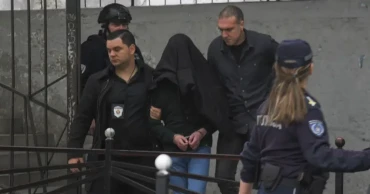
Suspect arrested in Serbia’s second mass shooting in 2 days
A gunman killed eight people and wounded 14 in three Serbian villages, authorities and media reported, shaking a nation still in the throes of grief over a mass shooting a day earlier. Police arrested a suspect Friday after an all-night manhunt.
The second shooting came Thursday, a day after a 13-year-old boy used his father’s guns to kill eight fellow students and a guard at a school in Belgrade, the capital.
The bloodshed sent shockwaves through a Balkan nation scarred by wars, but unused to mass murders. Though Serbia is awash with weapons left over from the wars of the 1990s, Wednesday’s shooting was the first at a school in the country’s modern history.
The last mass shooting before this week was in 2013, when a war veteran killed 13 people in a central Serbian village.
Also Read: 8 fatally shot in Serbia town a day after 9 killed at school
Late Thursday, an attacker shot at people in three villages near Mladenovac, some 50 kilometers (30 miles) south of the capital, according to state broadcaster RTS.
“I heard some tak-tak-tak sounds,” recalled Milan Prokic, a resident of Dubona, near Mladenovac. Prokic said he first thought people were shooting to celebrate a birth, as is tradition in Serbia.
“But it wasn’t that. Shame, great shame,” Prokic added.
Police said a suspect, identified by the initials U.B., was arrested near the central Serbian town of Kragujevac, about 100 kilometers (60 miles) south of Belgrade.
Authorities released a photo of the suspect in a police car, showing a young man in a blue T-shirt with an inscription and a map of part of Europe on it.
Serbian Interior Minister Bratislav Gasic called the shootings “a terrorist act,” state media reported.
Before the second shooting, Serbia spent much of Thursday reeling. Students, many wearing black and carrying flowers, filled streets around the school in central Belgrade as they paid silent homage to slain peers. Serbian teachers’ unions announced protests and strikes to warn about a crisis in the school system and demand changes.
The same day, authorities moved to boost gun control, as police urged citizens to lock up their guns and keep them away from children. The government ordered a two-year moratorium on short-barrel guns and tougher sentences for people who enable minors to get ahold of guns.
Under current law, a registered gun owner in Serbia must be over 18, healthy, and have no criminal record. Weapons must be kept locked and separately from ammunition.
Wednesday’s shooting at the Vladislav Ribnikar school also left seven people hospitalized, six children and a teacher. One girl who was shot in the head remains in life-threatening condition, and a boy is in serious condition with spinal injuries, doctors said Thursday.
Authorities have identified the shooter as Kosta Kecmanovic and said he is too young to be charged and tried. He has been placed in a mental hospital, and his father has been detained on suspicion of endangering public security.
Gun ownership is common in Serbia and elsewhere in the Balkans: The country has one of the highest number of firearms per capita in the world. And guns are often fired into the air at celebrations in the region.
Experts have repeatedly warned of the danger posed by the number of weapons in Serbia, a highly divided country where convicted war criminals are frequently glorified and violence against minority groups often goes unpunished. They also note that decades of instability stemming from the conflicts of the 1990s, as well as ongoing economic hardship, could trigger such outbursts.
Dragan Popadic, a psychology professor at Belgrade University, told The Associated Press that the school shooting has exposed the level of violence present in society and caused a deep shock.
“People suddenly have been shaken into reality and the ocean of violence that we live in, how it has grown over time and how much our society has been neglected for decades,” he warned. “It is as if flashlights have been lit over our lives and we can no longer just mind our own business.”
3 years ago

8 fatally shot in Serbia town a day after 9 killed at school
A shooter killed at least eight people and wounded 13 in a drive-by attack near a town close to Belgrade late Thursday, the second such mass killing in Serbia in two days, state television reported.
The attacker shot randomly at people near the town of Mladenovac, some 50 kilometers (30 miles) south of the capital, the RTS report said early Friday. Police were looking for a 21-year-old suspect who fled after the attack, the report said.
The shooting came a day after a 13-year-old boy used his father's guns in a rampage at a school in Belgrade that killed eight of his fellow students and a school guard.
The bloodshed sent shockwaves through a Balkan nation unused to mass murders.
Though Serbia is awash with weapons left over from the wars of the 1990s, mass shootings are extremely rare. Wednesday's school shooting was the first in the country's modern history. The last mass shooting before this week was in 2013, when a war veteran killed 13 people in a central Serbian village.
Serbian Interior Minister Bratislav Gasic called Thursday's shooting "a terrorist act," state media reported.
Special police and helicopter units have been sent to the region as well as ambulances, it added.
No other details were immediately available, and police had not issued any statements.
Earlier Thursday, Serbian students, many wearing black and carrying flowers, filled streets around the school in central Belgrade as they paid silent homage to peers killed a day earlier. Thousands lined up to lay flowers, light candles and leave toys to commemorate the nine people who were killed on Wednesday morning.
The tragedy also sparked a debate about the general state of the nation following decades of crises and conflicts whose aftermath have created a state of permanent insecurity and instability, along with deep political divisions.
Authorities on Thursday moved to boost gun control, as police urged citizens to lock up their guns and keep them away from children.
Police have said that the teen used his father's guns to carry out the attack. He had planned it for a month, drawing sketches of classrooms and making lists of the children he planned to kill, police said on Wednesday.
The boy, who had visited shooting ranges with his father and apparently had the code to his father's safe, took two guns from the safe where they were stored together with bullets, police said on Wednesday.
The shooting on Wednesday morning in Vladislav Ribnikar primary school also left seven people hospitalized — six children and a teacher. One girl who was shot in the head remains in a life-threatening condition, and a boy is in serious condition with spinal injuries, doctors said on Thursday morning.
To help people deal with the tragedy, authorities announced they were setting up a helpline. Hundreds answered a call to donate blood for the wounded victims. A three-day mourning period will begin Friday morning.
Serbian teachers' unions announced protests and strikes to warn about a crisis in the school system and demand changes. Authorities shrugged off responsibility, with some officials blaming Western influence.
The shooter, whom the police identified as Kosta Kecmanovic, has not given any motive for his actions.
Upon entering his school, Kecmanovic first killed the guard and three students in the hallway. He then went to the history classroom where he shot a teacher before turning his gun on the students.
Kecmanovic then unloaded the gun in the school yard and called the police himself, although they had already received an alert from a school official. When he called, Kecmanovic told duty officers he was a "psychopath who needs to calm down," police said.
The children killed Wednesday were seven girls and one boy. One of the girls was a French citizen, France's foreign ministry said.
Authorities have said that Kecmanovic is too young to be charged and tried. He has been placed in a mental institution, while his father has been detained on suspicion of endangering public security because his son got hold of the guns.
"I think we are all guilty. I think each one of us has some responsibility, that we allowed some things we should not allow," said Zoran Sefik, a Belgrade resident, during Wednesday evening's vigil near the school.
Jovan Lazovic, another Belgrade resident, said he was not surprised: "It was a matter of days when something like this could happen, having in mind what is happening in the world and here," he said.
Gun culture is widespread in Serbia and elsewhere in the Balkans: The region has among the highest numbers of guns per capita in Europe. Guns are often fired into the air at celebrations and the cult of the warrior is part of national identities.
Experts have repeatedly warned of the danger posed by the number of weapons in a highly divided country like Serbia, where convicted war criminals are glorified and violence against minority groups often goes unpunished. They also note that decades of instability stemming from the conflicts of the 1990s, as well as ongoing economic hardship, could trigger such outbursts.
"We have had too much violence for too long," psychologist Zarko Trebjesanin told N1 television. "Children copy models. We need to eliminate negative models ... and create a different system of values."
3 years ago

UK holds local elections amid storm over new voter ID rules
Millions of people in England were voting Thursday in local elections that are the first test of electoral opinion since Prime Minister Rishi Sunak took over a fractious and exhausted Conservative Party six months ago.
The Conservatives say they expect to lose ground in elections for more than 8,000 seats on 230 local councils across England as voters punish them for the turmoil that engulfed the party under former Prime Minister Boris Johnson. He resigned amid multiple scandals and was replaced by Liz Truss, whose rash tax-cutting plans spooked financial markets, hammered the value of the pound and roiled the wider British economy.
The party chose Sunak, a smooth former banker, to try to restore stability to the economy and the government.
Sunak said Wednesday that his party was expecting the election to be “hard for us,” but vowed the Conservatives were leaving behind the “box set drama” of the Johnson and Truss eras.
“I’ve only been prime minister for six months but I do believe we’re making good progress,” he told a think-tank event. “Just think about where we were then and where we are now.”
The left-of-center main opposition Labour Party hopes the results will confirm its front-runner status for the next national election, due by the end of 2024.
University of Strathclyde polling expert John Curtice said if Labour secured more than a 10% lead in the projected national vote share based on the local results, it would signal a likely general election victory for the party.
The election is the first to be held since the government changed the law to require voters show photo identification at all U.K. polling stations.
The government says ID is required to vote in many democracies, and the move will help prevent voter fraud. Critics say there is little evidence electoral fraud is a problem in Britain.
Acceptable forms of ID include passports, driver’s licenses and senior citizens’ travelcards – but not transit passes for young people.
The government says getting an older person’s travelcard requires proof of age, unlike other transit passes. But the discrepancy has brought allegations the change will disproportionately prevent young people – the group least likely to support the Conservatives – from voting. Poor people are also less likely to have photo ID than the more affluent.
University of Exeter political scientist Rebecca Baker said “there will very likely be voters who turn up on the day unable to use the polling booth.”
“We may also see much longer queues to vote, in light of the extra elements needed and poor tempers, placing additional strain on the already overloaded polling staff.”
Polls opened at 7 a.m. (0600GMT) and close at 10 p.m. (2100GMT). Most results are due Friday.
There are no elections in Scotland or Wales, while Northern Ireland will vote May 18. London, the U.K.’s largest city, will not elect its mayor and council until next year.
3 years ago

Ukraine’s Zelenskyy convinced Putin will face court justice
Ukrainian President Volodymyr Zelenskyy said on Thursday he was convinced that Russian President Putin would face an international war crimes court when Ukraine wins the war that has been raging for over a year.
In a speech titled “No Peace without Justice for Ukraine” given in The Hague, the city that hosts the International Criminal Court, Zelenskyy said that Putin “deserves to be sentenced for these criminal actions right here in the capital of the international law.”
“And I’m sure we will see that happen when we win. And we will win,” he said. The ICC has issued an arrest warrant for Putin for alleged war crimes in Ukraine, relating to the abduction of children.
The ICC cannot prosecute the crime of war aggression itself. Zelenskyy’s speech was an appeal for a full-fledged tribunal to prosecute that overarching crime, a heart-felt plea for a special tribunal for aggression.
“If we want true justice, we should not look for excuses and should not refer to the shortcomings of the current international law but make bold decisions that will correct that shortcomings that unfortunately exist in international law.”
Zelenskyy’s speech came a day after he denied that Ukrainian forces were responsible for what the Kremlin called an attempt to assassinate Putin in a drone attack on Moscow. The Kremlin promised retaliation for what it termed a “terrorist” act.
Putin’s spokesman on Thursday accused the United States of being behind the alleged attack.
Dmitry Peskov told reporters during a daily conference call that the Kremlin was “well aware that the decision on such actions and terrorist attacks is not made in Kyiv, but in Washington.”
“And then Kyiv does what it’s told to do,” Peskov said, without offering evidence for his claim.
Meanwhile, Ukraine’s military claimed three Russian drones that hit the southern city of Odesa early Thursday had “for Moscow” and “for the Kremlin” written on them, seemingly referring to the strikes in Moscow. Also, Kyiv was the target of an air attack for the third time in four days.
In total, Ukraine’s Air Forces intercepted 18 out of 24 Iranian-made drones launched by Russian forces in various regions. No casualties were reported.
Zelenskyy was welcomed outside the ICC building by the court’s president, Poland’s Piotr Hofmański. Staff crowded at windows to get a glimpse of Zelenskyy’s arrival and raised a Ukrainian flag next to the court’s own flag outside the building.
Judges at the ICC last month announced they had found “reasonable grounds to believe” that Putin and his commissioner for children’s rights were responsible for the unlawful deportation and transfer of children from occupied areas of Ukraine to Russia.
But the chances of Putin standing trial in The Hague are remote. The court does not have a police force to execute its warrants, and the Russian leader is unlikely to travel to any of the ICC’s 123 member states that are under an obligation to arrest him if they can.
The ICC said in a March 18 statement that Putin “is allegedly responsible for the war crime of unlawful deportation of (children) and that of unlawful transfer of (children) from occupied areas of Ukraine to the Russian Federation.”
ICC Prosecutor Karim Khan has made repeated visits to Ukraine and is setting up an office in Kyiv to facilitate his ongoing investigations.
However, the ICC does not have jurisdiction to prosecute Putin for aggression — the unlawful invasion of another sovereign country. The Dutch government has offered to host a court that could be established to prosecute the crime of aggression and an office is being established to gather evidence.
The new International Center for Prosecution of the Crime of Aggression should be operational by summer, the European Union’s judicial cooperation agency, Eurojust, said in February.
The Netherlands has been a strong supporter of the Ukrainian war effort since Russia’s invasion last year. Among military equipment Prime Minister Mark Rutte’s government has promised are 14 modern Leopard 2 tanks it is buying together with Denmark. They are expected to be delivered next year.
The Netherlands also joined forces with Germany and Denmark to buy at least 100 older Leopard 1 tanks for Ukraine.
Among other military hardware, it also sent two Patriot air defense missile systems and promised two naval minehunter ships as well as sending military forensic experts to assist war crime investigations.
Zelenskyy’s visit came on the day the Dutch remember their war dead.
Questions continued to swirl around Russia’s claim that it foiled an attack by Ukrainian drones on the Kremlin early Wednesday.
Putin wasn’t in the Kremlin at the time and was at his Novo-Ogaryovo residence outside Moscow, Peskov told Russia’s state news agency RIA Novosti.
There was no independent verification of the purported attack. Russian authorities said it occurred overnight but presented no supporting evidence. Questions also arose as to why it took the Kremlin hours to report the incident and why videos also surfaced later in the day
White House press secretary Karine Jean-Pierre said the U.S. was “unable to confirm the authenticity” of Russia’s claims of a Ukrainian attack on Moscow. Asked whether the U.S. believed Putin was a lawful target of any potential Ukrainian strike, Jean-Pierre said that since the start of the conflict, the U.S. was “not encouraging or enabling Ukraine to strike beyond its border.”
Asked whether the U.S. was concerned that the accusation might have been a false flag operation by Russia to serve as a pretext for more aggressive military action on Ukraine, Jean-Pierre said she didn’t want to speculate, but added, “Obviously Russia has a history of doing things like this.”
Two Russian oil facilities in southern regions of the country near Ukraine were attacked by drones in what appeared to be a series of attacks on fuel depots behind enemy lines, Russian media said Thursday.
Four drones struck an oil refinery in the Krasnodar region, which borders the Russian-annexed Crimean peninsula, Russian state news agency RIA Novosti reported, citing law enforcement sources. Another facility was reportedly hit in the neighboring Rostov region.
3 years ago

Russia says it foiled an alleged drone attack on Kremlin
Russian authorities accused Ukraine on Wednesday of attempting to attack the Kremlin with two drones overnight in an effort to assassinate President Vladimir Putin.
The Kremlin decried the alleged attack attempt as a "terrorist act" and said Russian military and security forces stopped the drones before they could strike.
In a statement carried by Russian state-run news agencies, it said no casualties took place.
Kremlin spokesman Dmitry Peskov told Russia's state news agency RIA Novosti that Putin wasn't in the Kremlin at the time and was working from the Novo-Ogaryovo residence.
The Kremlin added that Putin was safe and his schedule was unchanged.
There were no immediate comment from Ukrainian authorities. The Kremlin didn't present any evidence from the reported incident, and its statement included few details.
Tass quoted the statement as saying that the Kremlin considered the development to be a deliberate attempt on Putin's life ahead of the Victory Day that Russia celebrates on May 9.
Kremlin spokesman Peskov said a military parade would take place as scheduled that day.
Russia retains the right to respond "when and where it sees fit," the Tass report said, quoting the statement.
3 years ago

Fire rages at Russian oil depot; Zelenskyy visits Finland
A massive blaze broke out at an Russian oil depot, local officials said Wednesday, while the Kremlin's forces used 26 Iranian-made drones in another nighttime attack on Ukraine as the war stretched into its 15th month.
The developments came as Ukrainian President Volodymyr Zelenskyy made an unannounced visit to the Finnish capital, Helsinki, for a one-day summit with Nordic leaders, as he pushes Ukraine’s Western allies to provide Kyiv with more military support.
The Nordic countries have been among Ukraine’s strongest backers.
“The war is ... a turning point for our entire continent,” said Norwegian Prime Minister Jonas Gahr Støre, one of the summit attendees. “Here in the north, we have a more unpredictable and aggressive Russian neighbor, and it is important that we discuss together how to face this new situation.”
The oil depot erupted in flames in Russia’s southern Krasnodar region, located east of the Russian-held Crimean Peninsula, according to Krasnodar Gov. Veniamin Kondratyev.
He didn’t say what caused the fire, which was described as extremely difficult to put out. But some Russian media outlets said it was likely caused by a Ukrainian drone attack overnight. There was no official comment on that possibility.
Local residents heard an explosion shortly before the fire erupted, Russian news site Baza said.
Military analysts reckon Ukraine is targeting supply lines in the Russian rear as Kyiv gears up for a possible counteroffensive amid improving weather conditions and as it receives large amounts of weapons and ammunition from its Western allies.
Explosions have also derailed a Russian freight train and hit a Russian airfield in recent days. Analysts say the attacks may be perpetrated by Ukrainian saboteurs.
At the same time, anticipating a Ukrainian counteroffensive, Russian forces are focused on destroying logistical routes and centers of Ukraine’s armed forces, Kyiv military officials say.
Meanwhile, explosions were heard in Kyiv and elsewhere during the night as Ukrainian air defenses shot down 21 of the Russian drones, Ukraine’s Air Force Command said.
No damage or casualties were reported in the third attempt in six days by the Kremlin's forces to hit Kyiv.
But three people died and five were wounded when a supermarket in the southern Ukrainian city of Kherson came under fire on Wednesday.
According to Ukraine’s Ministry of Internal Affairs, the attack on the “only operating hypermarket in Kherson” happened at around 11 a.m. local time.
A round-the-clock curfew is to be introduced in Kherson from 8 p.m. on Friday through 6 a.m. on Monday, Kherson Gov. Oleksandr Prokudin announced.
“During these 58 hours, it is forbidden to move around or stay on the streets of the city. Also, the city will be closed for entry and exit,” Prokudin said.
The measure is necessary, he said in a video on social media, “so that law enforcement officers can do their job and not put you in danger,” but did not provide further details.
Both Russia and Ukraine reportedly have experienced ammunition shortages after a winter of long-range shelling and missile strikes as the conflict became bogged down in a war of attrition.
Ukraine's government has been pressing its allies to give it more as officials consider when and how they might start trying to drive Russian forces out of the Ukrainian territory they have occupied.
The U.S. plans to send Ukraine about $300 million in additional military aid, including an enormous number of artillery rounds, howitzers, air-to-ground rockets and ammunition, U.S. officials said late Tuesday.
The new package includes Hydra-70 rockets, which are unguided rockets that are fired from aircraft. It also includes an undisclosed number of rockets for the High Mobility Artillery Rocket Systems, or HIMARS, mortars, howitzer rounds, missiles and Carl Gustaf anti-tank rifles.
The weapons will all be pulled from Pentagon stocks, so they can go quickly to the front lines, according to the officials who spoke on condition of anonymity because the aid has not yet been formally announced.
New Zealand also said it was increasing its support for Ukraine by adding another year to the deployment of about 100 military personnel who, among other tasks, have been helping train Ukrainian troops in Britain on operating howitzers.
New Zealand Prime Minister Chris Hipkins said it will also donate an additional $3.3 million toward Ukrainian humanitarian, refugee and legal justice efforts. He said New Zealand has spent about $50 million on financial and military support to Ukraine since the war began.
3 years ago
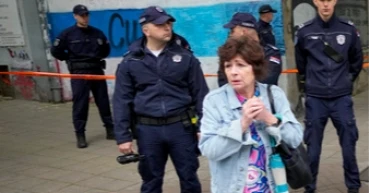
Teenage boy kills 8 children, guard at school in Belgrade
A teenage boy opened fire at a school in Serbia's capital Wednesday, killing eight children and a school guard, police said. Six more children and a teacher were injured and hospitalized.
Police identified the shooter by his initials, K.K., and said he had opened fire with his father's gun. He was arrested in the school yard, police said. A statement identified him as a student at the school in central Belgrade who was born in 2009.
Police said they received a call about the shooting at the Vladislav Ribnikar primary school around 8:40 a.m. Primary schools in Serbia have eight grades, starting with first grade.
“I was able to hear the shooting. It was non-stop," a student who was in a sports class downstairs when the gunfire erupted. “I didn’t know what was happening. We were receiving some messages on the phone.”
Unlike in the United States, mass shootings in Serbia and in the wider Balkan region are extremely rare; none were reported at schools in recent years. In the last mass shooting, a Balkan war veteran in 2013 killed 13 people in a central Serbian village.
Experts, however, have repeatedly warned of the number of weapons left over in the country after the wars of the 1990s. They also note that decades-long instability stemming from the conflicts as well as the ongoing economic hardship could trigger such outbursts.
Local media footage from the scene showed commotion outside the school as police removed the suspect, whose head was covered as officers led him to a car parked in the street.
The student who heard the shooting, who was identified only by her initials, E.M., because of her age, described the suspect as a “quiet guy” who “looked nice.”
“He was having good grades, but we didn’t know much about him,” the student added. “He was not so open with everybody. Surely i wasn’t expecting this to happen. ”
Milan Milosevic, who said his daughter was in a history class when the shooting took place, told N1 television that he rushed out when he heard what had happened.
“I asked where is my child but no one could tell me anything at first,” he said. “Then she called and we found out she was out.”
“He (the shooter) fired first at the teacher and then the children who ducked under the desks,” Milosevic quoted his daughter as saying. “She said he was a quiet boy and a good student.”
Police sealed off the blocks around the school, in the center of Belgrade.
3 years ago

UK’s diverse communities ambivalent about king’s coronation
Musician Deronne White is ready to play on King Charles III’s coronation day. The flautist and his fellow young musicians aren’t playing anything regal or solemn — they’re planning to parade through south London’s streets entertaining crowds with an uplifting “coronation carnival” set mixing gospel, jazz, grime, disco and rap. There’ll even be a calypso take on the U.K. national anthem.
While he’s excited about the gig, White says he has mixed feelings about the coronation. Like some others at the Brixton Chamber Orchestra, White is a descendant of migrants from Jamaica — a former British colony and Commonwealth member that wants to cut its ties with the monarchy and has called for the U.K. royals to address their historical ties to slavery.
“Personally it’s a little bit hard to connect to the whole occasion,” he said. “I think that the coronation could possibly allow people like me to try and connect to (the monarchy). But it can be a bit tough.”
Towns, cities and villages across the U.K. will be awash with Union flags and patriotic decorations to celebrate Charles’ coronation at Westminster Abbey this weekend, and officials say the festivities will bring Britain’s diverse communities together. But the event is viewed with a large dose of ambivalence by some in the U.K., not least those with African Caribbean backgrounds and other minorities for whom the British Empire’s past wrongs still loom large.
While slavery and the heyday of colonialism may be long gone, the royal family has in recent years struggled to grapple with new accusations of institutional racism – most notably from Prince Harry’s wife, Meghan.
The Duchess of Sussex, a biracial American actress, reopened the debate about the monarchy and race when she said last year that an unnamed member of the royal household had asked her how dark her baby’s skin might be when she was pregnant with her first child, Archie.
Last year, there was outrage when Ngozi Fulani, a Black charity executive, complained that a close aide of Queen Elizabeth II’s repeatedly questioned her at a party about where she was “really” from. Palace officials apologized and the aide, Susan Hussey, resigned.
Charles, 74, has on many occasions spoken about how much he values diversity in modern, multicultural Britain. He has paid tribute to Britain’s “Windrush generation” — the West Indians, like White’s great-grandparents, who helped rebuild Britain after World War II. In 2021, Charles won praise for acknowledging “the darkest days of our past” and the stain of slavery.
More recently, the monarch expressed for the first time his support for research into the links between the U.K. monarchy and the trans-Atlantic slave trade.
“I think he’s definitely trying — maybe not in the best way or the fastest way, but from what I’ve seen, it’s kind of a step in the right way,” said Teigan Hastings, 17.
But Hastings, a British Jamaican who plays the tuba alongside White, said that Meghan’s claims about how she was treated by her in-laws “opened up a bit of truth within the royal family.”
“I guess it wasn’t totally unexpected, but at the same time you think there’d be some form of acceptance … and there hasn’t really been,” he said. “It’s like there’s nothing like us normal people can really do about it except hope for change.”
The musicians say they hope that their vibrant blend of musical styles will help draw in the crowds, whatever they may think of Charles.
Across the capital in Southall, known as “Little India” — the west London neighborhood is home to one of the largest Indian populations outside India — local politician Jasbir Kaur Anand said the area’s British Asians also plan to mark the coronation in their own way.
About 6,000 tickets were snapped up for a coronation shindig complete with a huge television screen broadcasting the ceremony, funfair rides and bands playing Jewish, South American and gospel music, Anand said.
She added that she will attend a street party organized by a group of local women that promises to feature “lots of Punjabi food, Punjabi dancing and singing.”
Anand, whose family moved to Britain from Singapore when the city-state gained independence, said many immigrants of her generation feel gratitude to the U.K. monarchy for embracing them and giving them the opportunities to settle and prosper.
Gulu Anand, who owns Southall’s Brilliant curry house and has cooked for Charles several times over the years when he visited the neighborhood, is one vocal supporter of Charles.
Charles “actually listens to you,” he said, recalling the royal’s demeanor when he ate at his restaurant. “I think he is the people’s king.”
But Janpal Basran, who heads local charity Southall Community Alliance, said that many communities in the area are from former colonies and “remember what it was like to be ruled by others.”
“So they look at the monarchy, they remember all of the associated historical baggage, for want of a better word,” Basran said. “There will be people who will be thinking that the monarchy represents an institution which was repressive, discriminatory and violent. Is this something that we want to be supporting to the future?”
Patrick Vernon, a Black activist campaigning for justice for scores of Caribbean migrants who lost their rights as U.K. citizens because of a legal loophole, said Charles could do so much more to show his subjects that the monarchy takes diversity seriously.
He drew attention to a 2021 investigation by the Guardian newspaper that revealed the royal household is still exempt from equality laws preventing race and sex discrimination.
“I think Charles could be in a unique position to start to actually influence that agenda,” he said. “It’s important to demonstrate change, demonstrate that there’s a clear marker that we’re different, that we’re moving towards the 21st century.”
3 years ago