Europe

With coronation approaching, Charles and Buckingham Palace working at top speed to show new king at work
King Charles III is a man in a hurry.
After waiting nearly 74 years to become king, Charles has used his first six months on the throne to meet faith leaders across the country, reshuffle royal residences, stage his first overseas state visit and hold a sleepover at Windsor Castle that included the coach of the England soccer team. Then there was the big news: He opened the royal archives to researchers investigating the crown’s links to slavery.
“We are already surprised by the Prince Charles who was turned into King Charles and who we still call Prince Charles, because that’s how we think of him,” quipped royal historian Robert Lacey. “But, actually, he’s become a monarch quicker than people expected.”
With the coronation less than two weeks away, Charles and the Buckingham Palace machine are working at top speed to show the new king at work. And the public is seeing a new kind of sovereign as he tries to slim down the monarchy and show that it is still relevant in a modern, multi-cultural nation where reverence for Queen Elizabeth II muted criticism during her 70 years on the throne.
Out is the matronly decorum that characterized Elizabeth's reign. In is a more human monarch, who held back tears as he addressed the nation after his mother’s death and threw a mini-tantrum when a pen leaked on his fingers while signing a book in Northern Ireland. The public had a good laugh. The king now carries his own pen for signing emergencies.
While Elizabeth progressed grandly through meetings with subjects who bowed and curtseyed before her, King Charles sat on the floor with the congregation during a visit to a gurdwara, or Sikh house of worship, in Luton, some 30 miles (50 kilometers) northwest of London. On his first state visit, he displayed an ability to properly roll his R's while flipping between German and English in a speech to the Bundestag, the German parliament.
Germans were impressed. Britons were surprised. Who knew he could speak German?
Read: Oil for Charles III's coronation consecrated in Jerusalem
It's as if Charles, long derided as gray and stiff, has just stepped into the room. With extreme subtlety, his personality is starting to show, such as with the ever-changing pocket squares that give a dash of color to his conservative suits.
“Charles, the monarch, with his faults and virtues, has become a subject of more genuine interest,'' said Lacey, the author of “Battle of Brothers: William & Harry and the Inside Story of Family in Tumult.''
“I mean, what pocket handkerchief is he going to wear? Maybe this will become the equivalent of the queen’s handbag.”
One reason Charles is so eager to get started may be because he knows he won’t have much time to make his mark.
The man who waited a lifetime to be king alluded to the march of time during a white tie dinner at the presidential palace in Berlin, saying he hoped he and Camilla would “live long enough’’ to return to see the sapling they had just planted grow into a tree.
But there are speed bumps on the horizon, some linked to history, others to family.
Charles tried to get ahead of the history question by promising openness about the crown’s links to slavery, but some think that commitment fell short.
Laura Trevelyan, whose ancestors enslaved at least 1,000 people on the island of Grenada, says the king should do what her family did and apologize.
“I hope that he will use some of the wealth that the royal family accumulated from the slave trade to better the lives of people in the Caribbean and in Britain who are descendants of the enslaved,” she told the Times of London.
Then there is family.
Charles continues to fend off criticism from Prince Harry, whose memoir “Spare” painted his father as distant and unsympathetic toward a son who struggled with the death of his mother, Princess Diana. Harry also contended the royal family should have done more to accept his wife, Meghan, a biracial American.
Read: UK King Charles eyes continuing strong, close partnership with Bangladesh
Hugo Vickers, a royal historian and author of “Coronation: The Crowning of Elizabeth II,’’ compared the new king’s accession to the throne with being named chairman of a global corporation at a time when most people have retired. It’s a job where he will face questions of religion, the armed forces and politics, in addition to running the royal household and mediating family feuds.
“It’s a big thing to take on at that age,” Vickers said of Charles, who turns 75 in November. "So, yes, I suspect he’s a man in a hurry."
But on another level, Charles’ long apprenticeship may also be an advantage, giving him more training and experiences to draw upon than his mother, who was just 25 when she became queen.
While Elizabeth, like all British monarchs before her, was educated by tutors, Charles was bundled off to Hill House School in London just shy of age 8 to begin experiencing the world outside the palace.
Richard Townend, the son of the school's founder, was a contemporary of Charles’ at Hill House.
Townend said his father created the school as an antidote to what he had seen as a soldier, thinking that children who learned about other cultures would be less likely to wage war as adults.
“What he wanted to do was to make a school, which was quite unlike other schools at the time, in which half the children were not English,” Townend said. “They came from all over the world, so the children would learn to live with each other, different nationalities, different people, different colors, different races, different religions."
"He felt passionately that if children learned to live in peace with each other, then the world could only get better.''
Charles eventually earned a degree in history from the University of Cambridge and spent six years in the Royal Navy before leaving to focus on his duties as heir to the throne.
As Prince of Wales he founded charities, including one that helps young people get jobs, education and training. He started an organic food company and dabbled in urban planning. Charles was also an early advocate for conservation and environmental protection.
That said, he ruffled feathers when he lobbied government ministers and spoke out against projects he thought threatened Britain’s historic architecture, drawing complaints that he had violated the prohibition against royals intervening in politics.
But the biggest controversy of Charles’ life was the breakdown of his marriage to Princess Diana amid stories about his long-time relationship with the woman who would become his second wife, Camilla Parker-Bowles. Many people still remember Charles’ admission of adultery and the leaked tapes of intimate conversations between Charles and Camilla, including one in which he compared himself to a tampon.
It took Charles years to shake off the failure of his first marriage, and many people were slow to accept Camilla.
In “Spare,'' Harry wrote bitterly of the palace’s effort to rehabilitate Camilla’s image, suggesting that unflattering and untrue stories about him were leaked to the media in exchange for more glowing portraits of the senior royals.
Over time, Camilla’s charity work, her sense of humor and down-to-earth style won over the public, and she moved from being home wrecker to queen.
She will be crowned alongside her husband at Westminster Abbey.
“This is a man who has overcome problems and hurdles,” said Lacey, the historical consultant to the Netflix series "The Crown.''
“He’s loved despite the problems that he’s been through. He’s loved for his mistakes as well as for his virtues. We’re getting a rounded figure, and that’s what a personal represented monarchy is all about.”
3 years ago

Russia's air force accidentally bombs its own city
When a powerful blast shook a Russian city near the border of Ukraine residents thought it was an Ukrainian attack. But the Russian military quickly acknowledged that it was a bomb accidentally dropped by one of its own warplanes.
Belgorod, a city of 340,000 about 40 kilometers (25 miles) east of the border, has faced regular drone attacks that Russian authorities blame on the Ukrainian military, but the explosion late Thursday was far more powerful than anything its residents had heard before.
Witnesses reported a low hissing sound followed by a blast that made nearby apartment buildings tremble and threw a car on a store roof. It left a 20-meter (66-foot) -wide crater in the middle of a tree-lined boulevard flanked by apartment buildings, shattering their windows, damaging several cars and injuring two residents. A third person was later hospitalized with hypertension.
Immediately after the explosion, Russian commentators and military bloggers were abuzz with theories about what weapon Ukraine had used for the attack. Many called for a powerful retribution.
But about an hour later, the Russian Defense Ministry acknowledged that the explosion was caused by a weapon accidentally dropped by one of its own Su-34 bombers. It didn't offer any further details, but military experts said the weapon likely was a powerful 500-kilogram (1,100-pound) bomb.
In Thursday's blast, the weapon was apparently set to explode with a small delay after impact, to hit underground facilities.
Belgorod Gov. Vyacheslav Gladkov said that local authorities decided to temporarily resettle residents of a nine-story apartment building near the blast while it was inspected to make sure it hadn't suffered irreparable structural damage.
The explosion in Belgorod followed the crash of a Russian warplane next to a residential building in the port city of Yeysk on the Sea of Azov that killed 15 people. Yeysk hosts a big Russian air base with warplanes flying missions over Ukraine.
Military experts have noted that as the number of Russian military flights have increased sharply during the fighting, so have the crashes and accidents.
3 years ago

UK deputy PM Dominic Raab quits after bullying investigation
U.K. Deputy Prime Minister Dominic Raab resigned Friday after an independent investigation into complaints that he bullied civil servants.
Raab's announcement on Friday came the day after Prime Minister Rishi Sunak received findings into eight formal complaints that Raab, who is also justice secretary, had been abusive toward staff during a previous stint in that office and while serving as foreign secretary and Brexit secretary.
Raab, 49, denied claims he belittled and demeaned his staff and said he "behaved professionally at all times," but had said he would resign if the bullying complaints were upheld.
Sunak received the report Thursday morning and was carefully considering the findings but didn't immediately make a decision, spokesperson Max Blain said.
3 years ago
NATO head defiantly says Ukraine belongs in alliance one day
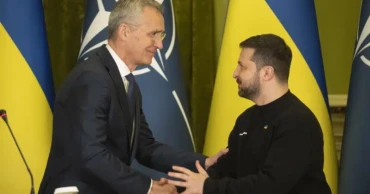
NATO chief Jens Stoltenberg defiantly declared Thursday that Ukraine deserves to join the military alliance and pledged continuing support for the country on his first visit to Kyiv since Russia’s invasion just over a year ago.
Ukrainian President Volodymyr Zelenskyy urged Stoltenberg, who has been instrumental in marshaling support from NATO’s members, to push for even more from them, including warplanes, artillery and armored equipment.
The Kremlin has given various justifications for going to war, but repeated Thursday that preventing Ukraine from joining NATO was a key goal behind its invasion, arguing that Kyiv’s membership in the alliance would pose an existential threat to Russia.
NATO leaders said in 2008 that Ukraine would join the alliance one day, and Stoltenberg has repeated that promise throughout the course of the war — though the organization has established no pathway or timetable for membership. “Let me be clear, Ukraine’s rightful place is in the Euro-Atlantic family,” Stoltenberg told a press conference. “Ukraine’s rightful place is in NATO.”
He said he and Zelenskyy discussed a NATO support program.
“This will help you transition from Soviet-era equipment and doctrines to NATO standards and ensure full interoperability with the alliance,” Stoltenberg said. “NATO stands with you today, tomorrow and for as long as it takes.”
He noted Thursday’s announcement by Denmark and the Netherlands that they plan to provide Ukraine with at least another 14 refurbished Leopard 2 battle tanks from early 2024. He added that he expected countries to “make new announcements of concrete military support to Ukraine” at a meeting Germany on Friday.
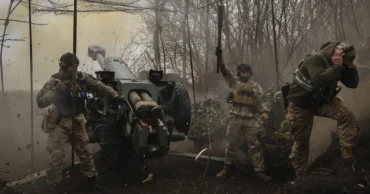
The fighting in recent months has become a war of attrition, with neither side able to gain momentum. But Ukraine is expected to launch a counteroffensive in coming weeks, and it has recently received sophisticated weapons from its Western allies.
NATO has no official presence in Ukraine and provides only provides nonlethal support to Kyiv, but Stoltenberg has been the strong voice of the alliance throughout the war.
A procession of international leaders has made the journey to Kyiv over the last year, and the former Norwegian prime minister is one of the last major Western figures to do so.
NATO, formed to counter the Soviet Union, has long feared being dragged into a wide war with nuclear-armed Russia, but as the West has moved from hesitantly providing helmets and uniforms to tanks, warplanes and advanced missile systems, high-level visits have become routine.
Kremlin spokesman Dmitry Peskov said Thursday that preventing Ukraine from joining NATO remains one of the goals of what Moscow calls its “special military operation.” Speaking in a conference call with reporters, Peskov said that Ukraine’s accession would pose a “serious, significant threat to our country, to our country’s security.”
Earlier this month, Finland joined the alliance, setting aside decades of neutrality in a historic realignment of Europe’s post-Cold War security landscape. While NATO says it poses no threat to Russia, the Nordic country’s accession dealt a major political blow to Putin Finland’s membership doubles Russia’s border with the world’s biggest security alliance. Neighboring Sweden is expected to join in coming months, too, possibly by the time U.S. President Joe Biden and his NATO counterparts meet in the Lithuanian capital Vilnius in July.
The alliance has focused on bolstering defenses on its own territory to dissuade Putin from attacking any member country. Under NATO’s collective security guarantee, an attack on one member country is considered to be an attack on them all.
On Friday, Stoltenberg will attend a Ukraine Defense Contact Group meeting at Ramstein Air Base, Germany, with U.S. Defense Secretary Lloyd Austin. It’s the main international forum for drumming up military support for the conflict-ravaged country.
Meanwhile, the Ukraine Space Agency said Thursday that a bright flash of light in the night sky over the country the previous day was probably a meteorite entering the earth’s atmosphere. Residents of the capital and several cities in Belarus saw the flash of light, which lingered for a couple of seconds, and an explosion was heard in the Kyiv region. It triggered an air raid alarm in Kyiv.
3 years ago

UK prime minister reviewing ‘bully’ report on top deputy
U.K. Prime Minister Rishi Sunak was reviewing a long-awaited report he received Thursday on whether his top deputy bullied civil servants.
Justice Secretary Dominic Raab, who is deputy prime minister, has denied multiple complaints that he was overly demanding and that he belittled and demeaned his staff. He said he “behaved professionally at all times,” but would resign if the bullying complaints were upheld.
Sunak’s spokesman, Max Blain, said the prime minister received the report on Raab’s behavior Thursday morning.
“He is carefully considering the findings of the report before coming to a judgment,” Blain said.
Raab, 49, was first elected to Parliament in 2010 and has served in senior government posts including justice secretary and foreign secretary. Appointed deputy prime minister under Boris Johnson, he briefly took charge of the government when Johnson was hospitalized with COVID-19 in April 2020.
Raab, 49, was first elected to Parliament in 2010 and has served in senior government posts including justice secretary and foreign secretary. Appointed deputy prime minister under Boris Johnson, he briefly took charge of the government when Johnson was hospitalized with COVID-19 in April 2020.
The report is the latest ethics headache for Sunak, who vowed to restore order and integrity to government after three years of instability under predecessors Johnson — brought down in summer 2022 after multiple scandals — and Liz Truss, who quit in October after six weeks in office when her tax-cutting economic plans sparked mayhem on the financial markets.
But he has struggled to shake off opposition allegations that the Conservative government remains mired in scandal and sleaze.
Sunak also faces an investigation announced this week by a parliamentary watchdog over whether he properly disclosed his wife’s interest in a company that stands to benefit from a massive boost to free child care in his administration’s budget.
A member of his Cabinet, Gavin Williamson, quit in November over bullying claims. In January Sunak fired Conservative Party chairman Nadhim Zahawi for failing to come clean about a multimillion-dollar tax dispute.
A separate inquiry is underway into claims Johnson secured a loan with the help of a Conservative donor, Richard Sharp, who was later appointed chairman of the BBC.
3 years ago
NATO chief visits Ukraine for 1st time since Russia invaded
NATO Secretary-General Jens Stoltenberg visited Ukraine on Thursday for the first time since Russia invaded more than a year ago, a highly symbolic trip that underscores the alliance’s commitment to helping Kyiv defend itself.
The Kremlin quickly warned that Ukraine must not be allowed to join NATO. Russia has given various and shifting justifications for going to war, but it has repeatedly pointed to the expansion of the military alliance toward its borders in recent years, including citing fears that Kyiv would be admitted.
Images published in local media showed Stoltenberg apparently paying tribute to fallen Ukrainian soldiers in Kyiv’s St. Michael’s Square.
The visit, just two days after Russian President Vladimir Putin himself went to Ukraine, holds important symbolism, but its exact purpose wasn’t immediately clear.
NATO has no official presence in Ukraine, but Stoltenberg has been the strong voice of the alliance throughout the war. He has been instrumental in garnering and coordinating support — including weapons, ammunition and training for Ukraine’s embattled troops — from the 31 countries that make up the organization.
NATO itself only provides nonlethal support — generators, medical equipment, tents, military uniforms and other supplies — to the government in Kyiv.
A procession of international leaders has made the journey to Kyiv over the last year and the former Norwegian prime minister is one of the last major Western figures to do so.
NATO, formed to counter the Soviet Union, has long feared being dragged into a wide war with nuclear-armed Russia, but as the West has moved from hesitantly providing helmets and uniforms to tanks, warplanes and advanced missile systems, high-level visits have become routine.
Stoltenberg had been to Kyiv before the war, but this is his first visit during the hostilities. NATO leaders said in 2008 that Ukraine would join the alliance one day, and Stoltenberg has repeated that promise throughout the course of the war.
Kremlin spokesman Dmitry Peskov said that preventing Ukraine from joining NATO remains one of the goals of what Moscow calls its “special military operation.” Speaking in a conference call Thursday with reporters, Peskov said that Ukraine’s accession would pose a “serious, significant threat to our country, to our country’s security.”
Earlier this month, Finland joined the alliance, setting aside decades of neutrality in a historic realignment of Europe’s post-Cold War security landscape. While NATO says it poses no threat to Russia, the Nordic country’s accession dealt a major political blow to Putin.
Finland’s membership doubles Russia’s border with the world’s biggest security alliance. Neighboring Sweden is expected to join in coming months, too, possibly by the time U.S. President Joe Biden and his NATO counterparts meet in the Lithuanian capital Vilnius in July.
The alliance has focused on bolstering defenses on its own territory to dissuade Putin from attacking any member country. Under NATO’s collective security guarantee, an attack on one member country is considered to be an attack on them all.
On Friday, Stoltenberg will attend a Ukraine Defense Contact Group meeting at Ramstein Air Base, Germany, with U.S. Defense Secretary Lloyd Austin. It’s the main international forum for drumming up military support for the conflict-ravaged country.
Denmark and the Netherlands announced Thursday that they plan to provide Ukraine with at least 14 refurbished German-made Leopard 2 battle tanks, starting in early 2024.
The announcement comes on top of a previous pledge, by Denmark, the Netherlands and Germany, to supply at least 100 older Leopard 1 A5 tanks.
3 years ago

Study: Climate change causing more 'heat stress' in Europe
Europeans, particularly in the south of the continent, are being subjected to more heat stress during the summer months as climate change causes longer periods of extreme weather, a study published Thursday shows.
The European Commission's Copernicus Climate Change Service said comparisons of data going back over decades show record heat last year resulted in hazardous conditions for human health.
"Southern Europe experienced a record number of days with 'very strong heat stress,'" defined as temperatures from 38 to 46 degrees Celsius (100 to 115 degrees Fahrenheit), it said.
The number of summer days with "strong" (32 to 38 Celsius) or "very strong" heat stress is rising across the continent, while in southern Europe this is also the case for "extreme heat stress" days above 46 Celsius, Copernicus said.
"There is also a decreasing trend in the number of days with 'no heat stress'," it added.
Heat stress is increasingly viewed as a significant issue worldwide as the planet warms due to human-made climate change. Experts say it can cause a wide range of health problems, including rashes, dehydration and heat stroke.
The warning was part of the annual Copernicus European State of the Climate report, which confirmed that the continent experienced its second warmest year on record in 2022. Last summer was the hottest on record across Europe at 1.4 Celsius (2.5 Fahrenheit) above the reference period of 1991-2020. The Svalbard region in the Arctic even saw summer temperatures that were 2.5 Celsius (4.5 Fahrenheit) higher than the average, it said.
High temperatures and low rainfall also resulted in widespread drought, while summer wildfires caused the highest carbon emissions in 15 years, Copernicus said.
This led to record melting of Alpine glaciers, with more than five cubic kilometers of ice disappearing, it said.
3 years ago

France's Macron heckled by crowd angry over pensions
In France, when presidents take strolls among the public, they're described as "taking a crowd bath." Emmanuel Macron took a very cold one on Wednesday.
Braving hecklers who shouted for him to resign, the French leader threw himself into the uphill task of repairing damage done to his presidency by forcing through unpopular pension reforms, taking his first such "crowd bath" since he enacted the law last week.
The visit to eastern France, close to the border with Germany, was part of a concerted new effort by Macron and his government to put the furor caused by the pension change behind him. Raising the retirement age from 62 to 64 has ignited a months-long firestorm of protest in France.
The uproarious climate of discontent threatens Macron's ability to get some other planned policies through in the remaining four years of his second and last term. He got to see first-hand how unhappy people still are when he mingled among a crowd in the town of Selestat.
One man who shook his hand didn't hold back and told Macron that his government is "corrupt" -- a claim that Macron immediately denied.
"You'll soon fall! You'll see," the man said.
Working his way along the crowd, which was kept back by a metal barrier, Macron argued for his pension reform but also acknowledged that it was "unpopular."
"It doesn't make anyone happy to work more and for longer," he said.
Still, he insisted that he wouldn't be cowed from mixing with people.
"I've known worse," he said.
In the background, some shouted "Macron, resign!," or intoned a song that has become an anthem of the retirement protests.
Earlier Wednesday, during a visit to a company specializing in wooden buildings, Macron was met by a more silent protest.
Lawmaker Emmanuel Fernandes of the far-left France Unbowed party appeared wearing a gag over his mouth bearing the number 49-3, in reference to the constitutional article that the government used to force the new pension age through parliament without a vote.
The hard-left CGT union plans scattered protest actions Thursday, and all of France's main unions plan new nationwide protests on May 1 to coincide with International Workers' Day.
3 years ago

Spain's prime minister warns drought now a major national concern
Spain's prime minister warned lawmakers Wednesday that the acute drought afflicting the southern European country has become one of its leading long-term concerns.
"The government of Spain and I are aware that the debate surrounding drought is going to be one of the central political and territorial debates of our country over the coming years," Prime Minister Pedro Sánchez told the Madrid-based Parliament.
The territorial tensions between regions over water that Sánchez referred to are already being seen in protests over the rerouting of water and disputes between farmers and ecologists.
Three years of scant rainfall and high temperatures put Spain officially into long-term drought last month.
The national weather service said 2022 was the hottest year ever recorded, when average daily temperatures rose above 15 degrees Celsius (59 degrees Fahrenheit) for the first time since records started in 1961. The country has warmed 1.3 degrees Celsius (34 F) since the 1960s, a warming that is noticeable all year round, but especially in summer when average temperatures have risen by 1.6 degrees.
The Mediterranean region as a whole is warming faster than the global average because of climate change caused by the release of greenhouse gases, experts and authorities say.
And there is no sign of the situation in Spain improving over the coming weeks.
That has led to water restrictions in the driest areas. Regional authorities in northeast Catalonia said this week that Barcelona and a wide surrounding area that's home to around 6 million people could enter a drought "emergency" by September unless forecasts prove wrong.
The reservoirs that provide northern Catalonia with water have shrunk to 27% of capacity. Only the reservoirs connected to the Guadalquivir river basin in southern Andalusia are worse off, at 26% of capacity.
Andalusia and other agricultural areas are bearing the brunt of the drought as farmers lose crops.
Spain's agriculture ministry met with farming associations and local authorities charged with irrigation management in Madrid on Wednesday. Agriculture Minister Luis Planas committed to asking the European Union to temporarily relax common agricultural regulations for Spanish farmers to help speed up financial help for the sector.
Andrés Góngora, representative of the COAG farmers and breeders association, said that his group urged the ministry to take emergency measures.
"(The government must) issue an emergency decree so it can adopt measures to address the catastrophic situation that many farmers and breeders are facing," he said. "This year, unfortunately, there won't be any green shoots, but instead a lot of red numbers."
Spain's forests are also suffering as firefighters battle blazes that are normally not seen until the hottest summer months.
Sánchez, a Socialist leader who faces a general election in December, said that a priority of his government is to invest heavily to "help recover our rivers, improve our water purification and cleaning systems and the reuse of water, and digitalize our water management."
"This is clearly our responsibility, our duty, because the challenge we face from climate change and water stress is evident," Sánchez said.
3 years ago

Ukraine: US-made Patriot guided missile systems arrive
Ukraine's defense minister said Wednesday his country has received U.S-made Patriot surface-to-air guided missile systems it has long craved and which Kyiv hopes will help shield it from Russian strikes during the war.
"Today, our beautiful Ukrainian sky becomes more secure because Patriot air defense systems have arrived in Ukraine," Defense Minister Oleksii Reznikov said in a tweet.
Ukrainian officials have previously said the arrival of Patriot systems, which Washington agreed to send last October, would be a major boost and a milestone in the war against Moscow's full-scale invasion.
The Patriot can target aircraft, cruise missiles, and shorter-range ballistic missiles. Russia has used that weaponry to bombard Ukraine, including residential areas and civilian infrastructure, especially the power supply over the winter.
Ukrainian air force spokesman Yurii Ihnat said late Tuesday that delivery of the system would be a landmark event, allowing Ukrainians to knock out Russian targets at a greater distance.
Reznikov thanked the people of the United States, Germany and the Netherlands, without saying how many systems had been delivered nor when.
Germany's federal government website on Tuesday listed a Patriot system as among the military items delivered within the past week to Ukraine, and German Foreign Minister Annalena Baerbock confirmed that to lawmakers in Berlin on Wednesday.
Reznikov said he had first asked for Patriot systems when he visited the U.S. in August 2021, five months before the full-scale invasion by the Kremlin's forces and seven years after Russia illegally annexed Ukraine's Crimea peninsula. He described possessing the system as "a dream" but said he was told in the U.S. at the time that it was "impossible."
Ukrainian personnel have been trained on the Patriot battery, which can need as many as 90 troops to operate and maintain it.
"Our air defenders have mastered (the Patriot systems) as far as they could. And our partners have kept their word," Reznikov wrote.
Experts have cautioned that the system's effectiveness is limited, and it may not be a game changer in the war, even though it will add to Ukraine's arsenal against its bigger enemy.
The Patriot was first deployed by the U.S. in the 1980s. The system costs approximately $4 million per round and the launchers cost about $10 million each, analysts say. At such a cost, it's not advantageous to use the Patriot to shoot down the far smaller and cheaper Iranian drones that Russia has been buying and using in Ukraine.
Kyiv officials have reported daily civilian, but not military, casualties from Russian bombardment.
At least four civilians were killed and 27 others were injured in Ukraine on Tuesday and overnight, the press office of Ukraine's defense ministry reported.
A 50-year-old man and 44-year-old woman were killed in a Russian airstrike on a border town in the northeastern Kharkiv region, its Gov. Oleh Syniehubov said in televised remarks.
Russian forces launched 12 rocket, artillery, mortar, tank and drone attacks on Ukraine's southern Kherson region, its Gov. Oleksandr Prokudin said, killing one civilian at a market in the center of Kherson, the region's namesake capital, and a nearby school.
A woman was killed and another was wounded in northern Ukraine after Russian forces shelled the border village of Richki from multiple rocket launchers, the local military administration said.
Russian forces also fired nighttime exploding drones at Ukraine's southern Odesa region.
3 years ago