Europe
Ukraine brings back 31 children from Russia amid war
The head of a Ukrainian rescue organization said Saturday that the organization has brought back 31 children from Russia, where they had been taken during the war.
Mykola Kuleba said at a news conference in Kyiv that the children were expected to arrive in the capital later in the day. Kuleba is the executive director of the Save Ukraine organization and is the presidential commissioner for children's rights.
Deportations of Ukrainian children have been a concern since Russia’s Feb. 24, 2022, invasion of Ukraine. The International Criminal Court increased pressure on Russia when it issued arrest warrants on March 17 for President Vladimir Putin and Russian children's rights commissioner Maria Lvova-Belova, accusing them of abducting children from Ukraine.
The International Committee of the Red Cross said this week it had been in contact with Lvova-Belova, the first confirmation of high-level international intervention to reunite families with children who were forcibly deported.
ICRC spokesman Jason Straziuso said the organization was in contact with Lvova-Belova “in line with its mandate to restore contact between separated families and facilitate reunification where feasible.”
An Associated Press investigation revealed Lvova-Belova’s involvement in the abductions and found an open effort to put Ukrainian children up for adoption in Russia.
Lvova-Belova told an informal U.N. Security Council meeting Wednesday that the children were taken for their safety, not abducted — a claim widely rejected by the international community.
The exact number of Ukrainian children taken to Russia has been difficult to determine, and numbers from the warring countries differ vastly.
A statement posted Wednesday on Twitter by Ukraine’s U.N. ambassador, Sergiy Kyslytsya, said more than 19,500 children had been seized from their families or orphanages and forcibly deported.
3 years ago
Polish-Ukrainian friendship masks a bitter, bloody history
Poland has emerged as one Ukraine's most ardent supporters during Russia's invasion despite historical grievances between the neighboring nations that stir up bad feelings to this day.
The tensions between the country at war and its staunch ally were acknowledged Wednesday when Ukrainian President President Volodymyr Zelenskyy made a state visit to Poland, where he was welcomed with honors.
President Andrzej Duda promised that Poland would keep helping Ukraine fight off Russia's aggression, but he also acknowledged at a joint news conference with Zelesnkyy that the relationship was complicated.
"There are still open wounds in the memory of many people,” Duda said, an obvious reference to the massacres of some 100,000 Poles by Ukrainian nationalists during the 1940s. Poland considers the killings genocide.
The difficult past in Poland-Ukraine relations goes back even further than that. In a part of Europe where entire nations have disappeared from maps for generations before returning from the ashes of collapsed empires, sometimes at the expense of neighbors, Poles and Ukrainians share a history of existential rivalry.
Ukrainians, for example, harbor resentment from centuries spent under Polish rule, a period which is not remembered as completely benign.
As the two presidents delivered public addresses to a crowd of Ukrainians and Poles in Warsaw, Duda acknowledged that both nations had made a lot of mistakes “for which we paid the ultimate price."
“We are sending a clear message to the Kremlin today: You will never succeed in dividing us again," he said.
Polish and Ukrainian officials have mostly avoided addressing the old grievances openly as they remain focused on Ukraine's survival and worry that Russian could exploit any divisions. It is, after all, a war whose outcome will determine Ukraine's very existence and Poland's own security for decades to come.
“In the future, there will be no borders between our peoples: political, economic and — what is very important — historical," Zelenskyy said in a Telegram message before his meeting with Duda. "But for that we still need to gain victory. For that, we need to walk side by side a little more.”
By raising the matter now, the leaders seemed to acknowledge that thorny issues could not be swept under the rug forever, even with the war dragging on.
Duda and other nationalist authorities face political pressure to make sure Polish suffering at Ukrainian hands is not forgotten, especially with the growing strength of a far-right party, Confederation, that has sometimes expressed anti-Ukrainian views. A parliamentary election in Poland before the end of the year will be a test for the ruling party, Law and Justice, and determine whether it wins a third term.
On Wednesday, though, Zelenskyy was met with red carpets and pomp. Duda bestowed on his visitor Poland’s oldest and highest civilian distinction, The Order of the White Eagle. “You are surely one of the most outstanding people who has received the distinction," the Polish president said.
Zelenskyy called Duda a friend and said Polish-Ukrainian relations have never been so good. At the same time, Duda insisted the past must not be forgotten and now was the right time to confront it.
“We cannot forget those who have perished in the past,” Duda said. “There are no taboo themes between us.”
Probably the touchiest point of contention is how to remember one of Ukraine’s national heroes, Stepan Bandera, the far-right leader of the Organization of Ukrainian Nationalists who briefly allied himself with Germany's Nazis.
Efforts by Bandera-led forces to carve out an independent territory for Ukraine led them to perpetrate atrocities against Poles, Jews and Soviets.
Such subjects were off-limits during the Soviet era, when Ukraine was a Soviet republic and Moscow also controlled Poland.
Historians say that more than 100,000 Poles, including women and young children, perished at the hands of their Ukrainian neighbors in areas that were then located in southeastern Poland and are mostly in Ukraine now.
The peak of the violence was on July 11, 1943, known as “Bloody Sunday,” when the Ukrainian insurgent fighters carried out coordinated attacks on Poles praying in or leaving churches in more than 100 villages, chiefly in the Volhynia region.
Polish officials insist that only the full truth can strengthen the nations' ties.
Poles were angered in January when Ukraine’s parliament commemorated Bandera on the 114th anniversary of his birth by tweeting an image of the current commander of the Ukrainian armed forces against a portrait of Bandera. The post was later deleted.
Polish Prime Minister Mateusz Morawiecki said then that his government took “an extremely critical stance toward any glorification or even remembrance of Bandera.”
After meeting with Zelenskyy on Wednesday, Morawiecki said the two spoke about the crimes and Poland’s request to carry out exhumations on the Polish victims, something Ukraine has so far banned.
“We had a very difficult history and today there is a chance to rewrite this history and base it on the truth,” Morawiecki said.
3 years ago
Macron in China urges 'shared responsibility for peace'
French President Emmanuel Macron said Wednesday he wants to "engage China toward a shared responsibility for peace" in Ukraine when he meets Chinese leader Xi Jinping this week.
French officials said earlier that Macron planned to urge Xi in talks Thursday to use Beijing's influence with Russian President Vladimir Putin, but didn't expect a big shift in the Chinese position.
Macron is to be accompanied by European Commission President Ursula von der Leyen in a show of European unity in dealings with Beijing.
Xi and Putin declared their governments had a "no limits friendship" before Moscow's February 2022 attack on Ukraine. Beijing has refused to criticize the Kremlin but has tried to appear neutral and has called for a cease-fire and peace talks.
In a speech to French residents of China, Macron said he would "try to build, and somehow engage China toward a shared responsibility for peace and stability on international issues" including Ukraine, Iran and North Korea.
Macron expressed hope China will "participate in initiatives that are useful to the Ukrainian people."
"Dialogue with China is indispensable," Macron said during the event at the French Embassy.
Xi's government sees Russia as a source of energy and as a partner in opposing what both say is U.S. domination of global affairs.
China is the biggest buyer of Russian oil and gas, which helps to prop up the Kremlin's revenue in the face of Western sanctions. That increases Chinese influence, but Xi appears reluctant to jeopardize that partnership by pressuring Putin.
Macron noted Putin's announcement that Moscow plans to deploy tactical nuclear weapons in Belarus, which China opposes.
"Territorial integrity, the sovereignty of nations is part" of the Charter of the United Nations, which China affirmed, Macron said.
Defending those principles "means moving forward together and trying to find a path for peace," Macron said. He noted China proposed a peace plan in February and that while France doesn't fully agree with it, the plan "shows a will to commit toward the resolution of the conflict."
Meanwhile, NATO's 31 member countries warned Wednesday of "severe consequences" should China start sending weapons and ammunition to Russia.
"Allies have been clear that any provision of lethal aid by China to Russia would be a historic mistake, with profound implications," NATO Secretary-General Jens Stoltenberg told reporters after chairing a meeting of the organization's foreign ministers in Brussels.
Stoltenberg declined to say what the implications of such a move might be, but warned only that it would involve "severe consequences."
"At a time when Beijing and Moscow are pushing back against the rules-based international order, it is even more important that we continue to stand together," he said.
Last week, von der Leyen warned the European Union must be prepared to develop measures to protect trade and investment that China might exploit for its own security and military purposes.
Thierry Breton, EU commissioner for internal market, said Monday on French news broadcaster FranceInfo the message to Chinese authorities is that they "must stop trying to play one country against another."
Macron also said "several major deals" were due to be signed between French and Chinese companies during the visit. He was accompanied by more than 50 French CEOs including from Airbus, railway equipment manufacturer Alstom and energy giant EDF.
A French official said last week negotiations were underway on a potential deal with Airbus that would come on top of China's 2019 order for 300 aircraft.
Macron said he will push for "working in partnership" with China on climate. He said France will organize a global conference on the protection of oceans in 2025 and said China should be part of these efforts.
3 years ago
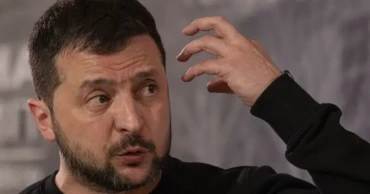
Zelenskyy visits Poland to thank ally and meet Ukrainians
Ukrainian President Volodymyr Zelenskyy and his wife arrived in Poland Wednesday for a state visit that is meant as a gesture of thanks to the neighboring nation for its crucial support in Ukraine's defense against Russia's invasion.
The visit is a rare foray for Zelenskyy out of Ukraine since Russia unleased the war in February 2022. While it follows visits to the United States, Britain, France and Belgium, it stands out from the others because it was announced in advance without the secrecy of past visits.
It is also unusual that the president is joined by the first lady, Olena Zelenska. Marcin Przydacz, the head of Polish President Andrzej Duda’s foreign policy office, described it as Zelenskyy's first visit of this kind since the war began.
The visit shines a light on Poland's rising international role in a new security order that is emerging after Russia's aggression against Ukraine. Poland is modernizing its military with orders of tanks and other equipment from U.S. and South Korean producers, while the United States has also beefed up its military presence in Poland.
Zelenskyy has traveled through Poland on his other trips, but until now had not made Poland the focus of of one his trips.
Zelenskyy is to meet with Duda and Prime Minister Mateusz Morawiecki, attend an economic forum focused on the reconstruction of Ukraine and meet some of the Ukrainians who have found refuge in Poland. Poland has been a key destination for Ukrainian refugees, particularly those who want to remain close because they plan to return or want to be able to visit loved ones.
Warsaw has been a key ally for Ukraine since Russia’s full-scale invasion last year, welcoming large numbers of refugees and becoming a hub for humanitarian aid and weapons to transit into Ukraine.
More than 1.5 million Ukrainians have registered with the Polish government since the war began, joining large numbers that had already arrived in recent years for work. The exact number of Ukrainians present in the country at any given moment is impossible to measure, especially with many going back and forth.
But Zelenskyy’s visit also comes at a delicate time, with Polish farmers growing increasingly angry because Ukrainian grain that has entered Poland has created a glut, causing prices to fall.
The grain is only meant to be stored and transit through Poland to reach international markets, but farmers in Poland say the grain is instead staying in Poland, taking up space in silos and entering local markets, causing local prices to fall for the farmers. Romanian and Bulgarian farmers say they are facing the same problem.
Przydacz acknowledged in comments to reporters that the issue has caused tensions and said that would be a topic of the talks on Wednesday.
The anger of the farmers is emerging as a headache for Morawiecki's government ahead of general elections in the fall, particularly since his conservative ruling party, Law and Justice, gets much of its support in rural areas.
An hour before Duda was to welcome Zelenskyy, Poland's agriculture minister, Henryk Kowalczyk, who has been the focus of the farmers' anger, resigned from his post.
3 years ago
Italy wants to punish use of English in official correspondence with up to €100k fines
Italians who use English or other foreign words in official correspondence might face fines of up to EUR 100,000 (USD 108,705) under new law proposed by Prime Minister Giorgia Meloni's Brothers of Italy party.
The legislation was introduced by Fabio Rampelli, a member of the lower chamber of deputies, and is backed by the Italian PM, reports CNN.
Read More: Sparks fly as neutral pronoun included in French dictionary
While the legislation applies to all foreign languages, it is aimed especifically against "Anglomania", or the usage of English phrases, which the draft argues "demeans" the Italian language, and is made worse because the UK is no longer a member of the EU, the report said.
The bill, which was yet to be debated in the Italian parliament, requires anybody holding a public administration position to have “written and oral knowledge and mastery of the Italian language.” It also forbids the use of English in official paperwork, including "acronyms and names" of employment functions in domestic firms.
According to a draft of the legislation, foreign firms would be required to have Italian language versions of all internal regulations and employment contracts.
Read More: Int’l Mother Language Day: Discussion on multilingual education held at UN HQ
The proposed law would create a body whose mandate would include “correct use of the Italian language and its pronunciation” in schools, media, commerce, and advertising, said the CNN report.
3 years ago
Officials: US providing Ukraine $2.6 billion in military aid
The U.S. will send Ukraine about $500 million in ammunition and equipment and will spend more than $2 billion to buy an array of munitions, radar and other weapons in the future, U.S. officials said, as the Ukrainian troops prepare for a spring offensive against Russian forces.
The ammunition rounds, along with grenade launchers and vehicles, will be taken from military stockpiles so they can be in the war zone quickly, the officials said.
"We very much appreciate everything that the United States has done specifically in the last month to help our army prepare itself for the counteroffensive," said Ukrainian Foreign Minister Dmytro Kuleba, speaking at NATO headquarters in Brussels before a meeting with U.S. Secretary of State Antony Blinken. "The Biden administration has upheld its commitment to provide Ukraine with a lot of what we need and set an example to other allies."
The $2.1 billion in longer-term aid, which is being provided under the Ukraine Security Assistance Initiative, will buy missiles for the National Advanced Surface-to-Air Missile System, or NASAMS, as well as radar and other weapons, according to the officials, who spoke on the condition of anonymity because the aid had not yet been announced. An announcement is expected as soon as Tuesday.
The new weapons and funding come as Russia has continued to bombard Ukraine with long-range missiles and the hotly contested battle for the eastern city of Bakhmut drags on. Ukrainian President Volodymyr Zelenskyy told The Associated Press in an exclusive interview that unless his country wins that fight, Russia could begin building international support for a deal that could require Ukraine to make unacceptable compromises.
Zelenskyy said if Moscow's forces take Bakhmut, then Russian President Vladimir Putin would "sell this victory to the West, to his society, to China, to Iran."
The latest U.S. package, with its mix of short-term and long-term aid, includes a wide variety of ammunition from Pentagon stocks, 23 million rounds of small arms ammunition and 200,000 grenades, as well as funding for more high-tech weapons, including counter drone rocket systems, air surveillance radar and satellite communications terminals and services.
It brings the total amount of U.S. security assistance to Ukraine to more than $35 billion since Russia invaded in February 2022. Defense leaders testifying on Capitol Hill last week said the U.S. is prepared to support Ukraine for as long as needed.
NATO Secretary-General Jens Stoltenberg echoed that sentiment on Monday, as the alliance's foreign ministers were preparing to meet in Brussels. The ministers on Tuesday "will discuss how we can step up our support, including by continuing to strengthen Ukraine's armed forces," Stoltenberg said. "Our support is for the long haul."
The White House said last week that it has new evidence that Russia is looking again to North Korea for weapons as it also prepares for a spring offensive. Russia would provide Pyongyang with needed food and other commodities in return.
U.S. officials also are concerned that the president of Belarus has warned that Russian strategic nuclear weapons might be deployed in his country, along with part of Moscow's tactical nuclear arsenal.
Putin has said he planned to place tactical nuclear weapons in neighboring Belarus. Those weapons are comparatively short-range and low-yield. Strategic nuclear weapons, such as missile-borne warheads, would be a greater threat.
Belarusian President Alexander Lukashenko, while talking up the possibility of nuclear weapons, has also called for a cease-fire in Ukraine. He said a truce must have no preconditions and all movement of troops and weapons must be halted.
Russia, however, has rejected a cease in fighting, claiming that Ukraine has refused to enter talks under pressure from its Western allies.
3 years ago
Sweden arrest 5 suspected of terror, ties to Quran burning
Five men have been arrested “on suspicion of aiding and abetting terrorist offenses,” Sweden’s SAPO domestic security agency said Tuesday, adding the case was related to the burning of a Quran in January in Stockholm and that an attack is not imminent.
In a statement, Susanna Trehörning, deputy head of SAPO’ s counterterror unit said that the case had “international links to violent Islamist extremism.” Swedish public radio said the suspects had links to the Islamic State group.
Trehörning said that Tuesday’s arrests came following “extensive intelligence and investigative work “after the protests that were directed at Sweden in connection with the high-profile burning of the Quran in January and where there are international calls for attacks.”
She told Swedish broadcaster SVT that the suspects were in ”a planning phase” and that they “had not immediately thought of doing anything here and now.”
In January, a far-right activist from Denmark received permission from police to stage a protest outside the Turkish Embassy in Stockholm where he burned the Islamic holy book.
That angered millions of Muslims around the world and triggered protests. NATO-member Turkey said it wouldn’t allow Sweden to join the military alliance as long as the Scandinavian country permits such protests to take place. In Sweden, such demonstrations are protected by freedom of speech.All NATO members need to ratify in their parliaments the accession requests by Sweden.
Finland which sought NATO membership at the same time as Sweden is expected to join the alliance later Tuesday after all 30 member states ratified the Finns’ accession request, but Turkey is holding out on ratifying Sweden’s membership.
In February, Swedish police denied permission for protests involving the burning of a Quran, fearing they could provoke terror attacks or attacks against Swedish interests.
On Tuesday, Sweden’s Administrative Court ruled that freedom of assembly and demonstration are constitutionally protected rights and overturned the police decision, saying security risk concerns were not enough to limit the right to demonstrate.
3 years ago
Finland set to join NATO, in blow to Putin
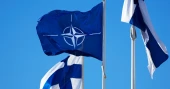
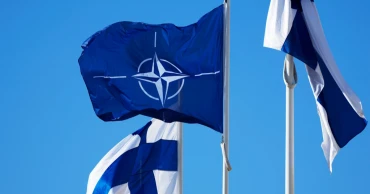
Finland joined the NATO military alliance Tuesday, dealing a major blow to Russia with a historic realignment of the continent triggered by Moscow's invasion of Ukraine.
With the handing over of documents, the Nordic nation officially entered the world's biggest security alliance, doubling its border with Russia.
Finland's membership represents a major change in Europe's security landscape: The country adopted neutrality after its defeat by the Soviets in World War II. But its leaders signaled they wanted to join the alliance just months after Russian President Vladimir Putin's invasion of Ukraine sent a shiver of fear through Moscow's neighbors.
The move is a strategic and political blow to Putin, who has long complained about NATO's expansion toward Russia and partly used that as a justification for the invasion. The alliance says it poses no threat to Moscow.
Also Read: Finland prime minister ousted, conservatives win tight vote
Russia warned that it would be forced to take "retaliatory measures" to address what it called security threats created by Finland's membership. It has also warned it will bolster forces near Finland if NATO sends any additional troops or equipment to what will be its 31st member country.
Neighboring Sweden, which has avoided military alliances for more than 200 years, has also applied. But objections from NATO members Turkey and Hungary have delayed the process.
Finland's membership became official when its foreign minister handed over documents completing its accession process to U.S. Secretary of State Antony Blinken. The U.S. State Department is the repository of NATO texts concerning membership.
3 years ago
Finland to join NATO Tuesday, military alliance chief says
NATO Secretary-General Jens Stoltenberg said Monday Finland will become the 31st member of the world’s biggest military alliance on Tuesday, prompting a warning from Russia that it would bolster its defenses near their joint border if NATO deploys any troops in its new member.
“This is a historic week,” Stoltenberg told reporters on the eve of a meeting of NATO foreign ministers in Brussels. “From tomorrow, Finland will be a full member of the alliance.” He said that he hopes Sweden will be able to join NATO in coming months.
The former Norwegian prime minister said that on Tuesday afternoon, “we will raise the Finnish flag for the first time here at the NATO headquarters. It will be a good day for Finland’s security, for Nordic security, and for NATO as a whole.”
Stoltenberg said that Turkey, the last country to have ratified Finland’s membership, will hand its official texts to U.S. Secretary of State Antony Blinken on Tuesday. Stoltenberg said he would then invite Finland to do the same.
Finnish President Sauli Niinistö and Defense Minister Antti Kaikkonen will attend the ceremony, along with Foreign Minister Pekka Haavisto.
“It is a historic moment for us. For Finland, the most important objective at the meeting will be to emphasize NATO’s support to Ukraine as Russia continues its illegal aggression,” Haavisto said in a statement. “We seek to promote stability and security throughout the Euro-Atlantic region.”
Russia’s Deputy Foreign Minister Alexander Grushko said that Moscow would respond to Finland becoming NATO’s member by bolstering its defenses if needed.
“We will strengthen our military potential in the west and in the northwest,” Grushko said in remarks carried by the state RIA Novosti news agency. “In case of deployment of forces of other NATO members on the territory of Finland, we will take addition steps to ensure Russia’s military security.”
The announcement of Finland’s entry comes just after Finnish voters gave a boost to conservative parties in a weekend election, depriving left-wing Prime Minister Sanna Marin of another term. Marin had championed her country’s NATO accession.
Fearing that they might be targeted after Russia invaded Ukraine a year ago, the Nordic neighbors Finland and Sweden abandoned their traditional positions of military non-alignment to seek protection under NATO’s security umbrella.
All 30 allies signed Finland’s and Sweden’s accession protocols. Turkey and Hungary delayed the process for months but have relented on Finland. Turkey has sought guarantees and assurances from the two, notably on tackling extremism. Hungary’s demands have never been explicit.
NATO must agree unanimously for new members to join. NATO officials are also keen to bring Sweden within the fold before U.S. President Joe Biden and his alliance counterparts meet in the Lithuanian capital Vilnius on July 11-12.
“Sweden is not left alone. Sweden is as close as it can come as a full-fledged member,” Stoltenberg said.
3 years ago
EU proposes digitalizing Schengen visa application process: Here’s what this means
The European Union (EU) member states’ ambassadors on March 29 agreed the Council’s negotiating mandate for a proposal to digitalize the Schengen visa procedure.
The proposal includes the ability to apply for Schengen visa online, as well as the replacement of the present visa sticker with a digital visa, according to a press release of the European Council.
The move intends to enhance the efficiency of the visa application process as well as the security of the Schengen area, it said.
Read More: Schengen visa fee for Bangladeshis to go up from Feb 2
“A digital Schengen visa will make it easier for legitimate travellers to apply and will at the same time help make the Schengen area safer. Online applications will reduce the number of trips to the consulate for travellers and make the process smoother for national administrations. At the same time, the digital visa will put an end to the risk of falsification and theft of the visa sticker,” said Maria Malmer Stenergard, Swedish minister for migration.
The proposed new guidelines will establish a platform for visa applications. All Schengen visa applications will be made through this platform – a single website that will forward them to the applicable country visa systems.
Schengen visa applicants will be able to enter all required data, submit electronic copies of their travel and supporting papers, and pay their visa fees on the website, it said.
Read More: Saudi Visa Service Centre launched in Dhaka
Travellers will also be informed of any decisions made regarding their Schengen visa.
First-time applicants, those whose biometric data is no longer valid, and those with a new travel document, will be required to be present in-person at the consulate, said the press release.
When a person wishes to visit several Schengen countries, the platform will automatically decide which one is in charge of evaluating the application based on the length of stay.
Read More: US announces in-person interview waivers for certain visa applicants throughout 2023
Nevertheless, the applicant will be able to choose whether the application should be handled by a certain member state based on the purpose of travel, the release also said.
Schengen visas will be issued in digital format, as a 2D barcode that is cryptographically signed, under the proposed new guidelines. This would reduce the security threats associated with counterfeit and stolen visa stickers.
Background and next steps for Schengen visa process
Current migration and security issues have dramatically altered the setting of the EU’s visa policy. Furthermore, the Covid-19 outbreak hindered Schengen visa processing and generated a demand for additional digital procedures.
Read More: Umrah e-visa: Biometric data must for pilgrims from Bangladesh, 4 other countries
Simultaneously, technology advancements give additional security features and potential to make procedures more efficient and effective for both visa applicants and national authorities, the release said.
In this regard, the Commission proposed a legislative proposal aiming at digitalizing the Schengen visa procedure on April 27, 2022.
The Council presidency will begin discussions with the European Parliament to agree on the final text based on the negotiating mandate agreed upon on March 29 meeting.
Read More: Bangladeshi applicants for UK visa need to pay online from Nov 28
3 years ago