europe
Russian missiles kill 6 in Ukraine's second-largest city where Moscow's troops are pressing
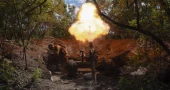
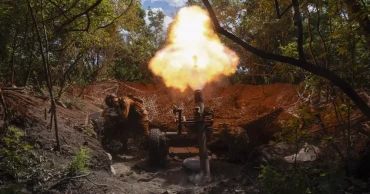
Russian missiles slammed into Ukraine’s second-largest city in the northeast of the country and killed at least six civilians early Thursday, officials said, as Kyiv’s army labored to hold off an intense cross-border offensive by the Kremlin’s larger and better-equipped forces.
At least 16 people were injured as S-300 missiles struck the city of Kharkiv, regional Gov. Oleh Syniehubov said. The sound of 15 explosions reverberated around the city of some 1 million people.
Ukrainian President Volodymyr Zelenskyy called the attack “extremely cruel.” He expressed renewed frustration at not getting enough air defense systems from the country’s Western partners to prevent the barrages after more than two years of unrelenting war.
The city of Kharkiv, which is the capital of the region of the same name, lies about 20 kilometers (12 miles) from the Russian border. Moscow’s troops have in recent weeks captured villages in the area as part of a broad push, and analysts say they may be trying to get within artillery range of the city.
In what is shaping up to be Ukraine’s biggest test since Russia’s full-scale invasion in February 2022, outnumbered and outgunned Ukrainian forces are being pressed at several points along the about 1,000-kilometer (600-mile) front line that snakes from north to south along the eastern side of the country.
With Ukraine short of air defenses and waiting for more Western military support that recently started trickling in, its army has been pushed backwards in places while Russia has pounded its power grid and civilian areas. Kyiv endured further power outages Thursday.
Zelenskyy said the main hotspots in recent fighting have been Kharkiv and the neighboring Donetsk region, where in February Ukraine’s defenders withdrew from the stronghold of Avdiivka. For the Kremlin, taking control of all of partially occupied Donetsk is a war priority.
At the same time, and in an apparent effort to stretch Ukraine’s depleted forces, Russian troops have made incursions in the northern Sumy region.
Nearly 1,500 people, including 200 children, have been evacuated from the towns of Bilopillia and Vorozhba in that region, according to regional Gov. Volodymyr Artiukh.
“The main focus (of the fighting) is on the entire border area,” Zelenskyy said in his nightly video address Wednesday.
Ukraine has also trained its sights on Russian regions across the border. Russia’s defense ministry said Thursday that 35 Ukrainian rockets and three drones were shot down over the Belgorod region. Regional Gov. Vyacheslav Gladkov said one drone struck a house and exploded after being shot down, killing a woman.
2 years ago
Rishi Sunak sets July 4 election date to determine who governs the UK
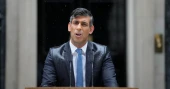
British Prime Minister Rishi Sunak on Wednesday set July 4 as the date for a national election that will determine who governs the U.K., choosing a day of good economic news to urge voters to give his governing Conservatives another chance.
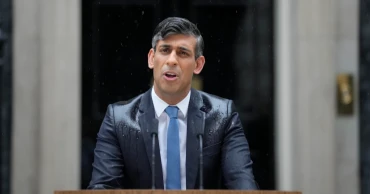
“Now is the moment for Britain to choose its future,” Sunak said as he stood in heavy rain outside the prime minister's residence.
Rishi Sunak fires UK Home Secretary Suella Braverman who accused police of favoring pro-Palestinian protesters
Sunak’s center-right party has seen its support dwindle steadily after 14 years in power. It has struggled to overcome a series of crises including an economic slump, ethics scandals and a revolving door of leaders in the past two years.
The center-left Labour Party is strongly favored to defeat Sunak’s party.
UK leader Sunak chides China after a report that a UK Parliament staffer is a suspected Beijing spy
The prime minister's announcement was nearly drowned out by protesters blasting “Things Can Only Get Better,” a Labour campaign song from the Tony Blair era.
Bookies and pollsters rank Sunak as a long shot to stay in power. But he said he would “fight for every vote.”
UK political watchdog says Prime Minister Rishi Sunak ‘inadvertently’ broke ethics rules
Sunak stressed his credentials as the leader who saved millions of jobs with support payments during the COVID-19 pandemic and got the economy under control. He said the election would be about “how and who you trust to turn that foundation into a secure future.”
The election will be held against the backdrop of a cost-of-living crisis and deep divisions over how to deal with migrants and asylum seekers making risky English Channel crossings from Europe.
The announcement came the same day official figures showed inflation in the U.K. had fallen sharply to 2.3%, its lowest level in nearly three years on the back of big declines in domestic bills.
The drop in April marks the greatest progress to date on five pledges Sunak made in January 2023, including halving inflation, which had climbed to above 11% at the end of 2022. Sunak hailed the new figure as a sign his plan was working.
“Today marks a major moment for the economy, with inflation back to normal,” Sunak said Wednesday ahead of the election announcement. “Brighter days are ahead, but only if we stick to the plan to improve economic security and opportunity for everyone.”
Voters across the United Kingdom will choose all 650 members of the House of Commons for a term of up to five years. The party that commands a majority in the Commons, either alone or in coalition, will form the next government and its leader will be prime minister.
Labour leader Keir Starmer, a former chief prosecutor for England and Wales, is the current favorite. The party’s momentum has built since it dealt the Conservatives heavy losses in local elections earlier this month.
The Conservatives have also lost a series of special elections for seats in Parliament this year, and two of its lawmakers recently defected to Labour.
Following on his party’s successes in the local elections, Starmer, 61, last week announced a platform focused on economic stability after years of soaring inflation as he tries to win over disillusioned voters.
He also pledged to improve border security, recruit more teachers and police and reduce lengthy waiting lists at hospitals and doctors′ clinics across the country.
Elections in the U.K. have to be held no more than five years apart, but the prime minister can choose the timing within that period. Sunak, 44, had until December to call an election. The last one was in December 2019.
Many political analysts had anticipated that a fall election would give Conservatives a better chance of maintaining power. That’s because economic conditions may improve further, voters could feel the effect of recent tax cuts, interest rates may come down and a controversial plan to deport some asylum-seekers to Rwanda — a key policy for Sunak — could take flight.
Sunak had been noncommittal about the election date, repeatedly saying — as late as lunchtime on Wednesday — that he expected it would be in the second half of the year.
Although inflation has fallen, Sunak’s other promises — to grow the economy, reduce debt, cut waiting lists to see a doctor at the state-run National Health Service and stop the influx of migrants crossing the English Channel — have seen less success.
He has struggled after entering office following the disastrous tenure of Liz Truss, who lasted only 49 days after her economic policies rocked financial markets. Truss had been chosen by party members after Boris Johnson was ousted over a series of ethics scandals.
2 years ago
Russian attacks on Ukraine power grid touch Kyiv with blackouts ahead of peak demand
Sustained Russian attacks on Ukraine's power grid in recent weeks have forced leaders of the war-ravaged country to institute nationwide rolling blackouts. Without adequate air defenses to counter assaults and allow for repairs, though, the shortages could still worsen as need spikes in late summer and the bitter-cold winter.
The Russian airstrikes targeting the grid since March have meant blackouts have even returned to the capital, Kyiv, which hadn’t experienced them since the first year of the war. Among the strikes were an April barrage that damaged Kyiv’s largest thermal power plant and a massive attack on May 8 that targeted power generation and transmission facilities in several regions.
In all, half of Ukraine’s energy system was damaged, Foreign Minister Dmytro Kuleba said.
Entire apartment blocks in the capital went dark. The city's military administration said at least 10% of consumers were disconnected.
For many, it is a taste of what might be in store if Ukraine doesn't find other electricity sources before winter.
With no end in sight to the attacks on the power grid and without a way to adequately defend against them, there are no quick fixes to the electricity shortages, Energy Minister Herman Halushchenko explained. Ukraine is appealing to Western allies for more air defense systems and spare parts to fix its Soviet-era plants.
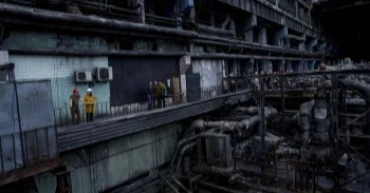
“With each attack we lose additional power generation, so it just goes minus, minus, minus,” Halushchenko said Tuesday while standing outside a coal-fired plant in central Ukraine that was destroyed in an April 11 attack. Any efforts to repair the plant would be futile until the military can defend it from another attack.
“Should we repair (power stations) just for them (Russians) to renew strikes while we are unable to defend ourselves?” the minister asked.
German Foreign Minister Annalena Baerbock’s joined him on the plant visit, underscoring Ukraine’s desperation to close the power gap as quickly as possible.
The first major test of the grid will come in July and August, when consumption can mirror levels in the sub-freezing winter months, the minister said.
By mid-May, Kyiv’s residents began to feel the consequences of Russia’s attacks. A cold snap drove up consumption, forcing Ukrenergo, the main transmission system operator, to introduce controlled blackouts throughout the country. Ukraine can't generate enough power to cover evening peaks, and the shortage is greater than the country’s ability to import electricity from Poland, Slovakia and Romania.
The April 11 attack on the plant destroyed generators, transformers and turbines — every necessary part to generate electricity, said Yevhen Harkavyi, the technical director of Centerenergo, which operates the plant.
Five missiles hit the facility that day, and workers were still clearing away rubble on Tuesday as snow-like tufts of poplar cotton fell through a hole in the roof.
The plan for winter is to restore power generation as much as possible, said Harkavyi. How that will happen isn't clear, he conceded: “The situation is already too difficult."
Ukraine is hoping to acquire parts from long-decommissioned German plants. Harkavyi said Ukrainian teams recently went to Germany to evaluate the equipment, which was taken offline because it doesn't meet European Union environmental standards. It remains to be seen how willing European allies will be to invest in Ukraine's coal-fueled energy sector given their own greener goals.
The teams are still evaluating how to get the equipment back to Ukraine, he said.
“This is the first question,” he said. “The second question is what Ukraine is crying about: We need active protection with air defense systems, and we hope that Mrs. Minister (Baerbock) has seen the scale of destruction and will do everything possible to call for help from the whole world.”
2 years ago
Slovak prime minister underwent another operation, remains in serious condition
Slovak Prime Minister Robert Fico has undergone another operation two days after being shot multiple times and remains in serious condition, officials said Friday.
Fico, 59, was attacked as he was greeting supporters after a government meeting in the former coal mining town of Handlova. A suspected assailant has been arrested.
Miriam Lapunikova, director of the University F. D. Roosevelt hospital in Banska Bystrica, where Fico was taken by helicopter after he was shot, said Fico underwent a CT scan and is currently awake and stable in an intensive care unit. She described his condition as “very serious.”
She said the surgery removed dead tissues that had remained inside Fico's body.
“I think it will take several more days until we will definitely know the direction of the further development," Robert Kaliniak, the defense minister and deputy prime minister, told reporters at the hospital.
Still, Kaliniak stressed that the government continues to work.
“The ministries are working on all their duties, nothing is frozen or halted, the country goes on," he told reporters. “The state is stable and today the patient is stable as well."
Fico has long been a divisive figure in Slovakia and beyond. His return to power last year on a pro-Russian, anti-American platform led to worries among fellow European Union and NATO members that he would abandon his country’s pro-Western course, particularly on Ukraine.
Earlier Friday the man charged with attempting to assassinate Fico was escorted by police to his home. Local media reported that it was part of a search for evidence.
Markiza, a Slovak television station, showed footage of the suspect being taken to his home in the town of Levice on Friday morning, and reported that police had seized a computer and some documents. Police did not comment.
Prosecutors have told police not to publicly identify the suspect or release other details about the case. The suspect's detention will be reviewed at a hearing Saturday at Slovakia's Specialized Criminal Court in Pezinok, outside the capital Bratislava.
Unconfirmed media reports suggested he was a 71-year-old retiree who was known as an amateur poet, and may have previously worked as a security guard at a mall in the country’s southwest.
Government authorities on Thursday gave details that matched that description. They said the suspect did not belong to any political groups, though the attack itself was politically motivated.
Slovakia’s presidential office said Friday that it was working to organize a meeting of leaders of all parliamentary parties for Tuesday. Outgoing President Zuzana Caputova announced the plan together with President-elect Peter Pellegrini, who succeeds her in mid June, in an attempt to reduce social tensions in the country.
At the start of Russia’s invasion, Slovakia was one of Ukraine’s staunchest supporters, but Fico halted arms deliveries to Ukraine when he returned to power, his fourth time serving as prime minister.
Fico’s government has also made efforts to overhaul public broadcasting — a move critics said would give the government full control of public television and radio. That, coupled with his plans to amend the penal code to eliminate a special anti-graft prosecutor, have led opponents to worry that Fico will lead Slovakia down a more autocratic path.
Thousands of demonstrators have repeatedly rallied in the capital and around the country of 5.4 million to protest his policies.
Fico said last month on Facebook that he believed rising tensions in the country could lead to the murder of politicians, and he blamed the media for fueling tensions.
Before Fico returned to power last year, many of his political and business associates were the focus of police investigations, and dozens have been charged.
His plan to overhaul of the penal system would eliminate the office of the special prosecutor that deals with organized crime, corruption and extremism.
2 years ago
UN chief calls for ensuring everyone benefits from digital age
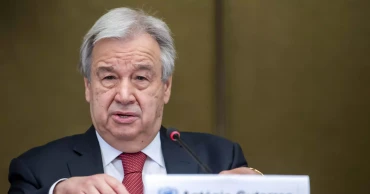
UN Secretary General Antonio Guterres has said innovative technologies and policies, from broadband infrastructure to digital literacy training, can help bridge the digital divide and secure connectivity for all by 2030 – a key goal of the International Telecommunication Union.
“On this World Telecommunication and Information Society Day, let us reaffirm our commitment to ensuring that everyone, in all countries, can benefit from the digital age,” he said in a message marking the day.
On World Telecommunication and Information Society Day, the UN chief said they celebrated the power of communication tools to change lives for the better.
This year's theme highlights the key role of digital innovation in promoting sustainable development and achieving the SDGs, he said.
The UN chief said digital technology can help educators reach their students and doctors communicate with their patients. It is fundamental to designing smart transport systems and sustainable cities.
“These innovations cannot be confined to rich countries. Developing economies bear the brunt of growing inequalities, climate change and environmental depletion – but they often face obstacles in accessing the digital technologies that could help to mitigate these challenges,” he said.
Guterres said global support and coordination also have an important role. “This is also the spirit of ITU’s AI for Good initiative, in line with the interim recommendations of my High-Level Advisory Body on AI, which calls for investments in enablers and responsible governance frameworks to ensure that AI benefits all.”
At the Summit of the Future in September, he said, countries will agree on a Global Digital Compact aimed at safeguarding technology as a force for human wellbeing.
“This will be a unique opportunity to harness digital innovation and technology to turbocharge the SDGs and advance effective and inclusive digital governance,” Guterres said.
2 years ago
Slovak interior minister says 'lone wolf' has been charged with shooting prime minister
The Slovak interior minister said Thursday that a “lone wolf” has been charged in the shooting that seriously wounded Prime Minister Robert Fico and prompted soul-searching among leaders in the deeply divided society.
Fico was in serious but stable condition Thursday, a hospital official said, after the populist leader was hit multiple times in an attempt on his life that shook the small country and reverberated across the continent weeks before European elections.
The attempted assassination has shocked the small central European nation, with many blaming the attack in part on extreme political polarization that has divided the country.
Slovakian prime minister in life-threatening condition after being shot
Interior Minister Matus Sutaj Estok said Wednesday that an initial investigation found “a clear political motivation” behind the attack on Fico while he was attending a government meeting in a former coal mining town. However, he said Thursday that the suspect charged was a lone wolf who “did not belong to any political groups.”
The minister did not specify what the motivation was. Fico has long been a divisive figure in Slovakia and beyond, and his return to power last year on a pro-Russian, anti-American message led to even greater worries among fellow European Union members that he would abandon his country's pro-Western course.
The attempt on Fico’s life came at a time of high division in Slovakia, as thousands of demonstrators have repeatedly rallied in the capital and around the country to protest his policies. It also comes just ahead of June elections for the European Parliament.
Slovakia's outgoing and next presidents — political rivals — appeared together in an appeal for Slovaks to overcome their increasingly tense political differences for the good of the country.
Outgoing President Zuzana Caputova, an opponent of Fico, said Thursday that the heads of the country’s political parties would meet in an effort to bring calm, saying the attack was a reflection of an increasingly polarized society.
“Let us step out of the vicious circle of hatred and mutual accusations," Caputova said at a news conference in the capital Bratislava. “What happened yesterday was an individual act. But the tense atmosphere of hatred was our collective work.”
A populist, pro-Russia ex-premier looks headed for victory in Slovakia's parliamentary elections
President-Elect Peter Pellegrini called on political parties to suspend or scale back their campaigns for European elections, which will be held June 6-9, to prevent “stand-offs and mutual accusations between politicians.”
“If there is anything that the people of Slovakia urgently need today, it is at least basic agreement and unity among the Slovak political representation. And if not consensus, then please, at least civilized ways of discussing among each other,” Pelligrini said.
Fico's government, elected last September, has caused controversy by halting arms deliveries to Ukraine, and has plans to amend the penal code to eliminate a special anti-graft prosecutor and to take control of public media. His critics worry that he will lead Slovakia — a nation of 5.4 million that belongs to NATO — down a more autocratic path.
Zuzana Eliasova, a resident of the capital Bratislava, said the attack on Fico was a “shock” to the nation and an attack on democracy at a time when political tensions were already running high.
“I believe that a lot of people or even the whole society will look into their conscience, because the polarization here has been huge among all different parts of society," she said.
Doctors performed a five-hour operation on Fico, who was initially reported to be in life-threatening condition, according to director of the F.D. Roosevelt Hospital in Banska Bystrica, Miriam Lapunikova. He is being treated in an intensive care unit.
Slovakia's populist opposition wins parliamentary election
Five shots were fired outside a cultural center in the town of Handlova, nearly 140 kilometers (85 miles) northeast of the capital, government officials said.
Slovak police have provided no information on the identity of the shooter. But unconfirmed media reports suggested he was a 71-year-old retiree who was known as an amateur poet, and may have previously worked as a security guard at a mall in the country's southwest.
Slovakia's Security Council was set to meet in the capital of Bratislava on Thursday to discuss the situation, a government office said, adding that a cabinet meeting would follow.
Fico returned to power in Slovakia last year, having previously served twice as prime minister. He and his Smer party have most often been described as left-populist, though he has also been compared to politicians on the right like the nationalist prime minister of neighboring Hungary, Viktor Orbán.
Fico’s comeback caused concern among his critics that he and his party — which had long been tainted by scandal — would lead Slovakia away from the Western mainstream. He promised a tough stance against migration and non-governmental organizations and campaigned against LGBTQ+ rights.
Despite the controversy surrounding Fico's leadership, condemnation of the attack came from both his allies and adversaries. On Wednesday, Russian President Vladimir Putin sent a message to President Caputova, expressing his support and wishing the prime minister a fast and full recovery.
“This atrocious crime cannot be justified,” Putin said in the message released by the Kremlin. “I know Robert Fico as a courageous and strong-willed person. I truly hope these personal qualities will help him overcome this harsh situation.”
Ukrainian President Volodymyr Zelenskyy also denounced the violence against a neighboring country’s head of government.
“Every effort should be made to ensure that violence does not become the norm in any country, form or sphere,” he said.
2 years ago
Slovakian prime minister in life-threatening condition after being shot
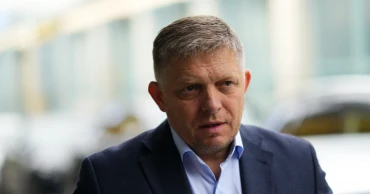
Slovakia’s populist Prime Minister Robert Fico is in life-threatening condition after being wounded in a shooting after a political event Wednesday afternoon, according to his Facebook profile.
Reports on TA3, a Slovakian TV station, said that Fico, 59, was hit in the stomach after four shots were fired outside the House of Culture in the town of Handlova, some 150 kilometers (93 miles) northeast of the capital, where the leader was meeting with supporters. A suspect has been detained, it said.
A message posted to Fico's Facebook account said that the leader "has been shot multiple times and is currently in life-threatening condition. At this moment he is transported by helicopter to Banská Bystrica, because it would take too long to get to Bratislava due to the necessity of an acute procedure. The next few hours will decide.”
The shooting in Slovakia comes three weeks ahead of crucial European Parliament elections, in which populist and hard-right parties in the 27-nation bloc appear poised to make gains.
Deputy speaker of parliament Lubos Blaha confirmed the incident during a session of Slovakia's Parliament and adjourned it until further notice, the Slovak TASR news agency said.
Slovakia’s major opposition parties, Progressive Slovakia and Freedom and Solidarity, canceled a planned protest against a controversial government plan to overhaul public broadcasting that they say would give the government full control of public radio and television.
“We absolutely and strongly condemn violence and today's shooting of Premier Robert Fico," said Progressive Slovakia leader Michal Simecka. “At the same time we call on all politicians to refrain from any expressions and steps which could contribute to further increasing the tension.”
President Zuzana Caputova condemned “a brutal and ruthless” attack on the premier.
“I’m shocked,” Caputova said. “I wish Robert Fico a lot of strength in this critical moment and a quick recovery from this attack.”
Fico, a third-time premier, and his leftist Smer, or Direction, party, won Slovakia’s Sept. 30 parliamentary elections, staging a political comeback after campaigning on a pro-Russian and anti-American message.
Critics worried Slovakia under Fico would abandon the country’s pro-Western course and follow the direction of Hungary under populist Prime Minister Viktor Orbán.
Thousands have repeatedly rallied in the capital and across Slovakia to protest Fico’s policies.
Condemnations of political violence quickly came from leaders across Europe, although no motive for the attack was immediately apparent.
European Commission President Ursula von der Leyen condemned what she described as a “vile attack.”
“Such acts of violence have no place in our society and undermine democracy, our most precious common good,” von der Leyen said in a post on X.
Czech Prime Minister Petr Fiala called the incident “shocking,” adding “I wish the premier to get well soon. We cannot tolerate violence, there’s no place for it in society.” The Czech Republic and Slovakia formed Czechoslovakia till 1992.
Polish Prime Minister Donald Tusk wrote on the social media network X: “Shocking news from Slovakia. Robert, my thoughts are with you in this very difficult moment.”
2 years ago
French president convenes top ministers to discuss spiraling violence in territory of New Caledonia
President Emmanuel Macron convened a meeting of top ministers to discuss spiraling violence in the French Pacific territory of New Caledonia after at least two people were killed and four others were seriously injured, including a gendarme, according to officials there and French media reports on Wednesday.
It was the third day of violent unrest over a constitutional reform pushed by Paris that has roiled the archipelago, which has long sought independence.
Macron’s office said that the president also canceled a trip he had been planning to northwest France on Wednesday while he focused on the crisis.
French authorities in the territory said that more than 130 people have been arrested an more than 300 have been injured since Monday in the violence that has raged across the archipelago, where there have been decades of tensions between Indigenous Kanaks seeking independence and descendants of colonizers who want to remain part of France.
The special defense and security council meeting called by Macron typically brings together a limited group of officials, including Prime Minister Gabriel Attal and the ministers for defense, interior, economy and foreign affairs.
Minister of Interior and Overseas Territories Gérald Darmanin said that 100 gendarmes were evacuated during violence overnight following “an attack on their station with an ax and live ammunition.”
“Calm must absolutely be restored," Darmanin said in an interview with French broadcaster RTL.
On Tuesday, the French Interior Ministry sent police reinforcements to New Caledonia, which long served as a prison colony and now hosts a French military base.
About 1,000 gendarmes and 700 police officers have been deployed and a dozen professionals from a specialized police intervention and riot control unit have also been mobilized, the territory’s top French official, High Commissioner Louis Le Franc, said at a news conference in New Caledonia.
The territory's political parties appealed for “calm and reason” with people who support independence and those who want the island to remain part of France.
“We have to continue to live together,” the rival parties said in a joint statement on Wednesday. "Only with dialogue and resilience (we will) get through this situation,” they added.
Two people were killed and three seriously injured in the unrest overnight, Le Franc said in an interview with France Info broadcaster. A fourth person, a member of the gendarmes, was also seriously injured in the unrest Wednesday near the southern town of Plum, according to France Info broadcaster. He was evacuated in critical condition to the medical unit of the Pacific Marine Infantry Regiment, French broadcaster BFM reported.
Earlier Wednesday, Le Franc warned that if calm isn't restored, there will be “many deaths” in the area of the capital, Noumea, where protests over the voting rights turned violent on Tuesday.
Local authorities extended a curfew until Thursday morning.
Clashes between police and protesters have continued in and around Noumea despite a curfew and ban on gatherings. Schools have been closed “until further notice” and the main airport, La Tontoura, “remains closed to commercial flights.”
“The situation is not serious, it is very serious," Le Franc said. “We have entered a dangerous spiral, a deadly spiral.”
He said some residents of the capital have formed “self-defense groups” to protect their homes and businesses.
The unrest started on Monday with a protest over France’s efforts to expand voter lists that would benefit pro-France politicians on New Caledonia and further marginalize the Kanak people, who once suffered from strict segregation policies and widespread discrimination.
Early Wednesday, France’s National Assembly adopted a constitutional revision reforming the electoral body in the territory in a 351-153 vote.
Pro-independence representatives appealed to supporters for calm and condemned the vote in the National Assembly, France’s most influential house of parliament.
Macron also appealed for calm after the vote and condemned “unworthy violence” in a letter to Caledonian representatives and political parties.
He called on all local politicians to engage in dialogue and submit suggestions for changes to the bill. Macron said he would convene the Congress, a joint session of lawmakers from both houses of the French parliament, by the end of June to amend the constitution and make it law in the absence of a meaningful dialogue with local representatives.
The bill would allow residents who have lived in New Caledonia for 10 years to cast ballots in provincial elections. People of European descent in New Caledonia distinguish between descendants of colonizers and descendants of the many prisoners sent to the territory by force. The vast archipelago of about 270,000 people east of Australia is 10 time zones ahead of Paris.
New Caledonia became French in 1853 under Emperor Napoleon III, Napoleon’s nephew and heir. It became an overseas territory after World War II, with French citizenship granted to all Kanaks in 1957.
A peace deal between rival factions was reached in 1988. A decade later, France promised to grant New Caledonia political power and broad autonomy and hold up to three successive referendums.
The three referendums were organized between 2018 to 2021 and a majority of voters chose to remain part of France instead of backing independence. The pro-independence Kanak people rejected the results of the last referendum in 2021, which they boycotted because it was held at the height of the COVID-19 pandemic.
2 years ago
Migration tracking group says 76 million people were displaced within their countries in 2023
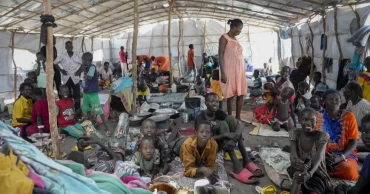
Conflicts and natural disasters left a record nearly 76 million people displaced within their countries last year, with violence in Sudan, Congo and the Middle East driving two-thirds of new movement, a top migration monitoring group said Tuesday.
The Internal Displacement Monitoring Center report found that the number of internally displaced people, or IDPs, has jumped by 50% over the past five years and roughly doubled in the past decade. It doesn’t cover refugees — displaced people who fled to another country.
The report tracks two major sets of information. It counted 46.9 million physical movements of people in 2023 — sometimes more than once. In most of those cases, such as after natural disasters like floods, people eventually return home.
It also compiles the cumulative number of people who were living away from their homes in 2023, including those still displaced from previous years. Some 75.9 million people were living in internal displacement at the end of last year, the report said, with half of those in sub-Saharan African countries.
Almost 90% of the total displacement was attributed to conflict and violence, while some 10% stemmed from the impact of natural disasters.
The displacement of more than 9 million people in Sudan at the end of 2023 was a record for a single country since the center started tracking such figures 16 years ago.
That was an increase of nearly 6 million from the end of 2022. Sudan’s conflict erupted in April 2023 as soaring tensions between the leaders of the military and the rival Rapid Support Forces broke out into open fighting across the country.
The group reported a total of 3.4 million movements within Gaza in the last quarter of 2023 amid the Israeli military response to the Oct. 7 attacks in Israel. That means that many people moved more than once within the territory of some 2.2 million. At the end of the year, 1.7 million people were displaced in Gaza.
Group director Alexandra Bilak said the millions of people forced to flee in 2023 were the “tip of the iceberg,” on top of tens of millions displaced from earlier and continuing conflicts, violence and disasters.
The figures offer a different window into the impact of conflict, climate change and other factors on human movement. The U.N. refugee agency monitors displacement across borders but not within countries, while the U.N. migration agency tracks all movements of people, including for economic or lifestyle reasons.
2 years ago
Thousands of protesters in Armenia demand the prime minister's resignation over Azerbaijan dispute
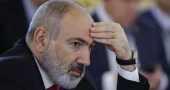
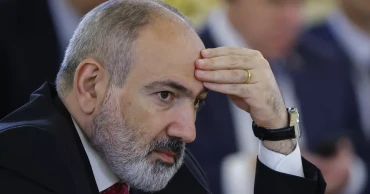
Thousands of protesters in Armenia angered by the government's decision to hand over control of some border villages to Azerbaijan demonstrated on Friday in the center of the Armenian capital for a second day to demand the resignation of Prime Minister Nikol Pashinyan.
The rally in Yerevan ended in the evening without incident, but the high-ranking Armenian Apostolic Church cleric who is leading the protests vowed that they would continue.
Armenia said in April that it would cede control of some border areas to Azerbaijan. That decision followed the lightning military campaign in September in which Azerbaijan's military forced ethnic Armenian separatist authorities in the Karabakh region to capitulate.
After Azerbaijan took full control of Karabakh, about 120,000 people fled the region, almost all of its ethnic Armenian population.
Ethnic Armenian fighters backed by Armenian forces had taken control of Karabakh in 1994 at the end of a six-year war. Azerbaijan regained some of the territory in fighting in 2020 that ended in an armistice that brought a Russian peacekeeper force into the region.
Archbishop Bagrat Galstanyan, the protests' leader, has called on them to "engage in peaceful acts of disobedience."
Pashinyan has said Armenia needs to quickly define the border with Azerbaijan to avoid a new round of hostilities. Many residents of Armenia's border regions have resisted the demarcation effort, seeing it as Azerbaijan's encroachment on areas they consider their own.
2 years ago