europe

Russian general is believed to be detained in aftermath of Wagner mutiny, AP sources say
Gen. Sergei Surovikin, the deputy commander of the Russian group of forces fighting in Ukraine, is believed to have been detained days after mercenaries staged a revolt inside Russia, two people familiar with the matter told The Associated Press on Thursday, citing U.S. and Ukrainian intelligence assessments.
The people spoke on condition of anonymity because they were not authorized to discuss the matter publicly.
It’s not clear whether Surovikin faces any charges or where he is being held, reflecting the opaque world of the Kremlin’s politics and uncertainty after the revolt.
But his reported detention comes days after Wagner Group mercenaries took over the military headquarters in the Russian city of Rostov-on-Don and were heading toward Moscow in what appears to have been an aborted insurrection.
Wagner head Yevgeny Prigozhin has spoken positively of Surovikin while criticizing the country’s military brass and suggested that he should be appointed the General Staff chief to replace Gen. Valery Gerasimov. The New York Times this week reported that U.S. officials believe Surovikin had advance knowledge of Prigozhin’s plan to stage the revolt.
The White House and the Kremlin declined to comment.
Surovikin, who has longtime links to Prigozhin, hasn’t been seen since the start of the rebellion when he posted a video urging an end to it.
A Russian military blogger, the Moscow Times, and the Financial Times reported that Surovikin, who is also the commander of the Russian air force, has been arrested.
Read: Wagner and Putin: What really happened?
There has been intense speculation that some top military officers may have colluded with Prigozhin and may now face punishment for the mutiny that briefly sent a virtually unchallenged march toward Moscow that Putin has labeled treason and a “stab in the back.”
Alexei Venediktov, former head of the Ekho Moskvy, a prominent independent radio station that was shut down by authorities after Moscow invaded Ukraine, said Surovikin and his close lieutenants haven’t been in contact with their families for three days, but stopped short of saying that he was detained.
Another prominent military messaging channel, Rybar, which is run by a former Defense Ministry press officer, reported a purge in the ranks was underway as authorities looked into allegations that some could have sided with Prigozhin.
Surovikin has been linked to Prigozhin since when both were active in Syria, where Russia has waged a military action since 2015 to shore up Syrian President Bashar Assad’s government and to help him reclaim territory after a devastating civil war.
While Prigozhin had unleashed expletive-ridden insults at Shoigu and chief of the General Staff Gen. Valery Gerasimov before last week’s mutiny in which he demanded their ouster, he has continually praised Surovikin and suggested naming him to replace Gerasimov. When the rebellion began, however, Surovikin recorded a video urging a halt to the mutiny.
Earlier this week, The New York Times reported that U.S. officials believed that Surovikin had advance knowledge about the mutiny. Asked about that report, Kremlin spokesman Dmitry Peskov shrugged it off as part of “speculations and gossip.”
On Thursday, Peskov refused to comment on whether Surovikin had been arrested.
Asked by the AP if the president still trusts Surovikin, he replied that Putin works with the defense minister and the chief of the General Staff and referred questions about officers to the Defense Ministry. He also referred all other questions about Surovikin and his status to the ministry.
As to whether Putin considers it necessary to dismiss military officials who had had links with Prigozhin, Peskov said “the issue isn’t my prerogative, and I have nothing to say on that.”
The bald, fierce-looking Surovikin, who was nicknamed “General Armageddon” by Western media for his brutal tactics in Syria and Ukraine, was credited with shoring up Russian defenses after Moscow’s retreat from broad areas of Ukrainian territory last fall amid a swift counteroffensive by Kyiv.
Named by Putin in the fall to lead Russian forces in Ukraine, Surovikin presided over the bombing campaign that targeted Ukraine’s power plants and other vital infrastructure but failed to knock out power supplies.
In January, Putin replaced him with Gerasimov, putting the General Staff chief in charge of the Russian battle in Ukraine. Surovikin was demoted to the position of Gerasimov’s deputy.
Gerasimov’s own fate also is unclear after the abortive mutiny. While Shoigu showed up at several events attended by Putin, Gerasimov was mysteriously absent.
If a purge is indeed underway, it could destabilize the military chain of command and erode troop morale amid the early stage of Ukraine’s latest counteroffensive and offer Kyiv a chance to reclaim more ground.
2 years ago

After last weekend's abortive rebellion in Russia, the fate of some top generals is unknown
Russia's president has succeeded in exiling Wagner mercenary head Yevgeny Prigozhin, who led a brief mutiny last week, but the fate of several top generals is still unclear.
There were unconfirmed reports that one of them with ties to Prigozhin has been arrested and another was mysteriously absent from several events attended by President Vladimir Putin and embattled Defense Minister Sergei Shoigu.
The opaque world of the Kremlin's politics has led to intense speculation that some top military officers may have colluded with Prigozhin and may now face punishment for the mutiny that briefly sent a virtually unchallenged march toward Moscow that Putin has labeled treason and a "stab in the back."
The speculation focused on Gen. Sergei Surovikin, who has longtime links to Prigozhin and hasn't been seen since the start of the rebellion when he posted a video urging an end to it.
A Russian military blogger, the Moscow Times and the Financial Times reported that Surovikin, who is also the commander of the Russian air force, has been arrested.
Alexei Venediktov, former head of the Ekho Moskvy, a prominent independent radio station that was shut down by authorities after Moscow invaded Ukraine, said Surovikin and his close lieutenants haven't been in contact with their families for three days, but stopped short of saying that he was detained.
Another prominent military messaging channel, Rybar, which is run by a former Defense Ministry press officer, reported a purge in the ranks was underway as authorities looked into allegations that some could have sided with Prigozhin.
Also read: Putin says the aborted rebellion played into the hands of Russia’s enemies
Surovikin has been linked to Prigozhin since when both were active in Syria, where Russia has waged a military action since 2015 to shore up Syrian President Bashar Assad's government and to help him reclaim territory after a devastating civil war.
While Prigozhin had unleashed expletive-ridden insults at Shoigu and chief of the General Staff Gen. Valery Gerasimov before last week's mutiny in which he demanded their ouster, he has continually praised Surovikin. When the rebellion began, however, Surovikin recorded a video urging a halt to the mutiny.
Earlier this week, The New York Times reported that U.S. officials believed that Surovikin had advance knowledge about the mutiny. Asked about that report, Kremlin spokesman Dmitry Peskov shrugged it off as part of "speculations and gossip."
Also read: US, NATO had no involvement in Wagner's 'short-lived' revolt in Russia: Biden
On Thursday, Peskov refused to comment on whether Surovikin had been arrested.
Asked by The Associated Press if the president still trusts Surovikin, he replied that Putin works with the defense minister and the chief of the General Staff and referred questions about officers to the Defense Ministry. He also referred all other questions about Surovikin and his status to the ministry.
As to whether Putin considers it necessary to dismiss military officials who had had links with Prigozhin, Peskov said "the issue isn't my prerogative, and I have nothing to say on that."
The bald, fierce-looking Surovikin, who was nicknamed "General Armageddon" by Western media for his brutal tactics in Syria and Ukraine, was credited with shoring up Russian defenses after Moscow's retreat from broad areas of Ukrainian territory last fall amid a swift counteroffensive by Kyiv.
Named by Putin in the fall to lead Russian forces in Ukraine, Surovikin presided over the bombing campaign that targeted Ukraine's power plants and other vital infrastructure but failed to knock out power supplies.
Also read: Wagner chief breaks his silence after aborted mutiny
In January, Putin replaced him with Gerasimov, putting the General Staff chief in charge of the Russian battle in Ukraine. Surovikin was demoted to the position of Gerasimov's deputy.
Gerasimov's own fate also is unclear after the abortive mutiny. While Shoigu showed up at several events attended by Putin, Gerasimov was mysteriously absent.
If a purge is indeed underway, it could destabilize the military chain of command and erode troop morale amid the early stage of Ukraine's latest counteroffensive and offer Kyiv a chance to reclaim more ground.
Also read: Russian defense minister makes first public appearance since mercenary revolt as uncertainty swirls
2 years ago

France will deploy 40,000 police officers to quell violence that followed deadly police shooting
France will deploy 40,000 police officers overnight to quell violence that engulfed cities and towns in the wake of a deadly police shooting, France's interior minister said Thursday.
Scores of police officers have been injured, according to ministers.
The justice minister, Éric Dupond-Moretti, gave a figure of 130 police officers injured.
"All this has to stop," the minister declared. He gave no details about the types and seriousness of the injuries.
Interior Minister Gerald Darmanin, who oversees the police, later gave a higher figure of 170 injured.
He said none of the injuries were life-threatening.
A French police officer who shot and killed a 17-year-old driver will be investigated for voluntary homicide, following two days of fires and violent protests, prosecutors said Thursday.
Overnight, protesters set cars and public buildings ablaze in Paris suburbs and unrest spread to some other French cities and towns, despite increased security efforts and the president's calls for calm.
The killing of 17-year-old Nahel during a traffic check Tuesday, captured on video, shocked the country and stirred up long-simmering tensions between young people and police in housing projects and other disadvantaged neighborhoods around France.
Nahel's surname has not been released by authorities or by his family. In earlier statements, lawyers for the family spelled the name Nael.
Nanterre prosecutor Pascal Prache said that based on an initial investigation, he concluded that "the conditions for the legal use of the weapon were not met."
Two magistrates have been named to lead the investigation, he said. Under the French legal system, which differs from the U.S. and British systems, magistrates often assigned to lead investigations.
Prache said he requested that the officer be held in custody. That decision is to be made by another magistrate.
In a separate case, a police officer who fatally shot a 19-year-old Guinean man in western France earlier this month was handed preliminary charges of "voluntary homicide," according to a statement by the local prosecutor on Wednesday. The man was fatally shot by an officer as he allegedly tried to escape a traffic stop. The investigation is still ongoing.
Clashes first erupted Tuesday night in and around the Paris suburb of Nanterre, where Nahel was killed, and the government deployed 2,000 police to maintain order Wednesday. But violence resumed after dusk.
Police and firefighters struggled to contain protesters and extinguish numerous blazes through the night that damaged schools, police stations and town halls or other public buildings, according to a spokesperson for the national police. The national police on Thursday reported fires or skirmishes in multiple cities overnight, from Toulouse in the south to Lille in the north, though the nexus of tensions was Nanterre and other Paris suburbs.
Police arrested 150 people around the country, more than half of them in the Paris region, the spokesperson said. She was not authorized to be publicly named according to police rules.
Scenes of violence in France's suburban areas echo 2005, when the deaths of 15-year-old Bouna Traoré and 17-year-old Zyed Benna led to three weeks of nationwide riots, exposing anger and resentment in neglected, crime-ridden suburban housing projects.
The two boys entered a power substation to hide from police in the Paris suburb of Clichy-sous-Bois, and were electrocuted.
French President Emmanuel Macron held an emergency security meeting Thursday about the violence.
"These acts are totally unjustifiable," Macron said at the beginning of the meeting, which aimed at securing hot spots and planning for the coming days "so full peace can return."
Macron also said it was time for "remembrance and respect" as Nahel's mother called for a silent march Thursday in his honor on the square where he was killed.
Multiple vehicles were set ablaze in Nanterre and protesters shot fireworks and threw stones at police, who fired repeated volleys of tear gas. Flames shot out of three stories of a building, and a blaze was reported at an electrical plant. Fire damaged the town hall of the Paris suburb of L'Ile-Saint-Denis, not far from France's national stadium and the headquarters of the Paris 2024 Olympics.
The police officer accused of the killing is in custody on suspicion of manslaughter and could face preliminary charges as soon as Thursday, according to the Nanterre prosecutor's office.
French activists renewed calls to tackle what they see as systemic police abuse, particularly in neighborhoods like the one where Nahel lived, where many residents struggle with poverty and racial or class discrimination. Government officials condemned the killing and sought to distance themselves from the police officer's actions.
Macron called the killing "inexplicable and inexcusable" and called for calm. "Nothing justifies the death of a young person," he told reporters in Marseille on Wednesday.
Videos of the shooting shared online show two police officers leaning into the driver-side window of a yellow car before the vehicle pulls away as one officer fires into the window. The videos show the car later crashed into a post nearby.
The driver died at the scene, the prosecutor's office said.
Bouquets of orange and yellow roses now mark the site of the shooting, on Nanterre's Nelson Mandela Square.
Speaking to Parliament, Prime Minister Elisabeth Borne said, "the shocking images broadcast yesterday show an intervention that appears clearly not to comply with the rules of engagement of our police forces."
Deadly use of firearms is less common in France than in the United States, though several people have died or sustained injuries at the hands of French police in recent years, prompting demands for more accountability. France also saw protests against racial profiling and other injustice in the wake of George Floyd's killing by police in Minnesota.
The most recent government statistics available show that 17 people were killed after police and gendarmerie officers shot at them in 2021.
Asked about police abuses, Macron said justice should be allowed to run its course.
A lawyer for Nahel's family, Yassine Bouzrou, told The Associated Press they want the police officer prosecuted for murder instead of manslaughter.
French soccer star Kylian Mbappe, who grew up in the Paris suburb of Bondy, was among many shocked by what happened.
"I hurt for my France," he tweeted.
2 years ago

Ukraine accuses local man of directing missile strike that killed 10 at popular pizza restaurant
Ukrainian authorities arrested on Wednesday a man they accused of helping Russia direct a missile strike that killed at least 10 people, including three teenagers, at a popular pizza restaurant in east Ukraine.
The Tuesday evening attack on Kramatorsk wounded 61 other people, Ukraine’s National Police said, in the latest bombardment of a Ukrainian city, a tactic Russia has used heavily in the 16-month-old war.
The strike, and others elsewhere across Ukraine late Tuesday and early Wednesday, indicated that the Kremlin is not easing its aerial onslaught despite its political and military turmoil caused by a short-lived armed uprising last weekend.
There has been no apparent military push by Ukraine to exploit that turmoil, though the government has been tight-lipped about recent battlefield developments as it seeks to gain momentum in its recently launched counteroffensive.
The Kremlin reeled from the weekend mutiny led by Yevgeny Prigozhin, owner of the Wagner private army of prison recruits and other mercenaries which has played a key role for Russia in Ukraine. The rebellion was the gravest threat so far to Russian President Vladimir Putin’s grip on power.
Prigozhin went into exile in neighboring Belarus on Tuesday, according to Belarus President Alexander Lukashenko, after Russia said he wouldn’t face charges for the revolt. Prigozhin’s whereabouts could not be independently confirmed.
Read: With Russia revolt over, mercenaries' future and direction of Ukraine war remain uncertain
Two sisters, both age 14, died in the Kramatorsk attack, the city council’s educational department said. “Russian missiles stopped the beating of the hearts of two angels,” it said in a Telegram post.
The other dead teenager was 17, according to Prosecutor General Andrii Kostin.
The attack also damaged 18 multistory buildings, 65 houses, five schools, two kindergartens, a shopping center, an administrative building and a recreational building, regional Governor Pavlo Kyrylenko said.
Rescuers are still searching the rubble for bodies and more survivors.
Officials initially blamed the strike in Kramatorsk on an S-300 missile, a surface-to-air weapon that Russia’s forces have repurposed for loosely targeted strikes on cities, but the National Police later said Iskander short-range ballistic missiles were used.
Kramatorsk is a front-line city that houses the Ukrainian army’s regional headquarters. The pizza restaurant was frequented by journalists, aid workers and soldiers, as well as local residents.
The Security Service of Ukraine said it detained a man whom it suspects directed the strike on the restaurant who is an employee of the local gas transportation company.
He filmed the restaurant for the Russians and informed them about its popularity, the Security Service said in a Telegram post.
Read: Russian mercenary chief says his forces are rebelling, some left Ukraine and entered Russia city
It provided no evidence for its claim. Russia has insisted during the war that it doesn’t aim at civilian targets, although its air strikes have killed many civilians. Kremlin spokesperson Dmitry Peskov repeated that claim on Wednesday.
Kramatorsk is located in Donetsk, one of four Ukrainian provinces that Russia claimed to annex last September but does not fully control. Russia has also occupied Crimea since 2015.
Ukrainian-held parts of the partially occupied provinces have been hit especially hard by Russian bombardment and are a key barrier to resolving the war.
The Kremlin demands that Kyiv recognize the annexations, while Kyiv has ruled out any talks with Russia until its troops pull back from all occupied territories. Kyiv recently launched a much-anticipated counteroffensive to take back occupied territory.
Russia, meanwhile, has stepped up its air campaign in Ukraine while fighting continues along the front line.
Russian forces on Tuesday and overnight also shelled 16 settlements in the southern Zaporizhzhia region, the Ukrainian presidential office reported.
It said a 77-year-old civilian was killed in the front-line town of Orikhiv, and that Russian shelling wounded three people in a nearby village recently retaken by Kyiv.
Read more: Both sides suffer heavy casualties as Ukraine strikes back against Russia, UK assessment says
Also, a Russian supersonic cruise missile slammed into a cluster of holiday homes in central Ukraine, sparking a fire which injured a child, the presidential office said.
In other developments:
Pope Francis’ peace envoy, Italian Cardinal Matteo Zuppi, was to meet with an aide to President Putin, Yury Ushakov, in Moscow on Wednesday. Kremlin spokesperson Dmitry Peskov said the talks would include “possible ways of political-diplomatic settlement.”
Francis dispatched Zuppi, a veteran of the Catholic Church’s peace initiatives, to Moscow in hopes of helping spur peace negotiations after his visit to Kyiv earlier this month. At the Vatican on Wednesday, Francis again appealed for an end to the war, praying that Ukrainians “may soon find peace: There is so much suffering in Ukraine, let us not forget that.”
2 years ago

US, NATO had no involvement in Wagner's 'short-lived' revolt in Russia: Biden
President Joe Biden on Monday said United States and NATO had no involvement in the short-lived insurrection in Russia by the Wagner Group mercenary force. He said it's "too early" to assess the impact on the war in Ukraine.
Biden said he held a video call with allies over the weekend and they are all in sync in working to ensure that they give Russian President Vladimir Putin "no excuse to blame this on the West" or NATO.
"We made clear that we were not involved. We had nothing to do with it," Biden said. "This was part of a struggle within Russian system."
Also read: Wagner chief breaks his silence after aborted mutiny
Biden also spoke with Ukrainian President Volodymyr Zelenskyy over the weekend about the situation and said he intended to speak with him again later Monday or early Tuesday.
"I told him that no matter what happened in Russia, let me say again, no matter what happened in Russia, we in the United States would continue to support Ukraine's defense and sovereignty and its territorial integrity."
A feud between the Wagner Group leader, Yevgeny Prigozhin, and Russia's military brass that has festered throughout the war erupted into a mutiny that saw the mercenaries leave Ukraine to seize a military headquarters in a southern Russian city. They rolled for hundreds of kilometers toward Moscow, before turning around after less than 24 hours on Saturday.
Also read: Russian defense minister makes first public appearance since mercenary revolt as uncertainty swirls
Earlier Monday, Prigozhin and Russian Defense Minister Sergei Shoigu made public comments with both aiming to play down the crisis.
In an 11-minute audio statement, Prigozhin said he acted "to prevent the destruction of the Wagner private military company" and moved in response to an attack on a Wagner camp that killed some 30 of his fighters.
Also read: With Russia revolt over, mercenaries' future and direction of Ukraine war remain uncertain
Biden said much remains in flux in the aftermath of the most significant challenge to Putin's authority during his long tenure.
"We're going to keep assessing the fallout of this weekend's events and the implications from Russia and Ukraine," Biden said. "But it's still too early to reach a definitive conclusion about where this is going."
Also read: Russian mercenaries' short-lived revolt could have long-term consequences for Putin
2 years ago

Wagner chief breaks his silence after aborted mutiny
The leader of the Wagner mercenary group defended his short-lived insurrection in an audio statement Monday, and Russian Defense Minister Sergei Shoigu made his first public appearance since the uprising that demanded his ouster, in a video aimed at projecting a sense of order after the country’s most serious political crisis in decades.
But uncertainty still swirled about his fate, as well as that of rebellion leader Yevgeny Prigozhin and his private army, the impact on the war in Ukraine, and even the political future of President Vladimir Putin.
In an 11-minute audio statement, Prigozhin denied trying to attack the Russian state and said he acted in response to an attack on his force that killed some 30 of his fighters.
“We started our march because of an injustice,” Prigozhin said in a recording that gave details about where he is or what his future plans are
A feud between the Wagner Group leader and Russia’s military brass that has festered throughout the war erupted into a mutiny that saw the mercenaries leave Ukraine to seize a military headquarters in a southern Russian city and roll seemingly unopposed for hundreds of miles toward Moscow, before turning around after less than 24 hours on Saturday.
The Kremlin said it had made a deal for Prigozhin to move to Belarus and receive amnesty, along with his soldiers. There was no confirmation of his whereabouts Monday, although a popular Russian news channel on Telegram reported he was seen at a hotel in the Belarusian capital, Minsk.
Russian media reported a criminal probe against Prigozhin continued, and some lawmakers called for his head.
In a return to at least superficial normality, Moscow’s mayor announced an end to the “counterterrorism regime” imposed on the capital Saturday, when troops and armored vehicles set up checkpoints on the outskirts and authorities tore up roads leading into the city.
The Defense Ministry video of Shoigu came as Russian media speculated that he and other military leaders have lost Putin’s confidence and could be replaced.
Shoigu was shown in a helicopter and then meeting with officers at a military headquarters in Ukraine in video broadcast on Russian media, including state-controlled television. It was unclear when it was shot.
General Staff chief Gen. Valery Gerasimov, also a main target of Prigozhin’s ire, has not appeared in public.
It was unclear what would ultimately happen to Prigozhin and his forces under the deal purportedly brokered by Belarusian President Alexander Lukashenko.
Though his mutiny was brief, it was not bloodless. Russian media reported that several military helicopters and a military communications plane were shot down by Wagner forces, killing at least 15. The Defense Ministry has not commented. Prigozhin denied there were any casualties on his side, but media reports indicated the airstrikes hit some Wagner vehicles, and messaging app channels featured images of the damage.
The U.S. had intelligence that Prigozhin had been building up his forces near the border with Russia for some time, suggesting the revolt was planned. That conflicts with Prigozhin’s claim his rebellion was a response to a Friday attack on his field camps in Ukraine by the Russian military, which he said killed a large number of his men. The Defense Ministry denied that.
Russia’s RIA Novosti state news agency cited unidentified sources in the Prosecutor General’s office as saying the criminal case against Prigozhin hasn’t been closed, despite earlier Kremlin statements. The Interfax news agency carried a similar report.
Should the case continue, Prigozhin’s presence in Belarus — a staunch Kremlin ally — would offer little protection against arrest and extradition.
It was unclear what resources Prigozhin has to draw on, and how much of his substantial wealth he can access. Police searching his St. Petersburg office on the day of the rebellion found 4 billion rubles ($48 million) in trucks outside the building, according to Russian media reports confirmed by the Wagner boss. He claimed the money was intended to pay his soldiers’ families.
Russian media reported that Wagner offices in several Russian cities had reopened on Monday and the company had resumed enlisting recruits.
Several Russian lawmakers called for tight regulations of private military companies under a new law set to be considered — and some argued that Prigozhin must be punished.
Andrei Gurulev, a retired general and current lawmaker who has rowed with the mercenary leader, said Prigozhin and his right-hand man Dmitry Utkin, a former military officer who runs Wagner, deserve “a bullet in the head.”
“I firmly believe that traitors in wartime must be executed,” he said.
Prigozhin appeared nonchalant in some of the last video taken during the rebellion. As a convoy carrying him in an SUV drove out of the southern city of Rostov-on-Don after its brief occupation Saturday, he was asked how he viewed the result of his revolt, according to footage posted on Russian social media.
“It’s normal, we have cheered everyone up,” the mercenary chief responded.
Before the uprising, Prigozhin had blasted Shoigu and Gerasimov with expletive-ridden insults for months, attacking them for failing to provide his troops with enough ammunition during the fight for the Ukrainian town of Bakhmut, the war’s longest and bloodiest battle.
Prigozhin’s rift with the military dates back years, to Russia’s intervention in Syria, where Wagner forces also were active.
Putin stood back from the feud and Shoigu and Gerasimov remained mum, possibly reflecting uncertainty about the president’s support. Observers said that by failing to end the feud, Putin had encouraged Prigozhin to raise the stakes dramatically.
Some analysts saw Prigozhin’s revolt as a desperate move to save Wagner from being dismantled after an order that all private military companies sign contracts with the Defense Ministry by July 1.
Russian political analyst Tatiana Stanovaya said on Twitter that Prigozhin’s mutiny “wasn’t a bid for power or an attempt to overtake the Kremlin,” but a desperate move amid his escalating rift with Russia’s military leadership.
While Prigozhin could get out of the crisis alive, he doesn’t have a political future in Russia under Putin, Stanovaya said.
Alex Younger, former head of Britain’s MI6 intelligence agency, said “everyone comes out of this weaker.”
He told the BBC that Prigozhin “didn’t have a plan, he didn’t have enough people” to succeed, while Putin looked indecisive, first vowing to crush the rebels, then striking a deal.
Russian media and commentators speculated that Shoigu could be replaced, but that Putin, who avoids making decisions under pressure, would likely wait before announcing a shakeup.
Putin held calls Monday with the leaders of Iran and Qatar, the Kremlin said, and addressed a forum of youth engineers in a pre-recorded video message that contained no mention of the mutiny.
It was not yet clear what the fissures opened by the 24-hour rebellion would mean for the war in Ukraine, where Western officials say Russia’s troops suffer low morale. Wagner’s forces were key to Russia’s only land victory in months, in Bakhmut.
The U.K. Ministry of Defense said Monday that Ukraine had “gained impetus” in its push around Bakhmut, making progress north and south of the town. Ukrainian forces claimed to have retaken Rivnopil, a village in an area of southeast Ukraine that has seen heavy fighting.
U.S. President Joe Biden and leaders of several of Ukraine’s European allies discussed events in Russia over the weekend, but Western officials have been muted in their public comments.
Russian Foreign Minister Sergey Lavrov told broadcaster RT that U.S. Ambassador Lynne Tracy contacted Russian representatives Saturday to stress that the U.S. was not involved in the mutiny and considered it an internal Russian matter. There was no immediate confirmation from the U.S., although Secretary of State Antony Blinken said Sunday that U.S. officials had “engaged” with Russia to stress the importance of protecting U.S. citizens and interests.
NATO Secretary-General Jens Stoltenberg said Monday that “the events over the weekend are an internal Russian matter.” The U.K. said “issues of regime in Russia are for Russia to resolve, first and foremost.”
EU foreign policy chief Josep Borrell said the revolt showed that the war is “cracking Russia’s political system.”
“The monster that Putin created with Wagner, the monster is biting him now,” Borrell said. “The monster is acting against his creator.”
2 years ago

Denmark to start the training of Ukrainian pilots on F-16s
Denmark's government said Monday that the training of Ukrainian pilots on F-16 jets has started and the retirement of Scandinavian country's fleet of aging U.S. fighters has been moved up two years.
The replacement fighters, F-35s, will be operative by 2025, acting Defense Minister Troels Lund Poulsen said. Initially, the switch was planned for 2027.
Lund Poulsen said that NATO-member Denmark “has taken the step of starting a training and further education effort for the Ukrainian pilots."
“We will also consider whether we should make a concrete donation to Ukraine of the Danish F-16 fighters, and how many there should be," he said.
Read: Ukraine recaptures village as Russian forces hold other lines, fire on fleeing civilians elsewhere
Ukrainian pilots must spend six to eight months of training before a possible donation of Danish F-16 aircraft can become a reality, Lund Poulsen told Danish broadcaster DR.
“This does not mean that you cannot make a decision beforehand. But (the F-16 planes) will be in Denmark until 2024,” Lund Poulsen said.
Denmark has ordered 27 F-35A fighter jets, which will replace the more than 40-year-old F-16s, of which Denmark has 30 operative planes. The switch to the F-35A Joint Strike Fighter jets is taking place from late 2023 to the end of 2025.
Read: UN aid chief says Ukraine faces `hugely worse' humanitarian situation after the dam rupture
Ukraine has long asked for Western fighter jets to help it resist the full-scale Russian invasion, which began in February 2022. Initially reluctant, the U.S. and other NATO countries recently agreed to allow Ukrainian pilots to receive training to on F-16 fighters, though none has yet committed to hand over any planes.
Read more: A dam collapses and thousands face the deluge — often with no help — in Russian-occupied Ukraine
2 years ago

Russian defense minister makes first public appearance since mercenary revolt as uncertainty swirls
Russian Defense Minister Sergei Shoigu made his first public appearance since a mercenary uprising demanded his ouster, inspecting troops in Ukraine Monday in a video aimed at projecting a sense of order after a weekend of chaos.
Shoigu is one of three powerful Russian military leaders whose diverging interests erupted into a mutiny that saw armed rebels seize a Russian city and march seemingly unopposed on the capital. Thousands of Wagner Group mercenaries headed from Ukraine deep into Russia, before turning around Saturday after less than 24 hours.
He is the first to appear publicly since then, in video released by the Defense Ministry that was widely shown on Russian media, including state-controlled television. It was unclear when it was filmed.
Neither Wagner Group chief Yevgeny Prigozhin nor General Staff chief Gen. Valery Gerasimov — like Shoigu, a target of Prigozhin's ire — has been seen or heard in public since then. Russian President Vladimir Putin hasn't made any public appearances either.
Moscow Mayor Sergey Sobyanin announced an end to the “counter-terrorism regime” imposed on the capital Saturday, during which troops and armored vehicles set up checkpoints on the edges of the city and authorities tore up roads leading into the city.
The Defense Ministry released a video showing Shoigu flying in a helicopter and then attending a meeting with military officers at a military headquarters in Ukraine, showing the minister for the first time since Prigozhin declared a “march of justice” to oust the defense minister and Gerasimov late Friday, during which the mercenaries captured the southern city of Rostov-on-Don and then marched on Moscow.
The rebellion ended on Saturday when Prigozhin ordered his troops back. The Kremlin said it had made a deal that the mercenary chief will move to Belarus and receive an amnesty, along with his soldiers. The mutiny marked the biggest challenge to President Vladimir Putin in more than 20 years of rule.
Read: With Russia revolt over, mercenaries' future and direction of Ukraine war remain uncertain
As Wagner’s convoy drove out of the southern Russian city of Rostov-on-Don after its brief occupation on Saturday, led by Prigozhin in an SUV, someone asked how he viewed the result of his revolt, according to a video posted later on Russian social media.
“It’s normal, we have cheered everyone up,” the mercenary chief responded.
It was unclear what would ultimately happen to Prigozhin and his forces. Few details of the deal were released either by the Kremlin or Belarusian President Alexander Lukashenko, who brokered it, and Prigozhin's whereabouts were unclear on Monday.
Before starting the revolt, Prigozhin had blasted Shoigu and army chief Gerasimov with expletive-ridden insults for months, attacking them for failing to provide his troops with enough ammunition during the battle for Bakhmut, the war’s longest and bloodiest battle.
Putin stood back from the rift, and Shoigu and Gerasimov remained mum, possibly reflecting uncertainty about Putin’s support. Observers said that by failing to end the feud Putin had encouraged Prigozhin to dramatically up the stakes.
Alex Younger, former head of Britain's MI6 intelligence agency, said it appeared that “neither side was in control" during the rebellion.
He told the BBC that Prigozhin “didn’t have a plan, he didn’t have enough people” to succeed, while Putin looked indecisive, first vowing to crush the rebels then striking a deal.
“Everyone comes out of this weaker," Younger said.
Asked by reporters Saturday whether Putin still trusts Shoigu, Kremlin spokesman Dmitry Peskov responded he wasn’t aware of any changes in the president’s attitude. Commenting on whether any changes in military leadership were discussed during negotiations with Prigozhin, Peskov responded that personnel changes were the exclusive prerogative of Putin as the commander-in-chief and so it wasn’t a subject for discussion.
Russian media and commentators speculated that Putin could replace Shoigu with Alexei Dyumin, the governor of the Tula region who had previously served as a a Putin bodyguard and then a deputy defense minister. They noted that Putin, who avoids making decisions under pressure, would likely wait before announcing a shakeup.
Read: Russia says Wagner Group's leader will move to Belarus after his rebellious march challenged Putin
Russian political analyst Tatiana Stanovaya said Prigozhin’s mutiny “wasn’t a bid for power or an attempt to overtake the Kremlin,” but a desperate move amid his escalating rift with Russia’s military leadership.
“Prigozhin was forced out of Ukraine and found himself unable to sustain Wagner the way he did before, while the state machinery was turning against him,” she wrote in a commentary om Twitter. “To top it off, Putin was ignoring him and publicly supporting his most dangerous adversaries.”
Stanovaya said that while Prigozhin could get out of crisis alive, he doesn’t have a political future in Russia under Putin.
Prigozhin’s rift with the top military brass dates back years to the Russian military intervention in Syria, where Wagner Group was also active. It dramatically escalated in recent months amid the fighting for Bakhmut.
The U.S. had intelligence that Prigozhin had been building up his forces near the border with Russia for some time, suggesting the revolt was planned in advance. That conflicts with Prigozhin’s claim that his rebellion was a response to an attack on his field camps in Ukraine on Friday by the Russian military, which he said killed a large number of his men. The Defense Ministry denied attacking the camps.
It was not yet clear what the fissures opened by the 24-hour rebellion would mean for the war in Ukraine. But it resulted in some of the best forces fighting for Russia being pulled from the battlefield: the Wagner troops, who had shown their effectiveness in scoring the Kremlin’s only land victory in months, in Bakhmut, and Chechen soldiers sent to stop them on the approach to Moscow.
The Wagner forces’ largely unopposed, rapid advance also exposed vulnerabilities in Russia’s security and military forces. The mercenary soldiers were reported to have downed several helicopters and a military communications plane. The Defense Ministry has not commented.
The U.K. Ministry of Defense said Ukraine had “gained impetus” in its push around Bakhmut, making progress north and south of the town.
Read more: Russia says Wagner Group's leader will move to Belarus after his rebellious march challenged Putin
"There has been little evidence that Russia maintains any significant ground forces operational level reserves which could be used to reinforce against the multiple threats it is now facing in widely separated sectors," it said in a daily assessment of the war.
U.S. President Joe Biden and leaders of several of Ukraine's European allies discussed events in Russia over the weekend, but Western officials have been muted in their public comments.
NATO Secretary-General Jens Stoltenberg “the events over the weekend are an internal Russian matter.”
Speaking in Vilnius, Lithuania, he said the crisis was "yet another demonstration of the big strategic mistake that President Putin made with his illegal annexation of Crimea and the war against Ukraine.”
EU foreign policy chief Josep Borrell, speaking to reporters before a meeting of EU foreign ministers in Luxembourg, said the revolt showed that the war is “cracking Russia's political system.”
“The monster that Putin created with Wagner, the monster is biting him now," Borrell said. “The monster is acting against his creator.”
2 years ago

With Russia revolt over, mercenaries' future and direction of Ukraine war remain uncertain
The rebellious mercenary soldiers who briefly took over a Russian military headquarters on an ominous march toward Moscow were gone Sunday, but the short-lived revolt has weakened President Vladimir Putin just as his forces are facing a fierce counteroffensive in Ukraine.
Under terms of the agreement that ended the crisis, Yevgeny Prigozhin, who led his Wagner troops in the failed uprising, will go into exile in Belarus but will not face prosecution.
But it was unclear what would ultimately happen to him and his forces. Belarusian President Alexander Lukashenko, who brokered the deal, released few details. Neither Prigozhin nor Putin has been heard from, and top Russian military leaders have also remained silent.
U.S. Secretary of State Antony Blinken described the weekend’s events as “extraordinary,” recalling that 16 months ago Putin appeared poised to seize the capital of Ukraine and now he has had to defend Moscow from forces led by his onetime protege.
“I think we’ve seen more cracks emerge in the Russian façade,” Blinken said on NBC’s “Meet the Press.”
“It is too soon to tell exactly where they go and when they get there, but certainly we have all sorts of new questions that Putin is going to have to address in the weeks and months ahead.”
It was not yet clear what the fissures opened by the 24-hour rebellion would mean for the war in Ukraine. But it resulted in some of the best forces fighting for Russia being pulled from the battlefield: the Wagner troops, who had shown their effectiveness in scoring the Kremlin's only land victory in months, in Bakhmut, and Chechen soldiers sent to stop them on the approach to Moscow.
Read: Russian mercenaries' short-lived revolt could have long-term consequences for Putin
The Wagner forces' largely unopposed, rapid advance also exposed vulnerabilities in Russia's security and military forces. The mercenary soldiers were reported to have downed several helicopters and a military communications plane. The Defense Ministry has not commented.
“I honestly think that Wagner probably did more damage to Russian aerospace forces in the past day than the Ukrainian offensive has done in the past three weeks," Michael Kofman, director of Russia studies at the CNA research group, said in a podcast.
Ukrainians hoped the Russian infighting could create opportunities for their army, which is in the early stages of a counteroffensive to take back territory seized by Russian forces.
“Putin is much diminished and the Russian military, and this is significant as far as Ukraine is concerned," said Lord Richard Dannatt, former chief of the general staff of the British armed forces. “... Prigozhin has left the stage to go to Belarus, but is that the end of Yevgeny Prigozhin and the Wagner Group?”
Under terms of the agreement that stopped Prigozhin’s advance, Wagner troops who didn’t back the revolt will be offered contracts directly with the Russian military, putting them under the control of the military brass that Prigozhin was trying to oust. A possible motivation for Prigozhin’s rebellion was the Defense Ministry’s demand, which Putin backed, that private companies sign contracts with it by July 1. Prigozhin had refused to do it.
“What we don’t know, but will discover in the next hours and days is, how many of his fighters have gone with him, because if he has gone to Belarus and kept an effective fighting force around him, then he ... presents a threat again” to Ukraine, Dannatt said.
Ukrainian President Volodymyr Zelenskyy said he told U.S. President Joe Biden in a phone call on Sunday that the aborted rebellion in Russia had “exposed the weakness of Putin's regime.”
Read: After day of drama, Wagner chief orders troops to halt march on Moscow
In their lightning advance, Prigozhin's forces on Saturday took control of two military hubs in southern Russia and got within 200 kilometers (120 miles) of Moscow before retreating.
People in Rostov-on-Don cheered Wagner troops as they departed late Saturday, a scene that played into Putin’s fear of a popular uprising. Some ran to shake hands with Prigozhin as he drove away in an SUV.
Yet the rebellion fizzled quickly, in part because Prigozhin did not have the backing he apparently expected from Russian security services. The Federal Security Services immediately called for his arrest.
"Clearly, Prigozhin lost his nerve," retired U.S. Gen. David Petraeus, a former CIA director, said on CNN's “State of the Union.”
"This rebellion, although it had some applause along the way, didn’t appear to be generating the kind of support that he had hoped it would.”
Rostov appeared calm Sunday morning, with only tank tracks on the roads as a reminder of the Wagner fighters.
“It all ended perfectly well, thank God. With minimal casualties, I think. Good job,” said a resident, who agreed only to provide his first name, Sergei. He said the Wagner soldiers used to be heroes to him, but not now.
In the Lipetsk region, which sits on the road to Moscow, residents appeared unfazed by the turmoil.
“They did not disrupt anything. They stood calmly on the pavement and did not approach or talk to anyone,” Milena Gorbunova told the AP.
As Wagner forces moved north toward Moscow, Russian troops armed with machine guns set up checkpoints on the outskirts. By Sunday afternoon, the troops had withdrawn and traffic had returned to normal, although Red Square remained closed to visitors. On highways leading to Moscow, crews repaired roads ripped up just hours earlier in panic.
Anchors on state-controlled television stations cast the deal ending the crisis as a show of Putin’s wisdom and aired footage of Wagner troops retreating from Rostov to the relief of local residents who feared a bloody battle for control of the city. People there who were interviewed by Channel 1 praised Putin’s handling of the crisis.
Read: Wagner forces advance toward Moscow despite Putin's warning
But the revolt and the deal that ended it severely dented Putin’s reputation as a leader willing to ruthlessly punish anyone who challenges his authority.
Prigozhin had demanded the ouster of Defense Minister Sergei Shoigu, whom Prigozhin has long criticized in withering terms for how he has conducted the war in Ukraine.
The U.S. had intelligence that Prigozhin had been building up his forces near the border with Russia for some time. That conflicts with Prigozhin’s claim that his rebellion was a response to an attack on his field camps in Ukraine on Friday by the Russian military that he said killed a large number of his men. The Defense Ministry denied attacking the camps.
U.S. Rep. Mike Turner, who chairs the House Intelligence Committee, said Prigozhin's march on Moscow appeared to have been planned in advance.
“Now, being a military guy, he understands the logistics and really the assistance that he’s going to need to do that,” including from some Russians on the border with Ukraine who supported him, Turner said on CBS' “Face the Nation.”
“This is something that would have had to have been planned for a significant amount of time to be executed in the manner in which it was,” he said.
2 years ago
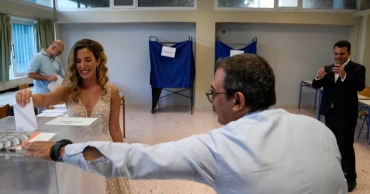
Greeks vote in second general election in 5 weeks and conservative party is favored to win majority
Greeks headed to the polls for the second time in less than two months on Sunday, with the conservative party in power a strong favorite to win with a wide majority after a campaign focused on economic growth and security.
The vote is overshadowed by a major shipwreck just over a week ago that left hundreds of migrants dead or missing off the coast of western Greece. But the disaster is unlikely to significantly affect the overall outcome as Greeks are expected to focus on domestic economic issues.
About 350 Pakistanis were on migrant boat that sank off Greece and many may have died, official says
Conservative leader Kyriakos Mitsotakis, 55, is eyeing a second term as prime minister after his New Democracy party won by a huge margin in May elections — but fell short of gaining enough parliamentary seats to form a government. With a new electoral law now favoring the winning party with bonus seats, he is hoping to form a strong majority in the 300-member parliament.
His main rival is Alexis Tsipras, 48, who leads the left-wing Syriza party and served as prime minister from 2015 to 2019 — some of the most turbulent years of Greece's nearly decade-long financial crisis.
Tsipras fared dismally in the May elections, coming a distant second, 20 percentage points behind New Democracy. He has since been trying to rally his voter base, a task complicated by splinter parties formed by some of his former associates.
Speaking after voting in a western Athens neighborhood, Tsipras seemed to accept his party would be in opposition for the next four years.
At least 79 dead after overcrowded migrant vessel sinks off Greece; hundreds may be missing
"This crucial election is not only determining who will govern the country, it is determining our lives for the next four years, it is determining the quality of our democracy," Tsipras said. "It is determining whether we will have an unchecked government or a strong opposition. This role can only be played by Syriza."
Sunday's vote comes after hundreds of migrants died and went missing in southern Greece when an overcrowded fishing trawler heading from Libya to Italy capsized and sank. The shipwreck drew criticism over how Greek authorities handled the rescue, as well as over the country's restrictive migration policy.
But the disaster, one of the worst in the Mediterranean in recent years, has done little to dent Mitsotakis' 20-point lead in opinion polls over Tsipras, with the economy at the forefront of most voters' concerns. As Greece gradually recovers from its brutal financial crisis, voters appear happy to return to power a prime minister who delivered economic growth and lowered unemployment.
"Our expectations are that the country will continue the path of development that it has had in recent years," said insurance company employee Konstantinos, who arrived early in the morning at a polling station in northern Athens with his newly-wed bride Marietta, still in her wedding dress, straight from their wedding reception. He asked that his surname not be used.
Another early morning voter, Sofia Oikonomopoulou, said she hoped the winning party on Sunday would have enough parliamentary seats to form a government "so that the country will not suffer any more."
"We hope for better days, for justice, a health system, education, that everything will go better and that the Greek truly will be able to live a better life through these elections," she said.
Mitsotakis, a Harvard graduate, comes from one of Greece's most prominent political families. His late father, Constantine Mitsotakis, served as prime minister in the 1990s, his sister served as foreign minister and his nephew is the current mayor of Athens. The younger Mitsotakis has vowed to rebrand Greece as a pro-business and fiscally responsible euro zone member.
The strategy, so far, has worked. New Democracy routed left-wing opponents in May, crucially winning Socialist strongholds on the island of Crete and lower-income areas surrounding Athens, some for the first time.
Tens of thousands march in Greece to protest train disaster
"We are voting so people can have a stable government for the next four years," Mitsotakis said after voting in northern Athens. "I am sure that Greeks will vote with maturity for their personal prosperity and the country's stability."
Trailing in opinion polls and on the back of his particularly poor showing in the May vote, Tsipras finds himself fighting for his political survival. His campaign in the runup to the previous elections was deemed by many as being too negative, focusing too heavily on scandals that hit the Mitsotakis government late in its term.
Despite the scandals, which included revelations of wiretapping targeting senior politicians and journalists, and a deadly Feb. 28 train crash that exposed poor safety measures, Tsipras failed to make any significant gains against Mitsotakis.
Whether the conservative leader will manage to form a government, and how strong it will be, could depend on how many parties make it past the 3% threshold to enter parliament. As many as nine parties have a realistic chance, ranging from ultra-religious groups to two left-wing splinter parties founded by top former members of the Syriza government.
In May elections, held under a proportional representation system, Mitsotakis' party fell five seats short, and he decided not to try to form a coalition government, preferring instead to take his chances with a second election.
Sunday's vote is being held under an electoral system that grants a bonus of between 25 and 50 seats to the winning party, depending on its performance, which makes it easier for a party to win more than the required 151 seats in the 300-member parliament to form a government.
2 years ago