europe

EU welcomes F-16 jet decision for Ukraine; pilots already being trained
The European Union's foreign policy chief said Tuesday that the U.S. green light to allow Ukrainian pilots get training to fly F-16s has created an inexorable momentum that will inevitably bring the fighter jets to the Ukrainian battlefield.
"You know, it's always the same thing, we discuss, at the beginning everybody is reluctant," said Josep Borrell, giving the example of the long debate and initial opposition to the dispatch of advanced Leopard battle tanks to Ukraine.
"And at the end — with the Leopards, with the F-16 at the end — the decision comes to provide this military support because it is absolutely needed."
He added that training for Ukrainian pilots had already begun in Poland and some other countries, though authorities in Warsaw could not immediately confirm the news. The Netherlands and Denmark, among others, are also making plans for such training.
No decision on actually delivering fourth-generation fighter jets has been taken yet, but training pilots now — a process that takes several months — will help speed up battle readiness once a formal decision is taken.
"We can continue and also finalize the plans that we're making with Denmark and other allies to start these these trainings. And of course, that is the first step that you have to take," said Dutch Defense Minister Kajsa Ollongren.
"We will continue discussing with our allies and with countries that might have F-16s available about that next step. But that's not on the table right now," Ollongren said.
Ukraine has long begged for the sophisticated fighter to give it a combat edge as it battles Russia's invasion, now in its second year. And this new plan opens the door for several nations to supply the aircraft and for the U.S. to help train the pilots.
With the decision, the Biden administration has made a sharp reversal after refusing to approve any transfer of the aircraft or conduct training for more than a year due to worries that it could escalate tensions with Russia. U.S. officials also have argued against the F-16 by saying that learning to fly and logistically support such an advanced aircraft would be difficult and take months.
3 years ago

Russia alleges border incursion by Ukrainian saboteurs; Kyiv claims they are disgruntled Russians
Russian officials claimed that Ukrainian military saboteurs launched an attack across the border Monday, wounding eight people in a small town. Kyiv officials denied any link with the group and blamed the fighting on a revolt by disgruntled Russians against the Kremlin.
Neither version of events could be independently verified in an area that has witnessed sporadic spillover from the almost 15-month war in Ukraine.
The governor of Russia's Belgorod region, which borders Ukraine, said that a Ukrainian Armed Forces saboteur group entered the town of Graivoron, about five kilometers (three miles) from the border. The town also came under Ukrainian artillery fire, he said.
Gov. Vyacheslav Gladkov said eight people were wounded and most residents had left the area, but the situation remained "tense."
In nearby Zamostye village, a projectile hit a kindergarten and caused a fire. One woman was wounded in her hand, Gladkov said. He also reported that Russian anti-aircraft systems shot down an unmanned aerial vehicle over Belgorod region.
Gladkov said a counterterrorist operation was underway and that authorities were imposing special controls, including personal document checks and stopping the work of companies that use "explosives, radioactive, chemically and biologically hazardous substances."
Kremlin spokesman Dmitry Peskov said Russian President Vladimir Putin was informed about the alleged saboteur incursion. An effort to "push them out from the Russian territory and liquidate them" was underway, he said.
Peskov described the action as an attempt by Ukraine to divert attention from the eastern city of Bakhmut, which Moscow claimed to have captured after months of battle but where Kyiv says it is still fighting.
But Ukrainian military intelligence officials didn't confirm that Kyiv had deployed saboteurs. Instead, they claimed that Russian citizens seeking regime change in Moscow were behind the Graivoron incursion.
Ukraine intelligence representative Andrii Cherniak said Russian citizens belonging to murky groups calling themselves the Russian Volunteer Corps and the "Freedom of Russia" Legion were behind the assault.
Ukrainian President Volodymyr Zelenskyy's advisor, Mykhailo Podolyak, said on Twitter that Ukraine "has nothing to do with it." He suggested an "armed guerrilla movement" was behind the attack.
The Russian Volunteer Corps claimed in a Telegram post it had crossed the border into Russia again, after claiming to have breached the border in early March.
The Russian Volunteer Corps describes itself as "a volunteer formation fighting on Ukraine's side." Little is known about the group, and it is not clear if it has any ties with the Ukrainian military. The same is true for the "Freedom of Russia" Legion..
The RVC was founded last August and reportedly consists mostly of anti-Putin far-right Russian extremists who have links with Ukrainian far-right groups.
Earlier Monday, Ukraine's Zaporizhzhia Nuclear Power Plant, Europe's largest atomic power station, spent hours operating on emergency diesel generators after losing its external power supply for the seventh time since Russia's full-scale invasion of its neighbor, the head of the U.N. nuclear watchdog said.
"The nuclear safety situation at the plant (is) extremely vulnerable," Rafael Grossi, head of the International Atomic Energy Agency, said in a tweet.
Hours later, national energy company Ukrenergo said on Telegram that it had restored the power line that feeds the plant.
But for Grossi, it was another reminder of what's at stake at the Russian-occupied plant which has seen shelling close by.
"We must agree to protect (the) plant now; this situation cannot continue," Grossi said, in his latest appeal for the area to be spared from the fighting between Ukrainian and Russian forces. IAEA staff are deployed at the plant, which is occupied by Russian troops.
The plant's six nuclear reactors, which are protected by a reinforced shelter able to withstand an errant shell or rocket, have been shut down. But a disruption in the electrical supply could disable cooling systems that are essential for the reactors' safety even when they are shut down. Emergency diesel generators, which officials say can keep the plant operational for 10 days, can be unreliable.
Grossi said it was the seventh time the plant had lost its outside power supply since Russia's full-scale invasion in February 2022.
The Zaporizhzhia Nuclear Power Plant is one of the 10 biggest atomic power stations in the world.
Ukraine's presidential office said Monday morning that at least three Ukrainian civilians were killed and 16 others were injured in Russian assaults over the previous 24 hours.
The Ukrainian Air Force reported that four out of 16 Russian missiles and all 20 drones launched against Ukrainian targets were shot down.
Military targets and public infrastructure in Dnipro, Ukraine's fourth-largest city in the center of the country, were singled out for Russian attacks, which injured eight people, officials said. The Dnipro fire department was affected, and 12 houses, shops, and a kindergarten were damaged, according to Governor Serhii Lysak.
3 years ago

7.7 magnitude earthquake causes small tsunami on South Pacific islands
A 7.7 magnitude earthquake caused a small tsunami to wash ashore on South Pacific islands Friday. No damage has been reported, and the threat passed in a few hours.
Waves 60 centimeters (2 feet) above tide level were measured off Lenakel, a port town in Vanuatu, the Pacific Tsunami Warning Center said. Smaller waves were measured by coastal or deep-ocean gauges elsewhere off Vanuatu and off New Caledonia and New Zealand.
Vanuatu's National Disaster Management Office advised people to evacuate from coastal areas to higher grounds. The office said people should listen to their radios for updates and take other precautions.
New Zealand’s National Emergency Management Agency said it expected coastal areas would experience strong and unusual currents, with unpredictable surges at the shoreline. The PTWC said small waves of 20 centimeters (8 inches) above tides were measured at North Cape, New Zealand.
The tsunami danger passed within a few hours, though the center said small sea level changes may continue.
The U.S. Geological Survey said the quake's epicenter was near the Loyalty Islands, a province in the French territory of New Caledonia. The quake was 37 kilometers (23 miles) deep.
The area is southwest of Fiji, north of New Zealand and east of Australia where the Coral Sea meets the Pacific.
The region is part of the “Ring of Fire,” an arc of seismic faults around the Pacific Ocean where most of the world's earthquakes occur.
3 years ago

Why Ukraine's spring offensive still hasn't begun — with summer just weeks away
For months, Western allies have shipped billions of dollars’ worth of weapons systems and ammunition to Ukraine with an urgency to get the supplies to Kyiv in time for an anticipated spring counteroffensive.
Now summer is just weeks away. While Russia and Ukraine are focused on an intense battle for Bakhmut, the Ukrainian spring offensive has yet to begin.
Last week Ukrainian President Volodymyr Zelenskyy said it's been delayed because his country lacks enough Western weapons to succeed without suffering too many casualties. Weather and training are playing a role too, officials and defense experts say.
Officials insist the counteroffensive is coming. Preliminary moves by Ukraine to set the conditions it wants for an attack have already begun, a U.S. official said on the condition of anonymity to discuss sensitive matters.
A look at the factors delaying the counteroffensive and the preparations both sides are making in anticipation of it starting soon.
WEATHER
A big part of the delay is the weather. It's taken longer than expected for Ukraine's frozen ground to thaw and dry, due to an extended, wet, cold spring, which has made it difficult to transition into an offensive.
Instead, the ground has retained a deep mud that makes it more difficult for non-tracked vehicles to operate.
The mud is like a soup, the official said. "You just sort of sink in it."
TRAINING
In the past few months, tens of thousands of Ukrainian soldiers have been trained by the U.S. and allies for the fight. But the final Ukrainian battalion the U.S. is currently training is just finishing its course now.
This final class brings the total number of Ukrainians the U.S. has trained for this fight to more than 10,700. Those forces have learned not only field and medical skills but advanced combined arms tactics with the Stryker and Bradley armored fighting vehicles and Paladin self-propelled howitzers. It also includes highly skilled forces who were trained to operate the Patriot missile defense system.
According to U.S. Army Europe-Africa, as many as 11,000 additional Ukrainian troops a day are in other training programs run by more than 30 partner nations.
Soon a new phase will begin: The U.S. will start training Ukrainians on Abrams tanks at the Grafenwoehr Training Area in Germany. But the Ukrainians won't wait for the tank training to be finished before they launch their counteroffensive, Ukrainian Defense Minister Oleksii Reznikov told reporters in late April.
WEAPONS ARRIVALS
In just the past five months alone, the U.S. has announced it would send more than $14 billion in weapons and ammunition to Kyiv, most of which is being pulled from existing stockpiles in order to get the supplies to Ukraine faster. NATO and Western allies have responded too, pledging billions in tanks, armored vehicles and air defense systems.
But a lot of that gear still hasn't arrived, said Ben Barry, a former British intelligence official who is now the senior land warfare fellow at the International Institute for Strategic Studies.
For example, of the approximately 300 tank systems pledged — such as the Leopard 2 tanks promised by countries including Denmark, the Netherlands, Spain and Germany — only about 100 have arrived. Of the 700 or so pledged fighting vehicles, such as British Marauders and U.S. Bradley infantry fighting vehicles, only about 300 have arrived, he said.
Ukraine will also need enough ammunition on hand to sustain a higher tempo fight once the counteroffensive begins, When it comes to the ammunition needed, Ukraine's chief military logistician will also have a strong say in when the army is ready to launch, Barry said.
In just one munition — the 155mm howitzer round — Ukraine is firing between 6,000 and 8,000 rounds per day, Ukrainian parliamentary member Oleksandra Ustinova told reporters in April.
COUNTEROFFENSIVE CLUES
Both Russia and Ukraine are taking steps in anticipation of the counteroffensive.
Russia has approximately 200,000 troops along a 1,000-kilometer (620-mile) battle line, dug in using the same type of trench warfare tactics used in World War I, a Western official said on the condition of anonymity to discuss intelligence matters.
These troops are not as highly trained as Russia's initial invading force, which sustained heavy casualties. But they are defended by ditches, minefields and dragon's teeth — above ground triangle-shaped concrete barriers that make it difficult for tanks to move.
Meanwhile, Ukraine has begun shaping operations, such as targeting Russia's forward lines with long-range artillery fire. That may indicate that Ukraine is about to push forward on that location — or it could be a decoy to draw Russia's attention from its actual planned first strike, the official said.
When Ukraine does try to punch through those lines — whether in a limited area or a complex campaign carried out in multiple locations — that will be the likely indicator the offensive has begun, both Barry and the Western official said.
Barry said when Ukrainian brigades start crossing into Russian-held territories and try to attack the first line of Russian defenses, "that's going to be a dead giveaway I think."
3 years ago
Russia fires 30 cruise missiles at Ukrainian targets; Ukraine says 29 were shot down
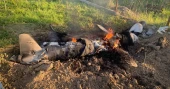
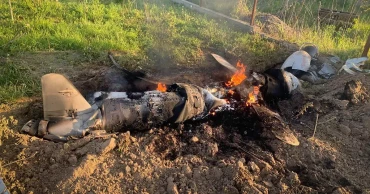
Russia fired 30 cruise missiles against different parts of Ukraine early Thursday in the latest nighttime test of Ukrainian air defenses, which shot down 29 of them, officials said.
One person died and two were wounded by a Russian missile that got through and struck an industrial building in the southern region of Odesa, according to Serhiy Bratchuk, a spokesperson for the region's military administration.
Read more: Russia agrees to extend Ukraine grain deal in a boost for global food security
Loud explosions were heard in Kyiv as the Kremlin's forces targeted the capital for the ninth time this month in a clear escalation after weeks of lull and ahead of a much-anticipated Ukrainian counteroffensive using newly supplied advanced Western weapons.
Debris fell on two Kyiv districts, starting a fire at a garage complex. There was no immediate word about any victims, Serhiy Popko, head of the Kyiv Military Administration, said in a Telegram post.
Ukraine also shot down two Russian exploding drones and two reconnaissance drones, according to authorities.
Read more: Russia freezes bank accounts of Finland's diplomatic missions, prompting cash payments
The missiles were launched from Russian sea, air and ground bases, General Valerii Zaluzhnyi, the Ukrainian commander in chief, wrote on Telegram.
Several waves of missiles were aimed at areas of Ukraine between 9 p.m. Wednesday and 5.30 a.m. Thursday, he said.
Russian forces used strategic bombers from the Caspian region and apparently fired X-101 and X-55-type missiles developed during Soviet times, Kyiv authorities said. Russia then deployed reconnaissance drones over the capital.
In the last major air attack on Kyiv, on Tuesday, Ukrainian air defenses bolstered by sophisticated Western-supplied systems shot down all the incoming missiles, officials said.
That attack used hypersonic missiles, which repeatedly have been touted by Russian President Vladimir Putin as providing a key strategic advantage. The missiles, which are among the most advanced weapons in Russia's arsenal, are difficult to detect and intercept because of their hypersonic speed and maneuverability.
Read more: G-7 leaders likely to focus on the war in Ukraine and tensions in Asia at summit in Hiroshima
But sophisticated Western air defense systems, including American-made Patriot missiles, have helped spare Kyiv from the kind of destruction witnessed along the main front line in the country's east and south.
While the ground fighting is largely deadlocked along that front line, both sides are targeting each other's territory with long-range weapons.
Meanwhile, Kremlin-installed authorities in occupied Crimea reported the derailment of eight train cars Thursday due to an explosion.
Russian state media reported the train was carrying grain.
Quoting a source within the emergency services, state news agency RIA Novosti said that the incident occurred not far from the city of Simferopol. The Crimean Railway reported that the derailment was caused by "the interference of unauthorized persons" and that there were no casualties.
The Russia-installed head of Crimea, Sergei Aksyonov, said that train services on the affected section of the line were suspended.
Also, two people were wounded in a drone attack in Russia's southern Kursk region, which borders Ukraine, the regional governor reported Thursday.
In a Telegram post, Roman Starovoit claimed Ukrainian forces dropped an explosive device from a drone on a sports and recreation complex.
3 years ago

Russia agrees to extend Ukraine grain deal in a boost for global food security
Russia agreed to a two-month extension of a deal that has allowed Ukraine to ship grain through the Black Sea to parts of the world struggling with hunger, Turkish President Recep Tayyip Erdogan announced Wednesday, a boost to global food security after the war drove up prices.
Turkey and the U.N. brokered the breakthrough accord with the warring sides last summer, which came with a separate agreement to facilitate shipments of Russian food and fertilizer that Moscow insists hasn't been applied.
Also read: Ukraine welcomes EU deal on continued farm exports
Russia had threatened to bow out if its concerns were not ironed out by Thursday. Such brinkmanship isn’t new: With a similar extension in the balance in March, Russia unilaterally decided to renew the deal for 60 days instead of the 120 days outlined in the agreement.
Russian Foreign Ministry spokeswoman Maria Zakharova said Wednesday that problems would need to be resolved “at the technical level.” Neither she nor Erdogan mentioned any concessions Moscow may have received.
"We will continue our efforts to ensure that all the conditions of the agreement are fulfilled so that it continues in the next period,” said Erdogan, who announced the highly anticipated decision two days after being forced into a runoff in Turkey's presidential election.
Extending the Black Sea Grain Initiative is a win for countries in Africa, the Middle East and parts of Asia that rely on Ukrainian wheat, barley, vegetable oil and other affordable food products, especially as drought takes a toll. The deal helped lower prices of food commodities like wheat over the last year, but that relief has not reached kitchen tables.
“Ukrainian and Russian products feed the world,” U.N. Secretary-General António Guterres said. “They matter because we are still in the throes of a record-breaking cost-of-living crisis.”
Deputy Prime Minister Alexander Kubrakov welcomed the extension, but emphasized that the deal “has to work effectively.” On Facebook, he blamed Russia for dragging its heels on joint inspections of ships by Russian, Ukrainian, U.N. and Turkish officials.
Average daily inspections — meant to ensure vessels carry only food and not weapons that could aid either side — have steadily dropped from a peak of 10.6 in October to 3.2 last month. Shipments of Ukrainian grain also have declined in recent weeks.
Also read: Russia rejoins key deal on wartime Ukrainian grain exports
Russia had denied slowing the work. No vessels have been cleared to enter Ukraine’s three open ports since May 6, and Kubrakov says nearly 70 vessels are waiting in Turkish waters to participate.
Russia, meanwhile, is shipping record amounts of its wheat through other ports. Critics say that suggests Moscow was posturing or trying to wrest concessions in areas such as Western sanctions.
The deal has allowed over 30 million metric tons of Ukrainian grain to be shipped, with more than half that going to developing nations. China, Spain and Turkey are the biggest recipients, and Russia says that shows food isn't going to the poorest countries.
Guterres has said developed countries bring in Ukrainian corn for animal feed, while emerging economies receive “a majority” of grain for people to eat. He noted exports bring prices down for everyone.
“Looking ahead, we hope that exports of food and fertilizers, including ammonia, from the Russian Federation and Ukraine will be able to reach global supply chains safely and predictably," the U.N. chief said Wednesday.
The U.S. said Russia should stop creating hurdles to the deal.
"We should not need to remind Moscow every few weeks to keep their promises and to stop using people’s hunger as a weapon in their war against Ukraine,” State Department deputy spokesman Vedant Patel told reporters.
Russia is expected to export more wheat than any country ever has in one year, at 44 million metric tons, said Caitlin Welsh, director of the Global Food Security Program at the Center for Strategic and International Studies.
Trade flows tracked by financial data provider Refinitiv show that Russia exported just over 4 million tons of wheat in April, the highest volume for the month in five years, following record or near-record highs in several previous months.
Exports since last July reached 32.2 million tons, 34% above the same period from last season, according to Refinitiv.
Welsh says Russia knows that the less grain Ukraine can export, the more it can make up for the shortfall. And restrictions on Black Sea shipments mean the war-torn country would have to rely more on land routes through the European Union, which has stirred anger from its neighbors.
“The more it restricts Ukraine’s access to Black Sea ports, the better it is for its political influence with trading partners and the better it is for Russia in the sense that it’s straining unity among EU member states and their support for Ukraine,” she said.
With Ukraine’s wheat harvest coming up in June and the need to sell that crop in July, maintaining a Black Sea shipping corridor is key to avoid “taking another large chunk of wheat and other grains off the market,” said William Osnato, a senior research analyst at agriculture data and analytics firm Gro Intelligence.
It comes as places including Morocco, Tunisia, Algeria, Syria and East Africa — big importers of food — are facing drought and economic issues that are likely to keep food prices high.
“Shortages of food in the system and lack of affordable fertilizer continues to push up prices, making it difficult for families in countries like Somalia to predict if they will be able to afford a meal the next day,” said Shashwat Saraf, emergency director for East Africa at the International Rescue Committee.
3 years ago

Russia freezes bank accounts of Finland's diplomatic missions, prompting cash payments
Russia has frozen the bank accounts of Finland’s diplomatic representations in Moscow and St. Petersburg, disrupting money flow and forcing the Nordic country's missions to resort to cash payments, the Finnish foreign minister said Wednesday.
Pekka Haavisto said Moscow’s move at the end of April breached the Vienna Convention on Diplomatic Relations and Helsinki had delivered a diplomatic note on the matter to Russia.
“We’re not alone with the money traffic problem,” Haavisto told reporters during a news conference. “Also, some other European Union nations have encountered problems with money traffic in Russia. But according to our information, restrictions on Finland are among the tightest.”
He said Moscow’s measure affected, among other things, payment of rents, electricity and water bills by the Finnish Embassy in Moscow and the Consulate General in St. Petersburg, which now have to rely on their cash assets.
The move did not, however, affect salary payments to staff and there was no risk of closure of Finland’s diplomatic missions in Russia, Haavisto said.
Earlier this year, Finland temporarily closed its diplomatic missions in the Russian Arctic city of Murmansk and the city of Petrozavodsk in the Karelia region — neither of them far from the Finnish border.
Haavisto — the caretaker foreign minister, as Finland is in the process of forming a new government — stressed that current EU sanctions on Moscow weren’t directed at Russia’s embassies and consulates and Helsinki hadn’t frozen the bank accounts of Russia’s diplomatic missions in Finland.
Moscow seemed to interpret the issue differently. Russian Foreign Ministry spokeswoman Maria Zakharova said later Wednesday the measure was a response to similar steps allegedly taken by Helsinki.
“We confirm the fact of introduction of restrictions on use of accounts of the embassy of Finland and the Finnish consulate general in St. Petersburg,” Zakharova said, as quoted by Russian news agency Tass. “These actions are a reciprocal response to similar restrictions (by Finland), imposed on Russian missions in this country, which can only use an account in a single Finnish bank. It is a fact.”
Finnish President Sauli Niinistö said Russia was overreacting.
“Russia claims that this is a reciprocal measure. However, this (freezing of bank accounts) significantly exceeds the restrictions that have been the practice in Finland in limiting the money flow of the Russian embassy in Helsinki,” Niinistö told Finnish news agency STT.
Haavisto didn’t see the move as linked to Finland’s recent membership of NATO but rather to Russia’s ongoing war in Ukraine.
Finland joined NATO last month as the 31st member of the alliance, a historic move after decades of military nonalignment. Finland shares a 1,340 kilometer (830-mile) border with Russia, the longest of any EU member.
3 years ago

Russia freezes bank accounts of Finland's diplomatic missions, prompting cash payments
HELSINKI, May 17 (AP/UNB) — Russia has frozen the bank accounts of Finland's diplomatic representations in Moscow and St. Petersburg, disrupting money flow and forcing the country's missions to resort to cash payments, the Finnish foreign minister said Wednesday.
Pekka Haavisto said Moscow's move at the end of April breaches the Vienna Convention on Diplomatic Relations and Helsinki has delivered a diplomatic note on the matter to Russia.
"We're not alone with the money traffic problem," Haavisto told reporters during a news conference. "Also some other European Union nations have encountered problems with money traffic in Russia. But according to our information, restrictions on Finland are among the tightest."
He said Moscow's measure affects, among other things, payment of rents, electricity and water bills by the Finnish Embassy in Moscow and the Consulate General in St. Petersburg, which now have to rely on their cash assets.
The move does not, however, affect salary payments to staff and there is no risk of a closure of Finland's diplomatic missions in Russia, Haavisto said.
Earlier this year, Finland temporarily closed its diplomatic missions in the Russian Arctic city of Murmansk and the city of Petrozavodsk in the Karelia region — both not far from the Finnish border.
Haavisto — the caretaker foreign minister as the new Finnish government is currently under formation — stressed that current EU sanctions on Moscow aren't directed at Russia's embassies and consulates and Helsinki hasn't frozen the bank accounts of Russia's diplomatic missions in Finland.
He didn't see the move as linked to Finland's recent membership in NATO but rather to Russia's ongoing war in Ukraine.
Finland joined NATO last month as the 31st member of the alliance, a historic move after decades of military nonalignment. Finland shares a 1,340 kilometer (830-mile) border with Russia, the longest of any EU member.
3 years ago

Former French President Sarkozy loses appeal on corruption conviction; prison sentence upheld
A French appeals court on Wednesday upheld a one-year prison sentence for former President Nicolas Sarkozy on a conviction for corruption and influence peddling.
His lawyer said he will take the case to France’s highest court and insisted that Sarkozy is innocent. The 68-year-old ex-president would not have to serve time until a final ruling, and if definitively convicted, he could ask to serve his sentence at home.
Sarkozy, 68, was convicted in 2021 of trying to bribe a magistrate in exchange for information about a legal case in which he was implicated. It was the first time in modern French history that a former president had been convicted of corruption and sentenced to prison.
Sarkozy, who was president from 2007 to 2012, denies wrongdoing and appealed the original ruling. The Paris appeals court on Wednesday upheld the conviction and the sentence, according to a court official.
His lawyer, Jacqueline Laffont, called the decision “stupefying” and “unjust.”
Sarkozy is entitled to ask to be detained at home with an electronic bracelet, standard practice for sentences of two years or less. He also received a two-year suspended sentence, which he will not have to serve if he commits no new offense in the next five years.
It is one of multiple legal cases Sarkoky has faced. He was convicted later in 2021 of illegal campaign financing of his unsuccessful 2012 re-election bid. Last week, prosecutors asked for him to be sent to trial on charges that he took millions in illegal financing for his 2007 campaign by the regime of late Libyan leader Moammar Gadhafi.
3 years ago
Zelenskyy's European tour aimed to replenish Ukraine's arsenal and build political support
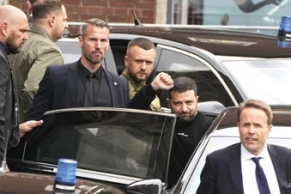
Volodymyr Zelenskyy set off across Europe with a long shopping list. Ukraine’s president will head home with much of what he wanted — though not the Western fighter jets he seeks to defend against Russian air attacks.
European leaders promised Zelenskyy an arsenal of missiles, tanks and drones during a whirlwind three-day visit to Italy, the Vatican, Germany, France and the U.K. that sought to replenish Ukraine’s depleted weapons supplies ahead of a long-anticipated spring offensive aimed at turning the tide of the war.
The trip was also about shoring up European political and military support for the longer term, to ensure Ukraine can hold any ground it takes back and press for a favorable peace.
“They’ve got to show … they’re in this conflict for the long term and that they’re able to keep sustaining this effort,” said Justin Crump, a former British tank commander who heads security consultancy Sibylline. “It’s not going to be one shot and done.”
Zelenskyy’s energetic international diplomacy over 15 months of war has persuaded Ukraine’s Western allies to send ever more powerful weapons, from German Leopard tanks to U.S. Patriot missile systems and Storm Shadow cruise missiles from the U.K.
Pressing his case to European leaders in person shows Zelenskyy’s growing confidence about traveling abroad. It’s also an attempt to get his “ducks in a row” as Ukraine prepares a push to reclaim territory seized by Russia, said Patrick Bury, senior lecturer in security at the University of Bath.
Bury said that if Ukraine launches an offensive “and it doesn’t go well, there might be a drop off in support and more pressure to negotiate. I think he’s just trying to bind in for as long as he possibly can as much support as he can from the West.”
On Monday, the U.K. pledged hundreds more air defense missiles, as well as attack drones with a range of more than 200 kilometers (120 miles).
France, where Ukraine’s leader met President Emmanuel Macron on Sunday, said it would supply Ukraine with dozens of light tanks and armored vehicles, along with unspecified air defense systems.
Zelenskyy also visited Germany for talks with Chancellor Olaf Scholz, whose initial reluctance to provide Ukraine with lethal weapons was a source of frustration in Kyiv. Now, Germany has become one of the biggest arms suppliers to Ukraine, including battle tanks and the sophisticated IRIS-T SLM air-defense system.
During Zelenskyy’s visit Germany announced another 2.7 billion euros ($3 billion) worth of equipment, including tanks, anti-aircraft systems and ammunition.
But Zelensky’s aim of forming an international “fighter jet coalition” to supply Ukraine with planes has run up against NATO concern about escalating the alliance’s role in the war. Ukraine wants U.S.-made F-16s to supplement its Soviet-era jets, but Washington has resisted calls to send them.
“We want to create a jet coalition and I am very positive about it,” Zelenskyy said Monday after meeting British Prime Minister Rishi Sunak. But, he added: “We have to work a little bit more on it.”
Sunak said Britain wants to help Ukraine acquire jets, but “it’s not a straightforward thing.”
The U.K. does not have any F-16s, but says it will give Ukrainian pilots basic training on Western-standard jets starting this summer.
Germany’s Scholz was evasive when asked about planes, referring instead to the anti-aircraft system it has provided to Kyiv.
“That’s what we as Germany are now concentrating on,” he said.
The flurry of announcements from Europe’s capitals is part diplomatic theater. Ukraine gets a steady flow of equipment from the West, and some of the weapons announced this week may already have been on the way. Zelenskyy’s trip was about securing supplies for the long term, as well as the imminent offensive.
“They should be able to carry out the offensive with what they already have, but that’s not enough to sustain it over the long term,” said retired French Vice Adm. Michel Olhagaray, a former head of France’s center for higher military studies. “And they’ll need the long term to make the Russians crack.”
Zelenskyy began his European tour Saturday in Rome, where he received a hearty commitment from Italian Premier Giorgia Meloni — and a more nuanced and less welcome message from Pope Francis.
Calling Zelenskyy her friend and emphasizing their personal rapport, Meloni promised to provide Ukraine with whatever it needs to win the war and said any compromise to accept an “unjust peace” was unacceptable for Ukraine and Italy, and dangerous for the rest of Europe.
“We cannot call ‘peace’ something that could resemble an invasion,” she told reporters, as Zelenskyy nodded along in agreement.
Zelenskyy also visited the Vatican to meet Pope Francis, who stressed the need for “gestures of humanity” toward the most vulnerable and innocent victims of the conflict.
While Francis has frequently prayed for the “martyred” Ukrainian people, he has also lamented the Russian mothers who have lost their sons. The equivalence, and Francis’ reluctance to outright condemn Russia, is part of the Vatican’s tradition of neutrality in conflicts.
Zelenskyy made clear he didn’t appreciate Francis’ emphasis on both Russian and Ukrainian victims of the war, tweeting: “there can be no equality between the victim and the aggressor.”
It was a reminder that Ukraine faces a political as well as a military battle. In Africa and Asia, especially, many are reluctant to take sides in what is seen as a regional European conflict.
François Heisbourg, a French analyst on defense and security questions at the International Institute for Strategic Studies, said Zelenskyy’s European trip was part “weapons shopping tour, that’s clear enough, and it seems to be working very well.”
“But the other aspect, of course, is what you would call shaping the political battlefield,” he said. “The politics are no less important for Zelenskyy than the purely military stuff.”
3 years ago