europe

Zelenskyy visits UK on European tour seeking military aid
President Volodymyr Zelenskyy was visiting Britain on Monday, as the staunch ally of Ukraine prepares to give more military aid in an effort to change the course of the war.
The U.K. government confirmed Zelenskyy's arrival early Monday and said he would meet with Prime Minister Rishi Sunak.
It is the fourth European country Zelenskky has visited in the past few days. He made an unannounced visit to Paris on Sunday evening to meet French President Emmanuel Macron, after trips to Germany and Italy, where he met those countries' leaders and Pope Francis.
A message posted Monday on Zelenskyy's official Telegram Channel said: "Today — London. The UK is leading the way when it comes to expanding our capabilities on the ground and in the air. This cooperation will continue today. I will meet my friend Rishi. We will conduct substantive negotiations face-to-face and in delegations.”
Sunak's office confirmed the two leaders would meet at Chequers. the prime minister's country retreat outside London. It's Zelenskyy's second trip to the U.K. since Russia invaded Ukraine in February 2022.
The U.K. has become one of Ukraine's major military allies, sending Kyiv short-range missiles and Challenger tanks and training 15,000 Ukrainian troops on British soil. Last week Britain announced it had sent Ukraine Storm Shadow cruise missiles, which have a range of more than 250 kilometers (150 miles) — the first known shipment of the weaponry that Kyiv has long sought from its allies.
Sunak's office said that on Monday Britain will confirm it is giving Ukraine hundreds more air defense missiles, as well as “long-range attack drones" with a range of more than 200 kilometers (120 miles).
“This is a crucial moment in Ukraine’s resistance to a terrible war of aggression they did not choose or provoke," Sunak said. "They need the sustained support of the international community to defend against the barrage of unrelenting and indiscriminate attacks that have been their daily reality for over a year.
“We must not let them down.”
Russia stepped up attacks across Ukraine with drones and missiles over the weekend. On Sunday, Russia shelled two communities in the northern border region of Sumy, the region’s military administration said in a statement on its official Telegram channel. It said 109 explosions were recorded.
Zelenskyy toured European capitals over the weekend to seek more aid as Ukraine prepares a long-anticipated spring offensive to retake territory seized by Russia.
Zelenskyy and Macron met for about three hours at the French presidential Elysee Palace — an encounter kept under wraps until shortly before the Ukrainian leader’s arrival in Paris.
Macron’s office said France will supply dozens of light tanks and armored vehicles “in the weeks ahead,” without giving specific numbers. Also promised were more air defense systems, but again details weren’t made public.
More Ukrainians will also be made battle-ready, with France aiming to train about 2,000 Ukrainian soldiers in France this year and nearly 4,000 others in Poland as part of a wider European effort, Macron’s office said.
France has supplied Ukraine with an array of weaponry, include air defense systems, light tanks, howitzers and other arms and equipment and fuel.
France had dispatched a plane to pick up Zelenskyy in Germany, where he met with Chancellor Olaf Scholz earlier Sunday and discussed his country’s planned counteroffensive.
It was his first visit to Berlin since the start of the invasion and came a day after the German government announced a new package of military aid for Ukraine worth more than 2.7 billion euros ($3 billion), including tanks, anti-aircraft systems and ammunition.
After initially hesitating to provide Ukraine with lethal weapons, Germany has become one of the biggest suppliers of arms to Ukraine, including Leopard 1 and 2 battle tanks, and the sophisticated IRIS-T SLM air defense system. Modern Western hardware is considered crucial if Ukraine is to succeed in its planned counteroffensive.
In the western German city of Aachen, Zelenskyy also received the prestigious International Charlemagne Prize, awarded to him and the people of Ukraine.
On Saturday. he met Francis and Italian Premier Giorgia Meloni in Rome.
On the European trip, Zelenskyy said it will aim to liberate Russian-occupied areas within Ukraine’s internationally recognized borders, and not attack Russian territory.
The Washington Post cited previously undisclosed documents from a trove of U.S. intelligence leaks suggesting that Zelenskyy has considered trying to capture areas in Russia proper for possible use as bargaining chips in peace negotiations to end the war launched by Moscow in February 2022. This would put him at odds with Western governments that have insisted that weapons they provide must not be used to attack targets in Russia.
Asked about the report, Zelenskyy said: “We don’t attack Russian territory, we liberate our own legitimate territory.”
“We have neither the time nor the strength (to attack Russia),” he said, according to an official interpreter. “And we also don’t have weapons to spare with which we could do this.”
“We are preparing a counterattack for the illegally occupied areas based on our constitutionally defined legitimate borders, which are recognized internationally,” Zelenskyy said.
Among areas still occupied by Russia are the Crimean peninsula and parts of eastern Ukraine with mainly Russian-speaking populations.
3 years ago

World's oldest dog, according to Guinness, celebrates 31st birthday
The world's oldest dog recently celebrated his 31st birthday, according to the Guinness Book of World Records.
Bobi, a purebred Rafeiro do Alentejo, a breed of Portuguese dog, celebrated during a party Saturday at his home in the rural Portuguese village of Conqueiros, where has lived his entire life.
More than 100 people attended the "very traditional" Portuguese party, owner Leonel Costa said.
Local meats and fish were served to up to 100 guests, with extra for Bobi, who only eats human food. A dance troupe also performed with Bobi participating in one of their routines.
Costa has owned several old-aged dogs in the past, including Bobi's mother, Gira, who lived to the age of 18. However, Costa said he never imagined any of his dogs would reach their 30s.
"We see situations like this as a normal result of the life that they have, but Bobi is one of a kind," Costa said.
One of the biggest contributing factors to Bobi's longevity is the "calm, peaceful environment" in which he lives, according to Costa.
Throughout his life, Bobi has freely roamed the forests surrounding the Costa house. He has never been chained or leashed.
The "very sociable" dog was never lonely because he grew up surrounded by many other animals, Costa said.
Now in his senior years, Bobi finds it difficult to walk, so he prefers to hang out at home in the yard. His eyesight has gotten worse, meaning he often bumps into things when he walks. Just like old-aged humans, Bobi sleeps a lot. He immediately lies down in bed after eating, although on cold days he chooses to nap by the fire, his owner said.
Bobi's birth date has been confirmed by Serviço Medico-Veterinário do Município de Leiria (Veterinary Medical Service of the Municipality of Leiria), which registered Bobi in 1992.
His age also has been verified by SIAC, a pet database authorized by the Portuguese government and managed by the SNMV (Sindicato Nacional dos Médicos Veterinários; National Union of Veterinarians).
Costa, now 38, was just 8 years old when Bobi was born. For him, Bobi is a living reminder of the past, he said.
"Bobi is special because looking at him is like remembering the people who were part of our family and unfortunately are no longer here, like my father, my brother, or my grandparents who have already left this world," Costa said. "Bobi represents those generations."
3 years ago

Ukraine's Zelenskyy arrives in Berlin to meet German leaders, discuss arms
Ukrainian President Volodymyr Zelenskyy arrived in Berlin early Sunday for talks with German leaders about further arms deliveries to help his country fend off the Russian invasion and rebuild what's been destroyed by more than a year of devastating conflict.
A Luftwaffe jet flew Zelenskyy to the German capital from Rome, where he had met Saturday with Pope Francis and Italian Premier Giorgia Meloni.
On the eve of his arrival — which took place amid tight security — the German government announced a new package of military aid for Ukraine with aid worth more than 2.7 billion euros ($3 billion), including tanks, anti-aircraft systems and ammunition.
“Already in Berlin. Weapons. Powerful package. Air defense. Reconstruction. EU. NATO. Security,” Zelenskyy tweeted Sunday, in an apparent reference to the key priorities of his trip.
After initially hesitating to provide Ukraine with lethal weapons, Germany has become one of the biggest suppliers of arms to Ukraine, including Leopard 1 and 2 battle tanks, and the sophisticated IRIS-T SLM air-defense system. Modern Western hardware is considered crucial if Ukraine is to succeed in its planned counteroffensive against Russian troops.
After meeting Chancellor Olaf Scholz and other senior officials at the chancellery, the two leaders are expected to fly to the western city of Aachen for Zelenskyy to receive the International Charlemagne Prize awarded to him and the people of Ukraine.
Organizers say the award recognizes that their resistance against Russia's invasion is a defense "not just of the sovereignty of their country and the life of its citizens, but also of Europe and European values.”
3 years ago
Turkey's elections for presidency, parliament set to begin
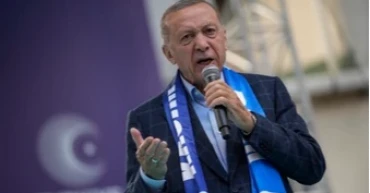
Voters in Turkey are heading to the polls on Sunday for pivotal parliamentary and presidential elections that are expected to be tightly contested and could be the biggest challenge Turkish President Recep Tayyip Erdogan faces in his two decades in power.
The vote will either grant the increasingly authoritarian Erdogan a new five-year term in office or set the NATO-member country on what his principal opponent calls a more democratic path.
For the first time in his 20 years in office, opinion polls indicate that the populist Erdogan, 69, is entering a race trailing behind an opponent. Opinion surveys have given a slight lead to Kemal Kilicdaroglu, the 74-year-old leader of the center-left, pro-secular Republican People’s Party, or CHP, and the joint candidate of a united opposition alliance. If no candidate receives more than 50% of the votes, the presidential race will go to a run-off on May 28.
More than 64 million people, including 3.4 million overseas voters, are eligible to vote in the elections, which are taking place the year Turkey marks the centenary of the establishment of its republic.
Voter turnout in Turkey is traditionally strong, showing continued belief in this type of civic participation in a country where freedom of expression and assembly have been suppressed.
The elections come as the country is wracked by economic turmoil that critics blame on the government’s mishandling of the economy and a steep cost-of-living crisis.
The country is also reeling from the effects of a powerful earthquake that caused devastation in 11 southern provinces, killing more than 50,000 in unsafe buildings. Erdogan’s government has been criticized for its delayed and stunted response to the disaster as well as the lax implementation of building codes that exacerbated the misery.
Internationally, the elections are being watched closely as a test of a united opposition’s ability to dislodge a leader who has concentrated nearly all powers of the state in his hands.
3 years ago

Germany announces $3 billion military aid package for Ukraine before possible Zelenskyy visit
Germany will provide Ukraine with additional military aid worth more than 2.7 billion euros ($3 billion), including tanks, anti-aircraft systems and ammunition, the government said Saturday.
The announcement came as preparations were underway in Berlin for a possible first visit to Germany by Ukrainian President Volodymyr Zelenskyy since Russia invaded his country last year.
Defense Minister Boris Pistorius said that Berlin wants to show with the latest package of arms “that Germany is serious in its support” for Ukraine.
“Germany will provide all the help it can, as long as it takes,” he said.
While Zelenskyy's visit on Sunday has yet to be officially confirmed, it would be a sign that relations between Ukraine and Germany have improved markedly after a rocky patch.
Kyiv has long been suspicious of Germany's reliance on Russian energy and support for the Nord Stream gas pipelines circumventing Ukraine, defended by then Chancellor Angela Merkel.
Her successor, Olaf Scholz, agreed to phase out Russian energy imports after the invasion but initially hesitated to provide Ukraine with lethal weapons, fearing Germany could be drawn into the conflict.
With Washington, Warsaw and London more overtly supportive of Ukraine's efforts to defend itself, Berlin got the cold diplomatic shoulder from Kyiv.
German President Frank-Walter Steinmeier was disinvited from Ukraine last year,prompting annoyance in Germany, which pointed out that it has given considerable financial aid to Kyiv and taken in more than a million Ukrainian refugees. Scholz eventually visited Kyiv with French President Emmanuel Macron and other leaders in June.
Though slow to provide military aid, Germany has since become one of the biggest suppliers of arms to Ukraine, crucially giving the green light for deliveries of modern battle tanks like its own Leopard 1 and 2, along with sophisticated anti-aircraft systems needed to fend off drone and missile attacks.
The new military aid package, first reported by German weekly Der Spiegel, includes 30 Leopard 1 A5 tanks, 20 Marder armored personnel carriers, more than 100 combat vehicles, 18 self-propelled Howitzers, 200 reconnaissance drones, four IRIS-T SLM anti-aircraft systems and other air defense equipment.
The Ukrainian president would be arriving from Rome, where he will meet with Pope Francis and Italian Premier Giorgia Meloni.
Berlin police confirmed last week that they are preparing for a possible visit by Zelenskyy and have imposed a security cordon throughout much of the capital's government district Sunday.
After meeting Scholz and other senior officials at the chancellery, the two leaders are expected to fly to the western city of Aachen, where Zelenskyy would receive the International Charlemagne Prize awarded to him and the people of Ukraine. Organizers say the award recognizes that their resistance against Russia's invasion is a defense "not just of the sovereignty of their country and the life of its citizens, but also of Europe and European values.”
Zelenskyy last visited Berlin in July 2021. He also attended the Munich Security Conference the following February, days before Russia launched its full-scale attack on Ukraine.
3 years ago

Zelenskyy arrives in Rome for meetings with Pope Francis, Italian leaders
Ukrainian President Volodymr Zelenskyy arrived in Rome on Saturday for talks with Italian officials and Pope Francis, who has said the Vatican has launched a behind-the-scenes initiative to try to end the war launched last year by Russia.
“Today in Rome,″ Zelenskyy tweeted. ”I’m meeting with President of Italy Sergio Mattarella, Prime Minister of Italy @GiorgiaMeloni and the Pope @Pontifex. An important visit for approaching victory of Ukraine! ”
When Zelenskyy arrived at a military airfield at Rome’s Ciampino airport, Italian Foreign Minister Antonio Tajani was on hand to greet him. Tajani told reporters that Italy will continue to support Ukraine “360 degrees" and press for a just peace, one that safeguards Ukraine's independence.
Italian Premier Giorgia Meloni staunchly backs military and other aid for Ukraine.
But while her far-right Brothers of Italy party fiercely champions the principle of national sovereignty, Meloni has had to contend with leaders of two coalition partners who have openly professed for years their admiration for Russian President Vladimir Putin. Coalition ally Silvio Berlusconi, a former premier, has boasted of his friendship with Putin, while another government ally, League leader Matteo Salvini, has questioned the value of economic sanctions against Russia.
The meeting with Mattarella, who is head of state, at the presidential Quirinale Palace was the first official appointment of what is expected to be a visit to the Italian capital lasting several hours.
Zelenskyy is believed to be heading to Berlin next.
Zelenskyy’s exact schedule hadn't been publicly announced because of security concerns, and the Vatican only confirmed a papal meeting shortly before the Ukrainian president's plane touched down.
Italian state radio reported that as part of protective measures, a no-fly zone was ordered for Rome skies and police sharpshooters were strategically placed on high buildings.
Meloni met with Zelenskyy in Kyiv, shortly before the anniversary of Russia's full-scale invasion on Feb. 24, 2022.
Francis, who is eager for peace, last met with the Ukrainian leader in 2020.
The pontiff makes frequent impassioned pleas on behalf of Ukraine's “martyred" people, in his words.
At the end of April, flying back to Rome from a trip to Hungary, Francis told reporters on the plane that the Vatican was involved in a behind-the-scene peace mission but gave no details. Neither Russia nor Ukraine has confirmed such an initiative.
He has said he would like to go to Kyiv, the Ukrainian capital, if such a visit could be coupled with one to Moscow, if a papal pilgrimage could further the cause of peace.
Last month, Ukraine's prime minister met with Francis at the Vatican and said he asked the pontiff to help Ukraine get back children illegally taken to Russia during the invasion.
The German government, meanwhile, said it was providing Ukraine with additional military aid worth more than 2.7 billion euros ($3 billion), including tanks, anti-aircraft systems and ammunition.
The announcement Saturday came as preparations were underway in Berlin for a possible first visit to Germany by Zelenskyy since Russia invaded his country last year.
Defense Minister Boris Pistorius said Berlin wants to show with the latest package of arms “that Germany is serious in its support” for Ukraine.
“Germany will provide all the help it can, as long as it takes,” he said.
OTHER DEVELOPMENTS:
— A “massive” Russian barrage overnight damaged an energy facility in Ukraine’s western Khmelnytskyi region, the Ukrainian energy ministry said Saturday morning. It added that power supply in the region wasn't affected. The mayor of the regional capital said that 11 civilians were wounded or injured overnight as a result of a Russian missile strike, He added that “hundreds” of residential buildings in the city were also damaged in the strike.
— Russian forces on Friday and overnight resumed their shelling of Ukraine’s northeastern Kharkiv region, killing a civilian, local Gov. Oleh Syniehubov reported on Telegram on Saturday. Four civilians were killed over the same period in Ukraine’s front-line Donetsk province in the east, its Gov. Pavlo Kyrylenko said Saturday.
— Russian forces overnight launched at least 21 Iranian-made Shahed drones at Ukrainian territory, 17 of which were shot down, Ukraine's air force said Saturday. One of the drones hit unspecified “infrastructure facilities” in the western Khmelnytskyi region, the update said in a likely reference to the energy facility in the province that was damaged in the nightly strike, according to Ukraine’s energy ministry.
— Russian shelling overnight wounded three civilians in the southern Ukrainian city of Mykolaiv, the mayor said Saturday. One person was hospitalized, while the two others were treated on the spot. Multiple fires were reported within the city.
3 years ago

Emirates to create $200mn fund for reducing fossil fuel use in commercial aviation
Long-haul carrier Emirates said Thursday it would create a $200 million fund for research and development projects aimed at reducing the use of fossil fuels in commercial aviation.
Emirates made the announcement ahead of releasing their annual report for 2022.
The airline, owned by Dubai's government, said the funding would be distributed over three years.
“It’s clear that with the current pathways available to airlines in terms of emissions reduction, our industry won’t be able to hit net zero targets in the prescribed timeline,” airline President Tim Clark said in a statement. “We believe our industry needs better solutions, and that’s why we’re looking to partner with leading organizations."
Emirates separately will aim to use so-called sustainable aviation fuel as well when possible — though it remains incredibly scarce in the market. In January, the airline successfully flew a Boeing 777 on a test flight with one of its two engines entirely powered by the fuel.
The announcement also comes ahead of Dubai hosting the COP28 climate talks in November.
3 years ago

First baby born from 3 people's DNA in UK
For the first time in the UK, a baby was born using three people's DNA, according to the fertility regulator.
The majority of the DNA comes from the baby’s two parents, with only 0.1% coming from a third, donor woman, reports BBC.
The ground-breaking technology aims to prevent infants from being born with catastrophic mitochondrial disorders.
There have been less than five such births, but no additional information has been given, the BBC report said.
Mitochondrial disorders are deadly and can occur within days or even hours of birth. Some families have lost several children, and this procedure is viewed as their sole hope of having a healthy child of their own.
Mitochondria are small compartments found within almost every cell that turn food into usable energy.
Defective mitochondria fail to provide energy to the body, resulting in brain damage, muscle atrophy, heart failure, and blindness, the report added.
They are only passed on by the mother. So mitochondrial donation therapy is a modified kind of IVF in which mitochondria from a healthy donor egg are used.
This donor DNA is solely important for producing functional mitochondria; it has no influence on other features like appearance, therefore thus does not constitute a "third parent."
The procedure was pioneered in Newcastle, and in 2015, rules were passed in the United Kingdom to allow the development of such newborns, it said.
However, the UK did not proceed immediately. In 2016, the first baby delivered using this procedure was to a Jordanian family receiving treatment in the United States.Prof Robin Lovell-Badge, from the Francis Crick Research Institute, said: "It will be interesting to know how well the mitochondrial replacement therapy technique worked at a practical level, whether the babies are free of mitochondrial disease, and whether there is any risk of them developing problems later in life."
3 years ago

Ukraine's occupied nuke plant faces possible staffing crunch
Russia plans to relocate around 2,700 Ukrainian staff from Europe’s largest nuclear plant, Ukraine’s atomic energy company claimed Wednesday, warning of a potential “catastrophic lack of qualified personnel” at the Zaporizhzhia facility in Russia-occupied southern Ukraine.
Workers who signed employment contracts with Russia’s nuclear agency Rosatom following Moscow’s capture of the Zaporizhzhia plant early in the war are set to be taken to Russia along with their families, Energoatom said in a Telegram post.
Energoatom did not specify whether the employees would be forcibly moved out of the plant nor was it immediately possible to verify Energoatom’s claims about Moscow’s plan.
Removing staff would “exacerbate the already extremely urgent issue” of staff shortages, Energoatom said.
The Moscow-installed governor of the region ordered civilian evacuations from the area last Saturday, including from the nearby city of Enerhodar where most plant workers live. The full scope of the evacuation order was not clear.
Fighting near the plant has fueled fears of a potential catastrophic incident like the one at Chernobyl, in northern Ukraine, where a reactor exploded in 1986 and spewed deadly radiation, contaminating a vast area in the world’s worst nuclear accident.
Zaporizhzhia is one of the 10 biggest nuclear plants in the world. While its six reactors have been shut down for months, it still needs power and qualified staff to operate crucial cooling systems and other safety features.
Kremlin-installed authorities in the Zaporizhzhia region are accelerating their push to relocate local residents, including families of workers at the plant, due to an expected Ukrainian counteroffensive, Kyiv officials said.
Military analysts say Ukraine may focus the counteroffensive on the Zaporizhzhia region, trying to split Russian forces in two by pushing through to the Azov Sea coast in the south.
Relatives of Zaporizhzhia plant staff who agreed to relocate were taken to Russia’s southern Rostov region and placed in temporary camps, the Ukrainian General Staff said.
It added that plant employees are currently prohibited from leaving Enerhodar. It made no mention of the alleged Russian plan referred to by Energoatom.
Ukraine's National Resistance Center, which says it runs and coordinates Ukrainian partisan movements on territory occupied by Russian forces, says Russian-installed officials in Zaporizhzhia are shutting down schools, preparing buses and appointing officials to oversee the evacuation process.
They allege that the process is largely targeting children.
The International Criminal Court in March issued an arrest warrant for Russian leader Vladimir Putin for war crimes, accusing him and Russia’s children’s ombudsperson of personal responsibility for the abductions of minors from Ukraine.
At the time, Ukraine’s human rights chief Dmytro Lubinets said that 16,226 Ukrainian children had been forcibly taken to Russia, citing data from Ukraine’s National Information Bureau.
After taking over at Zaporizhzhia, the Russians left the Ukrainian staff in place to keep the plant running but the exact number of workers currently at the plant is not known. The United Nations’ nuclear watchdog, the International Atomic Energy Agency, did not immediately reply to an Associated Press query about the staffing level.
However, the IAEA said soon after Russian troops overran the plant after invading Ukraine on Feb. 24, 2022, that low staffing levels “seriously compromised” one of the fundamental factors in nuclear safety and security, which is that “operating staff must be able to fulfil their safety and security duties and have the capacity to make decisions free of undue pressure.”
The IAEA has deployed a handful of staff at Zaporizhzhia in an effort to ensure its safety.
3 years ago

German chancellor, state officials meet for migration summit
German Chancellor Olaf Scholz has invited top officials of the country's 16 states for a summit Wednesday on the growing number of asylum-seekers and the lack of housing and spaces in schools or kindergartens for them.
The federal government and the states have been arguing for months over who gets to pay for the rising costs.
In addition to the more than 1 million Ukrainians who came to Germany last year looking for shelter from Russia's war on their country, the number of asylum-seekers is also up steeply. Ukrainians receive refugee status in Germany immediately and don’t need to apply for asylum.
In 2022, more than 244,000 people applied for asylum in Germany. In the first four months of this year, 101,981 people applied for asylum — an increase of 78% compared with the previous year, according to the Federal Office for Migration and Refugees. Experts estimate that up to 300,000 migrants could apply for asylum in Germany this year.
Many of those now arriving in Germany on a daily basis trek across the Balkan s and come from war-ridden countries such as Syria or Afghanistan. They rely on smugglers to take them across the borders so they can ask for asylum the moment they arrive on German soil.
Local communities — which are represented by the states at Wednesday's migration summit — have been putting up asylum-seekers in tents, containers, gyms or former airports for months as regular housing gets scarce. In addition, they say there's also a lack of kindergarten and school spaces for migrant children. They demand billions in additional federal funds to cover their costs.
The national government, however, rejects their demands, saying it spent 28 billion euros ($30.7 billion) on migration last year alone. More than 12 billion euros were invested in combating the causes of flight abroad, and around 15 billion were provided for direct relief to the states and local authorities, German news agency dpa reported.
For this year, the government says it will give 15.6 billion euros in federal support to the states and communities to help support their costs for migration — which the states claim is still not enough.
While the migration level of 2015-16, in which more than 1 million people applied for asylum in Germany, has not been yet reached, officials fear that the growing number of migrants could also lead to a re-strengthening of far-right parties trying to exploit anti-migrant sentiment for their own populist purposes.
There have been calls to reinstate border controls in Germany, which usually does not control its outer borders as it is a member of the visa-free Schengen travel zone. Scholz himself said earlier this year that Germany needs to do a better job curbing illegal migration and deporting those whose asylum bids get rejected. Germany has repeatedly reintroduced checks along its southern border with Austria in an effort to clamp down on migration. Austria in return, reinstated controls on its border with Slovakia to keep migrants from entering without authorization.
Beyond Germany, there’s also growing concern that the arrival of migrants throughout Europe is getting out of control and that a joint European solution needs to be found.
Some top officials, including German Interior Minister Nancy Faeser, support plans to establish transit camps for migrants at Europe’s outer borders where officials can decide on asylum bids — and deport those who are rejected before they can even travel to popular destinations such as Germany, Britain or Scandinavia.
“For too long, we have made it difficult for people to come to Germany who we need as bright minds and hardworking hands," German Finance Minister Christian Lindner said Tuesday on ZDF public television. "And for too long we have made it easy for people to stay who are actually obliged to leave because they entered Germany irregularly. And that has to change.”
3 years ago