europe

German climate activists pledge new wave of blockades
Climate activists said Tuesday that they will stage further protests in Berlin in an effort to force the German government into doing more to curb global warming.
The announcement came as courts are taking a tougher stance against members of the group Last Generation who have repeatedly blocked roads across Germany in the past year.
The group said at a news conference in Berlin that it would begin to stage open-ended protests Wednesday in the government district. From Monday onward, members will try to “peacefully bring the city to a standstill,” it said.
Last Generation accuses the German government of breaching the country’s constitution, citing a supreme court verdict two years ago that found too much of the burden for climate change was being placed on younger generations. The government under then Chancellor Angela Merkel subsequently raised its targets for cutting greenhouse gas emissions, but activists say the measures aren’t consistent with the Paris climate accord.
“As long as there’s no plan we can trust to protect our lives and future, and that’s based on the constitution, we are obliged to demand such a plan with all peaceful means,” said Carla Hinrichs, a spokesperson for Last Generation.
The group wants Germany to end the use of all fossil fuels by 2030, a step that would be extremely ambitious to achieve. The country switched off its last three nuclear plants over the weekend, increasing its reliance on coal and gas-fired power plants until sufficient renewable energy capacity is available.
Last Generation’s protests have drawn sharp criticism from across much of the political spectrum, though there has also been support for their underlying aims.
Three activists were sentenced to between three and five months imprisonment by a court in the southwestern city of Heilbronn on Monday. The judge noted that they had joined a blockade in March hours after being sentenced in a previous case.
One of the protesters, Daniel Eckert, defended his actions after the verdict, saying: “As long as the true criminals aren’t brought before a court but instead continue to destroy the basis of our existence and profit from it, I can’t do anything other than stand in the way of this destruction.”
3 years ago

UK welcomed into Blue Dot Network's steering by its most trusted friends
The United States, Japan, and Australia have welcomed the United Kingdom into joining the Steering Committee of the Blue Dot Network.
The Blue Dot Network certification will serve as a globally recognized symbol of quality infrastructure projects.
Blue Dot Network member countries work to ensure infrastructure meets the fiscal, social, environmental, and governance standards that benefit all users and stakeholders in their respective societies.
Pilot projects using Blue Dot Network criteria have demonstrated the certification process is an effective means of ensuring the roads, bridges, information networks, and energy grids we use benefit local economic development and adhere to international standards, laws, and regulations.
"After today’s announcement, we welcome more partners signing on to the future of sustainable and inclusive infrastructure development around the world by joining the Blue Dot Network," according to a statement released by the Governments of the United States of America, the Government of Japan, and the Government of Australia, on the occasion of the United Kingdom’s joining the Steering Committee of the Blue Dot Network on Monday.
3 years ago

Over and out: Germany switches off its last nuclear plants
"Nuclear power, no thanks!"
What was once a slogan found on the bumper of many a German car became a reality Saturday, as the country shut down its three remaining nuclear power plants in line with a long-planned transition toward renewable energy.
The shutdown of Emsland, Neckarwestheim II and Isar II shortly before midnight was cheered earlier in the day by anti-nuclear campaigners outside the three reactors and at rallies in Berlin and Munich. Inside the plants, staff held more somber ceremonies to mark the occasion.
Decades of anti-nuclear protests in Germany, stoked by disasters at Three Mile Island, Chernobyl and Fukushima, had put pressure on successive governments to end the use of a technology that critics argue is unsafe and unsustainable.
But with other industrialized countries, such as the United States, Japan, China, France and Britain, counting on nuclear energy to replace planet-warming fossil fuels, Germany's decision to stop using both has drawn skepticism at home and abroad, as well as unsuccessful last-minute calls to halt the decision.
Defenders of atomic energy say fossil fuels should be phased out first as part of global efforts to curb climate change, arguing that nuclear power produces far fewer greenhouse gas emissions and is safe, if properly managed.
As energy prices spiked last year due to the war in Ukraine, some members of German Chancellor Olaf Scholz's government got cold feet about closing the nuclear plants as planned on Dec. 31, 2022. In a compromise, Scholz agreed to a one-time extension of the deadline, but insisted that the final countdown would happen on April 15.
Still, Bavaria's conservative governor, Markus Soeder, who backed the original deadline set in 2011 when Chancellor Angela Merkel was Germany's leader, this week called the shutdown "an absolute mistaken decision."
"While many countries in the world are even expanding nuclear power, Germany is doing the opposite," Soeder said. "We need every possible form of energy. Otherwise, we risk higher electricity prices and businesses moving away."
Advocates of nuclear power worldwide have slammed the German shutdown, aware that the move by Europe's biggest economy could deal a blow to a technology they tout as a clean and reliable alternative to fossil fuels. On Friday, dozens of scientists including James Hansen, a former NASA climate expert credited with drawing public attention to global warming in 1988, sent a letter to Scholz urging him to keep the nuclear plants running.
The German government has acknowledged that, in the short term, the country will have to rely more heavily on polluting coal and natural gas to meet its energy needs, even as it takes steps to massively ramp up electricity production from solar and wind. Germany aims to be carbon neutral by 2045.
But officials such as Environment Minister Steffi Lemke say the idea of a nuclear renaissance is a myth, citing data showing that atomic energy's share of global electricity production is shrinking.
At a recent news conference in Berlin, Lemke noted that new nuclear plants in Europe, such as Hinkley Point C in Britain, have faced significant delays and cost overruns. Funds used to maintain ageing reactors or build new ones would be better spent on installing cheap renewables, she said.
Energy experts such as Claudia Kemfert of the German Institute for Economic Research in Berlin say the 5% share of Germany's electricity currently coming from nuclear can be easily replaced without risking blackouts.
The northwestern town of Lingen, home to the Emsland plant, plans to become a hub for hydrogen production using electricity generated from North Sea wind farms, Mayor Dieter Krone told The Associated Press in an interview this week.
The power plant's operator, RWE, made clear that it is committed to the shutdown. The company still runs some of Europe's dirtiest coal-fired power plants. It recently pushed through the destruction of a village for a mine expansion as part of a plan to increase short-term production before ending coal use by 2030.
Many of Germany's nuclear power plants will still be undergoing costly dismantling by then. The question of what to do with highly radioactive material accumulated in the 62 years since the country's first reactor started operating remains unsolved. Efforts to find a final home for hundreds of containers of toxic waste have faced fierce resistance from local groups and officials, including Soeder, the Bavarian governor.
"Nuclear power supplied electricity for three generations, but its legacy remains dangerous for 30,000 generations," said Lemke, who also pointed to previously unconsidered risks such as the targeting of civilian atomic facilities during conflicts.
Finding a place to safely store spent nuclear fuel is a problem that other nations using the technology face, including the United States. Still, U.S. Energy Secretary Jennifer Granholm has said that nuclear power will "play a critical role in America's clean energy future." This week, she welcomed Japan's decision to restart many of its reactors.
With debate raging again in Germany about whether the shutdown is a good idea, the top official in charge of nuclear safety at the Environment Ministry, Gerrit Niehaus, was asked by a reporter to sum up in a single sentence what lessons should be learned from the country's brief atomic era.
"You need to think things through to the end," Niehaus said.
3 years ago

In a victory for Macron, France’s Constitutional Council approves raising retirement age
France’s Constitutional Council on Friday approved an unpopular plan to raise the retirement age from 62 to 64 in a victory for President Emmanuel Macron after months of mass protests that have damaged his leadership.
The decision dismayed or enraged critics of the pension plan. Hundreds of union activists and others gathered peacefully in Paris Friday evening before some groups broke off in marches toward the historic Bastille plaza and beyond, setting fires to garbage bins and scooters as police fired tear gas or pushed them back.
Unions and Macron’s political opponents vowed to maintain pressure on the government to withdraw the bill, and activists threatened scattered new protests Saturday.
Macron’s office said he would enact the law in coming days, and he has said he wants it implemented by the end of the year. Prime Minister Elisabeth Borne said Friday’s decision “marks the end of the institutional and democratic path of this reform,” adding that there was “no victor” in what has turned into a nationwide standoff and France’s worst social unrest in years.
The council rejected some measures in the pension bill, but the higher age was central to Macron’s plan and the target of protesters’ anger. The government argued that the reform is needed to keep the pension system afloat as the population ages; opponents proposed raising taxes on the wealthy or employers instead, and said the changes threaten a hard-won social safety net.
In a separate but related decision, the council rejected a request by left-wing lawmakers to allow for a possible referendum on enshrining 62 as the maximum official retirement age. The council will rule on a second, similar request, next month.
Carl Pfeiffer, a 62-year-old retiree protesting outside City Hall, warned that the Constitutional Council’s decision won’t spell the end of tensions.
The council members “are irresponsible, because the anger that will come right after in the country, it’s their fault,″ he said.
Bartender Lena Cayo, 22, said she was disappointed but not surprised by the decision.
“We are protesting for so many weeks and the government didn’t hear us,” she said. “Workers who have gone on strike or protested the legislation since January are fighting “for their rights, but nothing changes.”
As tensions mounted hours before the decision, Macron invited labor unions to meet with him on Tuesday no matter what the Constitutional Council decision was, his office said. The unions rejected Macron’s invitation, noting that he had refused their previous offers of a meeting, and called for mass new protests on May 1, international workers’ rights day.
Unions have been the organizers of 12 nationwide protests since January and have a critical role in trying to tamp down excessive reactions by protesters. Violence by pockets of ultra-left radicals have marked the otherwise peaceful nationwide marches.
The plan to increase the retirement age was meant to be Macron’s showcase measure in his second term.
The council decision caps months of tumultuous debates in parliament and fervor in the streets.
Spontaneous demonstrations were held around France ahead of the nine-member council’s ruling. Opponents of the pension reform blockaded entry points into some cities, including Rouen in the west and Marseille in the south, slowing or stopping traffic.
The prime minister was interrupted while visiting a supermarket outside Paris by a group of people chanting, “We don’t want it,” referring to the way she skirted the vote by lawmakers to advance the pension reform.
The government’s decision to get around a parliamentary vote in March by using special constitutional powers heightened the fury of the measure’s opponents, as well as their determination. Another group awaited Borne in the parking lot.
Union leaders have said the Constitutional Council’s decisions would be respected, but have vowed to continue protests in an attempt to get Macron to withdraw the measure.
The leader of the moderate CFDT, Laurent Berger, warned that “there will be repercussions.”
Holding out hope to upend the decision, unions and some protesters recalled parallels with a contested 2006 measure about work contracts for youth that sent students, joined by unions, into the streets. That legislation had been pushed through parliament without a vote and given the green light by the Constitutional Council — only to be later scrapped to bring calm to the country.
Far-right lawmaker Marine Le Pen denounced the pension reform as “brutal and unjust.” In a statement, she said that once the reform is put into practice it “will mark the definitive rupture between the French people and Emmanuel Macron.”
Polls have consistently shown that the majority of French citizens are opposed to working two more years before being able to reap pension benefits. The legislation also requires people to work 43 years to receive a full pension, among other changes to the system.
3 years ago

Germany shutting down last nuclear power plants
For 35 years, the Emsland nuclear power plant in northwestern Germany has reliably provided millions of homes with electricity and many with well-paid jobs in what was once an agricultural backwater.
Now, it and the country’s two other remaining nuclear plants are being shut down. Germany long ago decided to phase out both fossil fuels and nuclear power over concerns that neither is a sustainable source of energy.
The final countdown Saturday -- delayed for several months over feared energy shortages because of the Ukraine war -- is seen with relief by Germans who have campaigned against nuclear power.
Yet with energy prices stubbornly high and climate change a growing concern, some in the country and abroad are branding the move reckless. As Germany closes nuclear stations, other governments in Europe have announced plans to build new ones or have backtracked on commitments to shut down existing plants.
“The Emsland nuclear power plant has indeed contributed significantly to the economic development of this region,” says Albert Stegemann, a dairy farmer and lawmaker for the opposition Christian Democrats who represents the nearby town of Lingen and surrounding areas in the federal parliament.
Unlike some of his conservative colleagues, Stegemann isn’t worried the lights will go out in Germany when the three reactors — Emsland, Neckarwestheim II and Isar II — are switched off for good. The closure of three other plants in late 2021 reduced nuclear’s share of electricity produced in Germany to about 5% but didn’t result in any blackouts.
The 47-year-old is also realistic about the lack of support the technology has among German voters, though he insists the vast majority of people in Lingen supported the plant.
“In the long term, nuclear power is certainly not the technology of the future. But at this time it would have been good to be able to rely on it,” he said.
Against the backdrop of the Russian attack on Ukraine and the challenges of climate change “it would have been wise to think about (delaying the shutdown) another one, two or three years,” Stegemann said.
“Politicians need to adjust to changed circumstances,” he added. “And I accuse the government of not doing that at all.”
Similar concerns have been raised in other quarters.
“Right now, existing nuclear plants are a critical source of carbon-free baseload energy,” said Peter Fox-Penner, previously a senior official at the U.S. Department of Energy and now with the Boston University Institute for Sustainable Energy. “Energy efficiency, wind, and solar energy will soon become dominant sources, but in the meantime, it is wisest to continue to run existing nuclear,” as long as safety is the priority, he said.
The government of German Chancellor Olaf Scholz has made clear, however, that a further extension isn’t in the cards.
“Nuclear power remains a risky technology, and in the end, the risks can’t be controlled even in a high-tech country like Germany,” Environment Minister Steffi Lemke said at a news conference ahead of the shutdown.
She cited the disaster at Japan’s Fukushima atomic power plant in 2011, when a tsunami knocked out the power supply leading to a catastrophic meltdown, evoking memories of the 1986 disaster at Chernobyl that remains a pivotal event for Germany’s anti-nuclear movement.
While Lemke’s environmentalist Green party is most closely linked to that movement, it was former Chancellor Angela Merkel — then leader of Stegemann’s Christian Democrats — who pulled the plug on atomic energy in Germany following Fukushima. The decision led to a greater reliance on fossil fuels that has kept Germany’s greenhouse gas emissions stubbornly high compared to neighbors such as atom-friendly France.
At Lingen’s modern town hall, Mayor Dieter Krone said there are mixed feelings about the imminent nuclear shutdown, which will be marked with a small, closed-doors ceremony inside the plant.
“For the staff, it will be a moment of sadness” he said, noting that Emsland has safely produced electricity for Germany and its neighbors for decades. “On the other hand, it’s the start of a new era because we want to get into hydrogen.”
For the past 12 years, Krone and others have worked to convince public and private partners to invest in what they hope will be a key green fuel of the future. The region already produces more renewable energy than it consumes and aims to become a hub for hydrogen production using wind and solar power in the coming years.
“We have the big advantage that all the infrastructure, the networks, are there,” he said.
One of the world’s biggest clean hydrogen production facilities is due to begin operating in Lingen this fall. Some of it will be used to make “green steel,” a vital step if Europe’s biggest economy wants to become carbon neutral by 2045.
“I believe we are going to become the biggest and most significant location in Germany for hydrogen,” Krone said. “As such, I do think we can say this is a kind of blueprint for development.”
Critics have warned that without nuclear power, Germany will have to rely on dirty coal and gas plants for energy during periods of overcast but calm weather — a condition for which Germans have even coined a new term, Dunkelflaute.
The government has dismissed such concerns, arguing that thanks to Europe’s integrated electricity network, Germany can import energy when needed while remaining a net exporter.
Lemke has brushed aside suggestions that Germany’s no-nuclear policy will hamper efforts to cut the country’s emissions.
“The expansion of renewables remains the cheaper and in particular faster path if we want to achieve the climate goals,” she told reporters in Berlin earlier this month, pointing to significant delays and cost overruns in the construction of nuclear power plants elsewhere in Europe.
Meanwhile, the price of installing solar and wind energy has dropped significantly in recent years, a trend that is expected to continue.
Back in Lingen, activist Alexander Vent of the anti-nuclear group AgIEL says the shutdown isn’t the end of the road for their efforts.
“We want to stop and commemorate this day. Of course it’s a reason to celebrate,” he said. “But for us it’s basically a milestone that’s been reached. We now need to look forward because we see there’s still a lot left to do.”
Campaigners like Vent have now shifted their focus to nearby facilities that process nuclear fuel for reactors elsewhere in Europe.
“We need to stop enriching uranium,” he said. “We need to stop producing fuel rods for all the nuclear plants outside Germany.”
3 years ago

Emotions high at French protests over Macron's pension plan
Protesters opposing President Emmanuel Macron’s unpopular plan to raise the retirement age to 64 marched again Thursday in cities and towns around France, in a final show of anger before a crucial decision on whether the measure meets constitutional standards.
Demonstrators targeted the Central Bank offices in Paris and briefly invaded the headquarters of luxury conglomerate LVMH — but their attention increasingly centered on the Constitutional Council, which is to decide Friday whether to nix any or all parts of the legislation.
Activists dumped bags of garbage outside the council's columned façade in the morning. Later, another crowd holding flares faced off with a large contingent of riot police that rushed to protect the building.Paris police banned all gatherings outside the council from Thursday evening through Saturday morning, in an attempt to reduce pressure on the council members as they make their decision.
Police said some 380,000 people took part in the protests across France Thursday. The number was down from recent weeks, but unions still managed to mobilize sizable crowds. The demonstrations were largely peaceful, though dozens of injuries were reported among police and protesters.
Unions had been hoping for a strong turnout Thursday to pressure both the government and the members of the Constitutional Council tasked with studying the text of the pension reform plan. Critics challenged the government’s choice to include the pension plan in a budget bill, which significantly accelerated the legislative process. The government’s decision to skirt a parliamentary vote by using special constitutional powers transformed opponents’ anger into fury.
The trash piles signaled the start of a new strike by garbage collectors, timed to begin with the nationwide protest marches. A previous strike last month left the streets of the French capital filled for days with mounds of reeking refuse.
Polls consistently show a majority of French people are opposed to the pension reform, which Macron says is needed to keep the retirement system afloat as the population ages. Protesters are also angry at Macron himself and a presidency they see as threatening France's worker protections and favoring big business.
Fabien Villedieu of the Sud-Rail Union said LVMH “could reduce all the holes" in France's social security system. ”So one of the solutions to finance the pension system is a better redistribution of wealth, and the best way to do that is to tax the billionaires.”
Bernard Arnault, head of LVMH, "is the richest man in the world so he could contribute,” Villedieu said.Security forces intervened to stop vandals along the Paris march route, with 36 people detained, police said. Like in past protests, several hundred “radical elements” had mixed inside the march, police said.
Thousands also marched in Toulouse, Marseille and elsewhere. Tensions mounted at protests in Brittany, notably in Nantes and Rennes, where a car was burned.
“The mobilization is far from over,” the leader of the leftist CGT union, Sophie Binet, said at a trash incineration site south of Paris where several hundred protesters blocked garbage trucks. “As long as this reform isn’t withdrawn, the mobilization will continue in one form or another.”CGT has been a backbone of the protest and strike movement challenging Macron's plan to increase France's retirement age from 62 to 64. Eight unions have organized protests since January in a rare voice of unity. Student unions have joined in.
Macron had initially refused a demand to meet with unions, but during a state visit on Wednesday to the Netherlands proposed “an exchange” to discuss the follow-up to the Constitutional Council decision. There was no formal response to his offer.
“The contention is strong, anchored in the people," said Laurent Berger, head of the moderate CFDT union. If the measure is promulgated, “there will be repercussions,” he warned, noting the “silent anger” among the union rank and file.
Protests and labor strikes often hobble public transportation in Paris, but Metro trains were mostly running smoothly Thursday. The civil aviation authority asked airports in Toulouse, Bordeaux and Nantes to reduce air traffic by 20%.
3 years ago

Ukraine's outrage grows over video seeming to show beheading
Ukraine launched an investigation Wednesday into a gruesome video that purportedly shows the beheading of a Ukrainian soldier, in the latest accusation of atrocities said to have been committed by Russia since it invaded in February 2022.
The video spread quickly online and drew outrage from officials in Kyiv, including President Volodymyr Zelenskyy, as well as international organizations. The Kremlin called the footage "horrible" but said it needed to be verified.
The Associated Press was not able to independently verify the authenticity of the video or the circumstances of where and when it was shot. The AP is not distributing the video or using frame grabs due to its extremely graphic nature.
Meanwhile, a Russian defense official claimed that fighters from Russia's paramilitary Wagner group have seized three districts of Bakhmut, the embattled city that for months has been the focus of Moscow's grinding campaign in the east.
The video circulating online appears to show a man in green fatigues wearing a yellow armband, typically donned by Ukrainian fighters. His screams are heard before another man in camouflage uses a knife to decapitate him.
A third man holds up a flak jacket apparently belonging to the man being beheaded. All three men speak in Russian.
Since Russia's forces invaded on Feb. 24, 2022, they have committed widespread abuses and alleged war crimes, according to the United Nations, rights groups and reporting by The Associated Press. Ukraine has repeatedly accused Russia of targeting apartment buildings and other civilian structures and equipment in its strikes, and images of hundreds of dead civilians in the streets and in mass graves in Bucha after Russian forces withdrew from the city have horrified the world.
The International Criminal Court has issued an arrest warrant for Russian President Vladimir Putin for war crimes, accusing him of personal responsibility for the abductions of children from Ukraine.
The Kremlin denies it has committed war crimes or that it has targeted civilians.
Ukrainian troops have also been accused of abuses, and last year Kyiv said it would investigate video circulating online that Moscow alleged showed Ukrainian forces killing Russian troops who may have been trying to surrender.
Zelenksyy said the violence in the latest video would not be forgotten, and that Russian forces would be held responsible.
"Everyone must react, every leader. Do not expect that it will be forgotten, that time will pass," he said in a video.
In it, he used strong language to describe Russian soldiers, calling them "beasts."
Later Wednesday, at a roundtable of IMF and World Bank meetings, Zelenskyy called in a video for a moment of silence for the Ukrainian soldier killed in the apparent beheading.
Kremlin spokesman Dmitry Peskov said the video was "horrible" but must be verified.
"In the world of fakes we live in, the authenticity of the footage must be checked," he said in a conference call with reporters.
Ukraine's state security service opened an investigation, according to a statement from Vasyl Maliuk, the head of the agency, known as the SBU. Officials are studying the video to identify those responsible, as well as the victim, according to Hanna Maliar, the deputy head of the Defense Ministry.
Posters on pro-Kremlin Russian Telegram channels, while not confirming the video's authenticity, did not dispute it. Some sought to justify it by saying combat has hardened Russian troops.
Andrei Medvedev, a Russian state TV journalist and a member of the Moscow city legislature, speculated that the video's release was "fairly opportune" for the Ukrainian army, saying it could help "fire up personnel ideologically" ahead of a planned major counteroffensive.
Mykhailo Podolyak, an adviser to Zelenskyy, also linked the video's release to the expected offensive but said it was meant to "demoralize the public mood or at least change the psychological perception of the war right now."
Ukraine's human rights chief said he will request that the U.N. Human Rights Committee investigate. Dmytro Lubinets said he has also written to the U.N. Commissioner for Human Rights, the U.N. Monitoring Mission in Ukraine, U.N. Secretary-General Antonio Guterres and the International Committee of the Red Cross.
He wrote on Telegram that "a public execution of a captive is yet another indication of a breach of Geneva Convention norms, international humanitarian law, a breach of the fundamental right to life."
The U.N. Human Rights Monitoring Mission in Ukraine said it had previously documented "serious violations of international humanitarian law, including those committed against prisoners of war," adding that "the latest incidents must also be properly investigated and the perpetrators must be held accountable."
Guterres "had also seen the video and was horrified by it and supports the call for the perpetrators to be held to account," said U.N. spokesman, Stephane Dujarric.
The video provoked an outcry among Ukrainians.
"This is horrifying," said Mykola Drobot, 44, of Kyiv. "Such things cannot happen without the consent -- silent or not -- of the military and political leadership."
Another Kyiv resident, Yuliia Sievierina, 40, speculated the video was meant as "moral pressure on us to consider ourselves even more oppressed and emotionally torn."
"It doesn't work," she told the AP. "It only creates more anger and thirst for resistance."
The war's front lines have been largely frozen for months, with much of the fighting focused around the city of Bakhmut.
Russian Defense Ministry spokesman Igor Konashenkov said Wagner forces had made progress there. Ukrainian officials did not immediately comment, but Zelenskyy has said before that his troops could pull out if they face a threat of encirclement.
Konashenkov did not specify which neighborhoods of Bakhmut are under Russian control, or how much of the city remains in Ukrainian hands.
Elsewhere, at least four civilians were wounded as Russian forces shelled a Ukrainian-held town near the shut-down Zaporizhzhia Nuclear Power Plant, said regional Gov. Serhii Lysak.
He said in a Telegram post that "people are being pulled out from under the rubble" after Russian shelling destroyed 13 houses and cars in Nikopol, across the Dnieper River from the plant.
Gov. Pavlo Kyrylenko alleged Russian forces attacked a town in the eastern Donetsk province with cluster munitions — banned by an international treaty — wounding one person. An AP and Frontline database called War Crimes Watch Ukraine has cataloged how Russia has used cluster bombs.
3 years ago
Italy declares state of emergency as migrant numbers surge
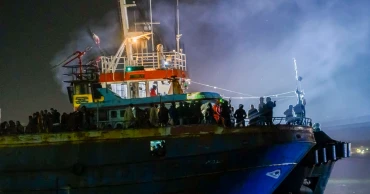
Italy’s right-wing government on Tuesday declared a six-month national state of emergency to help it cope with a surge in migrants arriving on the country’s southern shores.
State TV said a special commissioner was expected to be named. Initial funding of 5 million euros (nearly $5.5 million) was also approved as part of the measure approved by Premier Giorgia Meloni and her Cabinet.
In a statement after the Cabinet meeting, the government said the state of emergency was deemed necessary “to carry out with urgency extraordinary measures to reduce congestion” at an overwhelmed migrant shelter on a tiny Italian island in the Mediterranean.
Also needed are “new structures, suitable both for sheltering as well as the processing and repatriation of migrants who don't have the requisites to stay” in Italy, the government statement said.
Also Read: Italy's coast guard, navy, bring hundreds of migrants ashore
During the COVID-19 pandemic Italy’s governing coalitions also imposed a state of emergency, enabling the Cabinet to mandate many coping measures by decree, temporarily bypassing the usually long parliamentary process for funding and regulations.
“Let's be clear, this doesn't resolve the problem, whose solution is tied to a mindful and responsible intervention of the European Union,” Civil Protection and Sea Policies Minister Nello Musumeci was quoted as saying by the Italian news agency ANSA.
Largely unsuccessfully, Meloni's government, like several others before, has pressed for more solidarity from fellow EU countries, which often don't make good on pledges to accept some of the asylum-seekers hoping to find relatives or work in northern Europe.
Since the start of this year, some 31,000 migrants, either rescued by Italian military boats or charity ships or reaching Italy without assistance, have disembarked, according to Interior Ministry figures. That's nearly four times the roughly 8,000 for the same period in each of the two previous years.
The arrivals of migrants, who set out in unseaworthy vessels launched by smugglers from northern African shores, seem destined to swell. Early on Wednesday, a smugglers' boat, crowded with some 700 passengers, was expected to pull into the port of Catania, a major city in eastern Sicily.
Also Read: Italy: Migrants paid 8,000 euros each for ‘voyage of death’
Italian coast guard boats had been escorting the distressed fishing vessel toward shore when a breakdown forced it to need towing, slowing its advance. The coast guard had already transferred some 100 of the passengers when rough seas made that operation too risky, and the decision was taken to leave the rest of the migrants aboard until the vessel could reach port.
On one recent day alone, 26 migrant boats, many of them without needing rescue, reached the Lampedusa, a tiny Italian island south of Sicily. The facility on Lampedusa which shelters migrants so they can be provisionally identified as a first step toward any asylum application, was reeling under the relentless stream of arrivals.
The shelter is meant to accommodate about 350-400 people, but in recent days, there were 3,000. Italy chartered empty commercial ferries to transfer hundreds of them to Sicily or the mainland.
On Tuesday, some 1,600 migrants were staying in the Lampedusa structure, and authorities were hoping for weather to improve so that by evening some 400 could be ferried off the island.
“There are many women with small children, plus there are unaccompanied minors,” the migrant center director, Lorena Tortorici, told Italian Sky TG24 TV. “We are in an emergency situation. The staff are trying to do what they can.”
The biggest number of migrants arriving so far this year are from Ivory Coast, followed by people from Guinea, Pakistan, Egypt, Tunisia and Bangladesh, according to the Interior Minister's tally.
For years, most of the smugglers' boats plying the dangerous central Mediterranean route set sail from western Libya. But recent months have seen many of the voyages start from eastern Libya or from Tunisia. Another route starts from Turkey, aiming to reach Calabria or Puglia in the southern end of the Italian mainland.
3 years ago
Pope at Easter: Pray for Ukrainian, Russian people, refugees
In an Easter message highlighting hope, Pope Francis on Sunday invoked prayers for both the Ukrainian and Russian people, praised nations which welcome refugees and called on Israelis and Palestinians wracked by the latest surge in deadly violence to forge a “climate of trust.”
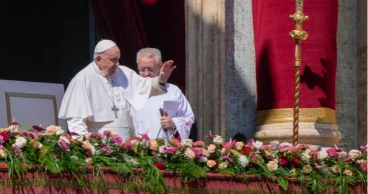
Francis, along with dozens of prelates and tens of thousands of faithful, celebrated Easter Mass in a flower-adorned St. Peter’s Square, affirming the Christian belief that Jesus rose from the dead days after his crucifixion.
The 86-year-old pontiff topped the celebration with a traditional speech about troubled places in the world. Encouraging “trust among individuals, peoples and nations," Francis said Easter's joy “illumines the darkness and gloom in which, all too often, our world finds itself enveloped.”
The pope's Easter message is known by its Latin name, ”Urbi et Orbi," which means “to the city and the world.”
Since Russia invaded neighboring Ukraine in February 2022, Francis has repeatedly called for the fighting to end and sought prayers for the “martyred” Ukrainian people.
Ukrainian diplomats have complained that he hasn't come down hard enough in his statements on Russia and particularly Russian President Vladimir Putin as the Vatican tries to avoid alienating Moscow.
“Help the beloved Ukrainian people on their journey towards peace, and shed the light of Easter upon the people of Russia,'' Francis implored God in his Easter speech, which he delivered while sitting in a chair on the central balcony of St. Peter's Basilica facing the square. ”Comfort the wounded and all those who have lost loved ones because of the war, and grant that prisoners may return safe and sound to their families."
He urged the international community to work to end the war in Ukraine and “all conflict and bloodshed in the world, beginning with Syria, which still awaits peace.”
Francis also prayed for those who lost loved ones in an earthquake that struck Syria and Turkey two months ago, claiming tens of thousands of lives.
With a renewal in deadly violence affecting both Israelis and Palestinians in recent days, Francis called for a "resumption of dialogue, in a climate of trust and reciprocal respect, between Israelis and Palestinians, so that peace may reign in the Holy City and in the entire region,'' a reference to Jerusalem.
But Francis also noted progress on some fronts.
“Let us rejoice at the concrete signs of hope that reach us from so many countries, beginning with those that offers assistance and welcome to all fleeing war and poverty," he said, without naming any particular nations.
How to care for asylum-seekers, migrants and refugees, and whether to allow them entrance, is a raging political and social debate in much of Europe, as well in the United States and elsewhere.
Francis also prayed that national leaders “ensure that no man or woman may encounter discrimination” and that there would be “full respect for human rights and democracy.”
With migrants risking their lives in smugglers’ unseaworthy boats in hopes of reaching Europe, the pope lamented that Tunisia's people, particularly the young, struggle with social and economic hardship.
In the last two weeks, dozens have died or were left missing after attempting to cross the Mediterranean Sea from Tunisia.
The pope included Lebanon and two African countries he visited this year - South Sudan and Congo - among the nations in need of ending divisions and building reconciliation.
Speaking about Haiti, he appealed to “political actors and the international community to seek a definitive solution to the many problems that afflict that sorely tried people.”
The bloody conflicts cited by Francis contrasted with a riot of bright colors lent by orange-red tulips, yellow sprays of forsythia and daffodils, hyacinths and other colorful seasonal flowers that decorated St. Peter's Square. The blooms were trucked in trucks from the Netherlands.
By the end of the pope's appearance, some 100,00 people had flocked to the square in time for the pontiff's speech, according to the Vatican's crowd count.
A canopy on the edge of steps on the square sheltered the pontiff, who was back in the public eye for the Mass 12 hours after a 2.25-hour long Easter vigil ceremony in St. Peter’s Basilica the night before.
Francis was hospitalized March 29-April 1 for treatment of bronchitis. Still recovering, he skipped the traditional Good Friday procession at Rome’s Colosseum due to unseasonably cold nighttime temperatures.
Near the end of the more than two-hour-long Easter Sunday appearance, Francis seemed to run out of steam. His voice grew hoarse and he interrupted his speech at one point to cough.
He nonetheless made several laps through the square in the popemobile after the Mass, waving and smiling at cheering well-wishers.
3 years ago

8 people missing in fiery collapse of Marseille building
Eight people remained missing after the building they lived in exploded and collapsed early Sunday near the port of Marseille, leaving mounds of burning debris hampering rescue operations, officials said.
More than 100 firefighters worked against a ticking clock to extinguish flames deep within the rubble of the five-story building, but more than 17 hours later “the situation is not yet stabilized,” Marseille Prosecutor Dominique Laurens said at an evening news conference.
Earlier in the day, officials had thought that between four and 10 people may have been trapped. Laurens said police have yet to confirm the apparent disappearance of a ninth person who lived in a next-door building. Five people suffered minor injuries from the collapse, which occurred shortly before 1 a.m.
Marseille Mayor Benoit Payan said two buildings that share walls with the one that collapsed were partially brought down before one later caved in, another complication in the search and rescue operation. The buildings were among evacuated structures.
Drones and probes have been used to examine the scene for signs of life. The burning debris was too hot for dogs in the firefighters' canine team to work until Sunday afternoon, though smoke still bothered them, the prosecutor said.
“We cannot intervene in a very classic way,” Interior Minister Gerald Darmanin said during a morning visit to the site. He said the fire was burning a few meters under the mounds of debris and that both water and foam represent a danger to victims’ survival.
An investigation has been opened for involuntary injury, at least initially sidestepping possible criminal intentions. A gas explosion was among the tracks to check, said Laurens, the prosecutor. But the start of the probe also was limited by the heat of the blaze.
“The flames weren't pink. They were blue,” Payan said.
Firefighters, with the help of urban rescue experts, worked through the night and all day Sunday in a slow race against time. The delicate operation aimed to keep firefighters safe, prevent further harm to people potentially trapped in the rubble and not compromise vulnerable buildings nearby, already partially collapsed. Some 30 buildings in the area were evacuated, Darmanin said.
Lauren, the prosecutor, said that firefighters “are really in a complicated situation, dangerous for them.” Work is progressing but with safety precautions, she said.
“We heard an explosion ... a very strong explosion which made us jump, and that's it,” said Marie Ciret, who was among those evacuated. “We looked outside the window at what was happening. We saw smoke, stones, and people running.”
The building that collapsed is located on a narrow street less than a kilometer (a half-mile) from Marseille's iconic old port, adding to an array of difficulties for firefighters and rescue workers. The prosecutor said the building and those next door “are not at all substandard buildings.”
Robots were reportedly being deployed. A crane was brought in to clear rubble and firefighters were at one point seen in TV video hosing parts of the debris from a window in a nearby apartment as plumes of smoke rose skyward.
“We’re trying to drown the fire while preserving the lives of eventual victims under the rubble,” Lionel Mathieu, commander of the Marseille fire brigade, said during a televised briefing.
“Firefighters are gauging minute by minute the best way to put out the fire,” Payan, the mayor, said.
“We must prepare ourselves to have victims,” he said grimly.
The collapsed building is located in an old quarter in the center of France’s second-largest city. The noise from the explosion resounded in other neighborhoods. Nearby streets were blocked off.
French President Emmanuel Macron and Prime Minister Elisabeth Borne both tweeted their thoughts for people affected and thanks to the firefighters.
In 2018, two buildings in the center of Marseille collapsed, killing eight people. Those buildings were poorly maintained — not the case with the building that collapsed Sunday after an explosion, the interior minister said.
3 years ago