Latin-America
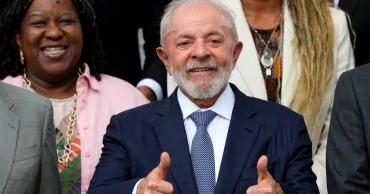
Brazil to establish deportee centre following disputed US flight
The Brazilian government announced on Tuesday its plan to set up a reception centre for migrants deported from the United States, following concerns raised over conditions on a recent deportation flight, reports AP.
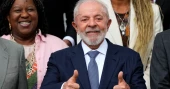
President Luiz Inácio Lula da Silva approved the creation of a humanitarian reception post in Confins, a municipality in the state of Minas Gerais, Brazil’s Minister of Human Rights and Citizenship, Macaé Evaristo, informed journalists in Brasília.
Brazil enacts law restricting smartphone use in schools
This decision was made in light of the possibility of further flights following the arrival of the first deportation flight under the new Trump administration, which carried 88 deportees over the weekend. This followed numerous such flights during the Biden administration.
According to local media, government officials were troubled by reports that Brazilians remained handcuffed after an unplanned stop in Manaus, the largest city in the Amazon, due to technical issues with the aircraft.
A Brazilian military plane subsequently transported the deportees to their final destination, Belo Horizonte, in Minas Gerais, on Saturday afternoon.
On the following day, Brazil’s Foreign Ministry issued a statement requesting explanations from Washington regarding the “degrading treatment” of its citizens during the flight. The statement referenced “the use of handcuffs and chains, the poor condition of the aircraft, including a malfunctioning air conditioning system, among other concerns.”
The U.S. Embassy declined to comment, while the U.S. Immigration and Customs Enforcement agency did not respond to an email request for a statement.
It remains unclear whether the 88 deportees were detained during the presidency of Donald Trump, who took office on 20 January, or under his predecessor, Joe Biden.
22 Killed in Collision Between Passenger Bus and Truck in Brazil
Over the past three years, nearly four dozen deportation flights have been conducted from the U.S. to Brazil. The Brazilian government has no intention of halting them and held discussions with the American chargé d’affaires on Monday, according to a government official with knowledge of the matter. The individual, who was not authorised to speak publicly, requested anonymity.
Brazilian authorities allow the use of handcuffs in exceptional cases, but not indiscriminately, and only following a risk assessment, the official stated.
Officials are currently investigating how many deportees were restrained. Reports from passengers indicate that the plane’s air conditioning system malfunctioned, creating extreme heat in the cabin, and that upon landing in Manaus, passengers disembarked through the emergency exit.
Regarding the humanitarian centre, Evaristo emphasised its purpose is to “ensure these passengers have access to proper conditions, including water, food, and a suitable temperature, which appears to have been the most harmful issue on the first flight.”
“We do not wish to antagonise the American government, but it is crucial that deported Brazilians are treated with dignity,” Justice Minister Ricardo Lewandowski stated on Monday.
1 year ago
Brazil enacts law restricting smartphone use in schools
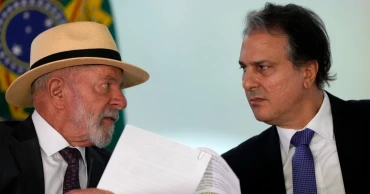
Brazil’s President Luiz Inácio Lula da Silva signed a law on Monday restricting smartphone use in schools, aligning with a global trend toward such measures, reports AP.
Effective February, the law will apply to elementary and high school students across the nation. It establishes guidelines allowing device use only in emergencies, for educational activities, or by students with disabilities requiring them.
Where does smartphone use start getting problematic?
“We cannot allow humanism to be replaced by algorithms,” Lula said during a private ceremony in Brasilia. He described the law as a recognition of educators' efforts to support children and teenagers.
A study by Fundacao Getulio Vargas in May revealed that Brazil has 258 million smartphones, surpassing its population of 203 million. Market research from last year showed Brazilians spend an average of 9 hours and 13 minutes daily on screens, among the highest globally.
Education Minister Camilo Santana noted that children’s early exposure to online content complicates parental monitoring, and limiting smartphone use in schools aims to address this challenge.
The legislation garnered rare bipartisan support from both Lula’s allies and those of his far-right predecessor, Jair Bolsonaro.
Parents and students largely back the initiative. An October survey by Datafolha found nearly two-thirds of respondents supported banning smartphones in schools, and over three-quarters believed the devices harm more than help children.
India to have 1 billion smartphone users by 2026: Deloitte
Ricardo Martins Ramos, a 43-year-old father and restaurant owner in Rio de Janeiro, called the restrictions “tough but necessary,” explaining that while smartphones are useful for schoolwork, excessive social use is detrimental. His 13-year-old daughter Isabela agreed, citing classmates’ struggles to concentrate during lessons. However, she highlighted unresolved issues like bullying and harassment.
As of 2023, two-thirds of Brazilian schools had some form of smartphone restriction, with 28% enforcing a total ban, according to an August survey by the Brazilian Internet Steering Committee. Several states, including Rio de Janeiro, Maranhão, and Goiás, have enacted local bans, but enforcement remains challenging. Sao Paulo is currently debating extending restrictions to both public and private schools.
Gabriele Alexandra Henriques Pinheiro, a 25-year-old beauty professional and mother of a boy with autism spectrum disorder, supports the restrictions but noted adults often set poor examples of smartphone use. She admitted that her own reliance on her device complicates efforts to limit her son’s screen time.
Experts and institutions have linked children’s smartphone use to bullying, anxiety, suicidal ideation, and diminished concentration. Other countries have implemented similar restrictions: China limited children’s smartphone use last year, and France has banned the devices in schools for children aged 6 to 15.
In the United States, eight states have passed laws or policies to curb smartphone use in classrooms. Meanwhile, more European parents are voicing concerns about the safety and mental health risks associated with smartphone use among children.
A UNESCO report published in September revealed that one in four countries has already imposed school restrictions on smartphones.
At a U.S. Senate hearing last year, Meta CEO Mark Zuckerberg apologised to parents of children harmed via social media and highlighted ongoing industry efforts to improve child protection.
1 year ago
Syrians demand justice for disappeared activists, accountability from all factions
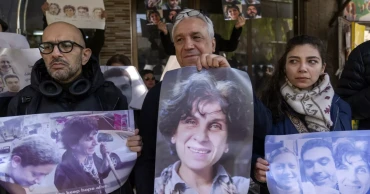
Protesters in Syria held a sit-in Wednesday demanding justice for four activists who were forcibly disappeared in 2013 and whose fate remains one of the most haunting mysteries of the country's 13-year civil war.
On Dec. 9, 2013, gunmen stormed the Violation Documentation Center in Douma, northeast of Damascus, and took Razan Zaitouneh, her husband Wael Hamadeh, Samira Khalil and Nazem Hammadi.
Outspoken and defiantly secular, Zaitouneh was one of Syria’s most well-known human rights activists. Perhaps most dangerously, she was impartial. She chanted in protests against then-President Bashar Assad but was also unflinching in documenting abuses by rebels fighting to oust him.
There has been no sign of life nor proof of death since she and her colleagues were abducted.
Since the ouster of Assad on Dec. 8, protests have erupted across Syria demanding information about thousands of people who were forcibly disappeared under his rule. The new leadership under the Islamist group Hayat Tahrir al-Sham, which orchestrated the offensive to oust Assad, has maintained a neutral stance regarding accusations against various armed groups for forcibly disappearing activists. At the same time, HTS has aligned with activists in their efforts to uncover the truth and seek justice.
“We are gathering here to remind the world of their case,” Yassin Haj Saleh, Khalil’s husband, said Wednesday, adding that the disappearance of activists represents “the deepest wounds” of Syria’s conflict. “This is the first opportunity that allows us to be in Douma, and in front of the place that they were kidnapped from, to speak up about the case, taking advantage of the political change that took place in the country.”
Saleh said they had repeatedly appealed to various armed groups for cooperation in finding the four activists in the years before Assad's ouster but were met with silence.
Strong clues had pointed to the Army of Islam, the most powerful rebel faction in Douma at the time, as the perpetrators. The group, made up of religious hard-liners who were pushing out other rebels and imposing strict Shariah rules, long denied involvement. An Army of Islam official, Hamza Bayraqdar, told The Associated Press in 2018 they brought Zaitouneh to Douma to protect her from the Assad government.
Read: Iran's supreme leader says Syrian youth will resist incoming government
The Army of Islam repeatedly blamed the Assad government, along with the Nusra Front — an al-Qaida-linked group originally founded by the current HTS leader — for his wife's disappearance, Saleh said.
Zaitouneh was a prominent human rights lawyer and founder of the Violation Documentation Center. She also helped organize networks of activists like the Local Coordination Committees, an umbrella network made up of activists who organized protests as part of the Syrian uprising.
Her work earned her international recognition, including an International Woman of Courage award presented by U.S. first lady Michelle Obama in 2013.
Several of those who spoke to the AP in 2018 said the Army of Islam saw Zaitouneh documenting abuses as a threat and resented her local administration plan as an encroachment on their power. Zaitouneh received a series of threats that friends and activists said traced back to the Army of Islam.
The Army of Islam was forced to move north in 2018 after the Assad government retook Douma, leading to the group's weakening and disintegration. Hopes that Zaitouneh and her colleagues would emerge among released prisoners during that time were unmet.
Today, the Army of Islam remains an armed faction backed by Turkey. It did not fight alongside the other Islamist factions that led the offensive against Assad and remains excluded from the HTS-led Syrian leadership. Recently, an Army of Islam delegation met HTS leader Ahmad Sharaa to explore integration into the new Syrian system, but no agreement has been reached.
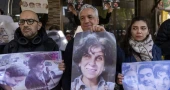
Protesters on Wednesday held banners openly accusing the Army of Islam and reading “Freedom” in English and “Traitor who kidnaps a revolutionary” in Arabic, alongside posters of the four missing activists.
Saleh described the plight of the disappeared as uniquely painful, saying, “Those who die are mourned, but the forcibly disappeared are forbidden from both living and being mourned.”
Their bodies must be found, he said, adding: “For Syria to heal, truth and justice must prevail.”
Wafa Moustafa, whose father was forcibly disappeared separately in 2013, also attended the protest.
Read more: Palestinian refugees return to Yarmouk, facing uncertainty in post-war Syria
“Justice in Syria cannot be limited to those detained by the Assad regime,” she said. “For many years, other factions controlled parts of Syria and committed similar crimes of detention, torture and killing. If justice does not include all victims, it will remain incomplete and threaten Syria’s future.”
Syrian delegation arrives in Saudi Arabia
A Syrian delegation led by the foreign and defense ministers, along with the head of intelligence, arrived in Saudi Arabia on their first official foreign trip, Syrian state media reported, citing a foreign ministry official.
Relations between Syria and Saudi Arabia have long been tense. Many Arab nations cut ties with Assad’s government after it relied on support from Iran and Russia to suppress uprisings. But the Arab League reinstated Syria in 2023, and regional leaders are increasingly open now to renewing diplomatic ties.
1 year ago

Bus-truck collision leaves 30 dead in Brazil
A crash between a passenger bus and a truck early Saturday killed 30 people on a highway in Minas Gerais, a state in southeastern Brazil, officials said.
The Minas Gerais fire department, which responded to the scene, said 13 others were taken to hospitals near the city of Teofilo Otoni. The bus had reportedly departed from Sao Paulo and was carrying 45 passengers.
Authorities said Saturday afternoon that all victims had been removed from the site and an investigation would determine the cause of the accident. Witnesses told rescue teams that the bus blew a tire, causing the driver to lose control and collide with a truck. Others said that a granite block hit the bus, the fire department added.
A car with three passengers also collided with the bus, but all three survived.
Gov. Romeu Zema wrote on X that he ordered “full mobilization” of the Minas Gerais government to assist the victims.
“We are working to ensure that families of the victims are supported to face this tragedy in the most humane way possible, especially as it comes just before Christmas,” Zema said.
In 2024, more than 10,000 people died in traffic accidents in Brazil, according to the Ministry of Transportation.
In September, a bus carrying a football team flipped on a road and killed three people. The Coritiba Crocodiles, a team from the southern Brazilian city of Curitiba, was headed to a game in Rio de Janeiro, where they were set to play in the country’s American football championship. The game was canceled following the deadly accident.
1 year ago
Bolsonaro indicted for coup attempt, jeopardising his political future
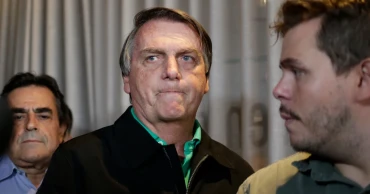
Police indicted Brazil’s former president Jair Bolsonaro and 36 others for allegedly attempting a coup to keep the right-wing leader in office after his defeat in the 2022 election. Already barred from running again in 2026 for a different case, he could now land in jail and see his influence further diminished.
Brazil's federal police said the sealed findings in Thursday's indictment were being delivered to Brazil’s Supreme Court, which will refer them to Prosecutor-General Paulo Gonet, who will decide whether to formally charge Bolsonaro and put him on trial, or toss the investigation.
Gonet is already under pressure from his legal peers to move forward with the various investigations related to the ex-president, local media have reported. And politicians say if Bolsonaro does stand trial at the Supreme Court there will be a race among his allies and rivals to seize his influence with voters.
“Bolsonaro is no longer the sole leader of the right-wing. He is coming out of mayoral elections in which most of his candidates lost. All these probes don't help him at all,” said Carlos Melo, a political science professor at the Insper university in Sao Paulo.
Melo added that “the governor of Sao Paulo, Tarcisio de Freitas, the radical candidate for Sao Paulo mayorship Pablo Marcal, the governor of Goias state, Ronaldo Caiado ... There are politicians lining up to court Bolsonaro voters.”
Bolsonaro told the website Metropoles that he was waiting for his lawyer to review the indictment, reportedly about 700 pages long. But he said he would fight the case and dismissed the investigation as being the result of “creativity.”
The former president has denied all claims he tried to stay in office after his narrow electoral defeat in 2022 to leftist President Luiz Inácio Lula da Silva. Bolsonaro has faced a series of legal threats since then.
Police said in a brief statement that the Supreme Court had agreed to reveal the names of all 37 people who were indicted “to avoid the dissemination of incorrect news.”
Dozens of former and current Bolsonaro aides also were indicted, including Gen. Walter Braga Netto, who was his running mate in the 2022 campaign; former Army commander Gen. Paulo Sérgio Nogueira de Oliveira; Valdemar Costa Neto, the chairman of Bolsonaro’s Liberal Party; and his veteran former adviser, Gen. Augusto Heleno.
Other investigations led to indictments for Bolsonaro's alleged roles in smuggling diamond jewelry into Brazil without properly declaring them and in directing a subordinate to falsify his and others’ COVID-19 vaccination statuses. Bolsonaro has denied any involvement in either.
Another probe found that he had abused his authority to cast doubt on the country's voting system, and judges barred him from running again until 2030.
Still, he has insisted that he will run in 2026, and many in his orbit were heartened by the recent U.S. election win of Donald Trump, despite his own swirling legal threats.
Creomar de Souza, a political analyst of Dharma Political Risk and Strategy, said the indictment is “obviously bad” for Bolsonaro, but added the right-wing leader could still continue his bid to run again sooner than he is currently allowed to. He is barred from running in the 2026 elections.
"The idea of due legal course is a struggling one in the political arena these days. This could give those targeted a chance to portray themselves as being persecuted," de Souza told the AP. “We can't rule out that the tension from indictments like this might well favor Bolsonaro to some extent.”
An indictment over the alleged coup attempt means the investigation has gathered evidence of "a crime and its author,” said Eloísa Machado de Almeida, a law professor at Getulio Vargas Foundation, a university in Sao Paulo. She said she believed there was enough legal grounds for the prosecutor-general to file charges.
Bolsonaro's allies in Congress have been negotiating a bill to pardon individuals who stormed the Brazilian capital and rioted on Jan. 8, 2023, in a failed attempt to keep the former president in power. Analysts have speculated that lawmakers want to extend the legislation to cover the former president himself.
However, efforts to push a broad amnesty bill may be “politically challenging” given recent attacks on the judiciary and details emerging in investigations, Machado said.
On Tuesday, Federal Police arrested four military and a Federal Police officer, accused of plotting to assassinate Lula and Supreme Court Justice Alexandre de Moraes as a means to overthrow the government following the 2022 elections.
And last week, a man carried out a bomb attack in the capital Brasilia. He attempted to enter the Supreme Court and threw explosives outside, killing himself.
1 year ago
At least 15 inmates killed in a fight in Ecuador's largest prison
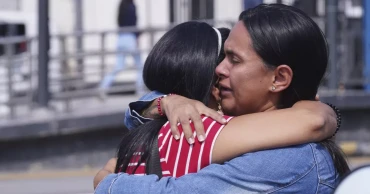
A fight among inmates has left at least 15 dead and 14 injured at Ecuador's largest prison, authorities said Tuesday.
The Litoral Penitentiary in the coastal city of Guayaquil has been the site of frequent riots and mass killings, including one in 2021 that left 119 inmates dead.
Authorities provided few details about what triggered the latest violence. In a statement, prison officials said police and military had been deployed to take control of the facility.
Local media reported helicopters flew over the prison as ambulances and relatives of inmates, some of them shouting in desperation for loved ones, rushed to the gates.
The mass killing is bound to agitate Ecuador's presidential race, where the law-and-order incumbent, Daniel Noboa, has made improving security, including inside detention facilities, a top priority in his bid to seek reelection next year.
Ecuador's prisons have become among the deadliest in Latin America as overcrowding, corruption and weak state control have allowed gangs connected to drug traffickers in Colombia and Mexico to proliferate. Many are heavily armed with weapons smuggled in from the outside and continue to organize criminal activity from behind bars.
The Litoral Penitentiary currently houses about 10,000 inmates — or double its capacity.
Ecuador's Attorney General's office said that it is preparing to charge nine inmates with murder stemming from the violence.
A dozen outbreaks of violence in Ecuadorian prisons have left more than 400 people dead since 2001. The prison violence reflects a deteriorating security situation throughout the Andean nation.
Ecuador registered a record 47 homicides per 100,000 inhabitants in 2023, up from a rate of six murders per 100,000 inhabitants in 2018.
Noboa in January declared a state of emergency and ordered the military to take control of the prisons after gunmen stormed and opened fire in a TV studio and bandits threatened random executions of civilians and security forces.
1 year ago

Tropical storm Rafael forms, may strike Cuba as hurricane
Tropical Storm Rafael formed Monday in the Caribbean and will bring heavy rain to Jamaica and the Cayman Islands before strengthening into a hurricane and likely hitting Cuba, forecasters said.
Later in the week it also is expected to bring heavy rainfall to Florida and portions of the U.S. Southeast, according to the U.S. National Hurricane Center in Miami.
A tropical storm warning was in effect for Jamaica, and a hurricane watch was in effect for the Cayman Islands and for parts of Cuba including the provinces of Pinar del Rio, Artemisa, La Habana, Mayabeque, Matanzas, and the Isle of Youth. A tropical storm watch was issued for Villa Clara, Cienfuegos, Sancti Spiritus, Ciego de Avila, Camaguey, and Las Tunas in Cuba.
A tropical storm watch also was issued for the lower and middle Florida Keys from Key West to west of the Channel 5 Bridge, and for the Dry Tortugas.
The storm was located about 150 miles (245 kilometers) south of Kingston, Jamaica. It had maximum sustained winds of 45 mph (75 kph) while moving north-northwest at 9 mph (15 kph), the center said.
The storm was expected to move near Jamaica late Monday, be near or over the Cayman Islands late Tuesday as a hurricane and approach Cuba on Wednesday.
Most forecasts show the storm peaking as a Category 1 hurricane, “but conditions over the next few days will favor strengthening so we’ll need to monitor how quickly it organizes, and a stronger hurricane can’t be ruled out,” wrote Michael Lowry, hurricane specialist and storm surge expert, in an analysis Monday.
On Monday morning, the government of the Cayman Islands offered people sandbags and announced schools would close on Tuesday.
“Residents are urged to take immediate precautions to protect themselves and their properties,” the government said in a statement.
Schools in Jamaica also were scheduled to close on Tuesday, with government offices closing on Monday afternoon.
Cuban authorities said Monday night that some 37,000 people remained under evacuation orders in far eastern Cuba, in the province of Guantanamo, due to bad weather.
The latest development comes on the heels of Tropical Storm Oscar, which dumped heavy rains in Cuba in October, leaving eight people dead and a widespread blackout across the island due to a collapse of the national energy system.
Meanwhile, the Jamaica Observer newspaper reported a large landslide in a rural area north of the Kingston capital on Sunday that officials blamed on persistent rains ahead of the potential storm. No injuries were reported, but a couple of communities were left isolated.
Heavy rainfall will affect the western Caribbean with totals of 3 to 6 inches (7 to 15 centimeters) and up to 9 inches (23 cm) expected locally in Jamaica and parts of Cuba. Flooding and mudslides are possible.
Rafael is the 17th named storm of the season.
On the opposite side of the Atlantic Ocean, Tropical Storm Patty dissipated.
1 year ago
Peru's ex-president Toledo sentenced to over 20 years' imprisonment
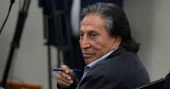
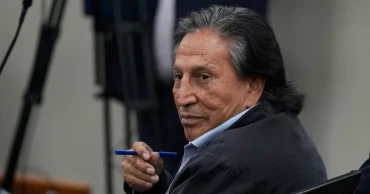
Peru’s former President Alejandro Toledo on Monday was sentenced to 20 years and six months in prison in a case involving Brazilian construction giant Odebrecht, which became synonymous with corruption across Latin America, where it paid millions of dollars in bribes to government officials and others.
Authorities accused Toledo of accepting $35 million in bribes from Odebrecht in exchange for allowing the construction of a highway in the South American country. The National Superior Court of Specialized Criminal Justice in the capital, Lima, imposed the sentence after years of legal wrangling, including a dispute over whether Toledo, who governed Peru from 2001 to 2006, could be extradited from the United States.
Judge Inés Rojas said Toledo’s victims were Peruvians who “trusted” him as their president. Rojas explained that in that role, Toledo was “in charge of managing public finances” and responsible for “protecting and ensuring the correct” use of resources. Instead, she said, he “defrauded the state.”
She added that Toledo “had the duty to act with absolute neutrality, protect and preserve the assets of the state, avoiding their abuse or exploitation,” but he did not do so.
At least 15 dead since July and thousands of hectares scorched as wildfires sweep Peru
Odebrecht, which built some of Latin America’s most crucial infrastructure projects, admitted to U.S. authorities in 2016 to having bought government contracts throughout the region with generous bribes. The investigation by the U.S. Department of Justice spun probes in several countries, including Mexico, Guatemala and Ecuador.
In Peru, authorities accused Toledo and three other former presidents of receiving payments from the construction giant. They alleged Toledo received $35 million from Odebrecht in exchange for the contract to build 650 kilometers (403 miles) of a highway linking Brazil with southern Peru. That portion of the highway was initially estimated to cost $507 million, but Peru ended up paying $1.25 billion.
Rojas at one point read parts of the testimony from Jorge Barata, a former Odebrecht executive in Peru, who told prosecutors that the former president called him up to three times after leaving office to demand that he be paid. Toledo lowered his gaze and looked at his hands as Rojas read the expletive-laden remarks that Barata recounted to prosecutors.
Toledo has denied the accusations against him. His attorney, Roberto Siu, told reporters after the hearing that they will appeal the sentence.
The former president on Monday frequently smirked, and at times laughed, particularly when the judge mentioned multimillion-dollar sums central to the case as well as when she struggled to read transcripts and other evidence in the case. Throughout the hearing, he also leaned to his right to speak with his attorney.
In contrast, last week, he asked the court with a broken voice and his hands together, as if he were praying, to let him return home citing his age, cancer and heart problems.
Toledo, 78, was first arrested in 2019 at his home in California, where he had been living since 2016, when he returned to Stanford University, his alma mater, as a visiting scholar to study education in Latin America. He was initially held in solitary confinement at a county jail east of San Francisco but was released to house arrest in 2020 because of the COVID-19 pandemic and his deteriorating mental health.
He was extradited to Peru in 2022 after a court of appeals denied a challenge to his extradition and he surrendered to authorities. He has since remained under preventive detention.
Rojas said Toledo will get credit for time served starting in April 2023. He will serve the remainder of his sentence at a prison on the outskirts of Lima that was built specifically to house former Peruvian presidents.
Prosecutor José Domingo Pérez after the hearing described the sentence as “historic” and said it shows Peruvians that “crimes and corruption are punished.”
Odebrecht rebranded as Novonor in 2020.
1 year ago

Cuba’s faces massive blackout after major power plant failure
Cuba’s electrical grid went down Friday after one of the island’s major power plants failed, a day after a massive blackout swept across the Caribbean island and with no official estimate for when service will be restored.
The Cuban energy ministry announced that the grid had gone down hours after the Antonio Guiteras thermoelectric plant had ceased operations, at about 11 a.m. local time Friday. It said state-owned power company UNE was using distributed generation to provide power to some areas and that a gas-fired thermoelectric plant was starting operations.
Mexico's president slams US aid for Ukraine and sanctions on Venezuela and Cuba
But as darkness started to fall, millions of Cubans remained without power.
Even in a country accustomed to frequent outages amid a deepening economic crisis, Friday’s supply collapse was unprecedented in modern times, aside from incidents involving intense hurricanes, like one in 2022. Various calls by The Associated Press seeking to clarify the extent of the blackout on Friday weren’t answered. In addition to the Antonio Guiteras plant, Cuba has several others and it wasn’t immediately clear whether or not they remained functional.
“The power went out at 8 in the morning and it is now 5 in the afternoon and there is no electricity anywhere,” said Luis González, a 73-year-old retiree in Havana.
Early Friday, Prime Minister Manuel Marrero had sought to assuage concerned citizens about the blackout Thursday evening, which was already the nation's worst in at least two years.
Officials said that 1.64 gigawatts went offline during peak hours, about half the total demand at the time. Millions were left without power, and on Friday the government implemented emergency measures to slash demand, including suspending classes, shutting down some state-owned workplaces and canceling non-essential services.
“The situation has worsened in recent days,” Marrero said in a special address on national television in the early hours of Friday. “We must be fully transparent ... we have been halting economic activities to ensure energy for the population.”
During Marrero's address, he was accompanied by Alfredo López, the chief of UNE, who said the outage Thursday stemmed from increased demand from small- and medium-sized companies and residences’ air conditioners, as well as breakdowns in old thermoelectric plants that haven’t been properly maintained and the lack of fuel to operate some facilities.
Changes to electricity rates for small- and medium-sized companies, which have proliferated since they were first authorized by the communist government in 2021, are also being considered, Marrero said.
Marrero sought to provide reassurance about the outage, citing an expected influx of fuel supply from Cuba's state-owned oil company.
“We are devoting absolute priority to addressing and solving this highly sensitive energy contingency,” Cuba’s President Miguel Díaz-Canel wrote on X. “There will be no rest until its restoration.”
The blackout has left millions of Cubans on edge. Thursday night, residents shut their doors and windows they typically leave open at night, and candles or lanterns were visible inside their homes. By Friday night, there was no indication that a solution was imminent.
Prolonged electricity outages in the past have affected services like water supply and Yasunay Pérez, a Havana resident, said, with sarcasm, that she’s willing and able to bathe in the sea.
“We can use all our survival (skills),” she said.
1 year ago
Over 6,000 people in Haiti leave their homes after gang attack killed dozens
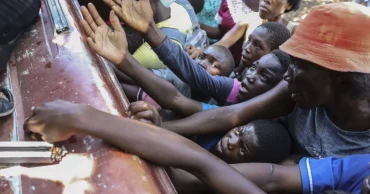
Nearly 6,300 people have fled their homes in the aftermath of an attack in central Haiti by heavily armed gang members that killed at least 70 people, according to the U.N.’s migration agency.
Nearly 90% of the displaced are staying with relatives in host families, while 12% have found refuge in other sites including a school, the International Organization for Migration said in a report last week.
The attack in Pont-Sondé happened in the early hours of Thursday morning, and many left in the middle of the night.
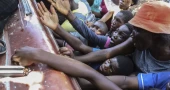
Gang members “came in shooting and breaking into the houses to steal and burn. I just had time to grab my children and run in the dark,” said 60-year-old Sonise Mirano on Sunday, who was camping with hundreds of people in a park in the nearby coastal city of Saint-Marc.
Bodies lay strewn on the streets of Pont-Sondé following the attack in the Artibonite region, many of them killed by a shot to the head, Bertide Harace, spokeswoman for the Commission for Dialogue, Reconciliation and Awareness to Save the Artibonite, told Magik 9 radio station on Friday.
Initial estimates put the number of those killed at 20 people, but activists and government officials discovered more bodies as they accessed areas of the town. Among the victims was a young mother, her newborn baby and a midwife, Herace said.
Prime Minister Garry Conille vowed that the perpetrators would face the full force of the law in comments in Saint-Marc on Friday.
Read: A gang in Haiti has killed more than 20 and injured dozens after raiding a small town, official says
“It is necessary to arrest them, bring them to justice, and put them in prison. They need to pay for what they have done, and the victims need to receive restitution,” he said.
The U.N. Human Rights Office of the Commissioner said in a statement that it was “horrified by Thursday’s gang attacks.”
The European Union also condemned the violence in a statement on Friday, which it said marked “yet another escalation in the extreme violence these criminal groups are inflicting on the Haitian people.”
Haiti’s government deployed an elite police unit based in the capital of Port-au-Prince to Pont-Sondé following the attack and sent medical supplies to help the area’s lone, and overwhelmed, hospital.
Police will remain in the area for as long as it takes to guarantee safety, Conille said, adding that he didn’t know whether it would take a day or a month. He also appealed to the population, saying “the police cannot do it alone.”
Gang violence across Artibonite, which produces much of Haiti’s food, has increased in recent years. Since that uptick, Thursday’s attack is one of the biggest massacres.
Similar ones have taken place in the capital of Port-au-Prince, 80% of which is controlled by gangs, and they typically are linked to turf wars, with gang members targeting civilians in areas controlled by rivals. Many neighborhoods are not safe, and people affected by the violence have not been able to return home, even if their houses have not been destroyed.
Read more:As UN meets, Haitians express hopelessness at finding an international solution to gang crisis
More than 700,000 people — more than half of whom are children — are now internally displaced across Haiti, according to the International Organization for Migration in an Oct. 2 statement. That was an increase of 22% since June.
Port-au-Prince hosts a quarter of the country’s displaced, often residing in overcrowded sites, with little to no access to basic services, the agency said.
Those forced to flee their homes are mostly being accommodated by families, who have reported significant difficulties, including food shortages, overwhelmed healthcare facilities, and a lack of essential supplies on local markets, according to the agency.
1 year ago