Middle-East
Israel retaliates with strikes on Lebanon after rocket attack
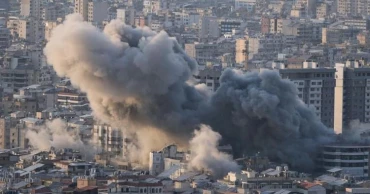
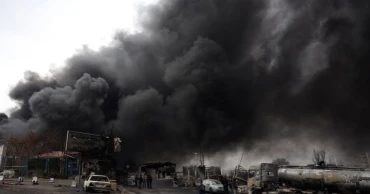
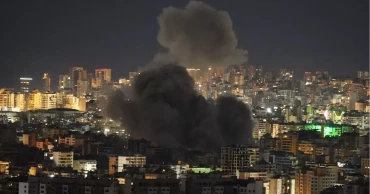
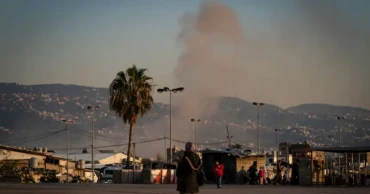
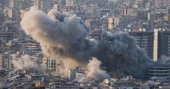
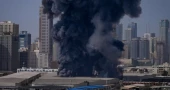
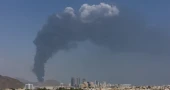
Israel launched airstrikes on Lebanon on Saturday in retaliation for rockets fired at Israeli targets, marking the most intense exchange of fire since the ceasefire.
The rockets from Lebanon, which hit northern Israel, were launched earlier in the day, sparking concerns over the stability of the fragile ceasefire with Hezbollah. Israel had warned of a severe response to the attack, which targeted the town of Metula.
Israel-Hezbollah war: WB estimates $11 billion needed for reconstruction of Lebanon
The conflict between Israel and Hezbollah escalated after the October 7, 2023, Hamas attack from Gaza, leading to full-scale war in September. Israel’s massive airstrikes killed many Hezbollah leaders and left over 4,000 people dead in Lebanon. The ceasefire brokered in November required Israel to withdraw from all Lebanese territories by January, with the deadline extended to February 18. However, Israel has remained in five locations across Lebanon, continuing airstrikes on southern and eastern regions, which it claims were aimed at Hezbollah.
Israel’s Prime Minister instructed the military to strike dozens of targets in Lebanon, asserting that Israel would not tolerate threats to its sovereignty. No comments have been made by Hezbollah. Lebanon's Prime Minister, Nawaf Salam, urged the Lebanese military to take necessary actions while expressing a desire to avoid war.
The United Nations Interim Force in Lebanon (UNIFIL) expressed concern over the potential escalation and called for restraint, warning of serious consequences for the region.
The strikes occurred after Israel announced its plans to intensify operations in Gaza until Hamas releases the 59 hostages it holds. Israeli airstrikes the previous night resulted in the deaths of at least nine people, including three children. Israel also destroyed Gaza's only specialized cancer hospital, accusing Hamas of using it as a base. Around 600 Palestinians have been killed since Israel resumed its operations earlier this week.
War-torn Lebanon forms its first government in over 2 years
International condemnation of the attacks has been widespread. Foreign ministers from the UK, France, and Germany called Israel's actions in Gaza a major setback, urging an immediate return to a ceasefire.
The ongoing conflict has killed over 49,000 Palestinians, with Israel claiming that around 20,000 were militants, though this figure remains unverified.
9 months ago
Wounded children overwhelm Gaza hospital amid relentless Israeli airstrikes
When the first explosions struck Gaza at around 1:30 am this week, a visiting British doctor stepped onto the balcony of a hospital in Khan Younis and watched as missiles streaked across the sky before slamming into the city. Beside him, a Palestinian surgeon gasped, “Oh no. Oh no.”
After two months of ceasefire, the devastation of Israeli bombardment had returned. The experienced surgeon turned to the visiting doctor, Sakib Rokadiya, and urged him to head to the emergency ward.
Israel orders troops to go deeper into Gaza
Soon, torn bodies poured in—brought by ambulances, donkey carts, or carried by desperate relatives. What shocked the doctors most was the number of children.
“Child after child, young patient after young patient,” Rokadiya recalled. “The vast majority were women, children, and the elderly.”
Thus began a chaotic 24 hours at Nasser Hospital, the largest medical facility in southern Gaza. The sudden Israeli offensive shattered the ceasefire that had been in place since mid-January, aiming to pressure Hamas into releasing more hostages and accepting revised terms of the truce. It became one of the deadliest days in the 17-month war.
The aerial assaults killed 409 people across Gaza, including 173 children and 88 women, while hundreds more were wounded, according to the territory’s Health Ministry, which does not distinguish between militants and civilians in its count.
More than 300 casualties inundated Nasser Hospital. Like other hospitals in Gaza, it had suffered damage from Israeli raids and airstrikes throughout the war, leaving it without essential equipment and running low on antibiotics and other necessities. After the first phase of the ceasefire expired on March 2, Israel blocked the entry of medicine, food, and supplies into Gaza.
Triage
The hospital’s emergency ward overflowed with the wounded, described to The Associated Press by Rokadiya and Tanya Haj-Hassan, an American paediatrician—both volunteers with the charity Medical Aid for Palestinians. The injured came from a tent camp, where missiles had ignited a fire, and from homes struck in Khan Younis and Rafah, further south.
A nurse was desperately trying to resuscitate a boy sprawled on the floor, shrapnel embedded in his heart. Nearby, a young man sat trembling, most of his arm missing. A barefoot boy carried in his younger brother, no older than four, whose foot had been blown off. Blood covered the floor, mixed with fragments of bone and tissue.
“I was overwhelmed, running from corner to corner, trying to decide who to prioritise, who to send to surgery, who to declare beyond saving,” Haj-Hassan said.
“It’s an incredibly difficult decision, and we had to make it repeatedly,” she said in a voice message.
Some wounds were easy to overlook. One little girl seemed fine—she only felt pain when she breathed, she told Haj-Hassan. But once undressed, doctors realised she was bleeding into her lungs. Looking through the curly hair of another girl, Haj-Hassan discovered shrapnel embedded in her brain.
Two or three injured patients were crammed onto gurneys and rushed to surgery, Rokadiya said.
He scribbled notes on slips of paper or directly onto patients’ skin—one for surgery, another for a scan. He wrote names when he could, but many children arrived with no known relatives, their parents either dead, wounded, or lost in the chaos. Often, he simply wrote “UNKNOWN.”
In the Operating Room
Dr Feroze Sidhwa, an American trauma surgeon from California volunteering with the medical charity MedGlobal, rushed to the hospital’s designated area for the gravely wounded who still had a chance of survival.
But the first child he saw—a girl around three or four years old—was beyond help. Her face was torn apart by shrapnel. “She was technically still alive,” Sidhwa said, but with so many other patients needing urgent care, “there was nothing we could do.”
He had to tell the girl’s father that she was dying. Then he moved on, performing around 15 surgeries back to back.
Palestinian surgeon Khaled Alserr and an Irish volunteer surgeon worked tirelessly alongside him. They operated on a 29-year-old woman with a shattered pelvis, her web of veins bleeding profusely. Despite their efforts, she died 10 hours later in the ICU.
Another patient was a six-year-old boy with two holes in his heart, two in his colon, and three more in his stomach, Sidhwa said. They managed to repair the damage and even restarted his heart after he went into cardiac arrest.
But he, too, died hours later.
“They died because the ICU simply didn’t have the capacity to care for them,” Sidhwa said.
Ahmed al-Farra, head of the hospital’s paediatrics and obstetrics department, explained that the ICU lacked critical antibiotics, among other essential supplies.
Israel resumes Gaza war with broader goals and fewer limits
Sidhwa reflected on his experience at Boston Medical Center when the 2013 Boston Marathon bombing happened, killing three people and injuring around 260 others.
“Boston Medical couldn’t have handled the number of cases we saw at Nasser Hospital,” he said.
The Hospital Staff
Rokadiya was struck by the resilience of the hospital staff as they cared for each other while under immense pressure. Workers moved through the hospital, handing out water to exhausted doctors and nurses. Cleaners worked swiftly to remove the bloodied clothing, blankets, tissues, and medical waste piling up on the floors.
At the same time, many staff members were dealing with personal tragedies.
Alserr, the Palestinian surgeon, had to go to the morgue to identify the bodies of his wife’s father and brother.
“The only thing I saw was a bundle of flesh and bones, melted and shattered,” he said in a voice message, without elaborating on how they were killed.
Another staff member lost his wife and children. An anaesthesiologist—who had already lost his mother and 21 relatives earlier in the war—later received word that his father, brother, and cousin had been killed, Haj-Hassan said.
The Aftermath
Around 85 people died at Nasser Hospital that Tuesday, including about 40 children between the ages of one and 17, al-Farra reported.
Airstrikes continued throughout the week, killing several dozen more. Among the dead were at least six senior Hamas figures.
Israel has vowed to continue its offensive against Hamas, insisting the group must release more hostages, despite having disregarded ceasefire conditions requiring negotiations for a long-term end to the war. The Israeli government maintains it does not target civilians and blames Hamas for their deaths, arguing that the group operates within civilian areas.
Tuesday’s bombardment also helped Israeli Prime Minister Benjamin Netanyahu consolidate his political standing. The offensive secured the return of a right-wing party to his coalition, strengthening his government ahead of a crucial budget vote that could have led to its collapse.
Haj-Hassan continues to check on the children in Nasser’s ICU. The girl with shrapnel in her brain remains unable to move her right side. Her mother, limping from her own injuries, came to see her and told Haj-Hassan that the little girl’s sisters had been killed.
“I cannot begin to process or comprehend the scale of mass killing and the slaughter of families in their sleep that we are witnessing here,” Haj-Hassan said. “This cannot be the world we live in.”
9 months ago
Israel orders troops to go deeper into Gaza
Israel's defines minister said Friday he has ordered ground forces to advance deeper into the Gaza Strip, vowing to hold more land until Hamas releases the remaining hostages it holds.
After retaking part of the strategic Netzarim corridor that divides Gaza’s north from south, Israeli troops moved Thursday toward the northern town of Beit Lahiya and the southern border city of Rafah. The military said it had resumed enforcing a blockade on northern Gaza, including Gaza City.
In Israel, Prime Minister Benjamin Netanyahu was delivered a setback in his attempt to fire the country's domestic security chief. Hours after Netanyahu's Cabinet unanimously approved the firing of Ronen Bar, the Supreme Court ordered a temporary halt to his dismissal until an appeal can be heard.
The court said it was delaying the firing until an appeal could be heard no later than April 8. Netanyahu’s office had said Bar’s dismissal was effective April 10, but that it could come earlier if a replacement was found.
Israel’s attorney general has ruled that the Cabinet has no legal basis to dismiss Bar.
A Shin Bet report into Hamas’ Oct. 7, 2023, attack that prompted the war acknowledged failures by the security agency. But it also said policies by Netanyahu’s government created the conditions for the attack.
In his comments about Gaza on Friday, Defense Minister Israel Katz said operations there would continue “with increasing intensity until the hostages are released by Hamas.”
“The more Hamas continues its refusal to release the kidnapped, the more territory it will lose to Israel,” Katz said.
The decision to sack Bar deepens a power struggle focused largely over who bears responsibility for the 2023 Hamas attack that sparked the war in Gaza.
Israel resumes Gaza war with broader goals and fewer limits
It also could set the stage for a crisis over the country’s division of powers. Israel’s attorney general has ruled that the Cabinet has no legal basis to dismiss Bar.
Critics say the move is a power grab by the prime minister against an independent-minded civil servant, and tens of thousands of Israelis have demonstrated in support of Bar, including outside Netanyahu's residence on Friday.
In addition to its report on the Oct. 7 attack, Netanyahu is also upset that Shin Bet has launched an investigation into connections between some of his close aides and the Gulf state of Qatar. His office said Bar’s dismissal would take effect on April 10 or before then if a replacement is found.
Nearly 600 Palestinians have been killed since Israel on Tuesday shattered a truce that had facilitated the release of more than two dozen hostages and brought relative calm since late January.
Israel had already cut off the supply of food, fuel and humanitarian aid to Gaza’s roughly 2 million Palestinians, has said it would escalate military operations until Hamas releases the 59 hostages it holds — 24 of whom are believed alive — and gives up control of the territory.
The ceasefire agreed to in mid-January was a three-phase plan meant to lead to a long-term cessation of hostilities, a full Israeli withdrawal from Gaza, and the return of all hostages taken by Hamas in its surprise attack on Israel.
9 months ago
Israel resumes Gaza war with broader goals and fewer limits
Israel has resumed its military campaign in Gaza with broader objectives and significantly fewer restrictions, raising concerns that this phase could be even more deadly and destructive than the previous one.
The war restarted with an unexpected bombardment early Tuesday, killing hundreds of Palestinians, ending the ceasefire, and threatening further devastation unless Hamas releases the remaining hostages and departs from the region.
One-month-old rescued from Gaza rubble after airstrike kills parents
Former U.S. President Donald Trump has fully endorsed the renewed offensive and previously suggested that Gaza’s 2 million residents be relocated to other countries. Meanwhile, Iran-backed militant groups allied with Hamas are in disarray.
Israeli Prime Minister Benjamin Netanyahu’s government is stronger than ever, and the number of hostages held inside Gaza is at its lowest since Hamas launched the war on October 7, 2023. This gives the Israeli military greater operational freedom.
These factors indicate that the next stage of the war could be even more intense than the last, during which tens of thousands of Palestinians were killed, the majority of the population was displaced, and much of Gaza was left in ruins.
"If all the Israeli hostages are not released and Hamas is not expelled from Gaza, Israel will act with an intensity you have never seen," Defence Minister Israel Katz said on Wednesday.
"Return the hostages and expel Hamas, and other options will become available, including relocation to other countries for those who wish. The alternative is total destruction and devastation."
Even Less U.S. Pressure to Protect CiviliansThe Biden administration provided critical military and diplomatic backing to Israel during the first 15 months of the war but also sought to reduce civilian casualties. Early in the conflict, Biden convinced Israel to ease its total blockade on Gaza and consistently urged it to allow more humanitarian aid, with mixed success. He opposed Israel’s offensive in southern Gaza in May and temporarily halted a weapons shipment in protest, though Israel proceeded regardless. Biden also played a key role in securing the ceasefire through negotiations with Egypt and Qatar, with Trump’s team later finalising the deal.
Israeli strikes across Gaza kill at least 40, Say Hospitals
The Trump administration, however, appears to have imposed no restrictions. It has not criticised Israel for sealing off Gaza again, unilaterally withdrawing from the ceasefire agreement, or launching strikes that have killed hundreds of civilians.
Israel maintains that it only targets militants and insists that dismantling Hamas is essential to preventing another attack like the one on October 7, when Palestinian militants killed approximately 1,200 people, mostly civilians, and took 251 hostages.
The Biden administration previously questioned this approach, arguing that Hamas was no longer capable of carrying out such an attack.
Before the January ceasefire, the offensive had resulted in over 48,000 Palestinian deaths, according to Gaza’s Health Ministry, which does not differentiate between civilians and militants in its reports but states that more than half of the casualties were women and children.
Trump Has Proposed Depopulating GazaTrump appeared to lose interest in the ceasefire weeks ago, saying it should be abandoned if Hamas did not release all hostages immediately.
A brief White House effort to negotiate directly with Hamas was abandoned after Israel objected. Trump’s Middle East envoy, Steve Witkoff, later blamed Hamas for the ceasefire’s collapse, stating that it had rejected proposals for the immediate release of hostages.
Hamas has insisted that it will only release the remaining hostages—its primary bargaining tool—in exchange for more Palestinian prisoners, a lasting ceasefire, and an Israeli withdrawal from Gaza, as outlined in the ceasefire agreement.
Trump, meanwhile, has proposed relocating Gaza’s entire population to other countries so the U.S. could take control of the territory and rebuild it for other inhabitants.
Palestinians have rejected this idea, insisting they will not leave their homeland, while Arab nations have also strongly opposed it. Human rights experts argue that such a move would likely violate international law.
Israel has welcomed the proposal and stated that it is developing plans to implement it.
Netanyahu’s Government Is More Secure Than EverNetanyahu faced intense pressure from the families of hostages and their supporters to maintain the ceasefire in hopes of securing their release. For months, thousands of protesters gathered in Jerusalem and Tel Aviv, blocking highways and clashing with police.
By resuming the war, Netanyahu has sidelined these critics and reinforced his hard-line coalition.
Far-right National Security Minister Itamar Ben-Gvir, who resigned in protest against the ceasefire, rejoined the government shortly after Tuesday’s strikes. Along with Bezalel Smotrich, another far-right ally of Netanyahu, he supports continuing the war, facilitating "voluntary migration" of Gaza’s population, and re-establishing Jewish settlements there, which were removed two decades ago.
Netanyahu has also dismissed or forced out several high-ranking officials who appeared more open to a hostage deal.
Hamas and Its Allies Are in DisarrayAlthough Hamas still governs Gaza, most of its senior leaders have been killed, and its military capabilities have been significantly weakened. Israel claims to have eliminated around 20,000 militants, though it has not provided evidence.
In its first attack after the ceasefire ended, Hamas launched three rockets on Thursday, triggering air raid sirens in Tel Aviv but causing no casualties.
Lebanon’s Hezbollah, which engaged in cross-border clashes with Israel for much of the war, was forced to accept a truce last autumn after Israeli strikes killed many of its leaders and devastated southern Lebanon. The fall of Syrian President Bashar Assad, a key ally, has further weakened the group.
Iran, which backs both Hamas and Hezbollah and directly exchanged fire with Israel twice last year, appears unlikely to intervene. Israel claims to have severely damaged Iran’s air defences with a wave of retaliatory strikes last autumn, while Trump has warned of U.S. military action if Iran refuses to negotiate a new nuclear deal.
Meanwhile, Yemen’s Iran-backed Houthi rebels have resumed launching long-range missiles at Israel, though these have rarely caused significant damage or casualties. The U.S. has responded with a new round of strikes on the Houthis, potentially further reducing their operational capacity.
International Criticism May Be More MutedThe initial phase of the war prompted global protests, condemnation from some European leaders, and United Nations action. Israel faced genocide accusations at the International Court of Justice, while the International Criminal Court issued an arrest warrant for Netanyahu.
This time, however, the response could be different.
The Trump administration has detained foreign-born pro-Palestinian student activists and others, while also threatening to withdraw billions in federal funding from universities accused of tolerating antisemitism. This crackdown makes a repeat of last year’s U.S. campus protests less likely.
European nations, already engaged in disputes with Trump over aid to Ukraine and trade tariffs, seem unlikely to challenge him over Middle East policy.
Both the U.S. and Israel have firmly rejected the actions of international courts, accusing them of bias. In early February, Trump signed an executive order imposing sanctions on the ICC, of which neither the U.S. nor Israel is a member.
9 months ago
One-month-old rescued from Gaza rubble after airstrike kills parents
A one-month-old girl was rescued from the rubble in Gaza after an Israeli airstrike killed her parents.
On Thursday, as rescuers sifted through the debris of a collapsed apartment in Khan Younis, they heard the cries of a baby beneath the wreckage.
Israeli strikes across Gaza kill at least 40, Say Hospitals
Amidst shouts of “God is great,” a man emerged carrying the infant, wrapped in a blanket, and handed her to waiting paramedics. Despite being alive, the baby girl showed signs of distress as the paramedics checked her over.
Her family, including her brother, mother, and father, perished in the airstrike. Rescuers noted that the baby had been trapped under the rubble since dawn. Hazen Attar, a civil defense worker, said, “She had been crying, then falling silent until we were able to free her.”
The infant, identified as Ella Osama Abu Dagga, was born just 25 days earlier, during a fragile ceasefire that many hoped would end the ongoing conflict in Gaza, which has claimed tens of thousands of lives and displaced nearly the entire population.
The girl's grandparents were the only survivors from the family. The airstrike also claimed the lives of a neighboring family, including a father and his seven children. Rescuers were seen recovering the body of one of the children from the wreckage.
Israel resumed airstrikes on Gaza on Tuesday, ending the ceasefire and reigniting the conflict. Israel cited Hamas's rejection of a new ceasefire proposal as the reason for the renewed fighting.
Since the resumption of strikes, nearly 600 people have been killed in Gaza, with the majority being women and children, according to Gaza's Health Ministry.
The strike that destroyed the girl's home targeted Abasan al-Kabira, a village near the Gaza-Israel border, killing at least 16 people. The area had been evacuated earlier by the Israeli military.
The Israeli military insists it targets militants and blames Hamas for civilian casualties, alleging that Hamas operates within residential areas. The military did not immediately comment on the recent airstrikes.
Later, Israel reinstated a blockade on northern Gaza, including Gaza City, which had been lifted under the ceasefire agreement. The war began on October 7, 2023, when Hamas militants attacked southern Israel, killing around 1,200 people and taking 251 hostages.
Israel launches ground operation to retake key Gaza corridor
In retaliation, Israel’s air and ground assaults have resulted in nearly 49,000 Palestinian deaths, according to Gaza’s Health Ministry. Israel claims to have killed around 20,000 militants, though it has not provided evidence.
9 months ago
Israeli strikes across Gaza kill at least 40, Say Hospitals
Israeli airstrikes overnight and into Thursday killed at least 40 Palestinians across Gaza, according to three hospitals. The attacks targeted homes in the southern cities of Khan Younis and Rafah, as well as Beit Lahiya in the north.
Israel resumed intense bombardments on Tuesday, breaking a ceasefire that had paused fighting and enabled the release of over two dozen hostages. Israeli officials blamed Hamas for the renewed conflict, accusing the group of rejecting an Israeli-backed proposal that differed from their prior agreement.
According to Gaza's Health Ministry, more than 400 Palestinians—primarily women and children—were killed on Tuesday alone. There have been no reports of Hamas launching rockets or carrying out attacks since fighting resumed.
Israeli Ground Troops AdvanceFor the first time since the ceasefire took effect in January, Israeli ground troops moved deeper into Gaza on Wednesday, securing part of a corridor that divides the northern and southern regions of the territory.
Israel has also cut off essential supplies, including food, fuel, and humanitarian aid, to Gaza’s roughly 2 million residents. Officials say military operations will continue until Hamas releases the 59 remaining hostages—35 of whom are believed to be dead—and relinquishes control of the territory. The Trump administration, which mediated the earlier ceasefire, has expressed full support for Israel.
Hamas has stated that it will only release the hostages in exchange for a permanent ceasefire and Israel’s full withdrawal from Gaza, as outlined in the January agreement brokered by the U.S., Egypt, and Qatar.
Israel launches ground operation to retake key Gaza corridor
The militant group, which does not recognize Israel, has indicated a willingness to transfer power to the Palestinian Authority or a politically independent committee but refuses to disarm until Israel ends its long-standing occupation of lands Palestinians seek for a future state.
Civilian CasualtiesIsrael has yet to comment on the latest airstrikes. The military maintains that its attacks target militants and blames Hamas for civilian casualties, citing the group's presence in residential areas.
The European Hospital in Rafah reported that 26 people, mostly women and children, were killed in strikes on two homes. One attack killed a father and his seven children.
Meanwhile, Nasser Hospital in Khan Younis received seven bodies from an overnight airstrike on a home, and the Indonesian Hospital in Beit Lahiya reported seven more deaths from a separate strike.
Background of the WarThe war erupted on Oct. 7, 2023, when Hamas-led militants launched a deadly assault into southern Israel, killing around 1,200 people and capturing 251 hostages. Many hostages have since been freed through ceasefire deals, with Israeli forces rescuing eight alive and recovering dozens of bodies.
Israel’s retaliatory offensive has been one of the deadliest and most destructive in recent history. The Gaza Health Ministry reports nearly 49,000 Palestinian deaths, stating that more than half were women and children. While Israel claims to have killed about 20,000 militants, it has not provided evidence.
Israeli strikes killing hundreds in Gaza are 'Only the Beginning': Netanyahu
The war displaced nearly 90% of Gaza’s population at its peak, leaving vast devastation across the enclave. Many who returned home during the ceasefire found their neighborhoods reduced to rubble.
Source: With input from agency
9 months ago
Israel launches ground operation to retake key Gaza corridor
Israel's military announced on Wednesday that it had initiated a “limited ground operation” aimed at reclaiming a portion of a vital Gaza corridor.
This escalation appears to intensify Israel's renewed offensive in Gaza, which has broken the ceasefire with Hamas that began in January. As part of the ceasefire agreement, Israel had withdrawn from the Netzarim corridor, a former military zone that divided northern Gaza from the south.
Israeli strikes killing hundreds in Gaza are 'Only the Beginning': Netanyahu
In other developments, a United Nations staff member was killed, and five others were injured in a strike on a U.N. guesthouse in Gaza on Wednesday, as Israel continued its new offensive, breaking the fragile ceasefire with Hamas. Israeli Defense Minister Israel Katz warned of intensifying the assault and stated that evacuations from combat zones would soon be ordered. He also issued a stern warning regarding hostages, asserting that if they were not freed, Israel would act with unprecedented force.
Jorge Moreira da Silva, head of the U.N. Office for Project Services (UNOPS), refrained from specifying who was behind the strike in Deir al-Balah, but confirmed that the explosion was intentional and not connected to demining activities. He stated that Israel had been informed of the U.N. facility's location after the first strike and had acknowledged it as a U.N. site. The injured were taken to Al-Aqsa Martyrs' Hospital in Deir al-Balah.
The Israeli military denied earlier claims that it had targeted the U.N. compound, but Moreira da Silva revealed that strikes had hit near the compound on Monday, and directly on Tuesday and Wednesday, resulting in the death of the U.N. staff member. There have been no reports of rocket fire or other militant attacks from Gaza since Israel began its airstrikes early Tuesday, effectively ending the ceasefire with Hamas. The ongoing bombardment has resulted in at least 436 deaths, including 183 children and 94 women, with another 678 people wounded, according to Gaza's Health Ministry.
The military has stated that it targets only militants, attributing civilian casualties to Hamas, which operates in densely populated areas. In the new offensive, the Israeli military claimed to have struck numerous militants and their sites, including the command center of a Hamas battalion.
Israel confirms killing Hamas's 'head of government' in Gaza
The escalation of violence threatens to return the region to full-scale war after a ceasefire agreement brokered in January had briefly paused the conflict. During this pause, Israel and Hamas had engaged in prisoner exchanges and were poised to negotiate an extension of the truce. However, these talks never materialized, as Hamas demanded Israel’s complete withdrawal from Gaza and the cessation of the war, while Israel proposed extending the truce and securing the release of more hostages without committing to ending the conflict.
9 months ago
Israeli strikes killing hundreds in Gaza are 'Only the Beginning': Netanyahu
Israel carried out widespread airstrikes across Gaza early Tuesday, killing over 400 Palestinians, according to local health officials. The attacks, which shattered a ceasefire in place since January, were launched as Israel sought to pressure Hamas into releasing more hostages and relinquishing control of the territory.
Israeli Prime Minister Benjamin Netanyahu ordered the strikes after Hamas rejected a demand to free half of the remaining hostages in exchange for extending the ceasefire. The bombardment—the deadliest in the 17-month war—claimed the lives of many women and children, the Gaza Health Ministry reported.
Netanyahu declared the offensive was "only the beginning" and vowed to continue military operations until Hamas was defeated and all hostages were freed.
Hamas reported that six senior officials were among those killed in the strikes, including the head of its civilian government, a justice ministry figure, and two security leaders.
Speaking in a televised statement, Netanyahu said any future ceasefire talks would occur "under fire." The White House confirmed it had been consulted and expressed support for Israel’s actions.
Evacuations Ordered, Supplies Running OutThe Israeli military instructed residents in eastern Gaza to evacuate toward central areas, signaling a possible renewed ground assault. Aid agencies warned that food, medicine, and essential supplies were critically low, as Israel had cut off deliveries for the past two weeks, affecting Gaza’s two million residents.
Airstrikes targeted homes and shelters, igniting a tent camp as families slept or prepared the pre-dawn meal for Ramadan fasting. In Gaza City, resident Omar Greygaa described the devastation:
"Everywhere I looked, I found the dead. I don’t know if this is war or a truce."
More than 400 killed as Israel launches airstrikes across Gaza
The latest escalation raised fears about the fate of around two dozen remaining hostages believed to be alive. A senior Hamas official accused Netanyahu of resuming hostilities to secure his political standing, calling the decision a "death sentence" for the hostages.
Hours after the strikes, Hamas had not launched retaliatory attacks, but Yemen’s Houthi rebels fired rockets toward Israel for the first time since the ceasefire began. The missiles, intercepted before reaching Israeli territory, triggered alarms in the Negev desert. The U.S. had recently carried out strikes against the Iran-backed Houthis.
Political Fallout in IsraelNetanyahu's renewed offensive comes as he faces domestic turmoil, including mass protests over his handling of the hostage crisis and his decision to fire Israel’s domestic security chief. His latest testimony in a corruption trial was postponed due to the attacks.
The strikes appeared to strengthen Netanyahu’s political standing, with far-right leader Itamar Ben-Gvir’s party rejoining the government after previously exiting over the ceasefire. However, families of hostages accused the government of sabotaging negotiations.
"Netanyahu didn’t open the gates of hell on Hamas today. He opened them on our loved ones," said Einav Zangauker, whose son remains captive.
Gaza's Hospitals OverwhelmedThe resumption of hostilities shattered two months of relative calm, forcing Palestinians to once again search for loved ones buried under rubble.
Hospitals reported a surge in casualties. A single strike in Rafah killed 17 members of one family, including five children, while another in Gaza City left 27 dead, mostly women and children.
At Khan Younis’s Nasser Hospital, medical staff struggled to cope. Dr. Tanya Haj-Hassan, a volunteer with Medical Aid for Palestinians, described treating a six-year-old girl with brain injuries who arrived without identification.
"We don’t know if her family survived," she said.
The Gaza Health Ministry reported at least 404 people killed and more than 560 wounded in Tuesday’s strikes. Over half of the dead were women and children. Officials called it the deadliest day since the war began, bringing the Palestinian death toll to over 48,500.
US Supports Israel, Holds Hamas ResponsibleThe White House blamed Hamas for the renewed violence, stating that the group could have extended the ceasefire by releasing hostages but chose war instead. However, the ceasefire agreement brokered by the U.S. did not require Hamas to release more captives in exchange for an extension.
69 killed as Israel launches series of deadly airstrikes across Gaza
An Israeli official, speaking anonymously, said the military was targeting Hamas leaders and infrastructure and that the offensive would likely expand beyond airstrikes. Hamas denied planning any new attacks.
Dispute Over Ceasefire TermsThe January ceasefire saw Hamas release 25 hostages and the remains of eight others in exchange for 1,700 Palestinian prisoners. Under the agreement’s second phase, all remaining hostages were to be freed, the war was to end, and Israeli forces were to withdraw.
However, Israel refused to negotiate the next phase, instead demanding that Hamas first release half of the remaining hostages in return for a temporary truce. Hamas rejected this and insisted both sides adhere to the original agreement.
Netanyahu's refusal to end the war aligns with far-right members of his coalition, who advocate for depopulating Gaza and rebuilding Jewish settlements there. By resuming military action, Netanyahu may also avoid politically difficult negotiations over Gaza’s future governance.
Source: With input from agency
9 months ago
Israel confirms killing Hamas's 'head of government' in Gaza
Israel confirmed on Tuesday that several senior Hamas officials and mid-level commanders, including Issam al-Daalis, head of the Hamas-run government in Gaza, were killed in its latest airstrikes.
Al-Daalis was the head of Hamas's Government Administrative Committee in the Gaza Strip, a role comparable to that of a prime minister.
The Israeli military and Shin Bet domestic security agency said in a joint statement that al-Daalis succeeded Rawhi Mushtaha as "the head of the Hamas government" after Mushtaha was killed by Israeli forces in July 2024.
The statement said several Hamas officials were killed over the past 24 hours in "dozens" of airstrikes. It said that "based on the information available at this stage, it can be determined with high probability" that three other Hamas members were killed. These included Mahmoud Abu Watfa, Gaza's head of internal affairs authority; Bahjat Hassan Abu Sultan, head of Hamas's internal security forces; and Ahmed Omar al-Hatta, head of Gaza's justice authorities.
More than 400 killed as Israel launches airstrikes across Gaza
In a statement earlier on Tuesday, Hamas confirmed that al-Daalis, as well as other officials, were killed in the Israeli assault, saying al-Daalis served as the Chairman of the Government Follow-Up Committee.
9 months ago
More than 400 killed as Israel launches airstrikes across Gaza
Israel launched a wave of airstrikes across the Gaza Strip early Tuesday, saying it was hitting Hamas targets in its heaviest assault in the territory since a ceasefire took effect in January.
The strikes killed more than 400 people and wounded over 500, according to Gaza's Health Ministry.
Prime Minister Benjamin Netanyahu said he ordered the strikes because of a lack of progress in talks to extend the ceasefire. Officials said the operation was open-ended and was expected to expand. The White House said it had been consulted and voiced support for Israel’s actions.
Hamas warned that Israel’s new airstrikes breached their ceasefire and put the fate of hostages in jeopardy.
The surprise attack shattered a period of relative calm during the Muslim holy month of Ramadan and raised the prospect of a full return to fighting in a 17-month war that has killed tens of thousands of Palestinians and caused widespread destruction across Gaza.
Gaza Health Ministry revises the number of dead and wounded
The Gaza Health Ministry has revised its death toll from Israeli strikes on Tuesday, saying a total of 404 people were killed. It had earlier reported 413 dead.
It also revised the number of wounded to 562 from 660. It did not provide an explanation.
Medics say the situation inside Gaza hospitals has been chaotic since the strikes began hours before dawn, and that many people are still buried under the rubble.
A doctor at a Gaza hospital speaks of ‘horror’ as casualties rise
A doctor working at a Gaza hospital said she had witnessed “a level of horror” that was hard to articulate after Israel’s surprise bombardment of the territory.
Dr. Tanya Haj Hassan, a volunteer with Medical Aid for Palestinians based at Nasser Hospital, said the pediatric intensive care unit was full. She said she had personally treated at least five patients who died in the emergency room.
“The ER was just chaos, patients everywhere, on the floor,” she said. “There were probably three men, and the rest were all children, women, elderly, everybody caught in their sleep, still wrapped in blankets. Terrifying.”
Israeli strikes across Gaza kill at least 413 Palestinians, officials say
The death toll from a wave of Israeli strikes in Gaza Tuesday has reached 413, according to the Palestinian Health Ministry in Gaza.
The ministry says at least 660 people have been wounded in the strikes.
Israel launched a new offensive on Gaza Tuesday, shattering a ceasefire between it and the militant group Hamas and threatening to fully ignite the war in Gaza.
Palestinians describe a strike on a school-turned-shelter
Palestinians at a school sheltering displaced families in Gaza City say they were shaken violently from their sleep early Tuesday when Israeli jets struck. Hospital officials said more than two dozen people were killed.
“People are sleeping peacefully, they set the alarm to wake up for suhoor, and they wake up to death,” said Fedaa Heriz, a displaced woman, referring to the early morning meal during the fasting month of Ramadan.
The Israeli military had no immediate comment on the school strike, which was part of a renewed offensive in Gaza.
“I heard screaming, my mother and sister screaming, calling for help. I came and entered the room and found the children under the rubble, under the stones,” said Majd Naser, a displaced Palestinian.
Hamas says at least 4 senior officials killed in Israeli airstrikes
The Hamas-run government media office in Gaza said at least four senior officials, including two top police officers, in the Hamas administration have been killed in Israeli strikes.
They include Issam al-Daalis, head of the government administrative committee, Maj. Gen. Mohamed Abu Watfa, undersecretary of the Interior Ministry, Maj. Gen. Bahgat Abu Sultan, director of the domestic security agency and Ahmed al-Hetta, undersecretary of the Justice Ministry.
Egypt lashes out at Israel over new attacks in Gaza
Egypt, a key mediator in Gaza ceasefire talks, lashed out at Israel, calling its new offensive on Gaza a “flagrant violation of the ceasefire deal.”
The Egyptian Foreign Ministry said in a statement that it rejects “all Israeli attacks which aim to … make ongoing efforts to de-escalate and regain stability fail.”
It called for the international community to “to immediately intervene to stop the Israeli aggression on the Gaza Strip.”
It also urged the parties to “exercise restraint” and give mediators a space to “complete their efforts to reach a permanent ceasefire.”
UN human rights chief ‘horrified’ by Gaza strikes
The U.N. human rights chief says he’s “horrified” by Israel airstrikes in Gaza overnight that have killed hundreds, according to health authorities in the territory.
Volker Türk says the last 18 months of fighting between Palestinian armed groups, including Hamas, and Israeli forces have shown that “the only way forward is a political settlement” and a “military path” offers no way out of the crisis.
The rights chief reiterated his calls for hostages held by Hamas and people held arbitrarily to be released “immediately and unconditionally.”
“This nightmare must end immediately,” he added in a statement.
69 killed as Israel launches series of deadly airstrikes across Gaza
Families of hostages call for a protest outside Israel’s parliament
The families of hostages held by Hamas are calling on supporters to protest with them outside Israel’s parliament, saying the resumption of fighting in Gaza puts their loved ones at risk.
“With each passing day, the danger to the hostages grows. Military pressure could further endanger their lives,” the Hostages and Missing Families Forum, the main group representing the families, said in a statement announcing the protest.
Netanyahu set to meet top security officials on the next step
An Israeli official says Netanyahu is to meet with top security officials in the coming half-hour to discuss next steps in the war.
The official spoke on condition of anonymity to discuss a closed-door meeting.
UN secretary-general says he is ‘shocked’ by Israeli strikes in Gaza
The United Nations Secretary-General António Guterres says he is “shocked” by the Israeli airstrikes in Gaza and has called for the ceasefire in Gaza to be respected.
Guterres, in a statement, called for humanitarian aid to resume for people in Gaza and for the hostages held by Hamas to be released unconditionally.
Freed British-Israeli hostage says she is ‘crushed' by resumption of fighting
Freed British-Israeli hostage Emily Damari says her “heart is broken, crushed and disappointed” by the resumption of fighting in Gaza. In a story on Instagram shared by Israeli media, she said she would keep fighting for the remaining hostages.
Israeli strikes kill at least 326 people
Gaza’s Health Ministry says Israeli strikes across the territory have killed at least 326 people. The wave of strikes that began early Tuesday is among the deadliest since the start of the 17-month war.
Australian prime minister calls for ceasefire to be maintained in Gaza
Australian Prime Minister Anthony Albanese called for the ceasefire to be maintained following Israel’s attack on Gaza.
“There’s already been enormous suffering there, which is why we’re calling upon all parties to respect the ceasefire and hostage deal that was put in place,” Albanese told reporters.
“We’ll continue to make representations. Australia will continue to stand up for peace and security in the region,” he added.
Israeli airstrike flattens prison, killing dozens of prisoners and police officers
An Israeli airstrike flattened a prison run by the Hamas-led government in Gaza Strip, killing dozens of prisoners and policemen, according to hospital records.
The prison was located in the urban Shati refugee camp in Gaza City. Associated Press footage showed a collapsed building and people trying to reach bodies buried under the rubble.
The bodies of more than three dozen prisoners and guards were taken to the nearby Shifa hospital.
The Hamas-run government operates a police force that numbered in the tens of thousands before the war and quickly returned to the streets after a ceasefire took hold in January.
Israel’s military orders people to evacuate eastern Gaza after wave of strikes
The Israeli military ordered people to evacuate eastern Gaza and move toward the center of the territory after Israel carried out a wave of airstrikes across the territory.
The orders issued Tuesday indicate Israel could launch renewed ground operations.
Classes suspended in dozens of Gaza schools after airstrikes
The Hamas-run Education Ministry in the Gaza Strip says classes have been suspended in dozens of schools that had recently reopened.
The decision came after Israel launched a wave of heavy airstrikes across Gaza early Tuesday, shattering a nearly two-month ceasefire.
Schools shut down across Gaza after Hamas’ Oct. 7, 2023, attack ignited the war, and most were converted to shelters for displaced people.
The ministry said it had resumed classes in around 70 schools in recent weeks.
A UNICEF staffer describes a harrowing night in Gaza
A United Nations staffer in the Gaza Strip described a “very tough night” as Israel resumed heavy strikes across the territory after a nearly two-month ceasefire.
Rosalia Bollen, a communications specialist with the U.N. children’s agency, said she woke up around 2 a.m. on Tuesday to “very loud explosions.”
She said the UNICEF bass near the southern city of Rafah “was shaking very heavily.” When the strikes subsided, she heard “people yelling, people screaming and ambulances.”
“The bombardments have continued throughout the night,” though at a lower intensity than the initial barrage, she said. “The whole night, there’s been just the constant buzzing of drones and planes flying over.”
She said the strikes hit tents and structures housing displaced families. “We’re seeing, as of this morning, at least several dozen children killed,” she said.
Families of hostages held in Gaza say they are terrified by the resumed airstrikes
The main group representing the families of hostages held in Gaza has slammed the decision to return to fighting, saying the move shows the government “chose to give up on the hostages.”
The Hostages Families Forum said “military pressure endangers hostages.” It asked the government in a post on X why it “backed out of the agreement” with Hamas that set out a release of all the living hostages in exchange for an end to the war.
“We are shocked, angry, and terrified by the deliberate dismantling of the process to return our loved ones from the terrible captivity of Hamas,” the group said.
ISIS leader killed in Iraq, Iraqi prime minister says
Netanyahu's hard-line ally welcomes return to fighting in Gaza
A key governing partner of Israeli Prime Minister Benjamin Netanyahu welcomed the return to fighting in Gaza.
Bezalel Smotrich had threatened to leave the government if fighting did not resume, which would imperil Netanyahu’s rule. Critics said those political considerations were influencing Netanyahu’s wartime decision-making.
“We remained in the government for this moment despite our opposition to the (ceasefire) deal, and we are more determined than ever to complete the task and destroy Hamas,” Smotrich posted on X.
Israeli strikes have killed at least 235 people in the Gaza Strip
Israeli strikes across the Gaza Strip have killed at least 235 people, according to local hospitals.
The toll from the strikes overnight and into Tuesday is based on records from seven hospitals and does not include bodies brought to other, smaller health centers.
Rescuers are still searching for dead and wounded.
North Korea criticizes US over airstrikes targeting Yemen's Houthi rebels
North Korea has criticized the United States over its new campaign of airstrikes targeting Yemen’s Houthi rebels.
The state-run KCNA news agency on Tuesday quoted Ma Tong Hui, North Korea’s ambassador to Egypt and concurrently to Yemen, as describing the attacks as a “wanton violation of all international laws including the U.N. Charter and it is an open encroachment upon the sovereignty of other nation that can never be justified.”
He also criticized “U.S. hooliganism.”
Trump during his first term held summits with North Korean leader Kim Jong Un, but the diplomacy collapsed over disagreements on US sanctions.
Senior Hamas official says Gaza strikes amount to ‘death sentence’ for remaining hostages
A senior Hamas official says Israeli Prime Minister Benjamin Netanyahu’s decision to launch widespread strikes on the Gaza Strip amounts to a “death sentence” for the remaining hostages held there.
In a statement early Tuesday, Izzat al-Risheq, a member of Hamas’ political bureau, accused Netanyahu of resuming the war to try and save his far-right governing coalition.
“Netanyahu’s decision to return to war is a decision to sacrifice the (Israeli) occupation’s captives and a death sentence against them,” he said.
He said Israel didn’t respect its commitments in the ceasefire deal reached in January and urged mediators to “reveal facts” on which side broke the agreement.
US security official blames Hamas for renewed fighting
National Security Council spokesman Brian Hughes said the militant group “could have released hostages to extend the ceasefire but instead chose refusal and war.”
U.S. envoy Steve Witkoff, who has been leading mediation efforts along with Egypt and Qatar, had earlier warned that Hamas must release living hostages immediately “or pay a severe price.”
Israel expects further military action
Israeli officials said the latest operation was open-ended and was expected to expand.
“Israel will, from now on, act against Hamas with increasing military strength,” Israeli Prime Minister Benjamin Netanyahu’s office said.
White House says it was consulted by Israelis before resuming attacks against Hamas
White House press secretary Karoline Leavitt says the “Trump administration and the White House were consulted by the Israelis on their attacks in Gaza tonight.”
“As President Trump has made it clear, Hamas, the Houthis, Iran — all those who seek to terrorize not just Israel, but also the United States of America — will see a price to pay: All hell will break lose,” Leavitt continued, speaking to Fox News on Monday evening.
Leavitt is one of three administration officials who face a lawsuit from The Associated Press on First- and Fifth-Amendment grounds. The AP says the three are punishing the news agency for editorial decisions they oppose. The White House says the AP is not following an executive order to refer to the Gulf of Mexico as the Gulf of America.
9 months ago