Middle-East
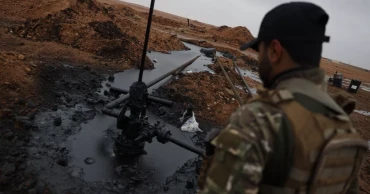
Syrian forces seize key town and oil fields from Kurdish-led SDF in eastward offensive
Syrian government forces on Sunday seized a strategic town and several oil fields in northeastern Syria as part of an ongoing military push against Kurdish-led forces east of the Euphrates River.
The advance into Tabqa, in Raqqa province, follows renewed tensions between Damascus and the US-backed Syrian Democratic Forces (SDF), which erupted earlier this month and led to deadly clashes. During the fighting, government troops also took control of three neighbourhoods in Aleppo previously held by Kurdish fighters.
The operation in Tabqa is seen as highly significant due to the presence of a major dam regulating water flow to southern regions under SDF control, as well as a military air base in the town.
Associated Press journalists reported seeing residents emerge from their homes to welcome Syrian troops, waving national flags. Government forces were also seen in control of oil fields in Raqqa province that had previously been held by the SDF.
Since toppling longtime President Bashar Assad in December 2024, Syria’s new leader President Ahmad al-Sharaa has struggled to consolidate authority nationwide and reassure minority groups wary of the country’s new Islamist-led leadership. The government and the SDF have exchanged accusations of breaching a March agreement aimed at reintegrating northeastern Syria and Kurdish forces into the state.
US conducts retaliatory strike in Syria, kills leader linked to deadly IS ambush
For years, the SDF controlled large parts of northeastern Syria, including key oil fields, and served as Washington’s main partner in the fight against the Islamic State group. However, since Assad’s removal, the United States has strengthened its ties with Damascus and sought to reduce tensions between the two sides.
Washington had called for calm after clashes in Aleppo this month left at least 23 people dead and displaced tens of thousands. Following a ceasefire, SDF leader Mazloum Abdi said on Friday that the group would withdraw its forces east of the Euphrates after al-Sharaa announced steps to strengthen Kurdish rights in Syria.
Last week, Syria’s Defence Ministry declared a disputed zone in eastern Aleppo a military area. Government forces now appear to be advancing deeper toward Raqqa, one of the most important SDF-controlled cities in the northeast.
Tabqa is the latest mostly Arab-majority area in Raqqa province to fall to government troops. It remains unclear how far the Syrian military intends to push into Kurdish heartland.
Syrian state media SANA reported that Kurdish forces blew up a bridge in the city in an apparent attempt to slow the government’s advance.
The Syrian government also accused the SDF of executing prisoners in Tabqa before withdrawing. The SDF denied the claim, saying detainees had been transferred elsewhere and accusing government forces of firing on the prison. It released a video showing armed men in civilian clothes inside the facility, though no bodies were visible.
An AP reporter who visited two prisons in Tabqa found them empty and saw no bodies inside. However, three bodies in civilian clothing were found at a nearby school.
The SDF captured Tabqa from Islamic State militants in 2017 during the campaign to dismantle the group’s self-declared caliphate.
Syrian troops move into northern towns after Kurdish fighters pull back
Further east, the governor of Deir el-Zour province urged residents to remain indoors following reports of clashes with the SDF. The area, home to the Al-Omar oil field and Conoco gas plant near US troop positions, has long seen tensions between Kurdish authorities and Arab tribes.
The Syrian Observatory for Human Rights said government forces have taken control of more than a dozen towns and villages in eastern Deir el-Zour after SDF fighters withdrew.
4 months ago
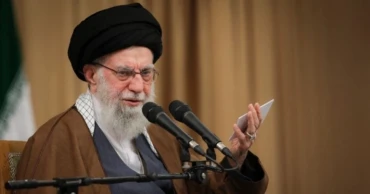
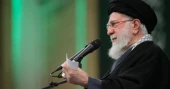
Khamenei blames US, Israel for deaths during Iran protests
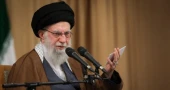
Iran’s Supreme Leader Ayatollah Ali Khamenei has accused actors linked to the United States and Israel of being responsible for the killing of “several thousands” of people during weeks of antigovernment protests across the country.
“Those linked to Israel and US caused massive damages and killed several thousands” during the protests that shook Iran for more than two weeks, Khamenei said on Saturday.
He alleged direct involvement by the two countries in the violence and described US President Donald Trump as a “criminal”. “The latest anti-Iran sedition was different in that the US president personally became involved,” Iranian state media quoted him as saying.
Iranian authorities have increasingly blamed foreign powers for the unrest, accusing long-time geopolitical rivals, particularly Israel and the United States, of fuelling instability and directing operations inside the country.
Khamenei warned that while Iran would avoid escalating tensions beyond its borders, those it considers responsible would face consequences. “We will not drag the country into war, but we will not let domestic or international criminals go unpunished,” he said.
Reporting from Tehran via satellite, Al Jazeera correspondent Resul Serdar Atas said Khamenei’s remarks largely echoed Iran’s long-held position but also introduced a new claim about the scale of casualties.
Read More: Iran’s supreme leader warns of harsh response as protests continue
Khamenei alleged a deeper level of US involvement than in previous unrest. “He said that in previous protests there was a low level of intervention of the Americans, but this time the president of the United States was a central figure in this international plot against Iran,” Atas added.
What stood out, however, was the size of the alleged death toll. “One thing that is new in his speech is that for the first time he is actually giving a sense of the numbers of people killed,” Atas said. “He is saying that the violent protesters have killed thousands of people.”
There is still no confirmed death toll, though US-based rights group HRANA says a further 3,000 have been killed in the protests. Until now, Iranian officials had publicly acknowledged hundreds of deaths, including members of the security forces.
Khamenei’s statement marks the first time Iran’s top authority has spoken of casualties in the thousands.
Atas noted that the claim partly aligns with assessments by some international human rights organisations. “They have been saying that the death toll is much higher than what is being publicly announced by the officials,” he said.
Iranian officials also say around 3,000 people have been arrested in connection with the protests.
Read More: Iran signals swift trials, executions despite Trump warning
Khamenei further accused protesters of widespread destruction, “including burning more than 250 mosque and medical facilities”, Atas said.
According to Iran’s official account, demonstrations initially began peacefully over rising prices and economic hardship on December 28 in several cities.
“The government was acknowledging their demands and the hardships that they are facing,” Atas said, adding that authorities now argue the protests were later “hijacked by the violent protests who were receiving orders from the outside powers”.
Iranian officials claim those involved were “equipped, financed, and trained” by foreign actors, with Khamenei placing Trump “in the centre of this plot”.
The semiofficial Fars News Agency reported on Saturday that authorities had restored the short messaging service (SMS) nationwide as part of a phased plan following eight days of near-total internet disruption.
4 months ago
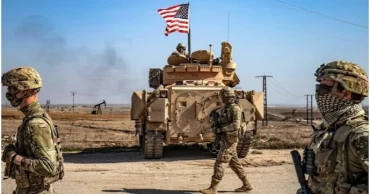
US conducts retaliatory strike in Syria, kills leader linked to deadly IS ambush
U.S. retaliatory strike in northwest Syria on Friday killed an Al-Qaeda-affiliated leader tied to the Islamic State member responsible for a December ambush that killed two U.S. soldiers and one civilian interpreter, officials said.
The U.S. Central Command identified the deceased as Bilal Hasan al-Jasim, describing him as an “experienced terrorist leader” who directly coordinated the Dec. 13 attack that killed Sgt. Edgar Brian Torres-Tovar, Sgt. William Nathaniel Howard, and interpreter Ayad Mansoor Sakat.
“The death of a terrorist operative linked to the deaths of three Americans demonstrates our resolve in pursuing terrorists who attack our forces,” CENTCOM commander Adm. Brad Cooper said. “There is no safe place for those who conduct, plot, or inspire attacks on American citizens and our warfighters. We will find you.”
The strike was the third in a series of operations under “Hawkeye Strike,” a broader U.S.-led campaign launched after the ambush to target Islamic State infrastructure and leaders attempting to regroup following the ouster of Syrian President Bashar Assad.
CENTCOM said U.S. forces, alongside partners such as Jordan and Syria, have targeted more than 100 ISIS sites, including weapons caches and infrastructure.
President Donald Trump emphasized that Syrian authorities were cooperating with American forces and that Syrian President Ahmad al-Sharaa was “extremely angry and disturbed” by the December attack.
The operation underscores the U.S. military’s continued commitment to hunting terrorists in Syria and its regional partners while responding to threats against American personnel.
4 months ago
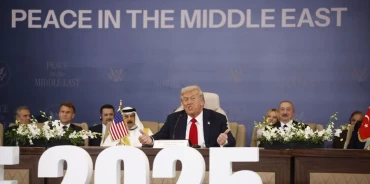
Trump forms “Board of Peace” for Gaza, aims for wider global role
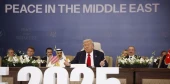
US President Donald Trump is moving forward with his “Board of Peace,” initially designed to help implement a Gaza ceasefire, with ambitions to expand its mandate to other global conflicts, potentially creating a parallel to the United Nations.
In letters sent Friday, Trump invited world leaders—including Argentina’s Javier Milei, Paraguay’s Santiago Peña, Canadian Prime Minister Mark Carney, Egyptian President Abdel-Fattah el-Sissi, and Turkish President Recep Tayyip Erdogan—to serve as founding members. Trump described the board as “the most impressive and consequential board ever assembled,” envisioning it as an international organization and transitional governing body.
Trump’s 20-point Gaza ceasefire plan, endorsed by the U.N. Security Council, serves as the framework for the Board of Peace, but letters suggest the body could extend beyond Gaza to address other global crises. A senior U.S. official said an expanded role is “aspirational” and aimed at addressing frustrations with the United Nations’ bureaucracy, though the board is not intended to formally replace the U.N.
Critics argue the initiative could undermine established international norms. Daniel Forti of the International Crisis Group said it allows the U.S. to sidestep traditional mechanisms for sovereignty and territorial integrity, potentially shaping global conflicts to Washington’s interests.
An executive committee overseeing Gaza already includes U.S. officials, business leaders, and former international figures such as Tony Blair and World Bank President Ajay Banga. Israel has objected, saying the board’s plans were not coordinated with its government.
The White House plans a formal announcement of the board and its members next week at the World Economic Forum in Davos, Switzerland, amid questions over its potential impact on the post-World War II international order.
4 months ago
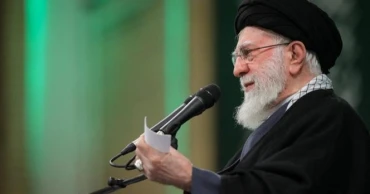
Ayatollah Ali Khamenei calls Trump ‘criminal’ for backing protests, blames demonstrators for deaths
Iran’s Supreme Leader Ayatollah Ali Khamenei on Saturday branded U.S. President Donald Trump a “criminal” for supporting protesters in Iran and blamed demonstrators for causing thousands of deaths during weeks of unrest.
In a televised speech, Khamenei said the protests that began on Dec. 28 had left “several thousand” people dead, marking the first time an Iranian leader publicly acknowledged the scale of casualties from the crackdown. Human rights groups say at least 3,308 people have been killed, though the figure could not be independently verified.
Khamenei accused Trump of encouraging what he called “seditious” protesters and alleged the United States was seeking to dominate Iran politically and economically. He described demonstrators as “foot soldiers” of Washington and claimed they were responsible for violence, including attacks on mosques and educational centers.
Trump responded by sharply criticizing Iran’s leadership, calling Khamenei “a sick man” and urging an end to his nearly four-decade rule. He said Iran’s poor leadership had made it one of the worst places to live and called for new leadership in the country.
The exchange followed more conciliatory remarks by Trump a day earlier, when he said Iran had halted the execution of hundreds of protesters, though Iranian officials dismissed his comments as baseless.
Iran has largely returned to an uneasy calm after the crackdown, with no major protests reported in recent days. Authorities had cut internet access nationwide earlier this month, though limited services and text messaging briefly resumed in some areas on Saturday.
Iranian officials have repeatedly accused the United States and Israel of fueling the unrest, allegations both countries deny.
4 months ago
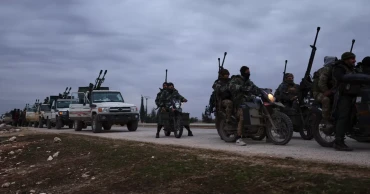
Syrian troops move into northern towns after Kurdish fighters pull back
Syrian government forces moved into two northern towns on Saturday after the Kurdish-led Syrian Democratic Forces (SDF) announced their withdrawal in an apparent effort to prevent further clashes.
State media said two soldiers were killed and several others injured in the latest violence. The town of Deir Hafer changed control following deadly fighting earlier this month between government troops and the US-backed SDF in Aleppo, Syria’s largest city. The clashes ended with Kurdish fighters leaving three neighbourhoods taken over by government forces.
An Associated Press reporter saw government tanks, armoured vehicles and pickup trucks mounted with heavy machine guns entering Deir Hafer after bulldozers cleared roadblocks. No SDF fighters were seen on the outskirts of the town.
The Syrian military said its forces had taken full control of Deir Hafer, seized the nearby Jarrah air base and were clearing mines and explosives. Troops later moved toward the nearby town of Maskana, where another military convoy was seen entering.
However, the SDF said Syrian forces violated an agreement by entering Deir Hafer and Maskana before Kurdish fighters had fully withdrawn, warning that the move created a dangerous situation. In contrast, state news agency SANA accused the SDF of breaking the deal by attacking an army patrol near Maskana, killing two soldiers and wounding others.
Over the past two days, more than 11,000 people fled Deir Hafer and Maskana using side roads to reach government-held areas after Damascus announced an offensive to retake the towns.
Civilians flee ahead of possible Syrian army attack in Aleppo
On Friday night, SDF commander Mazloum Abdi said his forces would pull out of contested areas in northern Syria and relocate east of the Euphrates River starting Saturday morning.
The easing of tensions followed visits by US military officials to Deir Hafer on Friday, where they held talks with SDF leaders. The United States maintains ties with both sides and has called for calm.
Abdi was also due to meet US special envoy to Syria Tom Barrack in Irbil, northern Iraq, on Saturday.
The SDF’s withdrawal came a day after Syria’s interim President Ahmad al-Sharaa issued a decree expanding Kurdish rights, recognising Kurdish as a national language alongside Arabic and declaring the Kurdish Newroz festival an official holiday.
Kurdish authorities in northeast Syria said the rights of Kurds should be protected through constitutional guarantees rather than temporary decrees, adding that lasting protection must be written into the country’s future constitution.
4 months ago
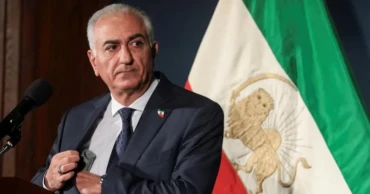
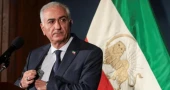
Exiled crown prince urges world support to topple Iran government
Reza Pahlavi, the exiled son of Iran’s last shah, has called on the international community to support protesters seeking to overthrow Iran’s government, saying the fall of the Islamic Republic is inevitable.
Speaking at a news conference in Washington, Pahlavi said the world should help the protesters and urged “surgical” strikes on Iran’s Revolutionary Guards to weaken the authorities and prevent further loss of life.
Protests erupted across Iran on Dec 28 over the country’s weak economy and falling currency. The demonstrations later turned into calls for the end of the rule of Supreme Leader Ayatollah Ali Khamenei.
Human rights groups say more than 2,000 protesters have been killed in the crackdown. The Iranian government has described the unrest as riots backed by foreign enemies.
Pahlavi said parts of Iran’s security forces have refused to join the crackdown and claimed that foreign militia fighters were brought in to suppress the protests. He vowed to return to Iran and outlined plans for a new constitution based on democracy, individual freedom, and separation of religion and state.
He said Iran’s future leadership should be decided by its people. “I am trying to help them liberate themselves,” he said.
The protests began after shopkeepers in Tehran went on strike over rising prices and quickly spread nationwide. Demonstrators have chanted slogans against the Supreme Leader and the clerical leadership.
With inputs from BBC
4 months ago
Civilians flee ahead of possible Syrian army attack in Aleppo
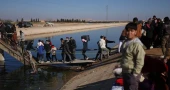
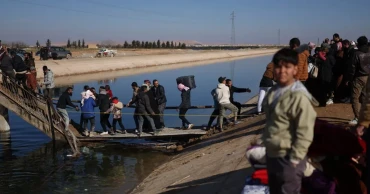
Scores of civilians carrying their belongings arrived in government-held areas in northern Syria on Friday amid fears of a potential Syrian army offensive against Kurdish-led fighters east of Aleppo.
Many used side roads after the main highway was blocked at a checkpoint previously controlled by the Kurdish-led and U.S.-backed Syrian Democratic Forces (SDF), AP journalists reported.
The Syrian army had announced late Wednesday that civilians could use a "humanitarian corridor" from 9 a.m. to 5 p.m. Thursday, signaling possible plans for an operation against the SDF east of Aleppo. Limited exchanges of fire were reported between the two sides.
Men, women, and children arrived in cars and pickup trucks loaded with clothes, mattresses, and other belongings. Local officials guided them to shelters. Some crossed canals by small boats or used a damaged pedestrian bridge to reach government-held areas.
Despite the SDF closing the main highway, about 4,000 people managed to reach government-controlled zones via alternative routes, according to Syrian state TV.
A U.S. military convoy reached Deir Hafer in the early afternoon, though it was unclear if the personnel would remain. Washington maintains good relations with both sides and has urged calm.
Inside Deir Hafer, most shops were closed and residents stayed indoors. Umm Talal, who arrived with her husband and children, said the road appeared safe and her husband planned to return home. Abu Mohammed, coming from Maskana, said SDF fighters had blocked the main highway, forcing people onto side roads.
The tensions follow heavy clashes last week in Aleppo, which ended with Kurdish fighters evacuating three northern neighborhoods that were then taken over by government forces. Fighting erupted as talks stalled between Damascus and the SDF over a March agreement for integration of forces and government control of institutions, including border crossings and oil fields in the northeast.
U.S. Special Envoy Tom Barrack said on X that Washington is in close contact with all parties, working to "prevent escalation and return to integration talks between the Syrian government and the SDF."
The SDF has long been Washington’s main partner in the fight against ISIS, but Turkey considers it a terrorist group due to its links with Kurdish separatists.
4 months ago
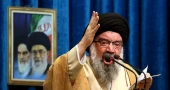
Iran cleric calls for death penalty for protesters, threatens Trump
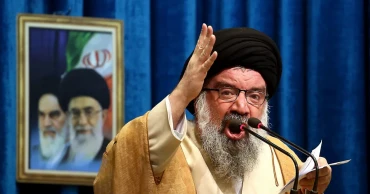
A hard-line Iranian cleric leading Friday prayers in Tehran demanded the death penalty for protesters detained during the nationwide unrest and directly threatened U.S. President Donald Trump, highlighting the regime’s growing anger following the demonstrations.
Ayatollah Ahmad Khatami’s sermon, broadcast by state radio, sparked chants from the congregation including, “Armed hypocrites should be put to death!” Executions and the killing of protesters had been two of the red lines set by Trump for potential military action against Iran.
Khatami also provided the first nationwide figures on damage caused during the protests, which began on Dec. 28 over economic hardship and quickly escalated into a challenge to Iran’s theocratic rule. He claimed 350 mosques, 126 prayer halls, 20 other religious sites, and 80 homes of Friday prayer leaders were damaged. He added that 400 hospitals, 106 ambulances, 71 fire department vehicles, and 50 other emergency vehicles were affected.
Appointed by Supreme Leader Ayatollah Ali Khamenei and a member of both the Assembly of Experts and Guardian Council, Khatami described the protesters as “Trump’s soldiers” and “the butlers of Israeli Prime Minister Benjamin Netanyahu,” warning of “harsh revenge from the system.”
Khatami, known for his hard-line stance, previously upheld a fatwa calling for the death of writer Salman Rushdie and threatened Israel in 2018, saying Iran could “raze Tel Aviv and Haifa to the ground.” He also urged the arrest of anyone supporting the rioters in any way.
Since Jan. 8, Iran has restricted internet access and intensified its crackdown, with the U.S.-based Human Rights Activists News Agency reporting at least 2,677 deaths, though the toll has not been independently verified.
4 months ago
Iran closes airspace for hours amid US tensions over crackdown on protests
Iran closed its airspace to commercial flights for several hours early Thursday without explanation, as tensions with the United States escalated over Tehran’s violent crackdown on nationwide protests.
The closure lasted more than four hours, according to pilot notices, affecting a major East-West flight corridor. International airlines rerouted flights north and south of Iran, and after one extension, the airspace reopened, with several domestic flights airborne by around 7 a.m.
Iran has previously restricted its airspace during conflicts, including the 12-day war with Israel in June and the Israel-Hamas war. Although there were no immediate signs of hostilities this time, the move disrupted global aviation due to Iran’s strategic location on key flight routes.
“Several airlines have already reduced or suspended services, and most carriers are avoiding Iranian airspace,” said SafeAirspace, a website that tracks aviation risks. The site warned that the closure could indicate heightened security or military activity, raising the possibility of missile launches or misidentification of civilian aircraft.
The alert recalled Iran’s 2020 downing of Ukraine International Airlines Flight PS752, when air defenses misidentified the plane as a threat, killing all 176 passengers.
The airspace closure coincided with U.S. precautions in the Gulf, including evacuation advice for personnel at a key U.S. military base in Qatar and a temporary halt on U.S. personnel movements to military installations in Kuwait. The U.N. Security Council scheduled an emergency meeting on Iran at the U.S.’s request.
Read more: US labels three Muslim Brotherhood branches as terrorist groups
U.S. President Donald Trump gave vague remarks Wednesday, saying he had been told executions in Iran had been halted, without providing further details. Trump had earlier assured Iranian protesters that “help is on the way” and that his administration would act in response to the crackdown.
Iranian Foreign Minister Abbas Araghchi called for diplomacy over conflict, saying, “Between war and diplomacy, diplomacy is a better way, although we don’t have any positive experience from the United States.”
The developments came hours after Iran’s judiciary chief urged swift action against thousands of detainees. Activists warned that executions could occur soon. According to the U.S.-based Human Rights Activists News Agency, at least 2,615 people have died during the protests, marking the deadliest unrest in Iran in decades and evoking memories of the 1979 Islamic Revolution.
4 months ago