middle-east
Iran’s supreme leader signals navy readiness for “bitter defeats” to rivals
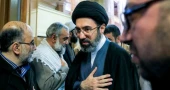
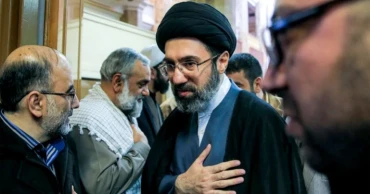
Iran’s Supreme Leader Mojtaba Khamenei on Saturday said the country’s navy is ready to inflict “new bitter defeats” on the United States and Israel, according to IRNA.
In a message marking Iran’s Army Day on April 18, he praised the army’s role against what he described as “enemies.” He said during the recent 40-day war, Iranian forces “courageously” defended the country alongside other armed units, exposing the “weakness and humiliation” of the United States and Israel.
Khamenei added that as army drones “thunderously” struck U.S. and Israeli targets, “its brave Navy is ready to give the enemies the bitter taste of new defeats.”
Iran reimposes restrictions on Strait of Hormuz amid US tensions
On Feb 28, Israel and the United States carried out joint attacks on Tehran and other cities, killing then Supreme Leader Ali Khamenei, senior commanders and civilians. Iran retaliated with missile and drone strikes and tightened control over the Strait of Hormuz.
A two-week ceasefire was declared on April 8, followed by talks between Iranian and U.S. delegations in Islamabad.
Meanwhile, Deputy Foreign Minister Saeed Khatibzadeh said no date has been set for the next round of talks, despite reported progress, adding Iran will act within international law.
1 month ago
Iran reimposes restrictions on Strait of Hormuz amid US tensions
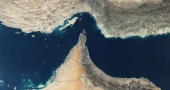
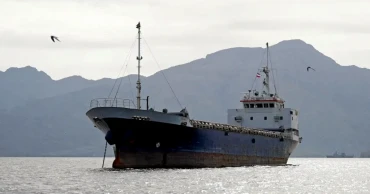
Iran has reimposed restrictions in the Strait of Hormuz, backtracking on its earlier move to reopen the vital shipping lane and warning that transit would remain blocked as long as the U.S. blockade on Iranian ports continues.
In a statement, the country’s joint military command said, “control of the Strait of Hormuz has returned to its previous state ... under strict management and control of the armed forces.”
It also cautioned that passage through the strategic waterway would continue to be restricted while the U.S. blockade remains in place.
Trump warns of renewed attacks if Iran ceasefire ends without deal
The development came a day after U.S. President Donald Trump said the U.S. blockade “will remain in full force” until Tehran reaches an agreement with Washington, including on its nuclear programme.
1 month ago
Iran rejects US claims it will transfer enriched uranium
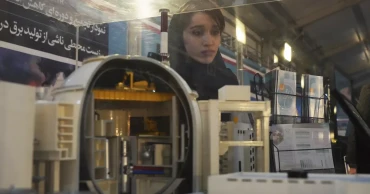
Iran has denied assertions by Donald Trump that it has agreed to hand over its enriched uranium stockpile.
Ebrahim Rezaei, spokesman for Iran’s National Security Committee, said Tehran has made no such commitment and will not allow enriched uranium to be sent to the country.
Speaking to Al Jazeera’s Mubasher, he stressed that Iran “categorically rejects” any proposal to eliminate enrichment or halt its peaceful nuclear programme, describing such demands as a strategic red line.
Trump has repeatedly claimed that Iran would relinquish its stockpile, writing on Friday that “the USA will get all Nuclear ‘Dust’”.
Esmaeil Baghaei also dismissed those claims.
In remarks to Tasnim News Agency, he said, “Enriched uranium is as sacred to us as Iranian soil and will not be transferred anywhere under any circumstances.”
1 month ago
Many ships still avoiding Hormuz transit as ‘situation is unclear’
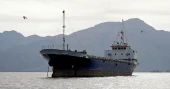
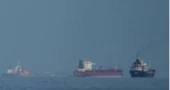
Uncertainty continues to disrupt maritime traffic through the Strait of Hormuz, with many vessels hesitant to pass despite Iran’s claim that the route remains open.
John-Paul Rodrigue said mixed signals about the situation are causing ships to reconsider their movements.
“Ships have been attempting transit since the announcement … but it looks like many of them are heading back because the situation is unclear,” Rodrigue told Al Jazeera.
He added, “There is contradictory information being issued by all parties,” highlighting the confusion affecting global shipping decisions.
Earlier, Abbas Araghchi stated that the Strait of Hormuz is “completely open” to commercial traffic. However, Mohammad Bagher Ghalibaf cautioned that access could be restricted if U.S. measures against Iranian ports continue.
Rodrigue noted that major shipping companies such as Maersk are unlikely to resume normal transit until there is full clarity and the complete “removal of the current Iranian interdiction”.
1 month ago
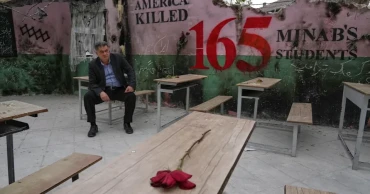
Iranian families struggle with school closures despite ceasefire
Families across Iran are facing ongoing difficulties as schools remain closed, even after airstrikes have stopped under a fragile ceasefire.
In Tehran, finance manager Mahnaz Ataei now takes her 7-year-old child to work and supervises his online classes while managing her job. Schools have been shut nationwide since the war began on Feb. 28, following attacks involving the United States and Israel, and authorities have yet to announce when in-person classes will resume.
Although the immediate threat of airstrikes has eased, daily life remains disrupted. Many parents say balancing work and children’s online education has become a major challenge, similar to the difficulties seen during the COVID-19 pandemic.
Ataei said her work suffers as she tries to focus on both her job and her child’s lessons, adding that she worries about whether he is learning properly.
The conflict has killed at least 3,000 people in Iran, including over 165 in a strike on an elementary school. The ceasefire is expected to expire soon, with tensions still high over key issues such as Iran’s enriched uranium. Concerns also remain about the impact of a possible US naval blockade on the country’s already struggling economy.
Many families who fled Tehran during the attacks are now returning, but the situation remains uncertain. Roya Amiri, a homemaker, recently came back to the capital after staying with relatives in a crowded house with about 15 people.
She said the displacement disrupted routines and created tension, especially among children. Her younger son, who has a respiratory illness, also faced difficulties getting medicine.
Schools initially closed after the attacks and briefly resumed online classes before the Nowruz holiday. Virtual learning restarted on April 4.
Despite fears of renewed violence, Amiri said she preferred returning home. If conflict resumes, she plans to stay in Tehran.
Another parent, Reza Jafari, said he moved his family to stay with relatives to escape the stress of explosions. While children adapted quickly to the new environment, adults struggled with lack of privacy, financial pressure and disrupted sleep.
Meanwhile, working parents like architect Padideh Teymourian and her husband Amir Ramezani have had to reorganize their daily lives around their 6-year-old daughter’s online preschool.
Teymourian said her office does not allow remote work, forcing her to take daily leave to help her daughter. Her husband adjusted his work schedule to stay home during the day, often returning late at night.
The couple said the situation has created both financial and emotional strain, with little time left for family life.
“We are just trying to get through each day until things return to normal,” Ramezani said.
1 month ago
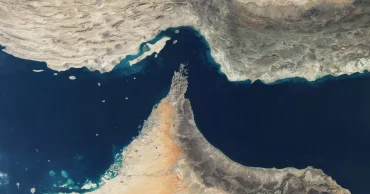
Hormuz transits require IRGC permission, Trump claims Iran won’t close strait again
Vessels transiting the Strait of Hormuz will require permission from Iran’s Islamic Revolutionary Guard Corps (IRGC), a senior Iranian military official said on state television.
However, a separate Iranian official told that all commercial vessels, including US-flagged ships, are allowed to pass through the strait, while naval vessels will not be granted transit, reports Al Jazeera.
Meanwhile, US President Donald Trump claimed that Iran has agreed to “never” close the strategic waterway again.
In a social media post, Trump said, “It will no longer be used as a weapon against the World!”
Earlier, both Iran and the United States said the strait has been reopened and is fully operational for commercial shipping after nearly seven weeks of disruption that affected global energy trade.
Trump said on social media that “IRAN HAS JUST ANNOUNCED THAT THE STRAIT OF IRAN IS FULLY OPEN AND READY FOR FULL PASSAGE. THANK YOU!,” while Iranian Foreign Minister Abbas Araghchi confirmed that commercial vessels would be allowed to pass in line with an ongoing ceasefire arrangement.
The developments come amid continued diplomatic efforts between Washington and Tehran to stabilise the situation and ensure uninterrupted global energy supplies.
1 month ago
Trump says US will get Iran’s enriched uranium
US President Donald Trump said Washington will obtain all of Iran’s enriched uranium as part of an anticipated agreement, while maintaining that no financial exchange would be involved.
In a post on social media, Trump referred to Iran’s enriched uranium as “nuclear dust” and said the United States would take possession of it, reports Al Jazeera.
He added that no money would be exchanged “in any way, shape, or form” and that the arrangement would not be linked to developments in Lebanon.
Iran, US say Strait of Hormuz is fully open to commercial vessels
In a separate post, Trump said the Strait of Hormuz is “completely open and ready for business,” but noted that a US naval blockade on Iran would remain in place until a final deal is reached.
“The naval blockade will remain in full force and effect as it pertains to Iran, only, until such time as our transaction with Iran is 100% complete,” he said, adding that the process “should go very quickly” as most key points have already been negotiated.
1 month ago
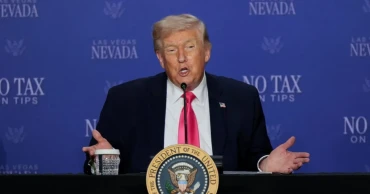
Trump says Israel ‘prohibited’ from bombing Lebanon
US President Donald Trump said that Israel has been “prohibited” from carrying out further bombing in Lebanon, signalling a potential de-escalation in the region, reports Al Jazeera.
In a post on Truth Social, Trump said, “Israel will not be bombing Lebanon any longer. They are PROHIBITED from doing so by the U.S.A. Enough is enough!!!.”
He added that the situation in Lebanon, including the presence of the Hezbollah armed group, would be addressed separately from issues related to Iran and handled in an “appropriate manner.”
However, Israeli Prime Minister Benjamin Netanyahu said Israel has “not yet finished the job” against Hezbollah, indicating a possible divergence in positions.
In a recorded address, Netanyahu said efforts would continue to address remaining threats. “We have not yet finished the job. There are things we plan to do to address the remaining rocket threat and the drone threat,” he said, adding that a key objective remains the “dismantling of Hezbollah.”
The remarks came just hours after a 10-day ceasefire between Israel and Hezbollah came into effect, amid ongoing diplomatic efforts to ease tensions in the region.
1 month ago
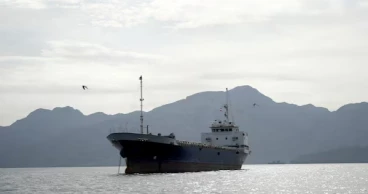
Iran, US say Strait of Hormuz is fully open to commercial vessels
Iran and the United States on Friday said the Strait of Hormuz has been reopened and is fully operational for commercial shipping after nearly seven weeks of disruption that had affected global energy trade.
“IRAN HAS JUST ANNOUNCED THAT THE STRAIT OF IRAN IS FULLY OPEN AND READY FOR FULL PASSAGE. THANK YOU!,” US President Donald Trump said on social media, using an unofficial name for the strategic waterway.
Iranian Foreign Minister Abbas Araghchi confirmed that commercial vessels would be allowed to pass in line with the ongoing ceasefire arrangement, reports South China Morning Post.
Araghchi said ships would be required to follow designated routes set by Iran’s Ports and Maritime Organisation.
The announcement comes alongside a 10-day ceasefire between Israel and Iran-backed Hezbollah, under which passage through the strait will remain open for the duration of the truce.
Trump, however, said US naval blockade on Iranian vessels and supplies would remain in place until a final agreement is reached.
The apparent breakthrough eased market concerns, with oil prices falling nearly 10 percent following the announcement.
1 month ago
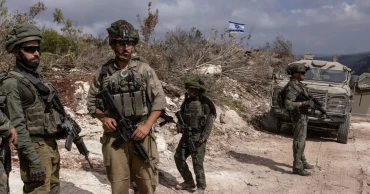
Israeli army to maintain control of positions it has ‘cleared and captured’ in Lebanon
Israel’s Defence Minister Israel Katz has said that the Israeli military will continue to hold all positions in Lebanon that it has “cleared and captured,” according to Israeli newspaper Haaretz.
Citing Katz, the report said the central objective of the Israeli military remains the disarmament of Hezbollah “by military or diplomatic means.”
He added that this goal is supported by a “significant diplomatic lever” involving direct US involvement and pressure on the Lebanese government.
Katz also said the Israeli army “holds and will continue to hold” all positions it has “cleared and captured.”
#From Al Jazeera
1 month ago