middle-east
Iran receives a US ceasefire plan, officials say, as strikes batter the Middle East
Iran has received a U.S. proposal to pause hostilities in the Middle East, officials said Wednesday, even as Washington continues to deploy paratroopers and additional Marines to the region.
Tehran has not publicly confirmed receiving the plan and dismissed the diplomatic effort, while continuing attacks on Israel and Gulf Arab states, including an assault that caused a major fire at Kuwait International Airport.
Key Points of the US Proposal
Two Pakistani officials, who delivered the plan to Iran, described the 15-point proposal broadly. It reportedly covers sanctions relief, a rollback of Iran’s nuclear program, limits on missile development, reopening the Strait of Hormuz, and restrictions on Iran’s support for armed groups, according to an Egyptian official involved in the mediation.
Many of the points were already contentious before the war. Iran has long insisted it will not discuss its ballistic missile program or regional militias, which it views as central to its security. Control over the Strait of Hormuz also represents a major strategic advantage.
US Military Reinforcements
At least 1,000 troops from the 82nd Airborne Division are scheduled to deploy to the Middle East in the coming days, sources told the AP. In addition, around 5,000 Marines trained for amphibious operations, along with thousands of sailors, are being sent to the region.
Diplomatic Hurdles
Egyptian and Pakistani officials suggested possible in-person talks between the U.S. and Iran could occur as soon as Friday in Pakistan. Special envoy Steve Witkoff, Jared Kushner, Secretary of State Marco Rubio, and Vice President JD Vance are involved in the U.S. team. Iran, however, denies engaging in direct talks with the U.S., with its Khatam Al-Anbiya Central Headquarters warning, “Not now, not ever.”
Israel, which has been urging continued military action against Iran, was reportedly surprised by the ceasefire proposal. Any negotiations face major challenges, including uncertainty over who in Iran has authority to negotiate, and Israel’s ongoing targeted strikes against Iranian leaders.
Ongoing Conflict and Casualties
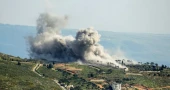
The Israeli military reported multiple airstrikes in Tehran and a strike on an Iranian submarine development center in Isfahan. Missile alerts have sounded repeatedly in Israel, while Hezbollah rockets continue to target northern Israel.
Iran also remains active against Gulf Arab neighbors. Saudi Arabia destroyed at least eight drones, and one Iranian drone hit a fuel tank at Kuwait International Airport.
Casualties are significant: Iran reports over 1,500 dead, Israel 20 (including two soldiers in Lebanon), and U.S. forces at least 13 killed. Lebanon has seen over 1,000 deaths, mainly from Israeli strikes on Hezbollah, and 80 Iraqi security personnel have been killed.
Impact on Energy Markets
Oil prices remain high due to Iran’s partial blockade of the Strait of Hormuz. Brent crude, which spiked near $120 a barrel during the conflict, dropped below $100 following news of potential negotiations but is still up roughly 35% since the war began. Iran confirms it charges ships for passage through the strait.
The ceasefire plan represents a potential first step toward de-escalation, though analysts warn substantial hurdles remain before any agreement can be realized.
2 months ago
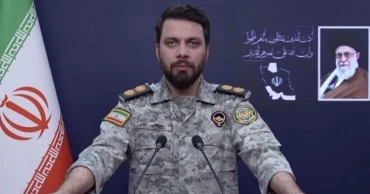
Iranian military dismisses Trump’s claims of US-Iran negotiations
An Iranian military spokesperson on Wednesday ridiculed U.S. claims of ongoing ceasefire talks, casting doubt on the viability of a 15-point plan proposed by Washington.
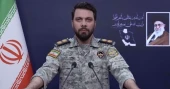
Lt. Col. Ebrahim Zolfaghari, spokesperson for the Khatam Al-Anbiya Central Headquarters which oversees both Iran’s regular military and the Revolutionary Guard made the remarks in a recorded video broadcast on state television. He suggested there were no negotiations despite U.S. President Donald Trump’s assertion that officials were in talks with Tehran.
“Have your internal conflicts reached the point where you are negotiating with yourselves?” Zolfaghari said. “Our first and last word has been the same from day one, and it will stay that way: someone like us will never come to terms with someone like you, not now, not ever.”
The 15-point plan was submitted to Iran through intermediaries from Pakistan, who have offered to host renewed talks between Washington and Tehran, according to an anonymous source. The New York Times was the first to report delivery of the plan to Iranian officials.
Meanwhile, the Pentagon is deploying two Marine units, adding roughly 5,000 Marines and thousands of sailors to the region, in what sources say is intended to give Trump “maximum flexibility” for his next steps. Israeli officials, who have encouraged continued U.S. action against Iran, were reportedly surprised by the ceasefire initiative. The White House declined to comment.
The tensions continue to escalate on the ground. Airstrikes have targeted Iranian sites, while Iranian missiles and drones have struck Israel and other locations in the region. Tehran’s control over the strategic Strait of Hormuz has disrupted international shipping, caused global fuel prices to spike, and threatened economic stability.
“The strategic power you used to talk about has turned into a strategic failure,” Zolfaghari said. “The one claiming to be a global superpower would have already gotten out of this mess if it could. Don’t dress up your defeat as an agreement. Your era of empty promises has come to an end.”
2 months ago
Trump administration offers 15-point ceasefire plan to Iran
The administration of Donald Trump has put forward a 15-point ceasefire proposal to Iran, according to a source familiar with the plan who was not authorised to speak publicly.
The proposal was conveyed to Tehran through intermediaries from Pakistan, which has also offered to host fresh negotiations between Washington and Tehran. The initiative comes as the United States prepares to deploy at least 1,000 additional troops from the 82nd Airborne Division, adding to roughly 50,000 American personnel already stationed in the region.
Earlier on Tuesday, The New York Times reported that the ceasefire plan had been delivered to Iranian officials.
At the same time, the Pentagon is moving to deploy two Marine Expeditionary Units, which would bring around 5,000 Marines along with thousands of sailors to the Middle East.
According to the source, Israeli officials — who have been urging the US to continue military operations against Iran — were caught off guard by the submission of a ceasefire proposal. However, with Washington simultaneously reinforcing its military presence, the move is being seen as an effort by Trump to maintain “maximum flexibility” in determining his next course of action.
The White House has not commented on the development.
In a related development, Trump said for a second consecutive day that the US is engaged in discussions with Iran aimed at ending the war, even as Iran denied that any such negotiations are underway.
Military tensions continue to escalate, with ongoing airstrikes hitting Iran while Iranian missiles and drones target Israel and other sites across the region.
Meanwhile, additional US troops are preparing for deployment. Officials told The Associated Press that at least 1,000 troops from the 82nd Airborne Division will be sent in the coming days, while thousands of Marines are already en route.
Israeli strikes kill 2 paramedics in southern Lebanon
Iran has rejected claims of negotiations and Trump has postponed his self-imposed deadline for Tehran to reopen the Strait of Hormuz. Iran’s control over the vital shipping route has disrupted global trade, driven up fuel prices and raised concerns about the global economy.
Pakistan’s Prime Minister Shehbaz Sharif said his country is ready to facilitate “meaningful and conclusive talks” to end the conflict.
According to multiple officials, the US has agreed in principle to participate in talks in Pakistan, while mediators are still trying to persuade Iran to join. A regional diplomat indicated that discussions could begin as early as next week, with US representatives expected to include envoy Steve Witkoff, Trump’s son-in-law Jared Kushner, Secretary of State Marco Rubio and Vice President JD Vance.
Speaking at the White House, Trump said multiple officials are engaged in negotiations and expressed confidence that Iran is interested in reaching a deal.
Iranian Foreign Minister Abbas Araghchi has held discussions with several counterparts this week. However, Iranian Parliament Speaker Mohammad Bagher Qalibaf denied any direct talks with the US, while a military spokesperson reaffirmed that Iran would continue fighting until “complete victory.”
Efforts led by regional mediators are focused on building trust between Washington and Tehran, with priorities including halting attacks on energy infrastructure and developing a mechanism for reopening the Strait of Hormuz. Israel is not involved in these diplomatic efforts.
Oil markets briefly responded to reports of possible negotiations, but prices soon rebounded, with Brent crude rising above $100 per barrel — nearly 40% higher since the conflict began.
On the battlefield, Israel reported launching extensive strikes on Iranian production facilities, though details were not disclosed. Explosions were heard across Tehran, including in northern districts and the city centre.
Iran, in turn, launched multiple waves of missile attacks on Israel. Emergency responders said three people were injured in southern Israel, while four others sustained minor injuries in Tel Aviv.
Regional fallout has also intensified. A Moroccan contractor working with the United Arab Emirates military was killed in Bahrain during an Iranian strike, while Kuwait experienced temporary power outages after air defence debris hit power lines. Saudi Arabia said it intercepted Iranian drones targeting its Eastern Province.
Israel also carried out heavy airstrikes on Beirut’s southern suburbs, targeting infrastructure linked to the Iran-backed Hezbollah. A strike on a residential building southeast of the Lebanese capital killed at least three people, including a three-year-old girl, while five others were killed in southern Lebanon.
In northern Israel, a woman was killed by shrapnel during cross-border attacks from Lebanon.
China urges early peace talks; Iran discusses war fallout with Malaysia
Lebanon has declared Iran’s ambassador persona non grata and ordered him to leave by Sunday. The country has also banned Iranian flights amid concerns they could transport weapons or funds to Hezbollah, with some Lebanese officials accusing Tehran of drawing the country deeper into the conflict.
The violence has taken a heavy toll. Israeli strikes have killed more than 1,000 people in Lebanon and displaced over one million. Iran’s death toll has exceeded 1,500, according to its Health Ministry. In Israel, 16 people have been killed, while at least 13 US service members and more than a dozen civilians in the occupied West Bank and Gulf states have also lost their lives.
2 months ago
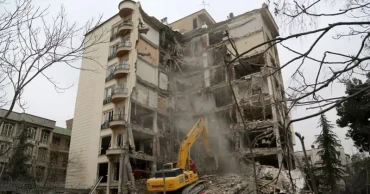
China urges early peace talks; Iran discusses war fallout with Malaysia
Wang Yi has called for the swift initiation of peace talks during a phone conversation with his Iranian counterpart Abbas Araghchi, as tensions continue to escalate in the Middle East.
According to China’s Foreign Ministry, Wang stressed that dialogue remains the best path forward, saying disputes should be resolved through negotiation rather than force. He urged all sides to seize opportunities to begin talks as soon as possible.
Araghchi, who requested the call, said Iran is seeking a comprehensive resolution to the conflict rather than a temporary ceasefire. He also expressed appreciation for China’s humanitarian assistance.
While China remains a key partner of Iran, it has distanced itself from Tehran’s recent strikes on Gulf states hosting US bases and has called for restraint and a ceasefire.
Separately, Iran held discussions with Malaysia over the impact of the ongoing conflict involving the United States and Israel.
In a statement, Iran said its foreign minister reaffirmed the country’s right to defend its sovereignty and territorial integrity, while stressing the importance of preventing regional territories from being used as launch points for attacks.
The talks also covered rising tensions around the strategic Strait of Hormuz and broader diplomatic efforts to address the crisis.
Malaysia’s foreign minister reiterated Kuala Lumpur’s opposition to what it described as US-Israeli aggression, calling for de-escalation and regional stability. He also conveyed condolences to Iran over civilian casualties resulting from the attacks. #From Al Jazeera
2 months ago
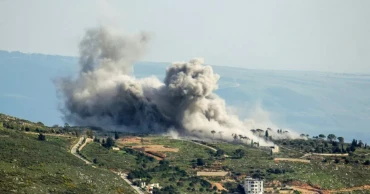
Israeli strikes kill 2 paramedics in southern Lebanon
Israeli attacks in and around Nabatieh have left several people dead, including two paramedics, according to Lebanon’s National News Agency.
The agency reported that a drone strike targeted a motorcycle convoy at the northern entrance of the city, killing two ambulance workers from the local Nabatieh ambulance team.
In a statement cited by the agency, the Nabatieh Ambulance Association said the two paramedics were killed while performing humanitarian duties, describing them as committed members who lost their lives serving their community.
The same site was reportedly struck again less than two hours later, though no further casualties were immediately confirmed.
In a separate incident, another drone strike near the Nafaa building on the Jbeil-Nabatieh highway killed one person and injured another. Meanwhile, a strike near the Al-Fayrouz Restaurant on the Haboush-Nabatieh road killed a Syrian national.
Israeli warplanes also carried out air raids on the village of Nabatieh al-Fawqa, the agency added.
#From Al Jazeera
2 months ago
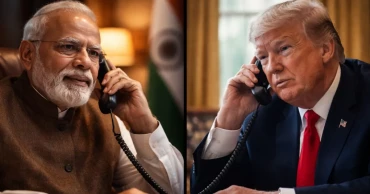
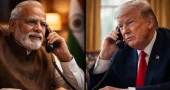
Modi, Trump discuss Strait of Hormuz amid Middle East tensions
India’s Prime Minister Narendra Modi and US President Donald Trump have discussed the escalating situation in the Middle East, with a focus on the strategic Strait of Hormuz.
In separate posts on X, Modi and US envoy to India Sergio Gor said the two leaders spoke over the phone on Tuesday. The conversation marked their first known contact since the United States and Israel carried out coordinated strikes on Iran on February 28.
Modi reiterated India’s position in favour of de-escalation and an early restoration of peace, stressing that keeping the Strait of Hormuz open, secure and accessible is crucial for global stability.
The vital maritime route handles a significant share of global energy shipments and supplies roughly 40 percent of India’s crude oil imports.
Addressing Parliament on Monday, Modi said the ongoing conflict has already impacted sectors such as aviation, shipping and gas supply. However, he assured that India has adequate reserves of petroleum, fertilisers and coal to manage any potential disruptions.
#From Al Jazeera
2 months ago

Iran’s surveillance cameras turned into targeting tool by Israel, experts say
Israel’s use of Iran’s street cameras in the killing of the country’s supreme leader highlights growing vulnerabilities in global surveillance systems, experts say.
Hundreds of millions of cameras, often connected to the internet and poorly secured, have become potential tools in wartime. Israeli forces reportedly exploited Tehran’s own cameras on Feb. 28 to track and target Ayatollah Ali Khamenei, according to sources familiar with the operation and a review of public and leaked data.
Cybersecurity analysts say authoritarian regimes face a paradox: the systems installed to monitor citizens and suppress dissent can expose leaders to external attacks. Conor Healy of IPVM said, “The infrastructure authoritarian states build to make their rule unassailable may be what makes their leaders most visible to the people trying to kill them.”
Security researchers warn that most cameras are easily hacked due to outdated software, weak passwords, and insider threats. AI has amplified the risk by allowing militaries to automatically analyze vast amounts of footage, identifying people, vehicles, and patterns in real time.
Israel’s use of the hacked footage extended beyond Khamenei. Intelligence reports indicate Tehran’s cameras had previously been exploited to track meetings of top security officials, including the Supreme National Security Council, allowing targeted strikes against leadership figures.
Analysts say the weaponization of surveillance cameras marks a shift in modern warfare, as governments increasingly realize that publicly installed infrastructure can be exploited. Ali Vaez of the International Crisis Group called the trend “a wake-up call” for states relying heavily on camera networks for control and security.
Gulf nations have taken steps to limit public access to footage from Iranian strikes, while Israel and others maintain heightened cybersecurity measures. Experts caution, however, that patching vulnerabilities is a continual challenge, describing the effort as a perpetual “whack-a-mole” game.
Ali Vaez said the rise in camera-targeting since the war began underscores the growing stakes for both authoritarian regimes and their adversaries in cyberspace.
2 months ago
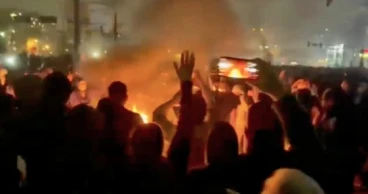
Wave of executions feared in Iran after 3 young men hanged
Rights groups have raised alarm over a possible wave of executions in Iran after authorities carried out the hanging of three young men this week, including a teenage wrestler, amid an ongoing crackdown on dissent.
The three — Saleh Mohammadi, 19, along with Mehdi Qasemi and Saeed Davoudi — were executed in the city of Qom after being convicted of “moharabeh,” or waging war against God, over the alleged killing of two police officers during recent protests, according to state media.
Activists say the executions are the first among thousands detained during a nationwide protest crackdown in January, warning that many more could follow. Oslo-based group Iran Human Rights said at least 27 protesters have already been sentenced to death, while over 100 others face charges that could carry capital punishment.
Amnesty International criticised the trials, saying convictions were based on forced confessions obtained under torture and described the proceedings as “grossly unfair.”
Rights advocates say the executions are aimed at deterring further unrest as Iran faces mounting pressure from the ongoing war with the United States and Israel.
“The executions are intended to instill fear in society and prevent new protests,” said Mahmood Amiry-Moghaddam of Iran Human Rights, warning that more executions of protesters and political detainees could be imminent.
The protests, which began in late December and peaked in early January, triggered one of the deadliest crackdowns since the 1979 Islamic Revolution. Estimates of the death toll vary, with rights groups reporting thousands killed and tens of thousands arrested, though official figures are significantly lower.
Despite the ongoing conflict in the region, authorities have continued to detain individuals accused of dissent, with limited information emerging due to internet restrictions.
Human rights groups allege widespread use of enforced disappearances, incommunicado detention and coercion to extract confessions from detainees.
The latest executions have intensified concerns that Iran’s leadership, under pressure both internally and externally, may escalate punitive measures to maintain control.
2 months ago
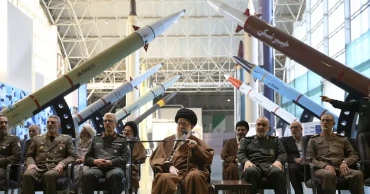
A look at who holds power in Iran after killing of top leaders
Iran’s leadership structure has come under intense strain following the killing of several top figures, including Supreme Leader Ali Khamenei and senior official Ali Larijani, raising questions over who now holds real authority in the country.
Following Khamenei’s death, his son Mojtaba Khamenei was swiftly named as the new supreme leader, placing him formally at the apex of Iran’s political and military system. However, his absence from public view and limited political experience have cast doubt on how firmly he controls the state.
Israeli Prime Minister Benjamin Netanyahu said Iran’s leadership appeared to be in disarray, questioning who is effectively in charge as the conflict continues.
Analysts suggest that real power may now lie with the Islamic Revolutionary Guard Corps, which has long been one of the most powerful institutions in the country. Experts say the force, originally established after the 1979 Islamic Revolution, could be playing a dominant role amid the leadership vacuum.
“The Revolutionary Guard is the state now,” said Ali Vaez of the International Crisis Group, noting that civilian leadership structures have been weakened by the loss of key figures.
Iran’s governance system, however, is designed with multiple layers of authority. Analysts say this could allow continuity even after the elimination of senior leaders, with lower-ranking officials stepping in to maintain operations.
Earlier, Foreign Minister Abbas Araghchi indicated that some military units were acting with a degree of autonomy, following pre-set directives amid the ongoing conflict.
Experts caution that while the loss of senior leadership could reshape Iran’s political system, any transformation is likely to unfold gradually rather than lead to immediate collapse.
2 months ago
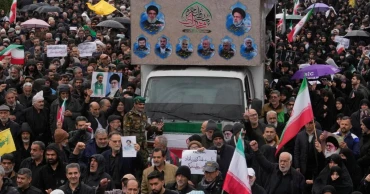
Iran threatens to target regional power plants supplying US bases
Iran has threatened to attack electrical plants in the Middle East that supply power to US military bases, as tensions escalate over the Strait of Hormuz.
The warning came Monday in a statement by Iran’s paramilitary Revolutionary Guard, which was broadcast on state television.
The statement said Iran would retaliate if its own power infrastructure comes under attack, vowing to target “power plants of the occupying regime” — referring to Israel — as well as facilities in regional countries that provide electricity to US bases.
It also warned of potential strikes on economic, industrial and energy infrastructure linked to American interests.
“Do not doubt that we will do this,” the statement added.
The threat comes as US President Donald Trump has set a deadline over the Strait of Hormuz, warning that Washington would strike Iranian power plants within 48 hours if the vital waterway remains effectively closed due to Iranian attacks on shipping.
The Strait of Hormuz is a key global oil transit route, and any disruption there could have major implications for international energy markets and regional security.
2 months ago