middle-east
New strikes illuminate Tehran night as Israel warns of ‘many surprises’
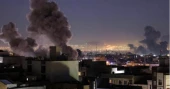
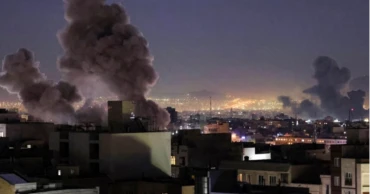
Fresh explosions lit up the skies over Tehran late Saturday as the conflict between Iran and Israel intensified, with Israeli Prime Minister Benjamin Netanyahu warning that the next stage of the week-long war would bring “many surprises.”
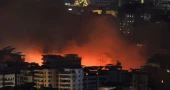
Israel’s military said it had struck fuel storage facilities in the Iranian capital. Video footage showed flames rising above the site and the night horizon glowing over Tehran.
Trump says he doesn't want Kurds to be involved in war
The strike appeared to mark the first time a civilian industrial facility has been targeted since the conflict began. Iranian state media blamed the attack on “the United States and the Zionist regime,” saying the facility supplies fuel to Tehran and nearby northern provinces.
Meanwhile, Israeli airstrikes in southern Lebanon killed eight people, according to the Lebanese Health Ministry. Local media also reported that an Israeli drone hit a hotel in Beirut, leaving four dead and 10 others injured.
Early Sunday, the Israeli military said it had targeted commanders linked to the Lebanese branch of Iran’s Revolutionary Guards’ Quds Force in Beirut. The deaths added to at least 47 people killed in Israeli strikes the previous day.
US-Israeli strikes hit over 6,600 civilian sites: Red Crescent
The conflict has also spread across the region. Drone and missile attacks in Kuwait, Iraq and Saudi Arabia caused damage and additional casualties.
Earlier Saturday, Iranian President Masoud Pezeshkian apologized for attacks affecting “neighboring countries,” even as Iranian missiles and drones were launched toward Gulf Arab states. Hard-line leaders in Tehran insisted the country’s war strategy would remain unchanged.
Differences within Iran’s leadership have also emerged. Some officials are calling for de-escalation while others are pushing for continued confrontation with the United States and Israel. The conflicting positions come from members of the leadership council that has overseen Iran since the death of Supreme Leader Ali Khamenei in early Israeli airstrikes.
Pezeshkian rejected U.S. President Donald Trump’s demand that Tehran surrender unconditionally, saying such an expectation was unrealistic.
Trump, meanwhile, warned Iran could face heavier strikes and said more locations and groups might become targets, without providing details. The escalating conflict has already shaken global markets and weakened Iran’s leadership following hundreds of Israeli and U.S. airstrikes.
Speaking to reporters aboard Air Force One, Trump said Washington was not seeking a settlement at this stage. He described the ongoing U.S. military actions in Iran as an “excursion” and suggested issues like rising fuel prices and the safety of Americans would improve after the conflict ends.
Within Iran, mixed signals have emerged over military operations. Pezeshkian said the leadership council had instructed the armed forces not to attack neighboring countries unless Iran itself is attacked, urging a diplomatic solution.
However, judiciary chief Gholam Hossein Mohseni-Ejei indicated that the current strategy would continue, saying locations used by enemies to launch attacks on Iran would remain targets.
Parliament speaker Mohammad Bagher Ghalibaf also warned that as long as U.S. military bases remain in the region, neighboring countries will not experience stability.
Later, Iran’s mission to the United Nations suggested — without presenting evidence — that strikes on non-military locations may have been caused by U.S. electronic defense systems intercepting incoming attacks.
Senior security official Ali Larijani said Iran’s leadership remains united on the issue and confirmed that steps are being taken to convene the Assembly of Experts to choose the country’s next supreme leader.
2 months ago

Trump says he doesn't want Kurds to be involved in war
US President Donald Trump said he does not want the Kurds to be involved in the war, saying their participation could make the situation more complicated.
Speaking to reporters aboard Air Force One earlier in the day, Trump said the US was not looking for the Kurds to enter the conflict. “We’re not looking to the Kurds going in,” he said, adding that the war is already complex. He also said he does not want Kurdish fighters to be hurt or killed, noting that the United States has maintained a good relationship with them. Although Kurdish groups are willing to take part, Trump said he has told them not to get involved.
Trump threatens ‘very hard’ strikes; Iran rejects surrender demand
His remarks came after Reuters reported that the president said on Thursday he would be “all for” an offensive by Iranian Kurdish fighters.
Earlier, the White House denied a report that Trump was considering arming the Kurds, many of whom had previously been trained by US forces to fight against the Islamic State group in Iraq.
Meanwhile, Iranian Kurdish opposition groups based in northern Iraq told BBC that their fighters have not yet crossed the border, rejecting claims that they had already done so.
Hana Yazdanpana of the Kurdistan Freedom Party (PAK), which says it has the largest armed force, said she had repeatedly asked the US to impose a no-fly zone to protect Kurdish fighters.
#From BBC
2 months ago
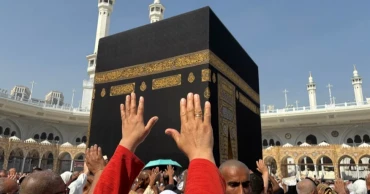
Muslim pilgrims caught in travel turmoil amid Middle East conflict
The ongoing war in the Middle East has disrupted travel for thousands of Muslim pilgrims visiting Saudi Arabia for the Umrah pilgrimage, leaving many stranded and forcing others to cancel their planned trips.
Indonesian authorities said more than 58,000 pilgrims from Indonesia are currently stuck in Saudi Arabia due to flight disruptions and security concerns.
Indonesia’s Vice Minister for Hajj and Umrah Dahnil Anzar Simanjuntak said the government is negotiating with Saudi authorities and airlines to reduce the financial burden on stranded pilgrims, particularly hotel and flight costs.
He also urged about 60,000 Indonesians planning to travel for Umrah to postpone their trips until April for safety reasons.
Officials described the situation as an urgent humanitarian and logistical challenge as many pilgrims struggle with unexpected expenses and uncertainty about returning home.
Some stranded pilgrims said the delays have caused both financial and emotional stress.
Zanirah Faris, an Indonesian pilgrim whose return flight was cancelled, told local media that she had been rebooked on a flight scheduled for March 12. She urged authorities to assist pilgrims who cannot afford extended hotel stays.
Indonesia, which has the world’s largest Muslim population, sends hundreds of thousands of people to Saudi Arabia each year for Umrah, especially during the holy month of Ramadan.
The travel disruption has also affected pilgrims from other countries.
Malaysia’s Consul General in Jeddah Mohamad Dzaraif Raja Abdul Kadir said about 1,600 Malaysian pilgrims were also stranded in Saudi Arabia. Authorities have opened a 24 hour operations centre to monitor the situation and assist affected citizens.
Malaysia Airlines has temporarily resumed return flights from Jeddah and Medina until Sunday, while the country’s foreign ministry is working with diplomatic missions and airlines to evacuate stranded Malaysians.
Airports in the Gulf region serve as major global transit hubs connecting travellers to Europe, Africa and Asia. As a result, the conflict has disrupted travel far beyond the Middle East.
Many pilgrims described how the war has overshadowed what is normally a deeply spiritual journey.
Maged Kholaif, an Egyptian pilgrim, said his flight from Saudi Arabia to Kuwait was cancelled on the day the war began. Stranded with his wife and mother in law, he eventually travelled overland to Kuwait where he reunited with his children.
Others cancelled their trips entirely.
Javed Khizer, a resident of Michigan in the United States, said he decided to cancel Umrah travel plans for himself and his family after watching the worsening situation in the news.
Umrah, often referred to as the minor pilgrimage, can be performed at any time of the year unlike the annual Hajj. Many Muslims prefer to perform Umrah during Ramadan, a period of increased worship and fasting.
Despite the tensions, some pilgrims already in Saudi Arabia say they are trying to focus on their religious rituals.
Majid Mughal, a visitor from the United States travelling with his family, said they learned about the conflict while on their way to Saudi Arabia but decided to continue the journey.
He said security conditions appeared normal so far, although his family continues to monitor flight updates daily as they prepare for their return home.
2 months ago
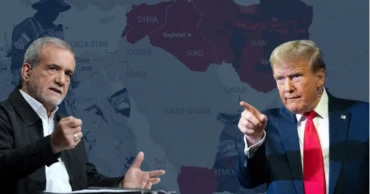
Trump threatens ‘very hard’ strikes; Iran rejects surrender demand
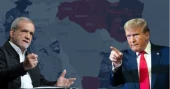
President Masoud Pezeshkian has said Iran will never surrender after US President Donald Trump demanded “unconditional surrender,” as Tehran continues launching drones and missiles at targets in Israel and across the Gulf region.
As the conflict initiated by the United States and Israel enters its second week with no sign of easing, Trump has threatened Iran with “very hard” strikes. He also claimed that Iran had “surrendered” to its neighbouring countries after Pezeshkian said Iranian forces would not target regional states unless attacks against Iran originated from those territories.
Read More: US-Israeli strikes hit over 6,600 civilian sites: Red Crescent
However, the Islamic Revolutionary Guard Corps (IRGC) warned that all US and Israeli military bases and interests would be treated as “primary targets” if attacks on Iran continue.
Meanwhile, at least 41 people were killed in Israeli air and ground attacks on the Lebanese town of Nabi Chit in the eastern Bekaa Valley.
Saudi Arabia said it intercepted and destroyed two ballistic missiles fired toward Prince Sultan Air Base, along with drones heading for the Shaybah oilfield.
With inputs from ALJAZEERA
2 months ago
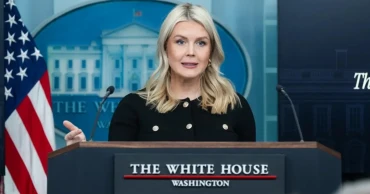
US looking at potential leaders for Iran: White House
The United States is reviewing potential candidates who could lead Iran, the White House said, a day after President Donald Trump suggested Washington should be involved in selecting the country’s next leader.
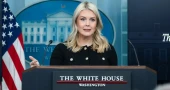
White House Press Secretary Karoline Leavitt told reporters that US intelligence agencies and government officials were assessing possible figures who could take leadership in Iran, reports Al Jazeera.
“I know there’s a number of people that our intelligence agencies and the United States government are looking at, but I won’t get any further on that,” Leavitt said.
Her remarks came after Trump stated that the United States should play a role in determining Iran’s future leadership following the recent escalation of conflict in the region.
Leavitt also addressed Trump’s earlier statement that there would be no deal with Iran except “unconditional surrender.”
She said the president meant that Iran would effectively reach a state of unconditional surrender once it no longer posed a threat to the United States and once the objectives of the US military operation, named “Operation Epic Fury,” were fully achieved.
“When the president, as commander-in-chief of the US armed forces, determines that Iran no longer poses a threat to the United States of America and the goals of Operation Epic Fury have been fully realized, Iran will essentially be in a place of unconditional surrender, whether they say it themselves or not,” Leavitt added.
2 months ago
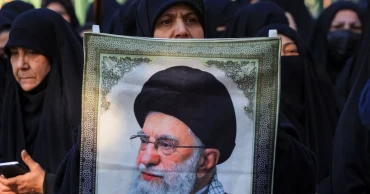
Moscow condemns Khamenei killing, offers condolences to Iran
Russia has expressed solidarity with Iran and condemned the killing of Supreme Leader Ayatollah Ali Khamenei, calling it an act of “U.S.-Israeli aggression.”
Deputy Foreign Minister Andrey Rudenko visited the Iranian embassy in Moscow on Friday to offer condolences on behalf of Russian Foreign Minister Sergey Lavrov. During the visit, Rudenko signed a book of condolences for Khamenei’s family and for other officials killed in the attack, reports Al Jazeera.
In a statement, the Russian Foreign Ministry said Rudenko denounced the assassination of senior officials of a sovereign nation and emphasized Moscow’s support for the Iranian people.
Rudenko also met with Iran’s ambassador to Russia, Kazem Jalali, reaffirming Russia’s solidarity with Tehran amid the ongoing conflict in the region.
2 months ago
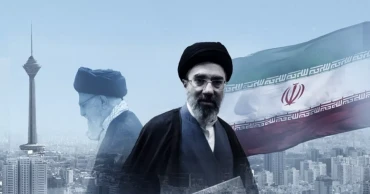
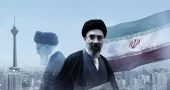
Mojtaba Khamenei emerges as possible successor to late Iranian Supreme Leader
Mojtaba Khamenei, the son of Iran’s late Supreme Leader Ayatollah Ali Khamenei, has long been considered a contender to succeed his father, despite never holding an elected or official government position.
The 1969-born cleric has largely operated behind the scenes, building influence within Iran’s political and military structures and maintaining close ties to the paramilitary Revolutionary Guard.
Last week, an Israeli airstrike targeting the supreme leader’s office killed Ayatollah Khamenei and Mojtaba’s wife, Zahra Haddad Adel. Mojtaba has not been seen publicly since and is believed to be in hiding as U.S. and Israeli strikes continue in Iran.
Hard-liners in the 88-member Assembly of Experts, which selects the next supreme leader, may now view him more favorably, portraying his family’s deaths as martyrdom amid the ongoing conflict with the United States and Israel.
Mojtaba Khamenei has been described as the “power behind the robes,” serving as gatekeeper, advisor, and administrator in his father’s office. He oversaw internal operations, helped consolidate control over billions in state-run foundations, and influenced domestic politics, including support for hard-line President Mahmoud Ahmadinejad during the 2005 election and the disputed 2009 re-election, which triggered the Green Movement protests.
If appointed, Mojtaba would inherit control of Iran’s military, the Revolutionary Guard, its nuclear program, and the country’s ballistic missile arsenal—key instruments of power in the ongoing U.S.-Israel-Iran conflict.
U.S. President Donald Trump has criticized him as “a lightweight” and claimed he should have a role in selecting Iran’s next leader, highlighting the international stakes of the succession.
Mojtaba Khamenei’s potential rise underscores the complex mix of hereditary influence, clerical authority, and military power that shapes the future of the Islamic Republic, as the country faces escalating regional tensions and global scrutiny.
2 months ago

Trump says US evacuating ‘thousands’ from Middle East
U.S. President Donald Trump said in a Truth Social post that the State Department is “moving thousands of people out of various countries throughout the Middle East” amid rising regional tensions.
Trump described the evacuations as being carried out “quietly, but seamlessly,” and praised Marco Rubio for “doing a great job.”
The State Department confirmed on Thursday that 20,000 Americans have returned home and said it is ramping up chartered flights, but provided no further details, reports Al Jazeera.
The evacuations follow Trump’s advisory earlier this week urging Americans to leave more than a dozen countries in the Middle East. The administration has faced criticism over the timing and scale of the effort, as concerns grow over regional security amid ongoing conflicts involving Iran, Israel, and other countries in the region.
Officials say the effort aims to protect U.S. citizens from escalating hostilities and ensure safe passage out of areas affected by airstrikes, missile attacks, and civil unrest.
2 months ago
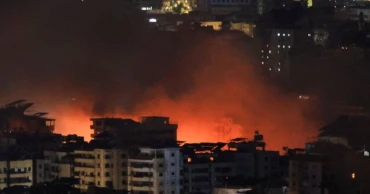
Israeli attacks in Lebanon kill over 120
Israeli air strikes across Lebanon have killed at least 123 people and wounded hundreds this week, according to Lebanon’s Ministry of Public Health, as fighting intensifies along Israel’s northern front with Hezbollah.
The ministry said the death toll from Israeli attacks since Monday has risen to 123, with at least 683 others injured.
Lebanese state media reported that Israeli warplanes launched fresh strikes early Friday on several towns in southern Lebanon, including Srifa, Aita al-Shaab, Touline, as-Sawana and Majdal Selem.
Another air strike hit the eastern town of Douris at dawn, while Israel also targeted Beirut’s southern suburb of Dahiyeh, a stronghold of Hezbollah.
Israeli forces also carried out raids around Sidon, the largest city in southern Lebanon. Lebanon’s health ministry said at least five people were killed and seven injured in the attack.
As the violence escalated, Hezbollah warned Israeli residents living within 5 kilometres of the border with Lebanon to leave the area.
The warning came shortly after Israel urged residents of Beirut’s southern suburbs to evacuate, triggering a mass exodus from the densely populated Dahiyeh district where about half a million people live.
The Israeli military said it has carried out at least 26 rounds of strikes in the area, claiming the attacks targeted Hezbollah infrastructure, including an executive headquarters and a drone storage facility.
Hezbollah said Israel’s attacks on Lebanese territory and civilians would not go unanswered. The group said its fighters launched several attacks early Friday on Israeli ground forces that had entered Lebanese territory.
According to Hezbollah, its fighters targeted Israeli troops near Maroun al-Ras and Kfar Kila inside Lebanon. It also claimed attacks on Israel’s Yoav military camp in the occupied Golan Heights and a naval base in Haifa.
There were no immediate reports of casualties from those attacks.
The Israeli army said it would not evacuate its border towns and has sent more troops into Lebanon, describing the move as necessary to protect nearby Israeli communities.
Meanwhile, thousands of Lebanese civilians have fled their homes after Israeli evacuation warnings. Many displaced families have taken shelter on beaches and in temporary locations across Beirut.
Aid groups warned that the humanitarian situation is rapidly worsening as shelters struggle to accommodate the large number of displaced people.
The United Nations human rights chief expressed concern over Israel’s large-scale evacuation orders in southern Lebanon and Beirut’s southern suburbs, saying the mass displacement raises serious questions under international humanitarian law.
The International Committee of the Red Cross said the evacuation orders have affected vulnerable groups including the elderly, the sick and people with disabilities. The Lebanese Red Cross has been helping evacuate patients from hospitals in affected areas.
The latest escalation comes as fighting between Israel and Iran-aligned Hezbollah has intensified amid the wider regional conflict involving Iran.
With inputs from ALJAZEERA
2 months ago
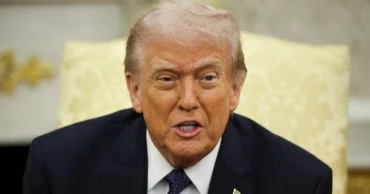
Trump demands Iran’s ‘unconditional surrender’
U.S. President Donald Trump on Friday appeared to rule out negotiations with Iran unless it agrees to “unconditional surrender,” as Israeli airstrikes pounded southern Lebanon and Iran launched retaliatory strikes against Israel and Gulf countries on the seventh day of the ongoing war.
The strikes in Lebanon were the heaviest since a 2024 ceasefire ended the last conflict between Israel and the Iran-backed Hezbollah, which fired rockets at Israel in the opening days of the latest hostilities. Over 95,000 people have fled Beirut’s suburbs and southern Lebanon following evacuation warnings.
The U.S. and Israel have targeted Iranian military capabilities, leadership, and nuclear infrastructure, with shifting war goals that at times included overthrowing Iran’s government or influencing leadership selection. Trump, in a social media post, said that after Iran’s surrender and the selection of a “great & acceptable” leader, the U.S. would help rebuild Iran’s economy.
The war has affected more than a dozen countries, spiking oil prices. Qatar’s Energy Minister Saad al-Kaabi warned of global economic fallout and predicted oil could reach $150 per barrel following disruption at Qatar’s largest LNG plant.
Trump previously urged Iranians to “take back your country” with U.S. immunity guarantees, and suggested involvement in selecting a new supreme leader to replace the late Ayatollah Ali Khamenei, dismissing Khamenei’s son, Mojtaba, as a “lightweight.” Iranian state TV reported that the country’s Assembly of Experts is now discussing convening to select a new leader, amid attacks on clerical infrastructure.
Israel said it launched a “broad-scale” strike on Tehran, targeting underground bunkers, while Iranian missile and drone attacks hit Israel, Kuwait, Qatar, Saudi Arabia, and Bahrain, with no immediate casualty reports. Six U.S. troops have died; total deaths include over 1,230 in Iran, more than 120 in Lebanon, and around a dozen in Israel.
The U.S. military said it struck an Iranian drone carrier, IRIS Shahid Bagheri, setting it ablaze. Earlier, a U.S. submarine sank an Iranian frigate off Sri Lanka, killing 87 crew members; 32 were rescued.
In Lebanon, Israel conducted at least 11 airstrikes around Beirut’s southern suburbs, prompting hospital evacuations. No immediate casualties were reported. Nawaf Salam condemned both Israel and Hezbollah, saying Lebanon did not choose this war. Meanwhile, Hezbollah called on fighters to “defend the nation” and escalate attacks.
The United Nations human rights chief Türk expressed extreme concern over civilian displacement, describing the situation as “blanket, massive displacement orders” by Israel.
The conflict continues to escalate across the Middle East, affecting global energy markets and regional security.
2 months ago