middle-east
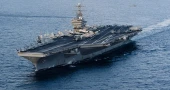
US says it shot down Iranian drone approaching aircraft carrier
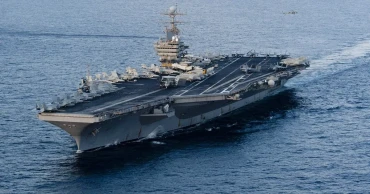
The United States military said on Tuesday that it shot down an Iranian drone after it “aggressively approached” a US aircraft carrier in the Arabian Sea.
US Central Command spokesperson Captain Tim Hawkins said an F-35C fighter jet launched from the USS Abraham Lincoln shot down the drone in self-defence to protect the carrier and its crew. The warship was operating about 500 miles from the Iranian coast at the time, and the drone’s intent was described as unclear.
No US personnel were injured and no equipment was damaged in the incident, Hawkins said.
The incident comes amid heightened tensions between Washington and Tehran as the US continues to strengthen its military presence in the region. President Donald Trump has warned of possible military action if Iran fails to negotiate restrictions on its nuclear programme.
Despite the incident, the White House said talks between the US and Iran remain scheduled for later this week. Press Secretary Karoline Leavitt said Trump remains committed to diplomacy but has “a range of options on the table,” including military force.
Iran has not commented on the drone incident. Earlier, Iranian President Masoud Pezeshkian said Tehran was open to negotiations if a suitable environment exists.
In a separate development, the US military said Iranian Revolutionary Guard forces harassed a US-flagged merchant vessel in the Strait of Hormuz, though the situation was later de-escalated.
With inputs from BBC
4 months ago

Son of late dictator Gadhafi is killed in Libya
Seif al-Islam Gadhafi, the son and former heir apparent of Libya’s late dictator Moammar Gadhafi, has been killed in northern Libya, Libyan officials confirmed Tuesday.
The 53-year-old was shot dead in the town of Zintan, about 136 kilometers (85 miles) southwest of the capital, Tripoli, the country’s chief prosecutor’s office said. An initial investigation confirmed the shooting but provided no further details on the circumstances.
Seif al-Islam’s lawyer, Khaled al-Zaidi, confirmed his death on Facebook without elaborating, and Abdullah Othman Abdurrahim, who represented him in a U.N.-brokered political dialogue to resolve Libya’s ongoing conflict, also announced it online.
Mexico agrees to ensure steady annual water deliveries to US
In a statement, Seif al-Islam’s political team claimed that “four masked men” stormed his house and killed him in what they described as a “cowardly and treacherous assassination.” The statement said he fought the attackers, who disabled CCTV cameras in an apparent attempt to hide evidence.
Born in Tripoli in June 1972, Seif al-Islam was the second son of Moammar Gadhafi and studied for a Ph.D. at the London School of Economics. He was considered the reformist face of the Gadhafi regime.
Moammar Gadhafi was overthrown and killed in a NATO-backed uprising in 2011, which plunged Libya into a prolonged civil conflict. Seif al-Islam was captured by fighters in Zintan later that year while trying to flee to Niger and was released in June 2017 after receiving amnesty from one of Libya’s rival governments.
He had been sentenced to death in absentia in 2015 by a Libyan court for inciting violence and murdering protesters and was also wanted by the International Criminal Court for crimes against humanity linked to the 2011 uprising.
In November 2021, Seif al-Islam announced his bid for Libya’s presidential election, a move that drew strong opposition from anti-Gadhafi political factions. Although the High National Elections Committee disqualified him, the election was never held due to ongoing disputes among rival administrations and armed groups controlling the country.
4 months ago
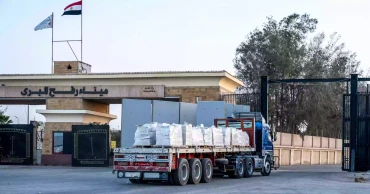
Gaza’s main Rafah crossing with Egypt reopens
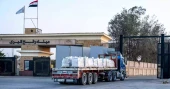
Palestinians have begun passing through the Rafah border crossing linking the Gaza Strip and Egypt following its reopening for passenger movement.
The crossing had been mostly shut since May 2024, after Israeli forces took control of the Palestinian side.
The long-awaited reopening forms a central element of the first phase of a ceasefire framework proposed by US President Donald Trump between Israel and Hamas, which took effect in October.
Under the arrangement, only a limited number of people, several dozen each day, will be permitted to cross in either direction. The passage of humanitarian assistance and commercial goods through the crossing remains prohibited.
About 20,000 Palestinians who are sick or wounded are awaiting permission to leave Gaza to receive medical treatment abroad.
According to Israeli media reports, only 50 patients will be allowed to exit the territory each day, accompanied by two relatives each. In addition, just 50 of the tens of thousands of Palestinians who left Gaza during the war will be permitted to return daily.
The World Health Organization (WHO) is expected to supervise the evacuation process. Patients will be transported by bus from areas under Hamas control, passing through zones controlled by the Israeli military before reaching the Rafah crossing, BBC News reported.
Read More: Israel to reopen Gaza–Egypt crossing after extended shutdown
Israeli Defence Minister Israel Katz warned that anyone crossing the Yellow Line, the boundary of Israeli-controlled territory under the ceasefire agreement, would be “met with fire”.
Under the arrangements, the Rafah crossing will be operated by European Union monitors alongside local Palestinian staff, while Israel will conduct security checks remotely. Israeli officials said a trial reopening of the crossing was successfully completed on Sunday.
A Palestinian official familiar with the trial phase told the BBC that around 30 Palestinian staff members had reached the Egyptian side of the crossing ahead of full operations.
The reopening follows provisions in US President Donald Trump’s 20-point Gaza peace plan, which states that the crossing will operate under mechanisms used during a previous ceasefire last January.
Before Israel seized control of Rafah in 2024, the crossing served as Gaza’s primary exit route and a key channel for humanitarian aid.
With inputs from BBC
4 months ago
Iran’s supreme leader says any US strike would ignite regional war
Iran’s Supreme Leader Ayatollah Ali Khamenei on Sunday warned that any military attack by the United States would spark a “regional war,” sharply escalating rhetoric amid rising tensions following Washington’s threats over Tehran’s violent crackdown on nationwide protests.
The warning, delivered as US aircraft carrier USS Abraham Lincoln and accompanying warships operate in the Arabian Sea, marked Khamenei’s most direct threat so far. The vessels were deployed by President Donald Trump after Iran’s security forces moved forcefully to suppress weeks of unrest across the country.
It remains uncertain whether Washington will resort to military action. Trump has repeatedly said Iran is interested in negotiations, while also raising concerns about Tehran’s nuclear programme as a key unresolved issue.
Addressing a crowd at his Tehran compound during events marking the anniversary of Iran’s 1979 Islamic Revolution, the 86-year-old leader accused the United States of seeking to dominate Iran’s natural resources.
“The Americans must know that if they start a war this time, it will be a regional war,” Khamenei said. He added that Iran did not seek conflict, but warned that any attack or harassment would be met with a severe response from the Iranian nation.
Trump, asked about the warning, told reporters that US naval forces were positioned nearby and expressed hope for a negotiated settlement. He said if no deal was reached, it would become clear whether Khamenei’s threat was credible.
Khamenei also hardened his stance on the protests, describing them as “sedition” akin to a coup attempt. While he had earlier acknowledged that some protesters were driven by economic grievances, he now accused demonstrators of targeting state institutions, security forces, banks and religious sites in an effort to destabilise the country.
Human Rights Activists New Agency, a US-based group that tracks developments inside Iran, said more than 49,500 people have been detained since the protests began in late December and estimated at least 6,713 deaths, mostly among demonstrators. The Associated Press has not been able to independently verify the figures, citing Iran’s restrictions on internet access.
Iranian authorities have put the death toll far lower, reporting 3,117 fatalities as of Jan 21, including civilians and security personnel, while labelling others “terrorists.” Past unrest has seen official figures widely questioned.
Meanwhile, Iran had planned live-fire military drills in the Strait of Hormuz, the strategic waterway through which about one-fifth of the world’s oil supply passes. The US military warned Tehran against threatening American forces or disrupting commercial shipping during the exercises.
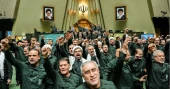
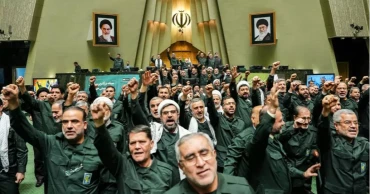
In a separate development, Iran’s parliament speaker Mohammad Bagher Qalibaf said Tehran now considers all European Union militaries to be terrorist organisations. The move came after the EU designated Iran’s Islamic Revolutionary Guard Corps as a terror group over its role in the crackdown.
Qalibaf, a former Guard commander, made the announcement as lawmakers wore Guard uniforms in solidarity. The designation is largely symbolic, mirroring a 2019 Iranian law used after the United States labelled the Guard a terrorist organisation.
Lawmakers later chanted anti-US and anti-Israel slogans in parliament.
Trump has outlined two red lines that could trigger US military action: the killing of peaceful protesters or mass executions of detainees. He has also renewed focus on Iran’s nuclear programme, which the US struck during a brief war with Iran last June.
Speaking over the weekend, Trump declined to say whether he had decided on a course of action, but said Iran was “seriously talking” to the United States about reaching a deal to prevent it from acquiring nuclear weapons.
4 months ago
Gaza’s Rafah crossing set to resume limited movement as ceasefire holds
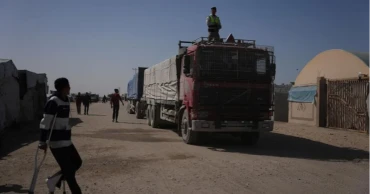
Palestinians in Gaza on Sunday watched with cautious hope as preparations got underway to reopen the Rafah border crossing with Egypt, the territory’s main gateway to the outside world, with Israel saying limited travel would resume from Monday under the ongoing ceasefire with Hamas.
Workers were seen readying the crossing, which has been largely shut since Israel seized control of it in May 2024. Many Gazans welcomed the move but voiced frustration over strict limits on the number of people allowed to cross.
“Opening the crossing is a good step, but setting a cap on how many people can pass through is a real problem,” said Ghalia Abu Mustafa from Khan Younis. Others stressed the urgent need for medical travel. Suhaila Al-Astal, displaced from Rafah, said her sick daughter required treatment abroad and called for the crossing to be opened permanently and in both directions.
Israel said the crossing had been opened on a trial basis and that Gaza residents would be allowed to begin crossing from Monday, though only in small numbers initially. Prime Minister Benjamin Netanyahu has said Israel will allow 50 medical patients to leave Gaza each day. According to an official familiar with the talks, each patient will be permitted to travel with two relatives, while up to 50 Palestinians who left Gaza during the war will be allowed to return daily.
Zaher al-Wahidi, head of documentation at Gaza’s Health Ministry, said the ministry had not yet been officially informed about the start of medical evacuations. Around 20,000 Palestinians in need of medical care are hoping to leave Gaza via Rafah, while thousands more outside the enclave are seeking to return.
Under the new arrangement, Israel and Egypt will vet those entering and leaving through the crossing, which will be overseen by European Union border monitors. Israeli officials say the number of travelers could increase gradually if the system functions smoothly.
The announcement came a day after Israeli airstrikes killed at least 30 Palestinians, including several children, according to hospital officials, marking one of the deadliest days since the ceasefire began on Oct. 10. Israel accused Hamas of violating the truce.
Nicolay Mladenov, head of US President Donald Trump’s newly established Gaza peace board, urged all sides to exercise restraint and said efforts were under way with a newly selected Palestinian committee to prevent further incidents.
Meanwhile, Israel’s Diaspora Ministry said it was moving to end the operations of Doctors Without Borders in Gaza by Feb. 28. Israel had suspended the medical charity’s activities in December after it declined to comply with new registration rules requiring aid groups to submit lists of local staff, arguing the measures could put Palestinian employees at risk.
Doctors Without Borders warned that the decision would have a devastating impact on health services in Gaza, where it supports six hospitals, runs two field hospitals, eight primary health centers and clinics, and operates two of the enclave’s five stabilization centers for severely malnourished children. Israel has suspended more than two dozen humanitarian organizations under the new rules, saying they are needed to prevent militant infiltration, while aid groups say the restrictions harm civilians in desperate need.
Palestinian security officers crossed through the Egyptian side of Rafah on Sunday to join the EU mission supervising the crossing, according to an Egyptian official. Ambulances were also seen passing through the Egyptian gate.
Before the war, Rafah was Gaza’s primary crossing for people traveling in and out of the territory. Israel says its takeover of the crossing last year was aimed at stopping weapons smuggling by Hamas. The crossing was briefly opened for medical evacuations during a temporary ceasefire in early 2025 but remained closed afterward until recent developments, including the recovery of the remains of the last hostage in Gaza.
Under the ceasefire terms, Israeli forces continue to control the area between the Rafah crossing and densely populated parts of Gaza. Egypt has repeatedly said the crossing must operate in both directions, amid concerns it could otherwise be used to force Palestinians out of the enclave.
The ceasefire paused more than two years of fighting that began with the Hamas-led attack on southern Israel on Oct. 7, 2023, which killed about 1,200 people and led to the capture of 251 hostages. Israel’s subsequent offensive has killed 71,795 Palestinians, according to Gaza’s Health Ministry, including 523 since the ceasefire began.
The first phase of the truce includes hostage and prisoner exchanges, increased humanitarian aid and a partial Israeli troop withdrawal. A more complex second phase envisions new governance arrangements for Gaza, the deployment of an international security force, the disarmament of Hamas and steps toward reconstruction.
4 months ago
82 metro stations, 300 parking lots in Tehran designated as shelters amid US tensions
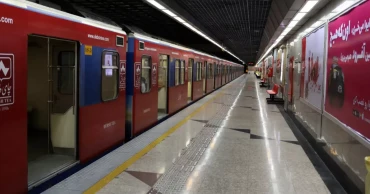
As tensions rise between Iran and the United States, Tehran authorities have moved to strengthen civil defense measures, designating 82 metro stations and over 300 underground spaces as emergency shelters.
Ali Nasiri, head of the Tehran Crisis Management Organization, told media on Saturday that the Passive Defense Committee of Tehran Municipality surveyed existing shelters and identified around 518 older shelters in schools, though only 20% are currently restorable, reports reports Anadolu Ajansi.
The 82 metro stations are being equipped with essential facilities, including restrooms, water, and food supplies. Shelter signs and labels are expected to be completed soon. Additional underground locations, such as parking lots and public complexes, have also been earmarked as emergency shelters, which once operational could accommodate around 2.5 million residents. Tehran’s population ranges from 10–12 million, rising to 15–16 million including the greater metropolitan area.
Read More: Iran dismisses Trump’s threats, vows swift response to any US attack
During the June 2025 confrontation between Iran and Israel, residents had previously taken refuge in metro stations. Since that 12-day conflict, officials have upgraded shelters to enhance safety in the capital.
In recent weeks, fears of renewed conflict have grown after U.S. President Donald Trump announced a naval fleet en route to Iran. The Iranian government has warned it will respond forcefully to any military attack, prompting authorities to accelerate preparations for potential emergencies.
4 months ago
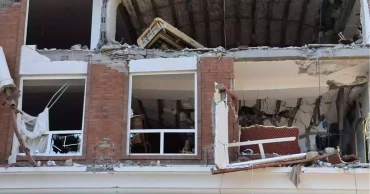
Blast in Iran port city kills 1, wounds 14 before Strait of Hormuz naval drill
An explosion ripped through an apartment building in Iran’s southern port city of Bandar Abbas on Saturday, killing a four-year-old girl and injuring at least 14 others, just a day before Iran is set to hold a naval drill in the strategically vital Strait of Hormuz.
Iranian state television quoted a local fire official as saying the blast was caused by a gas leak. Footage aired by local media showed rescuers carrying out an injured man wearing a green security force uniform on a stretcher, though officials did not confirm his identity. Iran’s paramilitary Revolutionary Guard denied reports that any of its naval commanders were wounded.
Bandar Abbas lies along the Strait of Hormuz, the narrow waterway linking the Persian Gulf to the Gulf of Oman, through which about one-fifth of the world’s traded oil passes. The incident comes amid heightened tensions, with the US military warning Iran against any actions that could endanger American warships or commercial vessels during the planned drill.
In a separate incident the same day, another explosion, also blamed on a gas leak, killed five people in the southwestern city of Ahvaz, according to Iranian media.
Regional tensions remain high following threats by US President Donald Trump to consider military action against Iran over its violent crackdown on protests and the possible mass execution of detainees. Tehran has warned it could respond by targeting US interests and allies in the region.
Iranian security official Ali Larijani said on social media that “structural arrangements for negotiations are progressing,” though no formal talks with Washington have been announced. Supreme Leader Ayatollah Ali Khamenei has repeatedly ruled out negotiations with the US.
Meanwhile, Egyptian President Abdel-Fattah el-Sissi called for de-escalation during a phone call with Iranian President Masoud Pezeshkian, saying Cairo is working to bring Tehran and Washington back to the negotiating table over Iran’s nuclear program. Qatar also said its prime minister visited Tehran to discuss efforts to reduce regional tensions.
4 months ago
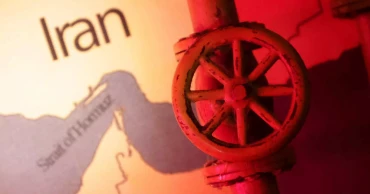
Tensions rise in Strait of Hormuz as Iran plans military drill
The Strait of Hormuz, a strategic chokepoint at the mouth of the Persian Gulf, has once again become a flashpoint as Iran plans a military drill that could intersect a key international shipping lane.
Iran has warned vessels that a live-fire exercise will take place Sunday and Monday in the strait, through which about one-fifth of the world’s oil supply passes. The U.S. Central Command issued a warning, cautioning Tehran that “unsafe and unprofessional behavior” near American forces, regional partners, or commercial ships could raise the risk of collisions, escalation, and destabilization.
The strait, just 33 kilometers (21 miles) at its narrowest point, links the Persian Gulf to the Gulf of Oman. While Iran and Oman control portions of its waters, it is considered an international waterway. Historically, it has been vital for trade and today carries the majority of Persian Gulf oil to Asian markets. Although pipelines in Saudi Arabia and the UAE can bypass it, most volumes have no alternative route. Past threats to the strait have spiked global energy prices, including during Israel’s 12-day war against Iran in June.
Iran’s notice to mariners indicated the drill may enter the Traffic Separation Scheme, a two-lane system guiding ships in and out of the Gulf. It is expected to involve the paramilitary Revolutionary Guard, whose small fast-attack vessels frequently confront U.S. Navy ships.
Tensions are heightened by U.S. concerns over Iran’s violent crackdown on nationwide protests and its nuclear program. President Donald Trump has threatened military action if Iran crosses red lines, including killing protesters or executing detainees. The USS Abraham Lincoln and supporting vessels are in the Arabian Sea, ready to respond if ordered. Iran has warned of possible retaliatory strikes against U.S. interests and Israel.
The situation underscores the Strait of Hormuz’s continuing strategic importance and the potential risks to global energy supplies as both sides maintain a show of force in the region.
4 months ago
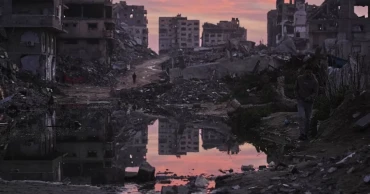
Israeli strikes kill 12 in Gaza as ceasefire advances
Israeli airstrikes killed at least 12 Palestinians, including women and children, across the Gaza Strip on Saturday, hospital officials said, marking one of the deadliest days since an October ceasefire aimed at halting the fighting.
The strikes hit sites in both northern and southern Gaza, including an apartment building in Gaza City and a tent camp sheltering displaced people in Khan Younis, according to hospitals that received the bodies. Among the victims were two women and six children from two separate families.
The latest violence came a day before the Rafah border crossing with Egypt is due to reopen in Gaza’s southernmost city. All border crossings into the territory have remained closed since the war began.
The limited reopening of Rafah is seen as the first significant move in the second phase of the US-brokered ceasefire now taking shape. Key and contentious issues in this phase include reopening borders, demilitarising the Gaza Strip after nearly two decades of Hamas rule and setting up a new governing authority to oversee reconstruction.
For Palestinians, Rafah is considered a vital lifeline, particularly for tens of thousands of patients seeking medical treatment outside Gaza, where most health facilities have been damaged or destroyed.
Despite the ceasefire progress, Saturday’s strikes underscored that fatalities continue to mount. Shifa Hospital said an early morning strike in Gaza City killed three children along with their aunt and grandmother, while the children’s mother survived.
In the south, Nasser Hospital reported that a strike on a tent camp triggered a fire, killing seven people, including a father, his three children and three grandchildren.
Gaza’s Health Ministry said more than 500 Palestinians have been killed by Israeli fire since the ceasefire took effect on Oct 10. The ministry, which operates under the Hamas-led administration, keeps detailed casualty records that are generally regarded as reliable by UN agencies and independent experts.
The Israeli military did not immediately comment on the reported strikes.
4 months ago
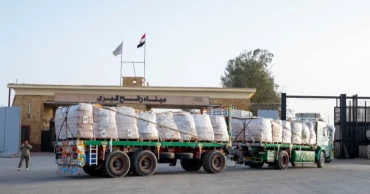
Israel to reopen Gaza-Egypt crossing after nearly two years
Israel will reopen Gaza’s Rafah border crossing with Egypt on Sunday, allowing limited movement of people after almost two years of closure.
The Israeli military unit COGAT, which coordinates aid to Gaza, said on Friday that only people will be allowed to pass through the crossing.
The Rafah crossing, Gaza’s main link to the outside world, has been mostly closed since May 2024. Israel and Egypt will screen individuals for entry and exit, with European Union border patrol agents overseeing the process.
Palestinians who left Gaza during the recent conflict will be allowed to return if they get Israeli security clearance.
Israel had previously resisted reopening the crossing, but the return of the last hostage from Gaza earlier this week cleared the way for the move, seen as a key step in U.S. President Donald Trump’s Gaza ceasefire plan.
4 months ago