Tech-News

Anthropic agrees to $1.5 billion settlement with authors over pirated books used in AI training
Artificial intelligence startup Anthropic has agreed to pay $1.5 billion to settle a lawsuit brought by book authors who accused the company of using pirated copies of their works to train its chatbot, Claude.
If approved by a San Francisco federal judge on Monday, the deal would mark a landmark moment in ongoing copyright disputes between AI developers and creative professionals, including writers, artists and publishers.
Under the settlement, Anthropic will pay authors and publishers about $3,000 per book for an estimated 500,000 works. It is believed to be the largest copyright payout ever secured.
“This is the first of its kind in the AI era,” said Justin Nelson, a lawyer for the authors.
The case was originally filed last year by thriller writer Andrea Bartz and nonfiction authors Charles Graeber and Kirk Wallace Johnson, later expanding to cover a wider class of authors and publishers.
Court records show Anthropic downloaded more than 7 million books from pirate sites including Books3, Library Genesis and Pirate Library Mirror. A federal judge previously ruled that while training AI on copyrighted books may qualify as “fair use,” the company illegally obtained the material.
Nepal blocks Facebook, X, YouTube Over failure to register with govt
As part of the settlement, Anthropic has agreed to destroy the pirated book files.
The Authors Guild welcomed the outcome, calling it a “strong message to the AI industry” about the risks of exploiting creative works without permission.
The agreement could influence ongoing lawsuits against OpenAI, Microsoft, Meta, and other AI firms.
Anthropic, founded in 2021 by former OpenAI executives, is valued at $183 billion and expects $5 billion in sales this year, though it has yet to turn a profit.
Source: Agency
8 months ago

Nepal blocks Facebook, X, YouTube Over failure to register with govt
Nepal's government said Thursday it is blocking most social media platforms including Facebook, X and YouTube because the companies failed to comply with regulations that required them to register with the government.
Nepal's Minister for Communication and Information Prithvi Subba Gurung said about two dozen social network platforms that are widely used in Nepal were repeatedly given notices to come forward and register their companies officially in the country. The platforms would be blocked immediately, he said.
TikTok, Viber and three other social media platforms would be allowed to operate in Nepal because they have registered with the government.
Nepal government have been asking the companies to appoint a liaison office or point in the country. It has brought a bill in parliament that aims to ensure that social platforms are properly managed, responsible and accountable.
The bill, which has not yet been fully debated in parliament, has been widely criticized as a tool for censorship and punishing opponents who voice their protests online. Rights groups have called it an attempt by the government to curb freedom of expression and violate citizens’ fundamental rights.
Officials have said it was necessary to bring laws to monitor the social media and ensure that both the users and operators were responsible and accountable of what they share and what is being published or said on these platforms.
9 months ago

Trump to dine with top tech leaders at White House — Musk left off guest list
President Donald Trump will host a dinner with some of the world’s most influential tech executives at the White House on Thursday evening, though Elon Musk will not be among them.
According to the White House, attendees include Microsoft cofounder Bill Gates, Apple CEO Tim Cook, Meta’s Mark Zuckerberg, Google founder Sergey Brin, CEO Sundar Pichai, Microsoft CEO Satya Nadella, OpenAI’s Sam Altman and Greg Brockman, Oracle’s Safra Catz, and several others from the AI and tech sectors.
Musk, once close to Trump and tapped to lead the Department of Government Efficiency, split with the president earlier this year. The break reportedly stemmed from Trump’s revocation of Musk associate Jared Isaacman’s NASA nomination.
Court rules Trump’s use of emergency powers for tariffs was Illegal
The dinner will be held on Trump’s newly remodeled Rose Garden patio, which now resembles the outdoor setup at his Mar-a-Lago resort.
White House spokesman Davis Ingle described it as “the hottest place to be in Washington, or perhaps the world.”
The gathering follows a meeting of the administration’s new Artificial Intelligence Education task force, chaired by First Lady Melania Trump, aimed at promoting AI learning for American youth
Source: Agency
9 months ago

Social security official resigns after blowing the whistle on data mishandling by DOGE
A senior Social Security Administration (SSA) official has stepped down after filing a whistleblower complaint accusing the Department of Government Efficiency (DOGE) of mismanaging highly sensitive personal data belonging to millions of Americans.
Charles Borges, the SSA’s Chief Data Officer, alleged that DOGE officials exposed the Social Security data of over 300 million Americans by uploading it to a cloud platform that lacked proper oversight. He submitted his complaint to the Office of Special Counsel on Tuesday.
In his resignation letter addressed to SSA Commissioner Frank Bisignano, Borges said that, since filing the complaint, his ability to carry out his responsibilities in a “legal and ethical” manner has been compromised. He cited emotional, physical, and mental distress, along with a hostile work environment marked by isolation, retaliation, and fear.
“After raising internal concerns and alerting regulators about significant risks to our citizens' most sensitive information, I have faced exclusion and internal conflict, making my work environment unbearable,” he wrote.
The Project Government Accountability Office, which represents Borges in the whistleblower case, published his resignation letter online Friday. Borges did not speak to the media, but his lawyer Andrea Meza stated that he resigned because he could no longer, in good conscience, remain at the SSA. She added that he plans to continue cooperating with oversight authorities.
In his complaint, Borges warned that the data compromised by DOGE could include medical records, income details, banking information, family relationships, and other personal identifiers.He stressed the potential consequences:“If bad actors were to access this cloud system, Americans could face widespread identity theft, loss of crucial health or food benefits, and the government might be forced to reissue Social Security numbers to everyone — a move that would be extremely costly.”
Borges had held the Chief Data Officer role since January.
The Social Security Administration did not comment on his resignation or the accusations outlined in his letter.
Under former President Donald Trump, DOGE was granted expanded access to vast amounts of personal data as part of its mission to root out waste, fraud, and abuse. The department has been criticized for overreach, and earlier this year, labor and retiree organizations sued the SSA for giving DOGE access to private data. A divided appeals court recently ruled in favor of DOGE, allowing continued access.
9 months ago

AI eruption simulation of Mount Fuji released to prepare Tokyo residents
Japanese officials have unveiled AI-generated simulations showing how a violent eruption of Mount Fuji could impact Tokyo, as part of Volcanic Disaster Preparedness Day activities.
The videos, released this week, aim to alert the 37 million residents of the greater Tokyo area to the risks of an eruption. Though the iconic peak has not erupted since 1707, experts warn it remains an active volcano.
One video depicts central Tokyo, located about 100 kilometers away, blanketed in volcanic ash within hours, disrupting transportation, food and power supplies, and causing respiratory problems. The clip ends with a reminder for families to stockpile food, water and first-aid kits, urging: “We need to arm ourselves with facts and prepare for disaster in our daily lives.”
Officials stressed there are no current signs of eruption. “The simulation is designed to equip residents with accurate knowledge and preparedness measures,” the Tokyo Metropolitan Government said.
Hongkong Land unveils city’s first AI-powered facility management platform
Still, the imagery unsettled some. “Are there really signs of eruption? Why are we suddenly hearing that even Tokyo could see 10 centimeters of ash?” asked Shinichiro Kariya, a hospital worker. Others, like Mishima City resident Hiromi Ooki, said the warning was useful: “Nature’s power is so great that maybe it’s better if it scares us a little.”
Experts emphasized that the timing has no special significance, but Japan remains highly disaster-prone. With 111 active volcanoes, the country continues its tradition of detailed preparation for earthquakes, typhoons, floods and eruptions.
Source: Agency
9 months ago

Nvidia’s AI chip sales rise again, but bubble concerns linger
Nvidia reported another surge in AI chip sales in its latest quarter, but the results fell just short of sky-high expectations, renewing concerns that the artificial intelligence boom may be cooling.
The Silicon Valley chipmaker — the first publicly traded company to hit a $4 trillion market value — has become a key gauge of the two-year-old AI frenzy that has driven stock markets to record highs. Yet recent reports and cautionary remarks from industry leaders have raised fears the sector’s growth may not be sustainable.
For the May–July quarter, Nvidia’s data center division, which houses its AI processors, generated revenue of $41.1 billion, up 56% from a year earlier but slightly below Wall Street forecasts of $41.3 billion, according to FactSet. Overall revenue jumped 56% to $46.7 billion, while net profit reached $26.4 billion, or $1.08 per share — both topping analyst estimates.
Looking ahead, Nvidia projected revenue of $54 billion for the August–October period, signaling continued confidence in AI demand. CEO Jensen Huang told analysts the world is “at the beginning of the buildout,” predicting $3 trillion to $4 trillion in AI investment by the decade’s end.
US to receive 15% share of Nvidia and AMD chip sales to China under rare new deal
Still, Nvidia’s stock slipped 3% in after-hours trading, a sign investors were underwhelmed given the company’s meteoric rise — more than tenfold in just over two years. Analyst Thomas Monteiro of Investing.com noted the stock “was priced for perfection,” making any letdown hard to avoid.
Adding to the pressure, Nvidia has faced sales restrictions in China after President Donald Trump temporarily banned its AI chip exports, a move estimated to have cost $8 billion last quarter. Earlier this month, Trump lifted the ban in exchange for a 15% cut of Nvidia’s China sales — a deal that could restore $2 billion to $5 billion in revenue, according to CFO Colette Kress.
While AI has been a powerful driver of tech and stock market gains — with the S&P 500 up 69% since late 2022 — some analysts warn of echoes of the late-1990s dot-com bubble, which ended in a painful Silicon Valley crash.
Source: Agency
9 months ago

HID launches new FIDO-enabled credentials with enterprise-scale passkey management
HID, a global leader in trusted identity and access control solutions, has introduced a new line of FIDO-certified credentials alongside its Enterprise Passkey Management (EPM) platform, aimed at helping organizations deploy and manage passkeys at scale.
The announcement comes as new research from the FIDO Alliance shows 87% of enterprises are adopting passkeys, though nearly half of those yet to implement them cite complexity and cost as key barriers. HID says its new offering addresses these challenges by simplifying passwordless authentication.
The expanded portfolio includes the Seos® FIDO-Enabled Card, which supports secure access to both physical facilities and business applications, and the MIFARE DESFire EV3 FIDO-Enabled Card, integrating DESFire EV3 smart card technology with FIDO 2.1 authentication.
According to HID, the new subscription-based EPM solution gives IT and identity access management teams centralized visibility, full lifecycle management, and the ability to remotely provision and revoke credentials, reducing IT support needs while supporting compliance.
Read: UL Solutions launches first commercial and service robot testing lab in South Korea
“As the line between physical and logical access continues to fade, organizations are increasingly seeking trusted partners to help streamline credential management across both domains,” said Jerry Wang, Head of Physical Access Control Solutions, North APAC at HID. “We are well-positioned to help organizations make that transition securely and efficiently with HID’s one-card solution.”
HID said the new FIDO-enabled credentials provide phishing-resistant, passwordless authentication with enterprise-grade scalability, making adoption more accessible for organizations of all sizes.
Source: Agency
9 months ago
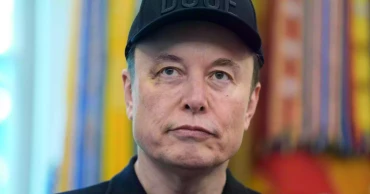
Elon Musk files antitrust case, accuses Apple and OpenAI of blocking competition
Elon Musk has filed an antitrust lawsuit against Apple and OpenAI, accusing them of colluding to block competition in artificial intelligence.
The 61-page complaint, filed in Texas federal court by Musk’s companies xAI and X Corp., follows his earlier claims that Apple unfairly boosted OpenAI’s ChatGPT in iPhone app store rankings while pushing down rivals like his own Grok chatbot. Musk is seeking damages and a court order to stop what he calls illegal tactics.
The lawsuit describes Apple and OpenAI as “two monopolists” working together to protect their dominance during a major AI revolution. It claims Apple sees AI as a threat to the iPhone’s success and struck a deal with OpenAI to give ChatGPT an unfair advantage.
Musk has previously accused OpenAI of betraying its nonprofit mission and prioritizing profit over safety. OpenAI dismissed the new lawsuit as part of Musk’s “ongoing pattern of harassment.” Apple has not yet commented.
At the center of the case is Apple’s decision to use ChatGPT as the iPhone’s AI-powered “answer engine,” which Musk says gives OpenAI exclusive access to valuable user data while sidelining competitors like Grok, DeekSeek, and Perplexity.
The filing also notes that former Apple designer Jony Ive has joined OpenAI to develop a new AI-powered device that analysts believe could one day rival the iPhone.
9 months ago

Dynamic Map Platform expands North American HD map coverage to 950,000 miles
Dynamic Map Platform (DMP), a global leader in high-definition mapping and software for the automotive industry, has announced that it has extended its North American coverage to more than 950,000 miles (1.5 million km) across the top four road classes. Each mile has been mapped with features designed to support safe and reliable automated driving.
Since 2023, DMP’s Mobile Mapping Systems have added 400,000 miles of secondary and other roads in the US and Canada, using precision LiDAR and imaging. These secondary roads, often maintained by state and local governments, play a vital role in linking small towns and cities to the major highway network.
From this data, the company extracted key road elements such as lane dividers, crossings, and roadside objects, and augmented them with virtual features including turn trajectories, virtual edges, and light-to-lane assignments. Such detailed LiDAR mapping, DMP says, is essential to enable confident autonomous driving on busy, non-divided roads.
“Our exceptional road coverage and accuracy provide a critical foundation for innovation in the automotive industry as AI evolves,” said Shuichi Yoshimura, CEO and President of DMP. “We are progressing on our mission to model the Earth.”
Read more: W Energy returns AI Energy forecasting to Australia with simble partnership
Chris Thibodeau, CEO and President of DMP North America, added that the expansion demonstrates the company’s commitment to offering precise maps to enhance user experience. “The ability to safely operate hands-free driving on non-divided roads essentially unlocks the vast majority of roads in any country,” he said.
DMP also noted that 99% of the 28,000 car dealerships in North America are within one mile of a DMP-mapped road, ensuring easier test drives and broader adoption of advanced driver assistance systems.
About DMPDynamic Map Platform is a leading geospatial measurement and mapping company, providing HD maps and software for advanced driver assistance systems and autonomous vehicles, with the goal of building a high-precision digital infrastructure worldwide.
Source: Agency
9 months ago

Kim Jong Un oversees test of new antiair missiles amid US-South Korea drills
North Korean leader Kim Jong Un personally supervised the test-firing of two newly developed antiair missiles, state media reported Sunday, in a show of advancing military capabilities as South Korea and the United States conduct joint exercises.
According to the Korean Central News Agency (KCNA), Saturday’s test demonstrated the missiles’ effectiveness against aerial threats, including drones and cruise missiles. Kim reportedly gave defense scientists unspecified “important” assignments ahead of a major political conference set for early next year. The report did not disclose details about the types of missiles tested or the location of the launch, nor did it cite any direct comments from Kim toward Washington or Seoul.
The test coincided with South Korean President Lee Jae Myung’s visit to Tokyo for talks with Japanese Prime Minister Shigeru Ishiba. The two leaders pledged closer bilateral ties and stronger trilateral cooperation with the United States to counter shared challenges, particularly North Korea’s nuclear ambitions. Lee is scheduled to travel to Washington on Sunday for a summit with U.S. President Donald Trump.
Despite repeated calls from Seoul and Washington to resume nuclear talks, Pyongyang has focused on deepening its partnership with Russia. Since Moscow’s invasion of Ukraine, Kim has sent thousands of troops and large consignments of weapons — including artillery and ballistic missiles — to bolster President Vladimir Putin’s war effort.
North Korea slams South for ‘serious provocation’ after border warning shots
South Korean assessments suggest around 15,000 North Korean troops have been deployed to Russia since last fall, with some 600 killed in combat. Pyongyang has also agreed to dispatch construction workers and deminers to Russia’s Kursk region, a move South Korean intelligence believes could take place soon.
Last week, Kim presided over a ceremony in Pyongyang honoring soldiers returning from Ukraine, awarding state “hero” titles to survivors and laying medals beside 101 portraits of the dead, hailing them as “great men, great heroes and great patriots.”
Source: Agency
9 months ago