Tech-News
Microsoft will invest $2.2 billion in cloud and AI services in Malaysia
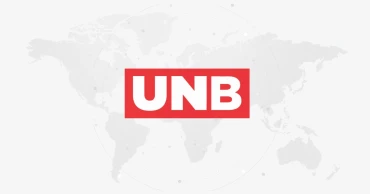
Microsoft is investing $2.2 billion over the next four years in Malaysia's new cloud and artificial intelligence infrastructure as well as partnering with the government to establish a national AI center, its CEO Satya Nadella said Thursday.
It marks Microsoft's single largest investment in Malaysia, as the tech giant seeks to bolster support for AI development in the region and worldwide.
"We are committed to supporting Malaysia's AI transformation and ensure it benefits all Malaysians," he said. "Our investments in digital infrastructure and skilling will help Malaysian businesses, communities and developers apply the latest technology to drive inclusive economic growth and innovation across the country."
Nadella on Tuesday also announced a $1.7 billion investment in cloud and AI services in Indonesia during his visit there as part of his Southeast Asia tour. On Wednesday, he said Microsoft will build its first regional data center in Thailand.
In April, the tech giant similarly unveiled a $2.9 billion investment in Japan and $1.5 billion in G42, an AI firm in Abu Dhabi.
Microsoft also pledged to provide AI training for 2.5 million people in Malaysia, Indonesia, the Philippines, Thailand and Vietnam by 2025.
Nadella earlier met Prime Minister Anwar Ibrahim, who said the investment will be the key support pillar for the government's goal to enhance AI capacity in Malaysia.
The new investment will include AI training for another 300,000 people, the establishment of a national AI center of excellence, enhancing the nation's cybersecurity capabilities and supporting the growth of Malaysia's developer community, Anwar said on Facebook.
Microsoft runs one of the world's largest cloud computing operations and has taken a leap into artificial intelligence through its partnership with OpenAI, developers of ChatGPT.
Since then, Microsoft has integrated an AI assistant into its Microsoft Edge browser, named Copilot, helping lift its profits by 20% in the first quarter.
Microsoft sees Southeast Asia, with its population of over 600 million people, as a growing market and potential location for more AI product development. A study held by global consulting firm Kearney said AI could contribute nearly $1 trillion to Southeast Asia's GDP by 2030. Indonesia is expected to capture $366 billion of the total and Malaysia $115 billion.
Microsoft said in a statement that the investment in Malaysia will build on its 2021 program to support inclusive economic growth. It said the proposed national AI center will drive AI adoption across key industries and public sector, while ensuring AI governance and regulatory compliance.
"Together with Microsoft, we look forward to creating more opportunities for our (small and medium-sized enterprises) and better paying jobs for our people as we ride the AI revolution to fast-track Malaysia's digitally empowered growth journey," Trade Minister Zafrul Aziz said in the statement.
2 years ago
WEF in Riyadh: Salman F Rahman bats for knowledge transfer, sharing in advanced tech
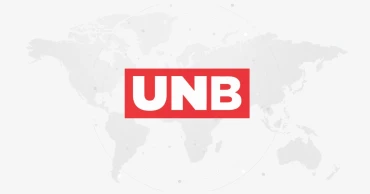
Prime Minister's Private Industry and Investment Adviser Salman F Rahman on Tuesday laid emphasis on worldwide sharing of technological capabilities to ensure benefits for the entire world.
“Artificial Intelligence (AI) technology may pose a threat to development by exacerbating the gap between the developed and underdeveloped nations. Excessive use of technology [AI robots replacing human jobs in industries] can potentially pose threats to human beings and development in the future,” he said.
Salman said this while speaking at a special meeting of the World Economic Forum in Saudi Arabia's Riyadh, that has emerged as a mid-year, Middle Eastern counterpart to the WEF's annual meet in Davos, Switzerland held in January.
The unprecedented advancements in technology are exacerbating the gap between the developed and underdeveloped nations, he said, adding that investors are also directing investments towards opportunities with high profit potential.
On Bangladesh, Salman said the country was overcoming its economic crisis and turning around.
Emphasising Bangladesh's achievements across diverse sectors, Salman said the country's development persisted even amidst the Covid-19 pandemic.
"However, the economic repercussions of the Russia-Ukraine conflict have posed challenges for the country, including declining forex reserves and the appreciation of dollar against taka," he added.
Despite Bangladesh's non-involvement in the conflict, it bears the brunt of the consequences, he said.
At the meeting world leaders advocated for equitable distribution of technology worldwide, extending beyond solely developed nations.
They also discussed global cooperation, economic growth, and energy policies.
2 years ago
Microsoft will invest $1.7 billion in AI and cloud infrastructure in Indonesia
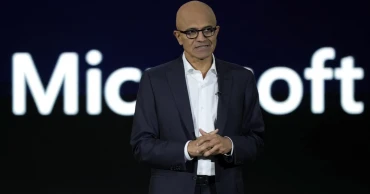
Microsoft will invest $1.7 billion over the next four years in new cloud and artificial intelligence infrastructure in Indonesia — the single largest investment in Microsoft’s 29-year history in the country — Microsoft CEO Satya Nadella said Tuesday.
Microsoft runs one of the world’s largest cloud computing operations and has taken a significant step into artificial intelligence by incorporating an AI chatbot into its search engine, Bing. Its earnings report Thursday said profit rose 20% for the January-March quarter as it tries to position itself as a leader in applying artificial intelligence technology to make workplaces more productive.
“This new generation of AI is reshaping how people live and work everywhere, including in Indonesia,” said Nadella, in Jakarta on the first stop of a tour of Southeast Asia.
“The investments we are announcing today — spanning digital infrastructure, skilling, and support for developers — will help Indonesia thrive in this new era,” he said.
Microsoft sees Southeast Asia as a growing market and potential location for more AI product development. The rise of AI in the region is expected to significantly impact its economic landscape. A study held by Kearney, a global consulting firm, said that AI could contribute nearly $1 trillion to Southeast Asia’s GDP by 2030, of which Indonesia is expected to capture $366 billion.
The investment announced Tuesday will include AI training for 840,000 people, as well as support for Indonesia’s growing community of tech developers.
Indonesia is home to the third-largest developer community in the Asia-Pacific region after India and China. More than 3.1 million developers in Indonesia use GitHub, a Microsoft-owned platform for software development, collaboration, and innovation. It is projected to be one of the top five developer communities on GitHub globally by 2026.
Apple CEO Tim Cook met Widodo on April 17 and said the company would “look at” manufacturing in Indonesia.
Indonesia, under President Joko Widodo’s administration, has emphasized development of digital technology and information sectors, aiming to achieve the government’s Golden Indonesia 2045 Vision, which projects Indonesia becoming one of the world’s top five economies with GDP of up to $9 trillion, exactly a century after it won independence from Dutch colonizers.
Nadella met Widodo on Tuesday in the Presidential Palace. During the meeting, Widodo proposed building an AI research center in Indonesia, and a Microsoft data center based in Bali or Nusantara, the country's new capital city on Borneo island, according to Indonesia’s Minister of Communication and Information Technology, Budi Arie Setiadi.
The CEO’s regional visit began in Indonesia and will be followed by Thailand and Malaysia over the next two days.
2 years ago
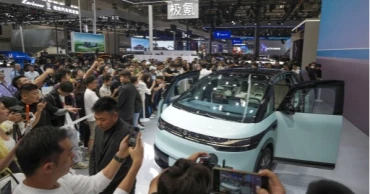
At China’s largest auto show, shift to digital and new-energy vehicles grab spotlight
Global automakers and EV startups unveiled new models and concept cars at China’s largest auto show on Thursday, with a focus on the nation’s transformation into a major market and production base for digitally connected, new-energy vehicles.
Toyota and Nissan both announced tie-ups with major Chinese technology companies as they strive to meet customer demand for AI-enabled online connectivity in cars, from social media apps to autonomous driving features.
Electric vehicles accounted for about a quarter of all auto sales in China last year. Hybrids, which have trailed EVs, are expected to be a growing segment going forward.
China’s largest EV maker, BYD, showed off two “dual-mode” plug-in cars that can run either solely on electricity or as hybrids. The other is a hybrid off-road SUV from its luxury Yangwang brand in the 1 million yuan-plus ($140,000) range.
“China’s EVs, represented by (BYD’s) Qin and Han series, have successfully realized the large-scale replacement of traditional fuel cars, and this trend is irreversible,” said Lu Tian, the head of sales for BYD’s Dynasty models. The cars are named after former imperial dynasties.
An executive from Chery, a more traditional Chinese maker, offered a more moderate perspective. Li Xueyong, a deputy general manager, said they envision a future of 40% fuel vehicles, 30% hybrids and 30% electric. The company plans to develop both fuel-powered and new-energy cars.
BYD has been expanding rapidly into overseas markets, launching its low-priced Dolphin Mini, sold as the Seagull in China, in Latin American markets this year.
Shenzhen's Rise: From Humble Beginnings to Global Tech Titan
It’s building a factory in Brazil on the site of a former Ford plant that closed when the U.S. maker left the country. Two other Chinese automakers including Chery already have factories in Brazil.
BYD accounted for 41% of EV sales in Brazil in the first three months of this year, though the overall number is still relatively low.
In Mexico, Chinese vehicles went from about 2.6% of the market in 2021 to 19.2% in the first quarter of this year. Most of those were gasoline-powered vehicles, as there are few charging stations and the cost of electricity makes it expensive to do so at home.
Chinese makers are making inroads in Europe too, raising concern in some countries that they pose a potential threat to European automakers and jobs. The EU is weighing whether to impose tariffs on China-made EVs because of government subsidies that drove the industry’s growth.
A proliferation of EV makers, encouraged by tax breaks as well as green-energy subsides, has prompted a fierce price war that is expected to lead to a shakeout and consolidation of the industry in the coming years.
For foreign players aside from American EV maker Tesla, it has challenged them to accelerate the development of new electric car models to stay competitive in the world’s largest auto market.
“No other region of the world has a transformation of the automotive industry that is as fast-paced as in China,” Volkswagen CEO Oliver Blume said Wednesday at an event previewing its appearance at the auto show.
“This market has become something of a fitness center for us,” he said. “We have to work harder and faster to keep.”
Other automakers expressed similar sentiments. Japan’s Nissan sent many top executives to the Beijing auto show to feel first-hand the pace of change in China, company President Makoto Uchida said.
Nissan was going to sign a memorandum or understanding with Baidu, a Chinese search engine and AI company, later Thursday. Uchida said Nissan needs to meet the needs of Chinese customers and the speed at which the market is changing.
“If we cannot do these two aspects, it will very difficult to keep our business in China,” he said.
Toyota announced a tie-up with Tencent, the maker of the widely-used WeChat messaging and e-payment app.
Honor X7b Review: Budget-friendly Phone with Powerful Battery
Volvo, the Swedish brand bought by China’s Geely group, stressed a simpler approach to the digitalization of its cars.
Likely aiming at a somewhat older audience, the company said its new EX30 electric SUV has an audio system and tablet screen that are easy to operate and uses sustainable fabrics in its interior.
“We believe that technology should be measured by its utility, not just its novelty,” said Xiaolin Yuan, Volvo’s Asia-Pacific head.
The EX30 will sell for 210,000 to 260,000 yuan ($29,000 - $36,000) in China, the company announced.
American brands at the show included Lincoln, Cadillac, Buick and Chevrolet. Ford presented a muscular look tied to its history, telling the story of the Mustang and Bronco - which it described as a “sports utility vehicle” when it was launched in 1966 — and showing the latest versions of those models.
2 years ago

China's latest EV is a 'connected' car from smart appliance maker Xiaomi
Xiaomi, a well-known maker of smart consumer electronics in China, is joining the country's booming but crowded market for electric cars.
The tech company will start taking orders for the SU7, a sporty four-door sedan, following a launch event with founder Lei Jun in Beijing on Thursday evening. Analysts think it will be priced in the 300,000 yuan ($40,000) range.
Government subsides have helped make China the world's largest market for electric vehicles, and a bevy of new makers are locked in fierce competition. Most of the industry's sales have been domestic, but Chinese makers are pushing into overseas markets with lower-priced models, posing a potential challenge to European, Japanese and American auto giants.
Lei is not bashful about that challenge, saying at an unveiling of the SU7 in December that Beijing-based Xiaomi aims to become one of the world's top five automakers in the next 15 to 20 years.
"I believe that one day, Xiaomi EVs will be a familiar sight on roads around the world,” he was quoted as saying in a company news release.
Xiaomi, founded in 2010, is entering an overcrowded market that analysts expect will undergo a shakeout in coming years, with weaker startups falling by the wayside.
The combined share of EVs and hybrids in China's auto sales is likely to reach 42% to 45% this year, up from 36% in 2023, according to Fitch Ratings. But the agency said in a December report that the competition could put pressure on automakers' short-term market share and profitability.
Known for its affordable smartphones, smart TVs and other devices, Xiaomi aims to capitalize on that technology by connecting its cars with its phones and home appliances in what it calls a “Human x Car x Home” ecosystem.
Tu Le, the founder of the Sino Auto Insights consultancy, said that Xiaomi is trying to close the loop by adding transportation to a product mix already integrated into its customers' personal and professional lives.
“The ability to seamlessly be a continuous part of someone’s life is the holy grail for tech companies,” he said in an emailed response. “You probably don’t know anyone in Beijing that doesn’t have at least one Xiaomi product, be it a mobile phone, computer, TV, (air) purifier, or tablet.”
As a newcomer to automaking, the company is making an educated guess that it can design and develop a car that will sell, he said. Given the sluggish Chinese economy and an ongoing EV price war, he predicted it would take a year or two to see if Xiaomi can adapt to correct any missteps and succeed.
“They are a technology company, so that’s their advantage but they need to reconcile that with drinking through a fire hose to learn how to be a tech company that builds cars,” Le said.
CreditSights, a financial research firm, said it expects Xiaomi's EV division to sell 60,000 vehicles in its first year and lose money for its first two years because of high marketing and promotion costs.
Chinese automakers trying to expand abroad face political headwinds.
The EU is investigating Chinese subsidies to determine if they give made-in-China EVs an unfair market advantage overseas. The U.S. announced an investigation last month into Chinese-made connected cars that it says could gather sensitive information about their drivers.
“China is determined to dominate the future of the auto market, including by using unfair practices,” President Joe Biden said when the U.S. investigation was announced. “China’s policies could flood our market with its vehicles, posing risks to our national security. I’m not going to let that happen on my watch.’′
China pushed back this week, filing a World Trade Organization complaint that alleges that U.S. subsides for electric vehicles discriminate against Chinese products.
The U.S. Defense Department put Xiaomi on a blacklist in 2021 over alleged links to China's military, but removed it a few months later after the company denied the links and sued the U.S. government.
2 years ago

China Media Group launches new Al productions
China Media Group (CMG) has embarked on an extraordinary journey towards merging Al technology with media, marking a significant milestone in innovative content creation.
CMG announced the launch of its latest Al productions on Wednesday.
The highlight of the launch event was the unveiling of "Chinese Mythology", the first multilingual microdrama entirely produced by AI.
This groundbreaking series represents a revolutionary shift in content creation, with artificial intelligence handling every aspect of production, including art design, storyboards, video production, dubbing, and soundtrack.
Furthermore, Al enables the overcoming of language barriers for audiences, a previously unparalleled achievement in the industry.
CMG also unveiled the first episode of the micro-drama series "AI Reads Classics", titled "Zhou Chu Eliminates Three Evils", further highlighting Al's storytelling capabilities.
The team completed the production of this episode in just 5 days, a remarkable accomplishment that underscores the efficiency Al brings to the process, which would typically require 3 to 4 months without Al.
Symphony Innova 30 Review: Budget-friendly, Powerful Camera Phone
Moreover, CGTN presented "The Rebirth of the Young Hero Nezha", an Al production that reinterprets ancient mythology using modern technology. This innovative approach is demonstrated by the Al production process, with the story resulting from training a large language model to deeply understand the classic plot from "Investiture of the Gods" and utilizing the AIGC tool to create adapted scripts.
The significance of Al in interpreting ancient myths lies in its ability to offer fresh perspectives on timeless narratives, capturing the collective dreams and aspirations of humanity.
This fusion of Al advancements with cultural heritage enriches comprehension of the past and inspires new forms of expression that seamlessly blend thought, art, and technology.
Despite the inherent imperfections in Al-generated content, the pursuit of excellence continues, driven by the belief in continuous improvement. This underscores the enduring truth that quality works deeply resonate with human emotions and concepts, regardless of the technological means employed.
Samsung Galaxy A55 5G Review: A Budget-friendly Version of Galaxy S24?
To address the risks and challenges posed by Al in the media industry, CMG has already developed and released the first set of regulations governing the use of artificial intelligence in Chinese media.
These regulations encompass crucial principles such as compliance with laws and regulations, maintaining direction, ensuring safety and controllability, safeguarding privacy respecting intellectual property rights, and promoting collaboration.
Special emphasis is placed on ensuring the authenticity of news and accurately portraying historical events, characters, and cultural nuances through Al productions.
2 years ago

Humane’s Ai Pin: Incredible Features of the ‘Smartphone Killer’
AI has already become a promising technology, demonstrating the convenience it can add to daily life, letting people automate different tasks and get a more satisfactory experience. With mobiles, computers, smartphones, cameras, glasses, rings, and watches, the world has seen a vast implementation of AI technology over the last few years, and the latest addition to the list is an Ai pin. A San Francisco-based tech innovating company, Humane Inc., has announced the soon-to-be-placed launch event, either at the end of March or in early April.
What is Humane’s Ai Pin?
A tiny, superlight, and lightweight wearable device, the Ai pin integrates AI technology, a projector, and numerous sensors to bring up a few cutting-edge functionalities, which can be intuitive or natural. However, where this brilliant AI Pin shines the most is its capacity to act like a smartphone, at a level of efficacy that people have termed it “a smartphone killer pin,” without even using a screen or a digital interface. The world is about to observe how a small peck of a pin can replace screen scrolling.
The pin turns on when touched and takes directives from the user's voice or hand gesture. It will take directive over voice command and run applications or provide information with the power of a sublime Ai with oral interaction capacity.
Read more: OPPO Air Glass 3: What's Special About It
Invention
The whole idea of the Ai Pin has taken birth from two extraordinary minds- Imran Chaudhri, CEO of Humane Inc., and his wife, Bethany Bongiorno. The couple said their prime goal was to free humanity from smartphone addiction. Soon, the AI Pin will hit the market under the banner of Humane, founded by a couple of ex-app executives, giving them a proper chance to achieve their goal.
With people bolstering the positive and limited sides of the device, Humane and several more big-name companies like Microsoft, OpenAi, and so on have visioned potentiality in the idea of an Ai device that users can clip to their clothes.
Imran Chaudhri and Bethany Bongiorno have combined a handful of modern technologies, such as app development, networking, cloud computing, databases, laser projections, etc., underneath their latest innovation. Each technology will work jointly with the rest and provide the ultimate result — communication with a user through projecting a laser diagram on the user’s palm and voice command.
Read more: Water Battery: What's Special About It
Specs and Features
Humane Ai has released a video exhibiting a few of the critical features of Ai Pin, only to shock users and show what’s coming.
The tiniest and the quickest source of info: The Pin wields a dynamic UI to generate a user interface optimized for the different types of information.
Communication: The tiny pin lets users take calls and send messages with voice commands. Users have to name the recipient and instruct the Ai pin to give phone calls or write and send texts.
Camera: The pin rooms dot cameras to take photos and record videos if necessary instruction is given. Users can record videos or take pictures by tapping a finger on the pin.
Read more: How to Block Ads on Android Phones in 2024
Media playback: Like all modern devices, the pin allows users to play different media files precisely and smoothly.
Reminders and Notes: An essential feature that every device with a user interface has, the ability to take notes and set reminders is installed in the Ai Pin. Users will be able to use this feature easily by commanding through voice.
Web search: The Ai Pin can look up any keyword or information on the web and provide the data asked by a user. On request, it can provide the data in an easy format.
Translation: The Ai pin will let users search words and sentences and find answers in more than 50 languages, which can be convenient during emergencies or travel.
Read more: Best and Worst Android OS Considering Bloatware in 2024
Productivity: Multiple productivity tools and software like After Effects and PhotoShop can be connected to Ai Pin to instruct different courses of action.
Image Recognition: Humane’s Ai Pin can scan images and provide critical information like how old the images are, what is in the image, and other information about the origin. The pin can do the same with objects, too.
Notification: Dealing with notifications will be systematic with the Ai Pin. It will store and summarize all the notifications in a place and inform the user when instructed without needing to open all individual apps.
Read more: What Is Google Gemini AI? How to Use the New Chatbot Model
2 years ago

How to get around Instagram’s new limits on political content
Instagram has started an automatic clamp down on the amount of political content appearing in its users' feeds, but there is a relatively quick and easy way to turn off the controls if you don't want to keep the limitations place.
As part of an initiative Instagram announced last month, the popular social media service owned by Meta Platforms has stopped “proactively” recommending political content posted on accounts that users don't choose to follow. To do that, Instagram has automatically set the “political content” control to “limit” on user accounts.
The limits also affect users with Threads accounts tied to their Instagram accounts.
The change has triggered an uproar among some users who feel as if Instagram is unnecessarily limiting political discourse in a year that pivotal elections are being held in U.S. and other countries.
Here's how to get around Instagram's political curbs in just a few steps.
1. To open up the political spigot again on Instagram, open up the app on your smartphone. Then tap the three-dash menu at the top right.
2. Navigate to “settings and privacy,” then choose "content preferences," then open the “Political content” menu.
3. Find and turn on the "Don't limit" option.
Once that is done, you should once again start to see posts relating to government, elections and other political matters shared from accounts that you don't follow flowing through your feed.
2 years ago

How to spot AI-generated deepfake images
AI fakery is quickly becoming one of the biggest problems confronting us online. Deceptive pictures, videos and audio are proliferating as a result of the rise and misuse of generative artificial intelligence tools.
With AI deepfakes cropping up almost every day, depicting everyone from Taylor Swift to Donald Trump, it’s getting harder to tell what’s real from what’s not. Video and image generators like DALL-E, Midjourney and OpenAI’s Sora make it easy for people without any technical skills to create deepfakes — just type a request and the system spits it out.
Infinix Hot 40 Review: Is It A Good Deal Under BDT 18000?
These fake images might seem harmless. But they can be used to carry out scams and identity theft or propaganda and election manipulation.
Here is how to avoid being duped by deepfakes:
HOW TO SPOT A DEEPFAKEIn the early days of deepfakes, the technology was far from perfect and often left telltale signs of manipulation. Fact-checkers have pointed out images with obvious errors, like hands with six fingers or eyeglasses that have differently shaped lenses.
But as AI has improved, it has become a lot harder. Some widely shared advice — such as looking for unnatural blinking patterns among people in deepfake videos — no longer holds, said Henry Ajder, founder of consulting firm Latent Space Advisory and a leading expert in generative AI.
Still, there are some things to look for, he said.
A lot of AI deepfake photos, especially of people, have an electronic sheen to them, “an aesthetic sort of smoothing effect” that leaves skin “looking incredibly polished,” Ajder said.
He warned, however, that creative prompting can sometimes eliminate this and many other signs of AI manipulation.
Check the consistency of shadows and lighting. Often the subject is in clear focus and appears convincingly lifelike but elements in the backdrop might not be so realistic or polished.
LOOK AT THE FACESFace-swapping is one of the most common deepfake methods. Experts advise looking closely at the edges of the face. Does the facial skin tone match the rest of the head or the body? Are the edges of the face sharp or blurry?
If you suspect video of a person speaking has been doctored, look at their mouth. Do their lip movements match the audio perfectly?
Ajder suggests looking at the teeth. Are they clear, or are they blurry and somehow not consistent with how they look in real life?
Bill that could ban TikTok passed in the US House of Representatives
Cybersecurity company Norton says algorithms might not be sophisticated enough yet to generate individual teeth, so a lack of outlines for individual teeth could be a clue.
THINK ABOUT THE BIGGER PICTURESometimes the context matters. Take a beat to consider whether what you’re seeing is plausible.
The Poynter journalism website advises that if you see a public figure doing something that seems “exaggerated, unrealistic or not in character,” it could be a deepfake.
For example, would the pope really be wearing a luxury puffer jacket, as depicted by a notorious fake photo? If he did, wouldn’t there be additional photos or videos published by legitimate sources?
USING AI TO FIND THE FAKESAnother approach is to use AI to fight AI.
Microsoft has developed an authenticator tool that can analyze photos or videos to give a confidence score on whether it’s been manipulated. Chipmaker Intel’s FakeCatcher uses algorithms to analyze an image’s pixels to determine if it’s real or fake.
There are tools online that promise to sniff out fakes if you upload a file or paste a link to the suspicious material. But some, like Microsoft’s authenticator, are only available to selected partners and not the public. That’s because researchers don’t want to tip off bad actors and give them a bigger edge in the deepfake arms race.
Open access to detection tools could also give people the impression they are “godlike technologies that can outsource the critical thinking for us” when instead we need to be aware of their limitations, Ajder said.
THE HURDLES TO FINDING FAKESAll this being said, artificial intelligence has been advancing with breakneck speed and AI models are being trained on internet data to produce increasingly higher-quality content with fewer flaws.
That means there’s no guarantee this advice will still be valid even a year from now.
Experts say it might even be dangerous to put the burden on ordinary people to become digital Sherlocks because it could give them a false sense of confidence as it becomes increasingly difficult, even for trained eyes, to spot deepfakes.
2 years ago

AI supercharges threat of disinformation in a big year for elections globally
Artificial intelligence is supercharging the threat of election disinformation worldwide, making it easy for anyone with a smartphone and a devious imagination to create fake – but convincing – content aimed at fooling voters.
It marks a quantum leap from a few years ago, when creating phony photos, videos or audio clips required teams of people with time, technical skill and money. Now, using free and low-cost generative artificial intelligence services from companies like Google and OpenAI, anyone can create high-quality “deepfakes” with just a simple text prompt.
A wave of AI deepfakes tied to elections in Europe and Asia has coursed through social media for months, serving as a warning for more than 50 countries heading to the polls this year.
“You don’t need to look far to see some people ... being clearly confused as to whether something is real or not,” said Henry Ajder, a leading expert in generative AI based in Cambridge, England.
The question is no longer whether AI deepfakes could affect elections, but how influential they will be, said Ajder, who runs a consulting firm called Latent Space Advisory.
As the U.S. presidential race heats up, FBI Director Christopher Wray recently warned about the growing threat, saying generative AI makes it easy for "foreign adversaries to engage in malign influence.”
With AI deepfakes, a candidate’s image can be smeared, or softened. Voters can be steered toward or away from candidates — or even to avoid the polls altogether. But perhaps the greatest threat to democracy, experts say, is that a surge of AI deepfakes could erode the public’s trust in what they see and hear.
Some recent examples of AI deepfakes include:
— A video of Moldova's pro-Western president throwing her support behind a political party friendly to Russia.
— Audio clips of Slovakia's liberal party leader discussing vote rigging and raising the price of beer.
— A video of an opposition lawmaker in Bangladesh — a conservative Muslim majority nation — wearing a bikini.
The novelty and sophistication of the technology makes it hard to track who is behind AI deepfakes. Experts say governments and companies are not yet capable of stopping the deluge, nor are they moving fast enough to solve the problem.
As the technology improves, “definitive answers about a lot of the fake content are going to be hard to come by,” Ajder said.
ERODING TRUSTSome AI deepfakes aim to sow doubt about candidates' allegiances.
In Moldova, an Eastern European country bordering Ukraine, pro-Western President Maia Sandu has been a frequent target. One AI deepfake that circulated shortly before local elections depicted her endorsing a Russian-friendly party and announcing plans to resign.
World’s First Transparent Laptop by Lenovo: A Peek into The Future
Officials in Moldova believe the Russian government is behind the activity. With presidential elections this year, the deepfakes aim “to erode trust in our electoral process, candidates and institutions — but also to erode trust between people,” said Olga Rosca, an adviser to Sandu. The Russian government declined to comment for this story.
China has also been accused of weaponizing generative AI for political purposes.
In Taiwan, a self-ruled island that China claims as its own, an AI deepfake gained attention earlier this year by stirring concerns about U.S. interference in local politics.
The fake clip circulating on TikTok showed U.S. Rep. Rob Wittman, vice chairman of the U.S. House Armed Services Committee, promising stronger U.S. military support for Taiwan if the incumbent party's candidates were elected in January.
Wittman blamed the Chinese Communist Party for trying to meddle in Taiwanese politics, saying it uses TikTok — a Chinese-owned company — to spread “propaganda.”
A spokesperson for the Chinese foreign ministry, Wang Wenbin, said his government doesn't comment on fake videos and that it opposes interference in other countries' internal affairs. The Taiwan election, he stressed, “is a local affair of China.”
BLURRING REALITYAudio-only deepfakes are especially hard to verify because, unlike photos and videos, they lack telltale signs of manipulated content.
In Slovakia, another country overshadowed by Russian influence, audio clips resembling the voice of the liberal party chief were shared widely on social media just days before parliamentary elections. The clips purportedly captured him talking about hiking beer prices and rigging the vote.
It's understandable that voters might fall for the deception, Ajder said, because humans are “much more used to judging with our eyes than with our ears.”
In the U.S., robocalls impersonating U.S. President Joe Biden urged voters in New Hampshire to abstain from voting in January's primary election. The calls were later traced to a political consultant who said he was trying to publicize the dangers of AI deepfakes.
In poorer countries, where media literacy lags, even low-quality AI fakes can be effective.
Such was the case last year in Bangladesh, where opposition lawmaker Rumeen Farhana — a vocal critic of the ruling party — was falsely depicted wearing a bikini. The viral video sparked outrage in the conservative, majority-Muslim nation.
“They trust whatever they see on Facebook,” Farhana said.
Experts are particularly concerned about upcoming elections in India, the world’s largest democracy and where social media platforms are breeding grounds for disinformation.
A CHALLENGE TO DEMOCRACYSome political campaigns are using generative AI to bolster their candidate’s image.
In Indonesia, the team that ran the presidential campaign of Prabowo Subianto deployed a simple mobile app to build a deeper connection with supporters across the vast island nation. The app enabled voters to upload photos and make AI-generated images of themselves with Subianto.
As the types of AI deepfakes multiply, authorities around the world are scrambling to come up with guardrails.
The European Union already requires social media platforms to cut the risk of spreading disinformation or “election manipulation.” It will mandate special labeling of AI deepfakes starting next year, too late for the EU's parliamentary elections in June. Still, the rest of the world is a lot further behind.
Bill that could ban TikTok passed in the US House of Representatives
The world's biggest tech companies recently — and voluntarily — signed a pact to prevent AI tools from disrupting elections. For example, the company that owns Instagram and Facebook has said it will start labeling deepfakes that appear on its platforms.
But deepfakes are harder to rein in on apps like the Telegram chat service, which did not sign the voluntary pact and uses encrypted chats that can be difficult to monitor.
Some experts worry that efforts to rein in AI deepfakes could have unintended consequences.
Well-meaning governments or companies might trample on the sometimes “very thin” line between political commentary and an “illegitimate attempt to smear a candidate,” said Tim Harper, a senior policy analyst at the Center for Democracy and Technology in Washington.
Major generative AI services have rules to limit political disinformation. But experts say it remains too easy to outwit the platforms' restrictions or use alternative services that don't have the same safeguards.
Even without bad intentions, the rising use of AI is problematic. Many popular AI-powered chatbots are still spitting out false and misleading information that threatens to disenfranchise voters.
And software isn't the only threat. Candidates could try to deceive voters by claiming that real events portraying them in an unfavorable light were manufactured by AI.
“A world in which everything is suspect — and so everyone gets to choose what they believe — is also a world that’s really challenging for a flourishing democracy,” said Lisa Reppell, a researcher at the International Foundation for Electoral Systems in Arlington, Virginia.
2 years ago