Tech-News
How AI Can Improve Education
Artificial intelligence (AI) is revolutionising numerous sectors and industries, including the realm of education. AI can potentially address significant global challenges and opportunities in education, encompassing aspects like accessibility, quality, equity, personalisation, and lifelong learning. This article explores how AI can lend support to educators, learners, and policymakers in creating more efficacious and all-encompassing learning environments. AI is causing a revolution in various industries, like medicine and finance. However, its impact on education is equally remarkable. Let's delve into some instances where AI is enhancing the educational landscape.
10 Ways AI Can Help Students Learn
Personalised Learning
One theory in pedagogy suggests that individuals have diverse learning styles, such as visual, aural, or kinesthetic learners. Although this theory has been debated, it is generally acknowledged that people learn differently, varying in work and study styles, learning pace, and ease with specific subjects or concepts. Given this understanding, personalising the learning experience becomes essential. However, manually tailoring lesson plans for every student is impractical due to time constraints. This is where AI-powered personalised learning comes into play.
AI's strength lies in its ability to quickly analyse vast amounts of data and identify patterns, making it the perfect tool for developing personalised learning plans. AI-based learning systems can provide teachers with detailed insights into students' learning styles, abilities, and progress, enabling them to customise their teaching methods accordingly. For instance, AI can suggest more advanced work for some students and offer extra attention to others.
Read more: Top 10 Humanoid AI Robots in 2023 So Far
Furthermore, AI can enhance accuracy in predicting results, assisting teachers in ensuring their lesson planning meets learning targets.
AI's role in planning, scheduling, and creating unique learning experiences for students can free up teachers' time, allowing them to focus on high-value tasks such as individual student support. Several universities have tested the use of chatbots for repetitive tasks typically handled by professors, providing 24/7 assistance to students.
Adaptive Learning
Adaptive learning employs AI to tailor resources and learning activities to suit each learner's unique needs, especially in online learning.
This method involves rigorous analysis of a student's performance data, enabling the AI algorithm to adjust the course material's pace and difficulty, optimising the learning process.
Read more: How to Avoid Mobile Data Leakage and Data Breach
Adaptive learning not only improves the learning process but also saves time and resources by eliminating unnecessary repetition and focusing on areas where a student may struggle. The teacher can offer support where needed, while the student can learn at a comfortable pace.
Many companies are embracing adaptive learning to improve content delivery. A notable example is Duolingo, a language-learning app that provides personalised exercises for learning various languages. The app uses AI to ensure lessons are paced and levelled according to each student's performance.
Automated Grading
Grading assignments and exams is among the most time-consuming tasks in education. AI-powered tools, utilising machine learning algorithms, can evaluate essays, multiple-choice tests, and programming assignments with remarkable accuracy and efficiency, thus saving teachers considerable time.
Using computers for grading ensures consistency and reduces bias, including unconscious bias that teachers may have, while also providing personalised feedback to students. This encourages students to take ownership of their learning and improve in problem areas.
Read more: AI & Future of Jobs: Will Artificial Intelligence or Robots Take Your Job?
Although automated grading has significant advantages, it is crucial to address biases that may persist in AI due to the underlying data used to train the algorithms. China has been experimenting with AI auto-grading platforms, with around 1 in 4 schools using machine-learning auto-grading platforms.
Intelligent Tutoring Systems
Intelligent Tutoring Systems (ITS) are computer systems powered by machine learning algorithms that offer personalised and adaptive lesson plans based on individual students' learning needs and pace. Similar to other AI tools, ITSs analyse student data to understand learning patterns, enabling them to provide customised suggestions, feedback, and exercises tailored to each student's requirements.
ITS benefits both students and teachers, allowing educators to monitor students' progress and modify their teaching approach for effective lesson delivery. Students can learn at their own pace while receiving support when needed and engaging in more advanced concepts when ready.
A study by the U.S. Department of Education revealed that existing ITS can enhance student literacy by improving their reading comprehension and writing skills. Implementing these systems in classrooms poses challenges, and natural language processing techniques have been suggested for scoring student responses.
Read more: How Can Artificial Intelligence Improve Healthcare?
Smart Content Creation
Creating lesson plans presents a significant challenge for teachers, as each student has unique learning requirements. "Smart content creation" refers to the use of AI to automate and enhance the generation of educational content. AI platforms analyse student data to create personalised and engaging educational material.
This customised content can then be used to create tailored environments catering to different learning outcomes. Students can select lesson plans that align with their needs. AI can generate interactive quizzes, simulations, and experiments using chatbots, augmented reality, or virtual reality, enriching the learning experience.
Coursera is a prime example of successful smart content creation, using AI to curate multiple educational and professional courses and suggest appropriate courses based on students' learning performance, pace, and individual needs.
Learning Analytics
Analysing large amounts of student data can be a tedious task, but AI-powered automated analytics make the process easier. Teachers can use the data to track student performance and engagement, enabling timely interventions and additional support as required. Students can also leverage analytics to monitor their own progress and request help when needed.
Read more: Ai and Future of Content Writing: Will Artificial Intelligence replace writers?
For instance, the University of Michigan offers a dashboard called "My Learning Analytics," allowing students to visualise and track their grade distribution, assignment planning, and resources.
Implementing learning analytics in education may face ethical and privacy issues, as well as challenges related to data collection and analysis. Addressing these concerns with the help of AI is essential to ensuring responsible usage.
Virtual Assistants
Virtual assistants powered by AI can automate administrative tasks such as lesson planning and scheduling, freeing up teachers' valuable time to focus on essential duties like lecturing and engaging with students.
Virtual assistants also provide customised feedback to students, monitor their progress, and offer additional resources based on individual needs. Interacting with AI-powered virtual assistants has even shown positive correlations with students' academic performance.
Read more: Top 5 AI Chatbot Platforms and Trends in 2023
Natural Language Processing
Natural Language Processing (NLP) is an AI field focused on making computer systems capable of understanding and interpreting human languages. NLP has various applications, such as text generation, chatbots, and information extraction. For instance, ChatGPT, developed by OpenAI, serves as a language model used by students for homework help, exam preparation, and learning in general. Teachers can also use ChatGPT to prepare lesson plans and check assignments for grammar and information.
It is important to view NLP and AI as assistive technologies, not absolute sources of knowledge, as they may have limitations and potential biases. Careful consideration of the technology's impact on the education sector is essential.
Predictive Modelling
AI-powered predictive modelling analyses large amounts of data to predict various outcomes, such as student performance. This information is valuable to teachers, parents, institutions, governments, and students, as it can greatly enhance the learning experience and set benchmarks. Predictive modelling allows teachers to offer timely guidance based on students' predicted performance and previous test or exam results.
Data-driven analysis helps improve individual student performance and provides additional support when needed, enriching the learning experience. Governments can also utilise predictive modelling for planning educational goals.
Read more: Google's AI Chatbot Bard: All You Need to Know
Augmented and Virtual Reality
Augmented Reality (AR) and Virtual Reality (VR) technologies have gained popularity in recent years. AR overlays computer-generated content onto real-world objects, while VR creates a simulated virtual environment. These immersive technologies hold immense potential for education.
Students can interact with AR and VR learning materials to enhance their understanding of complex concepts and their overall learning experience. VR can simulate labs for conducting chemistry experiments or virtual dissections, while AR enables studying stars and galaxies up close.
AR and VR technologies have promising applications in enhancing STEM courses, medical simulations, arts and humanities materials, and technical education. They are already being utilized by various institutions, like Arizona State University (ASU), to offer unique learning experiences.
Conclusion
Artificial Intelligence presents promising advancements for the education sector, benefiting both teachers and students. However, it cannot replace human interaction and empathy, and addressing biases and data privacy concerns remains crucial. Integrating AI responsibly is essential for leveraging its potential while understanding its limitations. The future of education could be revolutionised with AI's continued implementation, shaping the learning experiences of future generations.
Read more: ChatGPT-4: All you need to know
2 years ago
Elon Musk reveals new black and white X logo to replace Twitter's blue bird
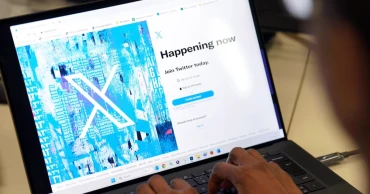
Elon Musk has unveiled a new black and white “X” logo to replace Twitter's famous blue bird as he follows through with a major rebranding of the social media platform he bought for $44 billion last year.
Musk replaced his own Twitter icon with a white X on a black background and posted a picture on Monday of the design projected on Twitter’s San Francisco headquarters.
Also read: Musk says Twitter is losing cash because advertising is down and the company is carrying heavy debt
The X started appearing on the top of the desktop version of Twitter on Monday, but the bird was still dominant across the phone app.
Musk had asked fans for logo ideas and chose one, which he described as minimalist Art Deco, saying it “certainly will be refined.”
“And soon we shall bid adieu to the twitter brand and, gradually, all the birds," Musk tweeted Sunday.
The X.com web domain now redirects users to Twitter.com, Musk said.
Also read: ‘Entering Twitter HQ - let that sink in!’: Musk tweets
In response to questions about what tweets would be called when the rebranding is done, Musk said they would be called Xs.
Musk, CEO of Tesla, has long been fascinated with the letter. The billionaire is also CEO of rocket company Space Exploration Technologies Corp., commonly known as SpaceX. And in 1999, he founded a startup called X.com, an online financial services company now known as PayPal,
He calls his son with the singer Grimes, whose actual name is a collection of letters and symbols, “X.”
Musk's Twitter purchase and rebranding are part of his strategy to create what he's dubbed an “ everything app ” similar to China’s WeChat, which combines video chats, messaging, streaming and payments.
Also read: Elon Musk imposes daily limits on reading posts on Twitter
Linda Yaccarino, the longtime NBC Universal executive Musk tapped to be Twitter CEO in May, posted the new logo and weighed in on the change, writing on Twitter that X would be “the future state of unlimited interactivity — centered in audio, video, messaging, payments/banking — creating a global marketplace for ideas, goods, services, and opportunities.”
Experts, however, predicted the new name will confuse much of Twitter's audience, which has already been souring on the social media platform following a raft of Musk's other changes. The site also faces new competition from Threads, the new app by Facebook and Instagram parent Meta that directly targets Twitter users.
2 years ago

Top 10 Humanoid AI Robots in 2023 So Far
Rapid technological progress has ushered in a new era of innovation in the field of AI and robotics. Diverse functional humanoid robots have already captured the attention of the scientific communities and the general people. Besides resembling and mimicking human beings in terms of appearance, the humanoid AI robots are designed to work for special purposes such as healthcare, entertainment, customer service, education applications, etc. Let’s take a look at the smartest humanoid robots in the world in 2023 so far.
World’s 10 Most Advanced Humanoid Robots in 2023
Ameca
Ameca, developed by Engineered Arts in 2021, stands as the epitome of sophistication among humanoid robots, surpassing all others in terms of advancement and realism. The debut of Ameca's inaugural video on December 1, 2021, garnered tremendous acclaim across Twitter and TikTok, capturing the attention of countless individuals. Its primary purpose revolves around propelling the field of robotics by exploring human-robot interaction.
Ameca incorporates an array of cutting-edge features, including embedded microphones, binocular eye-mounted cameras, a chest camera, and facial recognition software, enabling seamless engagement with the public. Furthermore, the interactions can be controlled either through GPT-3 or human telepresence. The utilisation of state-of-the-art technology extends to its artificial limbs, ligaments, and sensor arrays, underscoring its remarkable design.
Read more: Ameca: World’s Most Realistic Advanced Humanoid Robot AI Platform
Nadine
Nadine, an empathetic android developed by Japanese company Rokoro, emerged in 2013 as an exceptional creation. This social robot was modelled on Professor Nadia Magnenat Thalmann.
2 years ago

AI news anchor 'Aparajita' debuts on Channel 24, making history
Bangladesh’s first-ever artificial intelligence (AI) news anchor, "Aparajita" debuted on Channel 24 on Wednesday night, making history.
As Artificial Intelligence (AI) has been garnering significant attention in many sectors for the last couple of months with advanced AI mediums such as ChatGPT and Midjourney, to name a few, it has also been occupying the news industry in some countries.
Also read: AI & Future of Jobs: Will Artificial Intelligence or Robots Take Your Job?
Recently, a private television channel in India named Odisha Television Limited (OTV) introduced an AI newsreader named 'Lisa" on July 9, which is India’s first regional AI news anchor.
This was followed by India’s Power TV, a Kannada channel, which very recently made a similar groundbreaking move by introducing its very own AI presenter, "Soundarya”.
Although the Chinese news agency Xinhua introduced the first-ever AI news presenter in the world back in 2018, India introduced its first AI news presenter, 'Sana" back in April this year, as part of the country’s Aaj Tak news channel and also the very first AI news presenter in South Asia.
Also read: Ameca: World’s Most Realistic Advanced Humanoid Robot AI Platform
Besides, a couple of Asian countries, namely China, Taiwan, Indonesia, Malaysia, and Kuwait, have also been showcasing AI news presenters as part of their newsrooms.
Coping up with the neighbouring countries in this digital realm, Bangladeshi private television station Channel 24 news presenter Farabi Hafiz introduced 'Aparajita" which joined the 7:00 pm bulletin of the channel where it delivered a news report.
Appearing in a grey suit over a black shirt, "Aparajita" greeted her co-presenters first and then welcomed the audience before presenting her report. She also hosted and presented reports on a half-hour-long technology-based show on the TV channel at 11:00 pm.
Also read: Second laboratory of artificial intelligence launched
Regarding "Aparajita’s" inclusion in the news team, Channel 24 Senior News Editor Abdul Qayyum Tuhin said: "Artificial intelligence has brought about many positive benefits. We also want to keep up with the advancements in technology. We have introduced this initiative with that purpose in mind. I believe AI technology will make a difference in our country's history."
2 years ago

How to Avoid Mobile Data Leakage and Data Breach
Mobile devices, such as smartphones and tablets, have become an integral part of our daily lives. We use them for communication, entertainment, online shopping, and many other purposes. However, the convenience offered by these devices also brings certain risks, particularly concerning the security of our data. Mobile data leakage and data breaches have become prevalent, making it crucial for individuals and organizations to take necessary precautions to safeguard their sensitive information
What are Mobile Data Leakage and Data Breaches?
Mobile data leakage refers to the unauthorized disclosure or exposure of data stored on a mobile device. It can occur due to various reasons, including software vulnerabilities, malicious apps, weak passwords, or even physical theft of the device. On the other hand, data breaches involve unauthorized access or exposure of data stored in a system, network, or database. Mobile data breaches can result from cyberattacks, hacking attempts, or security vulnerabilities in mobile applications.
Common Causes of Mobile Data Leakage
Insecure Mobile Applications
One of the leading causes of mobile data leakage is the use of insecure mobile applications. Some developers may not prioritize security measures, leading to vulnerabilities that attackers can exploit. These vulnerabilities may allow unauthorized access to sensitive data stored within the application.
Weak Device Security
A lack of robust device security measures can make mobile devices vulnerable to data leakage. Weak passwords, lack of biometric authentication, and outdated security patches can allow attackers to gain unauthorized access to the device and its data.
Read more: Understanding VPN: The Comprehensive Guide
Phishing Attacks
Phishing attacks targeting mobile devices have become increasingly common. Attackers may use deceptive techniques, such as fraudulent emails or text messages, to trick users into providing sensitive information or downloading malicious apps. Falling victim to a phishing attack can result in data leakage.
Malware and Spyware
Mobile devices are also susceptible to malware and spyware infections. These malicious programs can be installed through untrusted apps or compromised websites, allowing attackers to monitor and collect sensitive data without the user's knowledge.
Unsecured Wi-Fi Networks
Connecting to unsecured Wi-Fi networks exposes mobile devices to potential data leakage. Attackers can intercept data transmitted over these networks, compromising the confidentiality of the user's information. It is essential to avoid connecting to untrusted or public Wi-Fi networks whenever possible.
Lost or Stolen Devices
The loss or theft of a mobile device can lead to significant data leakage. If the device is not adequately protected with passwords or encryption, anyone who gains access to it can potentially access the sensitive information stored on the device.
Read more: How to Protect Your YouTube Channel from Getting Hacked
Lack of Data Encryption
Data encryption plays a vital role in protecting sensitive information. Without proper encryption, unauthorized individuals can easily access and exploit data stored on mobile devices.
Insider Threats
Insider threats refer to individuals within an organization who have authorized access to sensitive data but misuse it for personal gain or with malicious intent. Insider threats can lead to intentional or unintentional data leakage.
2 years ago

Skoot-Walton to work on production of high-tech e-bikes
Skoot, a startup in the Innovation Design and Entrepreneurship Academy (iDEA) project portfolio, signed a Memorandum of Understanding (MoU) with Walton Digi-Tech Industries to collaborate on the manufacturing of e-bikes in Bangladesh.
The signing ceremony took place at Walton Digi-Tech Industries Ltd’s corporate head office in Bashundhara on Thursday, according to a press release.
Also read: Walton Mobile opens smart point at Shyamoli
Skoot directors Sihab Khan and Parth Roy, and Walton Digi-Tech Industries Ltd Head of Marketing Md Taufiq Imam, Deputy Assistant Director of Sales Fuad Rahman and Deputy Director – Ebike Kaikobad Siddiquie were present at the ceremony, among others.
The MoU outlined the commitment of Skoot and Walton to produce high-quality and advanced e-bikes that enhance the riding experience for customers. This partnership aims to revolutionize the e-bike industry in Bangladesh by introducing eco-friendly and technologically advanced products, said the release.
Also read: Walton to hold first-ever mega 'International Advanced Components and Technology Expo' in August
In addition to financial grants, the iDEA project provides startups with essential resources such as mentoring, training, networking opportunities, and access to co-working spaces.
The collaboration between Skoot and Walton holds great potential for the e-bike industry in Bangladesh. By combining their expertise and resources, both companies aspire to create a better future for e-bike enthusiasts, offering them innovative and sustainable transportation options, added the release.
Also read: Walton Plaza inaugurated in two new districts
2 years ago

Reluctant Twitter users, influencers and others are flocking to Meta's new Threads app
Celebrities, lawmakers, brands and everyday social media users are flocking to Meta's freshly minted app Threads to connect with their followers, including many Twitter refugees tired of the drama surrounding Elon Musk’s raucous oversight of that platform.
But the real question is: Will they stay?
Instagram head Adam Mosseri said in a Threads post Monday that in the five days since its launch, 100 million people have signed up for Threads, which was rolled out as a companion app to Instagram.
Ann Coleman is among them. The 50-year-old, who lives in Baltimore, said she joined Threads after hearing about the platform from a comedian she follows on social media. She said she loves Twitter and has been using it for more than 10 years. She even met her husband on there.
READ: 'Clone' or competitor? Users and lawyers compare Twitter and Threads
But Coleman, who is politically progressive, has been looking to switch to a new platform because of Musk’s political views and changes he’s made to Twitter, like upending its verification system. She previously joined the decentralized social network Mastodon, but found it a bit confusing to use.
She said she likes Threads but wishes she could easily follow all her Twitter friends there. Threads gives Instagram users the option to automatically follow the same accounts they do on the photo-sharing app, which makes it easier for active Instagram users to replicate a similar type of engagement on Threads. But others starting from the ground up will have to do more work.
“If I’m going to leave Twitter entirely, I’m going to have to try and find some of these people” from Twitter, Coleman said.
While she said she has her own concerns about Meta — specifically pointing to the Cambridge Analytica privacy breach, among other things — "it’s not with the depth of concern that I do with Musk.”
Michael Evancoe, 28, said he hasn't used Twitter much since his personal page was suspended years ago for what the platform attributed to violations of its rules on spam. Evancoe, who now works in production, said he agrees with some of the changes Musk has been making on Twitter and he created a new account earlier this year. But he wasn’t able to gain many followers or interactions.
READ: Twitter threatens legal action against Meta over Threads: Report
He joined Threads last week, and says he’s been able to interact more with other users. But he hopes that Meta does not moderate the platform overly aggressively.
“I think that would be a deterrent to both interest and engagement as well,” Evancoe said.
For its part, Meta has said it will moderate using Instagram’s content guidelines. In the past few days, the company has been positioning the much-hyped platform as a new digital town square that’s a less toxic version of Twitter, with some executives indicating their aim isn’t to replace Twitter but to offer something more palatable to a vast array of users.
“The goal is to create a public square for communities on Instagram that never really embraced Twitter and for communities on Twitter (and other platforms) that are interested in a less angry place for conversations,” Mosseri said Friday.
In the first two full days that Threads was broadly available — Thursday and Friday of last week — traffic on Twitter was down 5% compared with the same period a week ago, and down 11% compared with the same period a year ago, according to the web analytics company SimilarWeb. But it also said Twitter traffic has experienced an overall decline even in the absence of Threads.
To Jennifer Billinson, a professor of media studies at Nazareth University in New York, the first days of Threads have highlighted a potential culture clash -- specifically one between Twitter refugees and what is likely a much larger number of people just clicking over from Instagram.
READ: What is Threads? All your questions about Meta's new Twitter rival, answered
The idea that Threads will just become a Twitter clone, she says, is running headlong into the reality that the Twitterites are going to be “vastly outnumbered” on the new platform by those from Instagram, which has more than 2 billion monthly users. By comparison, Twitter has more than 237 million daily users, according to the most recent figures from the company's earnings report last year.
Among other things, those used to the more abrasive culture of Twitter could easily annoy more laid-back Instagram users. Of course, such tensions might be alleviated by potential platform changes that give people more control over what they’ll see in their Threads feed. At the moment, users are largely at the mercy of the Threads algorithm.
Despite the influx of users, Brendan Gahan, partner and chief social officer at the creative agency Mekanism, stressed it's too early to know how successful Threads will be. He further questions whether the rapid growth of Threads is even a good thing, pointing out some other successful platforms began with a focused approach and expanded more gradually.
There’s also the question of how influencers will use Threads and whether they can replicate the same following as on other platforms. Most notably, Jimmy Donaldson — a popular YouTube video maker who goes by MrBeast — has already amassed more than 4 million followers on Threads.
By integrating the new app to Instagram, Meta made it very easy for content creators to convert their Instagram followers to Threads followers. But that can also create a situation where popular content creators gain more influence while crowding out emerging talents from cultivating their own culture on a new platform, Gahan said.
READ: Meta unveils Threads, targeting users looking for an alternative to Twitter
Creators might also face other challenges.
“Somebody who is purely video and photo-based may have trouble translating to a text-focused platform,” Gahan said. “That said, a lot of them I see reposting the same content. Time will tell whether or not that's a successful strategy.”
Asante Madrigal, a content creator who makes his living off of social media posts about pop culture, said he’s been trying out the Threads app and reposting some videos he’s made recently on actress Keke Palmer, among other things.
But at least for now, the 22-year-old said he doesn’t plan to make Threads a priority because he can’t monetize his content on there. Instead, he said he’s going to focus on apps where he’s actually earning money, like Instagram, YouTube and TikTok, where he more than 2 million followers combined.
Madrigal said the Threads algorithm is a black box, and pointed to some things that are still lacking in the app, including hashtags and direct messaging between users. And figuring out what to do on there will take more work.
“I have a lot of friends that do pop culture as well,” Madrigal said. “And they were just like, ‘Oh, my God, not another app’.”
2 years ago

TechCrunch says Bangladesh govt website has leaked citizens’ personal data
TechCrunch, an American online news platform focusing on high tech and startups, says that a Bangladeshi government website has leaked the personal information of citizens.
The data leak includes full names, phone numbers, email addresses, and national ID numbers of millions of Bangladeshi citizens, TechCrunch quoted a researcher who discovered the leak.
Read: Personal data hack of 100s of German politicians, celebs
The leak was “accidentally discovered” by Viktor Markopoulos who works for Bitcrack Cyber Security. He then contacted the Bangladeshi e-Government Computer Incident Response Team.
Markopoulos said, finding the data “was too easy.”
“It just appeared as a Google result and I wasn’t even intending on finding it. I was Googling an SQL error and it just popped up as the second result,” he told TechCrunch, referring to SQL, a language designed for managing data in a database.
Read: 8 arrested in Hong Kong for posting personal data on police
TechCrunch said it was able to verify that the leaked data was “legitimate” through using a portion to query a public search tool on the affected website. The government website apparently returned other data contained in the leaked database, such as the name of the person who applied to register, as well as — in some cases — names of their parents.
TechCrunch, in the report published on July 7, 2023, said it attempted the process with 10 different sets of data, and all returned correct data.
The US news platform, however, did not name the government website as data is still available online.
It also said it has not heard back from any of the Bangladeshi government organisations that were emailed, asking for remarks and alerting of the data leak.
Read more: Facebook: Hackers accessed personal data from 29M accounts
2 years ago

TikTok and 5 content creators ask federal judge to block Montana from banning app
TikTok Inc. and a group of five content creators who are suing the state of Montana over its first-in-the-nation law to ban the video sharing app are now asking a federal judge to block implementation of the law while the case moves through the courts and before it takes effect in January.
The separate requests for preliminary injunctions were filed Wednesday in federal court in Missoula. The cases challenging the law were filed in May and have since been consolidated by U.S. District Judge Donald Molloy.
Montana Attorney General Austin Knudsen had the bill drafted over concerns — shared by the FBI and U.S. Secretary of State Antony Blinken — that the app, owned by the Chinese company ByteDance, could be used to allow the Chinese government to access information on U.S. citizens or push pro-Beijing misinformation that could influence the public. TikTok has said none of this has ever happened.
Also read: What is Threads? All your questions about Meta's new Twitter rival, answered
The motions for injunctions make the same arguments as the cases against the state — that the ban is an unconstitutional violation of free speech rights and that the state has no authority to regulate foreign affairs.
Attorneys on both sides have agreed to a schedule that calls for the state to respond to the motions by mid-August and for the plaintiffs to file their replies by mid-September, court records state.
The company and the Montana content creators argue a preliminary injunction should be granted because the plaintiffs are likely to succeed in their challenges to the law and if the ban took effect it would cause irreparable harm by depriving them of the ability to express themselves and communicate with others.
TikTok has safeguards to moderate content and protect minors, and would not share information with China, the company has argued. But critics have pointed to China’s 2017 national intelligence law that compels companies to cooperate with the country’s governments for state intelligence work.
Also read: What is Threads? All your questions about Meta's new Twitter rival, answered
“TikTok users don’t use the app – the app uses them and turns them into a spying apparatus for the Chinese Communist Party," Emily Flower, a spokeswoman for the Attorney General's Office, said in a statement that also noted recent reporting that TikTok is paying for the lawsuit filed by the content creators. "TikTok’s ‘support’ is bought and paid for – Montanans recognize the threat that the app poses to their privacy and national security.”
More than half the U.S. states, including Montana, and the federal government have banned TikTok from government-owned devices.
Republican Gov. Greg Gianforte signed the bill into law in May, saying Montana was taking "the most decisive action of any state to protect Montanans’ private data and sensitive personal information from being harvested by the Chinese Communist Party.”
Also read: TikTok now 2nd biggest social media platform in South Africa: Study
As of June 1, Gianforte also prohibited the use of any social media apps tied to foreign adversaries on state equipment and for state businesses. Among the apps he listed are WeChat, whose parent company is headquartered in China; and Telegram Messenger, which was founded in Russia.
2 years ago

Meta unveils Threads, targeting users looking for an alternative to Twitter
Meta unveiled an app to rival Twitter on Wednesday, appearing to target users looking for an alternative to the social media platform owned — and frequently changed — by Elon Musk.
Called Threads, the new offering is billed as a text-based version of Meta's photo-sharing app Instagram that the company says provides “a new, separate space for real-time updates and public conversations.”
Also read:Meta is set to take on Twitter with a rival app called Threads
The app went live just after midnight Wednesday in the U.K. in Apple and Google Android app stores in more than 100 countries including the U.S., Britain, Australia, Canada and Japan. Early celebrity users include chef Gordon Ramsay, the pop star Shakira and Mark Hoyle, better known as the YouTuber LadBaby.
Users get a Twitter-like microblogging experience, according to screenshots provided to media, suggesting that Meta Platforms has been gearing up to directly challenge the platform after Musk's tumultuous ownership has resulted in a series of unpopular changes that have turned off users and advertisers.
There are buttons to like, repost, reply to or quote a “thread,” and counters showing the number of likes and replies that a post has received.
Also read: Musk's Twitter disbands its Trust and Safety advisory group
“Our vision is that Threads will be a new app more focused on text and dialogue, modeled after what Instagram has done for photo and video,” the company said.
Posts are limited to 500 characters, which is more than Twitter's 280-character threshold, and can include links, photos and videos up to five minutes long.
Instagram users will be able to log in with their existing usernames and follow the same accounts on the new app. New users will have to set up an Instagram account.
Meta emphasized measures to keep users safe, including enforcing Instagram's community guidelines and providing tools to control who can mention or reply to users.
Meta's new offering, however, has raised data privacy concerns.
Also read: Twitter relaunching subscriber service after debacle
Threads could collect a wide range of personal information, including health, financial, contacts, browsing and search history, location data, purchases and “sensitive info,” according to its data privacy disclosure on the App Store.
Twitter co-founder Jack Dorsey pointed it out in a snarky tweet saying, “All your Threads are belong to us” that included a screenshot of the disclosure. Musk replied “yeah.”
One place Threads won't be rolled out is in the European Union, which has strict data privacy rules.
Meta has informed Ireland's Data Privacy Commission that it has no plans yet to launch Threads in the 27-nation bloc, commission spokesman Graham Doyle said. The Irish watchdog is Meta's main privacy regulator for the EU because the company's regional headquarters is based in Dublin.
While Meta had teased Threads with a listing on Apple’s U.K. App Store earlier this week, it could not be found in the French, German or Dutch versions. The company is working on rolling the app out to more countries but cites regulatory uncertainty for its decision to hold off on a European launch.
Analysts said its success is far from guaranteed, citing Meta's track record of starting standalone apps that were later shut down.
Also in question is whether it's the right move for Meta, which has announced tens of thousands of layoffs over the past year amid a tech industry slowdown.
CEO Mark Zuckerberg also has been focusing on the metaverse, investing tens of billions of dollars in the virtual reality concept.
Meta risks “spreading itself too thin,” said Mike Proulx, a research director at Forrester, a global market research company. “Meta is banking on a moment in time amidst peak Twitter frustration. However, this window of opportunity is already flooded with Twitter alternatives including Bluesky, Mastodon, Spill, Post.News and Hive, which are all competing for Twitter’s market share."
Even so, Threads could be a fresh headache for Musk, who acquired Twitter last year for $44 billion.
He's made a series of changes that have triggered backlash, the latest being daily limits on the number of tweets people can view to try to stop unauthorized scraping of potentially valuable data. He also is now requiring paid verification for users to access the online dashboard TweetDeck.
Musk’s rivalry with Zuckerberg could end up spilling over into real life. In an online exchange the two tech billionaires seemingly agreed to a cage match face-off, though it’s unclear if they will actually make it to the ring.
2 years ago