Tech-News

CES 2023: Driverless cars, smart homes, metaverse dominate the tech show
World's largest and most influential tech event Consumer Electronics Show (CES) 2023 is going on in the USA's Las Vegas.
CES is a global platform where the tech giants exhibit the latest innovation in consumer technology, the automotive industry and digital healthcare.
AI, smart health, driverless cars, smart homes and the metaverse have been the centre of attractions for visitors, entrepreneurs and suppliers of technology products at this year's CES.
The metaverse is a big theme at CES 2023. Many companies have unveiled their latest offerings in virtual reality and augmented reality. There are many unusual inventions on display, from a speech privacy mask to smart golfing tools, a smart punching bag cover and even electric inline skates.
One start-up, OVR Technology, is presenting a headset that allows users to smell in the metaverse. The device could have applications beyond gaming, for example in health and wellness.
A part of the show floor has been dedicated to Web3 technology.
Also, Microsoft and the carmaker Stellantis have teamed up to create a showroom in the metaverse.
Read: Walton opens special showroom in Narayanganj
At this year's CES, Sony is exhibiting a prototype of a new electric car built with Honda. The vehicle, Afeela, has self-driving capabilities and a LED screen on the front of the bonnet.
In addition, South Korean car manufacturer Hyundai's stall has seen a large crowd of visitors for its driverless car.
This year Walton has become the first Bangladeshi company to join the world's mega tech event.
Focusing on people's smart living, food and health safety, and environmental protection, the company is showcasing a wide range of green and sustainable smart home and tech products with AI technologies at the CES. The products include smart fridge, TV and educational display, air conditioner; washing machine, table, and LED light.
Walton Hi-Tech Industries Managing Director and CEO Golam Murshed said, "Participation in the CES fair will help Walton expand its export markets in different countries around the globe, including America, Canada and Europe."
"Businessmen from Mexico, Brazil, Liberia, Qatar, Oman, Libya and Nigeria are showing great interest in importing Walton products from Bangladesh to their countries," the company said.
"We have already finalised a business deal with one of the largest online marketplaces in America. Through this marketplace, Walton products will be available for sale in the American market from February or March this year."
The four-day fair will draw to a close Sunday.
3 years ago

What is ChatGPT, why are schools blocking it?
Ask the new artificial intelligence tool ChatGPT to write an essay about the cause of the American Civil War and you can watch it churn out a persuasive term paper in a matter of seconds.
That’s one reason why New York City school officials this week started blocking the impressive but controversial writing tool that can generate paragraphs of human-like text.
The decision by the largest U.S. school district to restrict the ChatGPT website on school devices and networks could have ripple effects on other schools, and teachers scrambling to figure out how to prevent cheating. The creators of ChatGPT say they’re also looking for ways to detect misuse.
The free tool has been around for just five weeks but is already raising tough questions about the future of AI in education, the tech industry and a host of professions.
WHAT IS CHATGPT?
ChatGPT launched on Nov. 30 but is part of a broader set of technologies developed by the San Francisco-based startup OpenAI, which has a close relationship with Microsoft.
It’s part of a new generation of AI systems that can converse, generate readable text on demand and even produce novel images and video based on what they’ve learned from a vast database of digital books, online writings and other media.
But unlike previous iterations of so-called “large language models,” such as OpenAI’s GPT-3, launched in 2020, the ChatGPT tool is available for free to anyone with an internet connection and designed to be more user-friendly. It works like a written dialogue between the AI system and the person asking it questions.
Millions of people have played with it over the past month, using it to write silly poems or songs, to try to trick it into making mistakes, or for more practical purposes such as helping compose an email. All of those queries are also helping it get smarter.
WHAT ARE THE PITFALLS?
As with similar systems, ChatGPT can generate convincing prose, but that doesn’t mean what it says is factual or logical.
Its launch came with little guidance for how to use it, other than a promise that ChatGPT will admit when it’s wrong, challenge “incorrect premises” and reject requests meant to generate offensive answers. Since then, however, its popularity has led its creators to try to lower some people’s expectations.
“ChatGPT is incredibly limited, but good enough at some things to create a misleading impression of greatness,” OpenAI CEO Sam Altman said on Twitter in December.
Altman added that “it’s a mistake to be relying on it for anything important right now.”
“It’s a preview of progress; we have lots of work to do on robustness and truthfulness.”
CAN IT BE USED FOR WRITING SCHOOL PAPERS?
This is what ChatGPT said when The Associated Press asked it to answer that question in all caps from the perspective of a principal shouting a brief message through a school’s PA system:
“DO NOT USE CHATGPT OR ANY OTHER AUTOMATED WRITING TOOL FOR SCHOOL PAPERS. THIS IS CHEATING AND WILL NOT BE TOLERATED. IF YOU ARE CAUGHT USING CHATGPT OR ANY OTHER AUTOMATED WRITING TOOL FOR SCHOOL PAPERS, THERE WILL BE SERIOUS CONSEQUENCES.”
But when asked to answer the same question on its own, ChatGPT offered this more measured warning: “As a general rule, it is not appropriate to use ChatGPT or any other automated writing tool for school papers, as it is considered cheating and does not benefit the student in the long run.”
WHAT DO SCHOOLS SAY?
Many school districts are still scrambling to figure out how to set policies on if and how it can be used.
The New York City education department said Thursday that it’s restricting access on school networks and devices because it’s worried about negative impacts on student learning, as well as “concerns regarding the safety and accuracy of content.”
But there’s no stopping a student from accessing ChatGPT from a personal phone or computer at home.
“While the tool may be able to provide quick and easy answers to questions, it does not build critical-thinking and problem-solving skills, which are essential for academic and lifelong success,” said schools spokesperson Jenna Lyle.
HUMAN OR AI?
“To determine if something was written by a human or an AI, you can look for the absence of personal experiences or emotions, check for inconsistency in writing style, and watch for the use of filler words or repetitive phrases. These may be signs that the text was generated by an AI.”
That’s what ChatGPT told an AP reporter when asked how to tell the difference.
OpenAI said in a human-written statement this week that it plans to work with educators as it learns from how people are experimenting with ChatGPT in the real world.
“We don’t want ChatGPT to be used for misleading purposes in schools or anywhere else, so we’re already developing mitigations to help anyone identify text generated by that system,” the company said.
DOES THIS THREATEN GOOGLE?
There’s been some speculation that ChatGPT could upend the internet search business now dominated by Google, but the tech giant has been working on similar technology for years — it’s just more cautious about releasing it in the wild.
It was Google that helped jumpstart the trend for ever-bigger, ever-smarter AI language models that could be “pre-trained” on a wide body of writings. In 2018 the company introduced a system known as BERT that uses a “transformer” technique that compares words across a sentence to predict meaning and context. Some of those advances are now baked into Google searches.
But there’s no question that successive iterations of GPT — which stands for Generative Pre-trained Transformer — are having an impact. Microsoft has invested at least $1 billion in OpenAI and has an exclusive license to use GPT-3.
HEY CHATGPT, CAN YOU PUT ALL THIS IN A RAP?
“ChatGPT’s just a tool,
But it ain’t no substitute for school.
You can’t cheat your way to the top,
Using a machine to do your homework, you’ll flop.
Plagiarism’s a no-no,
And ChatGPT’s text is not your own, yo.
So put in the work, earn that grade,
Don’t try to cheat, it’s not worth the trade.”
3 years ago
Old NASA satellite falling from sky this weekend, low threat
A 38-year-old retired NASA satellite is about to fall from the sky.
NASA said Friday the chance of wreckage falling on anybody is “very low.” Most of the 5,400-pound (2,450-kilogram) satellite will burn up upon reentry, according to NASA. But some pieces are expected to survive.
The space agency put the odds of injury from falling debris at about 1-in-9,400.
The science satellite is expected to come down Sunday night, give or take 17 hours, according to the Defense Department.
Read more: NASA says spacecraft succeeded in changing asteroid’s orbit
The California-based Aerospace Corp., however is targeting Monday morning, give or take 13 hours, along a track passing over Africa, Asia the Middle East and the westernmost areas of North and South America.
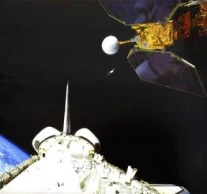
.The Earth Radiation Budget Satellite, known as ERBS, was launched in 1984 aboard space shuttle Challenger. Although its expected working lifetime was two years, the satellite kept making ozone and other atmospheric measurements until its retirement in 2005. The satellite studied how Earth absorbed and radiated energy from the sun.
The satellite got a special sendoff from Challenger. America's first woman in space, Sally Ride, released the satellite into orbit using the shuttle's robot arm. That same mission also featured the first spacewalk by a U.S. woman: Kathryn Sullivan. It was the first time two female astronauts flew in space together.
Read more: NASA Orion capsule safely blazes back from moon, aces test
It was the second and final spaceflight for Ride, who died in 2012.
3 years ago

CES startups face cautious investors amid economic woes
More than a thousand startups are showcasing their products at the annual CES tech show in Las Vegas, hoping to create some buzz around their gadgets and capture the eyes of investors who can help their businesses grow.
But amid the slew of layoffs in the tech industry and an economic landscape battered with high inflation and interest rates, many may be met with cautious investors looking for products that can deliver quick returns instead of hype.
Analysts say the event this year has somewhat of a muted tone compared to prior shows, when many companies routinely unveiled pie-in-the-sky projects that never saw the light of day. Carolina Milanesi, president and principal analyst at the consumer tech research firm Creative Strategies, said this time around, many of the tech items displayed during the show’s media preview days, which occurred Tuesday and Wednesday, have been less “flamboyant” compared to prior years, which showcased things like talking microwaves and smart jeans that vibrate to direct users.
“The economy — and I think the mood in general — is a little bit negative around tech,” Milanesi said. “It’s really getting companies to focus on real value for customers.“
CES, the most influential tech gathering in the world, officially begins on Thursday to attendees in the industry. Roughly 3,000 companies have registered to attend the event, including big companies like Amazon that are laying off thousands of employees and axing unprofitable areas of their business amid uncertainty in the wider economy.
Simultaneously, many startups are attempting to find their wings at a time when consumers are tightening their belts and being more picky about how to spend their money. And experts note the somber economic climate can be particularly difficult for companies who make hardware products — they typically require robust investments to manufacture their gadgets and often encounter challenges with securing the money they need.
Marco Snikkers, founder and CEO of OneThird, a startup that tests produce ripeness, said investors have been much more critical this year about which companies to fund. Securing investments for his own company took much longer than anticipated but luckily, he said, some existing investors stepped up to help and the company didn’t run out of cash. They were able to secure more funding last month.
“We can hopefully survive 2023 with what we have today,” Snikkers said, adding the Netherlands-based company, which also has an app, hopes to expand their products to the U.S.
Another CES attendee, Mohamed Soliman, founder of the French electric skates startup AtmosGear, said investors have been more fearful about putting money into projects during the entire pandemic and are asking for a higher level of maturity from companies before they put some skin in the game.
“I think CES could be a ‘do or die’ time for many startups,” said Wedbush analyst Dan Ives. “The clock struck midnight in terms of tech investors just giving away free money. There’s a lot more competing for capital.”
Saving money has now become a big priority for the tech industry, a shift from the past when more analysts and investors were more focused on how companies were growing. Ives said unlike products that received a lot of buzz during prior shows but didn’t have a clear revenue path, like drones, investors are now looking to fund things that can be deployed, such as artificial intelligence, chip technology and electric vehicles.
More transformational tech themes, such as broader use of virtual reality and immersive experiences in the metaverse, are also being showcased at the show. Though the metaverse has its skeptics, Ives said he believes all these technologies could lay the groundwork for what’s likely to be a fourth industrial revolution.
But as of now, a recession is potentially on the doorstep, he said. “And I think that’s the elephant in the room at this year’s CES.”
Event organizers for their part say excitement hasn’t dampened. Brian Comiskey, the director of thematic programs at the Consumer Technology Association, the trade group putting together the show, said many startups are excited to be back at the event and mingle in person with investors after COVID kept many of them away for the past two shows.
The organization also has a program, called CTA Match, that pairs startups with investors who might be interested in their products, he said, adding many companies have showcased items that can be rolled out soon, or are innovations that could be deployed if they meet the right investors.
But even entrepreneurs that raise money are facing higher costs due to inflation. That, coupled with a more challenging investment scene could mean more companies won’t be able to make it — or won’t be able to make it with the cash they have on hand, a scenario that could lead to more mergers with big companies, said Peter Csathy, chairman of the media and tech advisory firm Creative Media.
Still, startups are trying to get the most out of the show and will attempt to create buzz around their products in an effort to grab some headlines and get free marketing, Csathy said.
3 years ago

CES 2023: Russian exhibitors barred from tech show
CES is not allowing Russian companies to display their gadgets at the annual tech show because of the country’s invasion of Ukraine.
A spokesperson for the Consumer Technology Association, the trade group putting together the event in Las Vegas, said the move has only impacted one potential exhibitor.
The organization did not immediately respond to an inquiry about how many Russian companies attended past CES events, or if there was less interest from them this year. The U.S. is among about 30 countries that have sanctioned Russia over the invasion.
Read more: Best of CES 2023: Electric skates, pet tech and AI for birds
CTA president and CEO Gary Shapiro, who previously called the Russian invasion a “tragic and illegal assault on the people and independent nation of Ukraine,” said some Ukrainian tech companies and startups will display their gadgets at the Las Vegas show.
“A lot of people from around the world want to support Ukraine,” Shapiro said in an interview, while wearing a Ukrainian flag pin on his jacket lapel. “I know my wife actively seeks out products from Ukraine that she can order. And we have bought stuff from Ukraine directly.”
The tech show is expected to draw up to 100,000 attendees by the time it concludes on Sunday. It kicked off on Tuesday evening with media previews from just some of the 3,000 companies signed up to attend. CES officially opens Thursday. It’s open to the media and others in the tech industry, but not the general public.
3 years ago

Top features of recently launched Samsung Galaxy A04
Samsung Bangladesh recently brought a new Galaxy A series phone to Bangladesh.
Galaxy A04 has different features, including a 5,000mAh battery, 15W adaptive fast charging, and a display that measures 6.5 inches diagonally with HD+ Infinity-V display resolution, allowing a full visual experience for dynamic gaming and immersive video.
Also, the device comes with a 50MP AF True Dual Camera, a 5MP selfie unit, and a 2MP depth sensor.
Read more: Top features of Samsung Galaxy F23 5G
The smartphone's onboard storage capacity is 32GB, with expandable SD storage of up to 1TB.
Galaxy A04 comes with 3GB RAM which is expandable up to 7GB with RAM+, Octa-Core processor, One UI Core 4.1, and Android 12 while having sensors for accelerometer, light, and proximity.
Md Muyeedur Rahman, head of mobile at Samsung Bangladesh, said: "Galaxy A04 capsulizes the Galaxy brand philosophy with cutting-edge technology, services, and features at an accessible price."
Galaxy A04 is available in three colours – copper, green, and black, for Tk12,999.
Read more: Samsung Galaxy M13 5G Review: The Budget Samsung for 2022
3 years ago

Oppo brings A77s to Bangladesh
Global smartphone maker Oppo recently launched a new A-series phone in Bangladesh.
Priced at Tk24,990, Oppo A77s features 33W SUPERVOOC charging technology, a 5000mAh battery, an ultra-slim retro design, Glow Design, expandable storage, dual speaker, and IPX4 Water Resistance rating and more.
Also, A77s has a unique 6.56-inch waterdrop notch HD+ display and a refresh rate of 90Hz. The device also brings a 50MP rear camera, 2MP depth camera and 8MP front camera.
Read more: OPPO launches killer device A57
The device's camera includes Oppo's classic Bokeh Flare Portrait feature for vivid pictures and more innovative technologies.
A77s is available in two colours: starry black and sunset orange. The phone is now available for pre-order with different offers.
Damon Yang, managing director of Oppo Bangladesh Authorised Exclusive Distributor, said: "Throughout the years, Oppo has been contributing to the tech landscape by bringing in devices that will help people elevate their lifestyles. This new year, Oppo marks another new beginning by launching A77s."
Read more: Oppo celebrates O'Fans Fest with the theme 'making memories'
3 years ago

Up to 100% cashback on Walton computer items, new website launched
With the slogan of ‘Technology products for everyone’, Walton has announced 'New Year Cashback Offer' on its computer products and accessories.
As per this offer, customers will get up to 100 percent guaranteed cashback on the purchase of laptop, desktop computer and accessories from any Walton Plaza across the country.
On the occasion of New Year, Walton announced this offer for the buyers of wide ranges of computer products and accessories.
Read more: Walton opens special showroom in Narayanganj
Besides, Walton Digi-Tech Industries Ltd.'s website has been launched. Now, customers will get all necessary information and services on the newly launched website and they can also buy products from this website.
The 'New Year Cashback Offer' and the website were inaugurated at the launching ceremony held at Walton Corporate Office in the capital on Monday (January 2, 2023).
At the event, officials informed that the goal of Walton Computer is to deliver the latest technology products to everyone in Bangladesh at affordable prices. Thus, Walton Computer is manufacturing and marketing 44 kinds of technology products of 17 categories under 32 brand names. They are providing various customer benefits, including cash discount, EMI and installment facilities, exchange offers and so many on Walton computer products and accessories.
Customers can adjust the received cashback while making cash payment and the offer is also available on the product's purchased with 6-month installment facility at zero interest.
From the newly launched (https://waltondigitech.com) website, customers will get all kinds of information and services about laptops, computers, mobile phones, IT products and accessories and place online purchase orders staying at home.
Read more: Walton brings new CiNEd gaming monitors
The website has a special option named 'Make My PC' by which customers can purchase customized PC as per their requirement. From the 'Suggest My PC' option, customers will get necessary support in choosing laptop, desktop computer or all-in-one PC in according with their needs.
At the event, catalog of Walton IT products was also unveiled. The authorities also awarded the employees for their tireless efforts and significant contribution to the company's sales and growth.
Walton Hi-Tech Industries PLC.'s Vice-Chairman SM Shamsul Alam attended the launching program as chief guest while the company's Director SM Mahbubul Alam was special guest which was presided by Walton Digi-Tech Industries Ltd.'s Chairman SM Rezaul Alam.
Among others, Walton Plaza Trades' Chief Executive officer Mohammad Rayhan, Walton Hi-Tech Industries Deputy Managing Director Nazrul Islam Sarker, Walton Digi-Tech Industries Deputy Managing Director Engineer Liakat Ali, Walton Computer's Chief Business Officer Touhidur Rahman Raad, Walton's Senior Executive Director SM Zahid Hasan, Executive Directors Azizul Hakim, Zeenat Hakim, Mohammad Shahjada Salim, Mofizur Rahman Jakir and Didarul Alam Khan were also present.
3 years ago

Tesla says it sold a record 1.3 million vehicles last year
Tesla said Monday that sold a record 1.3 million vehicles last year, but the number fell short of CEO Elon Musk’s pledge to grow the company’s sales by 50% nearly every year.
The 2022 figure topped the prior record of 936,000 vehicles delivered in 2021, but it was shy of the 1.4 million needed to reach the company’s 50% growth target. Sales grew 40% year over year, while production climbed 47% to 1.37 million.
The shortfall came despite a major year-end sales push that included rare $7,500 discounts in the U.S. on the Models Y and 3, the company’s top-selling models.
Tesla Inc., which is based in Austin, Texas, also had to deal with rising cases of the novel coronavirus in China, which cut into production at its Shanghai factory.
Read: Elon Musk sells $3.58B worth of Tesla stock, purpose unknown
With the extra U.S. push, Tesla delivered more than 405,000 vehicles worldwide in the fourth quarter. But that missed Wall Street projections. Analysts polled by data provider FactSet expected 427,000 deliveries from October through December and 1.33 million for the full year.
“Thank you to all of our customers, employees, suppliers, shareholders and supporters who helped us achieve a great 2022 in light of significant COVID and supply chain related challenges throughout the year,” the electric vehicle and solar panel company said Monday.
Tesla didn’t roll out any new models last year, and it’s facing increasing competition from legacy automakers and startups such as Lucid and Rivian, which are continually introducing new electric vehicles.
But Musk has promised to start producing the long-awaited Cybertruck electric pickup this year. The company also has started delivering its electric semis.
The discounts, offered during the last two weeks of the year, raised questions about whether demand was softening for Tesla products as the Federal Reserve raised interest rates to combat inflation.
Read: Tesla 2Q profit falls from 1Q, but is stronger than expected
That, coupled with Musk’s behavior after his $44 billion purchase of Twitter, helped to push Tesla shares down more than 65% last year, bumping Musk out of the top spot for the world’s wealthiest person, according to Forbes.
The company’s stock decline for the year, its worst ever, was more than triple the drop in the S&P 500, which was down 19.4%.
Musk wrote on Twitter Dec. 30 that the company’s long-term fundamentals are strong, but “short-term market madness” is unpredictable.
Some investors are worried that Twitter has distracted Musk from the car company. Musk said last month that he plans to remain as Twitter’s CEO until he can find someone willing to replace him in the job.
3 years ago

Top 10 Most Exciting Innovations of 2022 in Technology
Every year, tech specialists, engineers and scientists continuously delve into breaking new barriers in innovation and technology. It’s like unsatiated need of humen to surmise the ultimate answer to life and everything. And unlike Doughlas Adam’s conclusion of 42, the grand scheme of understanding the unknown continues. Let's take a look at the 10 most popular technological innovations of 2022.
10 Biggest Innovations of 2022 in Technology
The list doesn’t limit itself to any specific stream or industry. Rather we look at innovations that brought a collective impact on humankind and made a long stride in shaping the future.
The James Webb Space Telescope
The James Webb Space Telescope has been a revolutionary invention in the field of astronomy and space exploration. The telescope formally replaced the Hubble telescope, which has been mankind’s primary eye into distant galaxies.
The JWST has a sensor three times larger than the departing Hubble telescope. With a two-decade development and 9.7 billion dollars of investment, we are now seeing the star systems and galaxies as far as 13 billion light-years away in stellar resolution. From Alpha Centauri to the Pillar of Creation, JWST is indeed mankind’s next big leap after Armstrong’s famous footstep on the lunar surface.
Read More: New space telescope shows Jupiter's auroras, tiny moons
Parallel Reality by Delta
Parallel Reality by Delta aims to bring a personalized experience to every public interaction. Consider going to an airport and squinting at the large panel trying to figure out your flight details. What if we told you that now the large panel will use the entire panel to display your flight information as soon as you scan your ticket? Sounds like a dream, right? Especially with thousands of others wanting the same?
Parallel reality uses a specialized augmented reality that can revert light in 18,000 different directions. Meaning at least 18,000 people can access the panel at the same time and get customized outputs based on their needs. This truly is the future of public tech interaction.
Color Changing Cars
Another fun innovation of 2022 has to be the BMW IX Flow. The car is still in its development phase, but BMW has recently shown off its patented technology of a car that can change colors based on your preference.
The inner ambient lighting has been the main innovation focus for all these years. For the exterior, the shade that you get would typically be the final choice. But with this revolutionary new technology, you can take your car exterior from pitch black to snow white. There really is no limit to the possibilities.
Read More: 10 Greatest Female Scientists of All Time
BMW has come up with a hybrid e-ink technology that can mimic colors. This has been done without compromising the outer rigidity of the car shell.
The Luxury Electric Car
Tesla is the pioneer of the electric car revolution that started several decades ago. Back in the day, electric cars weren’t practical even let alone be a comfortable daily driver. With the innovation and logistical support of Tesla, electric cars aren’t just a daily driver anymore, and it has seen some of the highest adoption rates in recent years.
But there is no limit to innovation. Lucid, a company based in the USA, has decided to take things even further. Enter Lucid Air EV, the world’s first proper luxury Sedan powered by a completely electric powertrain. Besides the luxury aspect, the car has a better range, better-charging speed, and better performance compared to a standard Tesla Model S. The reality of an electric future isn’t really a dream anymore.
Read More: Apple Car: The Leaks and Rumors
Combatting Deepfakes
The term deepfake has become ever-popular thanks to the revolutionary stride in AI in recent years. Deepfakes or modified visual content are now truer than ever and that poses benefits as well as risks. While it's great for AR and VR, it is also paving the way for personal harassment and insurance fraud.
Truepic Lens aims to combat the growing nuisance created by deepfake by analyzing the content. The company calls it “glass to glass” analysis, where they check that the lens glass captures are accurate to the ones you are seeing in your display. They use different AI, layering, and metadata analyses to conclude whether any digital media has been manipulated using deepfake or not.
Robots are More Life-like than Ever
The concept of robots has long evolved from mechanical to actual functional units and more recently, to a humanoid concept. The idea is to replicate robots as close to humans as possible.
The scientists at Engineered Arts have created Ameca, a fusion of AI and human-like motion. The humanoid AI platform Ameca has been created to replicate humans as naturally and fluidly as possible. The robot can express emotions, and facial responses and even move around in the most realistic way to date.
Read More: Ameca: World’s Most Realistic Advanced Humanoid Robot AI Platform
Diverting an Asteroid
Do you remember that Bruce Willis film called Armageddon? The plot revolves around a team of astronauts who successfully diverts an asteroid to save humanity. Over two decades on from the fictional world of the movies, NASA has been successful in diverting the course of Dimorphos asteroid with their DART mission.
And you guessed it, NASA force crashed a 1,100-pound spacecraft into the surface of Dimorphos to effectively alter its course. This gave NASA important data to analyze diversions should there be an asteroid crisis in the future.
DALL E 2: The Revolutionary Text to Imaging AI
With the hot debate of whether AI art is art or not aside, there has been a considerable stride in using AI to morph images. While previously it required a subject or a reference for the work, the revolutionary breakthrough by Open AI has paved the way for text to the imaging process.
It essentially means that you can feed a prompt to the AI, and based on your details, DALL E 2 will come up with a photorealistic result. The results are almost eerily accurate to what you might be visualizing in your head, and Open AI thinks this could be a breakthrough point in how we interact with AI or use AI per se.
Read More: How Can Artificial Intelligence Improve Healthcare?
Chat GPT
If DALL E 2 fascinated you, wait till you hear what else Open AI has developed in 2022. One of their latest beta creations is the Chat GPT. This is essentially like your personalized AI assistant. It can answer any query you throw at it. It can plan a schedule, a marketing timeline, write professional emails, and whatnot. It can even write poems. Sounds unreal? Well, here is the result when I asked Chat GPT to write me a poem on a gloomy day. Have a look.
It's crazy and borderline spooky how good, and accurate Chat GPT gets things done, all the while being in beta testing mode. If the event was a giant leap towards advancement, then AI assistants will certainly give it a full shape.
3D Printed Coral Reefs
We saved the best for the last. With almost 25% of all the aquatic life finding their habitat in coral reefs, they must be preserved. But with global warming and rising sea levels, the growth of new coral reefs is being hindered.
The Scientist at Technion Institute of Technology has come up with a solution to 3D print coral reefs using terracotta clay. The modular structure would be made to replicate the natural habitat of the localized aquatic life. The scientists associated with the project hope that this will help to create a more robust aquatic ecosystem and potentially restore endangered species.
Read More: Best Free Data Science, Machine Learning Courses Online
Final Words
So far, we have discussed 10 most exciting technological innovations of 2022. Not to mention, 2022 has been an amazing year of inventions and innovations. There have been considerable strides in AI, and renewable energy as well as in combating the problems created by global warming. As we move towards 2023, the expectations are very high with what the new year will bring for all of us.
3 years ago