Tech-News
Musk tweets conspiracy theory about attack on Pelosi's husband, then deletes it
On Sunday (October 30, 2022), Elon Musk tweeted and then removed a link to a piece that promoted an untrue conspiracy theory on the attack on Paul Pelosi, husband of US House of Representatives Speaker Nancy Pelosi. The post from Musk, who is now the owner of Twitter, sparked questions about the kind of information that will be permitted on the platform now that he is in charge of it.
In a now-deleted tweet in response to Hillary Clinton, Elon Musk stated: "There is a tiny possibility there might be more to this story than meets the eye." The tweet included a link to a report from the right-wing website Santa Monica Observer, which, according to an archived version of the story, has promoted an anti-LGBT conspiracy theory regarding the attack, CBS News reported.
According to The Associated Press, the source has previously made bogus statements, such that Clinton herself passed away on September 11 and has since been replaced by a lookalike.
Read more: Lay-off at Twitter: Elon Musk seeks list of staff according to report
Musk removed the tweet on Sunday (October 30, 2022) immediately after it was posted.
The 42-year-old David Wayne DePape is suspected of hitting House Speaker Nancy Pelosi's husband Paul Pelosi with a hammer on Friday inside the Pelosi family's San Francisco home, according to a tweet from the former secretary of state.
Clinton tweeted: "The Republican Party and its mouthpieces now regularly spread hate and deranged conspiracy theories. It is shocking, but not surprising, that violence is the result. As citizens, we must hold them accountable for their words and the actions that follow."
Musk's deleted tweet was posted days after the Tesla CEO acquired the social media platform for $44 billion and assumed official control of it.
Read more: Musk takes over Twitter: Users testing chaos, misinformation policies
Musk tweeted on Friday (October 28, 2022) that Twitter will be creating a "content moderation council with widely diverse viewpoints" amid ongoing speculation over the kind of content that would be permitted on the platform and whether previously banned accounts would be allowed back in.
3 years ago
Lay-off at Twitter: Elon Musk seeks list of staff according to report
Elon Musk, the new owner of Twitter, has announced plans to start laying off employees and has reportedly asked some managers to compile names of those who will be let go.
After taking control of Twitter, Musk ordered the layoffs on Saturday (October 29, 2022) to be made in the company which has 7,500 employees – with some teams to be trimmed more than others, reports the New York Times.
Read more: Musk takes over Twitter: Users testing chaos, misinformation policies
According to the report, Musk told investors that he planned to take Twitter private, reduce staff, loosen content moderation standards, and look for new revenue sources. The number of layoffs, however, was not known.
Employees were expected to receive stock grants as part of their remuneration, according to the NYT story, and the layoffs may occur before November 1.
Read more: Elon Musk takes over Twitter: what to expect?
While the merger agreement compels him to give the employees cash instead of their shares, it also stated that Elon Musk may avoid paying the grants by firing Twitter employees before to the deadline.
3 years ago
'Free speech absolutist' Musk about to get a crash course on content moderation
Twitter’s newly minted owner, the self-described “free speech absolutist” Elon Musk, is about to get a crash course on global content moderation.
Among his first moves after completing his $44 billion takeover Thursday was to fire the social media platform’s top executives, including the woman in charge of trust and safety at the platform, Vijaya Gadde.
He also posted a conciliatory note to wary advertisers, assuring them he won’t allow Twitter to devolve into a “free-for-all hellscape.”
The problem is, not even the world’s richest man can have it both ways.
Lightly moderated “free speech” sites such as Gab and Parler serve as cautionary tales of what can happen when the guardrails are lowered. These small, niche sites are popular with conservatives and libertarians fed up with what they see as censorship of their viewpoints on mainstream platforms like Facebook. They are also full of Nazi imagery, racist slurs and other extreme content, including calls to violence.
Some conservative personalities jumped on Twitter Friday after Musk’s takeover to recirculate long-debunked conspiracy theories in an apparent attempt to see if the site’s policies on misinformation were still being enforced.
Advertisers don’t want to promote their products next to disturbing, racist and hateful posts — and most people don’t want to spend time on chaotic online spaces where they are barraged by racist and sexist trolls.
On Friday, GM announced it would be pausing advertising on Twitter while it figures out the direction of the platform under Musk. But Lou Paskalis, former head of media for Bank of America, said Twitter’s most loyal advertisers, many Fortune 100 companies, believe in the platform and probably won’t leave unless “some really untoward things” happen.
But it’s not just ads and jokes that are at stake.
Eddie Perez, a former Twitter civic integrity team leader, said Musk seems to consider Twitter a digital public square where everyone has equal voice. It’s a “quaint idea of the modern-day version of the town square,” Perez said.
But that’s not how the major social media platforms work. They have instead become powerful tools of asymmetric warfare, and many of their users don’t realize they are being manipulated with disinformation by nation states and bad domestic actors — many with significant resources.
“The danger here is that in the name of ‘free speech,’ Musk will turn back the clock and make Twitter into a more potent engine of hatred, divisiveness, and misinformation about elections, public health policy, and international affairs,” said Paul Barrett, deputy director of the NYU Stern Center for Business and Human Rights.
Though he’d been expected to reinstate banned accounts — ranging from conspiracy theorist Alex Jones to Rep. Marjorie Taylor Greene — Musk said on Friday that no decisions on content or reinstatements will be made until a “content moderation council” is put in place. The council, he wrote, would have “diverse viewpoints,” but he gave no further details.
Musk may be starting from scratch, but Twitter has spent years building up its content moderation system, which is still far from perfect. As such, experts have expressed grave concern’s about Musk’s efforts — after all, the Tesla CEO has little experience navigating the temperamental and geopolitical world of social media, even if he is a constant and wildly popular user of the site he just bought.
“I am most concerned about Musk’s decision to summarily fire Vijaya Gadde, Twitter’s head of legal policy, trust, and safety — a senior executive who was trying, however imperfectly, to keep the platform from spreading even more harmful content than it does,” Barrett said.
Many are looking to see if he will welcome back a number of influential conservative figures banned for violating Twitter’s rules — speculation that is only heightened by upcoming elections in Brazil, the U.S. and elsewhere.
“I will be digging in more today,” Musk tweeted early Friday, in response to a conservative political podcaster who has complained that the platform favors liberals and secretively downgrades conservative voices.
Former President Donald Trump, an avid tweeter before he was banned, said Friday he was “very happy that Twitter is now in sane hands” but promoted his own social media site, Truth Social, that he launched after being blocked from the more widely used platform.
Trump was banned two days after the Jan. 6 attacks for a pair of tweets that the company said continued to cast doubts on the legitimacy of the presidential election and raised risks for the presidential inauguration that Trump said he would not be attending.
Another task for Musk: delivering on his promise to clean up the fake profiles, or “spam bots” that have preoccupied him and bedeviled Twitter since long before he expressed interest in acquiring it.
The bot count matters because advertisers — Twitter’s chief revenue source — want to know roughly how many real humans they are reaching when they buy ads. It’s also important in the effort to stop bad actors from amassing an army of accounts to amplify misinformation or harass political adversaries.
3 years ago
Musk takes over Twitter: Users testing chaos, misinformation policies
Shortly after Elon Musk took control of Twitter, some conservative personalities wasted no time to jump on the platform and recirculate long-debunked conspiracy theories in a tongue-in-cheek attempt to “test” whether Twitter’s policies on misinformation were still being enforced.
Twitter has made no announcements of any immediate policy changes and in a tweet posted on Friday afternoon, Musk said Twitter will be forming a “content moderation council with widely diverse viewpoints,” and “no major content decisions or account reinstatements will happen before that council convenes.”
But that didn’t stop users from cheering — or criticizing — what they expected to be a quick embrace of Musk’s previous pledges to cut back on moderation in the name of promoting free speech. Some were all too eager to see what they could get away with under the new regime.
Popular right-wing pundits tweeted buzzwords such as “ivermectin,” and “Trump won” to see whether they’d be penalized for content they suggested would previously have been flagged. Ivermectin, a cheap drug that kills parasites in humans and animals, has been promoted by some Republican lawmakers and conservative talk show hosts as an effective way to treat COVID-19. But health experts have been pushing back, warning there’s scant evidence to support the belief that it works.
“Ok, @elonmusk, is this thing on..?” Steve Cortes, a former commentator for the conservative TV network Newsmax and adviser to former President Donald Trump wrote in a tweet, where he included a microphone emoji. “THERE ARE TWO SEXES TRUMP WON IVERMECTIN ROCKS.”
In a letter aimed to soothe the fears of advertisers, Musk vowed Thursday that Twitter won’t be a “free-for-all hellscape, where anything can be said with no consequences.”
But the jury is still out on what will become of the social media platform — and what it will tolerate. Observers are eyeing who stays, who goes and who might potentially come back from the list of people the platform has banned over the years. They range from Trump, to conspiracy theorist Alex Jones and former Ku Klux Klan leader David Duke — none of whom have returned to the platform so far.
The Associated Press checked at least a dozen other Twitter accounts that were suspended by the platform — including those used by right-wing activist James O’Keefe and MyPillow Chief Executive Mike Lindell — and each turned up an “account suspended” message as of Friday afternoon.
At least one still found a way to get his message out.
“I am very happy that Twitter is now in sane hands, and will no longer be run by Radical Left Lunatics and Maniacs that truly hate our country,” Trump said Friday morning in a post on his social media platform Truth Social, leaving no indication of whether he'd return to the platform or not even though Musk has said he would allow it.
“I LOVE TRUTH!,” he said, adding Twitter will be “better” if it works to get rid of bots and fake accounts “that have hurt it so badly.”
Earlier in the day, news outlets reported Kanye West, the rapper legally known as Ye, appeared to be back on Twitter after being locked out of his account earlier this month over his antisemitic posts on the social media platform.
But there was no evidence to suggest the status of his account had changed or that Musk played a role, and there was no sign of recent activity. Twitter did not immediately reply to a request for comment on whether Ye was back on the platform. The rapper and fashion designer had also been suspended from Instagram, where his account there was recently reinstated.
Meanwhile, dozens of extremist profiles — some newly created — circulated racial slurs and Nazi imagery while expressing gratitude to Musk for his new leadership. One such post shared a breaking news update about Musk taking over the company, tweeting a racial slur and the message, “thank you Elon.” Another anonymous account tweeted, “Elon now controls Twitter, unleash the racial slurs,” along with several derogatory comments.
“His acquisition of Twitter has opened Pandora’s box,” the advocacy group Ultraviolet said in a prepared statement on Friday, while also urging Musk, Twitter executives and the company's board of directors to continue to enforce the ban on Trump "as well as violent right-wing extremists and white supremacists.”
Some users reacted to the news by threatening to quit, and others made fun of them for doing so. The terms “Elon,” and “deleting,” appeared in Twitter’s top trends Friday as users discussed the fallout. Speculation also permeated the platform. Some worried the number of their Twitter followers was plunging, theorizing that Twitter may be cleaning up bots. Other users posted unverified reports that their “like” counts were dwindling.
“Elon Musk bought a platform, he didn’t buy people,” said Jennifer Grygiel, a social media expert and professor at Syracuse University. “And we still have a choice in how we get our news, our information and how we communicate.”
Grygiel said there will be a flight to quality if Twitter descends into further chaos under Musk, and maybe that isn’t a bad thing as the platform has increasingly come to serve corporate and state media interests.
And as always, users were quick to crack jokes — aiming to cut through the disorder in more comical ways.
“In honor of Elon now owning this site, I’d like to start utter chaos,” CNN commentator Bakari Sellers wrote in a Tweet on Friday morning. “Which is better Popeyes or Bojangles and why?”
3 years ago
Elon Musk takes over Twitter: what to expect?
Elon Musk has taken control of Twitter after a protracted legal battle and months of uncertainty. The question now is what the billionaire Tesla CEO will actually do with the social media platform.
Musk gave one indication of where he's headed in a tweet Friday, saying no decisions on content or reinstating of accounts will be made until a “content moderation council” is put in place. The council, he wrote, would have diverse viewpoints.
Major personnel shakeups are widely expected, with Musk ousting several top Twitter executives on Thursday. A fourth confirmed his departure, in a tweet.
But Musk, the tech guru and self-proclaimed “Chief Twit,” has otherwise made contradictory statements about his vision for the company — and shared few concrete plans for how he will run it after buying it for $44 billion.
That has left Twitter's users, advertisers and employees to parse his every move in an effort to guess where he might take the company. Many are looking to see if he will welcome back a number of influential conservative figures banned for violating Twitter’s rules — speculation that is only heightened by upcoming elections in Brazil, the U.S. and elsewhere.
“I will be digging in more today,” he tweeted early Friday, in response to a conservative political podcaster who has complained that the platform favors liberals and secretively downgrades conservative voices.
Former President Donald Trump, an avid tweeter before he was banned, said Friday he was “very happy that Twitter is now in sane hands” but promoted his own social media site, Truth Social, that he launched after being blocked from the more widely used platform.
Trump was banned two days after the Jan. 6 attacks for a pair of tweets that the company said continued to cast doubts on the legitimacy of the presidential election and raised risks for the presidential inauguration that Trump said he would not be attending.
Trump has repeatedly said that he will not return to Twitter even if his account is reinstated, though some allies wonder if he’ll be able to resist as he moves closer to announcing another expected presidential campaign. His Twitter account remained suspended Friday.
Meanwhile, conservative personalities on the site began recirculating long-debunked conspiracy theories, including about COVID-19 and the 2020 election, in a tongue-in-cheek attempt to “test” whether Twitter’s policies on misinformation were still being enforced.
The mercurial Musk has not made it easy to anticipate what he'll do.
He has criticized Twitter’s dependence on advertisers, but made a statement Thursday that seemed aimed at soothing their fears. He has complained about restrictions on speech on the platform — but then vowed he wouldn’t let it become a “hellscape.” And for months it wasn’t even clear if he wanted to control the company at all.
After Musk signed a deal to acquire Twitter in April, he tried to back out of it, leading the company to sue him to force him to go through with the acquisition. A Delaware judge had ordered that the deal be finalized by Friday.
Wedbush analyst Dan Ives estimated that Musk and his investors overpaid. Even Musk has said the $44 billion price tag for Twitter was too high but that the company had great potential.
The payment “will go down as one of the most overpaid tech acquisitions in the history of M&A deals on the Street, in our opinion,” Ives wrote in a note to investors. “With fair value that we would peg at roughly $25 billion, Musk buying Twitter remains a major head scratcher that ultimately he could not get out of once the Delaware Courts got involved.”
After months of uncertainty, a series of moves by Musk this week signaled that the deal would in fact go through.
On Wednesday, he strolled into the company’s San Francisco headquarters carrying a porcelain sink and tweeted “Entering Twitter HQ — let that sink in!” Then on Thursday, he tweeted, “the bird is freed,” a reference to Twitter’s logo.
The same day, Musk fired CEO Parag Agrawal, CFO Ned Segal and Chief Legal Counsel Vijaya Gadde. Sean Edgett, who had been Twitter’s general counsel, confirmed on Twitter Friday that he’s also out of a job, posting that the company is full of the most amazing people. “Keep taking good care of this place, Tweagle,” he added, referring to the company name for Twitter's legal department. Gadde, meanwhile, removed all references to her former employer from her Twitter bio, while trolls continued to post thousands abusive messages in replies to her most recent tweet.
As concerns rise about the direction of Twitter’s content moderation, European Union Internal Market Commissioner Thierry Breton tweeted to Musk on Friday that “In Europe, the bird will fly by our rules.”
Breton and Musk met in May and appeared in a video together in which Musk said he agreed with the 27-nation bloc’s strict new online regulations. Its Digital Services Act threatens big tech companies with billions in fines if they don’t police platforms more strictly for illegal or harmful content such as hate speech and disinformation.
Musk has also spent months deriding Twitter’s “spam bots” and making sometimes conflicting pronouncements about Twitter’s problems and how to fix them.
He posted a note Thursday aimed at addressing concerns that his plans to promote free speech by cutting back on moderating content will open the floodgates to more online toxicity and drive away users. It showed a newfound emphasis on ad revenue, especially a need for Twitter to provide more “relevant ads” — which typically means targeted ads that rely on collecting and analyzing users’ personal information.
About 90% of Twitter's revenue comes from advertising, but it's far from being the biggest digital marketing platform. Google, Amazon and Meta account for about 75% of digital ads. Twitter was just 1% of global digital ad spending in 2022, according to an Insider Intelligence projection.
Lou Paskalis, former head of media for Bank of America, said Twitter’s most loyal advertisers, many Fortune 100 companies, believe in the platform and probably won’t leave unless “some really untoward things” happen. On Friday, General Motors announced that it had temporarily paused its Twitter advertising while it works to “understand the direction of the platform” under Musk's ownership. GM described the pause as a normal step it takes when a media platform undergoes “significant change.”
The takeover means Twitter is becoming a private company. Trading of its shares was suspended Friday, and they will be pulled from the New York Stock Exchange next month.
3 years ago
Connectivity: 'Operators can bring unlimited interconnection value to the world'
Operators have inherent network advantages in connectivity and can bring unlimited interconnection value to the world if their connectivity capabilities are fully unleashed.
Simon Lin, senior vice-president of Huawei and president of Huawei Asia-Pacific, said this Friday at the two-day Ultra-Broadband Forum 2022 which began in Bangkok Thursday.
Huawei is cooperating with operators to help the International Telecommunication Union-Telecommunication Standardization Sector formulate standards and jointly define the network carbon intensity energy indicator system, he added.
Simon also set out a roadmap for how operators can unleash the full value of connections in home and enterprise scenarios and how green networks can underpin the green development of various industries.
The upgrade of home networks and the emergence of new services such as live streaming at home pose new requirements on gigabit broadband.
Coupled with gigabit broadband, new services can provide users with diversified experiences, create new home network business models for operators, and enable connection monetisation, the senior vice-president of Huawei said.
"Fast and large-scale deployment of optical fibres lays the foundation for operators to build a positive business cycle. Deploying optical fibres on a large scale can effectively reduce the cost per line and enable operators to launch gigabit services with higher average revenue per user (ARPU)," he added.
Good network and service experiences can ensure operators' solution sales at a premium rate, Simon said.
"Operators can combine gigabit home networks with new services, such as providing scenario-specific broadband services, binding Internet services, and binding smart home device services. In this way, each new service can increase the ARPU of broadband services," he added.
Currently, operators have just begun to put into practice and expand new services based on optical fibre home networks.
Also, a connection entry is built for the digital transformation of enterprises to monetise their private lines and networks.
The digital transformation of traditional industries calls for connectivity upgrades. A variety of industries have different requirements for connectivity, driving operators to provide diverse enterprise network connectivity solutions.
Currently, more and more enterprise services are migrating to the cloud, allowing operators to expand their business space.
Simon said: "Enterprise private lines are a high-value market for operators and can be used for covering campus networks and enterprise data centre networks. The private line bandwidth is upgraded from Gbps to 10 Gbps to offer high-quality connections in and out of campuses and data centres."
"Enterprises' digital transformation requires diverse network connection services. Operators can provide scenario-specific private lines to increase revenues. For example, they can provide ultra-high-bandwidth private lines for the media industry, and millisecond-level low-latency private lines as well as security cloud services for securities companies."
"As many enterprise branches need to access multiple clouds, N x N private lines are required," Simon said. "Operators can use multi-cloud backbone and network slicing technologies to upgrade private lines to private networks, providing deterministic network assurance for enterprises," Simon said,
All-optical, simplified, and intelligent green networks enable the green development of various industries, the senior vice-president of Huawei also said.
3 years ago
'5G can change the face of industry in Bangladesh'
In an exclusive interview with UNB, Huawei's Asia Pacific Region's Vice President Zhang Zhengjun recently spoke about the tech giant's plans in Bangladesh.
Q. 5G is here already. What are your plans for Bangladesh?
Yes, in the Asia-Pacific region, 5G is already a hot topic. Korea and Japan were among the first countries to launch 5G. Thailand followed. Now, 30% of Thais are using 5G.
Bangladesh is an important country for us. In 2020, Huawei participated in the Digital Bangladesh Mela where we showcased the real power of 5G -- mobile internet speed up to 1.6 GBps.
We have had a lot discussions with the Bangladesh government and telecom operators.
Though 4G has been catering to the needs of mobile users for watching videos on YouTube or using TikTok, or Facebook, I found weak signal at many places -- like in Sylhet and Mymensingh.
There are 183 million mobile subscribers in Bangladesh. For such a large population, more cellular towers are required for ensuring better coverage.
I believe Bangladesh Telecom Regulatory Authority (BTRC) and Post and Telecommunication Division (PTD) will encourage telecom companies to facilitate installation of more mobile towers in Bangladesh to provide continuous network coverages.
And, this improvement should be ensured in all cities and rural areas across Bangladesh; not only in the major cities like Dhaka and Chattogram. So, this is important to bridge the digital divide.
Read more: Huawei: Maximise network resources for 5G's commercial success
Bangladesh government has already released 5G spectrum. However, 5G is more used in industrial areas. In China, for instance, 5G is widely in use in hospitals, port areas, manufacturing units. Bangladesh should take note of these things.
PTD has plans to utilise 5G in Chattogram. In a port city like Chattogram, a lot of workers are there to control different machineries. They stay at their workplaces for a very long time. If 5G is introduced there, workers can control the machines remotely because of the low latency and massive connections.
So, this kind of advantages could be used for industries in Chattogram and Mongla port areas and also at airports in different cities. For consumer uses, 4G is not bad, but l, of course, 5G will be better.
Manufacturing units can benefit from the use of 5G. Assembling lines that need a lot of cables to connect with different equipment during the production of, say, a mobile handset, can use 5G to save time and money.
In Bangladesh, the garment industry can also bank on artificial intelligence plus 5G to boost production.
Q. You said that Thailand, China and Korea have already launched 5G. In Bangladesh, we are still advocating for 4G’s expansion and 5G’s industrial use. But what is your experience in these three countries?
I think there are two aspects. People are more interested in 5G, especially in Korea, where there is a very big entertainment industry. People enjoy HD videos and gaming, which draw them to 5G. In Bangkok, thanks to 5G, the mobile internet speed is much faster and data traffic is much better. Moreover, different industries in both the countries also want to utilise 5G to improve efficiency and save costs.
I think operators also want to promote 5G, because now, especially in countries like Bangladesh, there's 2G to 5G. And for every technology, you need a network, even more than one network, because you have a different spectrum.
As there are so many networks, you need a lot of money for operation and maintenance; there’s a huge cost in terms of both Capex and Opex. So operators want to merge it; for example, in some countries, 3G has been shut down. In Bangladesh, I believe they will focus more on 4G and 5G.
Q. What would be your suggestion for the country, which is lagging in 4G coverage but 5G is available?
Let’s take Bangladesh as an example. The first suggestion is that 4G is the foundation. So, continuous and very good experience of 4G network is still needed.
The government and operators need to join hands and work together with that, because in rural areas, honestly speaking, there’s not so much convenience there, because even if you put up a tower and set up the network, revenue is little. So how to encourage operators to set up the network in rural areas and make coverage continuous and seamless -- is an important topic.
Read more: Huawei promises more innovation to push 5G operations ahead globally
And secondly, I think that 5G should be used extensively in some peak traffic areas like Chattogram and Dhaka. Because there we have high-end users – some people who use 5G handsets want 5G and better experience in online gaming.
Industries can use 5G for digitalisation that will help improve efficiency. Maybe you don’t have to roll out 5G countrywide in the very beginning, it depends on the needs.
Q. The entire world is suffering from energy crisis. Bangladesh is no exception. In that case, how Huawei’s tech like 5G can help countries like ours in energy?
Actually, regarding this, I think I can tell you two aspects. One thing is about the grid itself. Especially like in China, we use 5G to monitor the grid network to guarantee its smooth functioning. We also use drones to check power lines. Secondly, talking about energy, Huawei also have solar power solutions.
A one-time investment on solar power can serve upto 30 years, and you don’t have to import more oil. Now the unit price of solar power is equal or even less than a unit of traditional electricity.
Q. What about the health sector, do you have any plan for smart hospitals?
I do believe every country needs smart hospitals. From a Bangladesh perspective, I believe you need a network to cover the entire country.
Currently, every hospital is isolated, very independent. So, one common challenge is that one patient, when he or she goes to the hospital and do some checkups, and then it's difficult for them to get this record at another hospital because the data is not centralised. In rural areas, it's difficult for people to access proper healthcare. Here, comes the role of technology again.
Read more: Huawei ICT Incubator announces top 6 startups from Bangladesh
Q. You have a strong partnership in Bangladesh in building telecom structure. What's your next plan?
We are in Bangladesh for 23 years. Huawei has different business groups. The first one we call it CNBG (Carrier Network Business Group) that is the area with telecom operators. Secondly, we have the Enterprise Business. We cooperate with enterprises and the government. The third one is Consumer Business Group that includes laptops, tablets and wearables. And another one is Huawei Cloud. We started Huawei Cloud in Bangladesh in 2018.
Next is our Digital Power that reflects smart energy/solar power. So talking about solar power in Bangladesh, we cooperate with the government and try to promote it. We have the second largest solar power plant in Mymensingh.
Q. Over the next five years or so, where does Huawei want to stand in Bangladesh?
Actually, I believe the operators, I mean, the carrier business has still potential. Because 5G is not yet ready and 4G lacks countrywide coverage. So, I believe there is a high potential of work in this area. I can say that operators, regulators and also suppliers like us will need to understand each other and collaborate to make the network better.
Especially now, we value our position in Bangladesh. Bangladesh's economy is stable and growing. So, now it is high time for Bangladesh to grow further in the digital sector. We are paying more and more attention to the Bangladesh market, and we will try to develop a better ecosystem.
3 years ago
Musk takes control of Twitter, fires CEO Parag Agrawal
Elon Musk has taken control of Twitter and ousted the CEO, chief financial officer and the company’s general counsel, two people familiar with the deal said Thursday night.
The people wouldn’t say if all the paperwork for the deal, originally valued at $44 billion, had been signed or if the deal has closed. But they said Musk is in charge of the social media platform and has fired CEO Parag Agrawal, CFO Ned Segal and General Counsel Vijaya Gadde. Neither person wanted to be identified because of the sensitive nature of the deal.
The departures come just hours before a deadline set by a Delaware judge to finalize the deal on Friday. She threatened to schedule a trial if no agreement was reached.
The major personnel moves are expected to be the first of many changes made by Musk, who says he can increase Twitter's subscriber base and and revenue.
Earlier in the day, Musk tried to soothe leery Twitter advertisers saying that he is buying the platform to help humanity and doesn’t want it to become a “free-for-all hellscape.”
The message appeared to be aimed at addressing concerns among advertisers — Twitter’s chief source of revenue — that Musk’s plans to promote free speech by cutting back on moderating content will open the floodgates to more online toxicity and drive away users.
“The reason I acquired Twitter is because it is important to the future of civilization to have a common digital town square, where a wide range of beliefs can be debated in a healthy manner, without resorting to violence,” Musk wrote in an uncharacteristically long message for the Tesla CEO, who typically projects his thoughts in one-line tweets.
Also read: ‘Entering Twitter HQ - let that sink in!’: Musk tweets
He continued: “There is currently great danger that social media will splinter into far right wing and far left wing echo chambers that generate more hate and divide our society.”
Musk has previously expressed distaste for advertising and Twitter’s dependence on it, suggesting more emphasis on other business models such as paid subscriptions that won’t allow big corporations to dictate policy on how social media operates. But on Thursday, he assured advertisers he wants Twitter to be “the most respected advertising platform in the world.”
The note is a shift from Musk's position that Twitter is unfairly infringing on free speech rights by blocking misinformation or graphic content, said Pinar Yildirim, associate professor of marketing at the University of Pennsylvania’s Wharton School.
But it’s also a realization that having no content moderation is bad for business, putting Twitter at risk of losing advertisers and subscribers, she said.
“You do not want a place where consumers just simply are bombarded with things they do not want to hear about, and the platform takes no responsibility,” Yildirim said.
Musk said Twitter should be “warm and welcoming to all” and enable users to choose the experience they want to have.
“I didn’t do it to make money,” he said of the pending acquisition. “I did it to try to help humanity, whom I love. And I do so with humility, recognizing that failure in pursuing this goal, despite our best efforts, is a very real possibility.”
Friday’s deadline to close the deal was ordered by the Delaware Chancery Court in early October. It is the latest step in a battle that began in April with Musk signing a deal to acquire Twitter, then tried to back out of it, leading Twitter to sue the Tesla CEO to force him to go through with the acquisition. If the two sides don’t meet Friday's deadline, the next step could be a November trial that could lead to a judge forcing Musk to complete the deal.
But Musk has been signaling that the deal is going through. He strolled into the company’s San Francisco headquarters Wednesday carrying a porcelain sink, changed his Twitter profile to “Chief Twit," and tweeted “Entering Twitter HQ — let that sink in!”
And overnight the New York Stock Exchange notified investors that it will suspend trading in shares of Twitter before the opening bell Friday in anticipation of the company going private under Musk.
Musk is expected to speak to Twitter employees directly Friday if the deal is finalized, according to an internal memo cited in several media outlets. Despite internal confusion and low morale tied to fears of layoffs or a dismantling of the company's culture and operations, Twitter leaders this week have at least outwardly welcomed Musk's arrival and messaging.
Top sales executive Sarah Personette, the company's chief customer officer, said she had a “great discussion” with Musk on Wednesday and appeared to endorse his Thursday message to advertisers.
“Our continued commitment to brand safety for advertisers remains unchanged,” Personette tweeted Thursday. “Looking forward to the future!”
Musk's apparent enthusiasm about visiting Twitter headquarters this week stood in sharp contrast to one of his earlier suggestions: The building should be turned into a homeless shelter because so few employees actually worked there.
The Washington Post reported last week that Musk told prospective investors that he plans to cut three quarters of Twitter’s 7,500 workers when he becomes owner of the company. The newspaper cited documents and unnamed sources familiar with the deliberation.
Musk has spent months deriding Twitter's “spam bots" and making sometimes contradictory pronouncements about Twitter's problems and how to fix them. But he has shared few concrete details about his plans for the social media platform.
Thursday's note to advertisers shows a newfound emphasis on advertising revenue, especially a need for Twitter to provide more “relevant ads” — which typically means targeted ads that rely on collecting and analyzing users' personal information.
Yildirim said that, unlike Facebook, Twitter has not been good at targeting advertising to what users want to see. Musk’s message suggests he wants to fix that, she said.
Insider Intelligence principal analyst Jasmine Enberg said Musk has good reason to avoid a massive shakeup of Twitter’s ad business because Twitter's revenues have taken a beating from the weakening economy, months of uncertainty surrounding Musk's proposed takeover, changing consumer behaviors and the fact that "there's no other revenue source waiting in the wings."
“Even slightly loosening content moderation on the platform is sure to spook advertisers, many of whom already find Twitter’s brand safety tools to be lacking compared with other social platforms,” Enberg said.
3 years ago
'Ultra-broadband 5.5G to be key milestone on the path to intelligent world'
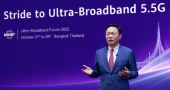
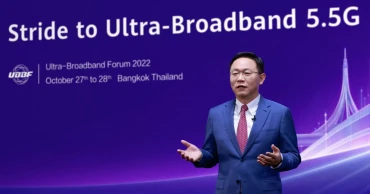
Ultra-broadband 5.5G will be a key milestone on the path to an intelligent world, David Wang, Huawei's executive director of the board and chairman of the ICT infrastructure managing board, said Thursday.
He was speaking at the two-day Ultra-Broadband Forum 2022 which began in Bangkok today.
"As we approach the intelligent world of 2030, home broadband speeds will reach 10 Gbit/s, marking a huge improvement over today's 1 Gbit/s experience," David said.
"Now homes have an average of 5 to 20 devices connected to their Wi-Fi networks. However, this is set to change as smart home devices see broad adoption, which will drive this number up to 150 to 200. It will therefore be essential that fibre can reach every room of every home."
Read: 5.5G: 'The key to building an intelligent world'
By 2030, Wi-Fi networks will also be capable of delivering several 10 Gbit/s experiences for mid- and large-sized campuses and will need to support intelligent operations and management, David said.
"Micro and small enterprises will need Wi-Fi networks that can deliver large bandwidth, premium experiences, and one-stop intranet services. Industrial Internet will require a bandwidth higher than 10 Gbit/s and latency lower than one millisecond," he added.
"Enterprises will adopt a multi-cloud strategy that requires networks to dynamically adjust routing. Driven by green development and automation, we will see 10-fold increases in network capacity, energy efficiency, and O&M efficiency," David said.
3 years ago
Microsoft’s Windows-centred PC business widely expected to take a hit
Microsoft on Tuesday reported a 14% drop in profit for the July-September quarter compared to the same time last year, reflecting a weak market for personal computers affecting its Windows business.
The company reported quarterly net income of $17.6 billion, or $2.35 per share, which still slightly beat Wall Street expectations despite undershooting last year’s results.
The Redmond, Washington-based software maker posted revenue of $50.1 billion in the quarter, up 11% from last year, also beating expectations.
Analysts expected Microsoft to earn $2.31 per share on revenue of $49.7 billion for the quarter.
Microsoft’s personal computing business, centered on its Windows software, was widely expected to take a hit given economic uncertainties such as inflation. In addition, many consumers bought new devices during the pandemic, helping crimp demand.
The company gets licensing revenue from PC manufacturers who install its Windows operating system on their products. Revenue from those licenses dropped 15% in the quarter, Microsoft said.
Worldwide shipments of personal computers declined almost 20% in the quarter from the same time last year, according to market research firm Gartner, which said it was the steepest decline since it began tracking the PC market in the mid-1990s. A disappointing back-to-school sales season for new computers also contributed to a fourth consecutive quarter of year-over-year decline, Gartner said.
Microsoft shares slipped more than 6% in after-hours trading Tuesday. Microsoft Chief Financial Officer Amy Hood said on a conference call with investors that some of the negative factors affecting the last quarter could extend into the near future. Alluding to recent layoffs and the past year of new hires, she said net headcount growth “will be minimal” heading into the current quarter.
Microsoft made up for some of the Windows-related losses through the strength of its cloud-computing services supplied to big businesses and other institutions.
Revenue from that segment grew 20% from the same time last year to $20.3 billion, making it the largest source of Microsoft’s sales and growth during the period. But growth in the company’s flagship Azure cloud computing platform was lower than what analysts anticipated, in part because of what Hood described as an ongoing spike in the cost of energy needed to run powerful data centers.
The second-largest business segment, made up of productivity-related software such as the Office suite of work products, grew 9% to $16.5 billion in revenue.
3 years ago