tech-news

Chinese astronauts return safely after debris-damaged capsule forces unexpected delay
Three Chinese astronauts returned to Earth on Friday after their trip home was delayed more than a week because their original return capsule was damaged, likely by space debris, officials said.
The crew, who had spent six months aboard the Tiangong space station, had been scheduled to return on Nov. 5. But their Shenzhou-20 capsule was found to have tiny cracks in one of its windows, prompting China’s Manned Space Agency to abandon the plan. Instead, they used the newly arrived Shenzhou-21 spacecraft, which had transported their replacements.
Watchdog group Public Citizen urges OpenAI to withdraw Sora app over deepfake risks
The nine-day delay extended their mission to 204 days — the longest stay by any astronaut at China’s space station. The space agency did not say whether the switch would affect future missions, though it confirmed Shenzhou-22 will be launched.
The return capsule touched down in the Gobi Desert on Friday afternoon, releasing a red-and-white parachute before landing in a cloud of dust. The astronauts were helped out about half an hour later and appeared in stable condition.
Mission commander Chen Dong said their prolonged stay underscored the challenges of space travel. “The path of human space exploration is not smooth,” he said. “But that is why we choose it.”
The crew had continued experiments during their extended mission, along with four mice brought to study how small mammals adapt to weightlessness and confinement.
China’s space program, which has ramped up rapidly in recent years, is a source of national pride. It has already landed a rover on Mars and aims to send astronauts to the moon by 2030.
Source: AP
6 months ago
iPhone users can now store US passport details in Apple Wallet
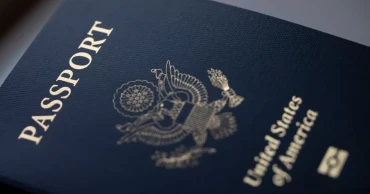
Apple has introduced a new “Digital ID” feature that allows iPhone users to add their U.S. passport information to the Apple Wallet app, offering a quicker way to verify identity at airports ahead of the busy holiday travel season.
Apple said the Digital ID system, launched on Wednesday, will initially be available in beta at Transportation Security Administration (TSA) checkpoints in more than 250 airports across the United States. It will allow travelers to confirm their identity during domestic flights even if they do not have a Real ID.
However, the company stressed that the Digital ID will not replace a physical passport and cannot be used for international travel or border crossings.
Apple already lets users in 12 U.S. states and Puerto Rico add their driver's licence or state ID to Apple Wallet, while TSA accepts some type of mobile ID at airport checkpoints in at least 16 states and Puerto Rico.
According to TSA, travelers using Digital ID “can move through more than 250 TSA checkpoints faster and more securely.”
How to add your passport to Apple Wallet
To set up the feature, users need to open the Wallet app on their iPhone, tap the plus (+) icon, and select “Digital ID.” If it does not appear, searching “Digital ID” inside the app may help.
The process requires scanning the passport’s photo page and then placing the iPhone on the passport’s embedded chip for authentication. Users will then need to verify their identity with a selfie and complete a series of simple facial movements, such as turning their head or blinking. After the verification is completed, the Digital ID will appear in the Wallet.
How it works at airport checkpoints
To present a Digital ID at TSA kiosks, users simply double-click the iPhone’s side button to open the Wallet app, select the Digital ID card and hold the device or Apple Watch near the reader. The machine will capture a photo, and the phone will show what information is being requested—such as name or date of birth. The user must then confirm the data using Face ID or Touch ID.
Security and privacy protections
Apple says all passport data added to the device is encrypted and stored securely. The company also cannot see where or when a Digital ID is used. The use of biometric verification ensures that only the device owner can release the information. Apple further notes that users do not need to unlock or hand over their device to present their Digital ID.
Where mobile IDs are accepted
TSA says more than a dozen states currently support mobile IDs at airport checkpoints. These include Arkansas, Arizona, California, Colorado, Georgia, Hawaii, Iowa, Louisiana, Maryland, Montana, New Mexico, New York, Ohio, Utah, Virginia and West Virginia, along with Puerto Rico.
More details are available on the TSA website.
Source: AP
6 months ago
Anthropic, Microsoft unveil massive AI data center projects amid industry expansion
Artificial intelligence firm Anthropic on Wednesday announced a $50 billion investment to expand its computing infrastructure, including new data centers in Texas and New York.
Microsoft also revealed progress on a major data center project in Atlanta, Georgia, which it said will be linked to another facility in Wisconsin to form a “massive supercomputer” powered by hundreds of thousands of Nvidia chips.
Apple removes two major gay dating apps in China following government order
The announcements underscore the tech industry’s continued push to build large-scale, energy-intensive AI infrastructure despite concerns about financial risks, environmental impact, and surging local electricity costs.
Anthropic, developer of the Claude chatbot, said the investment—made in partnership with London-based Fluidstack—will create about 800 permanent and 2,400 construction jobs. Microsoft’s new “Fairwater 2” center will bolster its own AI services as well as those of OpenAI and other developers.
Source: AP
6 months ago

Apple removes two major gay dating apps in China following government order
Apple has removed two of China’s most popular gay dating platforms, Blued and Finka, from its app store in the country following an order from Chinese authorities — marking another step in Beijing’s tightening restrictions on the LGBTQ+ community.
In a statement, an Apple spokesperson confirmed that the removal was made “based on an order from the Cyberspace Administration of China,” without providing further details. “We follow the laws in the countries where we operate,” the spokesperson told The Associated Press.
A review by the AP on Tuesday showed that both apps were no longer available on Apple’s China app store, although an “express” version of Blued could still be found. The difference between the full and express versions, or whether Android versions remain accessible, was not immediately clear.
Apple said Blued was available “only in China,” while Finka’s developer had already “elected to remove the app” from markets outside the country earlier this year. Another popular gay dating app, Grindr, was also removed from Apple’s Chinese app store in 2022.
Despite the decriminalization of homosexuality in 1997, China’s LGBTQ+ community has come under mounting pressure, with several advocacy groups forced to shut down and activism facing increasing restrictions.
Apple removes ICE-tracking app after US pressure
Both Blued and Finka are owned by BlueCity, a China-based company serving the LGBTQ+ community domestically and abroad. BlueCity was delisted from the Nasdaq in 2022 after going private.
Last year, Apple similarly removed messaging apps such as WhatsApp and Threads from its Chinese app store following directives from the same government agency.
“Among all foreign tech companies serving Chinese users, Apple is likely the most compliant with China’s internet regulations,” said George Chen, a partner and digital practice co-chair at The Asia Group. He noted that Apple “seldom challenges the government’s takedown orders, as the Chinese market — especially iPhone sales — remains too significant for the company.”
Source: AP
6 months ago

BBC faces ‘Existential Crisis’ after controversy over edited Trump speech
The BBC was thrown into turmoil Monday following the sudden resignations of two senior executives over the editing of a speech by former U.S. President Donald Trump — an incident that critics say has plunged the broadcaster into an “existential crisis.”
The century-old, publicly funded British institution came under fire after its flagship news program edited together segments of Trump’s January 6, 2021 speech in a way that appeared to show him urging his supporters to march on the U.S. Capitol and “fight like hell.”
BBC Chairman Samir Shah apologized for what he called an “error of judgment.” Trump’s legal team threatened to sue, demanding a retraction and compensation for the “false and defamatory” broadcast.
The scandal has reignited debate over whether the BBC — long seen as a cornerstone of British journalism — can maintain its impartiality in an era of political polarization.
“This is an existential crisis for the BBC,” said Julie Posetti, a journalism professor at City St. George’s University of London. She warned that the corporation’s quick concessions could embolden those seeking to intimidate or discredit public service media.
Allegations of BiasThe controversy erupted after the Daily Telegraph published details from an internal BBC memo criticizing the Panorama program’s handling of Trump’s speech. The documentary, aired just before the 2024 U.S. election, stitched together quotes from two separate parts of Trump’s remarks — nearly an hour apart — omitting lines in which he urged peaceful protest.
The BBC’s Director-General Tim Davie and Head of News Deborah Turness resigned Sunday amid the backlash. Shah acknowledged that the editing created “the impression of a direct call for violent action.” Turness admitted mistakes but denied claims of institutional bias — a stance echoed by U.K. Prime Minister Keir Starmer.
The leaked memo also accused the broadcaster of showing favoritism on transgender and Israel-related issues, fueling long-standing right-wing claims of bias within the BBC.
Political and Public ReactionTrump responded on social media, accusing BBC journalists of being “corrupt” and trying to “tip the scales” of the U.S. election. The White House press secretary shared headlines portraying Trump as “at war with fake news BBC.”
In Britain, right-wing politicians seized on the controversy. Reform U.K. leader Nigel Farage declared the BBC “institutionally biased for decades,” while conservative columnist Charles Moore said the corporation habitually reflected “a metropolitan, left-wing worldview.”
The BBC has also faced criticism from across the political spectrum for its coverage of the Israel-Hamas war and other sensitive topics.
Posetti, however, argued that the BBC remains one of the world’s most trusted media outlets. “It’s wrong to label it ‘fake news’ when it clearly isn’t,” she said, though she added that the organization should have addressed the editing issue “clearly and transparently.”
Legal Threats from TrumpTrump’s warning of legal action mirrors previous lawsuits against major U.S. networks. In recent years, he has reached multimillion-dollar settlements with CBS’s 60 Minutes and ABC News over allegedly misleading edits and statements.
The BBC’s Funding and FutureThe BBC is financed by a £174.50 ($230) annual television license fee paid by all U.K. households with a TV. It is legally required to remain impartial and independent under its royal charter, though it is not controlled by the government.
Founded in the 1920s and affectionately nicknamed “Auntie,” the BBC has long been considered a national institution. It operates the BBC World Service in over 40 languages and produces popular shows such as Doctor Who, Strictly Come Dancing, and The Traitors.
However, with its charter up for renewal soon, critics are questioning whether the license fee model is sustainable amid competition from streaming platforms and declining public trust.
Farage warned that the recent crisis could accelerate public disillusionment: “If the BBC doesn’t get its act together, millions will simply refuse to pay the license fee.”
6 months ago
China launches K-visa to attract global tech talent amid U.S. restrictions
China has introduced a new K-visa program aimed at attracting skilled professionals in science and technology, in a move seen as a direct challenge to the United States’ dominance in recruiting global tech talent.
For Indian IT expert Vaishnavi Srinivasagopalan, who has worked in both India and the U.S., the K-visa could open new career opportunities in China. “It’s like China’s version of America’s H-1B visa,” she said, adding that the new pathway makes working abroad easier for people like her.
Beijing unveiled the K-visa last month as part of a broader push to strengthen its innovation base and close the talent gap with the U.S. Unlike China’s existing R-visa, the K-visa doesn’t require applicants to have a job offer before applying, making it more flexible and appealing to international professionals.
The rollout comes amid tightening U.S. immigration policies under President Donald Trump, including sharply increased H-1B visa fees, which have made the U.S. less attractive to many foreign students and workers.
Tech giants woo millions of Indians with free AI tools to tap future market
Experts say Beijing is seizing the moment to project itself as an open destination for skilled workers and investors. “China sees the U.S. immigration squeeze as a golden opportunity to welcome global talent,” said Barbara Kelemen of Dragonfly, a security intelligence firm.
However, the move has stirred debate at home, where youth unemployment remains high. Some young Chinese job seekers fear foreign professionals might add to the competition.
Despite these concerns, analysts say China’s efforts to lure overseas experts reflect its determination to lead in fields such as artificial intelligence, semiconductors, and robotics.
Source: AP
6 months ago
Tech giants woo millions of Indians with free AI tools to tap future market
Global tech companies are offering premium artificial intelligence (AI) tools to millions of Indians for free, viewing it as a long-term investment in one of the world’s fastest-growing digital markets.
Starting this week, millions of Indian users will get a year of free access to ChatGPT’s new low-cost “Go” chatbot. The move follows similar offers from Google and Perplexity AI, which recently tied up with leading Indian telecom operators to distribute their AI services.
Perplexity partnered with Airtel, India’s second-largest mobile network, while Google joined hands with Reliance Jio, the country’s biggest operator, to offer free or discounted AI tools bundled with monthly data packs.
Analysts say these offers are not acts of generosity but calculated efforts to build user habits and loyalty in a massive market. “The plan is to get Indians hooked on generative AI before asking them to pay for it,” Tarun Pathak, an analyst at Counterpoint Research, told the BBC.
India’s open and competitive digital market, unlike China’s tightly controlled environment, makes it an attractive testing ground for global tech firms. With over 900 million internet users — most under 24 — and some of the world’s cheapest data, India provides scale, youth, and diversity that help train AI models more effectively.
“AI use cases from India will serve as valuable examples for the rest of the world,” Pathak added. “The more first-hand data companies gather, the better their generative AI systems become.”
However, experts have raised privacy concerns. “Most users have always been willing to give up data for convenience or something free — that will continue,” said Delhi-based technology writer Prasanto K. Roy. “This is where the government must step in.”
India currently lacks a dedicated AI law, though the Digital Personal Data Protection Act (DPDP) 2023 provides a broad framework for data and privacy regulation. The act has not yet been implemented, and its detailed rules remain pending.
Mahesh Makhija, technology consulting leader at Ernst & Young, said that once enforced, the law could become “one of the most advanced from a digital privacy perspective.”
For now, India’s flexible regulatory climate allows OpenAI, Google, and others to roll out free AI services — a strategy difficult to replicate in regions like the European Union or South Korea, where strict rules on transparency and data use apply.
Experts say India must strengthen user awareness and regulatory safeguards but without stifling innovation. “We need light-touch regulation for now,” Roy said, “but that must evolve as potential harms become clearer.”
Industry observers believe these free offerings mirror India’s earlier digital revolution driven by cheap internet data. Even if only a small fraction of users later subscribe to paid versions, companies could still gain millions of paying customers.
“Even if just 5% of free users convert to paid subscribers, that’s still a huge number,” Pathak said.
With inputs from BBC
6 months ago

Denmark plans to ban social media access for children under 15
Denmark’s government announced plans Friday to ban social media access for anyone under the age of 15, marking one of the toughest measures yet by a European country to shield children from harmful online content and corporate influence.
Under the proposal, parents could be granted permission — after a formal assessment — to allow children as young as 13 to use social media. The government has yet to detail how the restriction would be enforced, though officials acknowledge that existing age limits on platforms like Instagram, TikTok, and Snapchat have proven easy to bypass.
Digital Affairs Minister Caroline Stage said the move aims to curb the growing risks children face in a highly digitalized world. “Ninety-four percent of Danish children under 13 have profiles on at least one social platform, and more than half of those under 10 do,” she told The Associated Press.
“The amount of violence and self-harm children are exposed to online is an unacceptable risk,” Stage said. While calling Big Tech firms “some of the greatest companies in the world,” she criticized them for failing to protect young users: “They have enormous resources but are simply not willing to invest in children’s safety.”
Careful Legislation and Tough Enforcement
The law is not expected to take effect immediately, as lawmakers across party lines work out enforcement mechanisms. “We’ll move quickly, but we must do it right,” Stage said. “There can be no loopholes for the tech giants to exploit.”
Denmark’s plan follows Australia’s 2024 legislation, which made it illegal for children under 16 to access social media and imposed fines of up to AUD 50 million ($33 million) for companies that fail to comply.
Stage said Denmark will rely on its national electronic ID system, which nearly all citizens over 13 already use, and a forthcoming age-verification app. While tech companies cannot be forced to adopt the Danish app, they will be legally required to verify users’ ages. Platforms that fail to comply could face EU penalties of up to 6% of their global revenue.
Protecting Children from Digital Harm
The Danish government emphasized that the initiative is not meant to disconnect children from digital life, but to protect them from toxic content and online pressure.
“Children and young people lose sleep, concentration, and peace of mind due to constant digital engagement,” the ministry said in a statement. “This is not a problem parents or teachers can solve alone.”
Other countries have taken similar steps. China limits minors’ gaming and smartphone time, and in France, prosecutors recently opened an investigation into TikTok for allegedly promoting suicide-related content through its algorithms.
The EU’s Digital Services Act, in force since 2023, already bans users under 13 from holding social media accounts, but enforcement remains inconsistent. Platforms such as TikTok and Meta (Instagram, Facebook) use AI-based facial analysis to estimate users’ ages, though the methods have been criticized as unreliable.
In an emailed response, TikTok said it supports Denmark’s goals: “We have developed more than 50 safety features for teen accounts and tools like Family Pairing to help guardians manage content and screen time. We look forward to constructive collaboration on industry-wide solutions.”
Meta did not respond to a request for comment.
Minister Stage said Denmark has given tech companies ample time to act on child safety. “They’ve had many chances to fix this themselves,” she said. “Since they haven’t, we will now take control — and ensure our children’s digital futures are safe.”
6 months ago
Musk poised to become first trillionaire as Tesla shareholders approve record pay deal
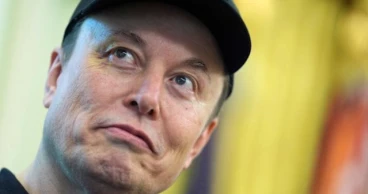
Tesla CEO Elon Musk is one step closer to becoming the world’s first trillionaire after shareholders overwhelmingly approved a massive pay package valued at up to $1 trillion, contingent on him meeting a series of ambitious performance goals over the next decade.
At Tesla’s annual meeting in Austin, Texas, more than 75% of voters backed the compensation plan — a striking show of confidence in Musk even as the electric carmaker battles declining sales, shrinking profits and growing competition.
“Fantastic group of shareholders,” Musk said after the vote, urging them to “hang on to your Tesla stock.”
The approval underscores investors’ enduring faith in Musk’s ability to engineer turnarounds like the one that transformed Tesla from a struggling startup into one of the world’s most valuable companies. Still, critics warn the reward is excessive and risky given Musk’s erratic behavior and political ventures.
The board’s plan ties the payout to steep milestones, including boosting Tesla’s market capitalization nearly sixfold and delivering 20 million electric vehicles over ten years. Musk must also deploy one million humanoid robots, a vision he describes as a “robot army.”
If he meets those targets, Musk could eclipse industrialist John D. Rockefeller, whose fortune is estimated at $630 billion in today’s dollars. Forbes currently values Musk’s wealth at around $493 billion.
Opposition came from major investors, including CalPERS and Norway’s sovereign wealth fund, along with watchdog groups Institutional Shareholder Services and Glass Lewis, who called the package excessive. Musk lashed out, branding them “corporate terrorists.”
Elon Musk launches Grokipedia as rival to Wikipedia
Supporters argue the deal aligns Musk’s incentives with Tesla’s long-term growth and its expansion into artificial intelligence. “This AI chapter needs one person to lead it, and that’s Musk,” said Dan Ives, an analyst at Wedbush Securities. “It’s a huge win for shareholders.”
Tesla shares climbed in after-hours trading before closing nearly flat at $445.44. Musk claimed the vote was about influence, not money, saying it would double his stake in Tesla to nearly 30%, giving him more control over its AI-powered future.
Shareholders also approved a measure allowing Tesla to invest in Musk’s AI startup, xAI, while rejecting a proposal to make it easier for minority shareholders to sue the company.
Source: AP
6 months ago
OpenAI faces 7 lawsuits claiming ChatGPT drove people to suicide, delusions
OpenAI is facing seven lawsuits claiming ChatGPT drove people to suicide and harmful delusions even when they had no prior mental health issues.
The lawsuits were filed Thursday in California state courts allege wrongful death, assisted suicide, involuntary manslaughter and negligence. Filed on behalf of six adults and one teenager by the Social Media Victims Law Center and Tech Justice Law Project, the lawsuits claim that OpenAI knowingly released GPT-4o prematurely, despite internal warnings that it was dangerously sycophantic and psychologically manipulative. Four of the victims died by suicide.
The teenager, 17-year-old Amaurie Lacey began using ChatGPT for help, according to the lawsuit filed in San Francisco Superior Court. But instead of helping, “the defective and inherently dangerous ChatGPT product caused addiction, depression, and, eventually, counseled him on the most effective way to tie a noose and how long he would be able to "live without breathing.'”
“Amaurie’s death was neither an accident nor a coincidence but rather the foreseeable consequence of Open AI and Samuel Altman’s intentional decision to curtail safety testing and rush ChatGPT onto the market,” the lawsuit says.
OpenAI did not immediately respond to a request for comment Thursday.
Another lawsuit, filed by Alan Brooks, a 48-year-old in Ontario, Canada, claims that for more than two years ChatGPT worked as a “resource tool” for Brooks. Then, without warning, it changed, praying on his vulnerabilities and “manipulating, and inducing him to experience delusions. As a result, Allan, who had no prior mental health illness, was pulled into a mental health crisis that resulted in devastating financial, reputational, and emotional harm.”
“These lawsuits are about accountability for a product that was designed to blur the line between tool and companion all in the name of increasing user engagement and market share,” said Matthew P. Bergman, founding attorney of the Social Media Victims Law Center in a statement.
OpenAI, he added, “designed GPT-4o to emotionally entangle users, regardless of age, gender, or background, and released it without the safeguards needed to protect them.” By rushing its product to market without adequate safeguards in order to dominate the market and boost engagement, he said, OpenAI compromised safety and prioritized “emotional manipulation over ethical design.”
In August, parents of 16-year-old Adam Raine sued OpenAI and its CEO Sam Altman, alleging that ChatGPT coached the California boy in planning and taking his own life earlier this year.
“The lawsuits filed against OpenAI reveal what happens when tech companies rush products to market without proper safeguards for young people,” said Daniel Weiss, chief advocacy officer at Common Sense Media, which was not part of the lawsuits. “These tragic cases show real people whose lives were upended or lost when they used technology designed to keep them engaged rather than keep them safe.”
6 months ago